

Shonen TCG · Guides
Mega Manectric ex Heliolisk Deck Guide: 2026 Build List
Decklist · 20 cards
- 2Mega Manectric ex
- 2Heliolisk
- 2Helioptile
- 1Electrike
- 2Clemont's Backpack
- 2Poké Ball
- 2Professor's Research
- 2Clemont
- 1Cyrus
- 1Copycat
- 1Elegant Cape
- 1Field Blower
- 1Training Area
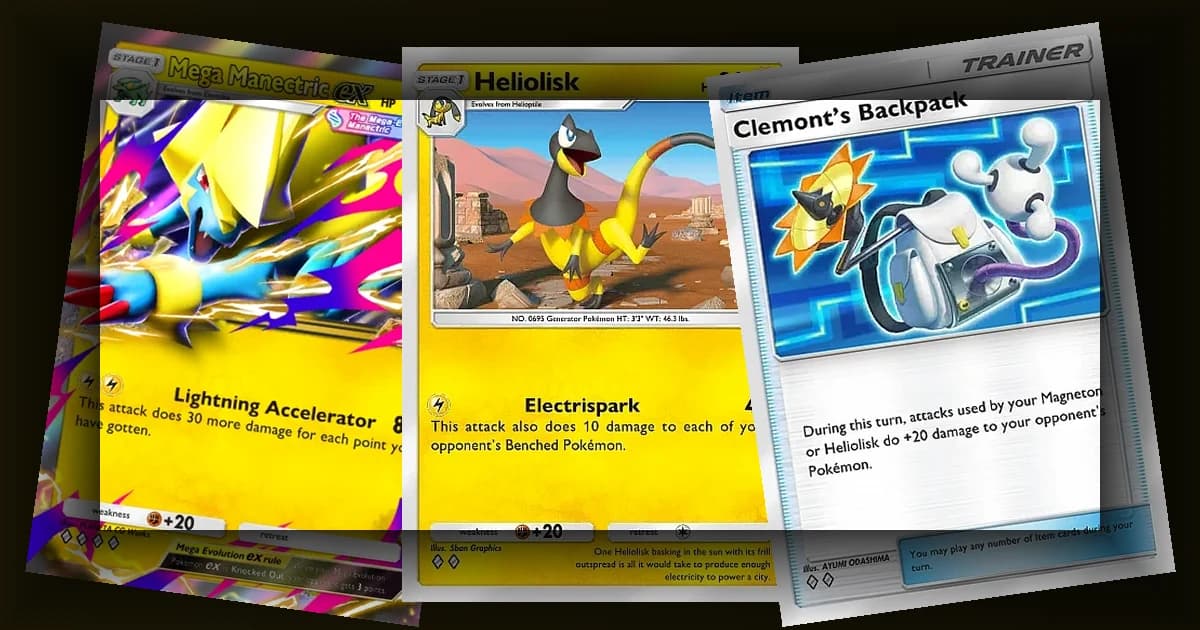
The Mega Manectric ex Heliolisk deck is a current Lightning list built around  B2b-027
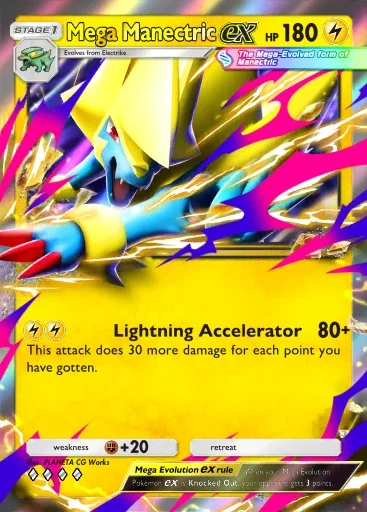 B2b-027 Mega Manectric ex and
 B4-061
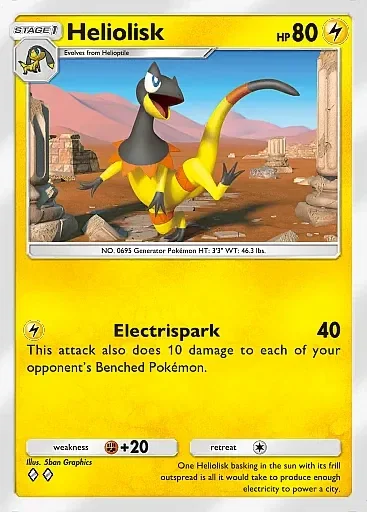 B4-061 Heliolisk. It is a 20-card shell that spreads small amounts of damage early, then lets the main attacker scale after you have taken points.
Updated October 12, 2026: Every fact re-checked. Tracker numbers moved to the October 11 snapshot (2.6% share, 51.5% win rate, 105 lists), the tracker is now correctly described as a fan site, Clemont's Backpack is an Item rather than a Tool, Training Area only boosts damage to the Active Pokémon, and the mulligan advice was replaced because Pocket always deals a Basic in the opening hand.
TL;DR: The pokemontcgpocket.app tracker snapshot updated October 11 reports a 2.6% meta share, a 51.5% win rate, 105 deck samples, 584 games, 29 tournaments, and a best finish of first. Mega Manectric ex uses Lightning Accelerator to add 30 damage for each point you have gotten, while Heliolisk's Electrispark also hits every opposing Benched Pokémon for 10.
Is the Mega Manectric ex Heliolisk deck competitive? (quick answer)
Yes, with a useful qualification. The pokemontcgpocket.app deck page, a fan-run tracker that draws its tournament data from the Limitless platform, reports a 2.6% meta share and a 51.5% win rate across 105 deck samples and 584 games. The deck appeared in 29 tournaments in the page's September 11 to October 9 window, and the best finish shown is first. That is enough public volume to call the pairing a real current archetype, not enough to call it the format's automatic best deck.
The pairing works because its two attackers ask different questions. Heliolisk can attack for 40 while also placing 10 damage on every opposing Benched Pokémon. That chip changes later knockout numbers and makes a hidden Basic less safe. Mega Manectric ex is less impressive before the deck has scored, then becomes much more threatening because Lightning Accelerator adds 30 damage for every point you have gotten.
The Pokemon TCG Pocket complete guide covers the game's Energy Zone and point rules. This article is about the decisions that matter after those rules are familiar: which Basic to put down, when Heliolisk should take the Active spot, and how to turn the first point into a Mega Manectric ex knockout rather than a stalled board.
Key takeaways for the Mega Manectric ex Heliolisk deck
- Stay on Lightning Energy. Neither main attacker needs a second type, and mixing the Zone makes the evolution turns less predictable.
 B1a-028
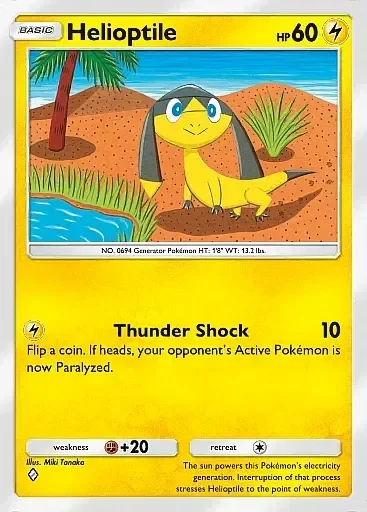 B1a-028 Helioptile is the preferred early Basic when the hand can reach Heliolisk, while
 B2b-026
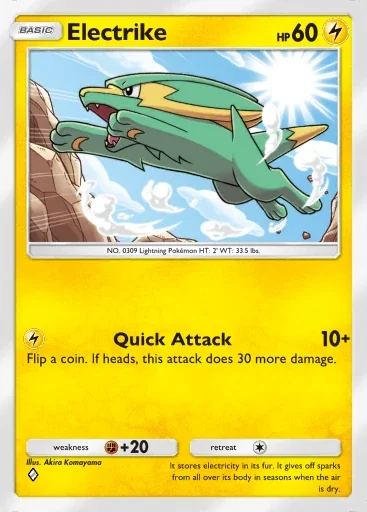 B2b-026 Electrike is the better bridge when Mega Manectric ex is already available.
- Heliolisk's 40-damage attack also places 10 damage on every opposing Benched Pokémon, so the attack has value even when it misses a knockout.
- Mega Manectric ex starts at 80 damage and adds 30 for each point you have gotten. The first point changes the attack from setup damage into real pressure.
 B1a-066
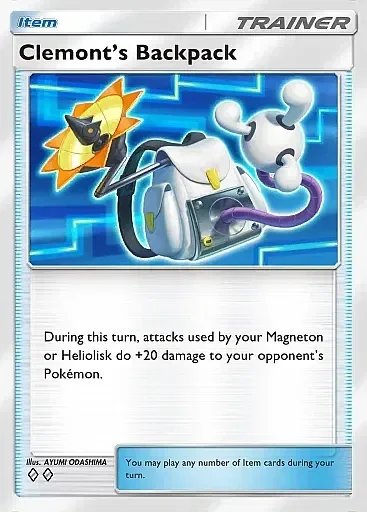 B1a-066 Clemont's Backpack is an Item that adds 20 damage to attacks from Heliolisk or Magneton for the turn. It is a Heliolisk card in this list, not a generic boost to spend automatically.
 B1a-068
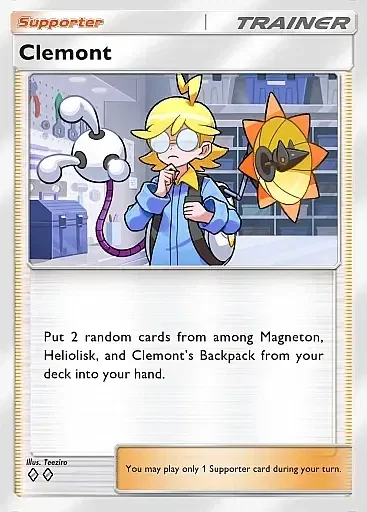 B1a-068 Clemont searches two random cards from Magneton, Heliolisk, and Clemont's Backpack. The effect is strongest when the deck has already made those targets meaningful.
 B3b-065
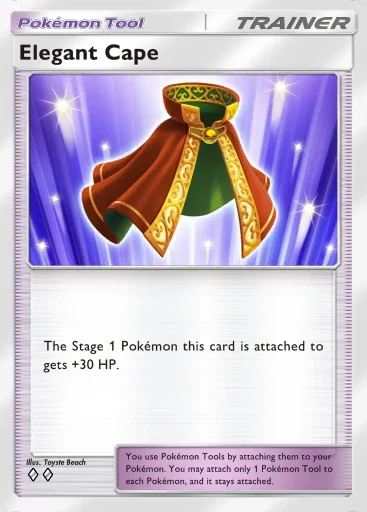 B3b-065 Elegant Cape adds 30 HP to a Stage 1 Pokémon, making Heliolisk harder to remove in the exact turns when it is spreading chip.
 B2-153
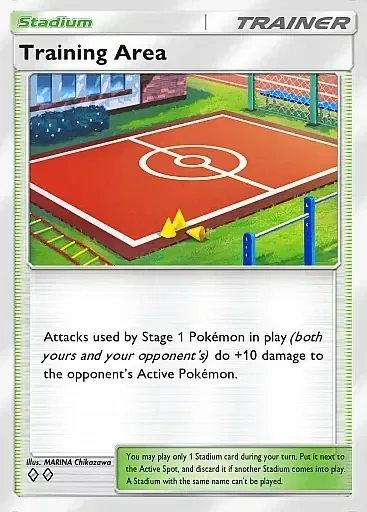 B2-153 Training Area adds 10 damage to the opposing Active Pokémon for attacks from every Stage 1 Pokémon in play. It helps Heliolisk, but it also helps the opponent, so play it for a specific number.
- The current representative list has enough search and draw to find either attacker. Do not turn every opening hand into a race for Mega Manectric ex if Heliolisk already creates the better first exchange.
Mega Manectric ex Heliolisk deck core: two attackers, one Energy type
Helioptile is the cleanest starting Basic for the Heliolisk line. Its Thunder Shock attack is small and has a coin-flip paralysis effect, so it is not a reason to attack repeatedly. Its job is to sit on the Bench, evolve, and give the deck a Stage 1 attacker that can pressure several targets at once.
Electrike fills the other evolution route. Quick Attack starts at 10 and can reach 40 on heads, which is more relevant before the deck has taken a point. Do not treat the two Basics as interchangeable just because both lead to a Lightning attacker. Helioptile points toward spread damage and a Heliolisk turn. Electrike points toward building the Mega Manectric ex line.
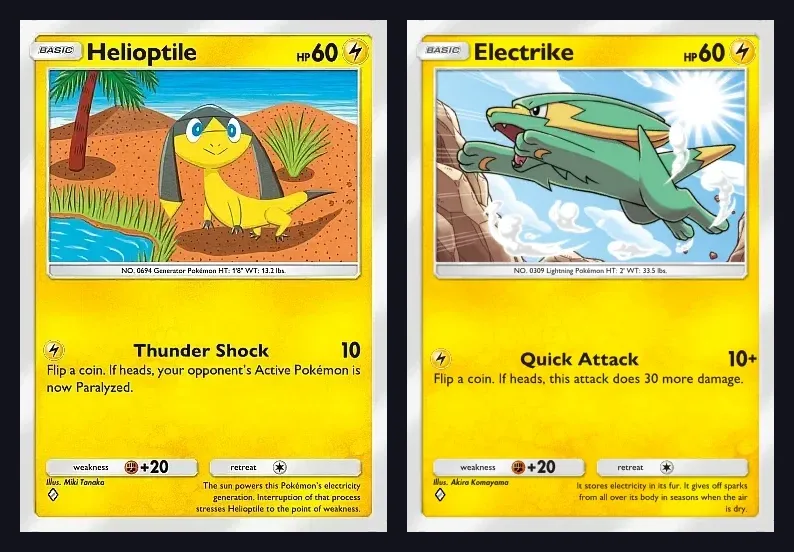 Image: Pokémon TCG Pocket card art (B1a-028 Helioptile, B2b-026 Electrike), via the pokemontcgpocket.app card database. The two Basics lead to different attackers.
The tracker's representative list uses two Mega Manectric ex, two Heliolisk, two Helioptile, and one Electrike. That ratio leaves Heliolisk as a real early plan rather than a single-copy surprise while still giving Mega Manectric ex the highest count in the closing package. A second Electrike can be a collection-dependent change, but test it against the current list rather than assuming more Basics always improve the draw.
Clemont's Backpack is a focused damage Item. It gives attacks from Heliolisk or Magneton 20 more damage for the turn, so Electrispark's 40 becomes 60. Save it for a knockout line or for the turn when that extra damage, plus the Benched 10, puts the right targets into a later range. Playing it merely because Heliolisk is attacking throws away the part that makes the Item worth a slot.
Clemont searches two random cards from Magneton, Heliolisk, and Clemont's Backpack. In this list, the Magneton branch is not the main plan, but its presence in the search pool means the Supporter is not a guaranteed pair of Heliolisk cards. Use Clemont when any two of those results improve the next turn, and prefer Professor's Research when the hand already contains the cards you need but lacks a fresh line.
Elegant Cape gives a Stage 1 Pokémon 30 more HP. Heliolisk is the important target here. The Cape can force an opponent to spend a stronger attack on the spread attacker, buying the turn needed to build Mega Manectric ex or take another point. It is less attractive on an already safe Bench Pokémon because it does nothing until that Pokémon is exposed.
Training Area is another card that rewards precision. Attacks from every Stage 1 Pokémon in play do 10 more damage to the opposing Active Pokémon, on either side of the table. On Heliolisk, it turns Electrispark's 40 into 50 against the Active, while the Bench spread stays at 10, and the opponent may get the same bonus. Play the Stadium when your next attack uses the extra damage immediately, not as a vague permanent upgrade.
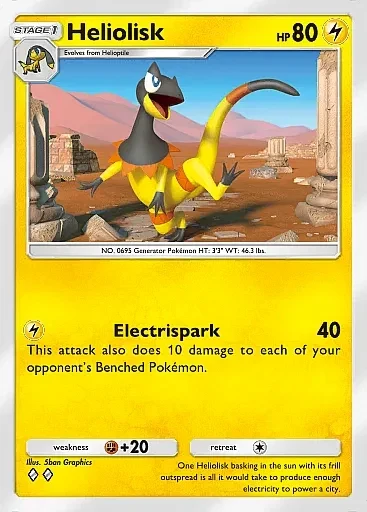 Image: Pokémon TCG Pocket card art (B4-061), via the pokemontcgpocket.app card database. Heliolisk hits the Active Pokémon and every opposing Benched Pokémon at once.
How the Lightning damage curve actually works
Mega Manectric ex's Lightning Accelerator deals 80 damage, then adds 30 for each point you have gotten. Pokemon.com's own Mega Manectric ex strategy piece puts it the same way: "Lightning Accelerator becomes more powerful the closer you are to winning the game." Before the first point, that is a setup attack. After one point, it reaches 110. After two, it reaches 140. Those thresholds matter more than the card's maximum because the deck usually wants Heliolisk to handle the first turn while Mega Manectric ex waits for a score modifier.
That means the first point is not merely a point. It changes the card in your hand. If Heliolisk can take a safe first knockout, let it do so even when Mega Manectric ex is already on the Bench. If the opponent has placed a high-HP ex Active and a low-HP Basic on the Bench, use Heliolisk to spread damage when a later 110 or 140 attack will finish the correct target.
Remember the cost of losing it, too: as a Mega Evolution Pokémon ex, Mega Manectric ex gives up 3 points when it is Knocked Out, which is a full game. The opponent knows this curve too. A player who sees one point on your side may try to remove Mega Manectric ex before it reaches the next threshold, or may force you to promote a damaged Heliolisk. Keep a second Basic on the Bench and do not attach every useful Tool to the first attacker. The list wins by making the next attack stronger, not by protecting one Pokémon at any cost.
Poké Ball and Professor's Research are the straightforward consistency cards.  P-A-005
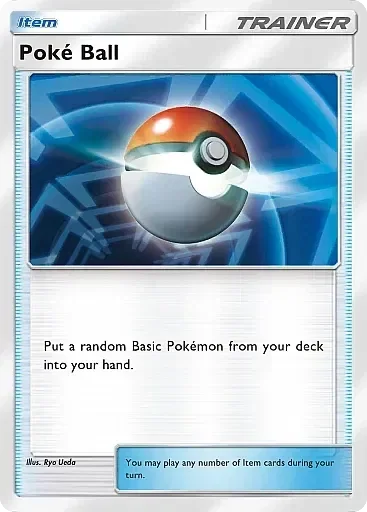 P-A-005 Poké Ball finds a random Basic, so play it before deciding whether a search effect is worth using on the current hand.
 P-A-007
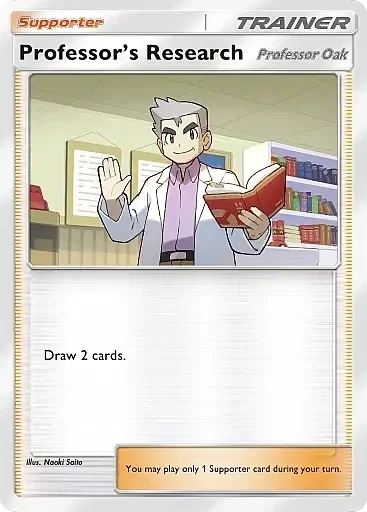 P-A-007 Professor's Research draws two and is at its best after the opening hand has already put one evolution line on the Bench. A hand with an attacker, a Basic, and a Supporter is usually better than a hand with two late cards and no route to turn two.
 A2-150
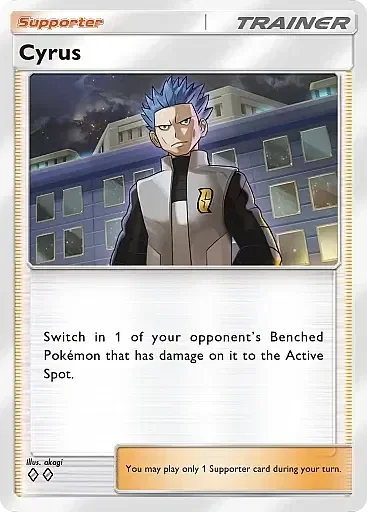 A2-150 Cyrus switches in a damaged Benched Pokémon from the opponent. Heliolisk makes Cyrus better by placing damage across the Bench, but do not spend the Supporter simply because a damaged target exists. Wait until the target is in range of Mega Manectric ex or until bringing it Active denies the opponent a safe retreat.
 B1-225
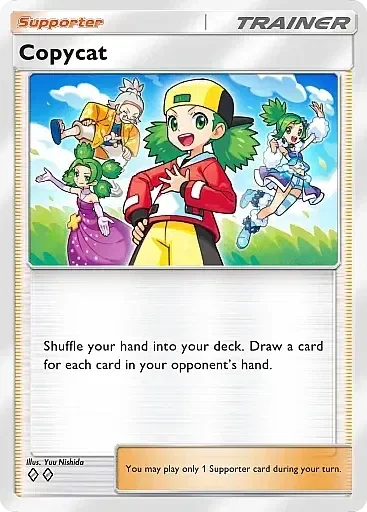 B1-225 Copycat redraws based on the opponent's hand size. It is strongest after the opponent has held evolution or Supporter pieces for a turn, and weaker when both players have small hands.
 B3-147
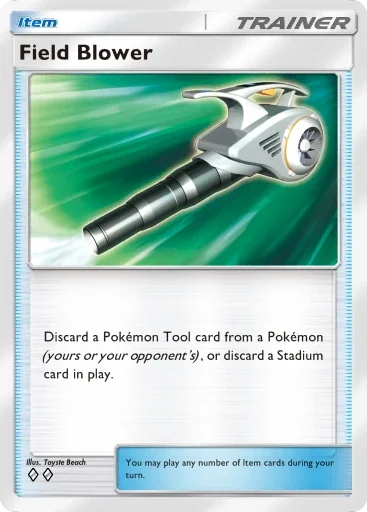 B3-147 Field Blower removes a Tool or Stadium, so it can clear a defensive Cape or replace Training Area when the opponent gets more from the shared Stage 1 bonus. These are flexible interaction cards, not automatic first-turn plays.
GODEEPER: Compare this Lightning shell with the broader rankings in the Pokemon TCG Pocket meta tier list before changing the list for a single matchup or one hot result.
Representative 20-card shell and flexible slots
The pokemontcgpocket.app tracker reconstructs this shell as a focused 20-card list from its 105 samples, with all 20 slots counted as core and no separate flex group:
| Count | Card | Role |
|---|---|---|
| 2 | Mega Manectric ex | Main attacker that scales after each point |
| 2 | Heliolisk | Early attacker and Bench spread |
| 2 | Helioptile | Heliolisk setup |
| 1 | Electrike | Mega Manectric ex setup |
| 2 | Clemont's Backpack | Item: +20 damage for Heliolisk this turn |
| 2 | Poké Ball | Random Basic search |
| 2 | Professor's Research | Two-card draw |
| 2 | Clemont | Searches Heliolisk, Magneton, or the Backpack |
| 1 | Cyrus | Brings a damaged Bench target Active |
| 1 | Copycat | Hand-size redraw |
| 1 | Elegant Cape | Adds 30 HP to a Stage 1 |
| 1 | Field Blower | Removes a Tool or Stadium |
| 1 | Training Area | +10 damage to the Active from Stage 1 attacks |
The table is a dated snapshot, not a command to copy the list without testing. The tracker's common alternatives include a third Electrike and Helioptile, Giant Cape, May, and Rocky Helmet, each in a minority of lists. The deck has a small enough sample to reward changes that answer a clear problem, but a random collection of extra Lightning cards can weaken the reason to play Heliolisk. Start by changing one flex slot, record which matchup it is meant to improve, and revisit the change after enough games to see whether it altered the relevant exchange.
Step-by-Step: How to pilot the Mega Manectric ex Heliolisk deck
1. Set the Energy Zone to Lightning. Both main attackers use the same type, and the deck does not gain enough from a second type to justify a less reliable first three turns.
2. Pick the Active Basic from the opening hand. Pocket always deals at least one Basic Pokémon in the five-card opening hand, so there is no mulligan. Put Helioptile Active when the hand can reach Heliolisk, keep Electrike on the Bench for the Mega Manectric ex line, and bench a second Basic on the first turn so an early knockout does not end the game.
3. Choose the early attacker by the opponent's board. Use Heliolisk when Bench spread will change a future knockout or when its 40 damage is enough to take the first point. Build Mega Manectric ex first when the opponent has a high-HP Active and no exposed Bench target.
4. Bench both lines before committing a Tool. The deck wants Heliolisk to take the first exchange and Mega Manectric ex to close. Do not attach Elegant Cape or use Clemont's Backpack until you know which attacker will be Active for the next attack.
5. Use Clemont when two search results matter. The Supporter can find a pair from the Heliolisk and Backpack pool, but it can also return an awkward mixture. If the hand needs raw cards rather than specific pieces, Professor's Research is cleaner.
6. Spread damage with a knockout in mind. Heliolisk's Bench damage is not free value if it leaves the Active alive without a follow-up. Count 10 damage on every Bench target, then identify which one Mega Manectric ex can finish after the next point.
7. Take the first point with the least expensive attacker. If Heliolisk can win the exchange, use it. That point turns Mega Manectric ex from 80 to 110 and may make the next attack worth more than saving the Stage 1 for later.
8. Spend the Backpack for a real threshold. The extra 20 should create a knockout or force a retreat. If it only changes 40 to 60 against a target that survives either way, keep the Item for the turn that matters.
9. Close with the score modifier, not a forced early Mega attack. After one or two points, Lightning Accelerator becomes the reason the deck can finish. Keep the main attacker safe, use Cyrus when a spread-damaged target is ready, and avoid handing the opponent a clean return knockout.
Matchup plans for the Mega Manectric ex Heliolisk deck
Against evolution decks, Heliolisk's spread is the first pressure point. Put 10 damage on every Bench Pokémon before the opponent can choose which line to develop, then use Cyrus or the scaled Mega attack on the target that has become most expensive to replace. Do not spend the first turn chasing a Stage 1 if the Active Pokémon is the only card currently able to attack.
Against fast ex attackers, the first point is a race. A damaged Heliolisk is acceptable if it takes a point or leaves a Bench target in range of the next attacker. A Heliolisk that attacks for chip and then gives up a point without building Mega Manectric ex has not done its job. Preserve one Basic on the Bench so the deck can keep attacking after the first exchange.
Against the site's Mega Sceptile ex Greninja guide, the important question is whether Heliolisk's spread reaches the Grass deck's Basics and Stage 1s before Mega Sceptile ex, a Stage 2, is ready. Use the Mega Sceptile ex Greninja deck guide for the opposing evolution thresholds, then decide whether Training Area helps your Heliolisk more than it helps their Stage 1 turn.
Against Suicune ex Baxcalibur, target the setup rather than the biggest Active Pokémon. Heliolisk's Bench damage can force the opponent to choose between protecting the Baxcalibur line, whose Ice Maker Ability attaches Water Energy to the Active Pokémon, and preserving the current Active. The Suicune ex Baxcalibur deck guide explains the Water deck's acceleration plan. Your job is to make that extra Energy arrive after the first point, not before it.
Against Mega Lucario ex Lucario, respect the point race and avoid assuming 110 damage is enough. The tracker lists it as this deck's biggest risk, with a 34.4% win rate over 32 games. The Mega Lucario ex deck guide breaks down its 90 and 140 damage modes. Heliolisk is useful when spread damage makes a later Mega Manectric ex hit cleanly, but do not expose the closer to a 140-damage return attack before the score modifier is doing its work.
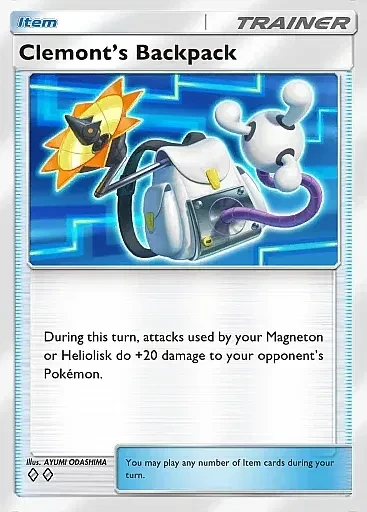 Image: Pokémon TCG Pocket card art (B1a-066), via the pokemontcgpocket.app card database. Clemont's Backpack is a timing card: its 20-damage boost matters most when it changes the next knockout.
Common mistakes with the Mega Manectric ex Heliolisk deck
Opening with the wrong Basic. Helioptile and Electrike are not interchangeable. Pick the line that matches the hand and the opponent's board rather than playing the first Lightning Basic without a plan.
Treating Heliolisk as a filler card. Its spread attack is often the reason the matchup is playable. A 10-damage counter on every Bench Pokémon can matter more than an extra 20 on the Active, especially when Cyrus or Mega Manectric ex is ready next turn.
Attacking with Mega Manectric ex before the score modifier matters. Lightning Accelerator's first attack is only 80. Let Heliolisk take the first exchange when it can, then let the point make the ex attack worth the Energy and Bench space.
Using Training Area without checking the opponent's Stage 1. The Stadium helps both sides. If the opponent's next attack crosses a knockout threshold because of it, discard or replace the Stadium rather than granting the bonus automatically.
Spending Clemont's Backpack on damage that does not change the board. The Item is not a passive upgrade. Keep it when Heliolisk's unboosted attack already fails to take a point and the boosted attack still fails.
Treating the tracker list as permanent. The page shows a 51.5% win rate over 584 games in its October 11 update, but the sample and card pool will move. Record the reason for every flex change and recheck the tracker before an event.
What players are saying about Mega Manectric ex Heliolisk
LIXXX's October 8 gameplay video, "Heliolisk + Mega Manectric ex Is SO GOOD!", shows the pairing in ranked play. The point cost of a Mega has come up in community threads too. In an r/PTCGP thread comparing a Team Rocket's Zapdos Heliolisk build with Mega Manectric ex, one player noted: "Yeah, but with that said manetric is a stage 1 and a 3 pointer." Another reply in the same thread answered: "I think mega manetric is faster".
Our take
Based on the tracker numbers and card text cited above, Mega Manectric ex Heliolisk is a solid second-tier pick rather than a format-defining deck: a 51.5% win rate over 584 games is above even, and the list is unusually settled, with all 20 slots counted as core. The deck's weak spot is just as clear in the same data, a 34.4% record against Mega Lucario ex Lucario. We would play it when Lucario is rare in your pool of opponents, lean on Heliolisk to take the first point, and treat Mega Manectric ex as the closer that must not be handed over for 3 points cheaply.
How we checked this: 27 facts checked on October 12, 2026 against the pokemontcgpocket.app tracker, Pokemon.com, the Limitless TCG Pocket card database, and Pokémon Zone; the full source table is kept with our editorial notes. Last reviewed: October 12, 2026.
Frequently Asked Questions
Is the Mega Manectric ex Heliolisk deck competitive in Pokemon TCG Pocket? Yes. The pokemontcgpocket.app tracker, updated October 11, 2026, reports a 2.6% meta share, a 51.5% win rate, 105 deck samples, 584 games, 29 tournaments, and a best finish of first for its September 11 to October 9 window. That is a real current archetype, but the figures are a dated fan-tracker snapshot.
What Energy does Mega Manectric ex Heliolisk use? Use Lightning Energy. The representative list is a focused Lightning shell, and both main attackers are designed to use that Zone. Heliolisk adds Bench pressure while Mega Manectric ex scales its damage after you have taken points, so a second Energy type usually makes the setup less reliable.
What is the core of the Mega Manectric ex Heliolisk deck? The verified core is two Mega Manectric ex, two Heliolisk, two Helioptile, one Electrike, two Clemont's Backpack, two Clemont, and the standard Poké Ball and Professor's Research package. Cyrus, Copycat, Elegant Cape, Field Blower, and Training Area fill the remaining slots in the current representative reconstruction.
Which Basic should I start with in Mega Manectric ex Heliolisk? Pokemon TCG Pocket always gives you at least one Basic Pokémon in the five-card opening hand, so there is no mulligan decision. The choice is which Basic goes Active. Helioptile is the better start when the hand can reach Heliolisk, while Electrike makes sense when Mega Manectric ex is already in hand.
What does Heliolisk do in this deck? Heliolisk attacks for 40 and also deals 10 damage to each opposing Benched Pokémon. That spread makes it a tempo attacker rather than a placeholder for Mega Manectric ex. It can soften a Bench for a later knockout and still pressure the Active Pokémon while the Lightning setup develops.
When does Mega Manectric ex hit hardest? Lightning Accelerator starts at 80 damage and adds 30 for each point you have gotten. It is a modest early attack and a much stronger closer after the first or second point, so plan the game around surviving the opening exchange and then turning the score into a clean knockout.
Related Reading
- Pokemon TCG Pocket Mega Blaziken ex Greninja Deck Guide
- Pokemon TCG Pocket Vespiquen ex Shuckle ex Deck Guide
- Pokemon TCG Pocket Hydreigon Mega Absol ex Deck Guide
- Pokemon TCG Pocket Dragonair Mega Rayquaza ex Deck Guide
References
- Mega Manectric ex Heliolisk deck page, pokemontcgpocket.app (fan tracker, Limitless tournament data): checked October 12, 2026 for the October 11 snapshot, representative list, matchups, and date window.
- Pokémon TCG Pocket: Mega Manectric ex Deck List Strategy, Pokemon.com: official explanation of Lightning Accelerator.
- Mega Manectric ex (B2b-027), Limitless TCG Pocket database: HP, attack text, and the Mega Evolution 3-point rule.
- Heliolisk (B4-061), Limitless TCG Pocket database: Electrispark text.
- Clemont's Backpack (B1a-066), Limitless TCG Pocket database and Training Area (B2-153): exact Trainer text.
- How to play Pokémon TCG Pocket, Pokémon Zone: opening-hand rule.
Was this guide helpful?
Cards in this article
About the author
Card values and pull rates
Pen name for the Shonen TCG desk's card value, pull rate and collector market coverage.
- Prices read from TCGplayer and Cardmarket listings, dated
- Pull rates tied to a stated sample
- Opinions marked as ours, with the reason
Keep reading
Dragonair Mega Rayquaza ex Deck Guide: 2026 Build List
Guides · 17 min
Mega Blaziken ex Greninja Deck Guide: Pokemon TCG Pocket
Guides · 15 min

Vespiquen ex Shuckle ex Deck Guide: Pokemon TCG Pocket
Guides · 15 min
Hydreigon Mega Absol ex Deck Guide: Pokemon TCG Pocket
Guides · 16 min
Mega Sceptile ex Greninja Deck Guide: Pokemon TCG Pocket
Guides · 13 min
Suicune ex Baxcalibur Deck Guide: Pokemon TCG Pocket
Guides · 15 min
Miraidon ex Magnezone Deck Guide: Pokemon TCG Pocket
Guides · 14 min

Pokemon TCG Pocket Deluxe Pack: Mega Guide, All 70 ex Cards
Guides · 8 min
Disclaimer
This article is published for informational and entertainment purposes. It does not constitute professional financial, legal, or technical advice. Game performance, online services, patch schedules, and store listings change. Verify critical details (pricing, system requirements, regional availability) with publishers and storefronts before you buy. Affiliate links, where present, help support our editorial work and are labelled in our affiliate disclosure.