

Shonen TCG · Guides
Pokemon TCG Pocket Pack Points Guide: F2P Pack Strategy
Pokemon TCG Pocket Pack Points are the reason this free to play card game doesn't feel like a slot machine wearing a Pikachu costume. Every single booster pack you open, hit or miss, pays you back in points you can save toward one specific card. I didn't understand this system when I first started playing, and honestly the "wait, so which pack do I even open" confusion is the number one thing new players get wrong. This guide breaks down exactly how the free-to-play economy works, what Pack Points actually do, and the order of operations that gets you toward a specific chase card without spending a cent.
TL;DR: Every player gets 2 free Booster Pack openings a day, and every single pack opened earns 5 Pack Points no matter what you pull. A Premium Pass subscription raises that to 3 free packs a day. Craft costs scale hard by rarity, roughly 35 points for a common up to 500, 1,250, or 2,500 for the rarest cards in a set, and Pack Points are locked to the specific expansion you earned them in. Wonder Pick and the rare God Pack add two more ways to get lucky without spending, but neither replaces the core points grind.
Pokemon TCG Pocket Pack Points: quick answer
Pack Points are Pokemon TCG Pocket's built-in bad luck protection. You earn 5 points every time you open a Booster Pack, regardless of what cards you actually pull, and once you've banked enough you spend those points to guarantee, or "craft," a specific card from that pack's pool. The catch: points only work within the set they came from. Open Genetic Apex packs and you get Genetic Apex points, full stop.
Key Takeaways
- Every player gets 2 free Booster Pack openings daily at no cost; a paid Premium Pass subscription raises that to 3 per day
- Every pack opened earns 5 Pack Points, no matter what you pull
- Craft costs scale hard by rarity: roughly 35 points for a common, up to 500, 1,250, or 2,500 points for the rarest cards in a set
- Pack Points are locked to the pack pool they were earned from and cannot be spent on cards from a different expansion
- Wonder Pick lets you spend stamina for a random pull from a pack a friend or other player already opened
- A God Pack (officially the Rare Pack) is a roughly 1-in-2000 pull that fills all five card slots with high-rarity cards, and it can sometimes surface as a pricier Wonder Pick option if a friend gets one
How Pokemon TCG Pocket Pack Points Fit Into the F2P Economy
Let's start with the baseline, because it's more generous than a lot of mobile card games manage. Every player, no purchase required, gets 2 free Booster Pack openings per day. That's not a trial period or a one-time bonus. It's the standing daily allowance for every account, forever. A Premium Pass, which is a real-money monthly subscription, raises that allowance to 3 free packs a day. The Premium Pass has other subscriber perks too, but I'm not going to guess at what those are beyond the extra pack since I haven't personally verified the full list, and you shouldn't take a random guide's word for benefits it didn't confirm either.
Here's the part that actually matters for a free-to-play player: every single pack you open earns 5 Pack Points, no matter what's inside it. Whiff on five straight packs with nothing but commons? You still walk away with 25 points banked. That's the whole design philosophy behind Pack Points: your bad luck accumulates into something useful instead of just evaporating.
Those points get spent to craft, meaning guarantee, a specific card from the pool you earned them in. Costs scale hard with rarity. A common card runs you around 35 points, which you can hit in a handful of pack openings. The rarest cards in a set, the ones sitting at the top of the pull rate ladder, cost 500, 1,250, or a full 2,500 points. That's not a typo. Going from a cheap common to the marquee chase card in a set is roughly a 70x jump in cost, and it should reshape how you think about saving.
The real gotcha, and the thing that trips up almost every new player including me when I started, is that Pack Points are locked to the specific expansion pool they came from. Points you earn opening Team Rocket's Ambition packs cannot be spent on a card from Genetic Apex, or whatever set releases next. There's no pooling your whole collection's worth of points toward one dream card across sets. If your target card lives in a different expansion than the one you've been opening, every point you've saved so far is stuck where it is. This is genuinely different from how a physical card game approaches saving toward staples. Our One Piece TCG budget competitive guide covers a format where a dollar is a dollar no matter which set the card came from. Here, your "currency" only spends where you earned it.
Wonder Pick fills a different gap. Instead of opening your own fresh pack, you spend a stamina-like resource to pull one random card from a pack that a friend or another player has already opened and revealed. It's a free shot at grabbing an extra copy of something already on the table, and the stamina cost scales up with how good the cards in that pack already are. Then there's the God Pack, officially called the Rare Pack: a roughly 1-in-2000 (0.05%) pull where all five card slots come up Art Rare or better instead of the normal spread. If someone on your friends list lands one, it can occasionally show up as a Wonder Pick option for you too, at a steeper stamina cost, giving you a shot at their lucky pull even though you didn't open it.
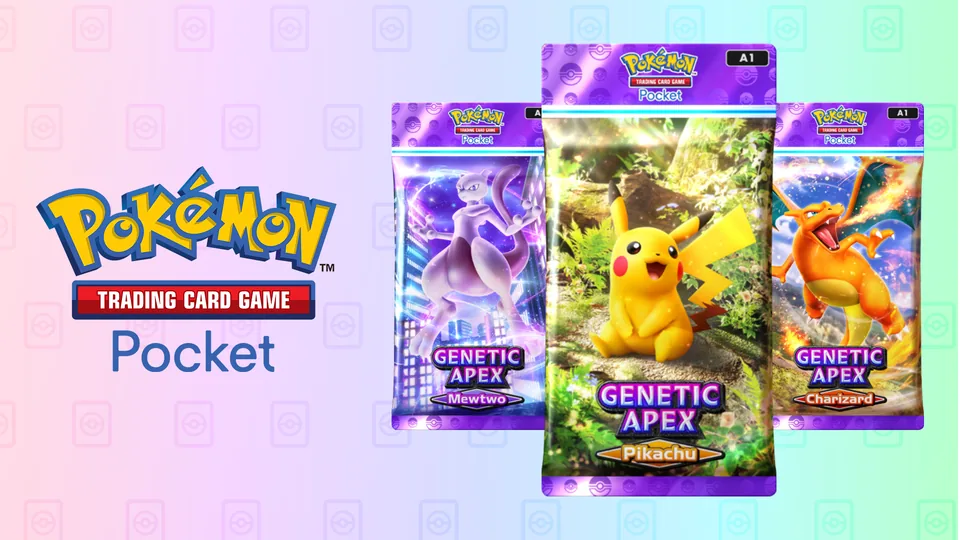 Three real Genetic Apex booster packs, the launch set's Mewtwo, Pikachu, and Charizard covers. Every pack opened, from any set, earns 5 Pack Points the same way.
GODEEPER: Haven't learned the actual rules of the card game yet? Start with the fundamentals before you worry about pack economy. Pokemon TCG Pocket Beginner Guide
Step-by-Step: Building a Collection as a New F2P Player
You don't need a spreadsheet for this, but you do need a plan. Here's the order that actually works if you're starting from zero and don't intend to spend money.
1. Claim your free packs every single day before anything else. Two free Booster Pack openings reset daily whether you use them or not, and they don't stack up if you skip a day. Missing a day is a permanently lost 10 Pack Points that you never get back. Make opening your packs the first thing you do when you open the app, the same way you'd check a daily login bonus in any other mobile game.
2. Pick one target card and confirm its exact Pack Points cost before you save anything. Don't start banking points with a vague "I want good cards" goal. Look up whether the card you want is a common, uncommon, rare, or one of the top-tier pulls, because the difference between a 35-point card and a 2,500-point card should completely change your plan. Saving blind is how players end up with a pile of points that don't add up to anything specific.
3. Open packs from whichever set actually contains your target card, since points don't transfer between expansions. This sounds obvious once you know the rule about Pack Points, but it's the single most common mistake new players make. If your dream card is in an older set and you keep opening the newest one because it's shiny and new, you are making zero progress toward that goal. Redirect your daily packs to the set that holds the card you actually want.
 Team Rocket's Ambition, the current expansion as of this guide. Pack Points earned opening its packs only craft cards from this set, not from Genetic Apex or any other pool.
4. Check your friends list for Wonder Pick opportunities every day, not just when you remember. Wonder Pick doesn't cost you your daily pack allowance, so it's close to free value if you have active friends opening packs regularly. Add players who are active in the game so there's always something worth picking from.
5. Watch specifically for a God Pack showing up on a friend's account. You're not going to pull one yourself with any regularity given the roughly 1-in-2000 odds, so don't plan your strategy around opening one. But if a friend gets lucky, that God Pack can sometimes appear as a Wonder Pick option for you at a higher stamina cost, and it's worth spending the stamina on since the whole pack is stacked with high-rarity cards.
6. Decide about Premium Pass only after you know what you're saving toward, not out of habit. The subscription buys you a third daily pack, which means 15 Pack Points a day instead of 10, roughly 50 percent faster progress toward whatever you're crafting. Whether that's worth a recurring real-money subscription depends entirely on how close you are to your target and how much the extra speed matters to you.
Tips for Faster F2P Progress
Do the math before you commit. A 35-point common and a 2,500-point chase card are not the same kind of goal. Know which tier you're actually saving for so you're not surprised three weeks in.
Pick one lane and stay in it. Splitting your daily packs across three different sets because each one has something interesting means slow progress toward all three and none of them finished quickly. Concentrate.
Treat Wonder Pick as a bonus, not a plan. It's good free value on top of your daily packs, but the stamina cost on anything worthwhile climbs fast, and you can't build a whole strategy around random friend luck.
Reevaluate before renewing Premium Pass. The extra pack is real value, but it's ongoing real money for an ongoing pace boost. If you've already crafted your target card, there's no shame in dropping the subscription until the next set gives you a new one worth chasing.
Don't treat this as an all or nothing choice. You don't have to pick between spending zero dollars ever and subscribing every month forever. Some players run Premium Pass only during the month their target card's set is active, then pause it. That's a completely reasonable approach.
GODEEPER: Want the complete picture of every mechanic, set, and system in the game beyond just the F2P economy? Pokemon TCG Pocket Complete Guide
Common Mistakes New F2P Players Make
Saving points broadly instead of picking one target. Vague saving is the single biggest reason players feel like they're never making progress. Pick the card, check its cost, save with intent.
Assuming points pool across sets. They don't, ever. This is the mistake I made in my first two weeks, and it cost me real progress toward a card I actually wanted because I'd been opening the wrong set's packs the whole time.
Treating Premium Pass as a guarantee. The subscription buys you a third pack a day. It does not guarantee a single specific pull. It speeds up your Pack Points accumulation and gives you more chances, nothing more.
Skipping Wonder Pick because it feels complicated. It costs you nothing but stamina and a couple of taps. Ignoring it means leaving free value on the table for no real reason.
Expecting a God Pack. At roughly 1-in-2000 odds, planning your whole strategy around pulling one yourself is not realistic. Treat it as a nice surprise, not a plan.
Related Reading
- Best Anime TCG to Play in 2026: if you're weighing Pokemon TCG Pocket against the physical anime card games this site covers, this ranking is the place to start.
- One Piece TCG vs Yu-Gi-Oh vs Pokemon: Which Anime TCG: a head to head look at how the mainline physical Pokemon TCG compares to two other anime card games.
- Dragon Ball Fusion World vs Pokemon TCG: Which to Play: useful if you're deciding whether to add a physical anime TCG alongside the free mobile app.
- Pokemon TCG Pocket Meta Tier List: once you've saved up pack points, this is what to actually spend them chasing.
Frequently Asked Questions
Is Pokemon TCG Pocket actually free to play? Yes. Every account gets 2 free Booster Pack openings daily with no purchase required, plus free Wonder Pick attempts using stamina that regenerates over time. Nothing is locked behind a paywall to simply play and open packs; spending only speeds up collection progress.
How many Pack Points do you earn per pack in Pokemon TCG Pocket? Every Booster Pack opened earns exactly 5 Pack Points, regardless of what cards you pull. Two free daily packs bank 10 points a day; a Premium Pass subscriber opening 3 packs banks 15 points a day.
How much does it cost to craft a card with Pack Points? Costs scale hard by rarity. Common cards run around 35 points. The rarest cards in a set can cost 500, 1,250, or a full 2,500 points, so crafting a chase card takes sustained, targeted saving.
Do Pack Points carry over between different expansions? No. Pack Points are locked to the specific pack pool they were earned from. Points from one expansion cannot be spent crafting a card from a different set, so there's no pooling your whole account's points toward one goal card.
What is Wonder Pick in Pokemon TCG Pocket? Wonder Pick lets you spend a stamina-like resource for one random pull from a pack a friend or other player already opened, instead of opening a fresh pack yourself. Stamina cost scales with the visible rarity of cards in that pack.
What is a God Pack in Pokemon TCG Pocket? Officially called the Rare Pack, it's a roughly 1-in-2000 (0.05%) pull where all five card slots come up Art Rare or higher. It can occasionally appear as a pricier Wonder Pick option if a friend on your list opens one.
Is the Premium Pass subscription worth buying? It depends on your goal. Premium Pass adds a third daily pack, roughly 50 percent more Pack Points per day, plus other subscriber perks. It's a real-money monthly subscription, so weigh it against how close you already are to your target card rather than subscribing by default.
References
- Pokemon TCG Pocket official game page: The Pokemon Company's official page for the app.
- A Guide to Collecting Cards and Using Wonder Picks: Official Pokemon.com strategy article covering Wonder Pick.
- Pokemon TCG Pocket on the App Store: Official app listing.
- Pack Points explained, Pokemon Zone: Dedicated breakdown of crafting costs by rarity.
- Pokemon Trading Card Game Pocket, Bulbapedia: Community-maintained reference wiki.
- r/PTCGP on Reddit: Community discussion and F2P strategy threads.
Was this guide helpful?
About the author
Beginner guides and anime crossover
Pen name for the Shonen TCG desk's beginner guides, starter decks and anime-to-card-game explainers.
- Rules checked against the official rulebook and card text
- Every claim traced to a cited source
- Opinions marked as ours, with the reason
Keep reading

Mega Lucario ex Deck Guide: 3,971 Matches, 49% Win Rate
Guides · 13 min
Pokemon TCG Pocket Meta Tier List: Altaria Espeon Leads
Guides · 10 min

Pokemon TCG Pocket Guide 2026: Rules, Decks, and Meta
Guides · 14 min
How to Play Pokemon TCG Pocket: Full Beginner Rules Guide
Guides · 14 min

Mega Altaria ex Espeon Deck Guide: Sleep Meta Build
Guides · 11 min

Miraidon ex Magnezone Deck Guide: Pokemon TCG Pocket
Guides · 14 min

Suicune ex Baxcalibur Deck Guide: Pokemon TCG Pocket
Guides · 15 min

Mega Sceptile ex Greninja Deck Guide: Pokemon TCG Pocket
Guides · 13 min
Disclaimer
This article is published for informational and entertainment purposes. It does not constitute professional financial, legal, or technical advice. Game performance, online services, patch schedules, and store listings change. Verify critical details (pricing, system requirements, regional availability) with publishers and storefronts before you buy. Affiliate links, where present, help support our editorial work and are labelled in our affiliate disclosure.