

Shonen TCG · Guides
Best TCG Binders and Portfolios 2026: Side-Load Guide
Best TCG binders and portfolios for 2026, why side-loading beats top-loading, real brands and prices, and 9-pocket vs 12-pocket for anime TCG collections.
Picking between the best TCG binders and portfolios comes down to one spec most buyers skip: I've watched a binder get picked up by one corner at a locals table and dump six cards face-down onto a sticky floor, and every single time it's been a top-loading binder. Side-loading binders don't do that, and that one difference is most of what actually matters when you're picking a binder to hold a growing One Piece TCG, Union Arena, Disney Lorcana, Dragon Ball Fusion World, or Riftbound collection.
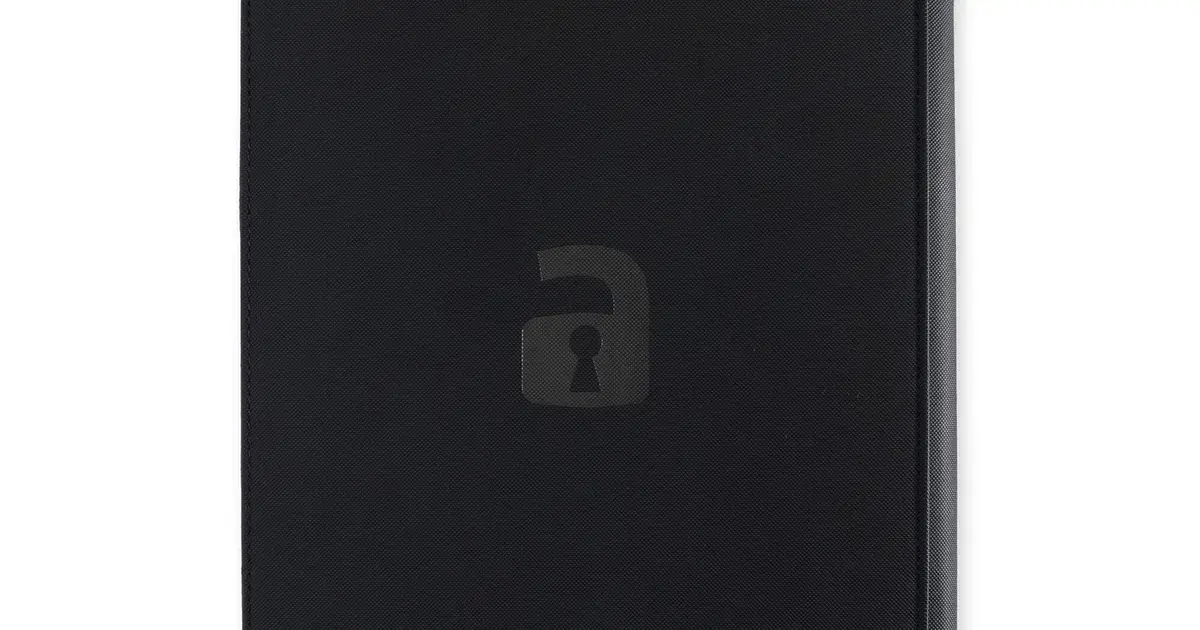
TL;DR: Buy side-loading pages, not top-loading, because top-loading pockets let cards slide out when the binder tips or gets picked up wrong. 9-pocket is the right size for most collectors, better visibility per page than 12-pocket without the extra bulk. Vault X's 9-Pocket Exo-Tec Zip ($29.99) is the strongest overall pick, it's the rare page that actually fits double-sleeved cards. Ultra Pro's Premium 9-Pocket PRO-Binder with strap closure ($35.99) is the pick if you want a padded leatherette cover over Vault X's technical zip case. Always check for acid-free, PVC-free construction; cheap PVC pages can degrade card surfaces over time.
What's the Best Binder for a TCG Collection? (Quick Answer)
Side-loading, 9-pocket, acid-free and PVC-free construction. Vault X's Exo-Tec Zip line at $29.99 is the strongest pick if you want one binder that fits both single- and double-sleeved cards and closes fully with a zip. Ultra Pro's Premium PRO-Binder at $35.99 is the right call if you want a padded leatherette cover with a classic book-like feel and don't need the zip seal.
Key Takeaways
- Side-loading pockets are strictly better than top-loading for a binder that actually gets handled, top-loading pockets let cards slide out when the binder is tipped, dropped, or stored upside down.
- 9-pocket pages are the standard balance of visibility and capacity for most anime TCG collectors; 12-pocket holds more per page but the smaller pockets crowd full-art and Manga Rare cards.
- Vault X's 9-Pocket Exo-Tec Zip ($29.99) is one of the few lines built to fit double-sleeved cards without forcing the pocket.
- Ultra Pro's Premium 9-Pocket PRO-Binder with strap closure ($35.99) trades Vault X's zip seal for a padded leatherette cover, pick it for the classic book-like feel, not to save money.
- Always confirm acid-free, PVC-free construction before buying, it's an archival concern, not just marketing language.
- A 20-page, 9-pocket binder holds 360 cards; real capacity across the market runs from roughly 180 to 720 cards depending on page count.
Overview: Why Side-Loading Is the Only Real Decision That Matters
Every binder buying guide talks about brand, color, and pocket count first. Those matter less than one structural choice: does the pocket open at the top, or toward the spine.
A top-loading pocket, the kind that opens along the outer edge of the page, relies on gravity and a snug fit to keep a card in place. Tip the binder, drop it, or store it on its side on a shelf for a few months, and cards work their way loose. A side-loading pocket opens toward the spine instead, so the same tipping and handling that dislodges a top-loading card does nothing to a side-loading one. This isn't a marginal upgrade. It's the difference between a binder that protects your collection and one that occasionally donates cards to the floor.
Every brand worth buying in 2026, Vault X, Ultra Pro, and Gamegenic among them, makes side-loading pages standard. If you're shopping and a binder doesn't specify side-loading, assume it's the older top-loading style and skip it.
GODEEPER: Not every pocket deserves the same page. Knowing which rarity tier a pull sits in changes whether it's worth a dedicated binder page at all. One Piece TCG Card Rarities Explained →
Vault X 9-Pocket Exo-Tec Zip: The Strongest Overall Pick
Vault X's Exo-Tec Zip binder is the rare product in this category that solves a problem most competitors don't even attempt: it's built to fit both single-sleeved and double-sleeved cards without forcing the pocket. That matters directly for anyone running a double-sleeved One Piece TCG or Riftbound collection, where a standard binder page is often sized for single-sleeving only and stresses at the seams the moment you try to fit anything thicker.
The rest of the construction backs up the $29.99 price. The cover is padded and water-resistant, a real consideration if a binder ever ends up in a bag during a rainy walk to locals, and Vault X states the pages are archival-safe, acid-free, and PVC-free. The zip closure seals the whole binder shut, keeping dust out and keeping pages from sliding loose if the binder gets stored on its side or knocked over.
The tradeoff is size and weight. A fully zipped binder with padded covers is bulkier than a strap-closure portfolio, which matters if you're carrying it in a backpack alongside a deck box, dice, and a playmat rather than leaving it on a shelf.
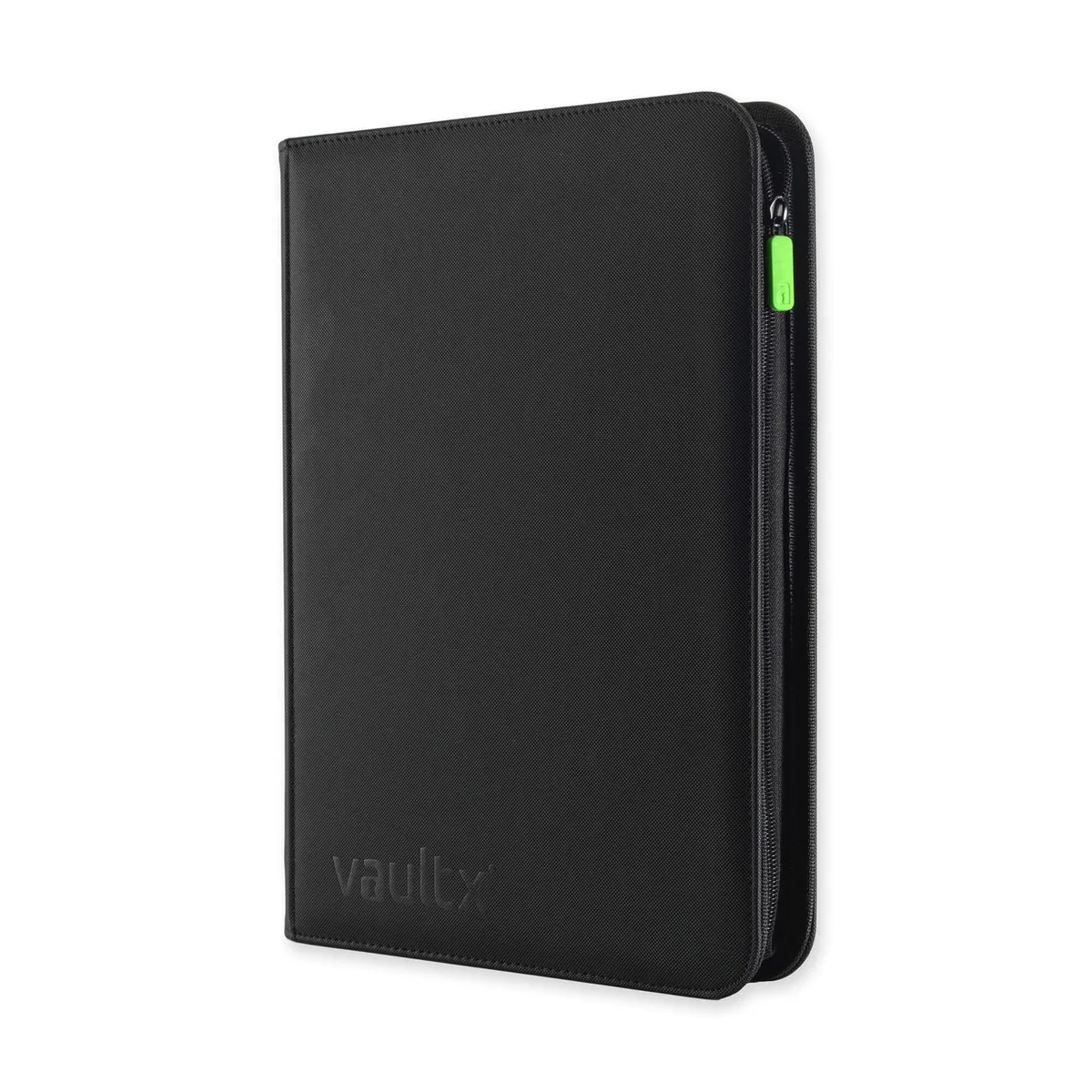 Opened flat, the 3x3 pocket grid is what "9-pocket" actually looks like on the page, each sleeve opens toward the spine, not the outer edge.
Ultra Pro Premium 9-Pocket PRO-Binder: The Leatherette Alternative
Ultra Pro's Premium 9-Pocket PRO-Binder with strap closure runs $35.99, a few dollars more than the Vault X Exo-Tec Zip, so this isn't the budget pick, it's the pick for collectors who want a padded leatherette cover and a classic book-like feel instead of a technical zip case. It carries the same archival-safe, acid-free, non-PVC construction that matters for long-term card health, just without the zip seal.
Ultra Pro's Vivid line, a separate 9-pocket option in the same family, adds a low-friction black backing between pockets specifically to reduce card-on-card rubbing when pages are flipped repeatedly. That's a small detail, but it's the kind of thing that shows up as surface wear on a page you flip through every week for a year.
The strap closure is the real limitation compared to Vault X's zip. It holds the binder shut for normal shelf storage, but it doesn't seal the edges the way a full zip does, so it's a better fit for a collection that mostly stays at home than one that travels to every locals event.
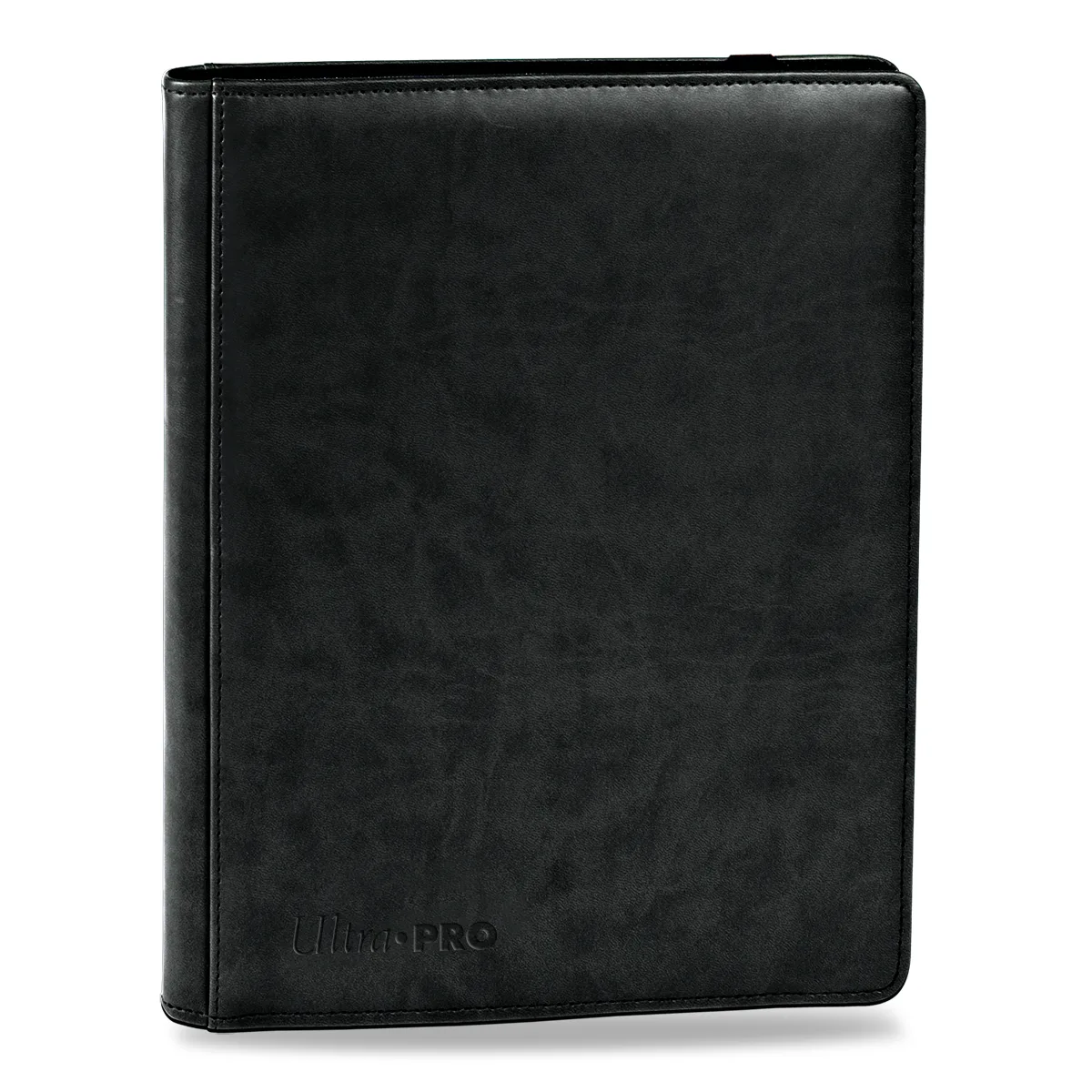 The padded leatherette cover gives this binder a book-like feel that Vault X's technical zip case doesn't try to match.
GODEEPER: Building your first deck before you worry about displaying your collection? One Piece TCG Beginner Guide 2026 →
Analysis: 9-Pocket vs 12-Pocket, and What Acid-Free Actually Protects
9-pocket and 12-pocket pages solve the same problem, holding sleeved cards for display, at two different tradeoffs. A 9-pocket page shows fewer cards per page but gives each card more room, which matters for anime TCG cards with full-bleed alt-art prints where a cramped pocket makes the art harder to appreciate at a glance. A 12-pocket page fits more cards into the same binder, useful for a large bulk collection you're organizing rather than displaying, but the individual pockets run noticeably smaller.
For most collectors building a binder around chase pulls, Manga Rares, SEC cards, Enchanted Lorcana singles, the extra breathing room of a 9-pocket page is worth the lower per-page count. If you're organizing hundreds of commons by set rather than showing off specific cards, 12-pocket earns its bulk.
The acid-free, PVC-free question is less about aesthetics and more about chemistry. PVC-based plastic can leach plasticizer compounds onto whatever it's in prolonged contact with, and a card sitting in a PVC pocket for years is exactly that kind of prolonged contact. The visible result is a slightly tacky or discolored card surface that shows up gradually enough that most people blame normal wear instead of the binder. Vault X, Ultra Pro, and Gamegenic all explicitly market their current lines as acid-free and PVC-free specifically because this used to be a real problem with older binder pages, and it's worth checking for that language on anything you buy that doesn't come from one of the well-known brands.
| Binder | Price | Pocket Count | Standout Feature |
|---|---|---|---|
| Vault X 9-Pocket Exo-Tec Zip | $29.99 | 9 | Fits double-sleeved cards, water-resistant zip cover |
| Ultra Pro Premium 9-Pocket PRO-Binder (strap) | $35.99 | 9 | Padded leatherette cover, still acid-free/PVC-free |
| Gamegenic Zip-Up | varies by retailer | 9 or 12 | Reinforced rigid covers resist warping |
GODEEPER: Not sure if a specific pull is worth building a binder page around? One Piece TCG Manga Rare Cards Guide →
How Many Cards Actually Fit
A single 9-pocket page holds 18 cards, 9 per side. A 20-page binder, a common mid-size option across brands, holds 360 cards at that rate. Binders on the market generally run from around 10 pages up to 40-plus, so total capacity for a single binder spans roughly 180 cards on the small end to more than 700 on a large one. If your collection is already past what one binder holds, that's the point where long-term bulk storage designed for volume rather than display starts making more sense than adding a second binder.
Once you've settled on a chase card worth building a whole page around, protecting it individually still matters even inside a binder page, a binder pocket isn't rigid the way a toploader or one-touch holder is, and a card that's valuable enough to grade should go straight into a grading service submission rather than a binder page at all.
Common Mistakes When Buying a Binder
Buying top-loading pages without realizing it. Older stock and budget off-brand binders still sell top-loading pages, and the listing doesn't always say so clearly. If "side-loading" isn't mentioned anywhere in the product description, assume it isn't.
Overstuffing double-sleeved cards into single-sleeve pockets. Most binder pages are sized for one standard sleeve. Forcing a double-sleeved card in stretches the pocket seam, and repeated stretching eventually tears it. Vault X's Exo-Tec line is one of the few built to actually handle this; most others aren't.
Ignoring acid-free labeling on off-brand binders. A binder that doesn't advertise acid-free, PVC-free construction anywhere probably doesn't have it. This matters more the longer a card sits untouched in the same pocket.
Buying 12-pocket for display purposes. 12-pocket is a genuinely good choice for bulk organization, but it's the wrong pick if the goal is showing off full-art chase pulls, the smaller pockets undersell exactly the cards you'd want to show off.
Related Reading
- One Piece TCG Trade Guide: How to trade cards fairly once they're organized enough to know what you actually have.
- One Piece TCG Sleeves and Accessories: What to Buy First: The starter gear order for a new collection, before a binder is even the priority.
- OP-16 Collectors Guide: SEC, Manga Rare, and alt-art cards worth building a dedicated binder page around.
- Riftbound Card Values: Chase Promos to Playable Prints: What a chase pull is actually worth before you decide it earns its own binder page.
Frequently Asked Questions
Should I buy a side-loading or top-loading binder? Side-loading. A top-loading pocket opens at the top edge, so a binder held upside down or dropped can spill cards straight out. Side-loading pockets open toward the spine, so gravity and normal handling can't pull a card free.
What's the best pocket count for a TCG binder? 9-pocket for most collectors. It balances how many cards you can see per page against how bulky the binder gets. 12-pocket holds more per page but the smaller individual pockets crowd full-art and Manga Rare cards.
Do binder pages fit double-sleeved cards? Not always. Vault X's Exo-Tec pages are built to fit single- and double-sleeved cards without forcing them, which is unusual. Most budget pages are sized for a single standard sleeve only.
Is a zip-closure binder worth it over a strap closure? For a binder that travels, yes. A zip fully seals the edges against dust and against pages sliding out. A strap closure is lighter and cheaper and fine for a binder that mostly sits on a shelf.
Are cheap binder pages actually bad for cards? The material matters more than the price tag suggests. PVC-based pages can leach plasticizers onto card surfaces over months or years. Brands worth buying explicitly advertise acid-free, PVC-free construction.
How many cards fit in a full TCG binder? A standard 9-pocket binder with 20 pages holds 360 cards. Most binders range from roughly 10 to 40 pages, so real capacity runs from about 180 to 720 cards depending on the page count.
References
- Vault X Exo-Tec 9-Pocket Zip Binder: official product line, price and material specs.
- Ultra Pro 9-Pocket Portfolios: official product line, price and Vivid backing detail.
- Gamegenic Zip-Up Binder: official product line, reinforced-cover construction.
About the author
Card values and pull rates
Pen name for the Shonen TCG desk's card value, pull rate and collector market coverage.
- Prices read from TCGplayer and Cardmarket listings, dated
- Pull rates tied to a stated sample
- Opinions marked as ours, with the reason
Keep reading
Best TCG Playmats 2026: Stitched Edge Buying Guide
Guides · 10 min

Best TCG Dice and Counters 2026: What You Actually Need
Guides · 12 min
Best Deck Boxes for TCG Storage in 2026: Full Buying Guide
Guides · 7 min
OP-18 pre-order guide: dates, price and legality explained
Guides · 11 min

Riftbound Ornn Deck Guide: Fire Below the Mountain
Guides · 13 min

Union Arena Attack on Titan Vol.2 Buying Guide: What to Buy
Guides · 14 min

Union Arena Re:ZERO Buying Guide: Box, Deck, or Singles
Guides · 6 min
Best TCG Sleeves 2026: Dragon Shield vs KMC vs Ultra Pro
Guides · 13 min
Disclaimer
This article is published for informational and entertainment purposes. It does not constitute professional financial, legal, or technical advice. Game performance, online services, patch schedules, and store listings change. Verify critical details (pricing, system requirements, regional availability) with publishers and storefronts before you buy. Affiliate links, where present, help support our editorial work and are labelled in our affiliate disclosure.