

Shonen TCG · Guides
OP-16 Collectors Guide: SEC, Manga Rare, Alt-Art Cards
TL;DR: OP-16 collectors guide for The Time of Battle. Current Limitless records show three Admiral Manga printings, two SEC Character cards, and a separate Three Admirals Super Alt-Art treatment. A September 17, 2026 USD snapshot places the Manga printings above the SEC cards, but prices move quickly and are not a forecast.
Last checked: Bandai's OP-16 product page and current Limitless card records were checked on September 18, 2026. Market prices are dated snapshots. Verify the exact printing, language, condition, and marketplace before buying, selling, or grading.
OP-16 collectors guide: quick answer
The official OP-16 product page identifies The Time of Battle as a Paramount War set released June 12, 2026. It calls out two SEC debuts for Portgas.D.Ace and Marshall.D.Teach, and says the set's Super Alt-Art feature is the Three Admirals.
The current market adds an important distinction. Limitless card records list a manga printing for Sakazuki, Kuzan, and Borsalino. Collectors commonly call those Manga Rare cards, while the official product page uses a broader rarity list that includes Special and Treasure Rare rather than using Manga Rare as a separate line. Use both the card record and the actual printing when you compare prices.
The short hierarchy is:
- Manga printings: Sakazuki, Kuzan, and Borsalino are the highest-priced OP-16 printings in the current snapshot.
- SEC Characters: Ace and Marshall.D.Teach are premium Character cards, separate from their Leader cards.
- Super Alt-Art and other parallel printings: The Three Admirals have special full-color treatments at lower current prices than their Manga printings.
- Base and playable cards: Standard copies are useful for play and set completion, but they should not be priced like the chase printings.
That order is a dated market observation, not a permanent rarity ranking or investment promise.
OP-16 collectors guide: current chase hierarchy
The table below uses USD figures shown on Limitless card pages when checked on September 17, 2026. These are marketplace snapshots, not guaranteed sale prices. Language, condition, seller fees, shipping, and the exact parallel can change the result.
| Printing | Card | Snapshot price | What to verify |
|---|---|---|---|
| Manga | 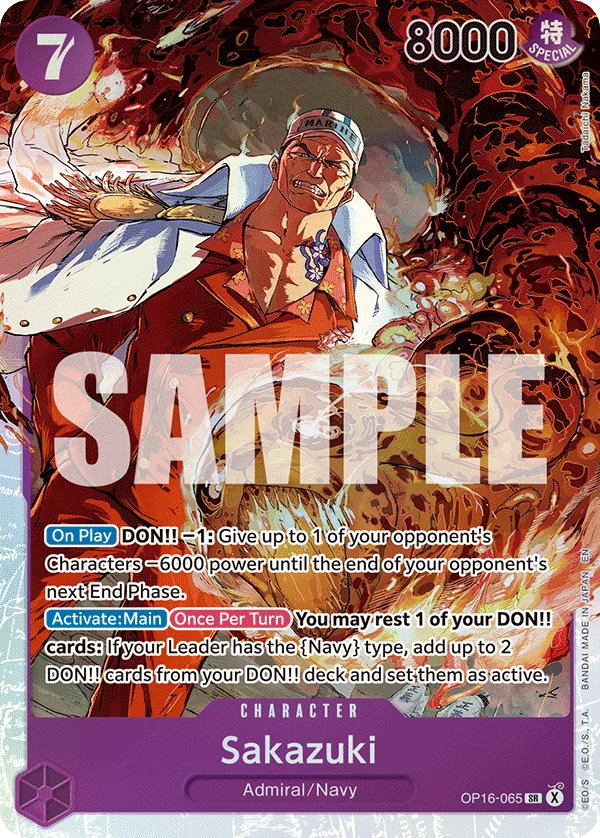 OP16-065OP16-065Shop on TCGplayer Sakazuki OP16-065OP16-065Shop on TCGplayer Sakazuki | about $1,126.76 | Confirm the Manga printing, not the base or alternate-art copy |
| Manga | 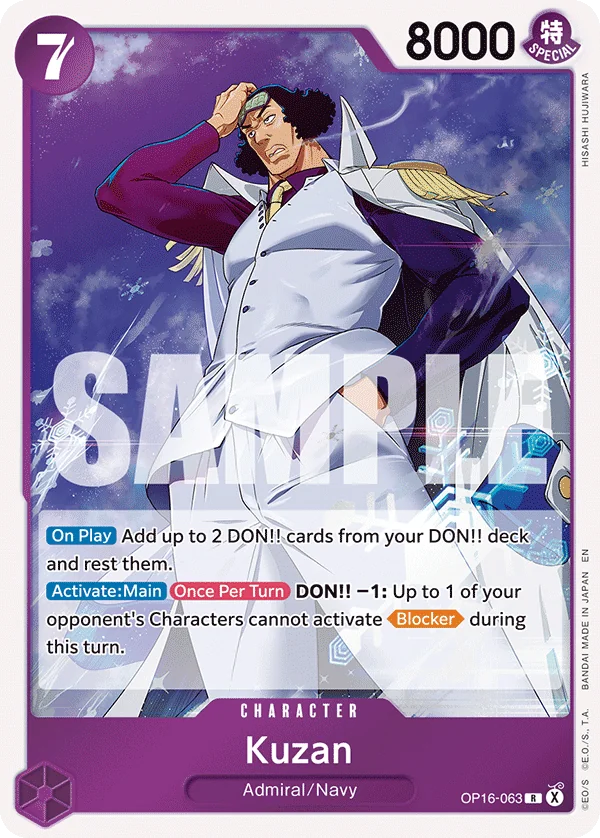 OP16-063OP16-063Shop on TCGplayer Kuzan OP16-063OP16-063Shop on TCGplayer Kuzan | about $1,109.24 | Confirm the card number and printing label |
| Manga | 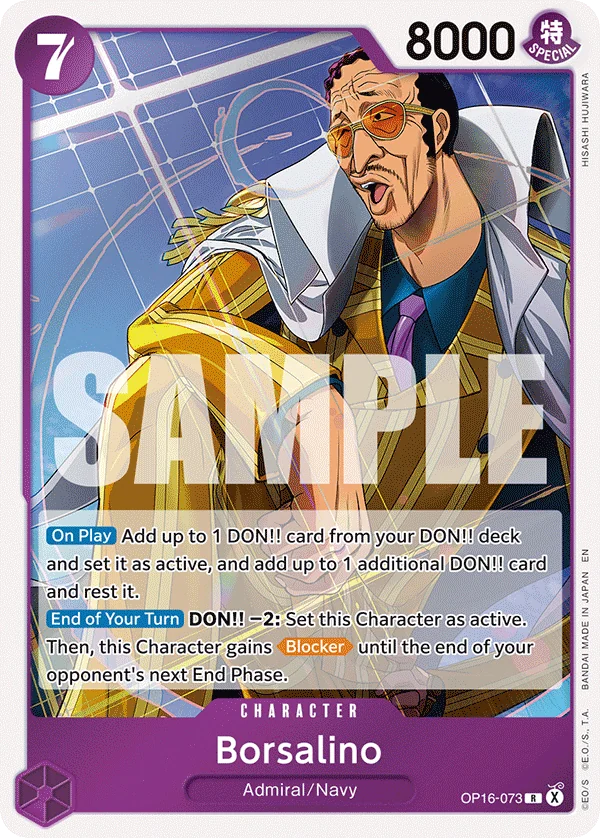 OP16-073OP16-073Shop on TCGplayer Borsalino OP16-073OP16-073Shop on TCGplayer Borsalino | about $1,043.28 | Compare raw condition and language |
| SEC base | 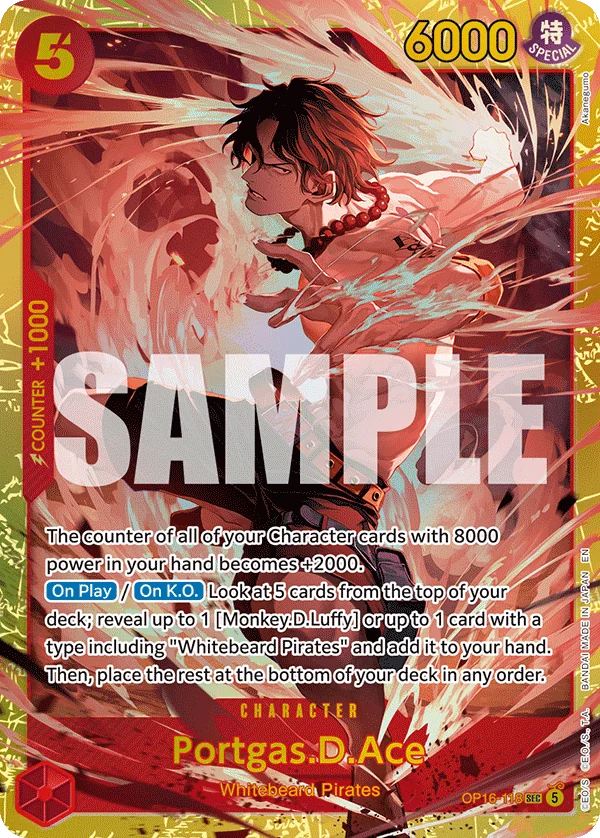 OP16-118OP16-118Shop on TCGplayer Portgas.D.Ace OP16-118OP16-118Shop on TCGplayer Portgas.D.Ace | about $17.11 | Separate base SEC from alternate art |
| SEC alternate art | Portgas.D.Ace OP16-118 | about $27.13 | Check the exact parallel in the listing |
| SEC base | 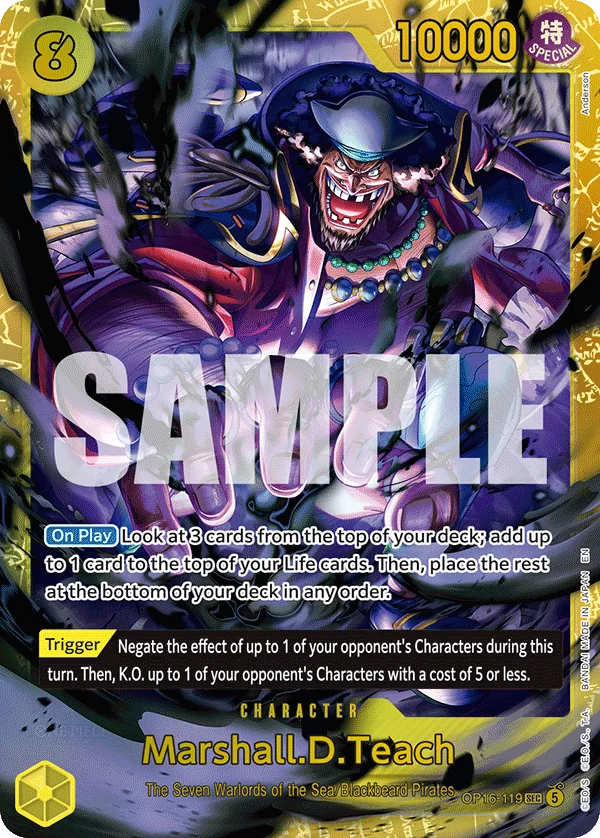 OP16-119OP16-119Shop on TCGplayer Marshall.D.Teach OP16-119OP16-119Shop on TCGplayer Marshall.D.Teach | about $33.06 | Check condition and English or Japanese printing |
| SEC alternate art | Marshall.D.Teach OP16-119 | about $47.54 | Do not confuse it with the Leader OP16-080 |
The figures come from the Sakazuki card record, Kuzan card record, Borsalino card record, Ace SEC record, and Marshall.D.Teach SEC record. Refresh those pages before acting on any number.
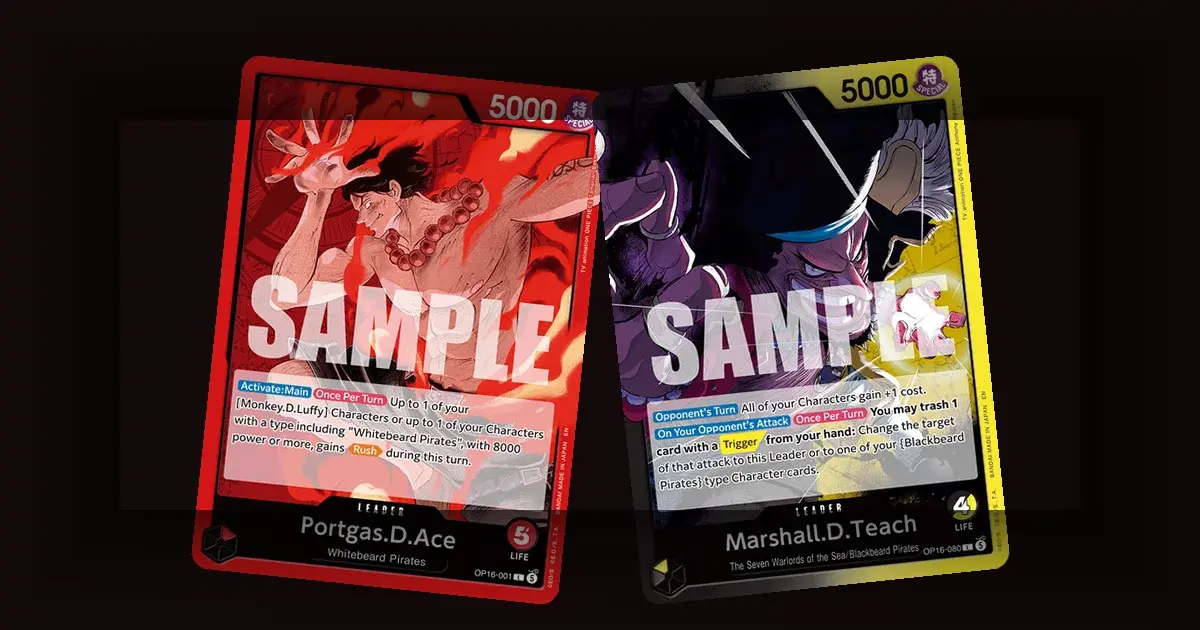
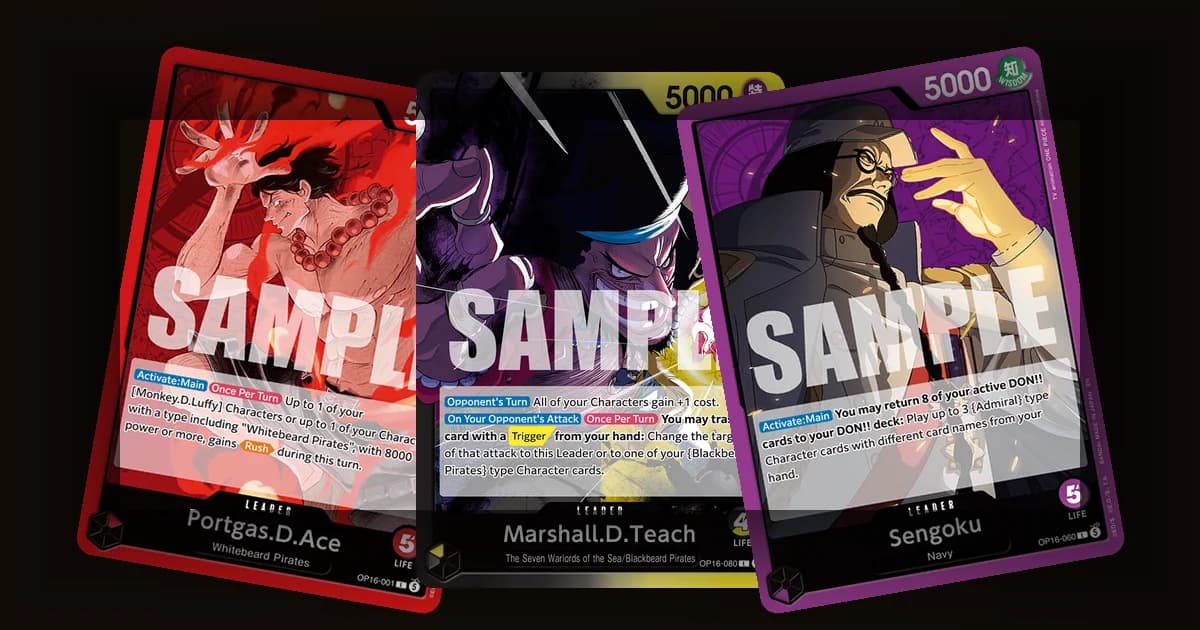
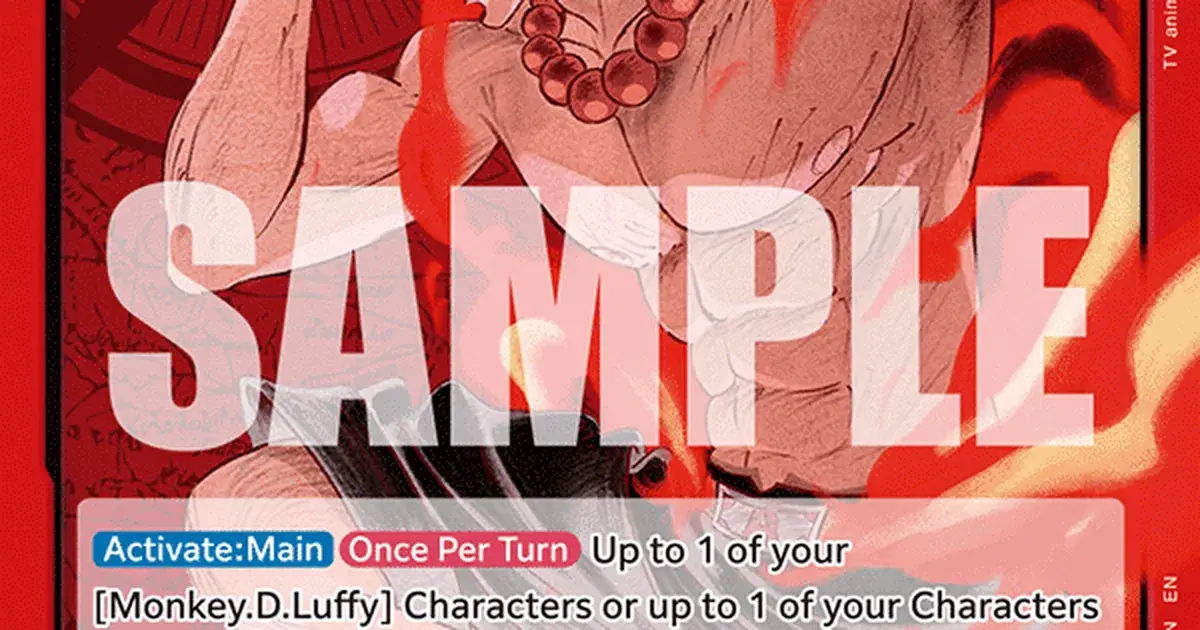
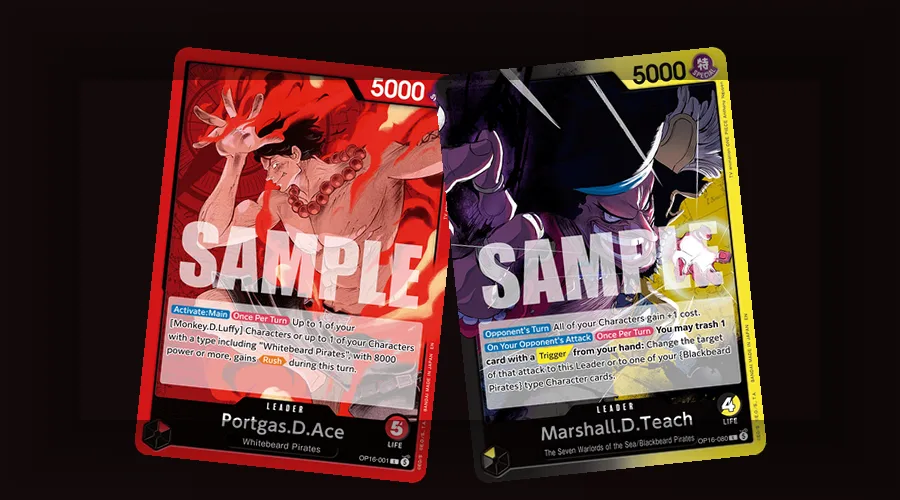 These real OP-16 sample Leaders show Portgas.D.Ace and Marshall.D.Teach. They are the regular Leader cards, not the SEC Character cards or the Manga and Super Alt-Art printings in the price table.
What each OP-16 rarity label means
Secret Rare Character cards
The two SEC cards are OP16-118OP16-118Shop on TCGplayer Portgas.D.Ace and OP16-119OP16-119Shop on TCGplayer Marshall.D.Teach. They are Character cards, not Leader versions. That distinction matters when you compare a listing: Ace's Leader is OP16-001 and Teach's Leader is OP16-080, while the SEC Character cards use OP16-118 and OP16-119.
The product page confirms that these characters debut as SEC cards. The current card records show that both are legal in Standard and Extra formats, but legality and price are separate questions. A card can be an attractive collectible without being a necessary tournament card, and a strong deck result can change demand without making a high price permanent.
Manga printings
Limitless currently exposes a manga printing for OP16-065OP16-065Shop on TCGplayer Sakazuki, OP16-063OP16-063Shop on TCGplayer Kuzan, and OP16-073OP16-073Shop on TCGplayer Borsalino. These are the three Admiral cards associated with the OP-16 Manga market category. Do not repeat the old speculation that Ace, Whitebeard, or Akainu were only expected Manga candidates. The set is already released and the current card records identify the three printings.
The market label is useful for searching, but card number and printing still control a transaction. Ask for clear front and back photos, confirm the printed card number, and make sure the seller is not using a Manga image for a base or alternate-art listing.
Super Alt-Art
Bandai's product page specifically highlights the Three Admirals as the set's Super Alt-Art feature. Limitless records also show separate alternate-art and Manga entries for the relevant card numbers. The full-color alternate art can be desirable without carrying the same price as the Manga printing, so ask which parallel the listing contains.
Base cards and playable copies
Base copies still matter for deck construction, set completion, and lower-cost collecting. A card such as Sakazuki can have different demand pools for the base play copy, the alternate art, and the Manga printing. Never use a price from one printing to value another.
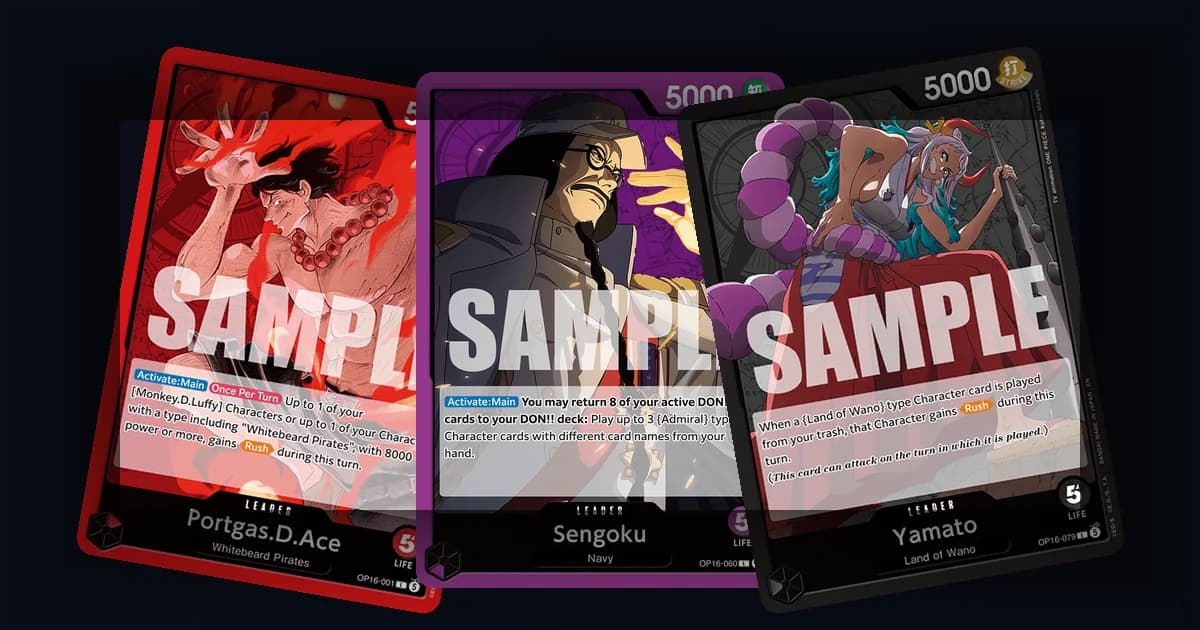
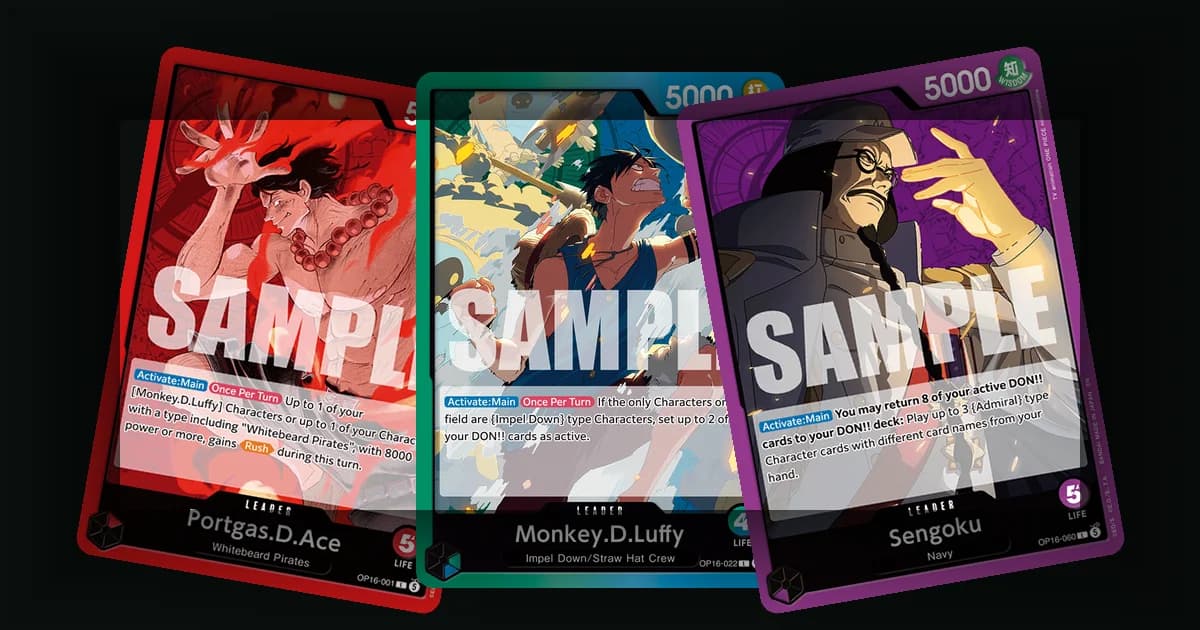
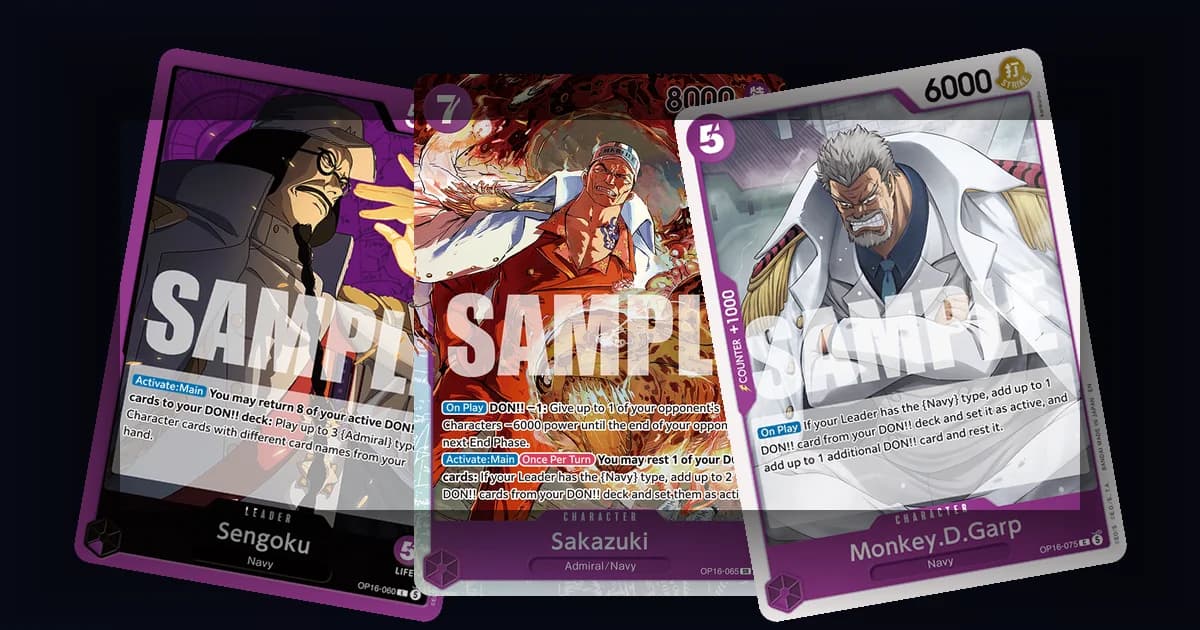
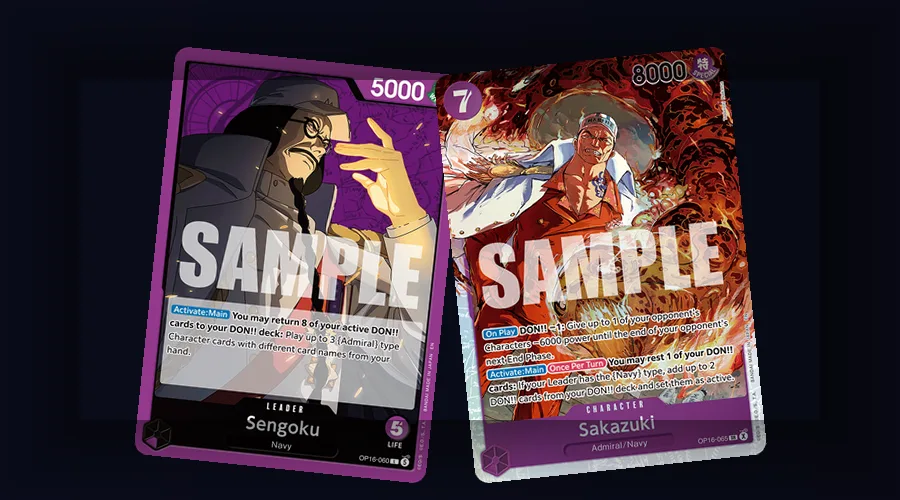 These real OP-16 sample cards show Sengoku and Sakazuki. They are representative base sample assets, not the Super Alt-Art or Manga versions discussed above.
Pull rates and sealed product
Bandai's product page lists 126 plus 1 card types, the $4.99 per pack MSRP, and the product's rarity categories. It does not publish a guaranteed box pull rate for each SEC, Super Alt-Art, or Manga treatment on that page. Avoid presenting community case-opening estimates as official odds.
Sealed product offers an experience and a chance at any available card, but variance is high. If your goal is a specific SEC or Manga printing, a single is usually the more controlled purchase because you select the exact card and condition. If your goal is the memory of opening a Paramount War set or building a complete binder, one or two sealed products can make sense as entertainment. Set a spending limit before opening.
Sealed boxes also have a different risk profile from singles. A box price can move with supply, new set releases, and chase-card demand. A chase price can fall while sealed inventory rises, or the reverse. Do not assume sealed appreciation just because a set has expensive top cards.
What to collect and what to hold
There is no guaranteed long-term hold, but you can make the decision more deliberate.
Collector-first choices: Choose the art and character you actually want. Manga printings of the Admirals and the two SEC Character cards have clear visual identity, but a high price does not prove future appreciation.
Player and collector demand: A card used in tournament lists can have a second demand pool, while a character with strong recognition can remain interesting after rotation. Neither demand source is permanent. Reprints, a rules change, or a new chase set can move attention elsewhere.
Condition: A raw Near Mint listing is not the same as a graded card. Ask for photos under good light, inspect corners and edges, and treat seller condition labels as claims to verify rather than guarantees.
Price discipline: Compare several recent sold listings in the same language and printing. A single high ask is not a market price. Include shipping, platform fees, taxes, and grading costs when you compare buy and sell decisions.
For broader rotation context, the One Piece TCG meta rotation guide explains why playable demand can change even when a card remains desirable to collectors.
Grading and storage
Grading is a condition and cost decision, not an automatic value multiplier. Before submitting a card, inspect:
- Centering on the front and back
- Whitening on corners and edges
- Scratches, print lines, dents, and surface marks
- The exact grading fee, insurance, shipping, and turnaround time
- Recent raw and graded sales of the same language and printing
Do not grade a card only because it is expensive today. A high-value raw card with a visible defect may not justify the submission cost, while a clean card may still be better kept raw if you are collecting for personal enjoyment. For a process overview, use the One Piece TCG card grading guide and recheck the grading company's current terms before sending anything.
For storage, sleeve a valuable card immediately and use a top loader or magnetic holder that fits without pressure. Keep the collection away from direct sunlight, heat, and high humidity. Store collection copies separately from cards used in a play deck, and record the acquisition date, condition, language, printing, and cost so you can identify the card later.
Buying singles safely
1. Identify the exact printing. Write down the card number, base or parallel treatment, language, and condition before comparing offers.
2. Check the card record. Limitless pages show the card number, legal status, print options, and recent market references. Use them to avoid confusing a Leader with a SEC Character.
3. Compare sold evidence. Look at recent completed sales or a transparent market history instead of treating an active listing as proof of value.
4. Ask for photos. For expensive Manga or SEC cards, request front, back, corners, and surface photos. Do not rely on a stock image for a high-value purchase.
5. Calculate the net cost. Add shipping, taxes, marketplace fees, grading, and insurance. A lower sticker price may not be lower after the full transaction cost.
6. Keep a record. Save the receipt, seller information, date, and photos. That helps with condition disputes and gives your collection a useful history.
Step-by-Step: Building an OP-16 collection
1. Choose the collection goal. Decide whether you want all six Leaders, the complete OP-16 card set, one Admiral Manga printing, SEC Characters, or a character-focused binder. A narrow goal prevents impulsive buying.
2. Complete inexpensive base cards first. Use the official card list or a reliable database to mark what you own. Avoid paying chase-card prices for a base copy just because the card number matches.
3. Buy a specific chase as a single. If the goal is one SEC or Manga printing, compare current listings and condition rather than opening sealed product until variance happens to cooperate.
4. Protect the card immediately. Sleeve it, inspect it, photograph it, and store it safely before deciding whether it belongs in a display, a binder, or a grading submission.
5. Recheck the market before selling or grading. Use the exact printing and current date. Old OP-16 launch estimates and a different parallel are not valid comparables.
Common OP-16 collector mistakes
- Confusing Leader and SEC Character cards: Ace OP16-001 and OP16-118 are different cards, as are Teach OP16-080 and OP16-119.
- Using a Manga price for an alternate art: The same card number can have base, alternate-art, and Manga market entries.
- Treating community pull estimates as official odds: The product page does not publish a guaranteed chase rate.
- Buying from one high listing: An asking price is not proof that the card sells at that number.
- Ignoring language and condition: English, Japanese, raw, Near Mint, and graded copies can have very different markets.
- Assuming a good character makes a good investment: Popularity helps attention, but reprints and new releases can still lower prices.
- Grading without inspecting the card: Centering, edges, corners, and surface determine the risk before the submission fee is paid.
Key takeaways
- OP-16 has two SEC Character cards: Ace OP16-118 and Marshall.D.Teach OP16-119.
- Limitless currently lists Manga printings for the three Admirals: Sakazuki OP16-065, Kuzan OP16-063, and Borsalino OP16-073.
- Bandai's product page highlights the Three Admirals as the set's Super Alt-Art feature and does not publish guaranteed pull rates for each chase treatment.
- A September 17, 2026 Limitless snapshot placed the three Manga printings above the SEC cards, but all prices are volatile.
- Match the exact card number, printing, language, condition, and sale date before comparing values.
- Storage, sold-market research, and a clear collecting goal matter more than a permanent tier list.
GODEEPER: Want the current price table across the set? Read the One Piece TCG Most Expensive Cards guide, then verify every number against the exact printing before buying.
Related Reading
- OP-16 Admiral Manga Rare Guide: Focused coverage of the three Admiral Manga printings.
- One Piece TCG Card Rarities Explained: How SEC, Special, alternate art, and other treatments fit together.
- OP-16 Best Cards to Pull: A set-level pull and playability reference.
- OP-16 Box Opening Strategy: How sealed opening variance changes the collecting decision.
- One Piece TCG Trade Guide: How to compare condition, printing, and net trade value.
Frequently Asked Questions
Q: What are the top OP-16 chase cards? A: Current Limitless records show three Admiral Manga printings, two SEC Character cards, and a separate Three Admirals Super Alt-Art treatment. The order can change as the market moves.
Q: How much is SEC Ace worth? A: The Limitless page showed about $17.11 for the base printing and $27.13 for the alternate art in the September 17, 2026 USD snapshot. Verify current listings and condition before acting.
Q: What are the three OP-16 Manga cards? A: Sakazuki OP16-065, Kuzan OP16-063, and Borsalino OP16-073. Limitless identifies their separate Manga printings alongside the base and alternate-art entries.
Q: Does OP-16 have official pull rates? A: Not for each chase treatment on the official product page. Treat community estimates as estimates rather than a guaranteed box result.
Q: Should I buy sealed or singles? A: Buy singles when you want a specific card and controlled condition. Open sealed product for the experience, set completion, or fun, with a fixed spending limit.
Q: Should I grade an OP-16 chase card? A: Inspect the card first and compare exact raw and graded sales with the current fee, insurance, and turnaround. A high grade is not guaranteed.
Q: Are OP-16 chase cards guaranteed to hold value? A: No. Iconic art and dual collector-player demand can help, but reprints, rotation, new releases, and market supply can change the result.
References
- OP-16 The Time of Battle official product page: Release date, SEC debut, Super Alt-Art feature, MSRP, contents, and official rarity categories.
- Sakazuki OP16-065 card record: Base, alternate-art, and Manga market entries.
- Kuzan OP16-063 card record: Base, alternate-art, and Manga market entries.
- Borsalino OP16-073 card record: Base, alternate-art, and Manga market entries.
- Portgas.D.Ace OP16-118 card record: SEC card text, legality, and market entries.
- Marshall.D.Teach OP16-119 card record: SEC card text, legality, and market entries.
- One Piece Card Game official rules hub: Current rules and organized-play documents.
Was this guide helpful?
Cards in this article
About the author
Card values and pull rates
Pen name for the Shonen TCG desk's card value, pull rate and collector market coverage.
- Prices read from TCGplayer and Cardmarket listings, dated
- Pull rates tied to a stated sample
- Opinions marked as ours, with the reason
Keep reading
OP-16 Box Opening Strategy: How Many Boxes to Open
Guides · 10 min
OP-16 Ace Deck Guide: Whitebeard Pirates Rush Build
Guides · 12 min
One Piece TCG Standard Format Guide 2026: Legal Sets
Guides · 12 min

OP-16 vs OP-15 power level comparison: what changed?
Guides · 11 min
One Piece TCG Trade Guide: How to Trade Cards Fairly
Guides · 13 min
OP-16 Sengoku Deck Guide: Purple Marine Admirals Build
Guides · 13 min
One Piece TCG Budget Competitive Guide 2026 Under $100
Guides · 13 min

One Piece TCG Deck Building Guide: Build From Scratch
Guides · 12 min
Disclaimer
This article is published for informational and entertainment purposes. It does not constitute professional financial, legal, or technical advice. Game performance, online services, patch schedules, and store listings change. Verify critical details (pricing, system requirements, regional availability) with publishers and storefronts before you buy. Affiliate links, where present, help support our editorial work and are labelled in our affiliate disclosure.