

Shonen TCG · Guides
PSA vs BGS vs CGC: Who Really Owns Your Grading Slab (2026)
PSA vs BGS vs CGC in 2026, one company now owns PSA, Beckett, and SGC after a December 2025 buyout, leaving CGC the only independent grader left standing.
If you're weighing PSA vs BGS vs CGC in 2026, the comparison you actually need isn't about grading quality anymore. It's about who signs the checks.
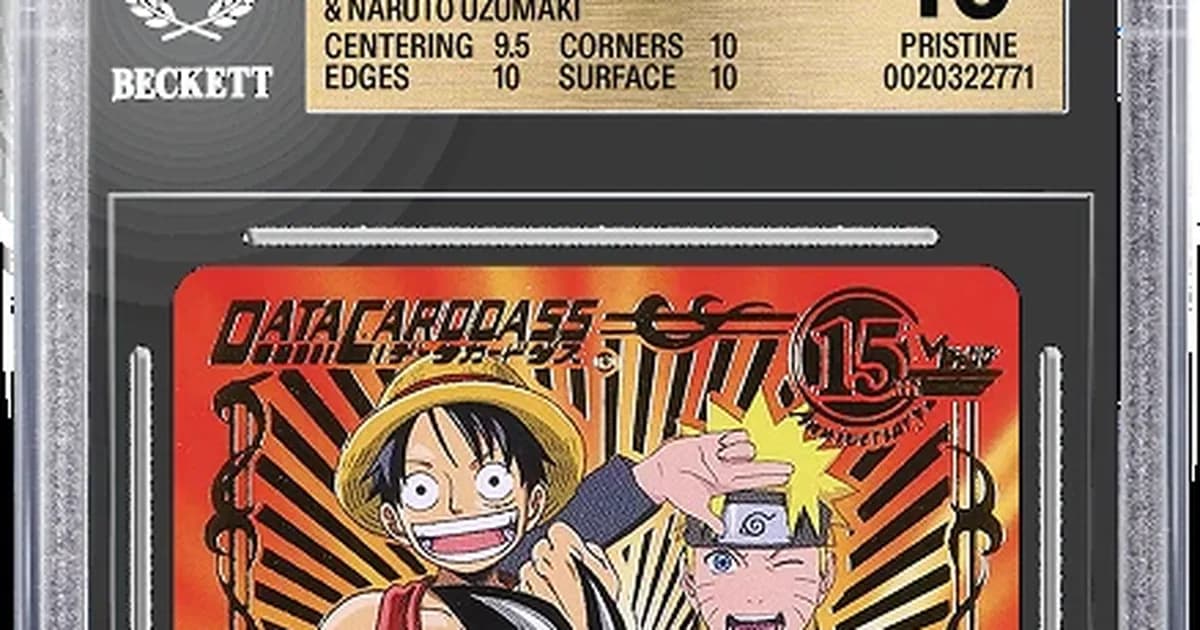
On December 15, 2025, Collectors, the parent company that owns PSA, announced a deal to acquire Beckett Grading Services. That deal landed less than two years after Collectors had already bought SGC in February 2024. Add it up and one company now controls PSA, BGS (Beckett), and SGC, three of the four names collectors compare when deciding where to submit a card. CGC is the only major grading service left that isn't part of that ownership structure.
TL;DR: Collectors, PSA's parent company, acquired Beckett Grading Services on December 15, 2025, after buying SGC in February 2024. PSA, BGS, and SGC are now the same corporate owner, combining for roughly 79% of the trading card grading market according to Sports Collectors Digest. CGC is the only major service still fully independent. Legal experts have raised monopoly concerns, and a member of Congress asked the FTC to investigate days after the deal was announced. For TCG collectors, the practical shift is less about grading quality and more about which service has an actual competitive incentive to hold or cut prices.
PSA vs BGS vs CGC quick answer
PSA is still the deepest resale market for graded TCG cards, CGC remains the fastest and cheapest option with no membership fee, and BGS sits in the middle on price while offering subgrades PSA charges extra for. What changed in late 2025 is ownership, not grading standards: Collectors now owns PSA, BGS, and SGC, while CGC is the only major service with a fully separate owner and, by extension, a separate financial incentive to compete on price and turnaround.
Key Takeaways
- Collectors, PSA's parent company, announced its acquisition of Beckett Grading Services on December 15, 2025, after buying SGC in February 2024.
- PSA, BGS (Beckett), and SGC now share the same corporate owner, combining for about 79% of the overall grading market per Sports Collectors Digest.
- CGC is the only major grading company that remains independently owned, with no ownership tie to PSA, BGS, or SGC.
- Legal experts quoted by Sports Collectors Digest raised monopoly concerns, and a member of Congress called for an FTC investigation days after the deal was announced.
- PSA's cheapest open tier is Regular at $79.99 per card, since its four cheaper Value tiers have been paused since June 2, 2026, with a backlog near 11.85 million cards as of August 11.
- CGC and BGS still don't require PSA's $99-a-year membership, and CGC's published entry tiers remain well under PSA's current floor.
Overview: who actually owns your grading company
Collectors' announcement on December 15, 2025 said Beckett would keep running as a distinct brand, its own grading standards, marketplace, and price guide, under the existing Beckett name. Nothing about the label on a submitted card changes overnight. What changes is who owns the company setting fees, staffing decisions, and submission policy behind that label, and that's the part most grading comparisons still miss.
This wasn't Collectors' first move in this direction. It bought SGC in February 2024, and Sports Collectors Digest has reported SGC shifting toward a smaller, "boutique" grading brand under the same corporate umbrella since that deal closed. Beckett is the second acquisition in the same pattern: buy a competitor, keep the name on the label, fold the ownership into the same parent company. With Beckett added, Collectors now controls three of the industry's top four grading operations by submission volume, a combined share Sports Collectors Digest put at about 79% of the market.
That consolidation didn't pass quietly. Attorneys interviewed by Sports Collectors Digest were blunt about it. Plaintiffs' attorney Paul Lesko told the outlet, "With that market share, yes, I would definitely say that they're a monopoly. Now are they to the grounds of illegal monopoly where antitrust should step in? They're really close." A former FTC analyst quoted in the same piece raised the possibility of a forced divestiture of BGS or SGC if regulators got involved. A member of Congress publicly called for an FTC investigation on December 19, 2025, four days after the acquisition was announced. None of that has produced a regulatory ruling as of this writing, but it's the clearest signal yet that this consolidation is being watched, not waved through.
For One Piece TCG, Dragon Ball Fusion World, or Union Arena collectors specifically, this matters less for any single card's grade and more for what happens to submission pricing, promotional discounts, and backlog handling across three services that no longer have separate owners setting separate strategies.
GODEEPER: Before comparing where to submit a card, know what rarity tier and premium it's actually sitting at. One Piece TCG Card Rarities: 7 Tiers, Manga Rare $1,212 →
PSA vs BGS vs CGC Analysis: Pricing, Backlog, and Ownership
Pricing and membership: what actually differs right now
Any PSA vs BGS vs CGC pricing comparison written before June 2026 is already out of date. PSA still runs the highest floor of the group. Its four cheapest Value tiers, previously priced around $25 to $33 per card, have been paused since June 2, 2026, after a submission spike pushed PSA's backlog past 12 million cards. Regular, at $79.99 per card, is currently PSA's cheapest open tier, and PSA has tied reopening the paused tiers to bringing that backlog down, not to a fixed calendar date. On top of per-card fees, PSA requires an annual membership of about $99 just to submit, a cost neither CGC nor BGS charges.
CGC and BGS both sit well below PSA's current floor on published entry-tier pricing, and neither requires a membership fee. BGS's advantage on the slab itself is subgrades bundled into its base tiers, something PSA charges separately for. Grading service pricing pages shift often enough that a locked dollar table goes stale fast; check each service's current submission page before you ship a card; but the relative gap, CGC and BGS undercutting PSA's Regular tier meaningfully, has held since the Value-tier pause.
For a full breakdown of exactly which One Piece TCG cards clear the current cost floor at each service, see our One Piece TCG card grading guide, which tracks specific chase card prices against PSA's and CGC's current tiers.
The PSA backlog, in numbers
PSA's submission backlog reached about 12.4 million cards in late July 2026, its largest in the company's 35-year history, before edging down to about 11.85 million as of August 11. The spike traces back to a May 14 pricing update that triggered a reported 20% jump in submissions almost overnight, flooding PSA's intake facility with an estimated 1.6 million extra cards in a matter of days. PSA responded by pausing its four Value tiers on June 2, 2026, and has said reopening them depends on getting the backlog down toward a lower target, not a set date on the calendar.
That backlog is the single biggest reason turnaround time, not grading accuracy, has become the deciding factor for a lot of collectors choosing between services in 2026. A card that would have taken four to six weeks at PSA's old Value tier now competes for space in a queue measured in the millions. While a card sits in that queue, how you packaged it before shipping matters, PSA specifically wants a semi-rigid card saver, not a toploader or magnetic holder, for submission.
What common ownership means for collectors
The practical argument for CGC's continued independence is straightforward: it's the one service in this comparison with no shared owner, and no shared owner means no shared incentive to move prices, discounts, or submission caps in step with the other three. Whether that translates into meaningfully better pricing or turnaround over the next year is still an open question, but it's the structural reason CGC keeps coming up as "the independent option" in every 2026 grading comparison, including our Dragon Ball Fusion World card grading guide and our Union Arena card grading guide.
There's a resale-side consideration too. PSA's population reports and buyer recognition are still the deepest in the hobby, including for anime TCG chase cards like the ones tracked in our Riftbound card values guide. A PSA 10 label carries a liquidity premium a CGC 10 or BGS 9.5 often doesn't match dollar for dollar, even when the physical grading is comparable. That premium is a market behavior, not a rule, and it can shift if the antitrust scrutiny around Collectors' ownership stake actually produces a forced spinoff of BGS or SGC down the line.
GODEEPER: Rarity math works the same way across anime TCGs even when the grading floor is different. Union Arena Card Rarities Explained: Every Tier in 2026 →
Which service actually fits your situation
For the highest-value single card you own, the one you'd sell to a collector rather than keep, PSA's resale liquidity still tends to win despite the higher cost and membership fee, provided the card clears the $200 to $250 raw range most anime TCG grading guides on this site use as PSA's realistic floor. Full price context for the kind of chase cards worth that math lives in our One Piece TCG most expensive cards list. Before it ever reaches a grading service, that same card should already be living in a real sleeve, not a random one from a starter deck, since surface damage from a cheap sleeve is one of the more avoidable ways to lose a grade point.
For bulk submissions, lower-value cards, or anyone who wants to avoid an annual membership fee entirely, CGC's lower published tiers and faster stated turnaround make it the more practical default in 2026, a point echoed across all three of this site's per-game grading guides. BGS is worth a look specifically when subgrades matter to you, hobby areas like centering-obsessed collectors care about this more than most, and you're comfortable that its parent company is now the same one behind PSA.
None of that changes because of who owns the company. What changes is the confidence you can have that PSA, BGS, and SGC are three genuinely separate competitors setting three genuinely separate strategies. As of December 2025, they aren't.
Related Reading
- OP-16 Most Expensive Cards: Top 6 Ranked by Price: Current raw prices for the OP-16 cards most likely to clear a grading service's cost floor.
- Dragon Ball Fusion World Most Expensive Cards (2026): The Fusion World chase cards worth the most before you decide whether to grade them.
- OP-16 Japanese vs English Price Guide: How JP and EN print pricing compares for collectors deciding which copy to submit.
Frequently Asked Questions
Who owns PSA, BGS, and CGC? PSA and BGS (Beckett Grading Services) share the same parent company, Collectors, which also owns SGC. Collectors bought SGC in February 2024 and announced its acquisition of Beckett on December 15, 2025. CGC is the only major grading service that remains independently owned.
Is PSA and Beckett the same company now? They share a parent company but run as separate brands. Collectors owns both PSA and Beckett Grading Services, and Beckett continues its own grading standards, submission pipeline, and price guide under its existing name. The ownership change happened at the corporate level, not on the slab label.
Which TCG grading service is cheapest in 2026? CGC generally publishes the lowest entry-tier pricing and charges no annual membership, unlike PSA's roughly $99-per-year requirement. BGS also undercuts PSA's current Regular tier. Prices shift often, so check each service's current submission page before comparing costs directly.
Why is PSA's cheapest grading tier so expensive right now? PSA paused its four lowest-cost Value tiers, previously $25 to $33 per card, on June 2, 2026, after a submission spike pushed its backlog past 12 million cards. Regular, at $79.99 per card, is the cheapest tier still open, with the backlog measured near 11.85 million cards as of August 11, 2026.
Is there a monopoly concern with card grading companies? Yes. Legal experts interviewed by Sports Collectors Digest said Collectors' combined PSA, SGC, and Beckett ownership, roughly 79% of the grading market, puts the company close to illegal monopoly territory. A member of Congress called for an FTC investigation days after the deal was announced.
Should I still use BGS now that PSA's parent company owns it? BGS still grades under its own standards and bundles subgrades PSA charges extra for, so it remains distinct on the card itself. The real difference is that BGS, PSA, and SGC now share an owner and financial incentives, while CGC has no ownership overlap with any of the other three.
References
- Collectors: Collectors to Acquire Beckett: Official December 15, 2025 acquisition announcement
- Sports Collectors Digest: Collectors concerned over Beckett acquisition: Legal experts on monopoly concerns and the FTC investigation call
- ESPN: PSA's parent company buys card grading rival Beckett: Deal terms and market share reporting
- PSA Card Grading: Official PSA submission pricing, membership terms, and backlog tracker
- CGC Trading Cards: CGC submission tiers and grading standards
- Beckett Grading Services: Official Beckett submission pricing and grading standards
About the author
Pen name for the Shonen TCG desk's tournament coverage, format analysis and cross-game comparisons.
- Results taken from event pages and standings
- Other games checked against their own official rules
- Opinions marked as ours, with the reason
Keep reading
Union Arena Card Grading Guide: Is It Worth It in 2026?
Guides · 11 min

Dragon Ball Fusion World Card Grading: Worth It in 2026?
Guides · 12 min
Riftbound Card Values: Chase Promos to Playable Prints
Guides · 13 min
Union Arena Worth Collecting in 2026? A Real Price Check
Guides · 6 min

Dragon Ball Fusion World Most Expensive Cards (2026)
Guides · 6 min

OP-17 Box Price Reality Check: What Boxes Sell For
Guides · 8 min
One Piece TCG Card Grading: Is It Worth It in 2026?
Guides · 6 min
FB11 Chase Cards: What Brightness of Hope Pulls Are Worth
Guides · 6 min
Disclaimer
This article is published for informational and entertainment purposes. It does not constitute professional financial, legal, or technical advice. Game performance, online services, patch schedules, and store listings change. Verify critical details (pricing, system requirements, regional availability) with publishers and storefronts before you buy. Affiliate links, where present, help support our editorial work and are labelled in our affiliate disclosure.