Loading…


Shonen TCG · Guides
Best TCG Playmats 2026: Stitched Edge Buying Guide
Best TCG playmats for 2026, why stitched-edge neoprene beats non-stitched, the 24x14 inch tournament standard size, and real brands and prices.
10 min readBy Kai Tanaka
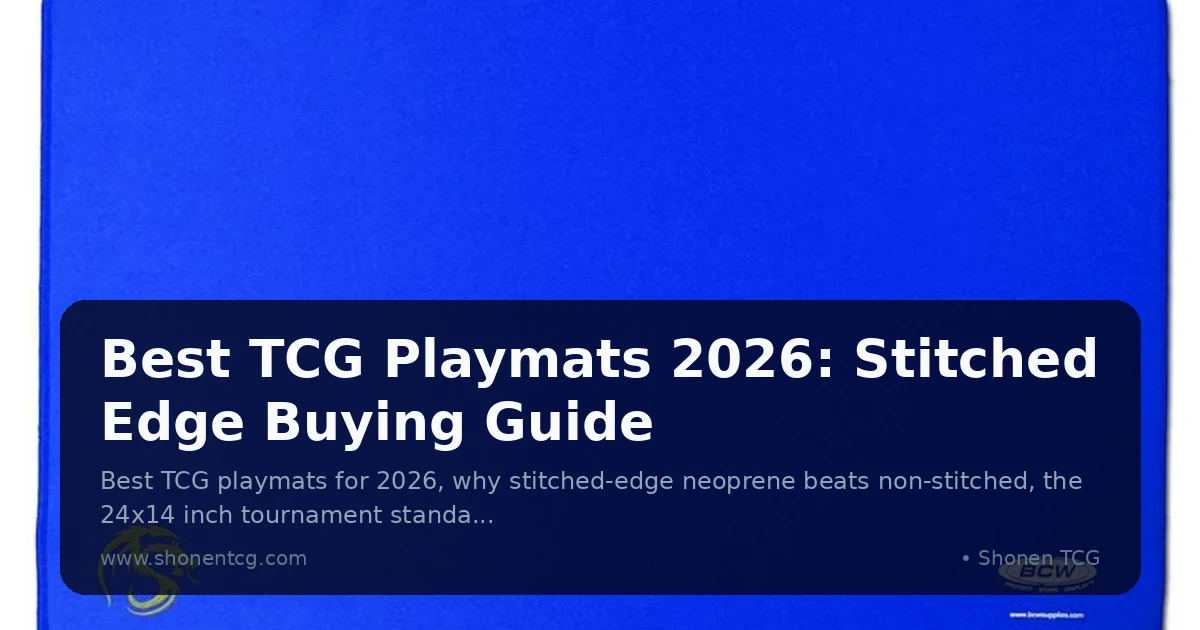
Shopping for the best TCG playmats feels like the most optional purchase on this list right up until you play a full game on a bare table and watch cards slide, catch on a rough patch, or pick up grime from whatever was on that table before you sat down. It's not required gear the way sleeves are, but once you've played on a good one, going back is annoying enough that most regular players never do.
TL;DR: 24 by 14 inches is the tournament-standard playmat size across every game covered here. Stitched edges matter more than anything else on the spec sheet, a non-stitched mat starts fraying within 6 to 12 months of regular use while a stitched one lasts years. Neoprene with a cloth top and rubber base is the standard construction across almost every brand. BCW's Spectrum line ($12.99 standard, $74.99 for the XL tabletop-covering size) is a reliable, inexpensive stitched-edge option if you don't need custom art.
What's the Best Playmat for a TCG? (Quick Answer)
Any stitched-edge neoprene mat at the standard 24x14 inch tournament size. Brand and printed art matter far less than construction quality, and construction quality comes down almost entirely to whether the edge is stitched. BCW's Spectrum line covers the budget-reliable end of that at $12.99; custom-art brands like FROGIGO or Extalas cost more for the same core construction plus your own artwork.
Key Takeaways
- 24 by 14 inches (about 61 by 35 cm) is the tournament-standard playmat size, sized to the footprint most events allocate per player.
- Stitched edges are the single biggest factor in playmat durability, a non-stitched edge frays within 6 to 12 months of regular handling; stitched edges last years.
- Neoprene with a cloth top and rubber base is the standard construction across almost every brand on the market.
- BCW Spectrum runs $12.99 for the standard 24x14 size and $74.99 for the XL, full-tabletop-covering version.
- Print quality and licensed art scale with price, durability doesn't scale as cleanly, so stitching matters more than the price tier once you're above the cheapest unstitched mats.
- Most sanctioned events accept any playmat that fits the standard footprint and isn't offensive, an official-branded mat isn't required.
Overview: What a Playmat Is Actually Protecting
A playmat does two jobs at once: it protects your sleeved cards from whatever's on the table underneath them, spilled drinks, dust, a scratched or splintery surface, and it protects the table itself from wear if you're playing somewhere that matters. Neither job needs to be flashy to work, which is why the cheapest genuinely good playmats and the most expensive custom-art ones are built almost identically underneath.
The standard construction across the market is a cloth or rubber top layer bonded to a neoprene rubber base. The rubber base is what keeps the mat from sliding around mid-game, and it's thick enough to smooth out minor texture in the table below it. What varies between a $12.99 mat and a $70 one is almost never this base construction, it's print quality, thickness, and, most importantly, how the edge is finished.
GODEEPER: A playmat protects cards mid-game. What protects them the rest of the time is a real sleeve. Best TCG Sleeve Brands Compared →
Stitched Edges: The One Spec That Actually Predicts Durability
Here's the fact that should drive most of a playmat buying decision: a non-stitched neoprene edge starts fraying and curling within roughly 6 to 12 months of normal handling, rolling for transport, and general wear. A properly stitched edge on an otherwise identical mat holds together for years under the same conditions.
The mechanism is simple. Neoprene is a cut fabric, and a cut edge left raw slowly unravels every time it flexes, gets rolled up, or rubs against the inside of a bag. Stitching locks that edge down so it can't progressively fray the way a raw cut edge does. It's a small manufacturing step that costs the brand very little to add, which is exactly why almost every reputable playmat brand includes it standard now, and why a mat that skips it is worth being suspicious of regardless of how good the printed art looks.
If you're playing weekly, at locals or online-adjacent paper events, a stitched edge isn't a luxury upgrade. It's the difference between a mat that's still flat and usable in a year and one that's curling at the corners by the time a new set releases.
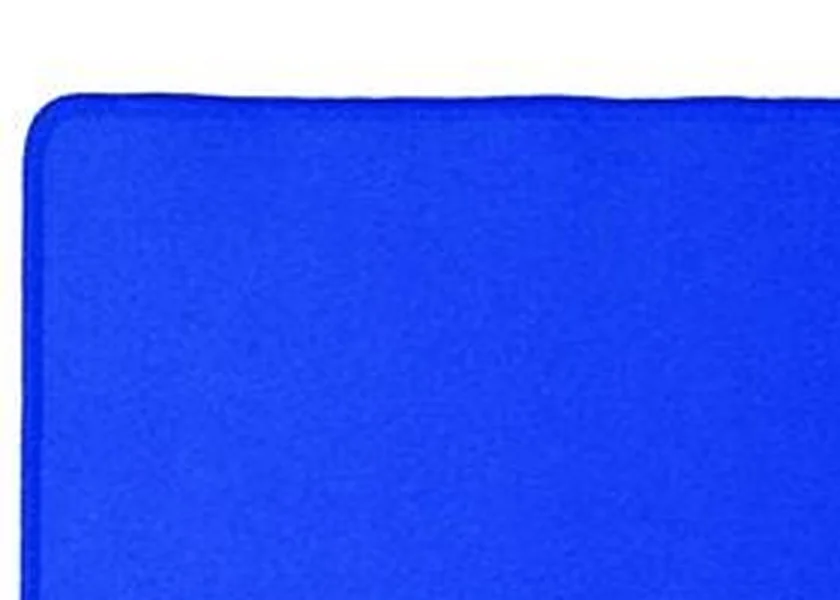 The stitched border is what keeps a neoprene edge from progressively fraying with regular handling.
The 24x14 Standard, and When to Ignore It
24 by 14 inches is the size that's become the de facto standard across the hobby, sized to match the amount of table space most tournament organizers allocate to a single player. It fits a full board state, including a Bench, Battlefields, or a Life-card row depending on which game you're setting up, without needing anything larger.
Games with especially busy board states benefit from staying right at this size or slightly larger rather than going smaller. A Riftbound match tracking Battlefields and a Rune Deck alongside a Main Deck board uses more table real estate than a simpler layout, and a mat that's too small forces cards off the edge onto bare table, defeating the point of having one at all.
The only real reason to go bigger is a full tabletop mat, something like BCW's Spectrum XL at $74.99, meant to cover an entire table surface for both players plus a shared zone, rather than a per-player footprint. That's a different use case (home games, streamed content, a permanent table setup) than the single-player 24x14 mat most people actually need for locals and events.
GODEEPER: Setting up your first real board state and not sure what goes where yet? One Piece TCG How to Play: Rules & Mechanics →
Analysis: Budget vs Custom-Art Playmats
The honest answer to "is an expensive playmat worth it" is that the expensive part is almost entirely the art, not the protection.
BCW's Spectrum line, stitched-edge neoprene at the standard 24x14 size, runs $12.99 in a handful of solid colors. That's a fully functional, durable tournament mat with none of the character art or set-specific branding a lot of players want. Custom-art brands like FROGIGO, Extalas, and similar print-on-demand playmat makers charge meaningfully more for the same underlying stitched-neoprene construction plus your own chosen artwork, whether that's official key art, a fan illustration, or a specific card's full art blown up to mat size.
Neither option is the "wrong" choice. A player who wants a plain, durable mat and doesn't care about branding gets full value from a $12.99 Spectrum mat. A player who wants their Union Arena or Dragon Ball Fusion World favorite character on the table every match is paying for something a plain mat can't offer, and that's a reasonable thing to pay extra for as long as the underlying construction (stitched edge, real neoprene base) is still there.
| Option | Price | What You're Paying For |
|---|---|---|
| BCW Spectrum (standard, 24x14) | $12.99 | Stitched-edge neoprene, no custom art |
| BCW Spectrum XL | $74.99 | Full-tabletop coverage, stitched edge |
| Custom-art brands (FROGIGO, Extalas, etc.) | Varies, generally higher | Same core construction plus licensed or custom artwork |
Common Mistakes When Buying a Playmat
Buying based on art alone, without checking for stitched edges. A gorgeous print on a raw-cut edge is still going to fray within a year of regular use. Check the product description specifically for "stitched" before buying anything based purely on the artwork.
Going oversized for tournament play. A playmat bigger than the standard 24x14 footprint can get you asked to swap it at an event if it doesn't fit the allocated table space. Save the full-tabletop mats for home games.
Assuming every mat is machine washable. Most stitched neoprene mats are, but not universally, and washing one that isn't rated for it can warp the rubber base or lift the print. Check the specific listing before it goes in a washing machine.
Skipping a mat entirely for a competitive deck. A bare table doesn't just look worse, it's a real gameplay factor: cards slide differently, shuffling picks up grime, and a rough or uneven surface can make sleeved cards catch. This matters more for a deck you're actually building to win with than a casual one.
Related Reading
- Best Deck Boxes and TCG Storage 2026: The other piece of gear most players buy in the same order as their first playmat.
- Best TCG Binders and Portfolios 2026: Where to display the cards you're not actively playing.
- Toploaders vs Card Savers vs One-Touch Holders: Individual protection for the one card too valuable to risk on a bare table.
- One Piece TCG Tournament Guide: How to Compete: What else to bring alongside a playmat once you're playing sanctioned events.
Frequently Asked Questions
What size playmat do I need for a TCG? 24 by 14 inches (about 61 by 35 centimeters) is the tournament standard, sized to match the footprint most event tables allocate per player. It fits a full board state without needing a custom size.
Does a playmat actually need stitched edges? For anything you'll use regularly, yes. A non-stitched neoprene edge starts fraying within about 6 to 12 months of normal use. A properly stitched edge holds together for years under the same handling.
What's the difference between neoprene and other playmat materials? Neoprene with a cloth top and rubber base is the standard construction across nearly every brand. It grips the table and gives cards a soft landing surface. Variation between brands comes down to thickness, print quality, and edge finishing.
Are expensive playmats actually better, or just prettier? Both, but not equally. Print quality and licensed art scale with price and are mostly cosmetic. A $12.99 stitched-edge mat from a real brand can outlast a cheaper unstitched mat regardless of how good the art looks.
Can I use any playmat at a sanctioned tournament? Generally yes, most events just require a mat that doesn't obstruct gameplay, isn't offensive, and fits within a reasonable size. Oversized or novelty mats can get you asked to swap it if it doesn't fit the table space.
How do I clean a TCG playmat? Most stitched neoprene mats are machine washable on a gentle cycle, check the specific listing first. For spot cleaning, a damp cloth with mild soap handles most spills without a full wash.
References
- BCW Spectrum Playmat: official product line, stitched-edge construction and pricing.
- BCW Spectrum Playmat, Blue, 24x14: retail listing confirming standard size and stitched-edge spec.
About the author
KT
Competitive TCG Analyst
Competitive One Piece TCG player and deck builder with 3 years of tournament experience. Covers meta analysis, tier lists, and leader builds.
- 3 years competitive OPTCG tournament experience
- Regional top 8 finisher
- Deck builder and meta analyst
- Covers every set since OP-01


Disclaimer
This article is published for informational and entertainment purposes. It does not constitute professional financial, legal, or technical advice. Game performance, online services, patch schedules, and store listings change. Verify critical details (pricing, system requirements, regional availability) with publishers and storefronts before you buy. Affiliate links, where present, help support our editorial work and are labelled in our affiliate disclosure.