

Shonen TCG · Guides
One Piece TCG card rarities explained: C to Manga Rare
One Piece TCG card rarities explained clearly means separating four things that are often mixed together: the printed rarity label, the card type, the product a card came from, and the artwork treatment. A card can be a Leader, have an alternate-art printing, and appear in a premium product without those labels being interchangeable.
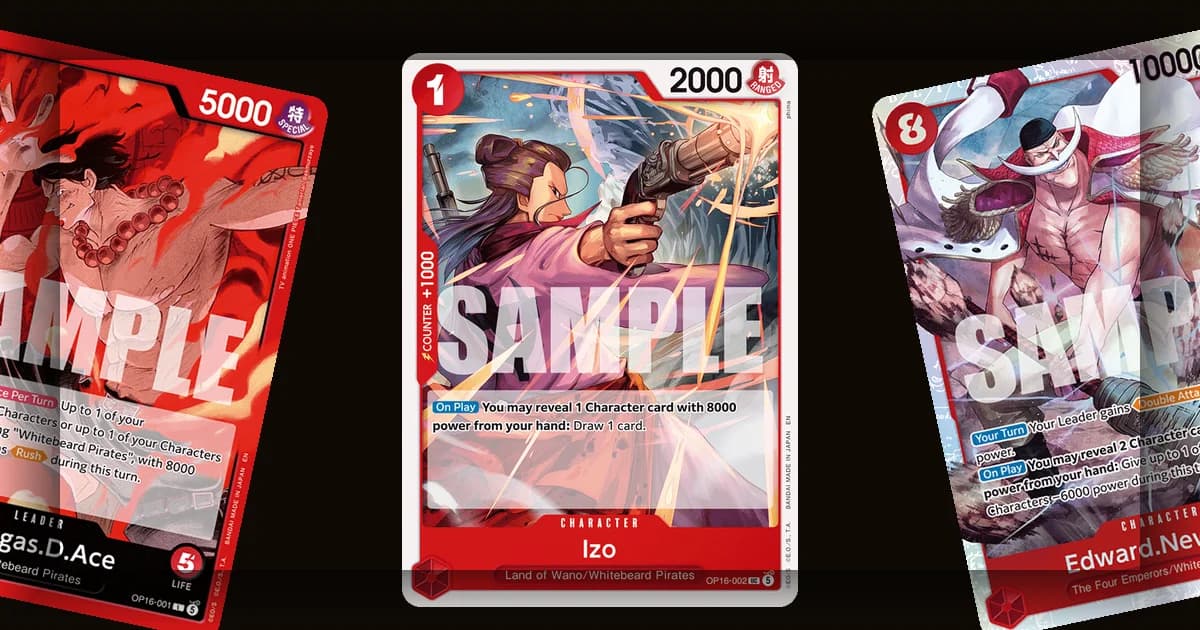
The official card database is the safest starting point. It identifies entries by card number, card type, and printed rarity label. Product pages then show which categories a particular set contains. That distinction matters more than a long rarity ladder because a set does not have to include every label used across the game.
If you are learning the rules at the same time, the One Piece TCG beginner guide explains card types and deck construction before you compare printings.
TL;DR: C, UC, R, SR, and SEC are common printed rarity labels in the card database. L identifies a Leader, not a normal power tier. Special Cards, Treasure Rare, promo cards, alternate art, and Manga Rare are product or variant labels that may appear in specific sets. Bandai does not publish a universal pull-rate table, and a higher rarity does not make a card stronger.
One Piece TCG card rarities explained
The most useful way to read a card is in layers:
- Card number: identifies the card entry and set, such as an OP-17 number.
- Card type: tells you whether it is a Leader, Character, Event, or Stage.
- Printed rarity label: may be C, UC, R, SR, SEC, or another set-specific label.
- Variant treatment: may indicate alternate art, a special version, a Treasure Rare, or a Manga Rare.
Those layers are why a Leader should not be placed on a simple Common-to-Manga ladder. L tells you the card's role in deck construction. A premium Leader parallel can be more expensive than a base Leader, but the parallel is not a different game-power tier.
The current official card database shows this separation in practice. Its entries pair labels such as L, C, R, and SR with card types such as LEADER and CHARACTER. The official OP-17 product page also lists set categories including Leader Cards, Secret Rares, Super Rares, Rares, Uncommons, Commons, Special Cards, Treasure Rare, and DON!! Cards. Not every category appears in every release.
One Piece TCG card rarities: labels and variants
| Label or treatment | What it tells you | What it does not tell you |
|---|---|---|
| C, Common | A common printed rarity label | That the card is weak or unplayable |
| UC, Uncommon | An uncommon printed rarity label | That the card is less useful than an SR |
| R, Rare | A rare printed rarity label | Its current market price or tournament demand |
| SR, Super Rare | A premium printed rarity label used by many set lists | That every pack contains one |
| SEC, Secret Rare | A secret rarity label for a card entry | A guaranteed pull rate or automatic alternate art |
| L, Leader | A Leader designation and deck-building role | A place on a single power ladder |
| Special Cards or SP | A special product or set treatment | A rate that applies to every release |
| Treasure Rare or TR | A named premium treatment used by specific products | A universal rarity available in all sets |
| Alternate art or Manga Rare | A premium parallel or collector treatment | Different rules text or automatic competitive value |
| Promo | A product, event, or distribution identity | A normal booster-pack pull rate |
Use the exact set checklist when a label matters. The official list may show a category in a particular set even when another set does not use it. Treat collector shorthand such as “top tier” as a description of demand, not as a replacement for the printed card data.
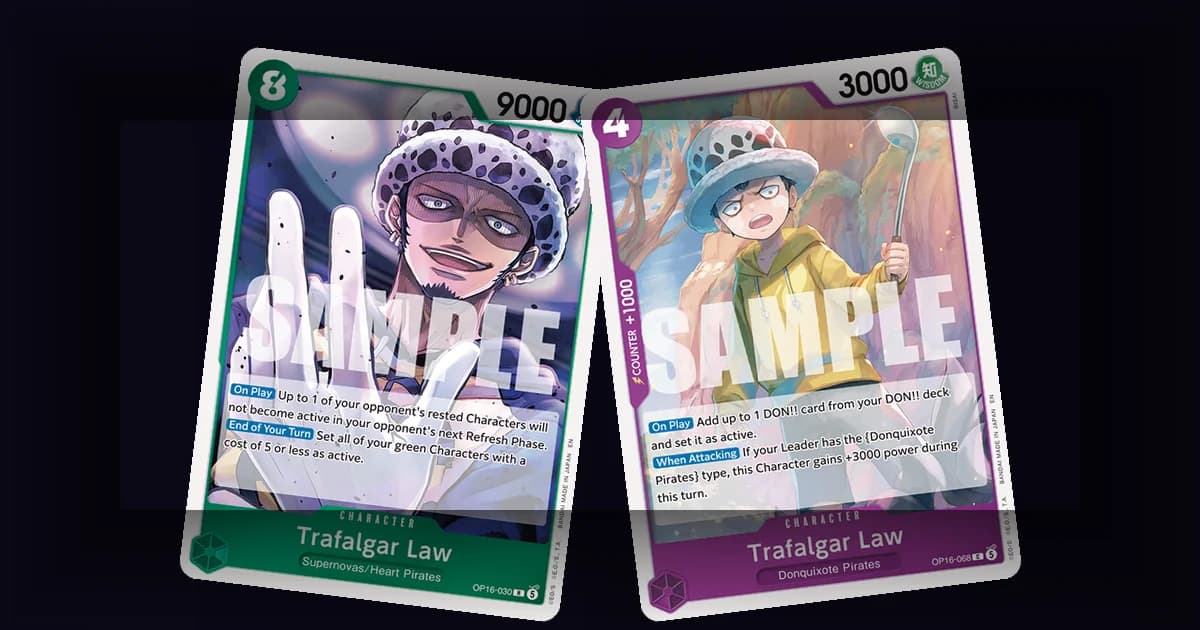
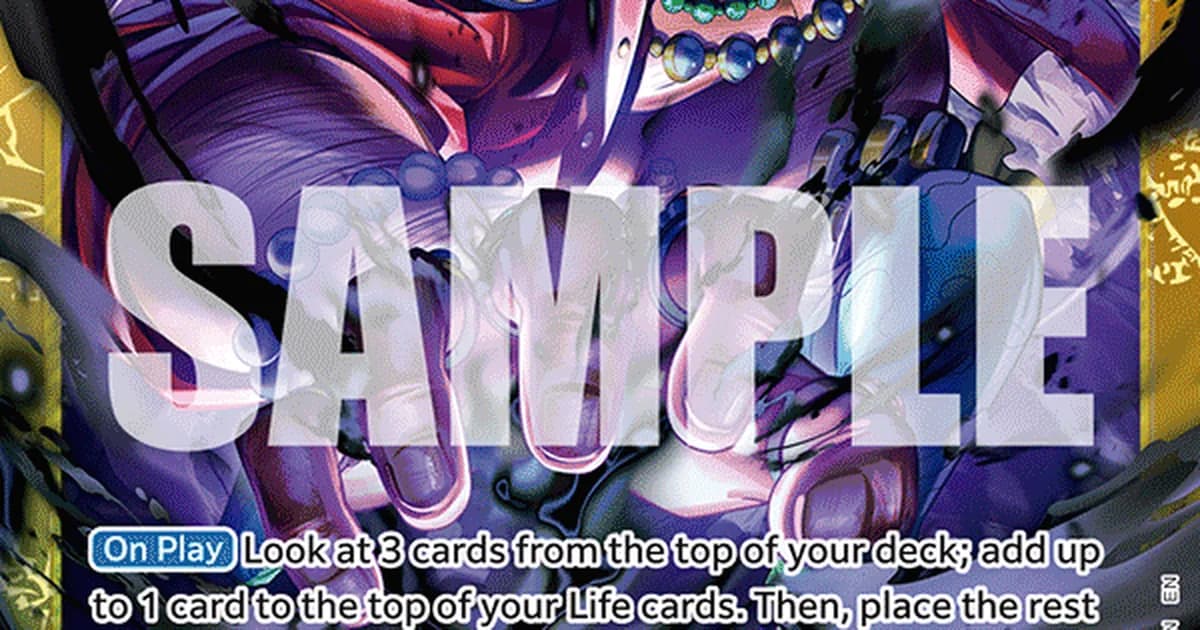
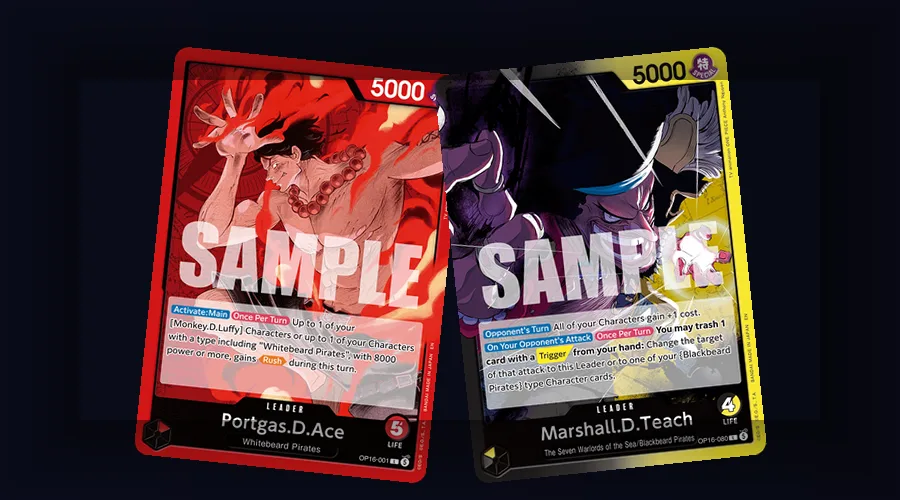 These OP-16 sample cards show why a card's name, type, number, and rarity label should be read separately.
Common, Uncommon, Rare, and Super Rare
Common (C)
Common cards are frequent set entries and often provide the low-cost Characters, Events, or utility pieces that make a deck function. Their rarity says nothing about whether a particular effect is useful. A Common counter or search effect can be more important to a deck than a flashy collector card.
Do not use an assumed pack count or a visual foil rule to identify every Common. Product collation varies, and print treatments can differ by product. Check the card number and official checklist when the finish is difficult to see through a sleeve.
Uncommon (UC)
Uncommons occupy the next printed rarity label in many set checklists. They can include efficient Events, Characters, or engine pieces, so a lower rarity is not a synonym for “bulk.” Their competitive value depends on the card text, color, and format.
Rare (R)
Rare cards often sit in the middle of a set checklist and can be central to a strategy. The same label can cover a low-demand filler card, a useful support Character, or a popular alternate-art base card. The label alone cannot predict a card's price or tournament role.
Super Rare (SR)
Super Rare is a printed rarity label, not a promise that a pack contains an SR. The number of cards, pack configuration, and product contents should come from the relevant official product page. Some SR cards become competitive staples, while others are included primarily for character appeal or set completion.
The safest comparison is card by card: read the effect, check the current format, and then compare base and parallel versions. Rarity is only one part of that decision.
Secret Rare, Leader, Special, Treasure Rare, and Promo
Secret Rare (SEC)
Secret Rare is commonly abbreviated SEC in set lists and card databases. It marks a high-rarity card entry, but it does not automatically mean alternate art, full-bleed art, or a fixed number of copies per booster box. Those details depend on the product and printing.
The official card database is more reliable than a visual shortcut. A foil pattern can be hard to judge under a sleeve, and an alternate-art version can look premium without changing the underlying card identity. Use the card number and checklist entry together.
Leader (L)
Leader cards are identified with L and have a distinct deck-building function: each deck uses one Leader to define its colors and core game plan. L is therefore a card designation and a rarity-style label in set data, but it should not be ranked beside C, UC, R, SR, and SEC as if it measured combat power.
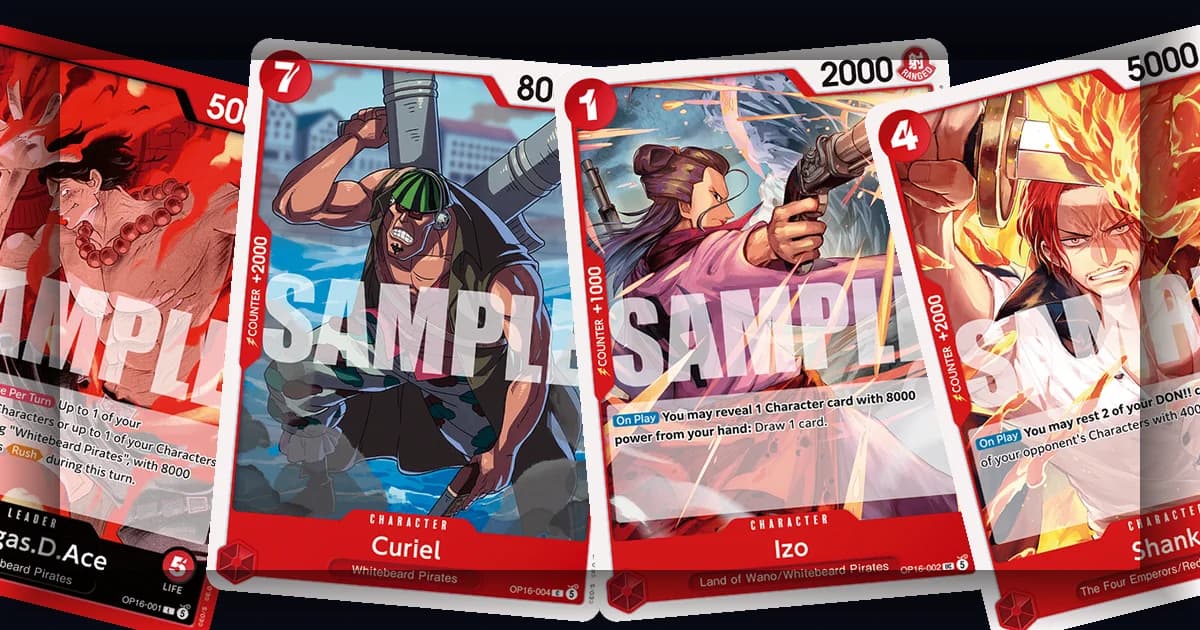
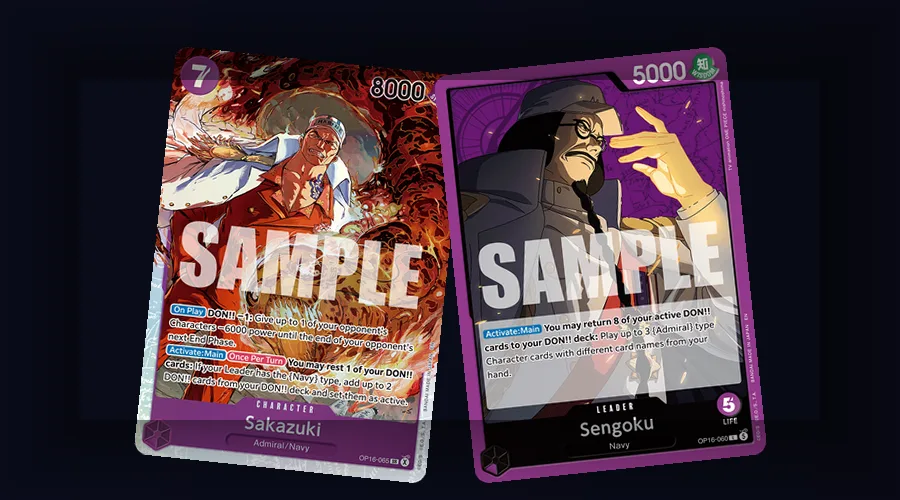 These sample Leader cards illustrate why the L designation describes a deck role, not a simple quality ranking.
Special Cards, Treasure Rare, and Promo cards
Special Cards and Treasure Rare are product-specific categories. They can be listed alongside the normal set labels, but they should be checked against the exact release rather than assumed to have one rate or finish across the game.
Promo cards come from a product, event, campaign, or other distribution channel. A promo can be desirable or scarce without being part of a normal booster checklist. That is why “the rarest card” questions need a set and product context.
DON!! cards are a separate game component and product category. Do not treat a DON!! card as another step in the Character rarity ladder.
Alternate art, Manga Rare, and other parallels
Alternate art describes a different printing of an existing card identity. Manga Rare is a premium collector treatment associated with manga artwork in specific releases. Neither label automatically changes the card's rules text, color, cost, or power.
The exact relationship can vary by set. A Manga Rare or alternate-art printing may be associated with an underlying R, SR, or other card entry, so the set checklist is more precise than an all-purpose rarity chart. “AR” is also not a universal base rarity code for every One Piece release. Use the terminology printed by the product or database instead of turning collector shorthand into a game rule.
Premium art can make a card harder to replace and more expensive to collect, but it does not make the base printing stronger. If you need playable copies, compare the ordinary printing with its parallel before paying for the artwork.
SHOP: Comparing One Piece rarities before you buy? Check current One Piece Card Game listings for the printings you actually want. Shop TCGplayer →
Pull rates: what is confirmed and what is estimated
Bandai does not publish a universal per-rarity pull-rate table for the One Piece Card Game. A current pull-rate review from InkSight makes the same distinction: official product pages provide structural information such as pack contents and checklist categories, but no publisher-confirmed probability for each rarity.
That means tables claiming “one SEC per box,” “one Manga Rare every X packs,” or a fixed rate for every set should be treated as community estimates at best. Even a carefully recorded opening sample is tied to a particular set, language, product, case, and collection window. It cannot be copied to a new release as a rule.
When researching a set, separate three kinds of evidence:
- Official structure: the publisher's product page, card list, and rules material.
- Set composition: how many entries or variants a checklist contains.
- Community observation: opening data with a stated sample size and date.
Only the third category can suggest a rate, and it remains an estimate. If you are choosing between sealed product and singles, buy sealed for the opening experience. Buy singles when you need a particular card, because no box guarantees the printing you want.
Rarity versus competitive power
Rarity and tournament strength answer different questions. A high-rarity card can be a format staple, a character showcase, or both. A Common or Uncommon can also be a key search, counter, or removal effect that appears in many lists.
For play, compare the card text, cost, counter value, color requirements, and current format results. For collecting, compare art, condition, language, print identity, and supply. The One Piece TCG card grading guide covers condition separately from rarity, which is important when a premium parallel is being evaluated.
The card's underlying identity is the practical anchor. An alternate-art card normally plays like the corresponding base printing, so a collector can choose the cheaper copy for a deck and keep the premium copy protected. Confirm the current legality and any event-specific language rules before registering a deck.
How to identify a card without guessing
When the card is sleeved or the foil is hard to read, use this checklist rather than relying on shine or artwork alone:
- Record the language and set number. Language and set can change the relevant checklist.
- Read the card number. This anchors the entry, including the set prefix and card number.
- Separate card type from rarity. A Leader is not automatically an SR, and a Character is not automatically a Rare.
- Read the printed label in the bottom information line. Compare it with the official card database instead of guessing from foil.
- Look for a parallel or product marker. Alternate art, Special Cards, Treasure Rare, Manga Rare, and promo identity may be listed separately.
- Check current legality. Rarity does not override a restriction, rotation, or event rule.
- Date any price check. Market prices change; never treat an undated price as a permanent rarity value.
Step-by-Step: evaluating a One Piece TCG card
- Start with the official card database and search the exact set number.
- Confirm whether the entry is a Leader, Character, Event, or Stage.
- Note the printed rarity label, then record any parallel or promo treatment separately.
- Check the current rules and format legality before judging its play value.
- For a deck, compare the cheapest playable printing with the premium version.
- For a collection, evaluate condition, language, art, supply, and the date of any market snapshot.
- Record your source and date whenever you publish a pull-rate or price claim.
For the rules foundation behind these checks, see the One Piece TCG how-to-play guide. For set-specific collector context, the OP-16 collectors guide is a better fit than a universal rarity table.
Related Reading
- One Piece TCG most expensive cards 2026: Compare market value without treating price as rarity.
- OP-16 best cards to pull: See how collector demand and play value can diverge.
- One Piece TCG meta rotation guide: Check why legality and format context matter more than shine.
Frequently Asked Questions
Does a higher rarity make a card stronger?
No. Rarity describes the printing, product, or collector treatment. The card's effect and current format determine its competitive value.
Is SEC always an alternate-art card?
No. SEC is a Secret Rare label. A set can have alternate-art or other premium versions as separate treatments, so check the card list for the exact entry.
Is there one official Manga Rare pull rate?
No. Bandai does not publish one universal rate. Set, language, product, and community sample all affect estimates.
What is the difference between a Leader and a rarity?
L identifies the card's Leader role and appears in set data as a label. It tells you how the card is used in a deck, not how powerful or valuable it must be.
Are alternate-art cards legal?
Usually, a legal parallel printing uses the same card identity and rules text as the base card. Confirm the current official restrictions and the event's language requirements before playing it.
What is the rarest One Piece TCG card?
There is no permanent answer across every product. Manga Rare printings are major booster-set chase cards, while limited promos, event cards, and serial products can be scarcer outside normal booster releases.
References
Was this guide helpful?
About the author
Beginner guides and anime crossover
Pen name for the Shonen TCG desk's beginner guides, starter decks and anime-to-card-game explainers.
- Rules checked against the official rulebook and card text
- Every claim traced to a cited source
- Opinions marked as ours, with the reason
Keep reading
OP-16 Pre-Launch Buying Guide: Post-Launch Update 2026
Guides · 11 min

OP-15 Meta Tier List 2026: Archived Format Snapshot
Guides · 9 min
OP-16 Red Law Decklist: No Leader, Rosinante's Key Piece
Guides · 14 min
One Piece TCG vs Yu-Gi-Oh vs Pokemon: Which Anime TCG
Guides · 13 min
OP-16 Garp Deck Guide: Sengoku Navy Build and Meta
Guides · 11 min
Best Anime TCG to Play in 2026: 5 Games Ranked and Compared
Guides · 12 min
One Piece TCG Meta Rotation Guide: When to Sell Cards
Guides · 15 min

One Piece TCG Deck Building Guide: Build From Scratch
Guides · 12 min
Disclaimer
This article is published for informational and entertainment purposes. It does not constitute professional financial, legal, or technical advice. Game performance, online services, patch schedules, and store listings change. Verify critical details (pricing, system requirements, regional availability) with publishers and storefronts before you buy. Affiliate links, where present, help support our editorial work and are labelled in our affiliate disclosure.