

Shonen TCG · Guides
Toploaders vs Card Savers vs One-Touch Holders (2026)
Toploaders vs card savers vs one-touch holders: toploaders handle shipping, card savers are what PSA wants for grading, holders protect a real chase pull.
Toploaders vs card savers vs one-touch holders: pick the wrong one and a card worth real money ends up with crushed corners, a rejected grading submission, or years of slow UV fade that a five-dollar piece of plastic could have stopped.
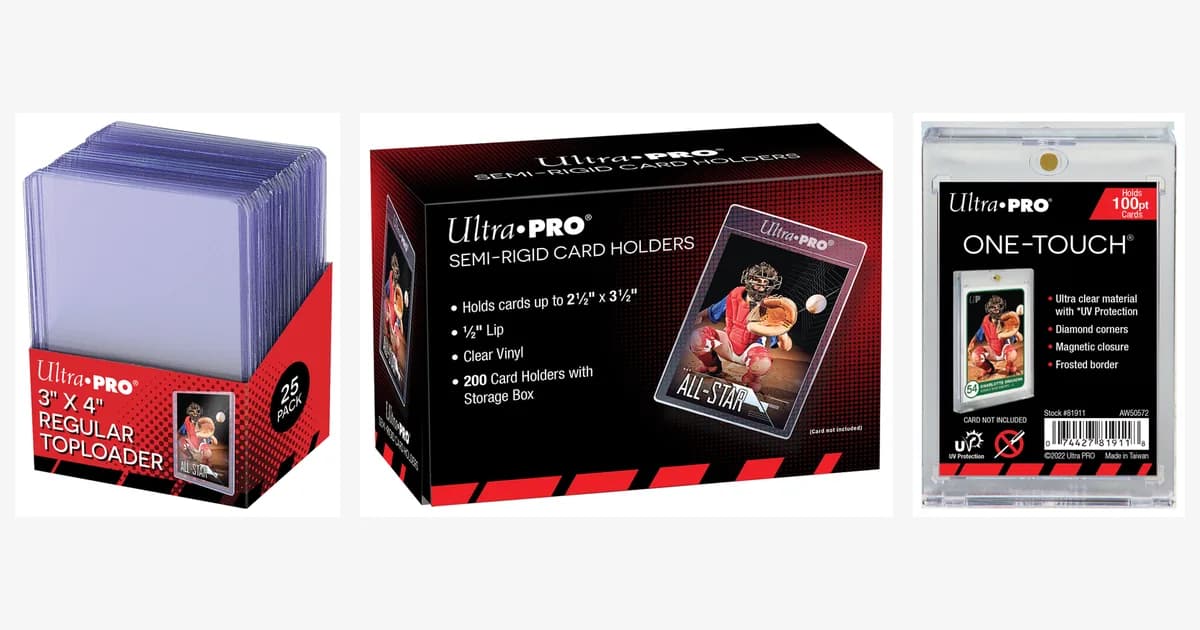
TL;DR: Toploaders (rigid, open-top) are for handling and shipping and cost pennies each. Semi-rigid card savers are what PSA and other grading services actually want for submission, because they flex open for safe card extraction where a rigid toploader doesn't. One-touch magnetic holders fully encapsulate a card on every side, block UV, and are the right call once a single card is worth roughly $50 to $100 or more. Sleeve the card first no matter which outer holder you pick.
Toploaders vs Card Savers: The Quick Answer
Use a toploader for everyday handling, trading, and shipping. Use a semi-rigid card saver for anything going to a grading service, because the card has to come back out safely on the other end. Use a one-touch magnetic holder for a card you're keeping long-term or displaying, once it's valuable enough that repeatedly sliding it in and out of a toploader starts to feel like a risk.
Those three products solve three different problems, not one problem at three price points. Picking the wrong one for the job is the most common protection mistake collectors make.
Key Takeaways
- Toploaders are rigid and open at the top, built to stop bending and corner damage during handling or shipping.
- Semi-rigid card savers are what grading services want for submission, because they flex open instead of trapping the card.
- One-touch magnetic holders fully seal a card on every side and add UV-blocking, acid-free materials.
- A common price-tier guideline: upgrade to a UV-blocking one-touch holder around $50, and go straight to one at $100 and up.
- Pro-Mold publishes independent lab data on UV protection; Ultra Pro's ONE-TOUCH line is the most widely cited magnetic holder.
- A penny sleeve goes under any of these. Never let the bare card touch a toploader, saver, or holder directly.
Overview: Three Ways to Protect a Card, and Why One Doesn't Fit All
Anyone who's pulled a real chase card from a One Piece TCG, Lorcana, or Union Arena pack has faced the same moment: the card is out of the pack, and now what? One Piece TCG's most expensive cards regularly sell for well into the hundreds of dollars raw, and a card like that shouldn't be handled the same way as a bulk common.
The three main product categories, toploaders, semi-rigid card savers, and one-touch magnetic holders, aren't tiers of the same thing. Each one is built to solve a different problem: impact protection during handling, safe extraction during grading, or long-term sealed storage. A card can pass through all three at different points in its life. What matters is matching the holder to what you're actually about to do with the card right now. None of this replaces a proper deck box for your actual play cards, these products are for the singles you're specifically setting aside.
GODEEPER: Not sure what rarity you're even holding? Manga Rare, SEC, and Treasure Rare aren't the same tier. One Piece TCG Card Rarities Explained
Toploaders: The Default for Handling and Shipping
A toploader is rigid, heavy-duty clear plastic with an open top, the classic "slide the card in from above" holder most collectors buy first. Its whole job is preventing bending, warping, and corner or edge damage while a card is being handled, traded, or shipped in an envelope.
Two things separate a good toploader from a bad one. First, acrylic quality: a genuinely UV-resistant toploader resists yellowing and cracking over time, while a cheap one won't, and most budget toploaders don't advertise UV treatment at all because they don't have it. Second, material safety: rigid toploaders are generally more chemically stable than old-style soft PVC sleeves, but not every brand is explicit about being acid-free, and that matters if a card is going to sit in one for years rather than weeks.
For the OP-16 most expensive cards, a toploader is fine for transport and short-term handling. It's not the product to leave your best pull sitting in for years, and it's not the product to grade with either, which is the next section.
 A 25-pack of Ultra Pro's standard 3x4 toploaders. The open top is visible at a glance, the rigid stack keeps every sleeve flat until it's loaded.
Semi-Rigid Card Savers: What Grading Services Actually Want
This is the fact most collectors get backward: PSA's own submission guide specifically asks for a semi-rigid pouch, often sold as Card Saver I (or Card Saver II for a thicker sleeved card), and explicitly advises against toploaders, hard acrylic cases, or screw-down holders. Submissions that show up in the wrong holder type get flagged for repackaging before grading even starts, which adds delay to your turnaround.
The reason comes down to extraction. A card saver is thin and flexes open gently, so a grader can slide the card out without forcing it against a rigid edge. A toploader is stiff and the card can shift and catch on the way out. A sealed one-touch holder is worse for this purpose, since it has no easy re-opening at all. If a card is headed to PSA, Beckett, or any other grading service, put it in a penny sleeve and then a card saver, not the holder you'd use to display or ship it.
This only applies to the submission step. Once a card comes back in a graded slab, none of this matters anymore, the slab itself is the permanent holder. It's the raw, ungraded card in transit to the grader where card savers earn their keep, and it's a big part of why the One Piece TCG grading guide treats prep as a separate step from deciding whether to grade at all. Which service you actually submit to is a separate decision, our PSA vs BGS vs CGC comparison covers the ownership and pricing landscape as of late 2025.
 Ultra Pro's semi-rigid card holder line, the same style PSA calls out by name. Notice how much thinner and more flexible the vinyl looks next to a toploader.
GODEEPER: Grading is for singles. Your actual play deck needs different gear entirely, sleeves, a deck box, dice. One Piece TCG Sleeves and Accessories Guide
One-Touch Magnetic Holders: Built for Your Best Pull
A one-touch magnetic holder is the premium tier, and the name describes the mechanism: two acrylic halves close over the card with a slide-in hinge and a magnetic latch, no screws. Ultra Pro's ONE-TOUCH line is the most widely cited option in this category for a reason. It's built with UV-blocking additives, uses non-PVC, acid-free materials, and fully encapsulates the card on every side, unlike a toploader, which stays open at the top no matter what you do.
That full encapsulation is the actual point. A card in a toploader still slides in and out every time you handle it, and that repeated friction wears the corners over years, even carefully. A one-touch holder opens once, holds the card in place with the magnetic closure, and never touches the card's surface with the same sliding motion again. Collectors call this "zero-friction" storage, and it's the reason a Manga Rare worth protecting for the long term or an Enchanted-rarity Lorcana pull usually ends up here rather than in a toploader once the owner decides to keep it.
Not every magnetic holder brand backs up its UV claim the same way, though. Pro-Mold, manufactured in the USA, stands out because it has published independent lab data showing its acrylic blocks over 99% of harmful UV rays, tested by an accredited weathering lab rather than just stated on the packaging. That's a real distinction. Plenty of brands print "UV-resistant" on the box; comparatively few can point to a lab report backing it.
The tradeoff is cost. A one-touch holder runs meaningfully more per card than a toploader or a card saver, which is exactly why it's not the right call for a bulk common, and exactly right for the one card in a binder that's actually worth protecting like it matters.
 The ONE-TOUCH magnetic holder fully seals the card on all sides, unlike the open-top toploader above. The UV Protection icon and "diamond corners" callout are printed right on the package.
Analysis: Toploaders vs Card Savers by Price Tier
There's no official rulebook for this, but a common guideline among collectors is straightforward enough to actually use:
- Under $15: penny sleeve plus a standard toploader. Cheap, effective against bending, and fine for a card you might trade or resell soon.
- $15 to $50, or anything headed to grading: penny sleeve plus a semi-rigid card saver. This is the PSA-preferred format regardless of the card's value once grading is the plan.
- $50 to $100: a UV-blocking one-touch magnetic holder. This is where the fading and friction risks of long-term toploader storage start to outweigh the extra cost of a holder.
- $100 and up: a premium one-touch holder with published UV lab data, like Pro-Mold or Ultra Pro's ONE-TOUCH line, rather than a generic magnetic holder with no verification behind its claims.
Treat this as a rule of thumb, not a hard cutoff. A Super Parallel Manga Rare sitting at $40 today that you expect to appreciate is a reasonable candidate to skip straight to a one-touch holder early. The variable that actually matters is intent: are you shipping this card soon, sending it to grading, or keeping it? Answer that first, then pick the holder, not the other way around.
Price isn't the only signal worth checking before you decide, either. A card's rarity tier tells you a lot about how long you're likely to hold it: a Fusion World SCR sitting near the top of its set's price list is a much safer bet to still be worth protecting in two years than a rotation-vulnerable common, and that expected holding period should push you toward the one-touch tier sooner rather than later.
Common Mistakes That Damage Chase Cards
Most of these come down to mixing up toploaders vs card savers at the wrong moment, using the handling product where the grading product belongs, or the reverse.
Skipping the penny sleeve. Every product in this article assumes a sleeved card underneath it. Put a bare card straight into a toploader or holder and you're letting the card's surface rub directly against harder plastic every time it moves. A penny sleeve works fine here, you don't need a premium brand for something that never sees a shuffle, our sleeve brand comparison is really about play sleeves, not this.
Submitting to grading in the wrong holder. As covered above, a toploader, hard acrylic case, or screw-down holder submitted to PSA gets flagged and repackaged before the actual grading process even starts. Use a card saver from the start and skip that delay.
Buying a toploader with no UV treatment for long-term storage. A basic toploader is fine for weeks or months. Left in direct or indirect light for years, an untreated one won't stop the slow yellowing and fading that a UV-blocking product is specifically built to prevent.
Assuming "magnetic" always means archival-quality. Not every magnetic holder brand uses acid-free, non-PVC materials or backs up a UV claim with real testing. Check for that language explicitly rather than assuming every one-touch product on a shelf is equivalent.
Re-sleeving a graded card at all. Once a card comes back from PSA or Beckett in a slab, the slab is the permanent holder. None of the above applies anymore, the grading company has already made that decision for you.
Related Reading
- Riftbound Card Values: Chase Promos to Playable Prints: Real price data across a full Riftbound set, useful for deciding which singles clear the one-touch holder threshold.
- Union Arena Worth Collecting in 2026? A Real Price Check: An honest look at whether Union Arena singles hold value long-term, which affects how much protection they're worth.
- Disney Lorcana Wilds Unknown Most Valuable Cards 2026: The specific Wilds Unknown singles worth moving straight to a one-touch holder.
- OP-17 Treasure Rare Revealed: Edward Newgate Is the Card: A single-card case study in exactly the kind of pull this guide's top price tier is built for.
- Union Arena Card Grading Guide: Is It Worth It in 2026?: The grading-submission prep rules in this article apply the same way to Union Arena singles.
Frequently Asked Questions
What's the difference between a toploader and a card saver? A toploader is thick, rigid plastic with an open top, built to stop bending during handling or shipping. A card saver is thinner and semi-rigid, so it flexes open for safe extraction, which is why grading services want submissions in a card saver instead of a toploader.
Do I need a one-touch holder or is a toploader enough? For an everyday chase card, a toploader is enough. Once a card is worth roughly $50 or more, a one-touch holder is a common upgrade, and at $100 or more, most collectors skip the toploader and go straight to a magnetic holder.
Can I send a card to PSA in a toploader? PSA's submission guide asks for a semi-rigid pouch like Card Saver I, not a rigid toploader, hard acrylic case, or screw-down holder. Rigid formats get flagged for repackaging before grading, adding delay, so use a card saver from the start.
Are one-touch magnetic holders better than toploaders? For long-term storage and display, yes. A one-touch holder fully encloses the card on every side where a toploader stays open at the top, and it uses UV-blocking, acid-free materials. It costs more per card, so save it for cards actually worth that cost.
Do toploaders protect against UV fading? Only if the acrylic is actually UV-treated. A bargain toploader won't stop fading. Pro-Mold has published independent lab data showing its acrylic blocks over 99% of UV rays, a claim most toploader brands don't back up.
What size toploader fits a One Piece TCG or Lorcana card? Standard-size cards, which covers One Piece TCG, Lorcana, Fusion World, and Union Arena, fit a standard 35pt toploader over a sleeved card. A thicker foil or a double-sleeved card may need a 55pt or 75pt size instead.
Should I sleeve a card before putting it in a toploader? Yes, always. Put a penny sleeve on the card first, then the outer holder over that. The sleeve keeps the card off the harder plastic and lets you switch protection types later without touching the raw card again.
References
- PSA: How to Submit: official submission prep guidelines, including the card saver requirement and toploader warning
- Ultra PRO ONE-TOUCH Card Holders: official product line, UV-blocking and acid-free material specs
- Pro-Mold Magnetic Card Holders: manufacturer page referencing independent UV lab testing
About the author
Deck guides and meta
Pen name for the Shonen TCG desk's One Piece TCG deck guides, tier lists and meta reports.
- Lists averaged from public tournament results, sample size stated
- Card text quoted from Bandai's official card list
- Opinions marked as ours, with the reason
Keep reading
OP-17 Best Cards to Pull: Chase Cards Ranked by Price
Guides · 6 min
Riftbound Radiance Chase Cards: Prices and What to Pull
Guides · 6 min

Hyperia City Chase Cards: Enchanted and Iconic Prices
Guides · 7 min
OP18 Meta Predictions: The Field After the Mihawk Ban
Guides · 7 min
FB11 Chase Cards: What Brightness of Hope Pulls Are Worth
Guides · 6 min

One Piece Heroines Gift Collection: Is It Worth $45?
News · 8 min

Lorcana Curator's Collection Beauty and the Beast Edition
News · 4 min
OP-17 One-Month Meta Report: Leaders After Release
Guides · 15 min
Disclaimer
This article is published for informational and entertainment purposes. It does not constitute professional financial, legal, or technical advice. Game performance, online services, patch schedules, and store listings change. Verify critical details (pricing, system requirements, regional availability) with publishers and storefronts before you buy. Affiliate links, where present, help support our editorial work and are labelled in our affiliate disclosure.