

Shonen TCG · Guides
One Piece TCG Manga Rare Cards: Guide & Values (2026)
One Piece TCG Manga Rare cards are a premium print category with artwork that can look very different from the base card. If you want a full overview of the game's rarity system, the One Piece TCG card rarities guide covers the main tiers from Common through Secret Rare.
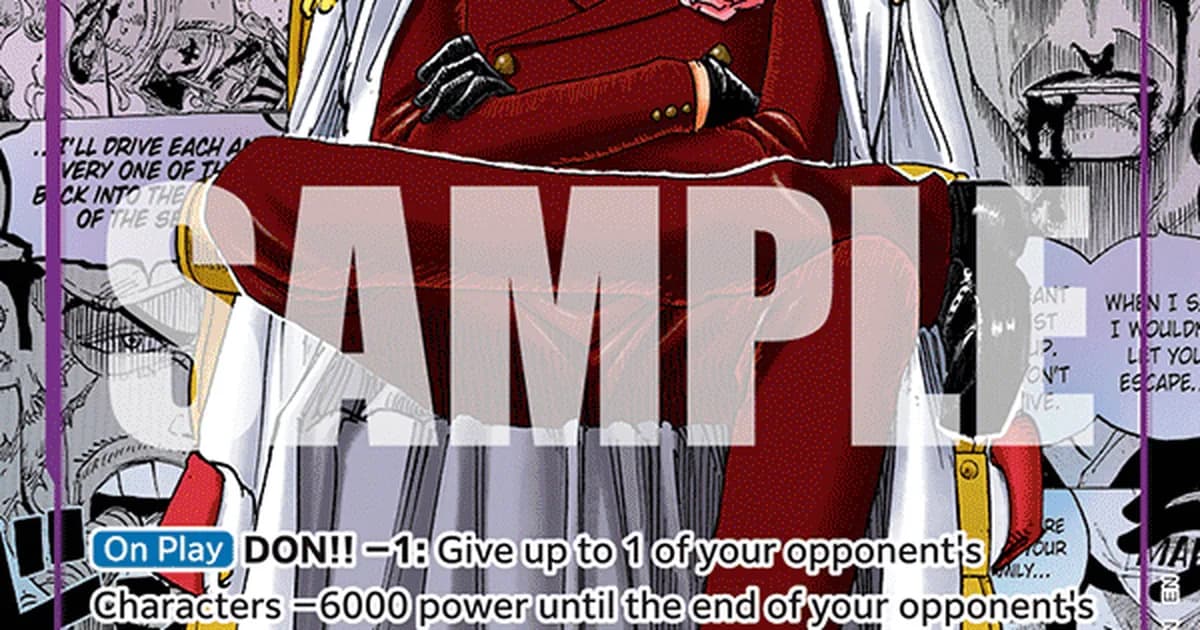
The first time someone showed me a Manga Rare in person, I genuinely could not tell if it was a real card or a custom. The panel-style art and premium finish look nothing like a standard One Piece TCG card. The exact balance of manga art, color, and foil treatment changes from set to set.
That's the point. Manga Rares are a collector centerpiece for many One Piece TCG sets. They are also playable when the underlying card is legal, but the premium is usually driven by collecting rather than gameplay. Knowing which value you are paying for prevents an expensive mistake.
TL;DR: Bandai does not publish Manga Rare pull rates, and community estimates vary by set. Many sets have one Manga variant, while OP-05 and OP-16 are examples with three. Limitless currently displays OP-16 Manga prices around $1,043-$1,127, but prices move. Buy a single when you want a specific card; do not assume sealed product has positive EV.
One Piece TCG Manga Rare cards: quick answer
Manga Rares are premium Manga Art variants. Many sets have one variant, while OP-05 and OP-16 are examples with three, and Bandai does not publish universal pull odds. A Manga print keeps the underlying card's gameplay identity, so a legal Manga Sakazuki can be used like the standard Sakazuki. The premium comes from the artwork, finish, and collector demand.
Key Takeaways
- Many sets have one Manga variant; OP-05 and OP-16 are examples with three
- Pull rate: not officially published; community estimates vary and are not guarantees
- Identical in gameplay to non-Manga Rare versions of the same card
- Playability can help demand, but character appeal, supply, and print variant also matter
- Limitless currently displays OP-16 Manga prices from about $1,043 to $1,127; check live listings before buying
- Do not open boxes specifically for a Manga variant without comparing current sealed and single prices
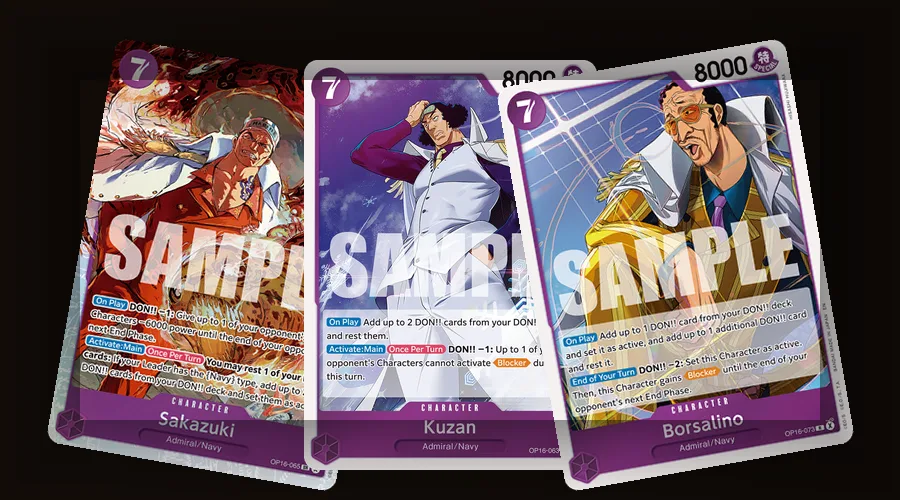 These OP-16 Admiral card designs identify the three underlying card numbers whose Manga variants are tracked separately.
What Makes Manga Rares Different
Standard One Piece TCG cards commonly use full-color character artwork. Manga variants use a different visual treatment, often built around manga or panel-style art, but the exact presentation varies by set.
Some Manga variants emphasize Eiichiro Oda's linework and screentone shading, while newer sets can use different color and layout choices. Do not assume that every Manga print is black and white or that every foil finish is identical.
The finish is also part of the premium, but it is not a substitute for checking the exact set and print. I have seen grown adults flip a card back and forth under a lamp for five minutes because they could not look away.
Beyond aesthetics, a Manga variant uses the same underlying card identity for gameplay. The card text and stats match that card, while event legality still depends on the format and any restrictions.
Pull Rates by Set
Bandai does not publish pull odds for Manga Art variants. The current card database can show which print variants exist, but it cannot establish a reliable pull rate:
| Set example | Manga variants shown in the current card database | Official pull rate |
|---|---|---|
| OP-05 (Awakening of the New Era) | 3 | Not published |
| OP-12 (Legacy of the Master) | 1 | Not published |
| OP-16 (The Time of Battle) | 3 tied to the Admirals | Not published |
Do not turn a community estimate into a guaranteed rate. Set configuration, language, product, and sample size can all affect what collectors observe.
Important caveat: No official source promises a Manga hit in a box or case. Treat a sealed purchase as a gamble and never buy it expecting a specific card.
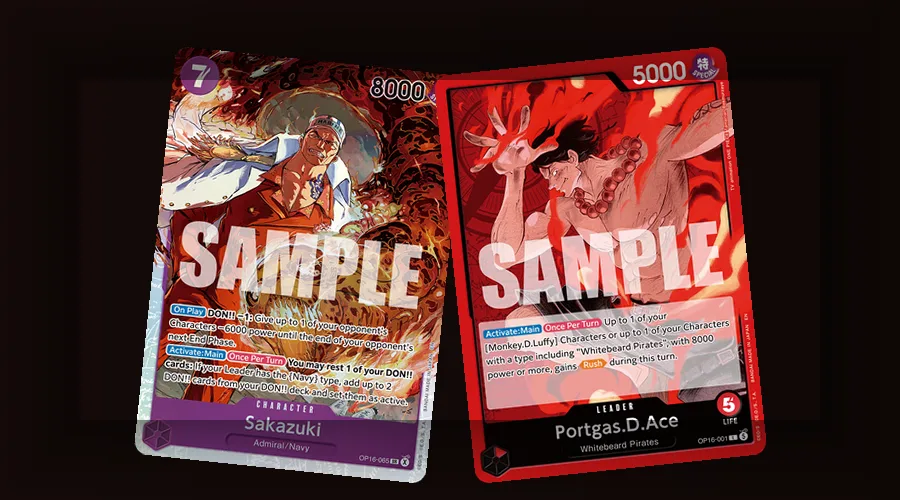 Compare the regular card and its premium print separately when judging whether a Manga variant is worth the premium.
OP-16 Manga Rare Values and Competitive Relevance
The current OP-16 card database lists Manga variants for three card numbers: OP16-063 Kuzan, OP16-065 Sakazuki, and OP16-073 Borsalino. All three are Admiral/Navy Characters. The official OP-16 product page also highlights a Three Admirals Super Alt-Art feature. As of September 17, 2026, Limitless displays these approximate English USD Manga prices:
Sakazuki (Akainu) Manga Rare (OP16-065): Limitless displays about $1,126.76, currently the highest of the three by its displayed USD price. The standard print is about $0.37 and the alternate art about $10.88 on the same page, so the Manga premium is collector-driven rather than required for gameplay.
Kuzan 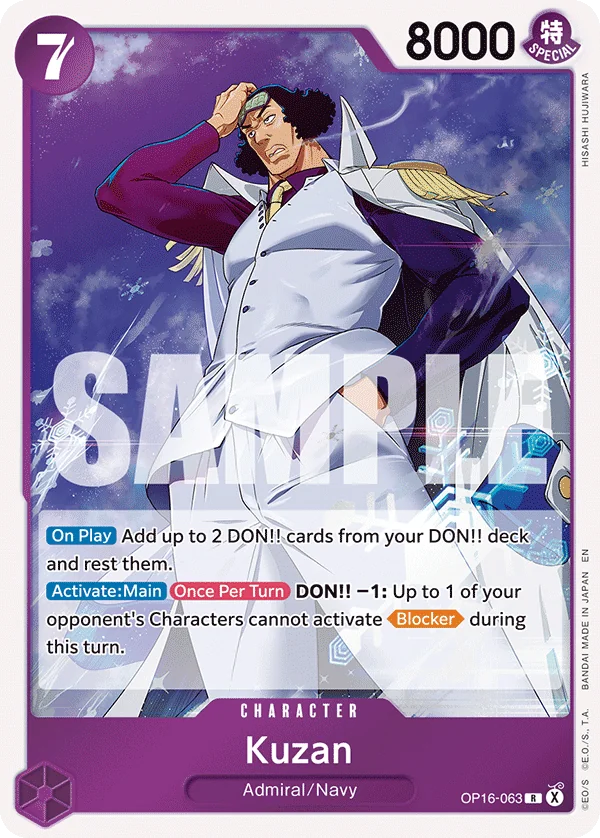 OP16-063OP16-063Shop on TCGplayer (Aokiji) Manga Rare (OP16-063): Limitless displays about $1,109.24. Its standard print is about $0.13 and its alternate art about $4.07.
Borsalino 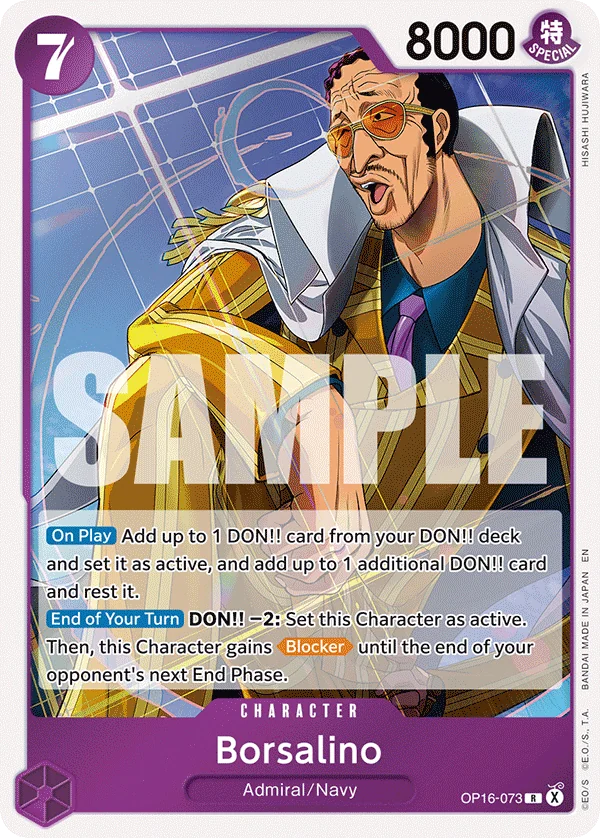 OP16-073OP16-073Shop on TCGplayer (Kizaru) Manga Rare (OP16-073): Limitless displays about $1,043.28, the lowest of the trio on that snapshot. Its standard print is about $0.10 and its alternate art about $4.17.
These are time-stamped marketplace snapshots, not guaranteed sale prices. Verify current sold listings before transacting. See the OP-16 Manga Rare price guide for the Admiral-by-Admiral breakdown.
Historical Manga Rare Values: What to Expect Over Time
Manga Rare prices do not follow a guaranteed curve. A useful way to think about the market is:
Week 1 (launch week): Early listings can carry a speculative premium, but the direction is not guaranteed. Compare sold data rather than treating the first asking price as a floor or ceiling.
Weeks 2-4: Supply and buyer interest start producing a clearer range. Some cards correct; others stay elevated if collector demand is strong.
Month 2-3: A more useful comparison window may emerge, but playability is only one factor. Character appeal, art, language, condition, and supply also matter.
6+ months: Long-term value is driven by competitive demand and collector sentiment. On the current Limitless snapshot, OP-03 Sogeking (OP03-122) is about $908.67, OP-12 Jewelry Bonney (OP12-118) about $772.94, and OP-14 Dracule Mihawk (OP14-119) about $719.38 for their Manga prints. Those examples show why a high price is not proof of a guaranteed floor.
Those are market snapshots, not investment guarantees. If you plan to play a card, compare the current single with the standard print and sealed cost. Our OP-16 is it worth buying guide shows how to compare current box costs and card value.
GODEEPER: Want to know the current competitive value of OP-16 cards beyond Manga Rares? OP-16 Best Cards to Pull →
Collector vs. Competitive Buying Decision
Buy as a competitive piece if: You plan to play the underlying card and are comfortable paying the collector premium. For OP-16, the current Manga snapshots are roughly $1,043-$1,127, while the standard and alternate prints are much cheaper and carry the same gameplay identity. You do not need the Manga variant to compete.
Buy as a collector piece if: You love the character or art regardless of competitive relevance. OP-14's Dracule Mihawk Manga snapshot is about $719.38, while OP-16's three Admiral variants are currently above $1,000 on Limitless. Collector pieces do not need to be investments; buy what you love.
Do not buy if: You are chasing one specific Manga variant without checking the numbers. There is no official universal pull rate or guarantee, so compare the current sealed cost with the price of the exact single you want. Buy the single when certainty matters more than the opening experience.
SHOP: Chasing a Manga Rare? Compare current One Piece Card Game listings for the card and parallel you actually want. Shop TCGplayer →
How to Safely Buy Manga Rares
TCGPlayer and CardMarket: Established marketplaces with seller ratings and buyer-protection tools. Compare recent sold prices and inspect the exact language, condition, and print variant before paying.
Local game stores: Often carry Manga Rares from box breaks. Prices may be competitive or inflated depending on the store. Good for inspecting condition in person.
Reddit /r/OnePieceTCG trading: An active community, but peer-to-peer trades need extra caution. Use verifiable feedback, tracked shipping, and payment protections where available.
Watch for fakes: Red flags include a price far below recent sales, a seller with no feedback, stock-only photos, or reluctance to show the card back and edges. Request clear condition photos and compare the card number, print, texture, and back with trusted references.
Once a Manga Rare actually arrives, get it out of a play deck immediately. Our toploaders vs card savers vs one-touch holders guide breaks down which holder to buy at which price tier.
Step-by-Step: Evaluating a Manga Rare Purchase
- Identify if the card is played competitively using Limitless TCG event data (see the OP-16 meta tier list for current competitive placement)
- Check current prices on TCGPlayer (not just seller listings; look at sold prices)
- Compare to the standard-art version of the same card
- Compare the premium with your budget and recent sold prices
- Decide whether the collector premium matters to you when the standard version serves the same gameplay role
Related Reading
-
OP-16 Three Admirals Guide: Akainu, Kizaru, Aokiji: OP-16 Three Admirals guide.
-
OP-16 Collectors Guide: SEC, Manga Rare, and Alt-Art rarity tiers and what to hold long-term
-
One Piece TCG Most Expensive Cards: Historical highest-value cards across all One Piece TCG sets
-
OP-16 Complete Guide: Everything about the current set including collector content
-
One Piece TCG Beginner Guide: New player overview before diving into card values
-
OP-16 Japanese vs English Price Guide: Import trade-offs and which version to buy for a chase card
-
Round1 One Piece Promo Cards: Phase 4 Signup Breaks Down: A different kind of chase card, exclusive promos distributed outside the normal booster print run entirely
Frequently Asked Questions
Can I use a Manga Rare in any One Piece TCG tournament? Usually, a Manga variant follows the legality of its underlying card number. Check the event's card pool, block, and restriction list before registering it.
Do Manga Rares come in both English and Japanese versions? Japanese and English printings can have different release schedules and prices. Check the language and region on the exact listing before comparing them.
Are all Manga Rares the same condition when pulled from packs? Not always. Pack handling, storage, and seller grading affect condition. Inspect clear surface, edge, corner, and back photos before buying a single.
How do I tell if a Manga Rare is authentic? No single visual test guarantees authenticity. Compare the card number, print layout, texture, stock, edges, and back with a trusted reference, and use a reputable seller or professional authentication service for an expensive purchase.
Do Manga Rare prices rise after sets rotate out of standard format? If a format rotation or legality change excludes the underlying card, competitive demand can change. Collector demand can move independently, especially for iconic characters, so do not treat rotation as an automatic buy or sell signal.
References
- Official OP-16 product page: release details and the Three Admirals Super Alt-Art feature
- Official One Piece Card Game rule manual: card identity and tournament deck rules
- Limitless Sakazuki OP16-065: current standard, alternate-art, and Manga price snapshot
- Limitless Kuzan OP16-063: current standard, alternate-art, and Manga price snapshot
- Limitless Borsalino OP16-073: current standard, alternate-art, and Manga price snapshot
- Limitless Jewelry Bonney OP12-118: current OP-12 Manga price snapshot
- Limitless Sogeking OP03-122: current OP-03 Manga price snapshot
- Limitless Dracule Mihawk OP14-119: current OP-14 Manga price snapshot
Was this guide helpful?
Cards in this article
About the author
Card values and pull rates
Pen name for the Shonen TCG desk's card value, pull rate and collector market coverage.
- Prices read from TCGplayer and Cardmarket listings, dated
- Pull rates tied to a stated sample
- Opinions marked as ours, with the reason
Keep reading
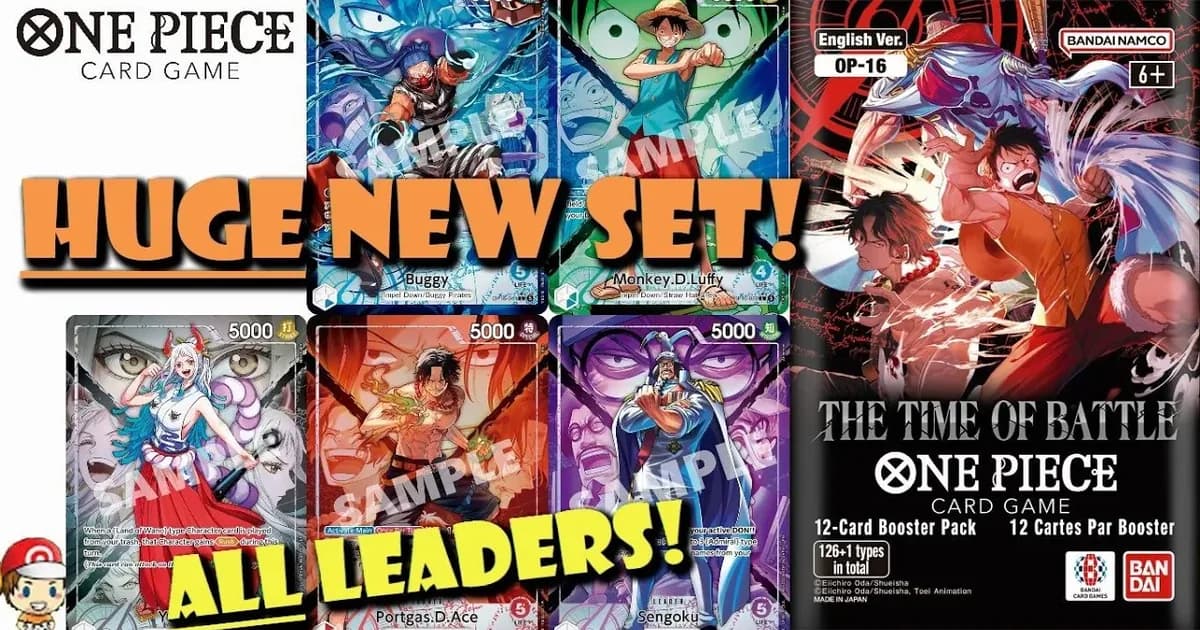
One Piece TCG OP-16 Guide: Set Review & Leaders (2026)
Guides · 20 min
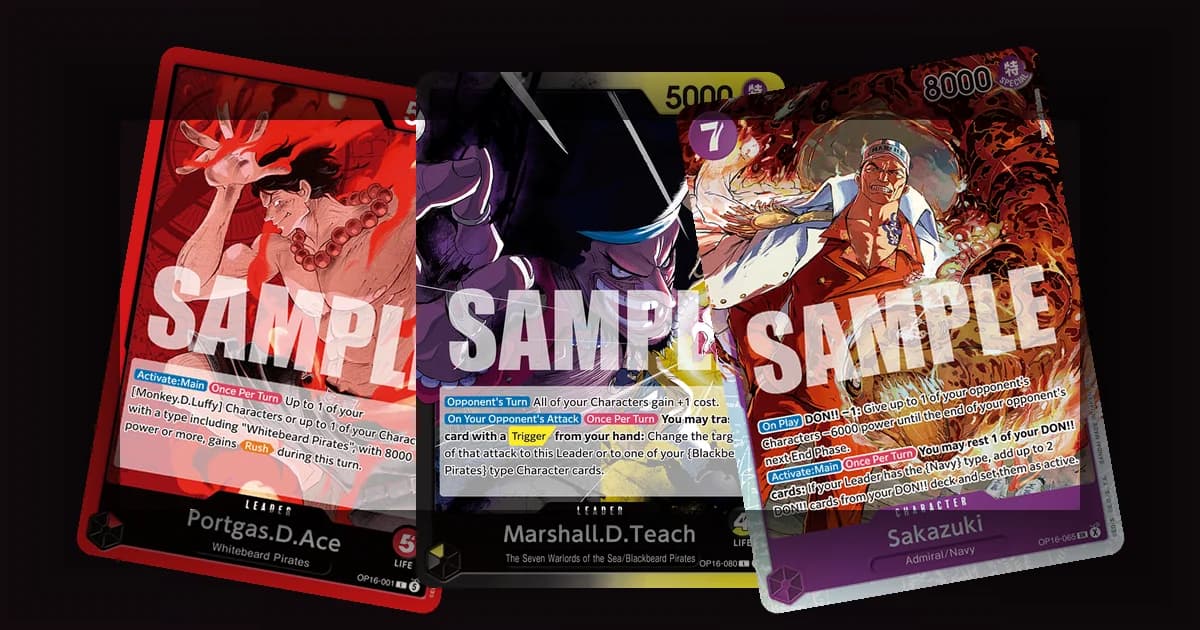
OP-16 Chase Cards: Best to Pull & Value Guide (2026)
Guides · 12 min
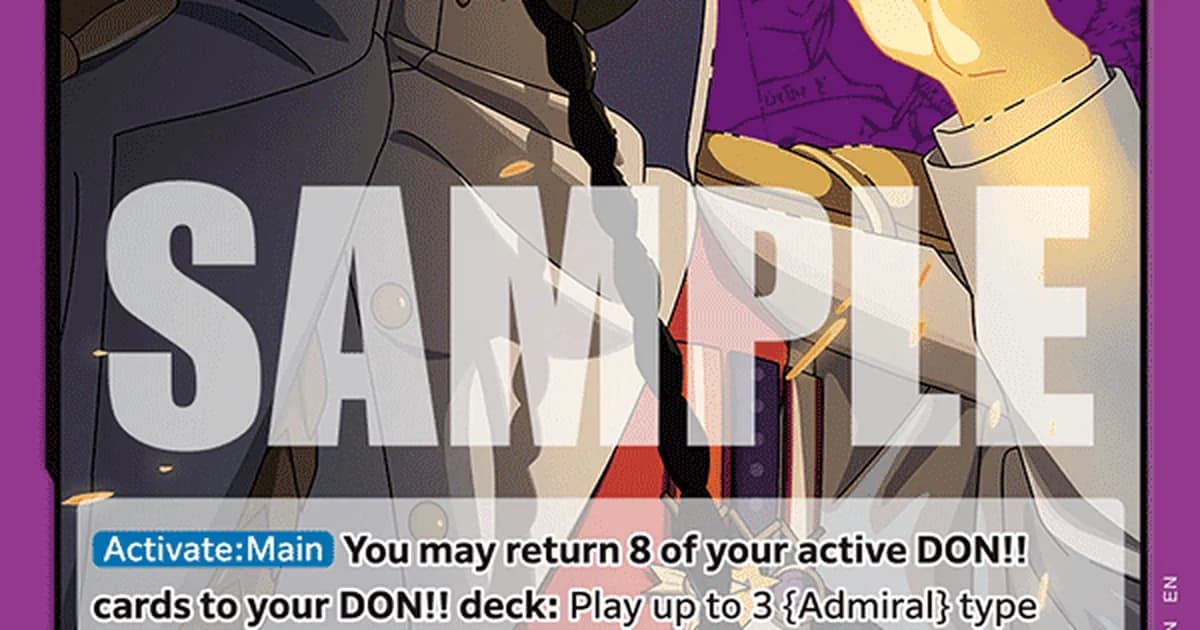
OP-16 All 6 Leaders Explained: Colors & Which to Build
Guides · 12 min

One Piece TCG How to Play: Rules & Mechanics (2026)
Guides · 16 min
One Piece TCG Most Expensive Cards 2026: Value Guide
Guides · 9 min
OP-16 Paramount War Leaders & Factions Guide (2026)
Guides · 12 min

One Piece TCG Colors: All 6 Colors and Deck Rules (2026)
Guides · 11 min
OP-16 Meta Tier List Week 1: Early EN Results (2026)
Guides · 10 min
Disclaimer
This article is published for informational and entertainment purposes. It does not constitute professional financial, legal, or technical advice. Game performance, online services, patch schedules, and store listings change. Verify critical details (pricing, system requirements, regional availability) with publishers and storefronts before you buy. Affiliate links, where present, help support our editorial work and are labelled in our affiliate disclosure.