

Shonen TCG · Guides
One Piece TCG Deck Building Guide: Build From Scratch

TL;DR: One Piece TCG deck building guide. Build leader-first: the leader sets your colors and Life. Then add exactly 50 cards (no more than 4 with the same card number, all in-color), plus a 10-card DON!! deck. Target ~32-38 Characters, 6-10 Events (mostly counters), 0-4 Stages. Prioritize a smooth cost curve and a counter package. Add your win condition last. Upgrade counters, then consistency, then finishers.
One Piece TCG deck building guide: quick answer
Every One Piece TCG deck is built with the same skeleton, regardless of leader:
- 1 Leader card, sets your colors and starting Life
- 50-card main deck. Characters, Events, Stages (no more than 4 with the same card number)
- 10-card DON!! deck, your resource engine, identical cards
- Color rule, every card must match your leader's color(s)
The method that matters: build leader-first. Pick the leader, then fill the 50 with cards that serve its strategy. Everything else follows from that choice.
GODEEPER: New to the rules entirely? Learn the turn structure and DON!! system first. One Piece TCG How to Play: Rules & Mechanics
Step-by-Step: Building a One Piece TCG Deck
Here is the full build process in order. Each step gets a deeper breakdown further down the page.
1. Choose your leader. Pick a mono-color leader for consistency or a two-color leader for flexibility, and read its ability before building around it.
2. Build the cost curve. Spread your plays across 1-2, 3-4, 5-7, and 8+ Don!! cost so you have something to do on every turn.
3. Pick your card ratios. Start around 32-38 Characters, 6-10 Events, and 0-4 Stages, then skew toward Characters for aggro or Events for control.
4. Build the counter package. Start by testing 8-14 counter-relevant cards, built around 2000-value counters plus a few high-value Events, before spending budget on finishers.
5. Lock in your win condition. Decide whether the deck is aggro, mid-range, or control, and build every other slot to support that single plan.
6. Respect the color rule. Only run cards that match your leader's color identity; no off-color splashes are legal.
7. Playtest and tune. Track weak turns, dead cards, and counter shortages, then adjust one variable at a time until the deck performs consistently.
Step 1: Choose Your Leader
The leader is the single most important decision because it locks in your colors, your Life total, and a leader ability you use every game.
- A mono-color leader (e.g. a Red aggro leader) restricts you to one color but offers maximum consistency.
- A two-color leader opens a second color and dual-color cards, trading some consistency for flexibility.
Your leader's ability also hints at your strategy. An aggressive leader wants Characters that attack; a control leader wants removal and card advantage. Read the leader first, then build toward what it rewards.
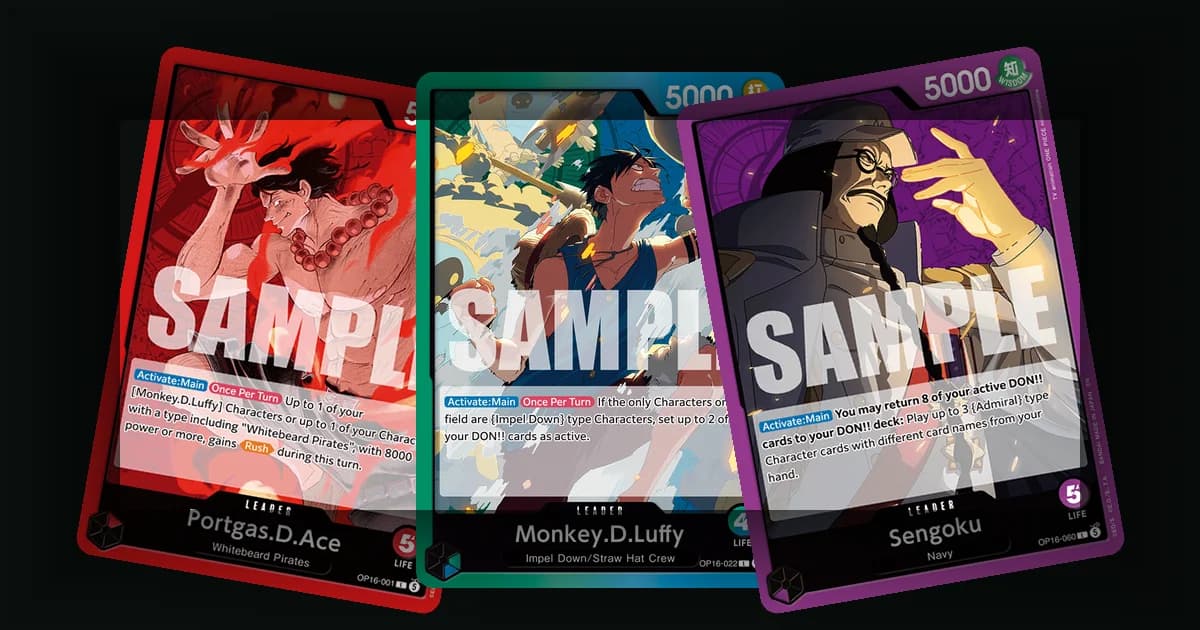
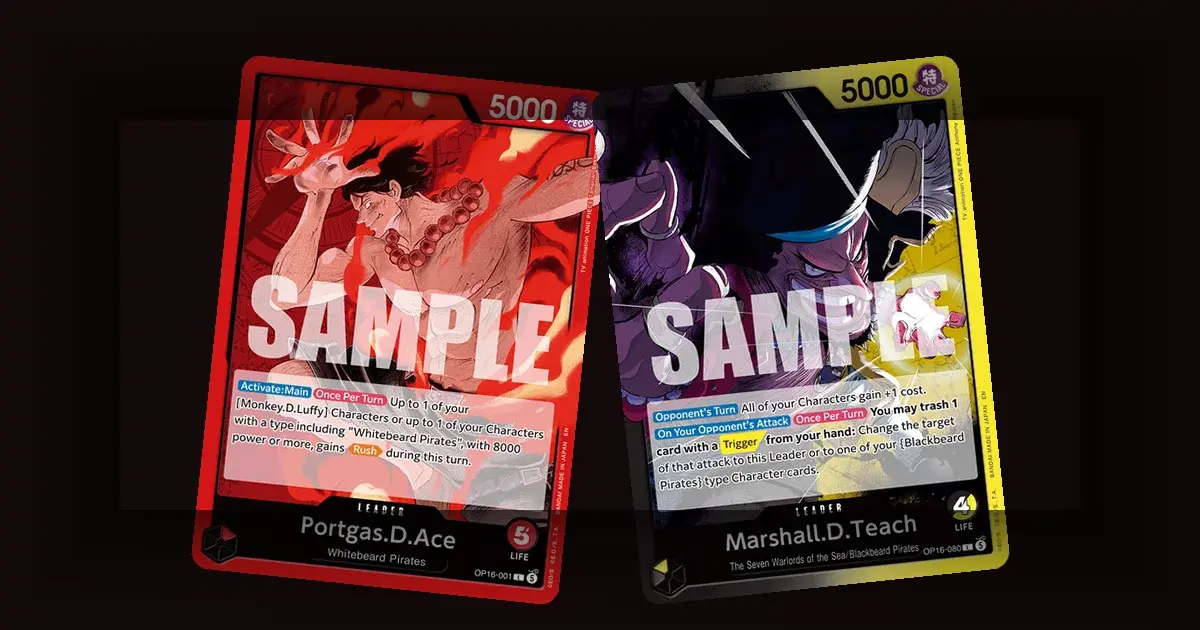
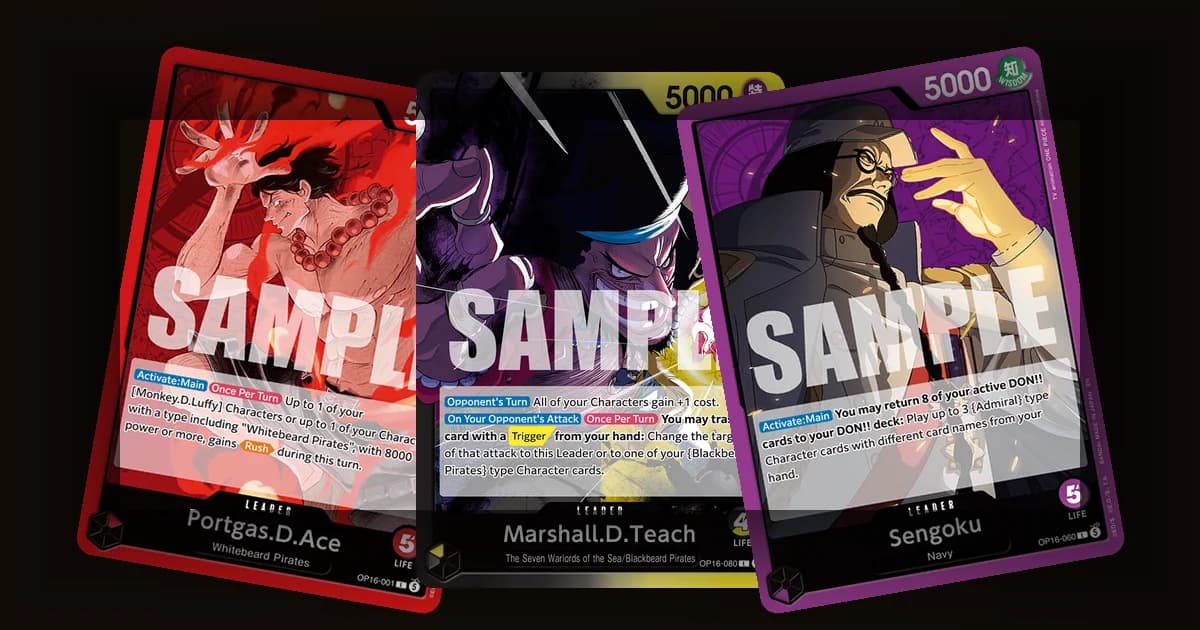
For OP-16 specifically, the six leaders span every strategy, from 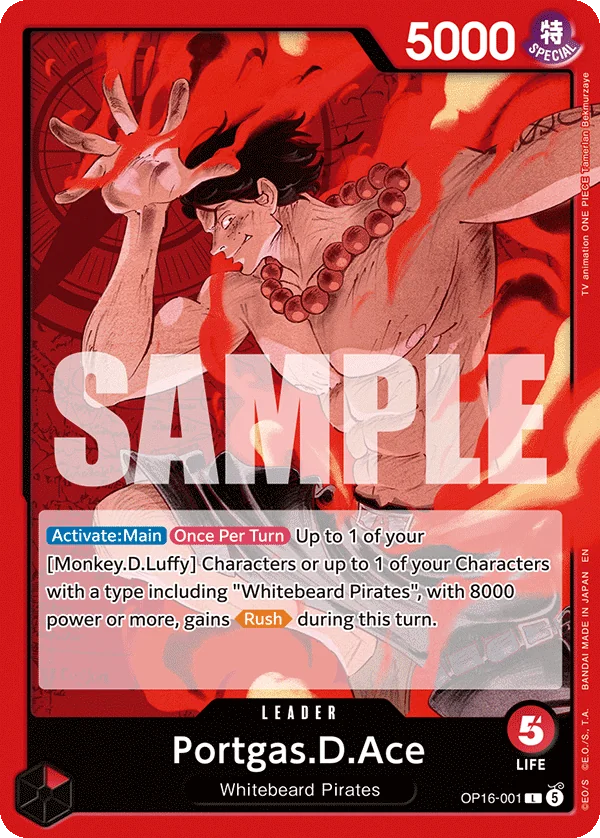 OP16-001OP16-001Shop on TCGplayer Ace's burn aggro to
 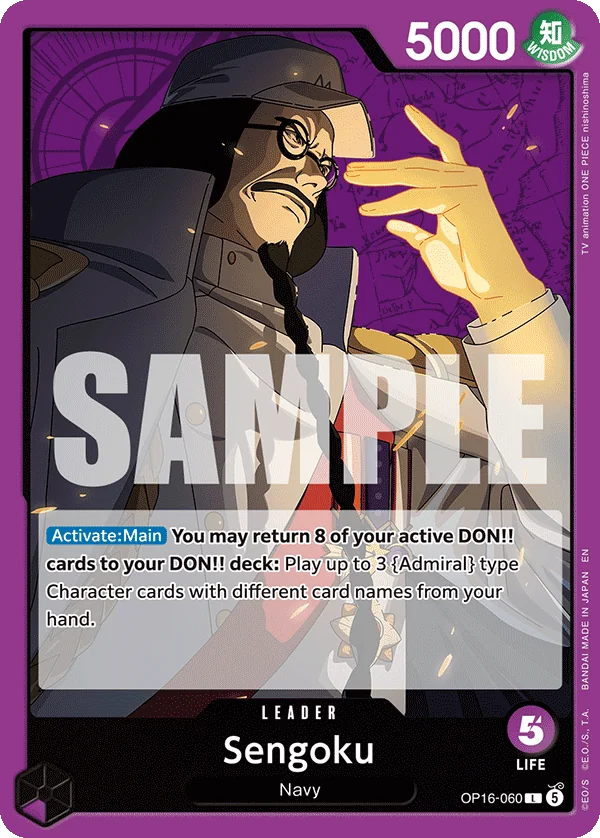 OP16-060OP16-060Shop on TCGplayer Sengoku's Navy control. See OP-16 All 6 Leaders Explained to pick one.
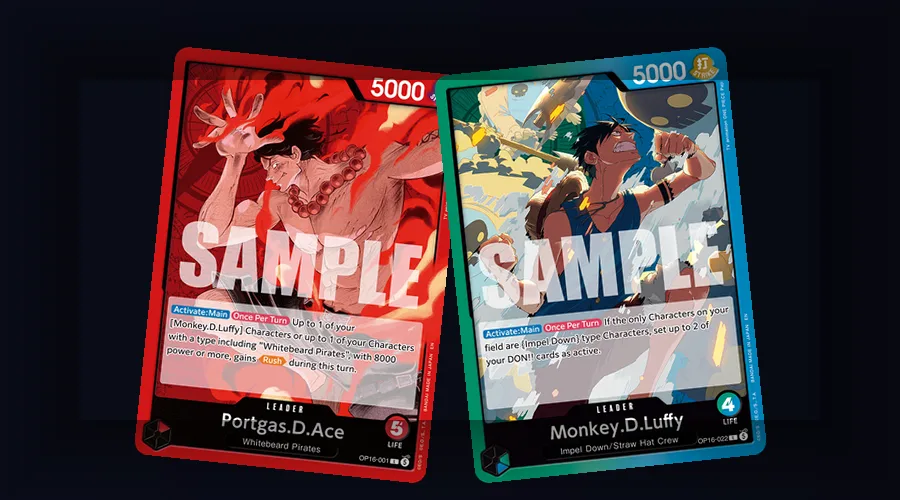 Your leader sets your colors, Life, and strategy. Build leader-first: every card in the 50 should serve the plan the leader rewards.
Step 2: Build the Cost Curve
A deck that cannot act on early turns loses to one that can. The cost curve is how your plays spread across DON!! values.
A healthy curve has plays at every stage:
- 1-2 cost: early board presence and synergy enablers
- 3-4 cost: the workhorse Characters that carry the mid-game
- 5-7 cost: impactful threats and finishers
- 8+ cost: a small number of game-enders (control decks lean here)
The common mistake: stacking too many expensive cards. A hand full of 7-cost Characters does nothing on turns 1-3. Most decks want the bulk of their cards in the 2-5 cost range, with a thin top end. Aggro curves lower; control curves higher, but even control needs early defense.
Step 3: Pick Your Card Ratios
A reliable starting frame for a 50-card deck:
- Characters: 32-38, the backbone; they attack, block, and trigger effects
- Events: 6-10, mostly counters, plus a few removal or draw effects
- Stages: 0-4, optional persistent effects, deck-dependent
Skew Characters higher for aggro, Events higher for control. These are starting points, not rules; tune them by playtesting. The one constant: do not skimp on the counter package.
Step 4: Build the Counter Package
Counters are high-impact defensive cards because they matter whenever you need to survive an attack. When your opponent attacks, you play counter cards from hand to boost a defender's power and survive.
- Run a base of 2000-value counters as your bread-and-butter defense
- Add a few high-value counters for clutch moments
- Treat 8-14 counter-relevant cards as a starting test range, then tune it for your leader and format
Budget builders especially should buy counters before expensive finishers. A complete counter package often matters more than one flashy bomb because it can help in every game you play. For current leader-by-leader purchase totals, compare the One Piece TCG Budget Decks snapshot.
GODEEPER: Building on a tight budget? See which counters and staples to buy first. OP-16 Budget Deck Guide
Step 5: Lock In Your Win Condition
Every deck needs a clear answer to "how do I actually win?" There are three common templates:
- Aggro: race the opponent's Life with consistent attacks and Rush threats, aiming to close before the opponent's late game.
- Mid-range: deploy efficient Characters that out-value the opponent, then close once ahead.
- Control: survive early with counters and removal, then win late with overwhelming finishers.
Your leader points you toward one of these. Build the rest of the deck to support that single plan rather than hedging across all three. A focused deck that does one thing well beats a muddled deck that does three things poorly.
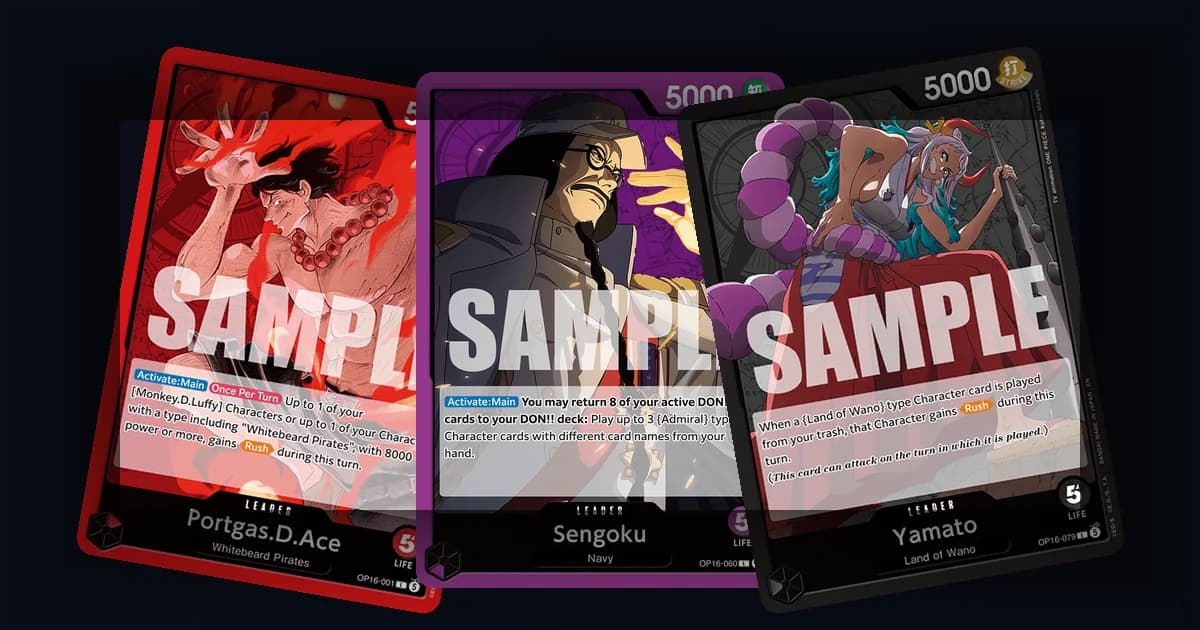
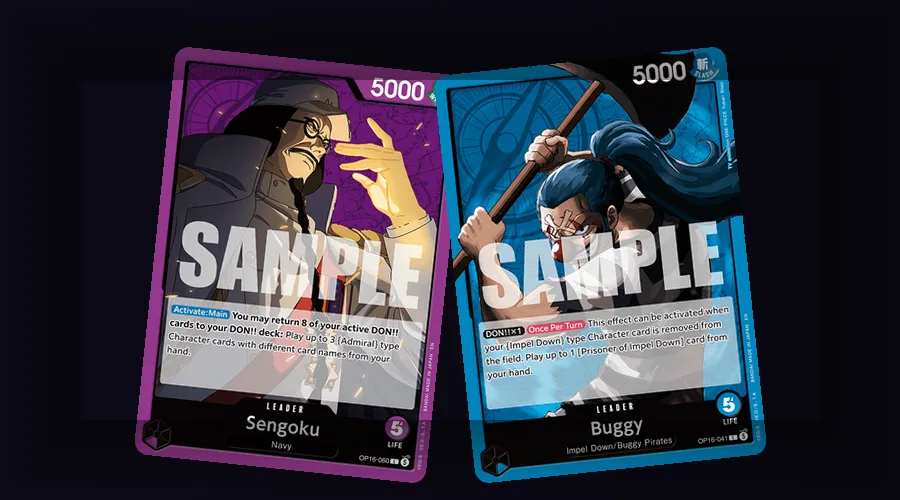 These Leader cards point toward different deck plans; let the chosen ability guide your curve and card ratios.
Step 6: Respect the Color Rule
You cannot splash off-color cards. A mono-Red leader runs only Red cards; a Red/Green leader runs Red, Green, and Red/Green dual cards. This is the constraint that makes leader choice define your whole deck.
When evaluating a card, check its color first. A powerful card you cannot legally run is irrelevant to your build. This is also why two-color leaders are popular: they widen your legal card pool, at a small cost to consistency.
For how color shapes strategy, see One Piece TCG Colors Explained.
Step 7: Playtest and Tune
A list on paper is a hypothesis. Playtesting reveals the truth.
- Track weak turns: if turn 2 is consistently dead, add more 2-cost cards
- Track dead cards: if a card never feels good, cut it
- Watch your counter count: if you keep dying to one extra attack, add counters
- Mulligan honestly: if you mulligan most hands, your curve or ratios are off
Tune one variable at a time so you can tell what helped. Studying a few tournament lists for your leader short-cuts this process by showing proven ratios you can adapt. Keep a written log of each change and the result; over a few sessions you build an intuition for your deck's ideal ratios that no netdeck can hand you directly, because every local meta rewards slightly different tuning.
Once you've settled on a list, get it a proper box. Our deck box and storage buying guide covers capacities for single- versus double-sleeved decks.
Common Deck Building Mistakes
- Too many one-of cards: running singles of many cards wrecks consistency. Use up to four copies of key pieces when the card-number rule allows it.
- Ignoring the curve: a top-heavy deck has dead early turns.
- Skimping on counters: the most common budget error; counters win games.
- Building around a Character instead of a leader: start from the leader, always.
- Copying a netdeck without understanding it: know why each card is there so you can adapt.
Key Takeaways
- Build leader-first: the leader sets colors, Life, and strategy
- Exactly 50 main cards + 1 leader + 10 DON!!, no more than 4 with the same card number, all in-color
- Target ~32-38 Characters, 6-10 Events, 0-4 Stages, then tune
- A smooth cost curve with early plays is non-negotiable
- Start by testing a counter package of roughly 8-14 cards, then tune it to the leader and format
- Pick one win condition and build everything to support it
GODEEPER: Ready to take your deck to an event? The tournament guide covers format, registration, and what to bring. One Piece TCG Tournament Guide 2026
Related Reading
-
One Piece TCG Beginner Guide 2026: How to Play & Rules: Core rules, DON!! system, and turn structure for players new to One Piece TCG.
-
One Piece TCG Trade Guide: How to Trade Cards Fairly: One Piece TCG trade guide.
-
One Piece TCG DON!! System Explained: A deeper look at the resource engine every deck depends on.
-
One Piece TCG Keywords Explained: The card-text terms you'll run into while picking ratios.
-
One Piece TCG Mulligan Guide: How to judge whether your curve-tuned opening hand is a keeper.
-
How to Play One Piece TCG Online: No Official App Yet: Test the deck you just built against a real opponent digitally.
-
One Piece TCG Common Beginner Mistakes: Deck-building pitfalls beyond the ones covered above.
-
One Piece TCG Best Leaders of All Time: Broader leader context once you've picked your deck-building direction.
Frequently Asked Questions
Q: How do you build a deck from scratch? A: Leader-first. The leader sets colors and Life; then add 50 cards in-color (no more than 4 with the same card number) plus a 10-card DON!! deck, with a curve, counters, and a win condition.
Q: How many cards are in a deck? A: Exactly 50 in the main deck, plus 1 leader and a separate 10-card DON!! deck.
Q: What is a good card ratio? A: Roughly 32-38 Characters, 6-10 Events (mostly counters), 0-4 Stages. Skew to Characters for aggro, Events for control.
Q: How important is the curve? A: Critical. A smooth curve with early plays prevents dead opening turns. Avoid stacking high-cost cards.
Q: How many counters should I run? A: Start around 8-14 counter-relevant cards, then adjust for the leader and format. Counters give you more ways to survive attacks.
Q: Can I mix colors? A: Only colors your leader allows. No off-color splashes. Leader choice defines your legal card pool.
Q: Best way to learn deck building? A: Start from a starter deck, study tournament lists for your leader, then upgrade counters, consistency, and finishers in that order.
References
- One Piece Card Game Official Rules: Deck construction rules and DON!! system
- One Piece Card Game Official Rule Manual: 50-card deck, color, copy-limit, and DON!! requirements
- One Piece Card Game Deck Builder: Official tool to build and test lists
- Limitless TCG OPTCG: Tournament lists and proven ratios
- TCGPlayer One Piece TCG: Card pricing for acquiring staples
- r/OnePieceCardGame: Community deckbuilding discussion
Was this guide helpful?
Cards in this article
About the author
Pen name for the Shonen TCG desk's tournament coverage, format analysis and cross-game comparisons.
- Results taken from event pages and standings
- Other games checked against their own official rules
- Opinions marked as ours, with the reason
Keep reading
One Piece TCG Budget Competitive Guide 2026 Under $100
Guides · 13 min
One Piece TCG Meta Rotation Guide: When to Sell Cards
Guides · 15 min
One Piece TCG Trade Guide: How to Trade Cards Fairly
Guides · 13 min
One Piece TCG Standard Format Guide 2026: Legal Sets
Guides · 12 min
OP-16 Ace Deck Guide: Whitebeard Pirates Rush Build
Guides · 12 min
OP-16 Collectors Guide: SEC, Manga Rare, Alt-Art Cards
Guides · 11 min
OP-16 Box Opening Strategy: How Many Boxes to Open
Guides · 10 min

OP-16 vs OP-15 power level comparison: what changed?
Guides · 11 min
Disclaimer
This article is published for informational and entertainment purposes. It does not constitute professional financial, legal, or technical advice. Game performance, online services, patch schedules, and store listings change. Verify critical details (pricing, system requirements, regional availability) with publishers and storefronts before you buy. Affiliate links, where present, help support our editorial work and are labelled in our affiliate disclosure.