

Shonen TCG · Guides
One Piece TCG Tournament Guide: How to Compete (2026)
This One Piece TCG tournament guide covers what changes between store events, Store Championships, Regionals, and the larger Championship Organized Play events in 2026.
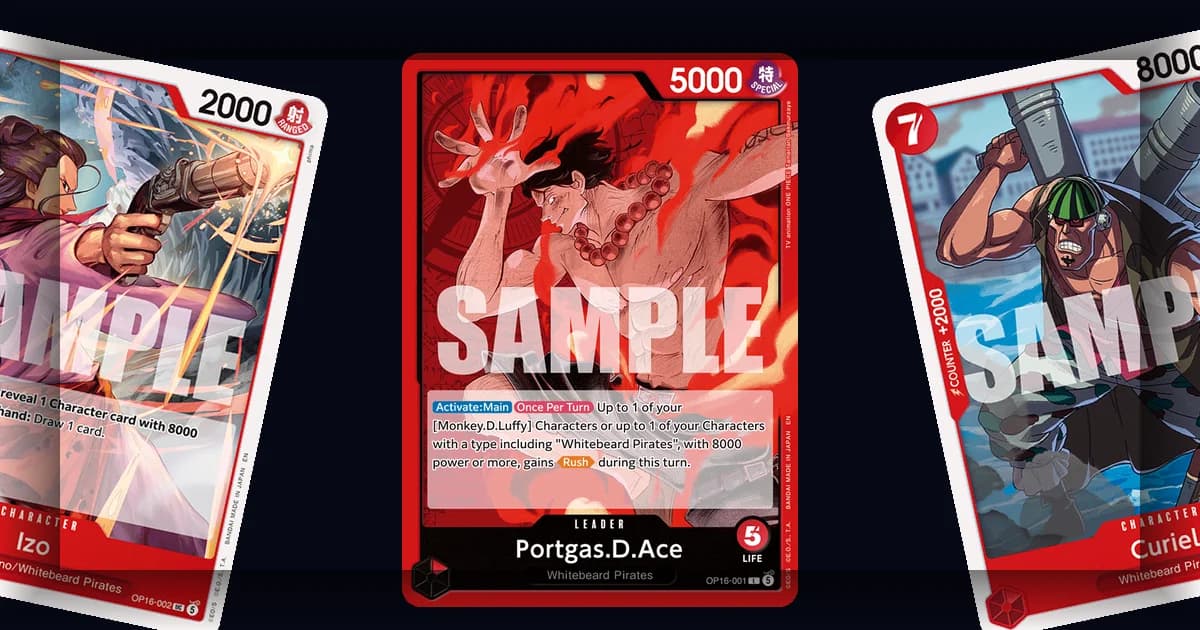
The most important correction for current players is simple: constructed One Piece Card Game events do not use a side deck. You need one Leader, a 50-card main deck, and 10 DON!! cards. Match format, time limits, language rules, and the need for a deck list depend on the event level and region, so read the individual listing before you travel.
For the wider set history, see our complete One Piece TCG sets guide. This page focuses on the practical details that can cost you a match if you learn them from an old guide.
TL;DR: Use Bandai TCG+ to find the event, confirm the advertised format, bring one legal Leader, 50 main-deck cards, 10 DON!! cards, opaque matching sleeves, and any required deck list. Current professional events generally use best-of-one qualifying rounds and best-of-three top cut matches. There is no constructed side deck.
One Piece TCG tournament guide: quick answer
Find the event in Bandai TCG+, check its region and format, prepare a legal 50-card list, and arrive early enough to register. The current Tournament Rules Manual classifies events as Level 1 Casual, Level 2 Competitive, or Level 3 Professional. It also sets the official deck, language, sleeve, timing, and Swiss-round framework.
Key Takeaways
- A constructed tournament deck is 1 Leader, 50 Character, Event, or Stage cards, and 10 DON!! cards.
- No side decks are permitted in constructed play, so every card you may play must be in the registered main deck.
- Level 3 qualifying rounds should use best-of-one; top cut uses best-of-three. The current standard clocks are 30 minutes plus 5 minutes of extra time for qualifying and 60 minutes plus 10 minutes for top cut.
- Swiss-round count depends on attendance. The organizer must announce the number of rounds before round 1.
- North America, Latin America, and Oceania require English Leader and Main Deck cards at official events. Europe allows English or French for those cards.
- Championship-level events require a full deck list with collector number and full card name. A local organizer may require a list too if that requirement is advertised.
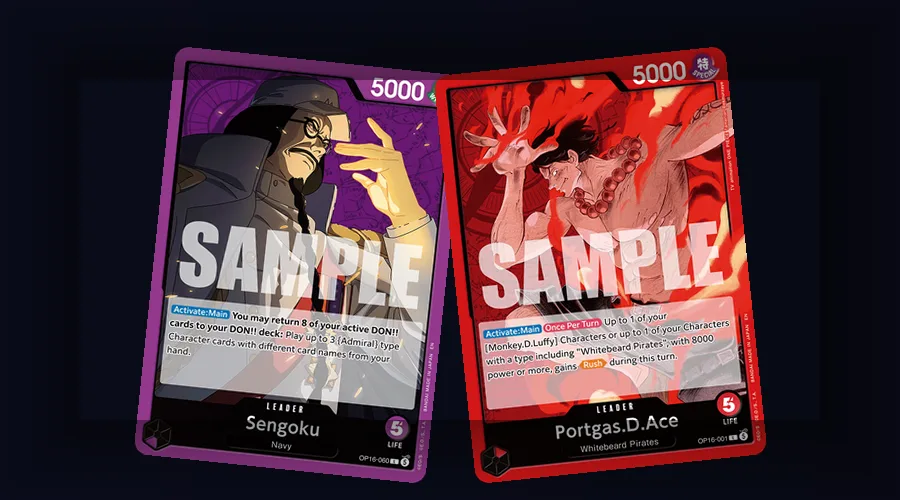 A legal constructed deck uses exactly 50 main-deck cards, one Leader, and a 10-card DON!! deck.
One Piece TCG tournament guide: event path
Level 1: store organized play
Level 1 includes store-organized constructed, draft, and prerelease events. These are the best place to learn how registration, pairings, judge calls, and reporting work. The store chooses the advertised schedule and may use a format that is more casual than a Regional.
One current 2026 Store Tournament notice lists best-of-one games with 35-minute matches and 5 minutes of extra time, but that is an event-specific notice. Read the listing rather than assuming every local uses that clock. Stores may also handle registration directly even when the event appears in TCG+.
Level 2: competitive store events
Level 2 includes Store Championship events and other special events. These events still depend on the published event information for format, entry, and schedule, but they use competitive rules enforcement. Bring a legal deck, matching sleeves, and extra sleeves even if the store does not ask for a deck list.
Level 3: professional organized play
Level 3 covers the Championship Organized Play Series, which may include Treasure Cups, Regionals, Nationals, and World Championship events. The current Championship 26-27 Finals page says that North American and European Finals invitations are earned through Regional events, while invitation requirements differ in other regions.
Do not use the old idea that every Regional has a fixed top 8 or that every major uses best-of-three from round 1. The manual sets the match structure and round table below, while the specific event page tells you how that event is being run.
Match structure and Swiss rounds
For professional events, the current manual recommends best-of-one during qualifying rounds and best-of-three for top cut. The published structures are:
| Stage | Games needed | Match time | Extra time |
|---|---|---|---|
| Standard qualifying | 1 | 30 minutes | 5 minutes |
| Top cut finals | 2 | 60 minutes | 10 minutes |
| Championship top 2 | 2 | No time limit | Not applicable |
The expected Swiss and top-cut sizes are based on registered players:
| Players | Swiss rounds | Top cut when applicable |
|---|---|---|
| 4 to 8 | 3 | None |
| 9 to 16 | 4 | Top 2 |
| 17 to 32 | 5 | Top 4 |
| 33 to 64 | 6 | Top 8 |
| 65 to 128 | 7 | Top 8 |
| 129 to 256 | 8 | Top 16 |
| 257 to 512 | 9 | Top 16 |
| 513 to 1024 | 10 | Top 32 |
| 1025 to 2048 | 11 | Top 32 |
An organizer can advertise an event with no top cut. The round count must be announced before round 1 and cannot be changed after it is announced, except under the variable-round procedure described in the manual.
Deck registration and card legality
A constructed deck contains:
- 1 Leader card
- 50 cards made up of Characters, Events, and Stages
- 10 DON!! cards
- No more than four cards with the same card number
- Only colors included on the Leader card
- No side deck
At Championship-level events, the deck list must include each card's collector number, full name, and quantity. Shorthand is not enough. Once submitted, the list cannot be changed unless a judge requests or permits a correction. Your physical deck must match the list exactly during deck checks.
When your list includes OP-16 examples such as Sakazuki 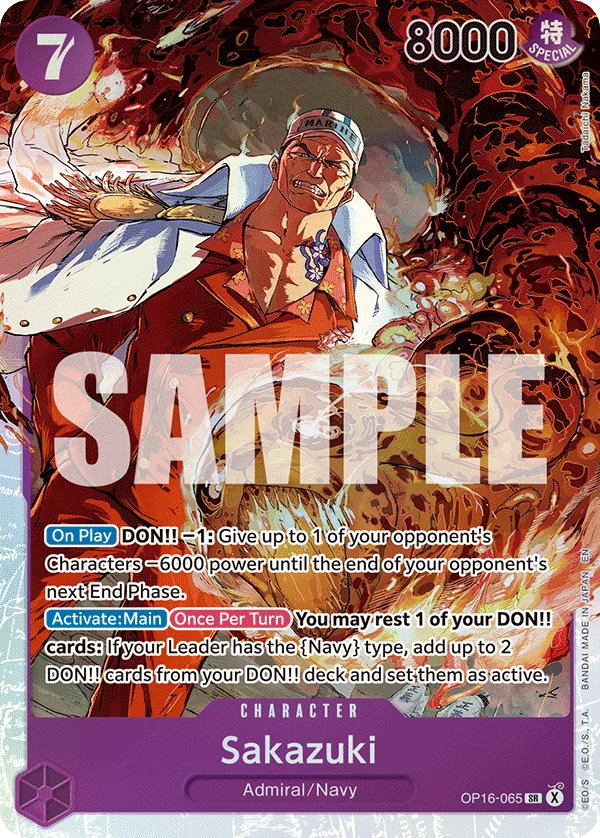 OP16-065OP16-065Shop on TCGplayer, Marco
 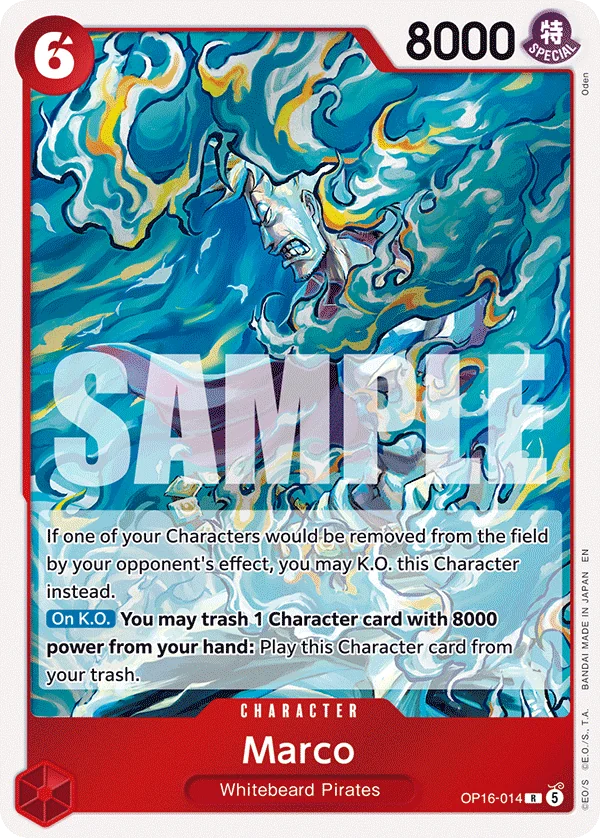 OP16-014OP16-014Shop on TCGplayer, or Buggy
 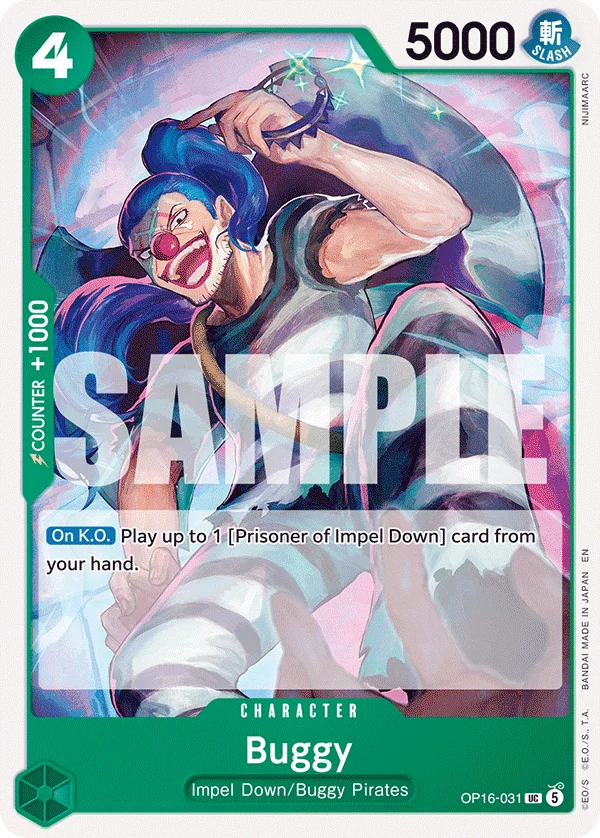 OP16-031OP16-031Shop on TCGplayer, write the exact card name and collector number from the current card database. The shortcode examples identify CHARACTER cards, not Leaders or side-deck options.
Card legality also has a release delay. The current manual says official sets are legal at Level 2 and Level 3 events seven days after release, while Level 1 events can use them on the release date, including the prerelease date. New-number promotional cards follow a separate seven-day or release-day rule depending on event level. Check the current official rules page and event FAQ before using a new card.
Language, sleeves, and tournament materials
The language rule is regional, not a blanket English-only rule. North American, Latin American, and Oceanian official events require English for the Leader and Main Deck. European events allow English or French. Officially distributed DON!! cards may be any language.
Main Deck sleeves must be opaque and identical in color, wear, and design. Leader and DON!! cards must be sleeved or unsleeved in a way that distinguishes them from the Main Deck. Bring extra sleeves because worn or marked sleeves can create a deck-check problem. A playmat is optional, but it must fit the play space and meet the event's conduct requirements.
Your practical tournament kit should include:
- Your legal Leader, 50-card Main Deck, and 10 DON!! cards
- Extra matching sleeves
- A pen for result slips where applicable
- A legal form of identification if the event requires it
- Proof of registration or the entry fee
- Counters or tokens that cannot be confused with game elements
- Water and anything you need between rounds, subject to venue rules
Players are not allowed to take notes during official Bandai organized play. Keep phones and unrelated objects away from the game area unless a judge or organizer has approved their use.
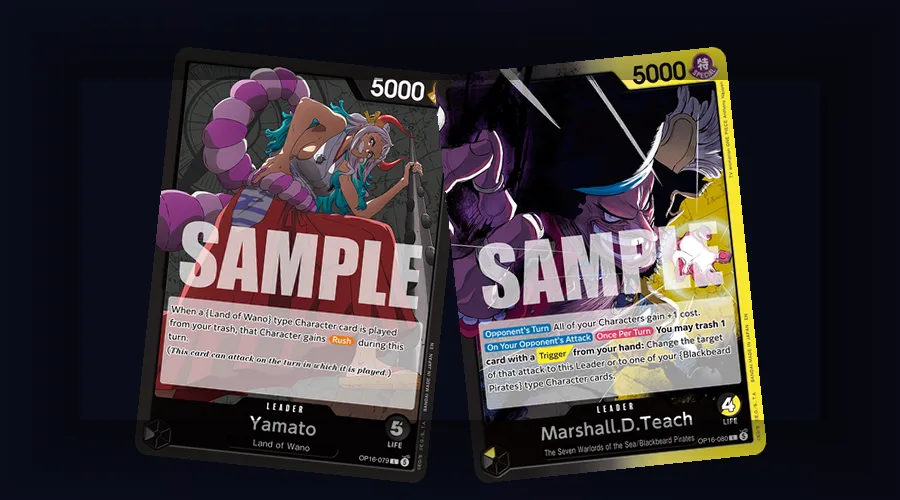 A varied field of Leaders rewards a list that is legal, sleeved consistently, and ready for the advertised format.
Timed rounds and judge calls
When time is called in a Swiss match, notify a judge if you need help and note who is the active player. If players are between games, the player with more game wins takes the match. If the game score is tied, the match can be a draw in Swiss play.
If time is called during a game, the active player finishes the current turn as turn 0, followed by three additional turns. If neither player wins, compare the number of Life cards, then cards remaining in deck, then Characters in the Character area, and then which player last removed a card from a Life area. The manual applies a five-minute limit to the extra-turn procedure.
Top cut and single-elimination rounds do not permit a draw. If time is called there, the same tie-break sequence determines a winner. The Championship match itself has no time limit.
Call a judge as soon as a rules problem occurs. Do not try to repair a disputed game state several turns later. The official manual also prohibits intentional draws and requires players to try to obtain a result, so do not agree to an ID even if both players think it is convenient.
How to choose and test your first tournament deck
Start with a list you can explain, not just one that won a recent event. Check its card numbers against the current card database, confirm the format and release dates, and practice the first three turns until you can play them without searching for every effect.
Our deck-building and mulligan guides can help with ratios and opening hands once you know which cards your own Leader needs. Do not assume an old OP-16 list is legal or well positioned after a new set, restriction, or errata update.
SHOP: Getting ready for a One Piece tournament? Compare current One Piece Card Game listings for the deck and spare cards you still need. Shop TCGplayer →
Step-by-Step: Tournament Day Checklist
1. The night before, verify the event. Open the TCG+ listing, confirm the venue, registration window, advertised format, language region, and arrival time. Save the organizer's contact details.
2. Count and sleeve the deck. Count 50 Main Deck cards, confirm one Leader and 10 DON!! cards, check the four-copy limit, and verify the color restrictions. Replace worn sleeves and pack extras. There is no side deck to prepare.
3. Register early. Bring your Bandai TCG+ account, proof of registration or entry fee, identification if required, and a legible deck list if the event requests one. At a Championship-level event, use full card names and collector numbers.
4. Play the advertised match format. Note the clock before the first round. In a timed game, communicate clearly, keep your game area readable, and call a judge immediately for a ruling. Do not take notes or place unrelated devices on the table.
5. Report and review. Confirm the result before submitting it. After the event, write down the matchups from memory outside official play, identify one rules or sequencing mistake, and make one testable change before the next tournament.
Related Reading
- OP-16 Full Card List and Spoilers: Card-pool reference for OP-16.
- One Piece TCG Beginner Guide 2026: Rules and mechanics before competing.
- Best One Piece TCG Decks for Beginners: Deck choices for a first event.
- One Piece TCG Deck Building Guide: Build a legal 50-card list.
- One Piece TCG How to Play: Rules review for tournament scenarios.
- One Piece TCG Mulligan Guide: Opening-hand decisions under tournament pressure.
Frequently Asked Questions
Can I change my deck between days at a multi-day event? No. Your submitted list controls the deck you play for that event unless a judge or organizer directs a correction. There is no constructed side deck to swap between games.
What happens if I forget my deck list? Ask the scorekeeper or judge before submitting anything. Championship-level events require a complete list, while other events may advertise their own requirement. Do not guess card names or quantities on a list you are signing as accurate.
How long do rounds typically take in One Piece TCG? The current standard qualifying structure is 30 minutes plus 5 minutes of extra time. Top cut is 60 minutes plus 10 minutes. A store event can publish a different approved structure, so the event listing controls.
Is there a minimum age requirement for OPTCG tournaments? There is no universal age rule stated in the tournament manual for every event. Individual Championship, convention, or store events may set age or identification requirements, so check the listing and contact the organizer if a minor is attending.
What is a game loss versus a match loss? A game loss applies to one game inside a match. A match loss ends the entire round for that player. The penalty and its application depend on the infraction and judge ruling, so call a judge rather than trying to assign the result yourself.
References
Was this guide helpful?
Cards in this article
About the author
Pen name for the Shonen TCG desk's tournament coverage, format analysis and cross-game comparisons.
- Results taken from event pages and standings
- Other games checked against their own official rules
- Opinions marked as ours, with the reason
Keep reading
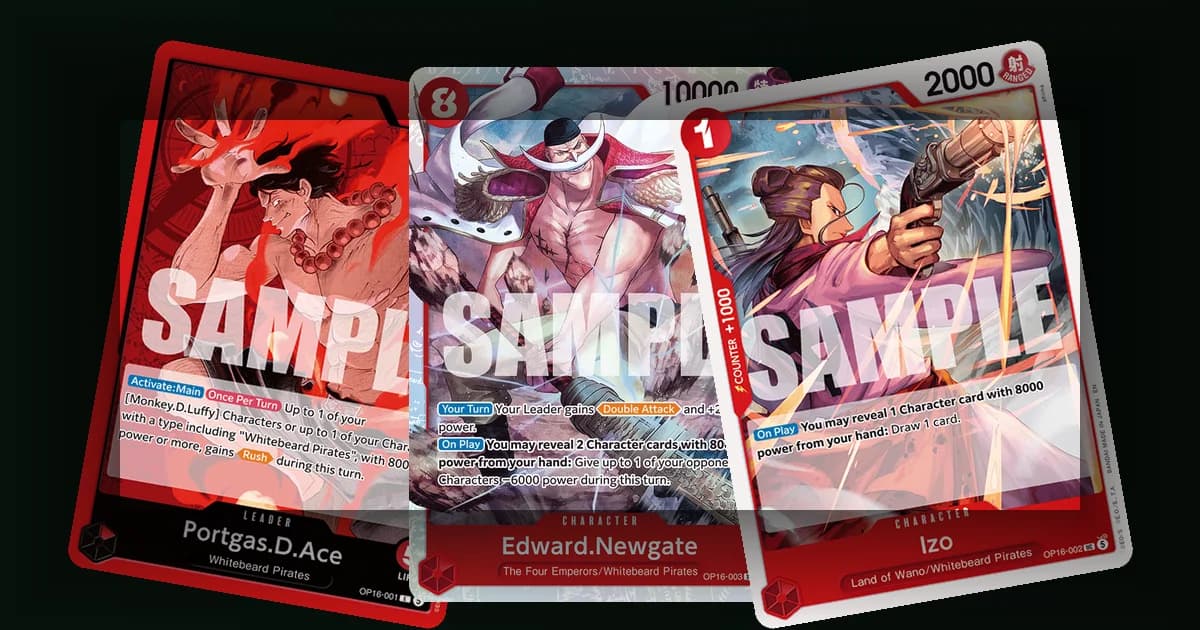
OP-16 is it worth buying? Box, singles, or sealed?
Guides · 9 min

All One Piece TCG Sets OP-01 to OP-17: Complete List (2026)
Guides · 13 min
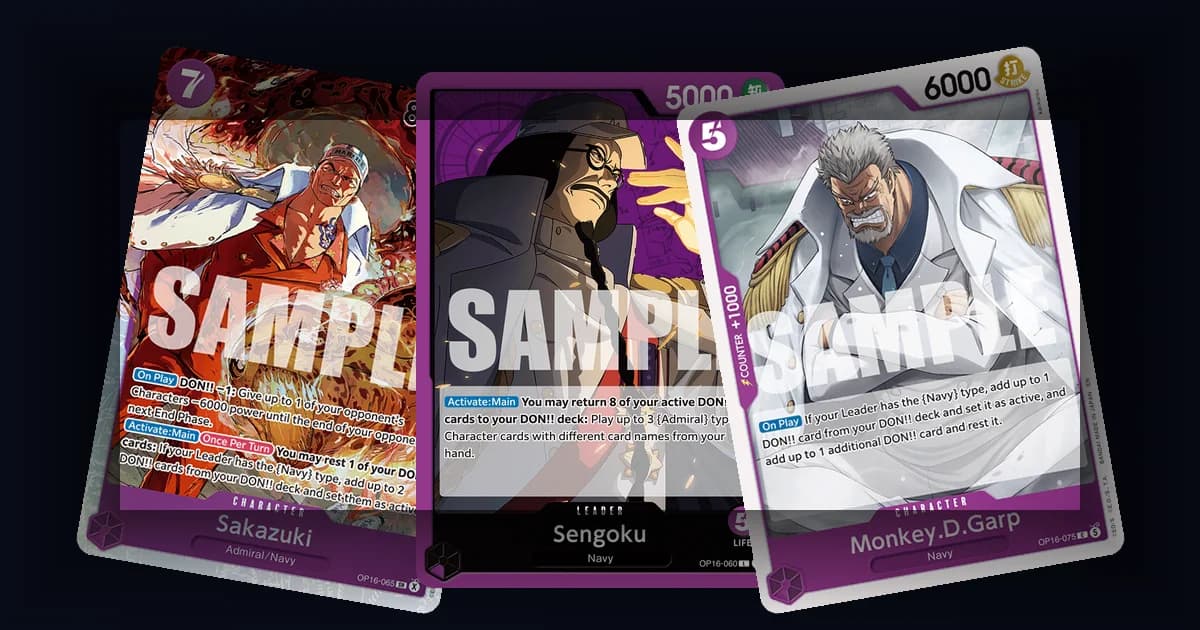
OP-16 Akainu deck guide: Sakazuki in Sengoku Navy 2026
Guides · 10 min
Best One Piece TCG Decks for Beginners: 5 Picks (2026)
Guides · 14 min
Best Anime TCG to Play in 2026: 5 Games Ranked and Compared
Guides · 12 min
OP-16 Garp Deck Guide: Sengoku Navy Build and Meta
Guides · 11 min
OP-16 Meta Tier List Week 1: Early EN Results (2026)
Guides · 10 min
One Piece TCG Most Expensive Cards 2026: Value Guide
Guides · 9 min
Disclaimer
This article is published for informational and entertainment purposes. It does not constitute professional financial, legal, or technical advice. Game performance, online services, patch schedules, and store listings change. Verify critical details (pricing, system requirements, regional availability) with publishers and storefronts before you buy. Affiliate links, where present, help support our editorial work and are labelled in our affiliate disclosure.