

Shonen TCG · Guides
One Piece TCG How to Play: Rules & Mechanics (2026)
Learning One Piece TCG how to play is mostly about putting five zones and five phases in the right order. The official rules use a 50-card main deck, one Leader, a 10-card DON!! deck, and a turn that runs Refresh, Draw, DON!!, Main, and End. Battles happen inside the Main Phase, not in a separate Battle Phase.

The first rules to memorize are simple: each player starts with five cards in hand, Life is based on the Leader's printed value, the first player skips their first draw and gets only one DON!!, and neither player can battle on their own first turn. After that opening restriction, the game becomes a repeated choice between developing Characters, paying for effects, attaching DON!! for the current turn, and deciding which attacks are worth defending.
TL;DR: One Piece Card Game uses 1 Leader, a 50-card main deck, and a 10-card DON!! deck. Each player draws five cards, may redraw once, then places Life equal to the Leader's printed Life value. Turns run Refresh, Draw, DON!!, Main, and End. The first player skips their first draw, gets one DON!!, and cannot battle on that first turn. You win by dealing damage to a Leader with 0 Life or by making an opponent reach 0 cards in their deck.
One Piece TCG how to play? (quick answer)
Before the first turn, each player prepares three separate pieces:
| Component | What it contains | What it does |
|---|---|---|
| Leader area | 1 Leader card | Sets your colors, Life value, power, and deck identity |
| Main deck | Exactly 50 Character, Event, and Stage cards | Supplies the cards you draw and play |
| DON!! deck | Exactly 10 DON!! cards | Pays costs and can increase power during your turn |
The Leader is not one of the 50 cards in the main deck. The DON!! deck is also separate. Your Life area is made from the top of your main deck after the opening hand and redraw procedure, so those cards are not an extra deck.
Deck construction rules
The official construction rules are the part to check before buying or copying a list:
- Your deck has exactly 1 Leader, 50 main-deck cards, and 10 DON!! cards.
- The main deck may contain Characters, Events, and Stages.
- A card must match one of the colors shown on your Leader.
- You may include no more than 4 cards with the same card number.
- Effects printed on specific cards can create exceptions to the normal construction rules.
A two-color Leader allows both of those colors, but it does not make every card legal. A card with a color outside the Leader's identity cannot normally be added to the deck. The Leader also determines how much Life you begin with, so do not assume every matchup starts at five Life.
The areas you will use
You will handle the deck, DON!! deck, hand, trash, Leader area, Character area, Stage area, cost area, and Life area. The cost area holds DON!! that is available or rested. Given DON!! sits under a Leader or Character until the Refresh Phase returns it to the cost area.
That last point matters. Giving DON!! is a temporary way to increase power for the current turn, not a permanent upgrade to the card. The official rules return given DON!! to the cost area rested during Refresh, then make rested cards in the cost area active.
One Piece TCG how to play: setup step by step
Use this order for a normal game:
- Present and thoroughly shuffle your 50-card main deck. Place it face-down in the deck area.
- Place your Leader face-up in the Leader area.
- Decide which player chooses whether to go first or second. Rock-paper-scissors or another agreed method can determine that player.
- That player declares whether they will go first or second.
- Each player draws 5 cards. Starting with the first player, each player may return their entire opening hand to the deck, reshuffle, and draw 5 new cards once.
- Each player places cards from the top of their deck face-down in the Life area equal to the Leader's Life value. The card that was on top of the deck becomes the bottom card of the Life area.
- The first player begins their first turn.
The redraw is not a partial mulligan. You return the whole hand, reshuffle it, and draw a new hand of five. The Life cards are placed after that redraw, and the number comes from the Leader rather than a universal five-card rule.
The first player has two opening restrictions. They do not draw during their first Draw Phase, and they place only one DON!! during their first DON!! Phase. Neither player can battle during their own first turn. That means the player going second draws normally on that player's first turn, receives two DON!!, but still cannot attack yet.
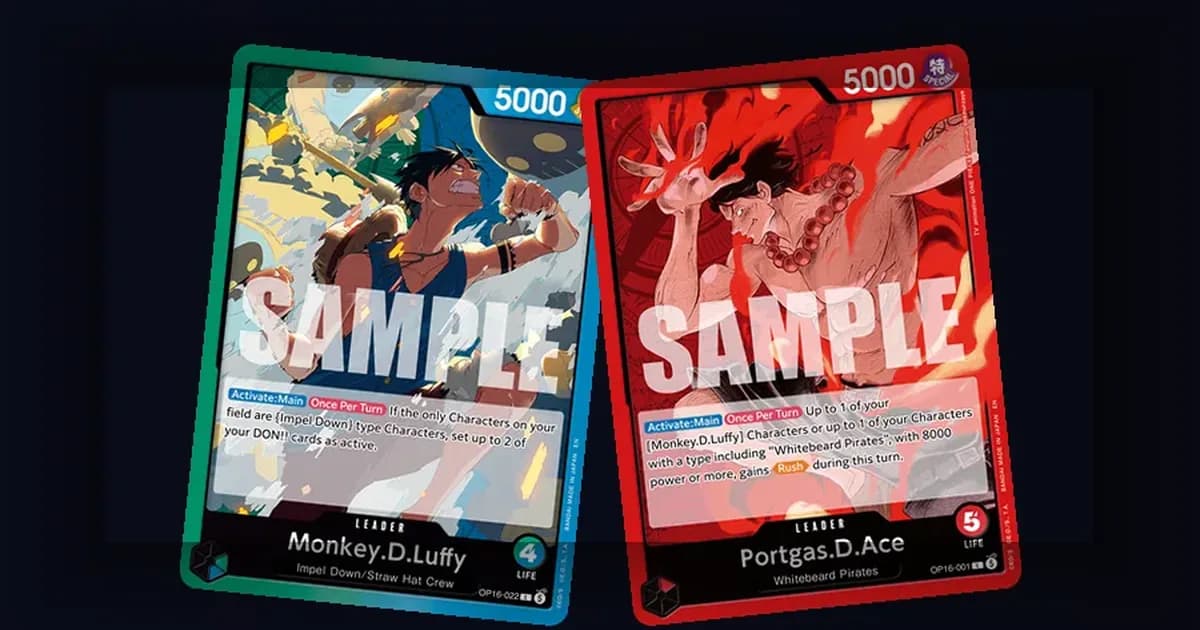
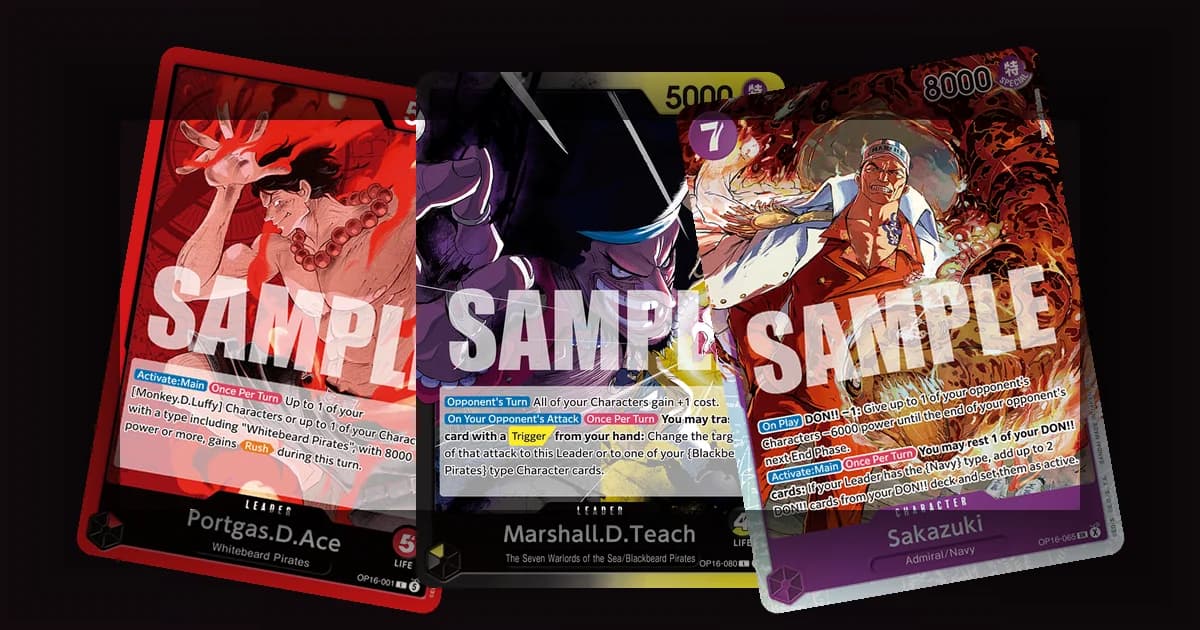
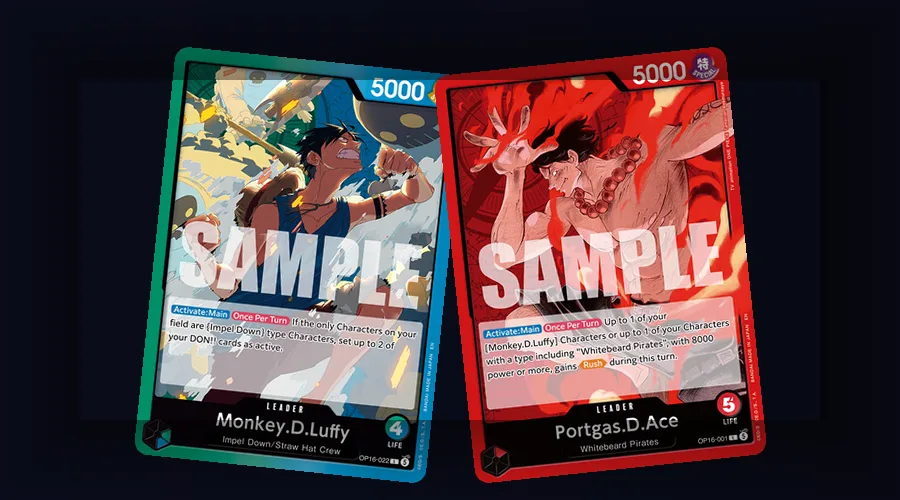 These real Leader cards show how a Leader card stays face-up in the Leader area and defines a deck's color identity.
One Piece TCG how to play: the turn flow
A turn has five phases. The Main Phase includes battles, so the order below is more flexible than a beginner may expect.
1. Refresh Phase
First, effects that last until the start of the next turn end and relevant start-of-turn effects activate. Given DON!! under your Leader or Characters returns to your cost area in the rested position. Then your rested Leader, Characters, Stages, and cost-area cards become active.
This is why a DON!! card given to a Character is not locked away forever. It helps that card's power during your turn, then comes back as a resource on the next Refresh.
2. Draw Phase
Draw one card from your deck. The player going first does not draw on that player's first turn. If an effect changes the normal draw, follow the effect's text and the current rules interaction.
3. DON!! Phase
Place two DON!! cards from the DON!! deck face-up in your cost area. On the first player's first turn, place only one. If only one DON!! remains, place one; if none remain, place none.
DON!! in the cost area can be rested to pay a cost. Active DON!! can also be given to your Leader or a Character during the Main Phase. The pile is shared only in purpose, not in ownership: each player has a separate 10-card DON!! deck.
4. Main Phase
You can take the following actions in any order and repeat them as often as the available cards and costs allow:
- Play a Character or Stage by paying its cost.
- Activate an Event with a [Main] effect.
- Activate a [Main] or [Activate: Main] effect.
- Give active DON!! from the cost area to your Leader or a Character.
- Start a battle with an active Leader or Character.
You do not have to finish all card plays before attacking. For example, you can play a Character, give DON!! to the Leader, attack, then play another card if you still have the resources and legal actions to do so.
A Character normally cannot attack on the same turn it is played. [Rush] is the keyword that allows a Character to attack on the turn it enters play. The first-turn battle prohibition still applies, so Rush matters after that opening restriction rather than creating a first-turn attack.
5. End Phase
End-of-turn effects resolve and temporary effects expire according to their text. There is no general discard-down step in the standard turn flow. When the End Phase finishes, the other player becomes the turn player and begins Refresh.
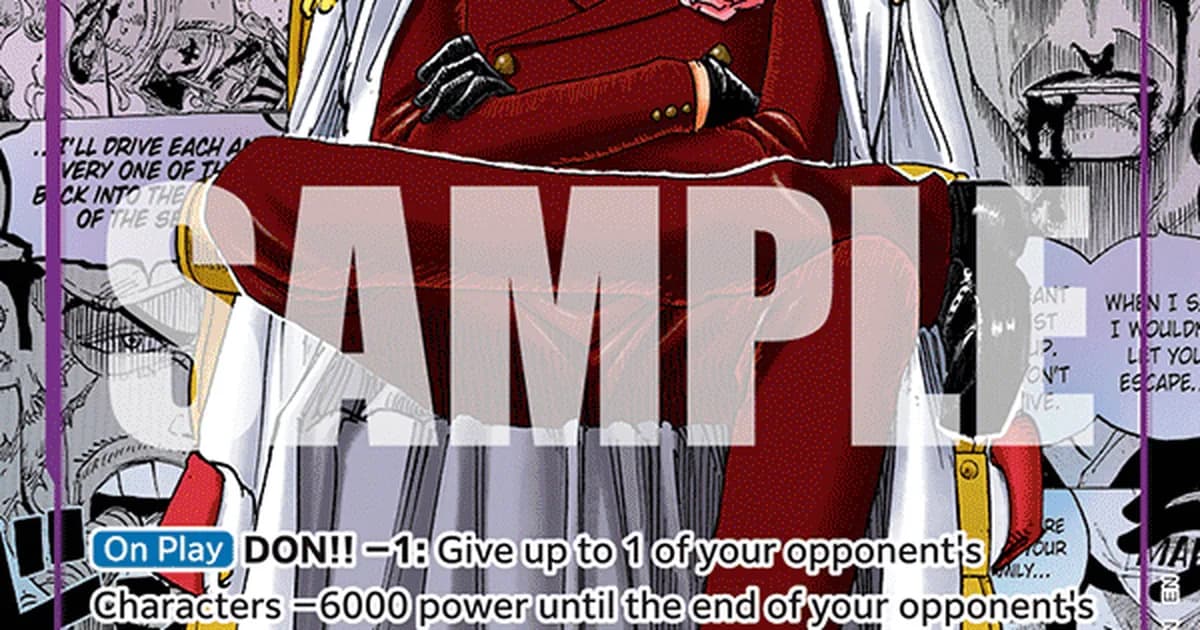
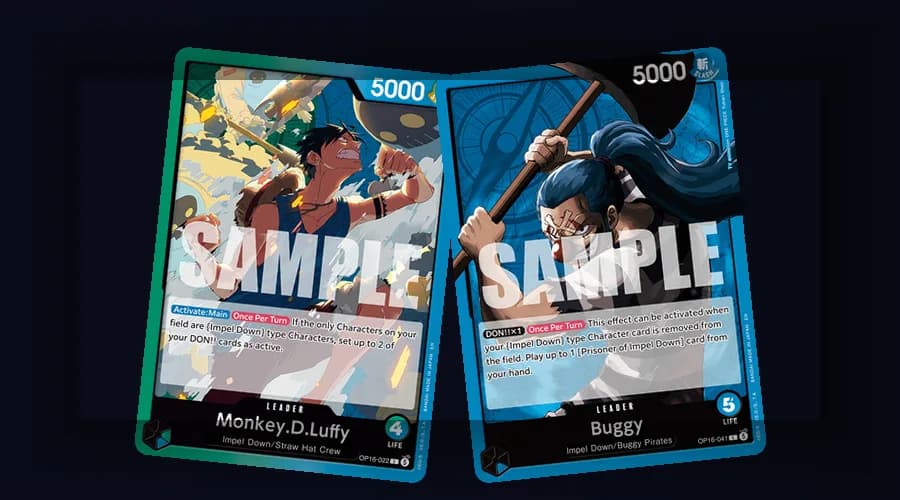
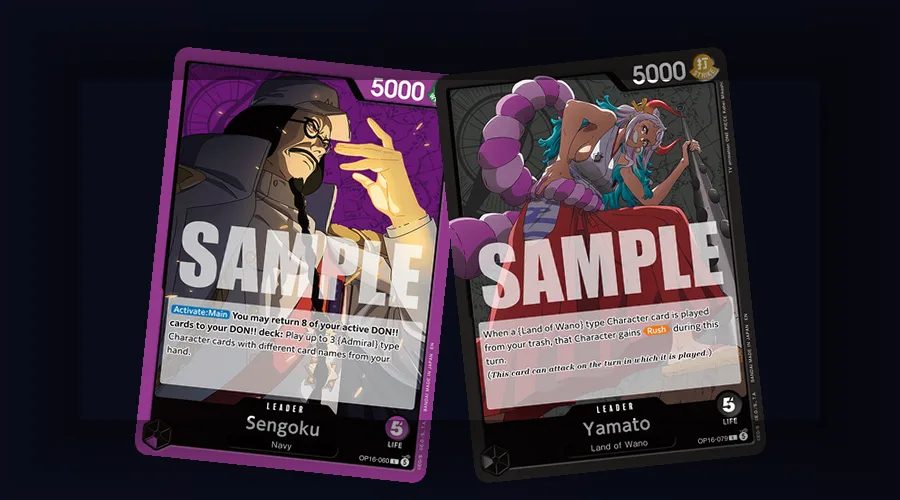 These real Leader cards are representative examples of how printed Leader effects can point a deck toward different strategies.
DON!!, costs, and giving cards
The DON!! system guide covers advanced resource patterns, but the basic rules fit into two actions.
Paying a cost
When you play a Character or Stage, activate a Main Event, or pay an effect cost, you normally rest the required number of active DON!! cards in your cost area. Rested DON!! become active at the next Refresh Phase. Some card effects use different instructions, so read the cost line exactly.
Giving DON!!
During your Main Phase, place an active DON!! from your cost area under your Leader or a Character so it remains visible. That Leader or Character gains 1000 power for each DON!! given to it during your turn.
If the card moves to another area, given DON!! returns to the cost area rested. At the next Refresh, it becomes active with the rest of your cost-area cards. This creates a real tradeoff:
- Keep DON!! in the cost area to play cards and pay effects.
- Give DON!! to raise a battle power for the current turn.
- Reserve enough active DON!! if your planned effect needs a cost.
- Remember that a Character leaving the field takes its given DON!! out of the attachment position.
A 6000-power attack is not automatically better than a 5000-power attack. The useful question is what that extra DON!! prevents you from playing, what counter the opponent may have, and whether the attack is aimed at a rested Character or a Leader.
Attacks, blockers, and the Counter Step
The official battle sequence has four important parts: Attack, Block, Counter, and Damage.
Attack Step
During the Main Phase, rest an active Leader or active Character to declare an attack. The normal target is either the opponent's Leader or one of the opponent's rested Characters. A normal attack cannot target an active Character.
A Character that entered play this turn cannot attack unless it has [Rush] or another effect that permits the attack. The attacking card stays rested after the attack unless an effect changes that position.
Block Step
After the target is chosen, the defending player may activate an available [Blocker]. A Blocker redirects the attack to that Character. The defending player can activate a Blocker only once during that battle, and a rested Character cannot activate its Blocker effect.
The attack now resolves against the Blocker. The opponent does not get to make a normal attack target change simply because a Blocker was used. Any additional target change must come from a card effect or another rule.
Counter Step
After the Block Step, the defending player may use Counter cards from hand:
- A Character with a printed Counter value is trashed from hand to increase the power of the defending Leader or Character for that battle.
- An Event with a [Counter] effect is played by paying its cost, then trashed as its effect resolves.
- The defending player may use legal Counter actions in any order and as many times as possible.
Counter cards are not played as Characters during this step. A Character used for its Counter value goes from hand to the trash, which is an important distinction when an effect cares whether a Character was played.
Damage Step
Compare the attacking card's power with the defending card's power. If the attacker's power is greater than or equal to the target's power, the attack wins:
- Against a Leader, the attack deals one damage.
- Against a Character, that Character is K.O.'d and goes to the trash.
If the attacker's power is lower, the attack loses and nothing happens during that battle. A tie favors the attacker, not the defender. Counter cards can change the comparison before the Damage Step, so calculate the final power after all legal Counter effects.
The attack and battle rules guide goes deeper into attack timing, while the counter mechanic guide covers defensive decisions.
Life cards, Trigger effects, and winning
When a successful attack deals damage to a Leader with at least one Life card, the defending player adds the top Life card to their hand. If that card has [Trigger], the player may reveal it and resolve its Trigger effect instead of adding it to hand. Trigger is an option, not an automatic replacement.
The printed Life value can differ by Leader. Losing one Life is not the same as losing the game. The game ends when a successful Leader attack deals damage while that player has 0 Life, or when a player reaches 0 cards in their deck. A player may also concede.
Two keywords change the normal Life interaction:
- [Double Attack] deals two damage instead of one when its attack successfully deals damage to the opponent's Leader.
- [Banish] sends the Life card to the trash instead of adding it to hand, and that card's [Trigger] does not activate.
A player with one Life can still choose to take an attack if the card entering hand or its Trigger is useful. A player with zero Life must stop the next successful Leader damage, because a successful hit meets the defeat condition.
Card types and keywords beginners see first
Leader: Your one face-up commander. It supplies colors, a Life value, power, and effects that shape the deck.
Character: A card played to the Character area. Characters can attack, defend, use effects, and be K.O.'d. Their printed Counter value can also be used from hand.
Event: A one-time card that is activated from hand, usually during a timing named in its text. Main Events work in the Main Phase. Counter Events work during the Counter Step when their requirements are met.
Stage: A persistent card in the Stage area. It can have effects and is subject to the same timing text printed on the card.
[Rush]: Lets a Character attack during the same turn it was played, except where another rule or effect prevents the battle.
[Blocker]: Lets an active Character redirect an attack to itself during the Block Step.
[Counter]: A printed Character value or Event effect that raises a defending card's power during the Counter Step.
[Trigger]: Lets a card from the Life area reveal and resolve its Trigger effect instead of going to hand after damage.
Cards can also have effects that alter these normal rules. When a card's wording conflicts with a general rule, check the official Q&A and the exact timing and cost in the card text.
Step-by-Step: a legal first game
Use this sequence to practice the rules without accidentally taking an illegal first-turn attack.
- Set up both sides. Each player presents a 50-card deck, places one Leader, prepares 10 DON!!, chooses who decides first or second, draws five, completes the optional full-hand redraw, and places Life equal to the Leader's value.
- Resolve the first player's opening turn. Refresh normally, skip the first Draw Phase, place one DON!!, and take Main Phase actions. The first player cannot battle on this turn. End the turn.
- Resolve the second player's opening turn. Refresh, draw one, place two DON!!, and take Main Phase actions. The second player also cannot battle on this first turn.
- Start the next turn. Refresh returns given DON!! to the cost area and makes rested cards active. Draw one and place two DON!! unless the DON!! deck has fewer cards. Now the turn player may battle during Main Phase.
- Declare one attack. Rest an active Leader or Character, choose the opponent's Leader or a rested Character, then allow the Block Step and Counter Step before comparing final power.
- Check the result. A successful Leader attack removes the top Life card or offers its Trigger. A successful Character attack K.O.'s the target. A failed attack does nothing.
- End cleanly. Resolve end-of-turn effects, then pass the turn. Keep your rested cards and remaining DON!! visible so both players can verify the next Refresh.
For practice, announce each phase aloud for the first few games. It prevents the two most common beginner errors: taking the first draw when going first and attacking during a first turn.
Beginner priorities after the rules click
Start with a deck whose Leader effect you understand rather than trying to copy a high-level list immediately. The One Piece TCG Beginner Guide 2026 explains the broader learning path, and the best starter decks guide compares accessible ways to begin.
A few habits transfer to every color:
- Keep enough DON!! available for the card or effect you actually plan to use.
- Do not assume a given DON!! is permanent. It is a current-turn power decision and returns during Refresh.
- Look at the target before attacking. Normal Character attacks can target only the opponent's Leader or a rested Character.
- Count the opponent's final power after Blocker and Counter actions, and remember that an equal attack power wins the battle.
- Treat Counter Characters as cards leaving your hand for defense, not as Characters entering the field.
- Track both Life and deck size. A game can end through either defeat condition.
- Read timing words such as [Main], [Counter], [Trigger], and [Blocker] before trying to use an effect.
The One Piece TCG Colors Explained guide is a useful next step when you want to understand why different Leaders reward different card choices.
Related Reading
- One Piece TCG Life Cards Explained: Learn how Life and Trigger decisions affect a game.
- One Piece TCG Common Beginner Mistakes: Fix the errors players make after learning the basics.
- How to Play One Piece TCG Online: Find digital practice options with the current availability caveat.
Frequently Asked Questions
How long does a One Piece TCG game take? The official rules do not set a universal game-length target. Casual games often take longer while both players check timing and card text, so plan enough table time for a full match and use the event's own round timer when playing organized play.
Do you need a play mat for One Piece TCG? No. A play mat is optional, but clearly separating your deck, DON!! deck, cost area, Leader, Characters, Stage, trash, hand, and Life area makes legal play easier to verify.
Can you play Events during your opponent's turn? Only when the Event's timing and effect allow it. A [Counter] Event is designed for the Counter Step during an attack. A [Main] Event is not automatically legal during the opponent's turn.
What happens when your deck runs out of cards? Reaching 0 cards in your deck is a defeat condition under the official rules. This is separate from losing because your Leader takes damage while you have 0 Life.
Can a Character attack on the turn it is played? Normally no. [Rush] or another card effect can allow it, but neither player can battle during that player's first turn.
Can a rested Character use Blocker? No. The official Q&A says a rested Character cannot activate its [Blocker] effect. A Blocker must be available when the Block Step begins.
References
Was this guide helpful?
About the author
Beginner guides and anime crossover
Pen name for the Shonen TCG desk's beginner guides, starter decks and anime-to-card-game explainers.
- Rules checked against the official rulebook and card text
- Every claim traced to a cited source
- Opinions marked as ours, with the reason
Keep reading
OP-16 All 6 Leaders Explained: Colors & Which to Build
Guides · 12 min
OP-16 Paramount War Leaders & Factions Guide (2026)
Guides · 12 min

One Piece TCG Colors: All 6 Colors and Deck Rules (2026)
Guides · 11 min
One Piece TCG OP-16 Guide: Set Review & Leaders (2026)
Guides · 20 min
One Piece TCG Manga Rare Cards: Guide & Values (2026)
Guides · 12 min
Best Starter Decks One Piece TCG 2026: Which to Buy
Guides · 11 min
One Piece TCG Beginner Guide 2026: How to Play and Rules
Guides · 13 min
OP-16 Chase Cards: Best to Pull & Value Guide (2026)
Guides · 12 min
Disclaimer
This article is published for informational and entertainment purposes. It does not constitute professional financial, legal, or technical advice. Game performance, online services, patch schedules, and store listings change. Verify critical details (pricing, system requirements, regional availability) with publishers and storefronts before you buy. Affiliate links, where present, help support our editorial work and are labelled in our affiliate disclosure.