

Shonen TCG · Guides
One Piece TCG vs Yu-Gi-Oh vs Pokemon: Which Anime TCG
One Piece TCG vs Yu-Gi-Oh vs Pokemon comparison for 2026, with verified deck rules, rotation checks, learning curves, and a practical pick by playstyle.
One Piece TCG vs Yu-Gi-Oh vs Pokemon is a choice between three very different tabletop systems, not a simple ranking. The old version used unverified price bands, stale set counts, and a hero image that suggested all three games even though it showed only One Piece cards. This update replaces those claims with current deck rules, rotation checks, and a playstyle-based recommendation.
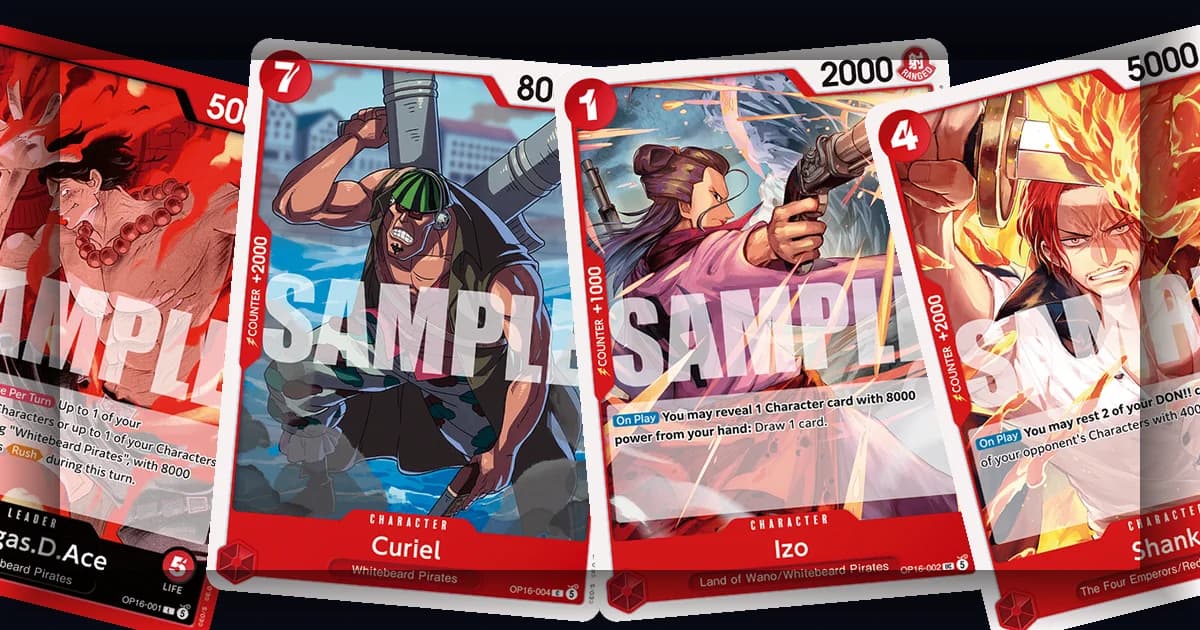
TL;DR: Choose Pokemon for the most transparent first game, One Piece TCG for a focused Leader and DON!! resource system, or Yu-Gi-Oh for the largest rules and combo ceiling. Prices change by region, reprint, rarity, and format, so the reliable comparison is the rules burden, the deck-building structure, the local event access, and the format policy you can keep up with.
One Piece TCG vs Yu-Gi-Oh vs Pokemon: quick answer
Pick Pokemon if you want the cleanest first match and a fixed 60-card deck. Pick One Piece TCG if you want a single Leader to define the deck, a visible resource system, and meaningful attack and defense decisions without a separate Extra Deck. Pick Yu-Gi-Oh if you enjoy studying long interaction chains, multiple summoning systems, and a Main Deck plus optional Extra and Side Decks.
That recommendation is about fit, not power. Each game's current legality is maintained differently. One Piece TCG checks card numbers and its Banned/Restricted policy, Yu-Gi-Oh checks the current Forbidden and Limited list, and Pokemon checks regulation marks, reprints, and the Standard rotation. Read those pages before buying a deck for an event.
Key Takeaways
- One Piece TCG uses one Leader, a 50-card deck, and a 10-card DON!! deck.
- Yu-Gi-Oh uses a 40 to 60 card Main Deck, with optional Extra and Side Decks of up to 15 cards each.
- Pokemon uses an exactly 60-card deck, requires at least one Basic Pokemon, and limits most card names to four copies.
- One Piece TCG counts copies by card number and restricts deck colors through the Leader.
- Yu-Gi-Oh's current official policy uses Forbidden, Limited, and Semi-Limited categories.
- Pokemon's 2026 in-person Standard format removes G regulation marks and accepts H, I, and J marks, subject to the official legality rules.
- Learning difficulty is a player-fit judgment. Watch a full match before treating a ranking as fact.
- Market prices are not stable enough to serve as a permanent winner in a three-game comparison.
What each game asks you to track
One Piece TCG gives you three pieces to prepare: one Leader, a 50-card deck made from Character, Event, and Stage cards, and a 10-card DON!! deck. The official rule manual says deck cards must share a color with the Leader and permits no more than four cards with the same card number. The rules also place two DON!! cards into the cost area during each DON!! Phase, with the turn-one exception described in the manual.
That structure makes the Leader a strong identity choice. It tells you which colors and card types to investigate before you buy singles. Life cards also remain part of the decision space, because a Leader's Life value determines the cards placed in the Life area at setup. The result is a game where attacking, defending, taking a Life card, and attaching DON!! can all change the next turn.
Yu-Gi-Oh separates the Main Deck from an optional Extra Deck and Side Deck. The official rulebook sets the Main Deck at 40 to 60 cards, the Extra Deck at 0 to 15, and the Side Deck at 0 to 15. The rulebook also allows up to three copies of the same card across those decks, unless the current Forbidden, Limited, or Semi-Limited policy says otherwise.
There is no DON!! or Energy pile that advances at a fixed rate. Costs come from card text, summons, tributes, and the interaction between effects. The Extra Deck introduces another planning layer, and match play can use the Side Deck between Duels. That flexibility is powerful, but it means a new player has more zones, timings, and card interactions to learn.
Pokemon uses an exactly 60-card deck. The official rulebook requires at least one Basic Pokemon and generally permits up to four cards with the same name, with Basic Energy as the familiar exception. Each player prepares a Prize-card area, and Energy cards are attached to Pokemon to pay attack costs.
The structure is visually clear. You can see the Active Pokemon, the Bench, attached Energy, damage counters, and Prize cards. A beginner still needs to learn abilities, Trainer timing, retreat costs, and the current Standard card pool, but the first game usually communicates its state more directly than the other two games.
Dragon Ball? No, these are different resource systems
The three games do not share a common idea of “mana.”
One Piece TCG has a dedicated DON!! deck. Each turn adds DON!! to the cost area, and those cards can be attached to Leaders or Characters for power and effect costs. The choice is visible: spend DON!! to develop a board, hold it for an Event, or attach it to make an attack more threatening.
Yu-Gi-Oh has no dedicated resource deck in the standard rules. A card may require a Normal Summon, a tribute, a discard, a Life Point payment, a condition, or a chain interaction. The resource is often the cards and effects you can access, plus the timing windows that let you interrupt the opponent.
Pokemon uses Energy cards as the main attack resource. Energy stays attached until an effect or retreat cost moves it, so a player must plan which Pokemon receives it and how the Prize-card race affects that investment. Trainer cards and abilities supply search, draw, disruption, and recovery.
If you want a resource count that rises in a predictable way, One Piece TCG is the clearest fit. If you prefer resource management to live inside card interactions, Yu-Gi-Oh is the outlier. If you want Energy attachments and a visible prize race, Pokemon is the natural choice.
One Piece TCG vs Yu-Gi-Oh vs Pokemon: rules and rotation in 2026
Legality is one of the biggest practical differences, and it changes over time.
One Piece TCG: the official manual sets the deck structure and same-card-number limit. Bandai also maintains a Banned/Restricted section for official and certified tournaments. The current rules page explains that cards can be added to or removed from those lists, so check it before a tournament rather than assuming that a card's set age tells you its status.
Yu-Gi-Oh: the official Deck Construction Rules page separates Forbidden, Limited, and Semi-Limited cards. The current English list published by Konami is effective May 18, 2026, but the list can be updated again. Advanced, Traditional, World Championship, and alternate formats can use different policies, so the event notice matters.
Pokemon: the official 2026 Standard rotation took effect April 10 for in-person play and March 26 for Pokemon TCG Live. The announcement says G regulation marks leave the Standard format and H, I, and J marks are legal, along with future marks, subject to release timing and reprint rules. A card's expansion alone is not enough to determine legality.
This is why a comparison article should not promise that one game “keeps your cards playable” or that another “resets every few months.” The answer depends on the format, the region, reprints, ban updates, and the date of the event.
For One Piece TCG rules and deck construction, the One Piece TCG deck building guide is the practical next read. It should still be checked against the official manual and current restriction page.
Complexity and learning curve
These labels are editorial judgments, not tournament statistics.
Pokemon has the gentlest first match. The board has clear zones, Energy attachments, attacks, damage, and Prize cards. The game becomes more demanding as you learn sequencing and competitive deck lists, but a new player can see why most actions happen.
One Piece TCG sits in the middle for many players. The Leader narrows the deck's identity, while DON!! attachment, Counter values, Life choices, and attack order create decisions. The game is not simple once both players know the card pool, but the resource system gives beginners a stable framework.
Yu-Gi-Oh has the steepest rules onboarding of these three. A player may need to learn Normal and Special Summons, the Extra Deck types, chain timing, card-specific restrictions, and the current deck's combo routes. That depth is a strength for players who enjoy technical study. It is a real cost for someone who wants to sit down and understand the board immediately.
A good test is to watch one complete match without pausing. If you enjoy asking why a player held an effect, attacked in a particular order, or declined a summon, that game may fit you. If the match feels like homework before you have played, try one of the other two first.
Competitive play and local access
All three games support organized play, but the useful question is which one you can actually play in person.
One Piece TCG uses Bandai's organized events and store-level play. Bring a deck that matches the announced format and check the current card restriction notice. The official tournament documents also tell players to use the latest rules and event-specific policy.
Yu-Gi-Oh has Official Tournament Stores, Championship Series events, and multiple supported formats. Its official site links the rulebook, card database, tournament policies, and current Forbidden and Limited lists. Confirm whether an event uses Advanced, Traditional, World Championship, or another ruleset.
Pokemon uses Play! Pokemon events, including League play and Championship Series tournaments. The 2026 Standard rotation is particularly important for competitive deck choice, and new cards can have a waiting period before tournament use. Check the event handbook and legality page before submitting a list.
Local access beats an abstract scene-size ranking. Search each publisher's event locator, call the store, and ask which game has weekly play at a time you can attend. A smaller game you play twice a month will teach you more than a large game you only watch online.
Cost: compare the buying path, not a fixed dollar range
The old price table treated secondary-market ranges as if they were stable facts. They are not. A competitive deck can change price with a new set, reprint, restriction, language, rarity, or local supply. Prices also differ between a starter product, a budget list, an optimized list, and a collector version of the same card.
Use a three-step cost check:
- Find the current official starter or preconstructed product.
- Search the exact card numbers in the list you want to build.
- Compare the total against your local singles and event costs, then check the restriction or rotation page before buying.
One Piece TCG can be a good fit if you like building around one Leader and upgrading a focused card pool. Pokemon can be a good fit if you want a fixed preconstructed deck and a clear 60-card structure. Yu-Gi-Oh can be a good fit if you prefer buying into a specific strategy and are willing to learn the Main, Extra, and Side Deck together.
None of those is a promise that one game is always cheaper. It is a safer buying decision than repeating the old $80, $250, or $600 figures without a dated market source.
The anime connection
One Piece TCG puts its source material directly into the deck structure. Leaders represent characters or factions, color identity shapes the list, and the card pool makes it easy to build around a crew, arc, or theme. The gameplay connection is strongest for players who enjoy seeing the characters define the plan.
Yu-Gi-Oh has a large anime and manga history, but competitive deck identity does not always follow the story. A player can choose the game for the characters and then discover that tournament play is driven by newer archetypes and card interactions. That split is not a flaw, but it is worth knowing before buying for nostalgia alone.
Pokemon connects through character and creature identity more than through a single anime storyline. You can build around a favorite Pokemon, but competitive legality and card strength still decide which versions see tournament play. The current Standard rotation makes the regulation mark a more reliable legality check than the expansion name.
If story fidelity is your first priority, One Piece TCG usually provides the most direct bridge between character and strategy. If the creatures and collection matter more than a story deck, Pokemon is a natural fit. If you want an anime universe with a long competitive rules history and many archetypes, Yu-Gi-Oh offers the broadest field.
A practical choice process
Choose Pokemon first if:
- you want an easy-to-read board;
- you are teaching a child or a complete beginner;
- you want an exact 60-card construction rule;
- you are comfortable checking regulation marks and rotation.
Choose One Piece TCG first if:
- you want a Leader to set the deck's colors and identity;
- you like visible resource decisions through DON!!;
- you enjoy attack and defense choices involving Life cards and Counters;
- you want a compact deck structure without an Extra Deck.
Choose Yu-Gi-Oh first if:
- you enjoy studying complex card interactions;
- you want Main, Extra, and Side Deck construction;
- you like a high technical ceiling more than a short rules tutorial;
- you are willing to check the current Forbidden and Limited list before each event.
Before buying, play a demo or borrow a legal starter product. Ask the store whether the next event is casual, constructed, sealed, or a special format. That test is more useful than an old ranking based on set counts or price snapshots.
Frequently Asked Questions
Is One Piece TCG easier to learn than Yu-Gi-Oh?
Many beginners find One Piece TCG's Leader, DON!!, and Life systems easier to track than Yu-Gi-Oh's long chains of summons and effects. That is a learning-curve judgment, not a rule. Yu-Gi-Oh has a higher rules ceiling and rewards players who enjoy studying timing, interactions, and deck-specific combo lines.
Is One Piece TCG or Pokemon easier for a new player?
Pokemon usually offers the gentlest first game because the turn structure, Energy attachments, attacks, and Prize cards are easy to see on the table. One Piece TCG adds more decisions through DON!! attachments, Life cards, and Counter effects. Pick Pokemon for clarity, or One Piece for earlier tactical depth.
What are the current deck sizes for these games?
One Piece TCG uses one Leader, a 50-card deck, and a 10-card DON!! deck. Yu-Gi-Oh uses a 40 to 60 card Main Deck plus optional Extra and Side Decks of up to 15 cards each. Pokemon uses an exactly 60-card deck with at least one Basic Pokemon.
Which game rotates cards in 2026?
Pokemon's 2026 Standard rotation removed cards with the G regulation mark and permits H, I, and J marks, subject to release and reprint rules. One Piece TCG and Yu-Gi-Oh use their own restriction and event policies instead. Check the official rules page for the region and format you will play.
Which game has the best competitive scene?
There is no single objective winner. Yu-Gi-Oh has a mature international tournament structure, Pokemon has an established Play! Pokemon Championship Series, and One Piece TCG has Bandai organized events. Compare the events available near you, the format you enjoy, and the schedule you can realistically attend.
Can I start any of these games without knowing the anime?
Yes. The rules and card text are self-contained in all three games. The anime connection mainly changes how much you may enjoy the characters, art, and story references. Choose by the tabletop system first, then explore the source material if the theme makes you curious.
Which anime TCG should I choose in 2026?
Choose Pokemon for the clearest first game, One Piece TCG for a compact deck with visible resource decisions, or Yu-Gi-Oh for the deepest interaction ceiling. Before buying, check the current ban or rotation page, find a local event, and watch a complete match of the game you are considering.
Related Reading
- One Piece TCG Common Beginner Mistakes: 9 to Avoid: practical errors to avoid after your first games.
- One Piece TCG Beginner Guide 2026: How to Play and Rules: a full One Piece rules walkthrough.
- OP-15 Meta Tier List 2026: Best Decks Before OP-16: a dated One Piece competitive snapshot.
- Pokemon TCG Pocket Meta Tier List: a separate mobile game comparison for players who prefer digital play.
- Union Arena InuYasha English Release Guide: another anime TCG option with its own product and event schedule.
References
- One Piece Card Game Official Rule Manual: deck, DON!!, color, and copy-limit rules.
- One Piece Card Game Comprehensive Rules: current rule structure and game setup.
- One Piece Card Game Banned and Restricted policy: official tournament restriction policy.
- Yu-Gi-Oh! Official Rulebook: Main, Extra, and Side Deck construction rules.
- Yu-Gi-Oh! Deck Construction Rules: current Forbidden, Limited, and Semi-Limited categories.
- Yu-Gi-Oh! Forbidden and Limited List effective May 18, 2026: dated English list used for this audit.
- Pokemon TCG Rules: 60-card deck and Basic Pokemon rules.
- Pokemon 2026 Standard rotation announcement: G rotation and H, I, J legality for 2026.
- Pokemon TCG card database: card-level legality and reprint lookup.
About the author
Pen name for the Shonen TCG desk's tournament coverage, format analysis and cross-game comparisons.
- Results taken from event pages and standings
- Other games checked against their own official rules
- Opinions marked as ours, with the reason
Keep reading
OP-16 Red Law Decklist: No Leader, Rosinante's Key Piece
Guides · 14 min

OP-15 Meta Tier List 2026: Archived Format Snapshot
Guides · 9 min
One Piece TCG card rarities explained: C to Manga Rare
Guides · 12 min
OP-16 Pre-Launch Buying Guide: Post-Launch Update 2026
Guides · 11 min
OP-16 Garp Deck Guide: Sengoku Navy Build and Meta
Guides · 11 min
One Piece TCG Meta Rotation Guide: When to Sell Cards
Guides · 15 min

One Piece TCG Deck Building Guide: Build From Scratch
Guides · 12 min
One Piece TCG Budget Competitive Guide 2026 Under $100
Guides · 13 min
Disclaimer
This article is published for informational and entertainment purposes. It does not constitute professional financial, legal, or technical advice. Game performance, online services, patch schedules, and store listings change. Verify critical details (pricing, system requirements, regional availability) with publishers and storefronts before you buy. Affiliate links, where present, help support our editorial work and are labelled in our affiliate disclosure.