

Shonen TCG · Guides
Dragon Ball Fusion World vs Pokemon TCG: 2026 Guide
Dragon Ball Fusion World vs Pokemon TCG in 2026: compare rules, deckbuilding, rotation, digital play, collecting, and the best fit for your goals.
Reviewing
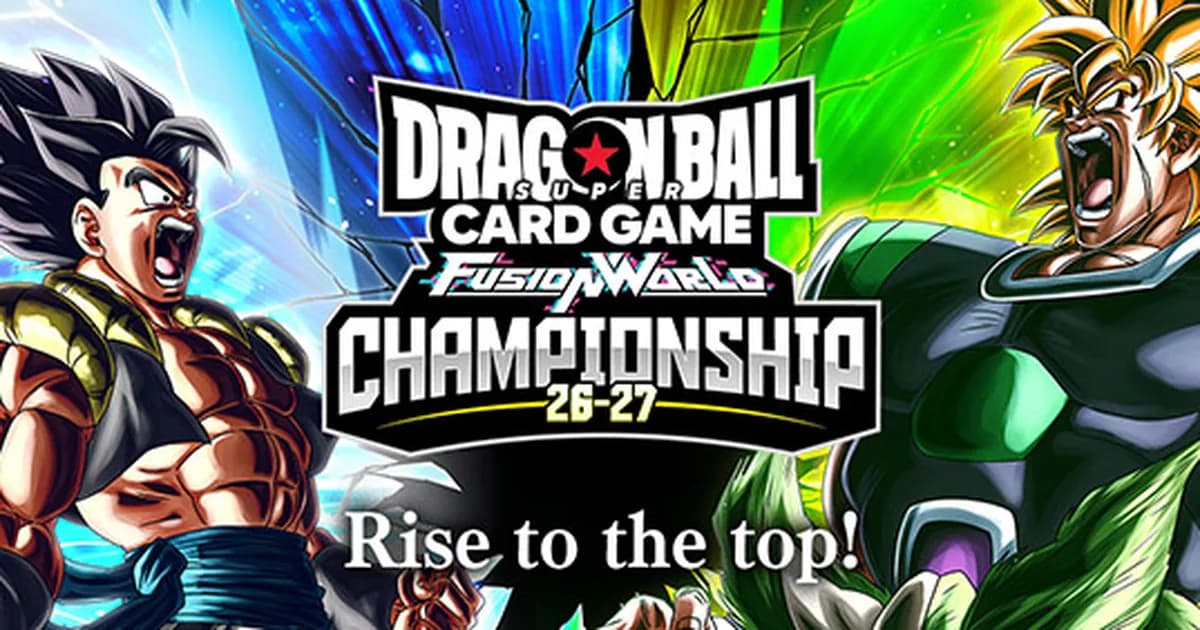
Dragon Ball Super Card Game Fusion World
Dragon Ball Fusion World vs Pokemon TCG is a practical 2026 choice between two very different competitive card games. Their rules, deck construction, event paths, digital options, and collecting experiences point to different players.
TL;DR: Choose Pokemon TCG for the broader established Championship Series and a Prize-card game with a deep product history. Choose Fusion World if you prefer a Leader-centered battle system, an Energy Area, and direct pressure on Life cards. Neither game is automatically cheaper, easier, or safer as a long-term collection.
Dragon Ball Fusion World vs Pokemon TCG? (quick answer)
Pick Pokemon TCG if the most important factor is finding a mature organized-play ecosystem, a large range of deck styles, and an official path from local play to Regionals, Internationals, and Worlds. You will also need to accept Standard rotation and the work of rebuilding parts of a deck when regulation marks leave the format.
Pick Fusion World if the most important factor is its combat model. One Leader stays at the center of the game, cards move into an Energy Area, and attacks pressure the opponent's Life cards or Leader directly. It is a good fit for a Dragon Ball fan who wants a focused physical and digital game, provided nearby stores actually run events.
The practical answer is to try both games with a starter product or a low-cost digital list, then choose the one that has opponents you can regularly find. A reputation for being cheaper or easier is not a substitute for testing a real deck in your local environment.
Dragon Ball Fusion World vs Pokemon TCG: where they differ
The clearest comparison is not a price list. It is the number of systems you want to track during a turn and the kind of competition you want to join.
| Question | Pokemon TCG | Dragon Ball Fusion World |
|---|---|---|
| Main deck | Exactly 60 cards | 50 to 60 Battle Cards and Extra Cards, plus exactly 1 Leader |
| Copy rule | Usually up to 4 cards with the same name, with Basic Energy and card-specific exceptions | Usually up to 4 cards with the same card number, with banned and restricted exceptions |
| Resource system | Attach Energy to Pokemon and sequence Trainer cards | Place a card from hand into the Energy Area during Charge Phase, then pay costs with energy and markers |
| Central objective | Take Prize cards through knockouts or meet another win condition | Reduce the opponent's Life to 0 or deck to 0 |
| Legality pressure | Standard rotation follows regulation marks and an announced schedule | The public rules hub currently emphasizes banned and restricted cards rather than an annual rotation schedule |
| Digital option | Pokemon TCG Live | Official Fusion World digital version for PC and Mac |
Those are rules-level differences, not tier-list opinions. The current Fusion World official rule manual lists one Leader and a 50 to 60 card main deck. The current Pokemon 2026 rotation announcement confirms the regulation-mark system and separate paper and digital rotation dates.
Deck construction and consistency
Pokemon decks are exactly 60 cards. The normal same-name limit is four cards, except for Basic Energy and other card-specific rules. That makes a deck's consistency plan visible: players often decide how many copies of a search card, Supporter, attacker, or evolution piece they need, then use the remaining slots for answers and Energy.
Fusion World gives you exactly one Leader and a 50 to 60 card main deck. Bandai's rule manual allows up to four copies of a card with the same card number, and the rules hub maintains a separate banned and restricted list. The Leader's color also constrains which cards you can include. A deck therefore has fewer main-deck slots than Pokemon at the low end, but it still has to balance attackers, Extra Cards, combo power, and cards that can become Energy.
Neither copy rule guarantees a low-cost deck. A four-copy staple can be inexpensive or costly depending on printings and demand. A Fusion World card that is played as a one-of can still be expensive if it has a premium rarity, while a four-copy common can be easy to acquire. Price the actual list, not the game's reputation.
Resource systems and turn decisions
Pokemon attaches Energy from hand to a Pokemon and builds turns around attacks, retreat costs, Abilities, Items, Supporters, Stadiums, and evolution timing. The Prize-card structure changes the value of every knockout. Taking a Prize may advance your win condition, but trading a large Rule Box Pokemon can also give the opponent more Prizes when it is knocked out.
Fusion World uses a dedicated Energy Area. During Charge Phase, you may put a card from your hand into that area in Active Mode, and energy markers also exist in the rules. You then use rested Energy to pay card and skill costs. Combat compares power and gives both players room to use Battle Cards in combos, so holding a card can matter as much as playing it.
This creates two different learning curves. Pokemon rewards sequencing across several card types and planning a Prize map. Fusion World rewards reading attack windows, managing Energy and combo cards, and deciding when to pressure the Leader or a Rest Mode Battle Card. Players coming from another TCG may find either one familiar in places and surprising in others.
How games end
Pokemon normally asks you to take all of your Prize cards, but the rules also include alternate loss and win conditions. The number of Prizes taken by a knockout depends on the Pokemon and its Rule Box, so the board state matters more than a simple six-knockout count.
Fusion World gives the opponent eight Life cards during setup. An attack that deals damage to the Leader adds a Life card to the opponent's hand, and the game ends when the opponent's Life or deck reaches zero. That makes Life management a visible resource. A player may choose to take damage now to preserve a card, or defend a Leader when the next attack would create a losing position.
Cost and collecting
Why there is no fixed cost winner
The claim that Fusion World is always cheaper than Pokemon is too broad. Both games have ordinary versions for learning, competitive staples, chase cards, and premium treatments. The balance changes with the format, the exact deck, reprints, language, condition, and the local singles market.
For Pokemon, the 60-card structure and four-copy rule can make a playset of one important card the biggest part of a budget. For Fusion World, the 50 to 60 card structure does not eliminate that issue because the rules still permit four copies and high-rarity cards can command large premiums. A player who wants to compete should buy the lowest trustworthy printing that works for the list, then reserve premium versions for collecting.
Starter products and digital clients are useful for learning, but they are not a complete cost comparison. Before buying sealed product, make a list of the cards you need and compare current singles. This is especially important when a set has a premium Alt-Art or Secret Rare market that is disconnected from the price of regular play copies.
Collecting appeal
Pokemon offers a wide range of characters, eras, set themes, and illustration treatments. Its long-running product history creates more collecting lanes, from playable cards to character collections and art-focused binders. That range is a strength if you want to define a collection around a Pokemon, artist, mechanic, or release era.
Fusion World has a more focused identity. Its strongest collecting appeal comes from Dragon Ball scenes, Leaders, Secret Rares, alternate artwork, and the relationship between a card and the deck that plays it. The narrower theme can make a binder feel more coherent, while premium prices can still move sharply when a new set, event result, reprint, or collector trend changes demand.
Neither game's rarity is a guarantee of future value. Treat an expensive card as a purchase you are happy to own even if the market falls. For play, condition and legality matter first. For collecting, verify the card number, language, finish, and exact art treatment before comparing listings.
Rotation, legality, and long-term use
Pokemon Standard is the clearer case. The 2026 announcement says G regulation-mark cards left in-person Standard on April 10, 2026. Pokemon TCG Live applied the same rotation on March 26, 2026, and the announcement lists H, I, J, and future regulation marks as eligible under the stated rules. Reprints can preserve legality when the same card is reprinted with a legal mark, so check the card and the event format rather than relying only on its original expansion.
Fusion World currently presents a different public policy. Bandai's rules hub, updated September 4, 2026, explains that tournament decks generally allow up to four copies by card number and directs players to banned and restricted lists that can change with the environment. I could not verify a published Pokemon-style annual rotation date in that current rules material. That supports saying there is no announced annual rotation at the time of this audit, not saying a card purchased today is guaranteed to remain legal forever.
The practical longevity question is therefore different. Pokemon asks whether your card has a legal regulation mark for the format you want. Fusion World asks you to check the current banned and restricted page, the event announcement, and any format-specific rules. In both games, a card can lose competitive relevance without becoming formally illegal.
Community and organized play
Pokemon has the more established documented route from local play to major competition. The Pokemon Championship Series includes Regional Championships, International Championships, and the World Championships, with qualification and Championship Points information published for the 2026 season. That does not mean every city has a healthy League, but it does mean the competitive framework is broad and easy to verify.
Fusion World is not limited to kitchen-table play. Bandai lists Store Championships, official events, and a 2026 to 2027 digital championship. The Fusion World Digital Stadium provides the official PC and Mac digital version and a tournament platform. The smaller local footprint is the important caveat: check the store locator, recent event listings, and whether players actually attend before investing in a paper deck.
If you want the highest chance of finding a major event, Pokemon is the safer choice. If you have a reliable Fusion World store or prefer its combat system, the smaller circuit may be an advantage because it is easier to recognize regular opponents and build a focused testing group.
Digital play
Pokemon TCG Live is free to play and supports the current Pokemon card game digitally. It also follows the Standard rotation, which the 2026 announcement explicitly calls out. That makes it useful for testing a post-rotation list, but it does not make every physical card available or every Expanded card actively supported.
Fusion World has an official digital version for PC and Mac, and Bandai runs digital events through its tournament platform. Its rules, card pool, and economy are separate from Pokemon TCG Live. Choose the client whose gameplay and available opponents match your goal, rather than assuming that a digital account replaces a paper collection.
Which game fits which player?
Choose Pokemon TCG if you want
- A large, established organized-play path with published Regional, International, and World events.
- A Prize-card race with Pokemon stages, attached Energy, and many Trainer-card sequencing decisions.
- A collection with broad character and art categories.
- A game where the Standard legality schedule is clearly published, even though rotation requires regular updates.
- A free-to-play digital option that follows the current Standard format.
Choose Fusion World if you want
- A Leader-centered game where attacks directly pressure Life cards.
- A dedicated Energy Area and combat decisions built around power and combos.
- Dragon Ball characters and artwork as the central collecting theme.
- A current public rules system centered on banned and restricted cards rather than an announced annual rotation.
- A physical and digital game that works well when your local store or online group actively supports it.
A low-risk way to choose
- Play a tutorial for each game and note which turn structure feels readable.
- Ask your local store which game has recurring events, not just one launch event.
- Use a starter product or digital list for several matches before buying chase cards.
- Price the exact competitive list you would build, including playsets and premium alternatives.
- Check the current legality page before registering for an event.
The right choice is the game you can play often with people whose style you enjoy. Pokemon has the larger established ecosystem. Fusion World offers a more focused Dragon Ball combat experience. Those are meaningful differences, but neither one removes the need to test the game for yourself.
Frequently Asked Questions
Which game is easier to start with?
Both can be learned from a starter product. Pokemon asks you to track Pokemon, Energy, Trainer cards, evolution, and Prize cards. Fusion World asks you to manage a Leader, Energy Area, Life cards, and combo power. The better first game is usually the one with an active local teacher.
Which one costs less competitively?
There is no reliable permanent answer. Pokemon playsets can concentrate cost under the four-copy rule, while Fusion World premium rarities can be expensive even when a deck uses fewer copies. Check current singles for the exact list and printing.
Does Fusion World have a Pokemon-style rotation?
No Pokemon-style annual rotation date was published in the Bandai rules material I verified as of September 18, 2026. Bandai does maintain banned and restricted lists, and event rules can change, so do not treat this as an indefinite legality guarantee.
What is the Pokemon Standard status in 2026?
G regulation-mark cards rotated from in-person Standard on April 10, 2026. Pokemon TCG Live applied the rotation on March 26, 2026. H, I, J, and future regulation marks remained eligible under the official announcement.
Can I play both online?
Yes. Pokemon TCG Live is free to play, while Fusion World has an official PC and Mac digital version and a digital tournament platform. They are separate games and accounts.
Which has the larger tournament scene?
Pokemon has the more established published Championship Series, including Regionals, Internationals, and Worlds. Fusion World has official store, championship, and digital events, but local availability varies more by store.
Should I buy premium cards as an investment?
Treat premium cards as speculative collectibles, not guaranteed investments. Buy them because you want the art or enjoy owning the card, and verify current market listings before paying a premium.
Related Reading
- Dragon Ball Fusion World Complete Guide 2026: rules, colors, sets, and deck-building fundamentals.
- Dragon Ball Fusion World Beginner Guide: a first explanation of Leaders, Energy, combos, and attacks.
- Dragon Ball Fusion World Best Leaders FB10: a leader-by-leader look at the Cross Force options.
- Dragon Ball Fusion World FB10 Cross Force Set Guide: the card pool and product details for FB10.
- Dragon Ball Fusion World FB10 Vegito Deck Guide: a focused competitive deck guide for the Blue Evolve strategy.
- Pokemon TCG Pocket Pack Points Guide: a separate look at Pokemon TCG Pocket's digital economy.
- Mega Lucario ex Deck Guide: a Pokemon TCG Pocket deck guide, not a paper Pokemon TCG Standard list.
References
- Fusion World official rules hub: current rules manual, general rules, tournament rules, and banned or restricted card notices.
- Fusion World Official Rule Manual Ver.1.20: deck construction, Charge Phase, Energy Area, Life, and victory conditions.
- Fusion World General Rules Ver.1.08: detailed rules updated September 12, 2026.
- Fusion World Digital Stadium: official digital version and tournament platform.
- 2026 Pokemon TCG Standard Format Rotation Announcement: 2026 paper and digital dates and regulation-mark eligibility.
- Pokemon TCG official site: current Pokemon TCG and Pokemon TCG Live information.
- Pokemon World Championships and Championship Series: current organized-play structure and 2026 World Championships information.
About the author
Multi-TCG analyst covering the competitive trading card game scene. Tournament coverage, format analysis, and cross-game comparison content.
- Covers multiple TCG formats
- Tournament reporter and analyst
- Cross-game format comparison specialist
- Active in OPTCG, Union Arena, and Lorcana communities
Keep reading
Dragon Ball Fusion World FB10 SCR Cards: Art & Value Guide
Guides · 12 min

Dragon Ball Fusion World FB10 Where to Buy Guide 2026
Guides · 14 min

Dragon Ball Fusion World Cell Deck Guide: FB10 Android 2026
Guides · 14 min

Dragon Ball Fusion World Tier List: September 2026 Meta
Guides · 17 min
Dragon Ball Fusion World Best Leaders FB10: All 5 Ranked
Guides · 12 min

Dragon Ball Fusion World Energy Guide: Master Your Turns
Guides · 15 min

Dragon Ball Fusion World FB10 Tier List: 5 Leaders Ranked
Guides · 12 min
Dragon Ball Fusion World Best Cards for Beginners 2026
Guides · 12 min
Disclaimer
This article is published for informational and entertainment purposes. It does not constitute professional financial, legal, or technical advice. Game performance, online services, patch schedules, and store listings change. Verify critical details (pricing, system requirements, regional availability) with publishers and storefronts before you buy. Affiliate links, where present, help support our editorial work and are labelled in our affiliate disclosure.