

Shonen TCG · Guides
Riftbound Azir Deck Guide: Emperor of the Sands Build
This Riftbound Azir deck guide covers the Calm Order token shell that has put Emperor of the Sands into the current competitive conversation. Azir is not a leader card. Public Riftbound decklists use the focal Champion or Legend as the deck name, so this page calls the archetype the Azir deck even though the chosen Legend is Emperor of the Sands.
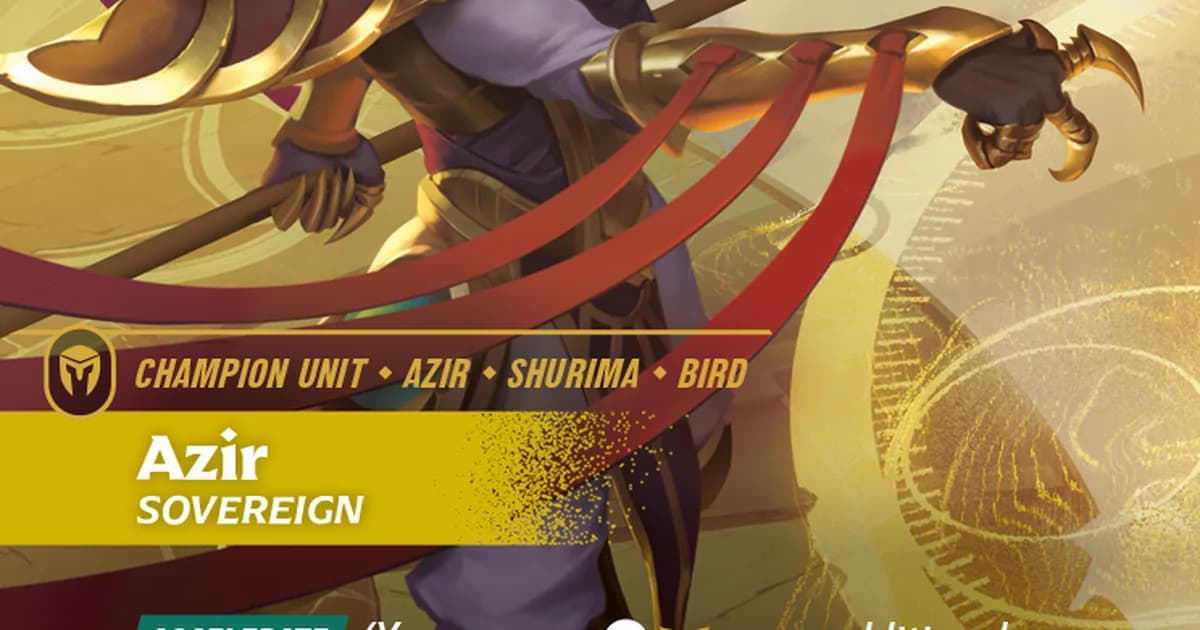
TL;DR: The public Singapore sample uses
SFD-197
SFD-197 Emperor of the Sands with
SFD-177
SFD-177Shop on TCGplayer Azir Sovereign, seven Calm runes, and five Order runes.
SFD-198
SFD-198Shop on TCGplayer Arise! and
SFD-154
SFD-154Shop on TCGplayer Guards! create Sand Soldiers, while Equipment turns on the Legend and lets the token board attack in several places. Current tracker data places Azir in Tier 1, but the deck rewards careful resource and attack sequencing.
Is the Riftbound Azir deck still a real meta choice? (Quick Answer)
Yes. The Riftbound.gg snapshot we checked on September 28 (Vendetta, before Radiance's October 23 release) places Azir in Tier 1 and lists a Top 4 in Barcelona, a Top 8 in Wuhan, and a Top 16 in Singapore. The same snapshot counts one win and nine Top 8 finishes, and Riot's RQ Los Angeles Top 8 included two Azir decks, one of them MICE Squirtle's.
The Riftbound meta tier list still matters for context because it separates current placement from individual tournament peaks. Azir is near the front of the field because its token plan can create a proactive answer to decks that rely on linear combat. It is not automatically easy to pilot. The deck can spend several resources making a board that does nothing if the Equipment timing, token movement, or attack order is wrong.
The public list used for this guide is a Singapore Regional Qualifier sample updated in September, not a claim that Azir won that tournament. It uses seven Calm runes and five Order runes, with low-cost Equipment, Sand Soldier spells, combat tricks, and a package of Hidden interaction. That is enough evidence to build and test the archetype without pretending one archived list is the only correct configuration.
Key takeaways for the Riftbound Azir deck
- Calm and Order give Azir an Equipment-based token plan with both resource stability and wide-board pressure.
- Emperor of the Sands gives Sand Soldiers Weaponmaster and can create a 2-Might token after an Equipment turn.
- Azir Sovereign has Accelerate and can move any number of your token units to his Battlefield when he attacks.
- Arise! creates one Sand Soldier for every Equipment you control, then readies two of them.
- Guards! is a Hidden token maker that can also ready the new Sand Soldier when you pay the Order resource.
- The public Singapore sample uses seven Calm runes and five Order runes, a slight Calm bias for the Equipment engine.
- The deck wants to win by making the opponent answer multiple locations, not by investing every resource into one Champion.
- Hidden Blade, Back Off, and Discipline let the token board convert a small lead into a safe final turn.
Riftbound Azir deck core: Sand Soldiers and Equipment
The Legend is Emperor of the Sands. Its passive gives your Sand Soldiers Weaponmaster, which makes each token more useful when it reaches a contested Battlefield. Its exhausted action creates a 2-Might Sand Soldier at your base, but only after you have played an Equipment that turn. That restriction defines the deck's rhythm: Equipment first, token production second, combat or movement third.
The public list's Equipment package is best understood by function rather than by a fixed set of names. The important question is whether a card turns on Emperor of the Sands and improves the next attack. Do not treat every Equipment as a permanent attachment. Some are best played simply to unlock the Legend before the token spell resolves.
Azir Sovereign is the Champion that turns a wide board into a location swing. It has Accelerate, so you can pay an additional resource to have it enter ready. When Azir attacks, you may move any number of your token units to his Battlefield. That text punishes an opponent who counts only the units already present. A token that looked committed to a safe hold can join the attack after the combat has been declared.
The timing is more important than the raw number of tokens. Moving every token to Azir's location can win that Battlefield and lose the other two. Before attacking, count whether the move creates a second scoring threat, protects a hold, or only makes one location larger. The best Azir turns often leave one token behind so the opponent must respect a separate hold.
Arise! is the largest token payoff. It plays a 2-Might Sand Soldier for each Equipment you control, then readies two of them. The spell is strongest when Equipment has already been converted into a board-wide threat. It is weaker when played as the first action of a turn because the opponent can answer the new tokens before they force a response.
Guards! provides a cheaper, less visible token line. Its Hidden ability plays a Sand Soldier and lets you pay Order to ready it. Because the card can wait outside the normal action sequence, it changes how the opponent evaluates a Battlefield. Hold it when the opponent needs to overcommit to a location, then use the token to change the combat or the final hold.
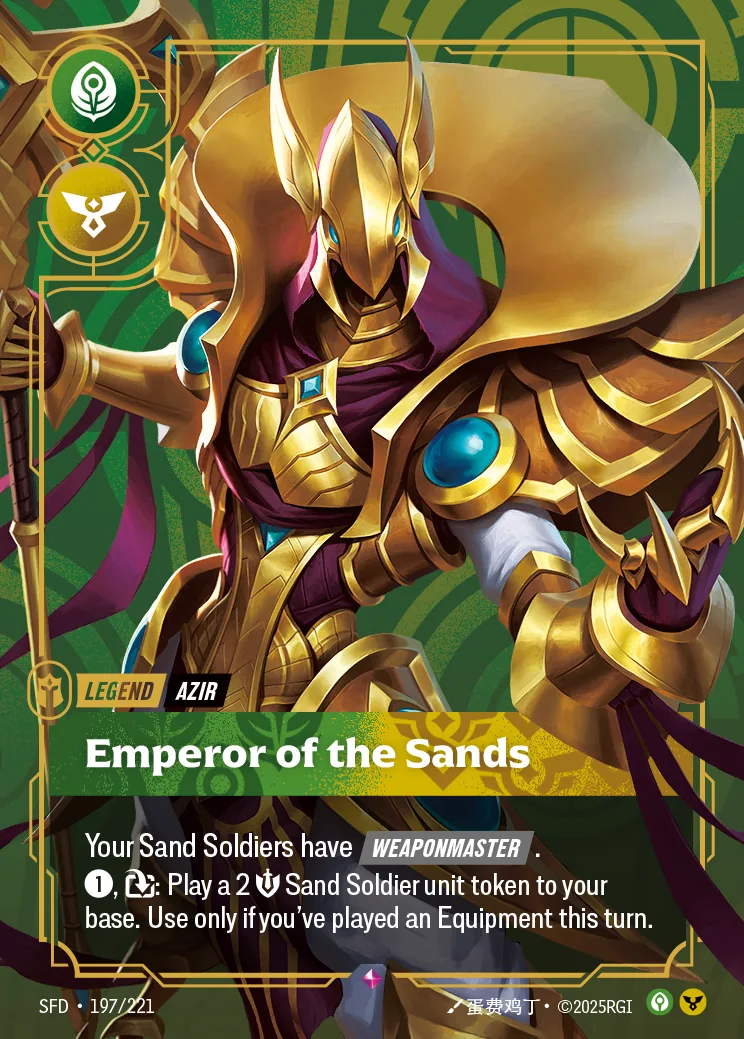 Emperor of the Sands rewards an Equipment turn before it creates another Sand Soldier.
The public Azir list and how to adapt it
The public Singapore Regional Qualifier sample uses seven Calm runes and five Order runes. Its main plan includes three copies of Soul Sword, three copies each of Arise!, Guards!, Discipline, Hidden Blade, and Back Off, plus Defy and a group of low-cost units and Equipment. The list also uses Battlefields that reward holding multiple locations rather than putting every resource into one attack.
That shape tells you why the archetype is not simply a swarm deck. The token spells are the visible payoff, but the list needs enough Equipment to unlock Emperor of the Sands, enough interaction to protect the first token board, and enough card flow to make an expensive Arise! turn possible. Cutting the Equipment package for more token spells often makes the deck look explosive in a perfect draw and nonfunctional in a normal one.
Start with the seven Calm and five Order split when testing. Move toward more Order only when the field makes the ready and combat lines more valuable than the Calm draw and Equipment access. Move toward more Calm when the opening hand is too dependent on finding one narrow card. The domains are part of the engine, so change the split only after you know which turn is failing.
The Domains guide has the general rune and Domain rules. For Azir specifically, ask what each rune count allows before a token spell. You want the resources to play an Equipment, create a token, and still represent an answer. If the list cannot do that, adding another expensive payoff will not solve the underlying problem.
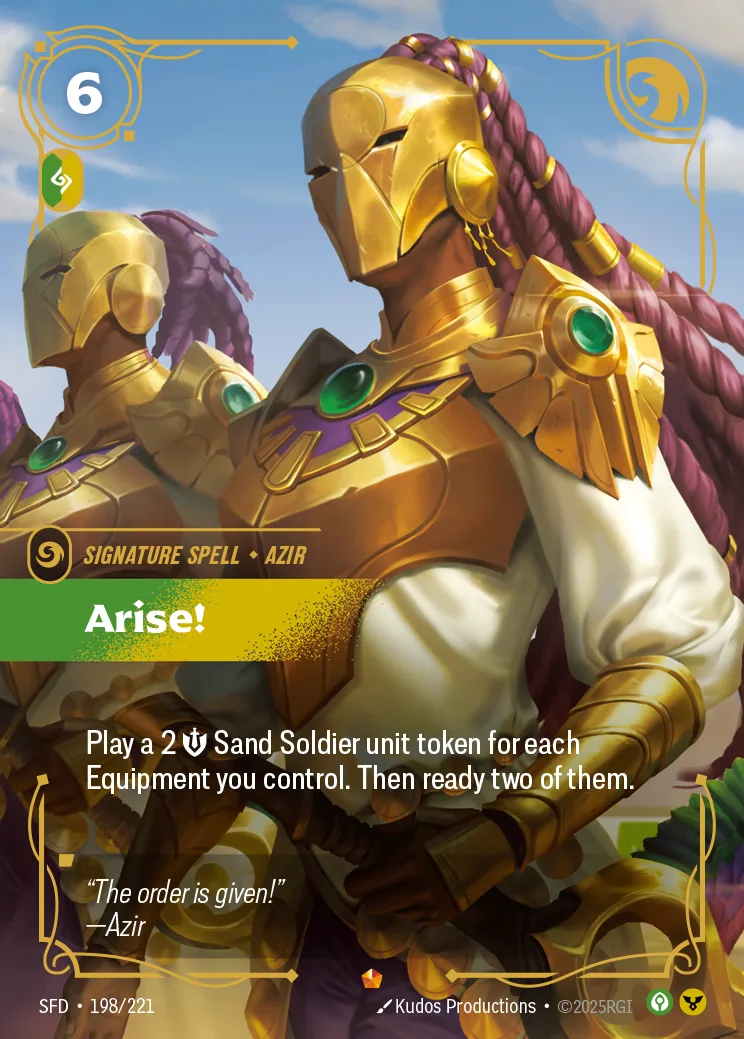 Arise! creates one Sand Soldier per Equipment and readies two of them.
Step-by-Step: How to pilot the Riftbound Azir deck
1. Mulligan for an Equipment line. Keep an early unit, one Equipment, and a way to produce or protect a token. Emperor of the Sands is a strong keep when the hand can play an Equipment first. Return a hand that contains only Arise!, expensive Champions, and reactive spells with no board.
2. Establish the first location without showing the whole plan. Play a unit that can hold or contest a Battlefield, but do not reveal Arise! just to make the board look wider. Azir gets more value when the opponent has to respect several possible token turns rather than one obvious spell.
3. Play the Equipment before using the Legend action. Emperor of the Sands needs the Equipment turn. Sequence the resource payment so that the Gear both turns on the Legend and leaves enough resources for the token or interaction that follows. If you cannot name the follow-up, keep the Equipment for a better turn.
4. Use Guards! to change a combat threshold. The Hidden token is most valuable when it appears after the opponent has committed to a location. Ready the token when it creates a trade, protects a hold, or changes who wins the Battlefield. If it only adds two Might to a location that you still cannot conquer, keep the Order resource.
5. Attack with Azir after counting token destinations. Azir Sovereign can move any number of token units to his Battlefield when he attacks. Before declaring, decide which tokens stay behind and which move. The correct line may move one token, not all of them, because the second hold can be worth more than a larger first attack.
6. Build Arise! around the number of Equipment you control. Count the Equipment before casting. One token is rarely worth the six-cost spell, while three or four tokens can make the spell a complete board reset in your favor. Leave a ready effect or protection card when possible so the new units survive the response window.
7. Use Discipline to protect a winning exchange.  OGN-058
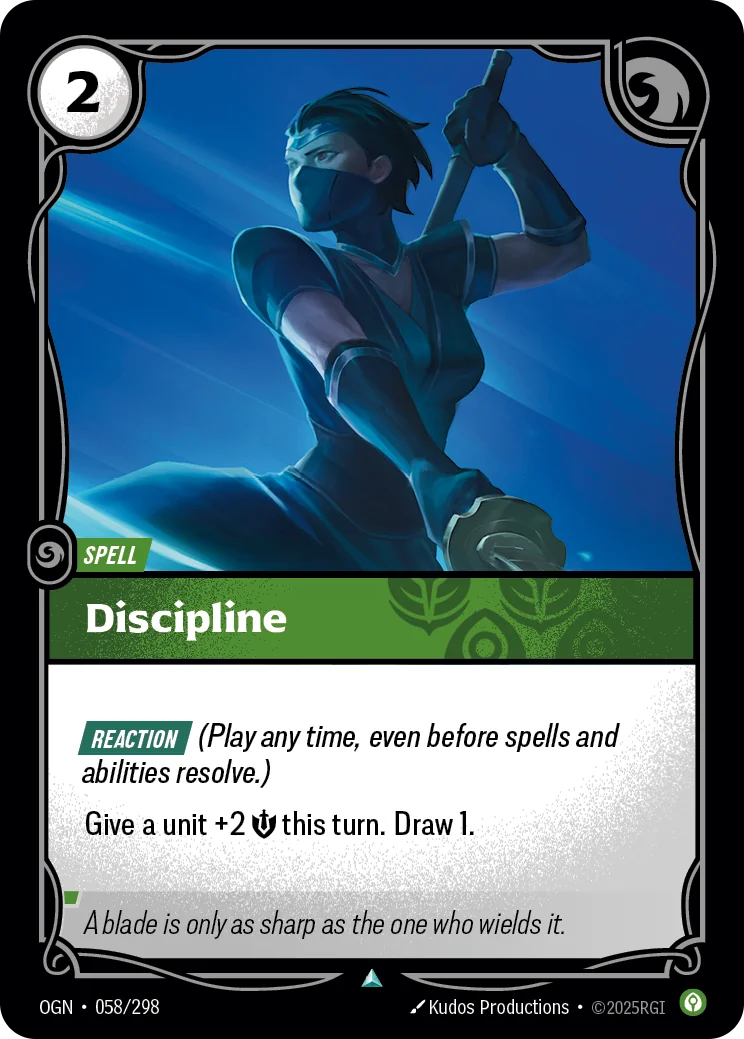 OGN-058Shop on TCGplayer Discipline gives a unit +2 Might for the turn and draws a card. That makes it both a combat trick and a way to prevent the hand from collapsing after an attack. Do not spend it on a trade that leaves the opponent with the only remaining location threat.
8. Close by splitting the opponent's answers. A final Azir turn should ask two questions at once. Use the token movement to threaten one Battlefield and leave a token or Champion at another. Hold  OGN-213
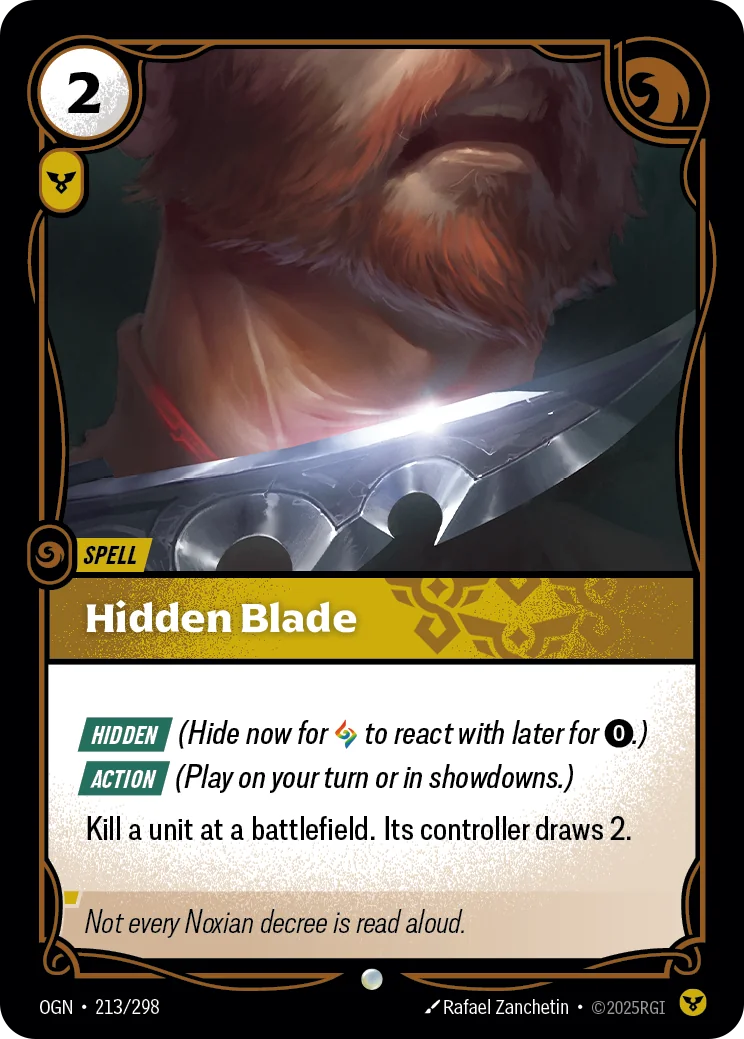 OGN-213Shop on TCGplayer Hidden Blade or
 UNL-042
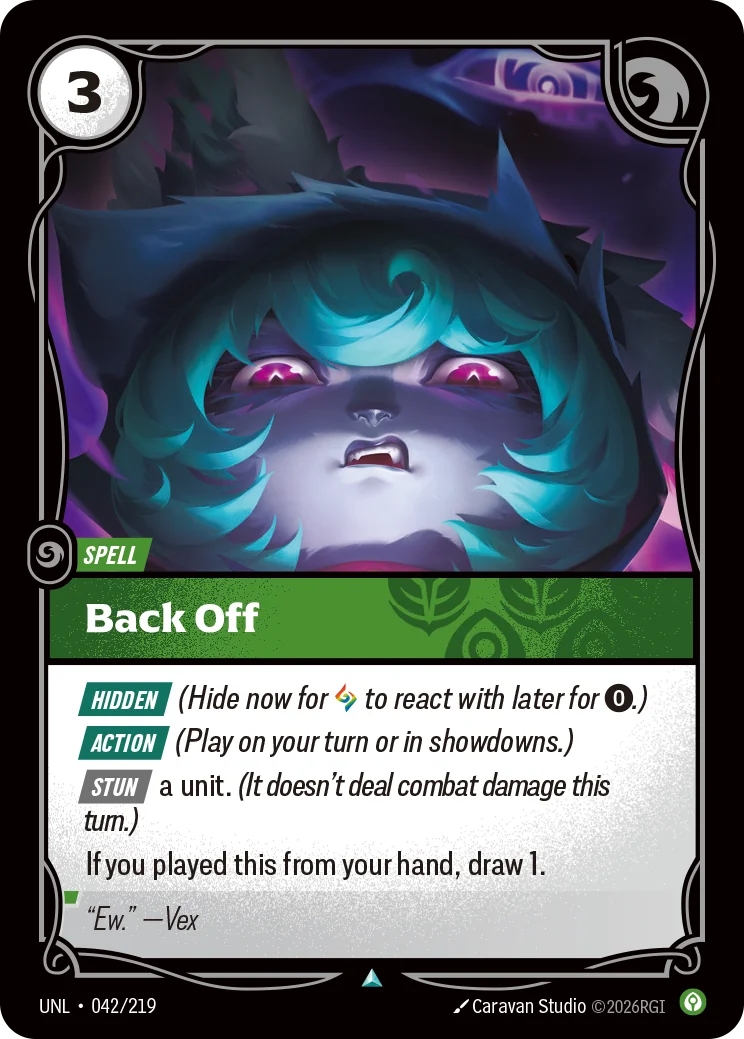 UNL-042Shop on TCGplayer Back Off when a removal or stun effect can make the opponent's best blocker disappear, but remember that Hidden Blade gives its target's controller two cards.
Tips for playing the Azir deck into common matchups
Against Ornn, avoid letting the Gear deck take a free long game. Ornn gains value from every cheap equipment play, so force its units to answer two locations before the Gear chain is established. Create tokens after the opponent has spent the ready action, then use Azir's movement to change which Battlefield matters. The Ornn guide explains the other side of that exchange.
Against Irelia, keep a token at the location that looks least important. Movement decks win when every unit is committed to the same fight and one ready effect changes the score. Guards! is valuable as a delayed body, while Arise! should be cast only when the new tokens can survive the opponent's next movement line.
Against Kennen, do not assume that a wide board is safe. Efficient removal can make a token plan lose tempo if you produce units without a clear score. Use Equipment to improve the token turn, then force Kennen to spend answers on bodies that are already generating value. A single giant attack is easier to answer than two moderate threats at separate locations.
Against fast aggression, play the first unit earlier than you would in a slow matchup. A token that only exists to hold one Battlefield can buy the turn needed for Emperor of the Sands to come online. Do not keep a perfect Arise! hand if it means conceding the first two locations before the spell is affordable.
Common mistakes with the Azir deck
Casting Arise! before the Equipment count is meaningful. The spell looks spectacular, but one token for six resources is not a plan. Track how many Equipment you control and what two ready tokens will do before you commit.
Moving every token with Azir Sovereign. The attack trigger lets you move any number, not all of them. Leave a token behind when it preserves a hold or makes the opponent split an answer between Battlefields.
Playing Equipment after the token spell. Emperor of the Sands rewards the order of operations. If the Equipment comes second, the Legend's token action may be unavailable and the whole turn loses its best conversion.
Using Guards! as a normal unit. Its Hidden timing is the reason it matters. Keep the card until the opponent commits to a location or until the ready token changes a specific combat. Playing it early can reveal the only surprise in your hand.
Cutting interaction for more token makers. The board needs a way to survive the opponent's answer. Discipline, Defy, Hidden Blade, and Back Off let a token lead become a win. Without them, the opponent can wait for the big turn and trade one answer for several turns of setup.
Treating the Singapore sample as an official list. It is a real public list, not a mandatory recipe. Copy the verified domain split and core plan, then adjust the flex cards after checking the current format and your local matchups.
Frequently Asked Questions
Is Azir Tier 1 in the current Riftbound format?
Yes, in Vendetta. The Riftbound.gg snapshot we checked on September 28, before Radiance released on October 23, places Azir in Tier 1 and records a Top 4 in Barcelona, a Top 8 in Wuhan, and a Top 16 in Singapore. The tracker also records one win and nine Top 8 finishes, which is a stronger signal than a single isolated result.
What is the best opening hand for Azir?
Keep a cheap unit, one Equipment, and a resource or draw card that makes the first two turns work. Emperor of the Sands is worth keeping when the hand can play an Equipment first. A hand made only of Arise!, late-game units, and reactive cards is too slow and should be mulliganed.
Should I use seven Calm and five Order runes?
That is the verified split in the public Singapore sample used for this guide. It gives Calm a slight majority for the Equipment engine while keeping enough Order for Sand Soldiers and ready effects. Treat it as a tested starting point rather than an unchangeable rule.
What does Emperor of the Sands do?
The Legend gives your Sand Soldiers Weaponmaster. Its exhausted action can play a 2-Might Sand Soldier to your base, but only if you played an Equipment during that turn. That condition is the reason the deck sequences Equipment before token production.
What does Azir Sovereign add to the deck?
Azir Sovereign has Accelerate and can move any number of your token units to his Battlefield when he attacks. The trigger turns a spread board into a sudden attack, but moving every token is not always correct. Keep one behind when a second hold matters.
Is the Azir deck difficult to pilot?
It is more sequencing-intensive than a simple combat deck. You must count Equipment, token destinations, ready effects, and the opponent's possible answer in the same turn. The payoff is a list that can change which Battlefield matters after the opponent has already committed resources.
Related Reading
- Riftbound Ornn deck guide: Compare Azir's Equipment-to-token conversion with Ornn's Gear ready loop.
- Riftbound Akali deck guide: See how another current Tier 1 Legend uses movement, pressure, and a two-domain shell.
- Riftbound Domains explained: Review Calm and Order before changing the rune split.
- Riftbound complete guide 2026: Keep the core rules and deckbuilding reference nearby while testing.
References
- Riftbound.gg Vendetta meta tier list, checked September 28, 2026.
- Mobalytics Azir Emperor of the Sands deck archive, checked for the public Singapore sample and seven Calm, five Order split.
- Official Riot Singapore Top Decks, checked November 2, 2026: MICE Squirtle's Azir ranked #1 of 92 Azir decks.
- Official Riot Los Angeles Top Decks, checked November 2, 2026: two Azir decks in the Top 8.
- RiftboundDecklists Azir archive, checked for the public archetype and list history.
- Official Riftbound card gallery for SFD-177, SFD-197, SFD-198, SFD-154, UNL-039, OGN-058, OGN-213, and UNL-042.
Was this guide helpful?
Cards in this article
About the author
Beginner guides and anime crossover
Pen name for the Shonen TCG desk's beginner guides, starter decks and anime-to-card-game explainers.
- Rules checked against the official rulebook and card text
- Every claim traced to a cited source
- Opinions marked as ours, with the reason
Keep reading
Riftbound Ornn Deck Guide: Fire Below the Mountain
Guides · 13 min
Riftbound Domains Explained: All Six Colors and Deck Roles
Guides · 9 min
Riftbound Akali Deck Guide: Rogue Assassin Vendetta Plan
Guides · 7 min

Riftbound Irelia Deck Guide: Blade Dancer Vendetta Plan
Guides · 14 min

Riftbound Fiora Deck Guide: Grand Duelist Build 2026
Guides · 16 min

Riftbound Vex Deck Guide: Gloomist Control Build 2026
Guides · 16 min

Riftbound Jayce Deck Guide: Aurora Mind-Body Build
Guides · 7 min

Riftbound LeBlanc Deck Guide: Mind-Order Meta Build
Guides · 11 min
Disclaimer
This article is published for informational and entertainment purposes. It does not constitute professional financial, legal, or technical advice. Game performance, online services, patch schedules, and store listings change. Verify critical details (pricing, system requirements, regional availability) with publishers and storefronts before you buy. Affiliate links, where present, help support our editorial work and are labelled in our affiliate disclosure.