

Shonen TCG · Guides
Riftbound Fiora Deck Guide: Grand Duelist Build 2026
This Riftbound Fiora deck guide covers the current Body Order shell, using public Vendetta lists and the current tracker rather than a guessed Champion pile. The archetype is built around making one unit Mighty, winning a precise combat, and turning that exchange into another ready attack or a protected hold.

TL;DR: The September 24 Riftbound.gg snapshot (Vendetta format, before Radiance) places Fiora in Tier 2, while Riot's Singapore Top Decks page publishes the top-ranked Fiora list using Body and Order.
SFD-205
SFD-205 Grand Duelist rewards a unit becoming Mighty,
SFD-180
SFD-180 Fiora Worthy can ready a unit for an Order rune, and the deck uses combat tricks to turn one good exchange into a second threat.
Riftbound Fiora deck? (quick answer)
Yes, Fiora was a distinct competitive choice in the Vendetta field, before Radiance released on October 23. The September 24 Riftbound.gg snapshot lists the archetype in Tier 2 and records results across both large and mid-sized event buckets. Riot's official Singapore page also publishes a Fiora Top 8 list (Legend Rank #1 of 54), and its Barcelona top-decks page includes another public Fiora list. These sources establish a real shell without claiming that every Fiora build performs the same way.
The deck is a Body and Order combat list. Its win condition is not a permanent swarm or a single giant unit. Instead, it creates a Mighty unit, takes a duel that the opponent cannot afford to lose, and uses the resulting ready, movement, or protection effect to keep the same board relevant. That makes the list especially good at punishing an opponent who commits one important Champion to a Battlefield.
Fiora is not a leader-zone deck. Riftbound names decks after the focal Legend or Champion in a public decklist, so the phrase Fiora deck means the Grand Duelist Legend plus the Fiora Champion package. That distinction matters when comparing this guide with a One Piece or Union Arena list. The cards are still evaluated by their individual domains, costs, and battlefield timing.
The public deck archive showed nine Fiora lists from the late Vendetta period. At RQ Los Angeles, Riot counted 41 Fiora players on Day 1 and 4 on Day 2. That is enough to identify a repeatable Body Order plan, but not enough to call one list definitive. The sample used here starts from Riot's published Singapore list and cross-checks the recurring cards against the public Fiora archive.
Key takeaways for the Riftbound Fiora deck
- Body and Order create a focused combat shell with enough protection and card flow to fight over one Battlefield at a time.
- Grand Duelist rewards a unit becoming Mighty, so the list wants reliable ways to reach five or more Might before the opponent can answer.
- Fiora Worthy can ready a friendly unit after it becomes Mighty when you pay an Order rune, turning a successful combat into a second action.
- Fiora Victorious gains Deflect, Ganking, and Shield while Mighty, making a properly timed finisher much harder to answer.
- Punch First is the cleanest one-card Mighty trigger, while Challenge turns equal Might into a removal exchange.
- En Garde is stronger when Fiora is the only unit at a Battlefield, so do not fill every location automatically.
- Riposte protects a key spell window and gives a unit Might equal to that spell's Energy cost for the turn.
- The deck is favored when the opponent presents one important threat, but wide token boards can force Fiora to spend combat tricks inefficiently.
Riftbound Fiora deck core: Mighty turns and ready attacks
The Legend is Grand Duelist. When one of your units becomes Mighty, the Legend can exhaust to channel one exhausted rune. That trigger is easy to underestimate because it looks like a small resource rebate. In practice, it lets a combat turn pay for a second spell, a movement effect, or the Order rune needed to ready Fiora Worthy.
The important sequencing rule is to make the unit Mighty before exhausting Grand Duelist. A unit counts as Mighty at five or more Might, so the threshold can come from a pump spell, a Gear attachment, a battlefield bonus, or several smaller effects. The Legend does not ask you to win the fight. It asks you to reach the threshold, which means you can sometimes take the resource even when a trade is not favorable.
Fiora Worthy is the main Champion for the early and middle turns. When a unit you control becomes Mighty, you may pay an Order rune to ready it. That effect is not limited to Fiora. A different unit can become Mighty, ready itself, and then give Fiora a separate attack or hold line. The best turns treat Worthy as a board engine rather than a unit that must attack every round.
 OGN-232
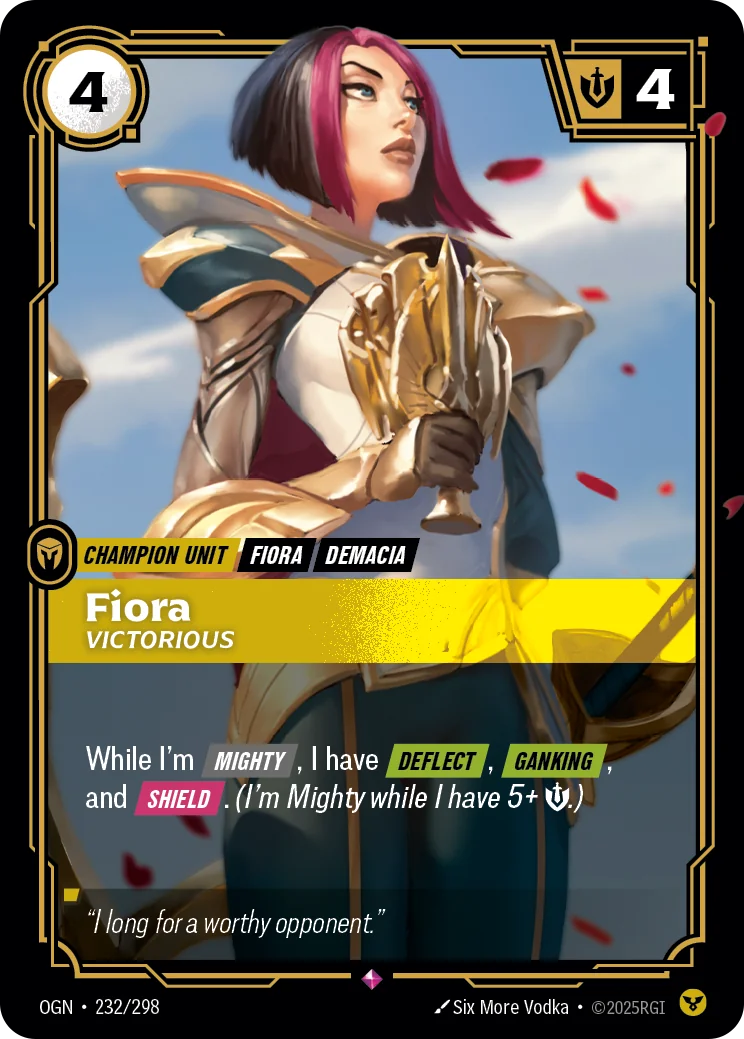 OGN-232 Fiora Victorious is the high-pressure version. While she is Mighty, she has Deflect, Ganking, and Shield. Those keywords turn a temporary combat bonus into a meaningful threat. Deflect taxes opposing spells, Ganking changes where the unit can be played or moved, and Shield improves the chance that the attack survives a response. Do not expose Victorious before you can make the Might threshold or protect the trigger.
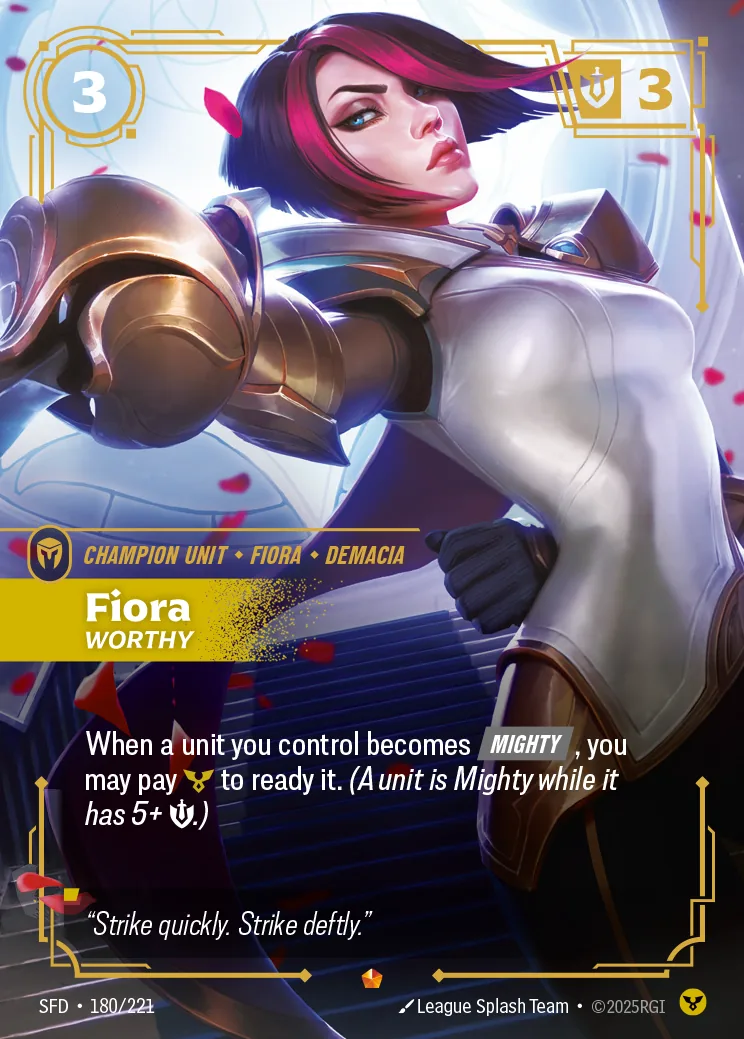 Fiora Worthy converts a Mighty trigger into a ready unit when the Order rune is available.
 SFD-097
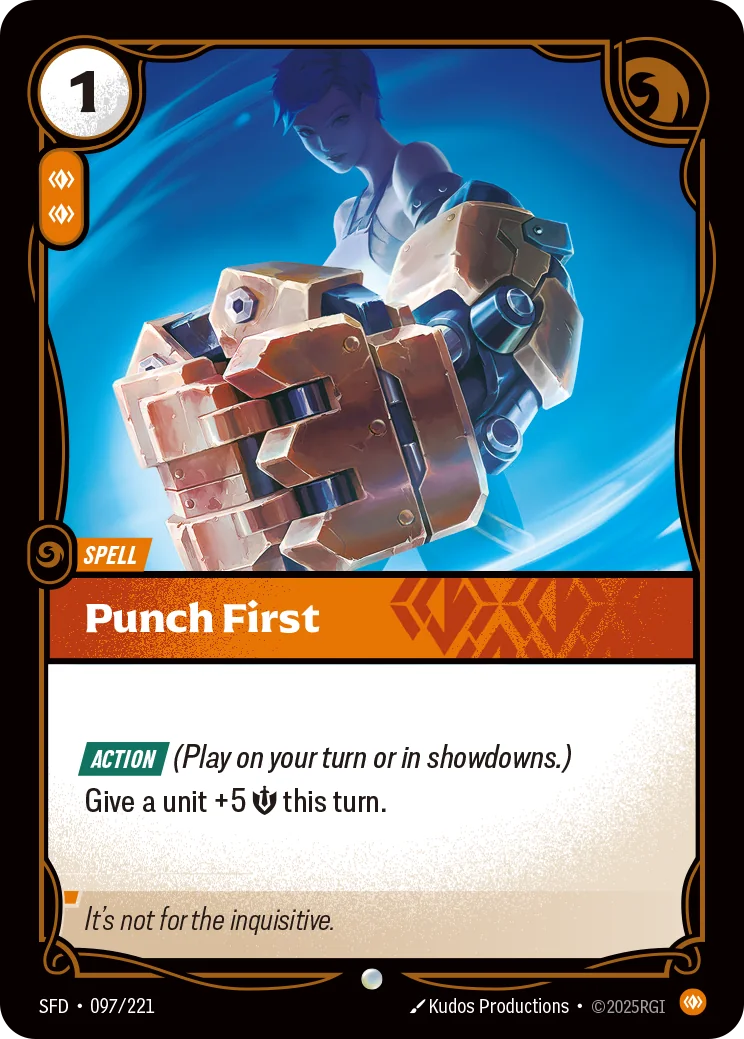 SFD-097Shop on TCGplayer Punch First is the simplest way to reach Mighty. It gives a unit +5 Might for the turn, so it can turn a small body into a seven or eight Might attacker without requiring several cards. The spell is strongest when it creates a knockout, protects a hold, or activates both Fiora and Grand Duelist at once. If it only makes a losing attack look slightly larger, save it.
 OGN-128
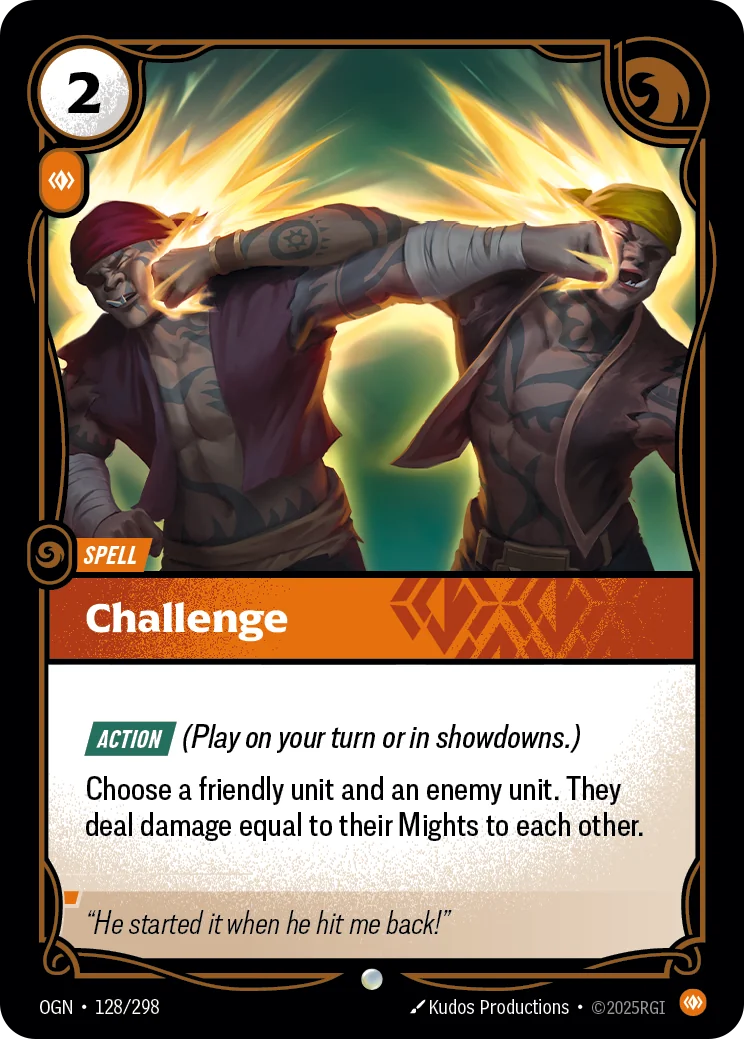 OGN-128Shop on TCGplayer Challenge is the clean removal tool. It makes a friendly and enemy unit deal damage equal to their Mights to each other. The card is at its best after a pump effect has changed the comparison. It can remove a larger-looking unit with a Mighty bonus, but it can also trade a disposable body for an opposing Champion when the opponent expects Fiora to rely only on direct combat.
The public Fiora list and domain split
Riot's Singapore Top Decks page publishes Fr0zen's Fiora Top 8 list (Overall #8) with eight Body runes and four Order runes. Its notable cards include Challenge, Dazzling Aurora, Divining Shells, Elder Dragon, Flurry of Blades, Harnessed Dragon, Mobilize, Poppy Paragon, Rampage, Rengar Trophy Hunter, Repulse, Rift Herald, Riposte, Sacrifice, Sett Brawler, and Shepherd's Heirloom. The list is a verified competitive sample, not a claim that every card must stay at the same count after a format shift.
The eight Body and four Order split gives the deck a clear priority. Body supplies the combat actions, while Order pays for the ready and protection turns. The public archive shows other ratios, including a Barcelona list with a different split, so treat the rune count as a starting point. If the hand repeatedly lacks Order at the moment Fiora Worthy needs it, adjust the resource base before adding another expensive finisher.
 OGN-046
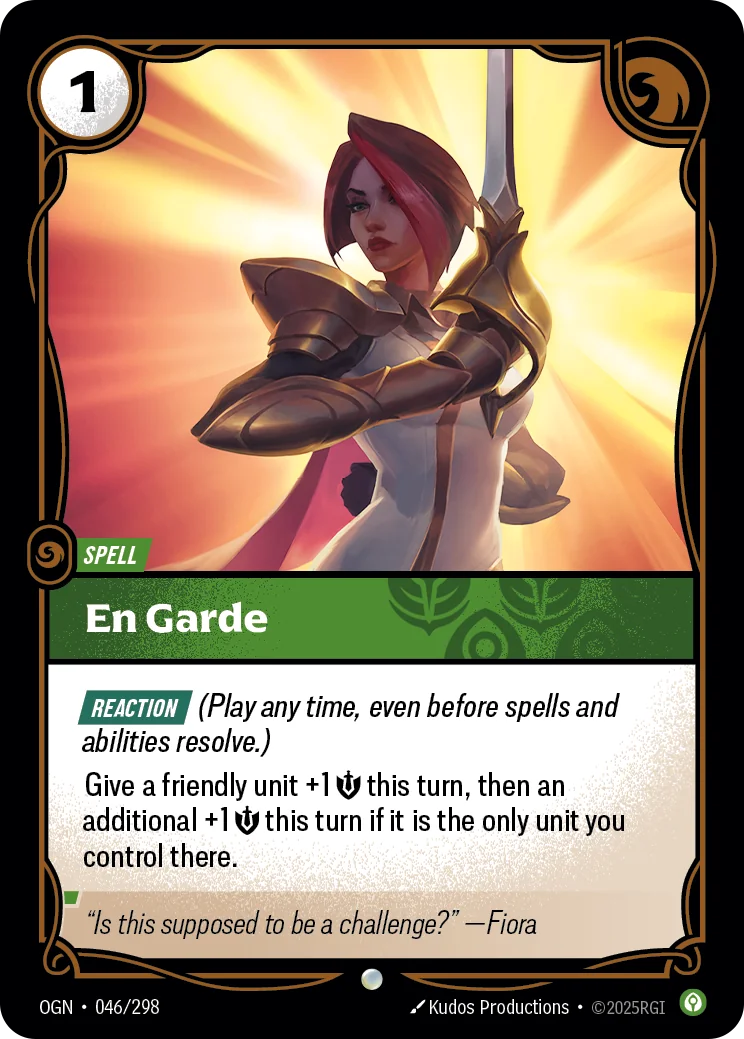 OGN-046Shop on TCGplayer En Garde is a useful reaction because it gives a friendly unit +1 Might, then gives an additional +1 if that unit is alone at its Battlefield. The second bonus is a real deckbuilding signal. Fiora does not always want to create a wide board. One protected Champion with a clear Might threshold can be stronger than three small units that divide the combat trick across locations.
 SFD-206
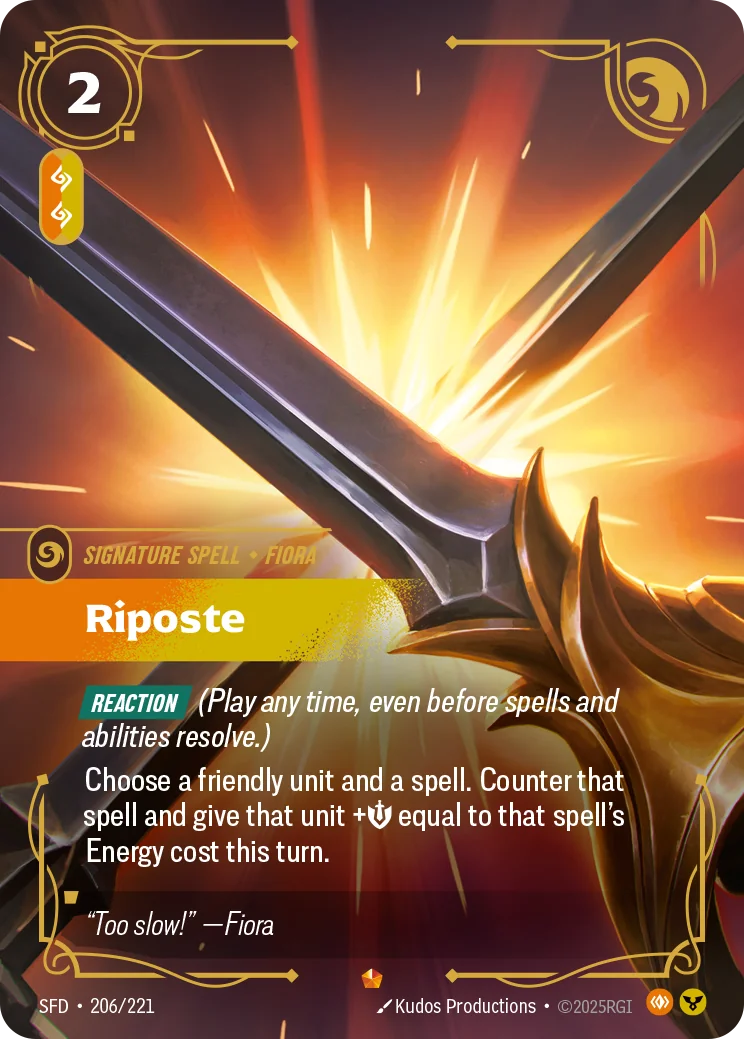 SFD-206Shop on TCGplayer Riposte is the defensive swing card. It counters a spell and gives a friendly unit Might equal to that spell's Energy cost for the turn. That can turn an opponent's expensive answer into the trigger for Grand Duelist, Fiora Worthy, or Fiora Victorious. Hold it when the opponent has to cast a costly spell to stop the attack, but do not refuse to play a normal combat card forever while waiting for a perfect counter.
 UNL-161
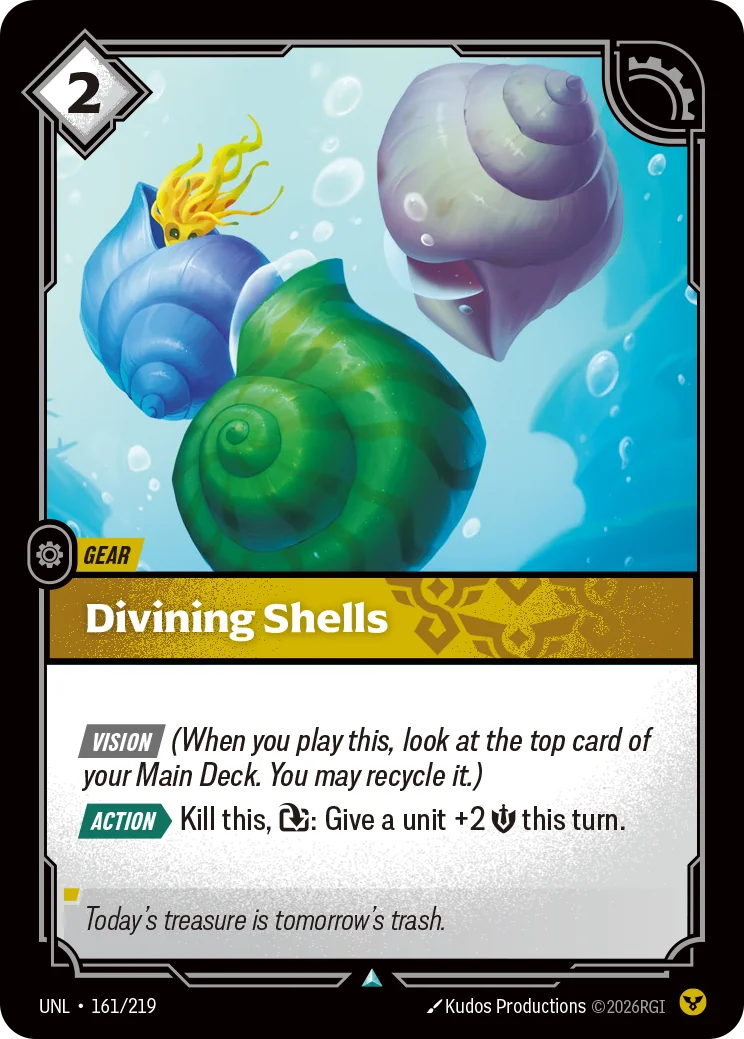 UNL-161Shop on TCGplayer Divining Shells gives the list a small amount of top-deck control. Its Vision effect lets you look at the top card and recycle it if it is not useful, while its later action can give a unit +2 Might after the Gear is killed. The first ability helps find a unit or a combat spell, and the second creates a delayed Mighty trigger. Plan the Gear's death before attaching it to a unit you still need.
The public sample also uses  OGN-134
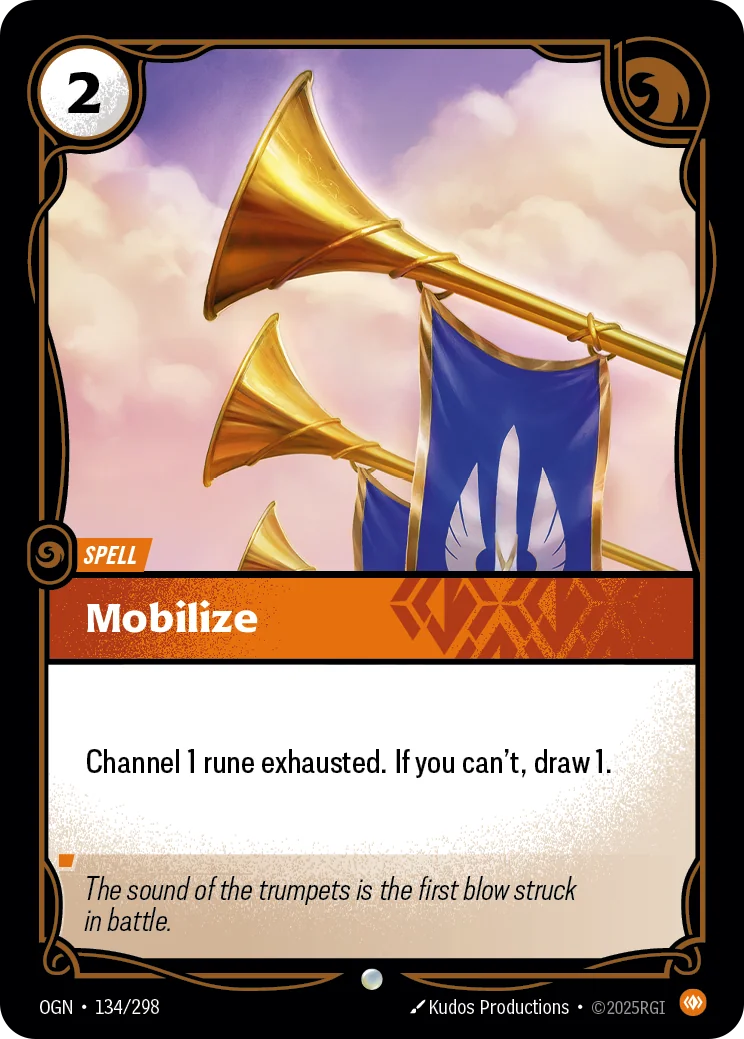 OGN-134Shop on TCGplayer Mobilize, which channels one exhausted rune or draws a card if it cannot. It is a low-friction way to make a turn function when the hand has the right cards but the wrong resource timing. The extra draw matters in long games, especially after the deck has traded two-for-one with an opposing Champion.
GODEEPER: The Domains guide explains how Body and Order resources shape this list's early turns. Riftbound Domains Explained →
Step-by-Step: How to pilot the Riftbound Fiora deck
1. Mulligan for a body and a Might line. Keep a cheap unit, a Champion or Legend access point, and one card that can make a unit Mighty. Fiora Worthy is a strong keep when Punch First, En Garde, or another combat setup is present. Return hands containing only Rift Herald, Dazzling Aurora, and reactive cards with no early unit.
2. Start with one strong Battlefield. Do not spread units simply because the base has room. A single unit that can become Mighty gives En Garde its full bonus and makes Challenge easier to evaluate. Add a second location when the opponent is forced to answer the first or when a ready effect can protect both holds.
3. Spend Body before the Order trigger. Body cards usually create the combat threshold, while Order pays for Worthy's ready effect. Sequence the pump or duel first, then decide whether the resulting Mighty trigger is worth the Order rune. This keeps the ready effect optional instead of committing a resource before the fight is clear.
4. Exhaust Grand Duelist only after the threshold is live. If Punch First or En Garde makes a unit Mighty, resolve that change before using the Legend. The channeled rune can fund Riposte, a second combat trick, or the Order payment for Fiora Worthy. Do not exhaust the Legend early just because you expect the trigger later.
5. Use Challenge when the comparison is favorable. Challenge does not need to target the biggest opposing unit. It needs to create a trade that changes the score or removes the blocker protecting a second Battlefield. Count temporary Might, Shield, and any battlefield bonuses before choosing the pair.
6. Use Worthy to create a second question. After a unit becomes Mighty, pay Order to ready the unit when the second attack can win a hold, move the opponent's Champion, or force another answer. If the ready attack only adds damage to a location that still loses, keep the rune for the next turn.
7. Protect Victorious's Mighty window. Victorious is most threatening when the opponent must answer her after Deflect, Ganking, and Shield are active. Make the Might threshold as late as possible, then attack or move before the opponent can reset the unit. A naked four-Might Victorious is much easier to handle.
8. Close with split pressure, not one oversized duel. Fiora can win a combat and still lose the game if every other Battlefield is empty. Leave a second unit holding or threatening a move while the main Champion attacks. The final turn should make the opponent choose which location to abandon.
Matchup plans for the Fiora deck
Against Kennen, the matchup is about keeping one important unit alive through efficient interaction. The public Fiora archive identifies Kennen as a preferred target because Kennen usually presents a smaller number of high-value threats. Do not rush Victorious into a response window. Build a Mighty trigger, hold Riposte for the key answer, and take the Battlefield when the opponent cannot recover with one spell.
Against Azir, the problem is the opposite. A token board can make every combat trick look too small, and moving Fiora to one location may concede the other two. Save Challenge for a token cluster that is actually scoring, then use Ganking or a ready unit to contest the second location. The Riftbound Azir deck guide shows why leaving one token behind is often better than sending the whole board into one fight.
Against Ornn, attack the setup rather than waiting for the Gear engine to become huge. Ornn rewards repeated Equipment turns, so force a meaningful combat before the opponent has a free long-game turn. Punch First can remove an early unit or make a hold safe, while Divining Shells helps the Fiora hand keep finding the next body. Compare this plan with the Riftbound Ornn deck guide when tuning the matchup.
Against Irelia, count movement before declaring any attack. A ready effect can turn a location that looked won into a second attack elsewhere. Keep a unit at a quiet Battlefield, and avoid spending every Order rune on Worthy if that leaves no way to answer the opponent's move. Fiora's best line is often a small Mighty exchange followed by a reposition, not a race to make the largest possible attacker.
Against wide aggressive lists, accept a smaller combat if it preserves a second hold. The Body cards are efficient only when they convert into points or remove a key blocker. If a spell merely creates a temporary Might lead, use the resource to establish another body instead. Fiora's late-game strength comes from repeatable thresholds, not from spending the entire hand on the first attack.
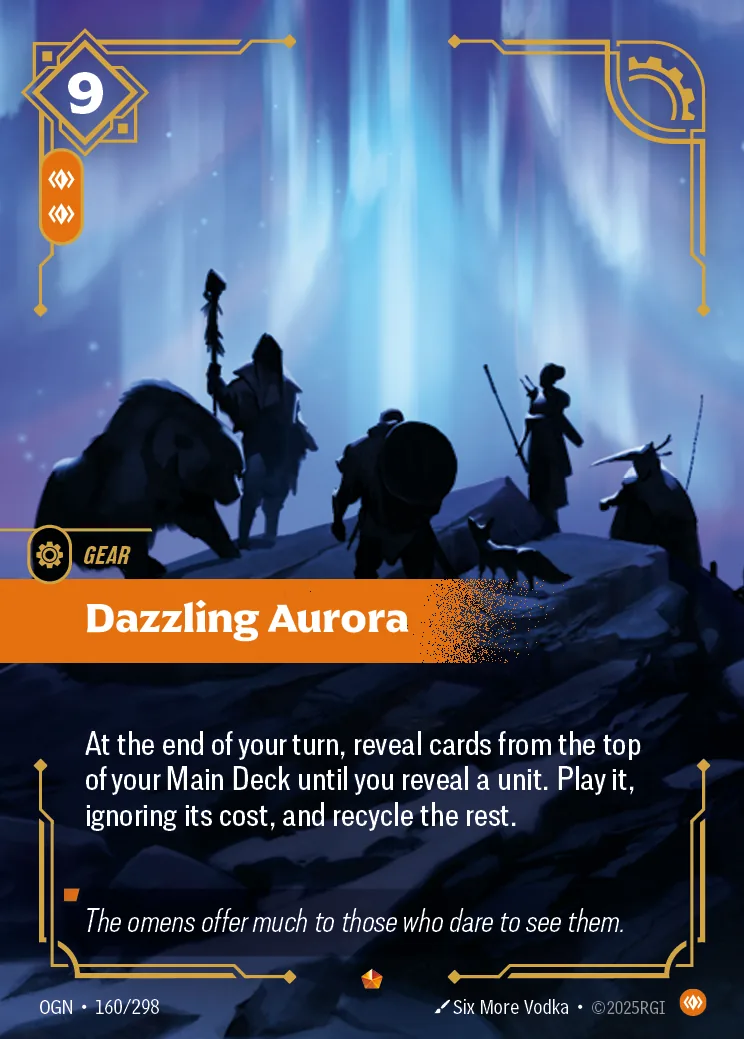 Dazzling Aurora is a late-game Gear payoff that can refill the board after the combat shell has traded resources.
Common mistakes with the Riftbound Fiora deck
Treating every Mighty trigger as an attack. The trigger can channel a rune, ready a unit, or turn on defensive keywords. Sometimes the correct play is to reach five Might and pass while keeping the opponent from taking a Battlefield.
Spreading the board before En Garde matters. Fiora gets more from a single unit when the reaction can use its second bonus. Add units after the first combat line is secure or when the opponent's deck requires a wide defense.
Paying Order for Worthy automatically. A ready unit is only valuable if the second action changes the score or the opponent's next turn. Keep the rune when the attack cannot win a location or force a meaningful answer.
Exhausting Grand Duelist before the pump. The Legend's resource trigger is conditional. Make the unit Mighty first, then take the rune. This also tells you whether the combat is worth continuing.
Using Riposte on a cheap spell. Riposte is flexible, but its best turns counter an answer that would otherwise remove a Champion or erase the Mighty threshold. If the opponent's cheap spell is not changing the score, let it resolve and keep the card.
Copying a public list without its context. The Singapore list proves that Body Order Fiora has tournament-level results. It does not prove that every card count remains correct after a ban update or a local metagame shift. Keep the verified core and tune the flex slots after testing actual matchups.
Frequently Asked Questions
Is the Riftbound Fiora deck Tier 2 right now?
The September 24 Riftbound.gg snapshot places Fiora in Tier 2 and records results across multiple field sizes. Riot's Singapore Top Decks page also publishes a Fiora Top 8 list. Those are useful competitive signals, but they do not make Fiora an automatic choice for every player because the deck rewards precise combat and resource sequencing.
What is the best opening hand for Fiora?
Look for a unit, a way to reach five Might, and enough Body or Order access to pay for the next action. Fiora Worthy plus Punch First is a strong start, but a cheap unit plus En Garde can be just as good when the opponent is likely to fight over one location. Ship late-only hands with no board.
How does Grand Duelist generate value?
Grand Duelist can exhaust when one of your units becomes Mighty and channel one exhausted rune. The trigger does not require you to win the fight, so it can refund part of a combat turn even when the exchange is awkward. Make the threshold first, then choose whether the extra rune funds a ready or protection line.
When should Fiora Worthy ready a unit?
Pay the Order rune when the ready attack wins a Battlefield, forces a second answer, or preserves a separate hold. Do not pay automatically after every Mighty trigger. The deck is strongest when Worthy turns one threshold into two meaningful board decisions, not when it simply adds a second attack to a lost location.
Does this deck use a leader card?
No. Riftbound uses Legends and Champions rather than a leader-zone convention. Public decklist sites name this archetype for its focal Fiora cards, while Grand Duelist is the Legend that supports the build. Evaluate the deck by its domain and battlefield plan, not by importing terminology from another trading card game.
Can I replace Dazzling Aurora?
Yes, if the local field does not allow a nine-cost Gear turn to resolve. Aurora is a late-game payoff, not a required opening card. Keep the Mighty combat package and enough card flow first. Replace the Gear with a lower-cost unit or interaction card only after testing whether the deck still closes games.
Related Reading
- Riftbound Rengar deck guide: Compare Fiora's deliberate Mighty turns with a Body deck built around Ambush.
- Riftbound Master Yi deck guide: Review another Champion shell that asks when to commit to a combat payoff.
- Riftbound complete guide 2026: Keep the core rules and deckbuilding reference beside this matchup guide.
References
- Riftbound.gg Vendetta meta tier list, checked September 28, 2026.
- Official Riot Singapore Top Decks, checked November 2, 2026 for Fr0zen's Fiora Top 8 list (Overall #8, Legend Rank #1/54).
- Official Riot Los Angeles Top Decks, checked November 2, 2026 for Fiora's Day 1 and Day 2 counts.
- Official Riot Barcelona Top Decks, checked for a second public Fiora list.
- RiftboundDecklists Fiora archive, checked for the current public archetype and list count.
- Official Riftbound card gallery, checked for the card text and art used in this guide.
Was this guide helpful?
Cards in this article
About the author
Beginner guides and anime crossover
Pen name for the Shonen TCG desk's beginner guides, starter decks and anime-to-card-game explainers.
- Rules checked against the official rulebook and card text
- Every claim traced to a cited source
- Opinions marked as ours, with the reason
Keep reading

Riftbound Vex Deck Guide: Gloomist Control Build 2026
Guides · 16 min
Riftbound Rek'Sai Deck Guide: Fury Order Tunnels 2026
Guides · 16 min
Riftbound Banned Cards: Current Banlist Explained 2026
Guides · 14 min
Riftbound Azir Deck Guide: Emperor of the Sands Build
Guides · 13 min
Riftbound Ornn Deck Guide: Fire Below the Mountain
Guides · 13 min

Riftbound Domains Explained: All Six Colors and Deck Roles
Guides · 9 min

Riftbound Akali Deck Guide: Rogue Assassin Vendetta Plan
Guides · 7 min

Riftbound Irelia Deck Guide: Blade Dancer Vendetta Plan
Guides · 14 min
Disclaimer
This article is published for informational and entertainment purposes. It does not constitute professional financial, legal, or technical advice. Game performance, online services, patch schedules, and store listings change. Verify critical details (pricing, system requirements, regional availability) with publishers and storefronts before you buy. Affiliate links, where present, help support our editorial work and are labelled in our affiliate disclosure.