

Shonen TCG · Guides
Riftbound LeBlanc Deck Guide: Mind-Order Meta Build
Riftbound LeBlanc deck lists have moved from fringe curiosity to a serious post-ban Vendetta option. The September 24 Riftbound.gg tracker places LeBlanc in Tier 1, and a public Singapore Regional Qualifier sample shows the Mind-Order shell players were testing before that ranking settled. The deck wins through temporary Reflection copies, efficient location fights, and Order cards that make every copied unit matter.
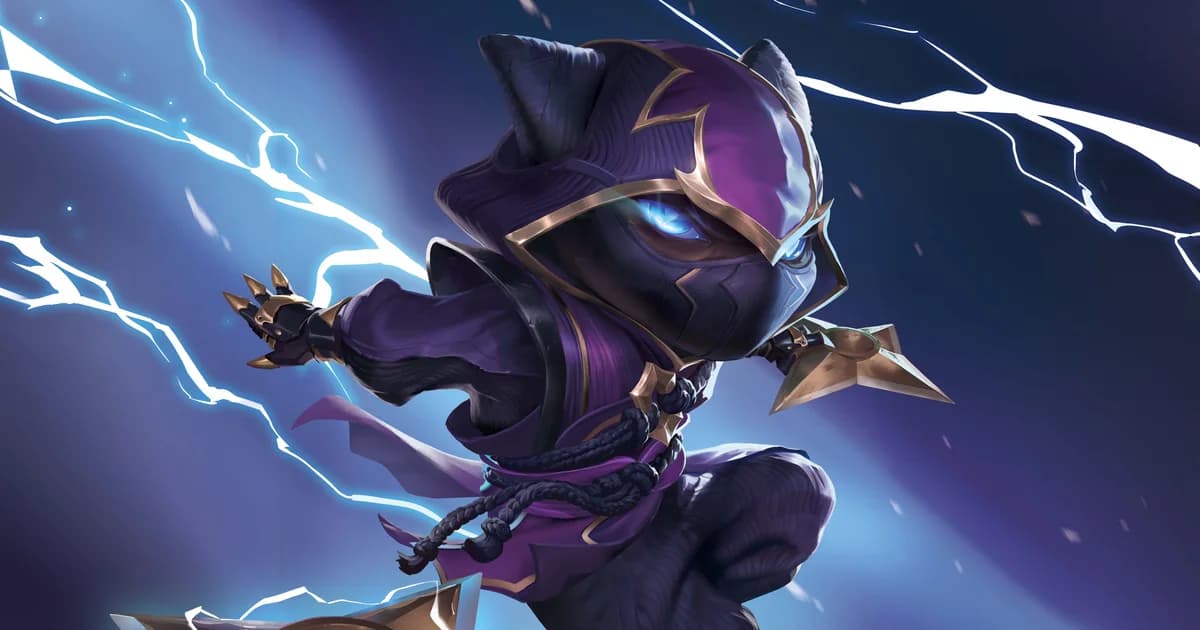
TL;DR: LeBlanc is a Mind-Order deck built around
UNL-199
UNL-199 Deceiver and
UNL-200
UNL-200Shop on TCGplayer Mirror Image. Both cards create Reflection copies, so the deck turns a strong unit already in play into extra pressure without filling the list with redundant finishers. Keep a cheap setup card, one useful unit to copy, and enough early interaction to reach the first conquer or hold trigger. The public tracker currently treats LeBlanc as Tier 1, while the Mobalytics Singapore list remains the clearest public deck shell to study.
Is the Riftbound LeBlanc deck good after the post-ban reset? (Quick Answer)
Yes. The latest public Riftbound.gg tier list checked for this article puts LeBlanc in Tier 1 alongside other leading Vendetta legends. That placement comes from a tracker, so it should be read as a current competitive signal. It does not replace results from the next Regional Qualifier, and it does not mean every LeBlanc list has the same matchup spread.
LeBlanc earns that attention because the deck converts one good unit into several relevant bodies. A Reflection token can copy a unit at a key Battlefield, take a location fight, or create a second attack that the opponent did not plan around. The token disappears before scoring because of Temporary, but it has already forced a block, removed a unit, or changed the conquer math.
The public Singapore sample is useful for structure. It shows the Mind and Order pairing, four Mind runes, eight Order runes, and a package built around LeBlanc, Karthus, Glasc Mixologist, Deathgrip, Hidden Blade, and other Order tools. Use that list as a reference point. The current build should still be adjusted for the opponents appearing at your local events.
For the broader ranking and the post-ban context, compare this guide with the Riftbound meta tier list. The tier list tracks the field at a higher level, while this article focuses on how the Reflection engine actually wins locations.
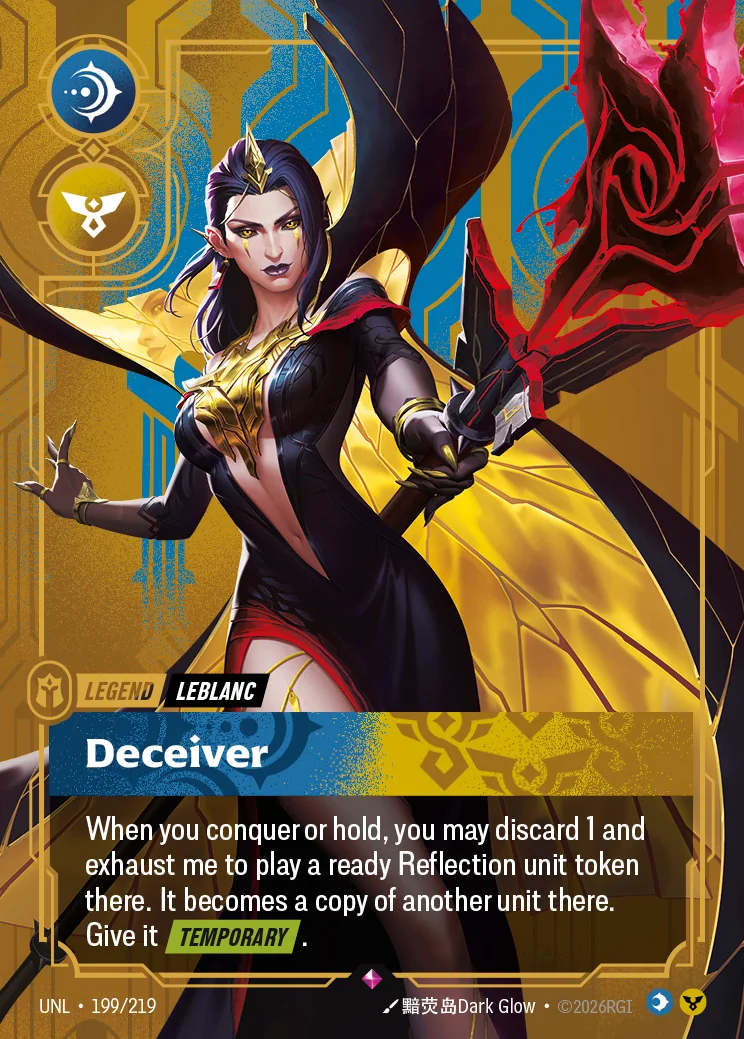 Deceiver is LeBlanc's Legend card in UNL-199, with the Reflection copy effect used by this build.
Key Takeaways for the Riftbound LeBlanc deck
- Mind and Order give LeBlanc a flexible board plan. Mind supplies the card's copy and setup identity, while Order supplies the removal, Deathknell, and unit quality that make a copied body worth creating.
- Deceiver copies a unit after a conquer or hold trigger. Mirror Image creates a copy at your base, which gives the deck a second way to turn a single strong unit into a temporary board swing.
- Temporary changes the timing of every copy. The Reflection token will not survive to the next Beginning Phase scoring window, so create it when it can affect combat, movement, or a hold check immediately.
- The deck prefers a hand with early development and one clear target to copy. Several expensive cards without a unit to protect or duplicate usually create a slow opening.
- The public LeBlanc sample is a starting point, not an official fixed list. Riftbound.gg's Tier 1 label and Mobalytics list answer different questions, so keep those evidence types separate.
LeBlanc's Mind-Order game plan and core cards
The deck plays like a value engine with a sharp timing window. You want a real unit on a Battlefield, then you want Deceiver or Mirror Image to produce a temporary copy at the location where that body changes the score. The copy is most valuable when it creates an extra attacker, adds enough Might to win a contest, or lets the original unit stay in place while the Reflection handles the dangerous exchange.
UNL-199UNL-199 Deceiver is the central Legend card. After LeBlanc conquers or holds, you may discard a card and exhaust her to play a ready Reflection unit token at that location. The token copies another unit there. The effect asks for two resources, a card from hand and LeBlanc's readiness, so the trigger is strongest after you have already identified the location that decides the turn.
UNL-200UNL-200Shop on TCGplayer Mirror Image plays a ready Reflection token to your base and copies a unit. It is less tied to a conquer or hold trigger, which makes it useful for setting up a location before the opponent can force a fight. The copied unit gains Temporary, so the target should have an immediate purpose. A large body that never contests a location is usually a poor Mirror Image target.
The Order half of the list gives those copies room to work. Karthus supports Deathknell lines, while cards such as Deathgrip, Hidden Blade, and Honest Broker give you ways to turn a single unit into a meaningful answer. Glasc Mixologist fits the same pattern: it keeps the board functional while LeBlanc waits for the right trigger. The precise counts depend on the local field, but the roles stay consistent.
The Mind rune count in the Mobalytics sample is lower than the Order count. That is a useful clue for construction. LeBlanc needs Mind online to function, yet the shell still wants enough Order access that the deck can fight for a location after the first copy has been made. A list that overcorrects toward one domain loses the reason to play the pairing.
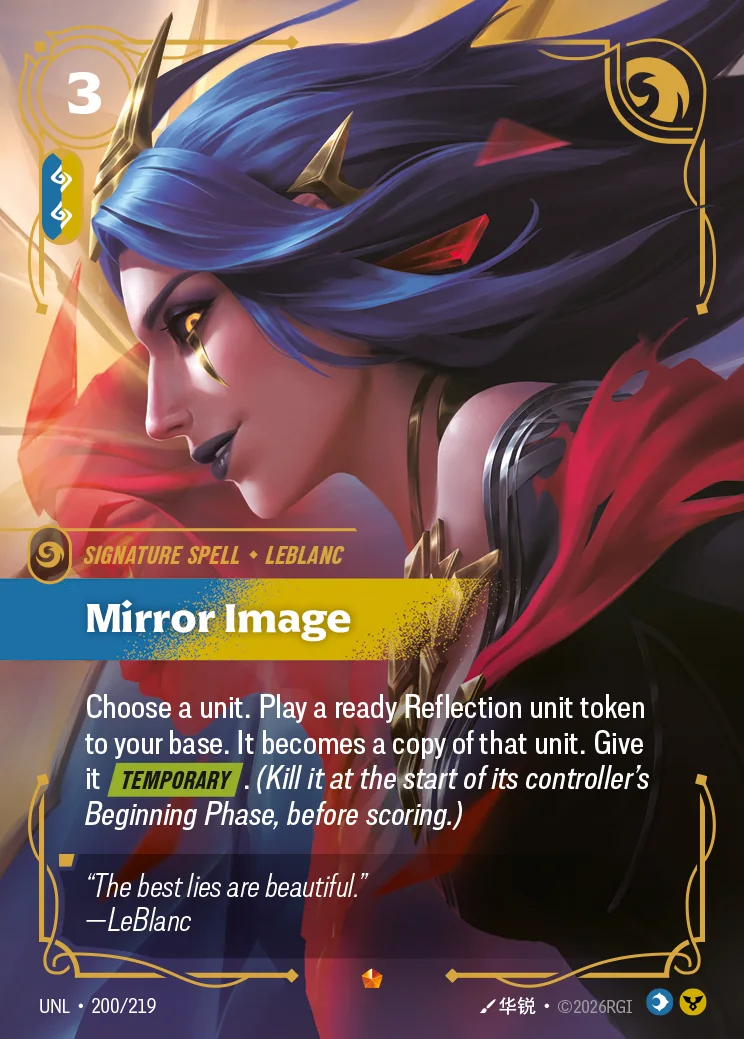 Mirror Image gives the deck a copy at its base, which is useful before the opponent commits to a specific Battlefield.
Step-by-Step: How to pilot the LeBlanc deck
1. Keep a functional opening hand. Look for a low-cost unit, a way to establish a Battlefield presence, and one card that stays useful after the first exchange. Deceiver is a strong keep when the rest of the hand can put a copy target on the board. A hand made only of expensive Order cards is a mulligan even if the cards are powerful later.
2. Decide which location matters before you spend the copy effect. Deceiver rewards patience. If you trigger the effect just because it is available, the Reflection may fight at a location that does not decide the turn. Track the Battlefield score, the opponent's ready units, and the next possible hold check before exhausting LeBlanc.
3. Put the real body where it can do work twice. A strong unit should either contest now or threaten the next score. Mirror Image is better when the target remains relevant after the temporary copy disappears. If the copied unit only adds damage without changing the location math, save the card for a target that does.
4. Use Order interaction to protect the timing window. The deck is at its best when the opponent has to answer a real board before the copy arrives. Spend removal on the unit that prevents your next hold, not on the smallest body in play. This is also where Deathknell lines become more valuable, because they make a trade produce pressure after the exchange.
5. Count the Beginning Phase before making a temporary copy. Temporary copies are removed before scoring. A Reflection can still win a fight during the turn it enters, but it cannot be treated as a body that will hold the Battlefield on the next scoring step. If the only reason to make the copy is future score, the effect is late.
6. Close the game by forcing two bad answers. A good LeBlanc turn often asks the opponent to answer both the original unit and the Reflection. If they spend removal on the copy, the original may hold. If they ignore it, the temporary body can win the location. Use movement and the two-domain toolkit to make that choice happen at the location that scores next.
Mulligan priorities and matchup decisions
The mulligan changes with the opponent's speed. Against a deck that develops slowly, keep Deceiver, a solid unit to copy, and a card that improves the next two turns. Against fast pressure, replace a second expensive payoff with early interaction or a cheap unit. LeBlanc cannot afford to wait for the perfect Reflection target while an opponent takes the first two locations.
Against midrange, the deck can play the long game. Let the opponent commit a high value unit, then use Deceiver or Mirror Image to match the fight without dedicating another full card to the same role. Order removal is best saved for the unit that protects a hold, since trading away a random body may leave the opponent with a clean scoring turn.
Against aggressive lists, prioritize the first Battlefield over an elaborate Deathknell sequence. A temporary copy that survives a combat exchange has done enough. You do not need to preserve every resource for the late game if the opponent is about to score twice. Take the safe fight, then rebuild with the next draw.
Against control, make the opponent answer distinct threats. The deck is vulnerable when every play depends on one expensive unit, so use smaller units and the base version of Mirror Image to spread the burden. If the opponent is holding removal, do not expose the only good copy target before you can gain value from it.
Against another Mind or Order deck, expect the contest to revolve around timing. Count ready units and open resources before you trigger Deceiver. The copy effect is strongest when it creates a clean location win, not when it merely makes the board look larger.
Common mistakes with the Riftbound LeBlanc deck
Making every Reflection immediately. A ready token is tempting, but Deceiver's trigger asks you to choose a location and discard a card. Waiting until the score is clear often gives the same effect more impact.
Copying the biggest unit instead of the most useful one. A smaller unit with a strong play or combat effect can be a better target than a large body. Read the location first, then choose the copy that changes the next action.
Treating Temporary as a drawback that makes the card bad. Temporary is a timing constraint. It is excellent for a combat, a removal setup, or a hold check during the current turn. It is poor for a plan that depends on surviving to the next score.
Overloading the list with expensive Order cards. The public sample has a strong Order bias, but it still needs Mind access and units that reach a Battlefield early. Copy effects cannot fix a hand that never establishes a target.
Assuming the tracker ranking settles the deck choice. The current Tier 1 placement is useful evidence, while the Singapore list shows a concrete shell. Neither source guarantees a result at your next event. Test the matchups that appear in your local queue and adjust the flex cards.
Frequently Asked Questions
Is LeBlanc a good Riftbound deck after the post-ban changes? Yes. The September 24 Riftbound.gg tracker places LeBlanc in Tier 1 after the post-ban reset. That is a public tracker ranking, not an official Riot tier, so treat it as a current metagame signal rather than a permanent verdict.
What domains does the Riftbound LeBlanc deck use? The deck uses Mind and Order. A public Singapore Regional Qualifier sample listed four Mind runes and eight Order runes, giving the build access to LeBlanc's Reflection effects and the Order package that supports longer board fights.
What does Deceiver do in Riftbound? Deceiver lets you discard a card and exhaust LeBlanc after you conquer or hold, then creates a ready Reflection token that copies another unit at that location. The token gains Temporary, so it is removed before the next scoring window.
What is the main plan of the LeBlanc deck? The plan is to turn a temporary Reflection into extra pressure at the location that matters most. Deceiver and Mirror Image copy high value units, while Order tools and Deathknell lines keep the opponent from winning the next Battlefield before those copies matter.
Which public LeBlanc list supports this deck guide? The guide uses the Mobalytics Singapore Regional Qualifier Best-Of sample updated September 10, 2026, listed at overall rank 17 on that page. It is a dated public list used to explain the shell, not a claim that every LeBlanc deck should copy it card for card.
What is LeBlanc's biggest weakness in Riftbound? The deck can lose when an opponent forces a fast Battlefield exchange before the Reflection engine produces value. Hands full of expensive Order cards also become awkward if the opponent keeps changing locations, so early interaction and flexible units matter more than a greedy top end.
Related Reading
- Riftbound Kennen Deck Guide: a Chaos and Order combo plan that approaches the Vendetta board from a different angle.
- Riftbound Master Yi Deck Guide: the Calm and Body midrange shell that tests LeBlanc's ability to win long location fights.
- Riftbound Rengar Deck Guide: a faster proactive deck that pressures the setup turns LeBlanc wants.
- Riftbound Jayce Deck Guide: a Mind-Body Gear ramp plan that asks different questions of the same post-ban field.
References
- Riftbound official card gallery: verified the names, domains, text, and images for Deceiver and Mirror Image.
- Riftbound Tier List: public tracker snapshot checked September 24, 2026.
- LeBlanc Deceiver Singapore Regional Qualifier Best-Of: dated public deck sample checked September 25, 2026.
- CCS Riftbound Qualifier 5 report: post-ban event context and current competitive results.
Was this guide helpful?
Cards in this article
About the author
Deck guides and meta
Pen name for the Shonen TCG desk's One Piece TCG deck guides, tier lists and meta reports.
- Lists averaged from public tournament results, sample size stated
- Card text quoted from Bandai's official card list
- Opinions marked as ours, with the reason
Keep reading

Riftbound Jayce Deck Guide: Aurora Mind-Body Build
Guides · 7 min

Riftbound Irelia Deck Guide: Blade Dancer Vendetta Plan
Guides · 14 min
Riftbound Akali Deck Guide: Rogue Assassin Vendetta Plan
Guides · 7 min
Riftbound Domains Explained: All Six Colors and Deck Roles
Guides · 9 min
Riftbound Ornn Deck Guide: Fire Below the Mountain
Guides · 13 min
Riftbound Azir Deck Guide: Emperor of the Sands Build
Guides · 13 min

Riftbound Fiora Deck Guide: Grand Duelist Build 2026
Guides · 16 min
Riftbound Vex Deck Guide: Gloomist Control Build 2026
Guides · 16 min
Disclaimer
This article is published for informational and entertainment purposes. It does not constitute professional financial, legal, or technical advice. Game performance, online services, patch schedules, and store listings change. Verify critical details (pricing, system requirements, regional availability) with publishers and storefronts before you buy. Affiliate links, where present, help support our editorial work and are labelled in our affiliate disclosure.