

Shonen TCG · Guides
Riftbound Vex Deck Guide: Gloomist Control Build 2026
This Riftbound Vex deck guide covers the current Calm Chaos hold shell, using public Vendetta lists and the live tracker rather than a guessed Champion pile. The plan is to hold a battlefield, draw from that hold through Gloomist, and make every opposing unit play awkward by punishing the location it enters.

TL;DR: Riftbound.gg's October 9 tier list ranks Vex first in Tier 3, down from Tier 2 on October 1, and a public Singapore Regional Qualifier list finished 33rd with the archetype.
UNL-232
UNL-232 Gloomist draws when you or an ally holds,
UNL-150
UNL-150 Vex punishes an enemy unit played at your battlefield, and Calm plus Chaos gives the deck defensive bodies, Hidden tricks, and late-game reach.
Updated October 12, 2026: Every fact re-checked. Vex moved from Tier 2 to Tier 3 in Riftbound.gg's October 9 update, the Singapore list's 5 and 7 counts are runes rather than cards, Tideturner swaps locations with a friendly unit anywhere rather than at the same battlefield, and the mulligan advice now follows Riftbound's set-aside-two rule.
Riftbound Vex deck? (quick answer)
Yes, Vex is a distinct competitive archetype in the current Vendetta field, though not a top-tier one. Riftbound.gg's tier list, updated October 9, 2026 for the post-ban metagame, ranks Vex first in Tier 3, which the site defines as a Legend that "Competes for Top 64 spots with an experienced pilot." Its October 1 report had Vex in Tier 2. The October 9 report credits Vex with 11 top cuts since the bans, including Top 32 at the Los Angeles RQ, and calls it "a very consistent legend in the post-ban metagame," while noting that Azir, Kennen, Master Yi, and Irelia "are all 45% opponents at best." The RiftboundDecklists archive shows six public Vex, Gloomist lists, and Mobalytics records a Vex Gloomist list from the Singapore Regional Qualifier on September 10 with an overall placement of 33rd. Those sources establish a real deck without inflating one result.
The deck is a Calm and Chaos hold strategy. It does not try to race with a wide board or win one giant combat every turn. Instead, it creates a safe early hold, turns that hold into cards through Gloomist, and uses Vex's battlefield trigger to punish the opponent for adding a unit where the deck is already established. Hidden units then let you move, empower, or trade without showing the plan too early.
Vex is not a leader-zone deck. Public Riftbound decklists name a list after its focal Legend or Champion, so Vex deck means the Gloomist Legend plus the Vex package. The same convention appears across the public archive for other Legends. That is useful when comparing this article with One Piece or Union Arena content, where the word leader can describe a different part of deck construction.
Key takeaways for the Riftbound Vex deck
- Calm and Chaos create a defensive resource base with enough movement and Hidden play to keep a hold relevant.
- Gloomist turns a successful hold into a card, so the deck wants to contest a location before spending its entire hand.
- Vex Apathetic has Deflect and Stuns an enemy unit played while Vex is at a battlefield. That unit cannot move during the turn.
- Steel Paws is a cheap Deflect body that becomes a serious threat after its Empower 7 line resolves.
- Mutated Mouser blocks efficiently because Shield 2 and Tank make it a reliable defender at a contested location.
- Scuttle Crab can draw on entry and still hold a battlefield at zero Might, which makes it better than its printed power suggests.
- Tideturner and Tornado Warrior are Hidden plays that turn unexpected locations into live scoring positions.
- Kharox is a late finisher, not an opening-hand card. Its empowered effect burns the opponent and can reuse a unit from their trash.
Riftbound Vex deck core: hold first, punish the entry
UNL-232UNL-232 Gloomist is the Legend that gives the shell its card advantage, and its printed Domains, Calm and Chaos, set the deck's Domain Identity. Whenever you or an ally holds, you may exhaust Gloomist to draw one. The trigger does not require a combat win, and it does not care whether the holding unit is a Champion. That means the list can use a small Calm body to create a card before committing Vex or a larger threat.
The timing is important. Do not exhaust Gloomist as soon as a unit reaches a battlefield if the opponent can remove that unit before the hold is checked. Establish the hold, resolve the draw, then decide whether the same location needs another unit. In longer games, one extra card per turn is more valuable than a flashy early attack because it keeps Hidden and response cards available.
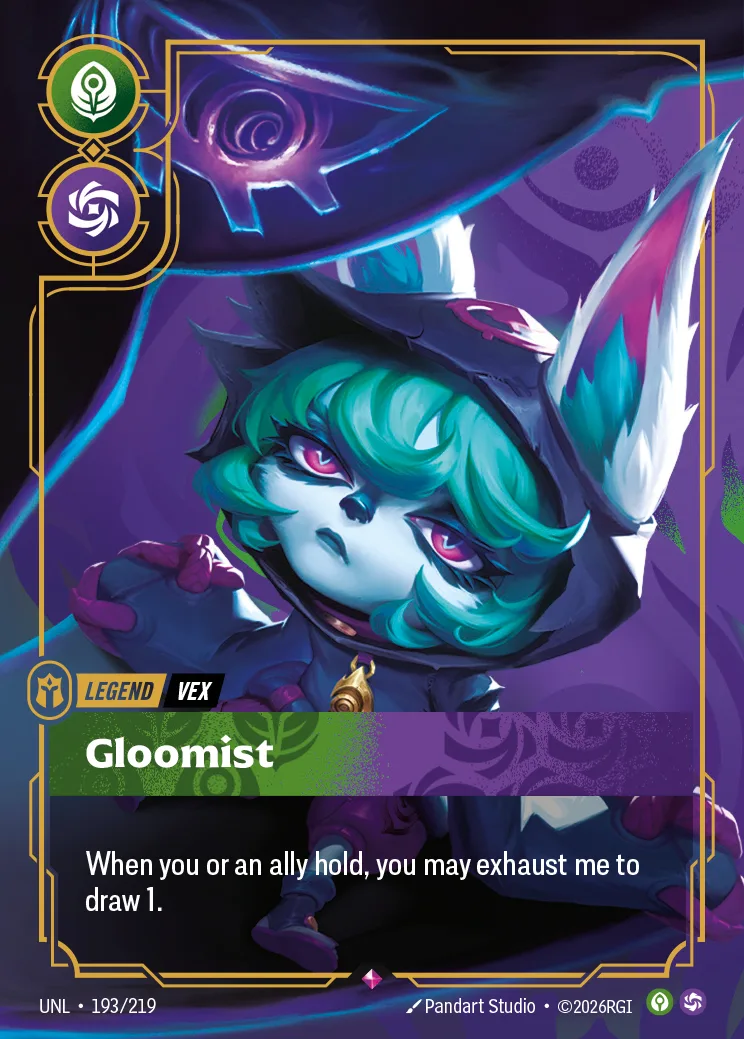 Image: Riot Games, Riftbound official card gallery (UNL-193, Gloomist). The Legend's two Domain icons, Calm and Chaos, set the deck's colors.
Vex Apathetic is the pressure piece. Vex has Deflect, so opponents must pay a Rainbow rune to choose her with a spell or ability. More importantly, when an opponent plays a unit while Vex is at a battlefield, that unit is Stunned and cannot move that turn. This does not remove the unit, but it turns the location into a bad landing spot and denies the opponent the easy reposition that often makes a new unit matter.
Vex is strongest when she arrives before the opponent has a clean way to move around her. A unit that enters at another battlefield may avoid the trigger, so do not treat Vex as a universal lock. Use the rest of the deck to make the defended location the one that matters. A hold plus a visible Vex can force the opponent to spend a turn elsewhere, which is already a win if Gloomist is drawing and the score is moving.
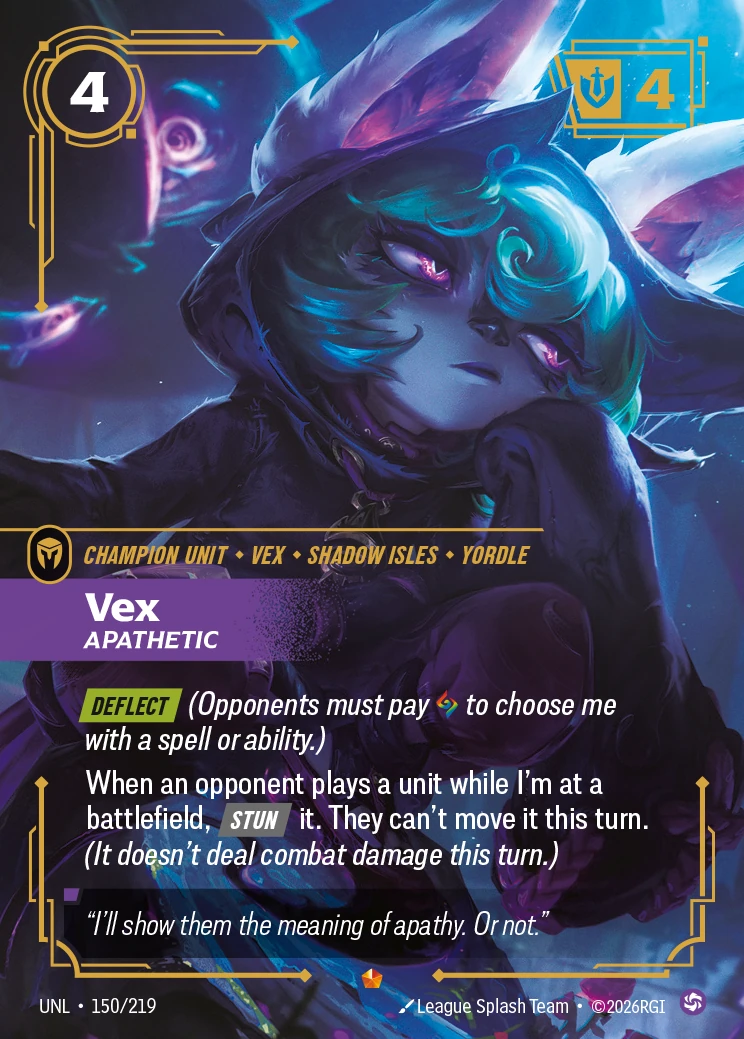 Image: Riot Games, Riftbound official card gallery (UNL-150, Vex, Apathetic). She Stuns an opposing unit played at her battlefield.
 VEN-043
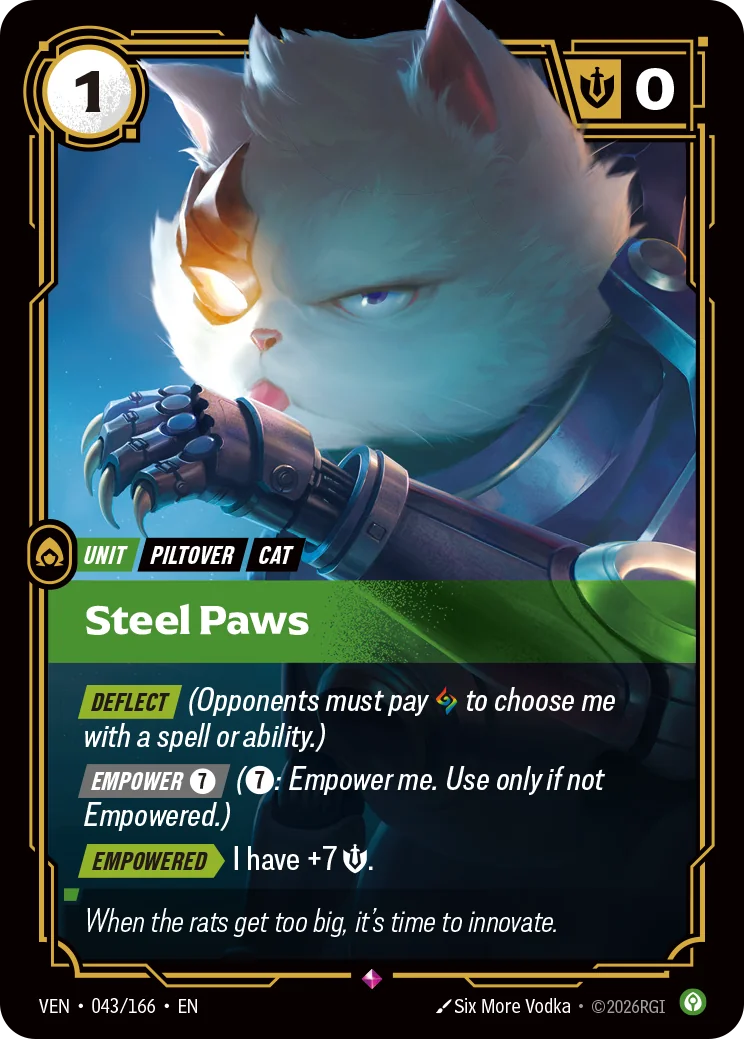 VEN-043Shop on TCGplayer Steel Paws gives the deck a one-Energy body that is hard to answer cleanly. Deflect taxes targeted interaction, while its Empower cost of 7 Energy turns the zero-Might unit into a +7 Might threat. The card is not asking to be empowered on turn one. Its job is to hold a location cheaply, draw through Gloomist, and become relevant when the opponent has already spent removal on Vex.
 UNL-036
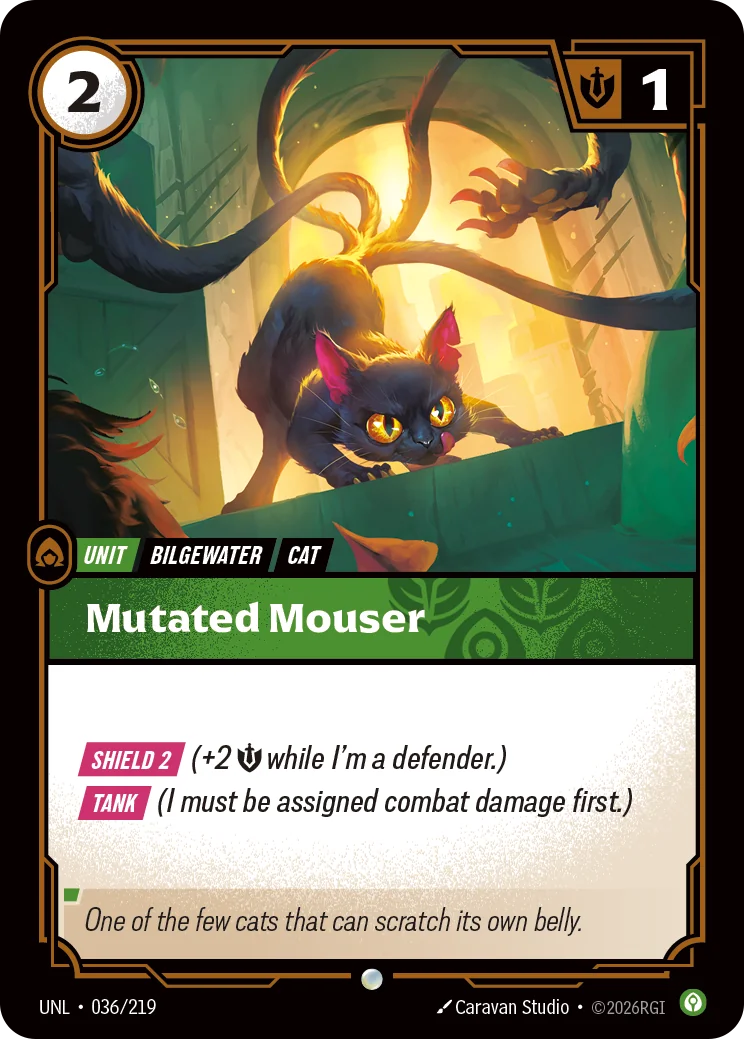 UNL-036Shop on TCGplayer Mutated Mouser is a better defender than its one Might suggests. Shield 2 gives it +2 Might while it is defending, and Tank means combat damage must be assigned to it first. Put it at the battlefield the opponent is most likely to attack, then let Vex or Gloomist make that location expensive to ignore. It also protects a higher-value unit from being the first target in combat.
 UNL-053
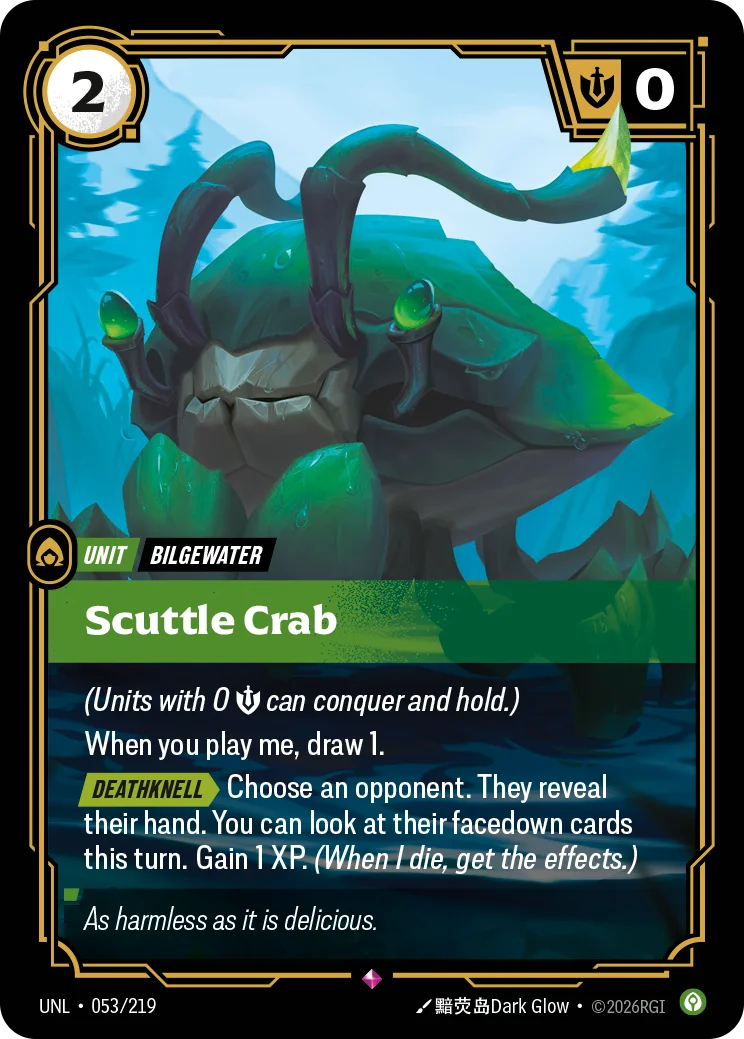 UNL-053Shop on TCGplayer Scuttle Crab is the deck's unusual utility body. Units with zero Might can conquer and hold, so its printed zero is not a blank line. Playing it draws one, and its Deathknell can reveal the opponent's hand, inspect facedown cards for the turn, and gain one XP. Use the Crab when the location needs a holder or when information changes the next Hidden play. Do not sacrifice it merely for a small attack.
The verified Calm Chaos list and its role assignments
The public Mobalytics Singapore list runs 5 Calm and 7 Chaos runes. Its main deck includes one Vex, Apathetic, three Steel Paws, three Mutated Mouser, two Scuttle Crab, two Tideturner, three Tornado Warrior, two Kharox, two Astral Heron, two Zhonya's Hourglass, three Switcheroo, and defensive or movement spells such as Defy, Discipline, and Rebuke. The current public archive contains other Vex lists, so the sample is a verified shell rather than a claim that there is one mandatory 40-card configuration.
Calm handles the first hold. Steel Paws, Mutated Mouser, Scuttle Crab, and other defensive units make it possible to score without spending a spell immediately. This matters because Gloomist only creates an advantage if the unit survives long enough to hold. Calm also gives the deck bodies that can stay behind while Chaos prepares a Hidden response.
Chaos is the second question the opponent must answer. Vex itself is a Chaos Champion, and cards from the domain add movement, surprise Might, and late-game pressure. The deck is most successful when the opponent cannot tell whether the next card is a new holder, a location swap, or a finisher. Spend Chaos on the play that changes the score, not simply on the most expensive unit available.
 OGN-199
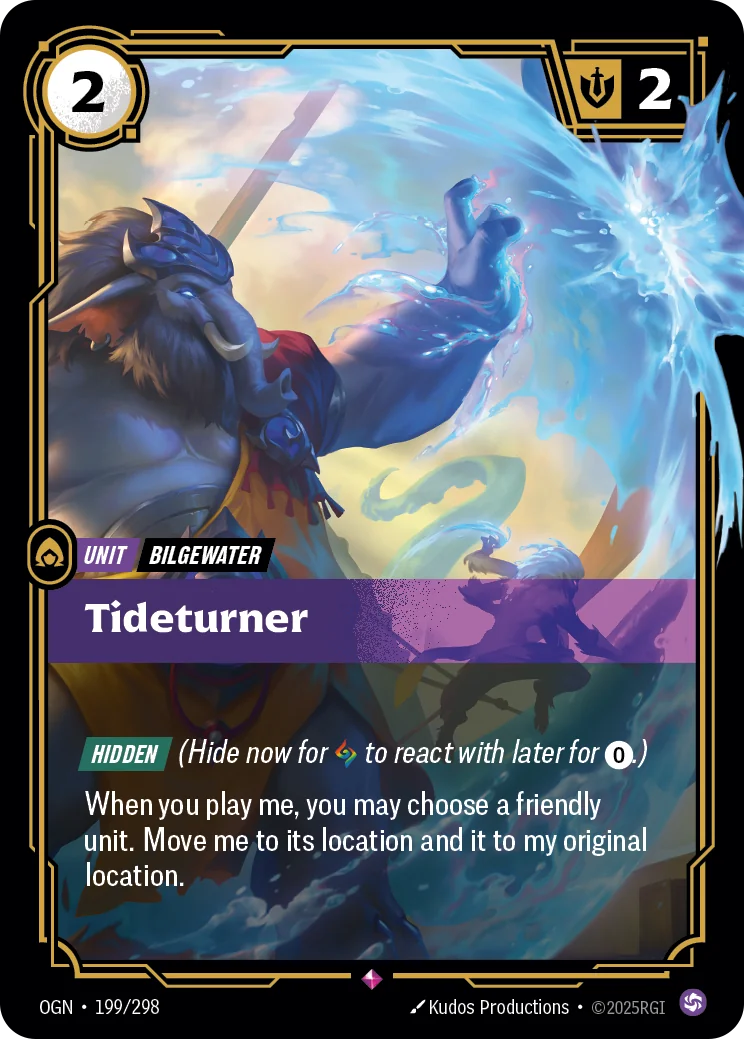 OGN-199Shop on TCGplayer Tideturner is the cleanest movement trick in the package. It has Hidden, and when you play it you may choose a friendly unit, then move Tideturner to that unit's location and the unit to Tideturner's original location. That lets a holder slip out of a bad fight while Tideturner takes its place, or lets Tideturner arrive at a location where its two Might changes the combat math. Reveal it only after the opponent has committed to the current board.
 VEN-099
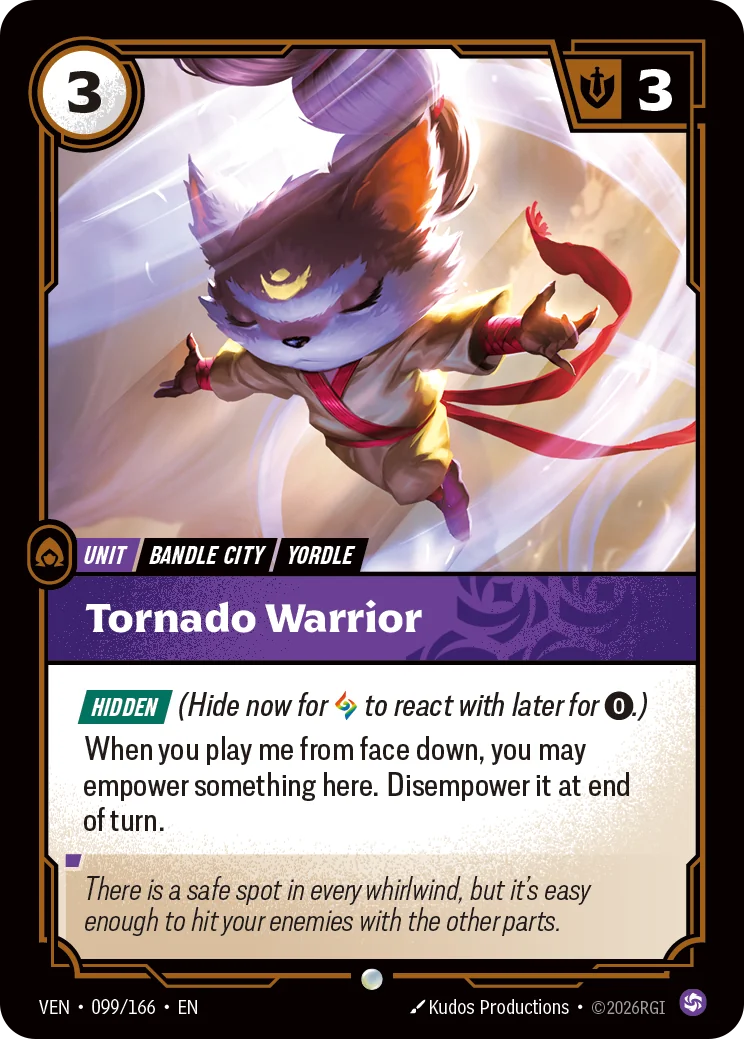 VEN-099Shop on TCGplayer Tornado Warrior is another Hidden tool. When played face down, it can empower something at its battlefield for the turn and then disempower it at end of turn. The temporary boost is useful for a hold threshold, a Gloomist trigger, or a combat that would otherwise fail. Remember that the empower is not a permanent upgrade. Count the end-of-turn board before choosing the location.
 VEN-114
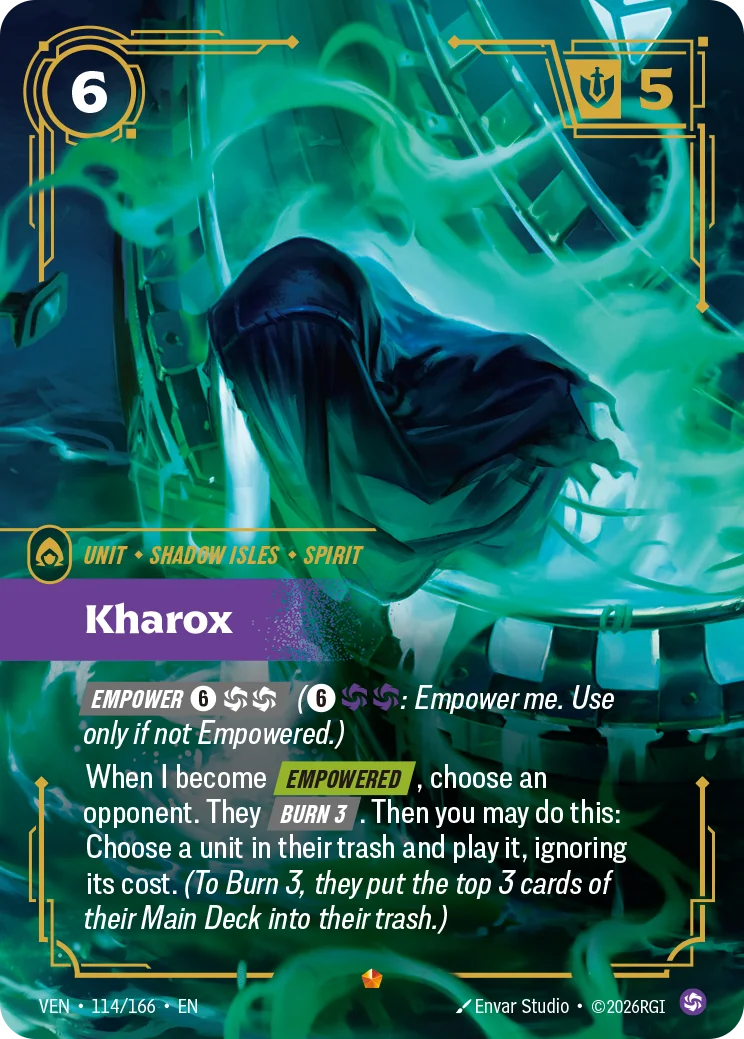 VEN-114Shop on TCGplayer Kharox closes games that reach a long resource exchange. It costs 6 Energy to play and its Empower costs 6 Energy plus two Chaos runes, so it belongs in the late-game plan. When Kharox becomes Empowered, the opponent burns three cards from the top of their Main Deck, and you may play a unit from their trash while ignoring its cost. The effect is strongest after Scuttle Crab or ordinary combat has revealed what the opponent is trying to keep alive.
 SFD-145
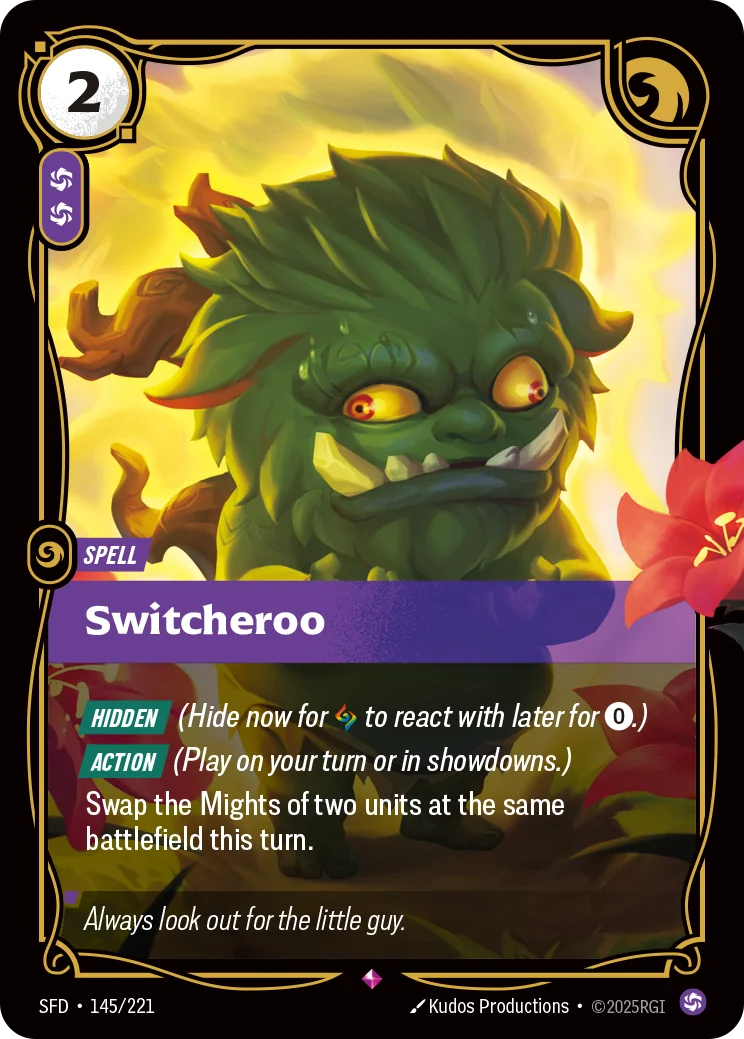 SFD-145Shop on TCGplayer Switcheroo is a flexible Chaos reaction from the wider shell. Its Hidden Action swaps the Might of two units at the same battlefield for the turn. Use it to make a seemingly harmless holder win a combat, or to reduce an opposing attacker before damage is assigned. It is a setup card, not a reason to attack into an otherwise bad exchange.
GODEEPER: The domains article explains how Calm and Chaos resources shape a turn before the Vex package asks for a late finisher. Riftbound Domains Explained ->
Step-by-Step: How to pilot the Riftbound Vex deck
1. Mulligan for a cheap body and one plan to hold. Riftbound's mulligan lets you set aside up to two of your four opening cards and draw that many. Keep a Calm unit or another low-cost card that can reach a battlefield early, and set aside Kharox or expensive responses first, because Gloomist does nothing until a unit holds.
2. Choose the first battlefield by score, not by habit. Put the early holder where the opponent must answer it to keep pace. If the location is worth only a small amount and the opponent can move freely, use it as a staging point instead of committing Vex. The deck wins by making one location awkward, not by occupying every space immediately.
3. Establish the hold before spending the draw engine. Gloomist can draw when you or an ally holds, so let the unit become a real scoring threat before exhausting the Legend. If the opponent can remove the holder, use Mutated Mouser or another defender first. The extra card is valuable only when the board gives it time to matter.
4. Put Vex at the location the opponent wants to enter. Vex's stun trigger only applies when the opponent plays a unit while she is at that battlefield. Watch the opponent's available movement and choose the location that blocks their best line. If they can simply play elsewhere, take the hold and make the alternative location less valuable with another body.
5. Keep Hidden information until the score is committed. Tideturner, Tornado Warrior, and Switcheroo gain value when the opponent has already decided how much Might they need. Reveal them after the attack or hold is declared if the action changes the result. Playing every surprise card before combat makes the deck easier to read.
6. Use Deflect bodies as resource shields. Vex and Steel Paws tax targeted answers. Let the opponent spend a Rainbow rune on a low-cost body when possible, then use the remaining hand to protect the location that scores. Do not pay for Deflect just because it exists. The point is to make the opponent's answer inefficient.
7. Convert the first hold into a second question. After Gloomist draws, decide whether the new card makes the same battlefield safer, opens another hold, or creates a movement line. A second unit is correct when it prevents a clean attack. Otherwise, keep the card for a response and force the opponent to solve the first location alone.
8. Save Kharox for a meaningful trash. Kharox is much better after the opponent has traded a useful unit. Its Empowered trigger lets you play a unit from the opposing trash, so its value depends on what is there, and the Burn 3 can add a fresh target first. Playing it as a six-cost vanilla threat wastes the reason to include it.
9. Close by denying movement. Vex's stun, Tornado Warrior's temporary empower, and Tideturner's swap can create a final turn where the opponent cannot move the new unit into the scoring location. Count every available move before declaring the hold. If the opponent can still reach the battlefield, use Switcheroo or a second body to make the entry trade unfavorable.
Matchup plans for the Vex deck
Against Kennen, a Tier 1 Legend in the October 9 list, the goal is to keep one hold alive. Kennen's Legend empowers when its controller plays a card from anywhere other than hand, then gives a unit Assault 2, so a single Vex trigger will not solve the matchup. Put Vex at the location that a fresh unit must enter, then use Calm defenders to make the other location less attractive. The Riftbound Irelia guide is a useful comparison for how movement-heavy decks punish a predictable board.
Against Rengar, also Tier 1, protect the low-cost units that make the opening hold function. Rengar's Legend gives a unit +1 Might each time its controller plays a unit, and a weak first exchange can remove the very unit that Gloomist wanted to reward. Mutated Mouser is valuable here because Tank forces the opponent to spend combat damage on the defender first. Do not expose Steel Paws to a fight before Empower 7 will change the result.
Against Azir, assume the opponent can widen the board: its Legend makes 2-Might Sand Soldier tokens on turns it has played an Equipment. The Riftbound Azir deck guide shows why token pressure can make one-location control look too slow. Use Scuttle Crab to hold a low-Might space while Vex defends the location that matters, then save movement tricks for the turn the opponent attempts to score with multiple bodies. A single perfect Vex trigger is less important than making the second location awkward.
Against Ornn, race the Gear engine's first meaningful turn. Ornn's Legend adds a rune only for gear, so the deck turns one body into a long-term investment, so make the opponent choose between protecting the Gear holder and contesting your hold. Vex's stun trigger is strongest when Ornn must play a unit into an occupied battlefield. Compare the Riftbound Ornn deck guide when deciding whether your local field needs another answer to Equipment.
Against another Vex list, do not spend the first turn trying to win the same battlefield at any cost. The mirror is about information and the order of Hidden reveals. Hold with a cheap body, draw through Gloomist, and make the opponent reveal Tideturner or Tornado Warrior first. The player who still has a movement trick after the first exchange usually controls the final scoring turn.
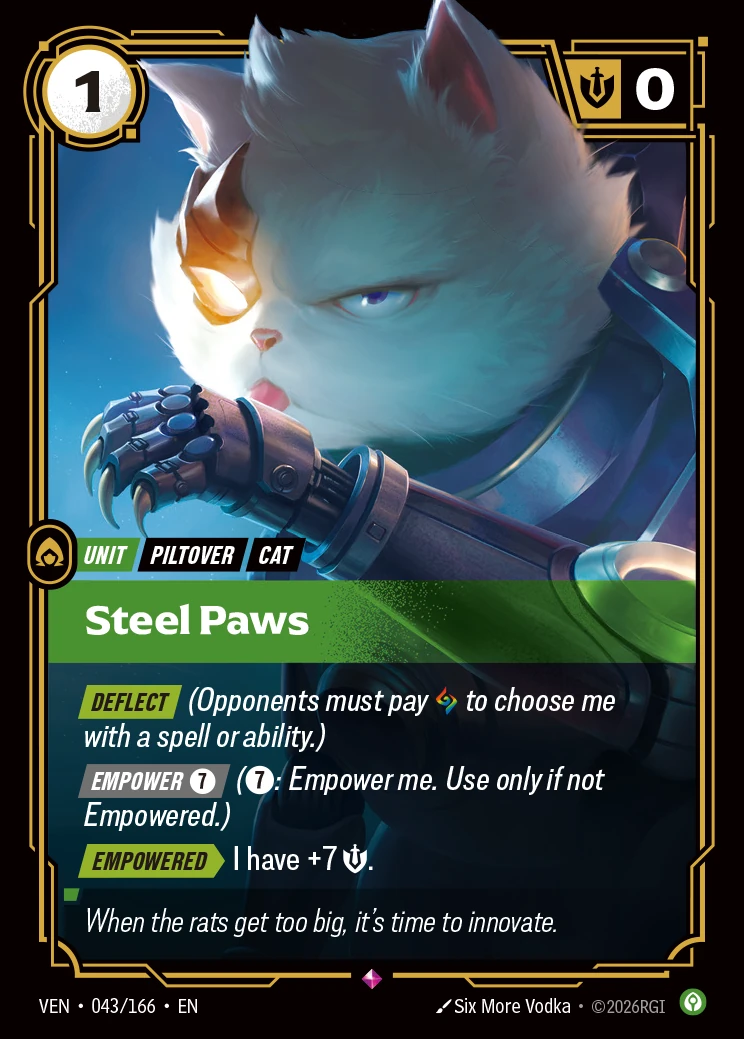 Image: Riot Games, Riftbound official card gallery (VEN-043, Steel Paws). A cheap Deflect holder that grows once you can pay 7 Energy to Empower it.
GODEEPER: Compare Vex with the other Legends ranked in the Riftbound meta tier list before choosing a deck for a Regional Qualifier.
Common mistakes with the Riftbound Vex deck
Treating Vex as a removal card. Her trigger Stuns a unit and stops it moving for the turn. It does not destroy that unit. Plan the location so the stun denies the opponent's score, rather than assuming the card disappeared.
Exhausting Gloomist before the hold is safe. Drawing one is attractive, but a removed holder can give the opponent both tempo and a better battlefield. Defend first when Mutated Mouser or another cheap body can make the trigger reliable.
Playing every Hidden card face up. Tideturner, Tornado Warrior, and Switcheroo are strongest when the opponent has already done the arithmetic. Reveal them only when the action changes a hold, a combat, or a move.
Keeping Kharox in every opening hand. The card is an endgame effect with a six-cost setup. Set it aside in the mulligan when the hand lacks a cheap body, unless the rest of the opening hand already establishes a hold and a resource path.
Using Deflect as permission to attack. Deflect protects a unit from targeted choices for a price. It does not make the unit win combat. Count Might, Shield, and the opponent's untargeted effects before sending Steel Paws or Vex into a fight.
Copying one public list without reading its role assignments. The Singapore list proves that Calm Chaos Vex is a real tournament shell. It does not make every domain count or flex card universal. Preserve the early hold, Gloomist draw, Vex trigger, and Hidden package while tuning the remaining slots for the decks you actually face.
What players are saying about the Vex deck
Runes & Rift's coverage of round 12 at the Los Angeles Regional, uploaded October 1, shows Vex against Kai'Sa in a feature match after the bans. On r/Riftbound, the author of an October 8 "Best of Vex" guide thread answered a question about the list's many single copies by pointing to Gloomist's draw: "Since the deck draws many cards you shouldn't have any problem."
Our take
Based on the tier data and card text cited above, Vex is a reliable Top 32 deck that struggles to convert into wins. Riftbound.gg's 11 top cuts since the bans show the hold plan works across a wide field, but the same report puts the four strongest Legends at 45% or worse for Vex, and the deck dropped from Tier 2 to Tier 3 between the October 1 and October 9 reports. We would bring it to a large open event where consistency is rewarded, keep the Singapore list's cheap Calm holders and Hidden package intact, and only tune the flex spells for a field heavy in Kennen or Irelia.
How we checked this: 30 facts checked on October 12, 2026 against Riftbound.gg, RiftboundDecklists, Mobalytics, Riot's card gallery and Core Rules, and riftbound.org card pages; the full source table is kept with our editorial notes. Last reviewed: October 12, 2026.
Frequently Asked Questions
Is the Riftbound Vex deck competitive in the current Vendetta format? Yes, as a Tier 3 deck. Riftbound.gg's tier list, updated October 9, 2026, ranks Vex first in Tier 3, and RiftboundDecklists shows six public Vex, Gloomist lists. A Singapore Regional Qualifier list finished 33rd, so the archetype is tournament real, but it is not a top-cut favorite. What domains does the Vex deck use? The Vex shell uses Calm and Chaos, the two Domains printed on the Gloomist Legend. Calm supplies cheap defensive units, Shield, and holding bodies, while Chaos supplies Hidden plays, movement tricks, and a late finisher. The Singapore list runs 5 Calm and 7 Chaos runes; treat that split as a starting point. What is the core of a Vex Gloomist deck? The core is Gloomist, Vex Apathetic, Steel Paws, Mutated Mouser, Scuttle Crab, Tideturner, and a small Hidden package. Gloomist draws when you or an ally holds, while Vex punishes an opponent for playing a unit at your battlefield. The rest of the shell keeps those holds safe or changes their location. What should I mulligan with Vex? Riftbound's mulligan lets you set aside up to two of your four opening cards and draw replacements. Keep cheap Calm units such as Steel Paws, Mutated Mouser, or Scuttle Crab, and set aside Kharox, Astral Heron, or late spells first. The goal is a body that can hold early so Gloomist starts drawing. Does Riftbound Vex use a leader card? No. Riftbound decklists are commonly named after a focal Legend or Champion rather than a leader-zone card. Gloomist is the Legend associated with this build, and Vex is the Champion package that makes holding a battlefield dangerous for the opponent. The deck still follows the normal domain and resource rules. Is Vex a Tier 1 Riftbound deck? No. Riftbound.gg's October 9, 2026 update lists Vex at the top of Tier 3, after ranking it Tier 2 in its October 1 report. Tier 3 means a Legend that competes for Top 64 spots with an experienced pilot. Irelia, Master Yi, Rengar, and Kennen make up Tier 1.
Related Reading
- Riftbound Complete Guide 2026
- Riftbound Rengar Deck Guide
- Riftbound Fiora Deck Guide
- Riftbound Vendetta Set Guide
References
- Riftbound.gg tier list, checked October 12, 2026 for the October 9 update (Vex first in Tier 3) and tier definitions.
- RiftboundDecklists public deck archive, checked October 12, 2026 for the six public Vex, Gloomist lists.
- Mobalytics Singapore Regional Qualifier list, checked October 12, 2026 for the September 10 list, rune split, and 33rd-place result.
- Official Riftbound card gallery, checked October 12, 2026 for card names, text, and art; card text cross-checked on riftbound.org card pages.
- Riftbound Core Rules: opening hand of four and the mulligan rule.
Was this guide helpful?
Cards in this article
About the author
Beginner guides and anime crossover
Pen name for the Shonen TCG desk's beginner guides, starter decks and anime-to-card-game explainers.
- Rules checked against the official rulebook and card text
- Every claim traced to a cited source
- Opinions marked as ours, with the reason
Keep reading
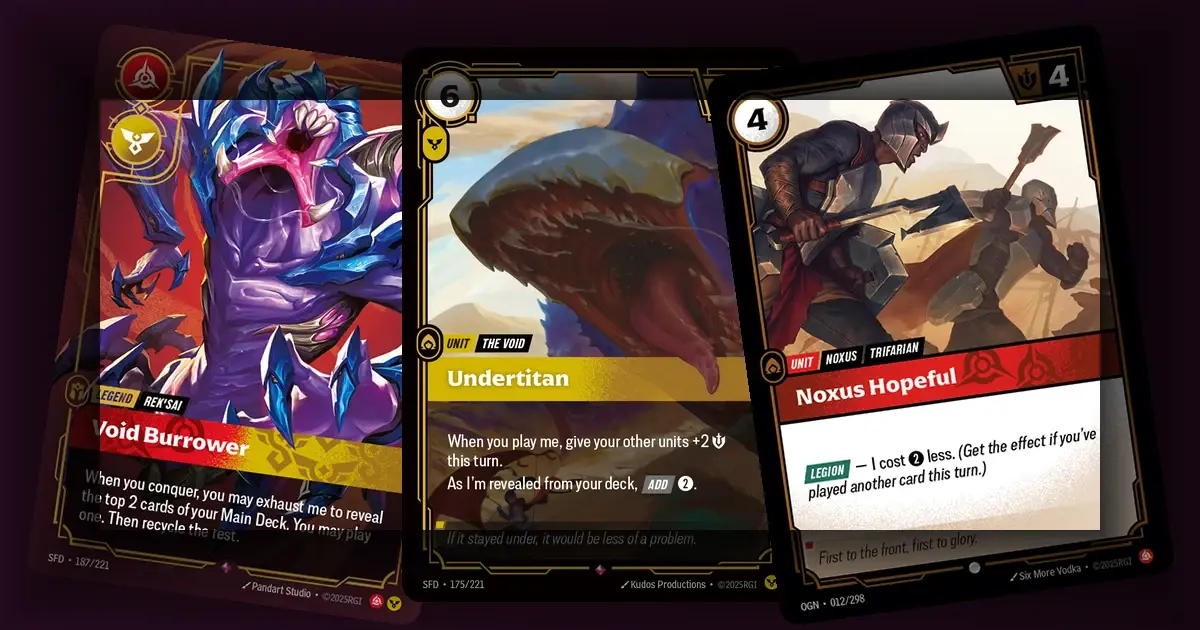
Riftbound Rek'Sai Deck Guide: Fury Order Tunnels 2026
Guides · 16 min
Riftbound Banned Cards: Current Banlist Explained 2026
Guides · 14 min

Riftbound Fiora Deck Guide: Grand Duelist Build 2026
Guides · 16 min
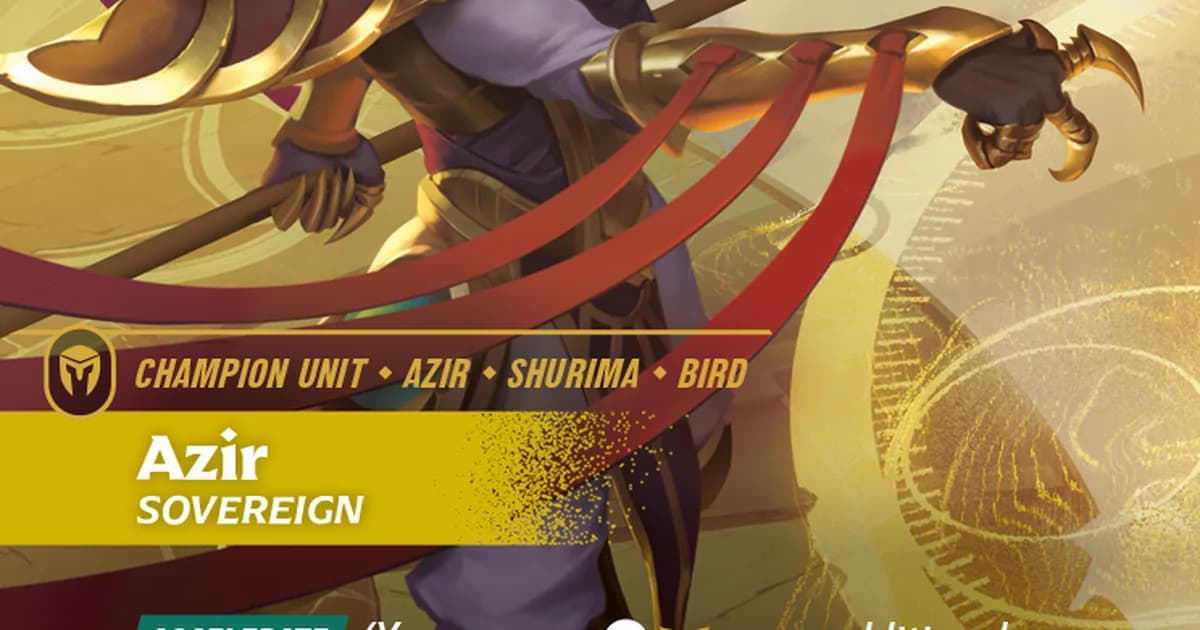
Riftbound Azir Deck Guide: Emperor of the Sands Build
Guides · 13 min
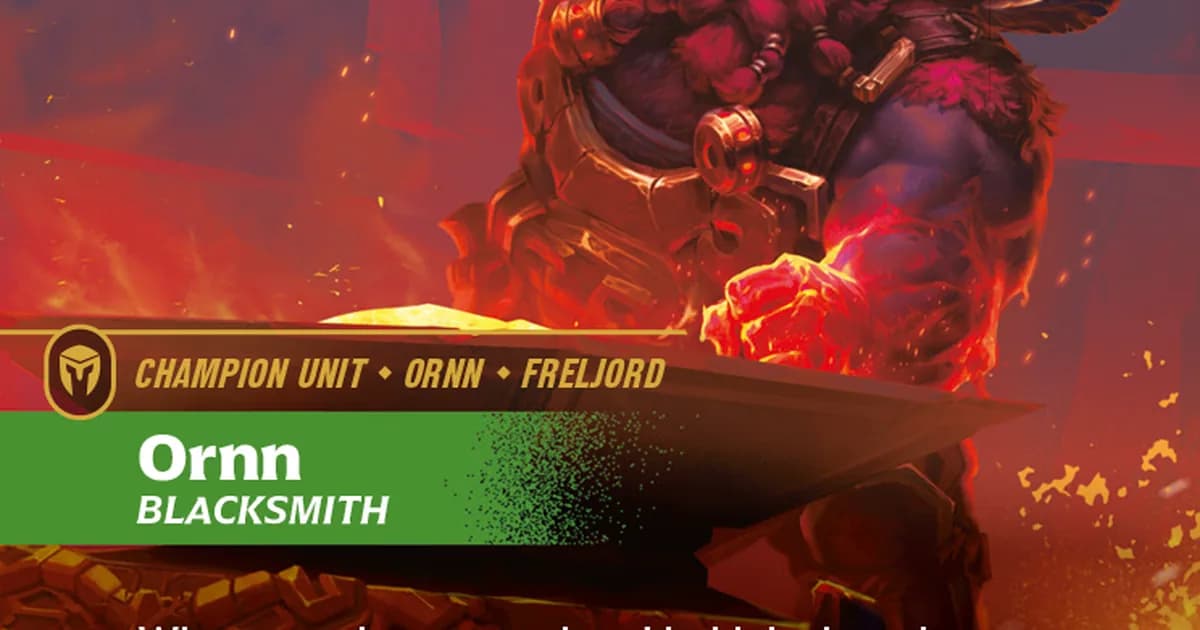
Riftbound Ornn Deck Guide: Fire Below the Mountain
Guides · 13 min
Riftbound Domains Explained: All Six Colors and Deck Roles
Guides · 9 min

Riftbound Pre-Rift Guide: Radiance Kit, Rules and Dates
Guides · 14 min

Riftbound Akali Deck Guide: Rogue Assassin Vendetta Plan
Guides · 7 min
Disclaimer
This article is published for informational and entertainment purposes. It does not constitute professional financial, legal, or technical advice. Game performance, online services, patch schedules, and store listings change. Verify critical details (pricing, system requirements, regional availability) with publishers and storefronts before you buy. Affiliate links, where present, help support our editorial work and are labelled in our affiliate disclosure.