

Shonen TCG · Guides
OP-16 Japanese vs English Price Guide: Which to Buy
OP-16 Japanese vs English price guide: current JP manga snapshots sit near ¥243k to ¥258k, while English copies are around $1.1k. Compare fees.
This OP-16 Japanese vs English price guide uses September 15 to 16, 2026 market snapshots instead of the launch prices that originally appeared here. The Japanese tracker now lists the Admiral Manga Rares in the ¥178,000 to ¥258,000 range, while recent English marketplace snapshots are roughly $1.1k to $1.2k. That is a premium comparison, not a 2.5x to 3x rule.

TL;DR: The official English OP-16 release was June 12, 2026, after the Japanese May 30 release. A current Japanese tracker lists Sakazuki near ¥243,000, Kuzan near ¥258,000, and Borsalino near ¥178,000. TCGplayer snapshots put the English copies around $1.1k to $1.2k. Buy English for English events and simpler fulfillment. Import Japanese for the printing, the Japanese market, or a verified lower landed cost after every fee.
OP-16 Japanese vs English price: quick answer
For most English players, buy English. The English product is sold for the English region, is easier to source locally, and avoids international shipping and customs. Japanese OP-16 makes sense when the Japanese printing is the point, when you buy for the Japanese market, or when your all-in import quote is genuinely lower after conversion and fees.
The price gap has also changed since launch. The old version of this page used mid-July Japanese figures near ¥500,000 for Sakazuki and over ¥400,000 for Kuzan, then compared them with mid-August English prices. The current Japanese tracker is much lower, and the English market has moved too. Those old numbers were valid as dated snapshots, but they are not a September buying guide.
The practical answer is:
- Choose English for English events, local pickup, simpler returns, and a known domestic seller.
- Choose Japanese for Japanese artwork, earlier release access, or a Japanese collector market.
- Compare a specific card, not a language label. A cheap Japanese listing can become expensive after shipping and fees.
- Treat every price below as a timestamped indicator, not a guaranteed sale price.
GODEEPER: Need sealed-product availability and retailer options? OP-16 Where to Buy and Pre-Order Guide
OP-16 Japanese vs English price snapshot
The official English product page lists OP-16 as available June 12, 2026 at $4.99 per pack. The Japanese price tracker page was updated September 15 and lists current Japanese averages for the set's three Admiral Manga Rares. TCGplayer product and search pages surfaced English market snapshots around $1.1k to $1.2k, but their crawl dates differ, so ranges are more honest than one exact number.
| Card | Japanese tracker, September 15 to 16 | English marketplace snapshot | What the comparison says |
|---|---|---|---|
| Sakazuki, OP16-065 | About ¥243,000 | About $1,127 to $1,178 | JP remains higher after a rough currency conversion |
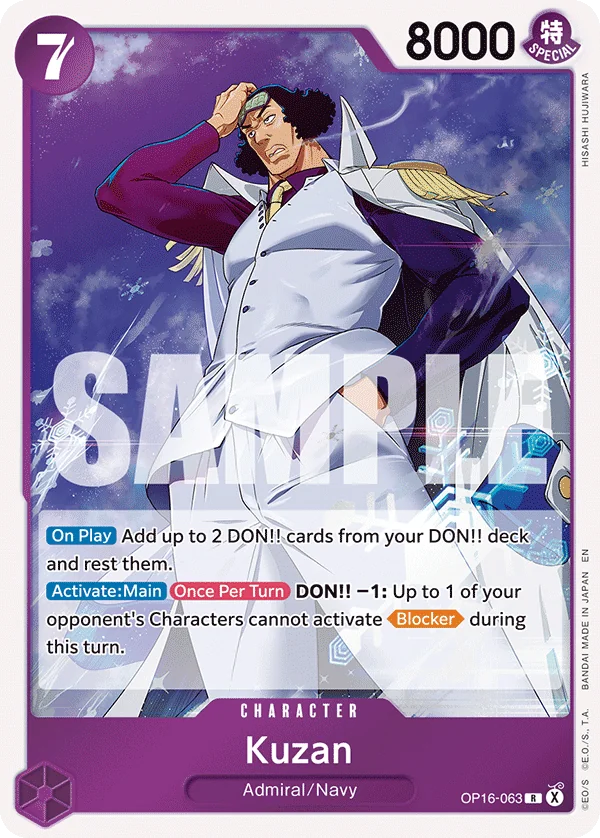
| Kuzan, OP16-063 | About ¥258,000 | About $1,109 to $1,166 | JP remains higher, but not by the old 2.5x to 3x claim |
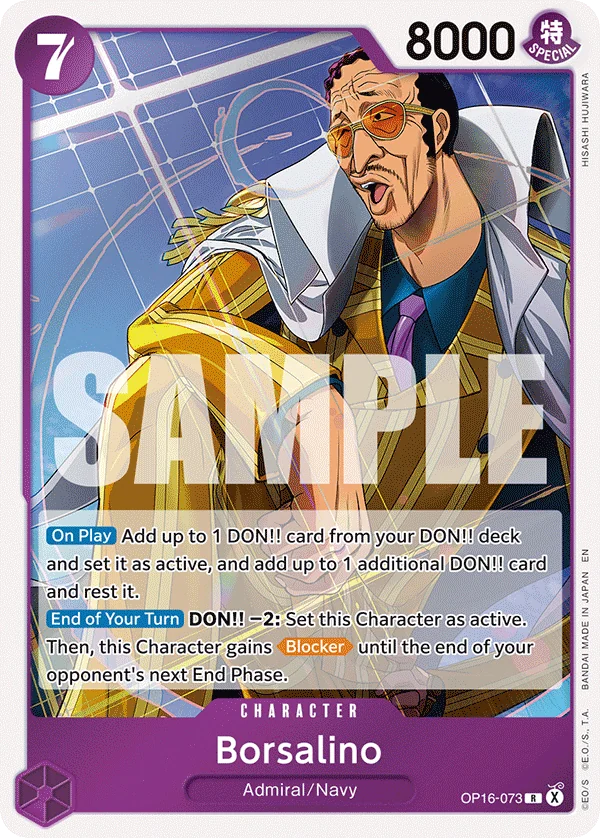
| Borsalino, OP16-073 | About ¥178,000 | About $1,043 | The gap is smaller than for Sakazuki or Kuzan |
Using the September 16 USD/JPY reference of about ¥155.03 to $1, the Japanese figures convert to roughly $1,567 for Sakazuki, $1,664 for Kuzan, and $1,148 for Borsalino. That conversion is only a comparison aid. Your bank rate, marketplace fee, shipping, and customs can move the landed cost in either direction.
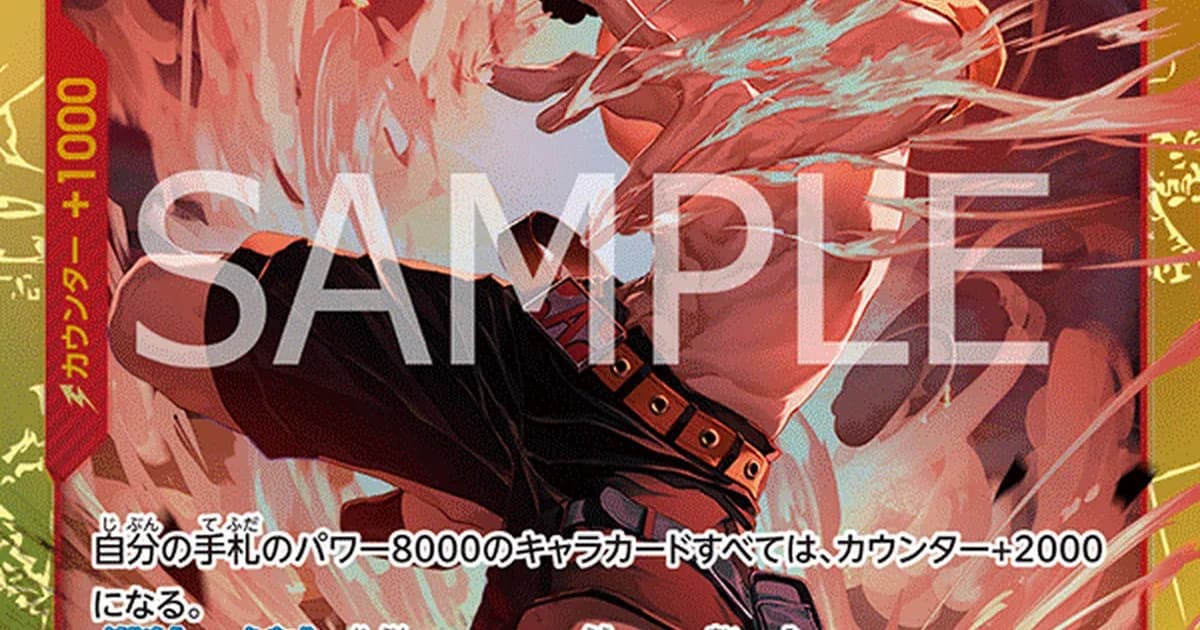
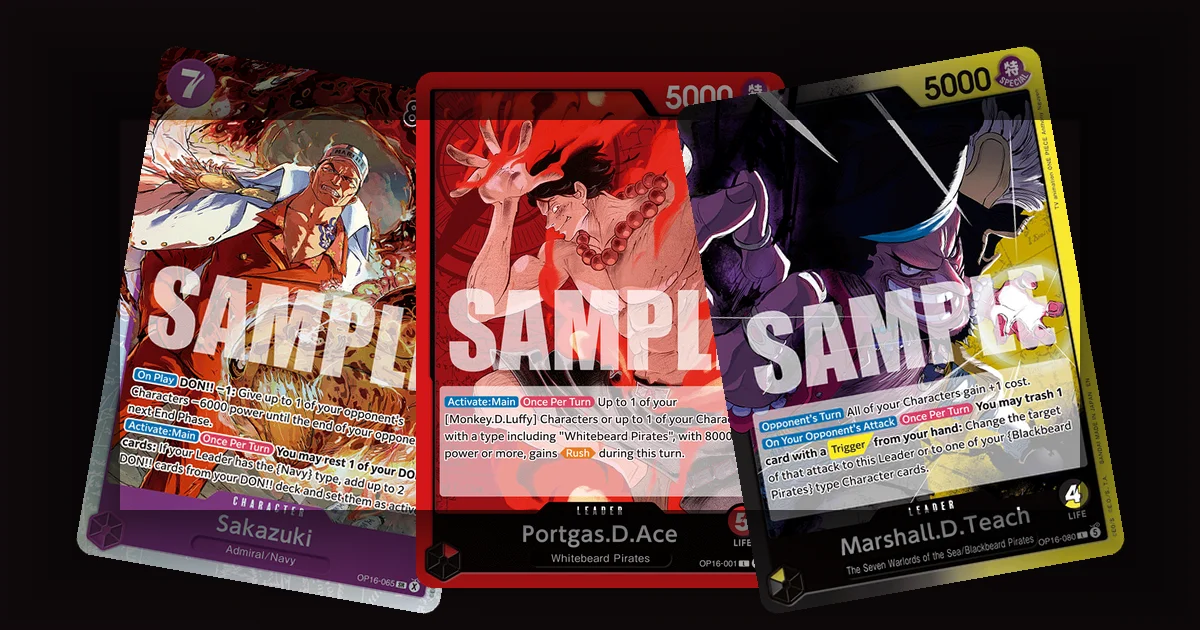 This real official OP16-073 Borsalino Character card image represents one of the Admiral subjects, not sealed Japanese and English booster boxes.
The most important correction is the scale of the difference. JP is still not automatically cheaper for these chase cards, but the current numbers do not justify saying Japanese copies are 2.5x to 3x the English market across the board. The market has cooled from the launch peak, and Borsalino's spread is notably smaller.
Why the JP and EN numbers differ
OP-16 released in Japan on May 30 and became available in English on June 12. That two-week window gave Japanese sellers the first price discovery, but it also concentrated opening demand and scarcity in one market. Early numbers reflected excitement, limited supply, and buyers trying to complete the Admiral trio before English supply arrived.
The English market then gained a larger seller base and a wider pool of buyers. That does not make English cards automatically cheap. It means a price page can show more listings and more recent sales, which usually makes the range easier to interpret. A Japanese quote from one shop or a high-end listing is not directly comparable with an English market average.
The current Japanese numbers show why the original comparison needed a reset. Sakazuki's Japanese tracker average fell from the old 500,000-yen snapshot to about 243,000 yen. Kuzan moved from the earlier 400,000-yen-plus report to about 258,000 yen. A buyer checking only the old launch table would overestimate the current Japanese premium.
The cards also have different buyer pools. Japanese buyers may pay for Japanese text, local availability, or the local collector market. English buyers may pay more for tournament convenience, domestic shipping, or a card that is easier to resell in their region. The language premium is not a fixed property of the card.
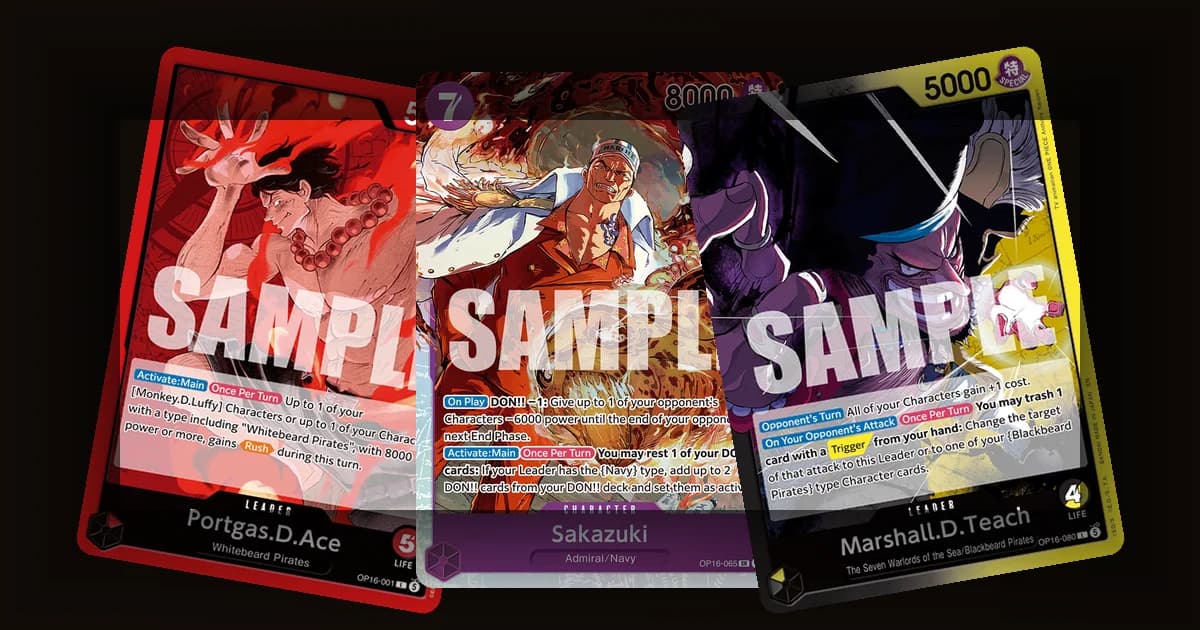
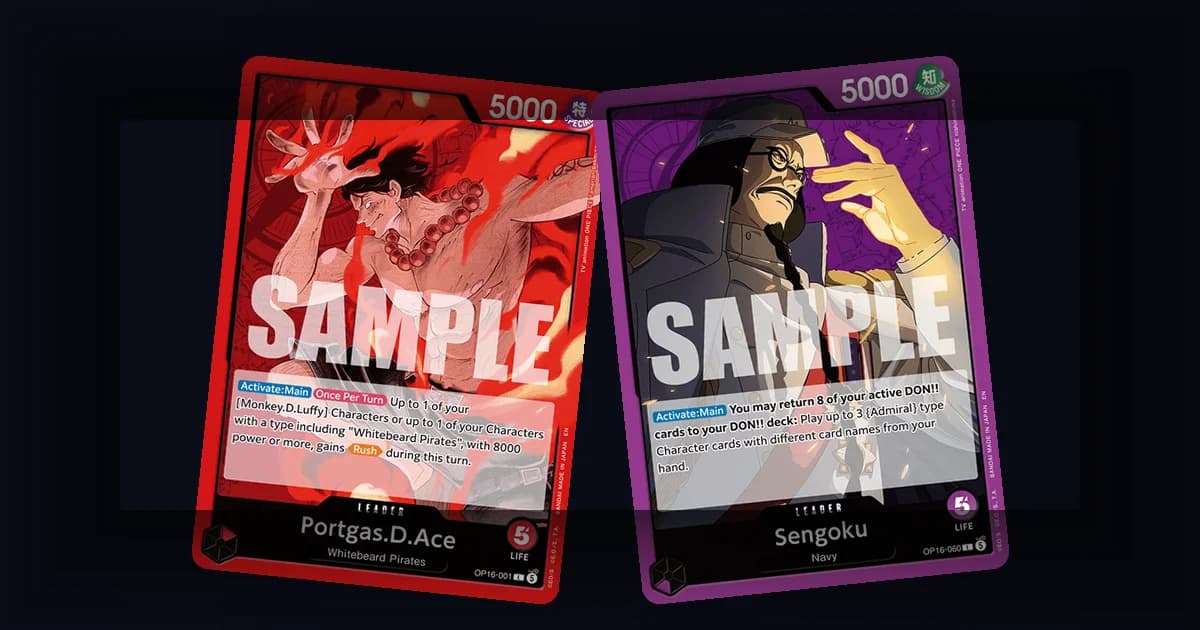
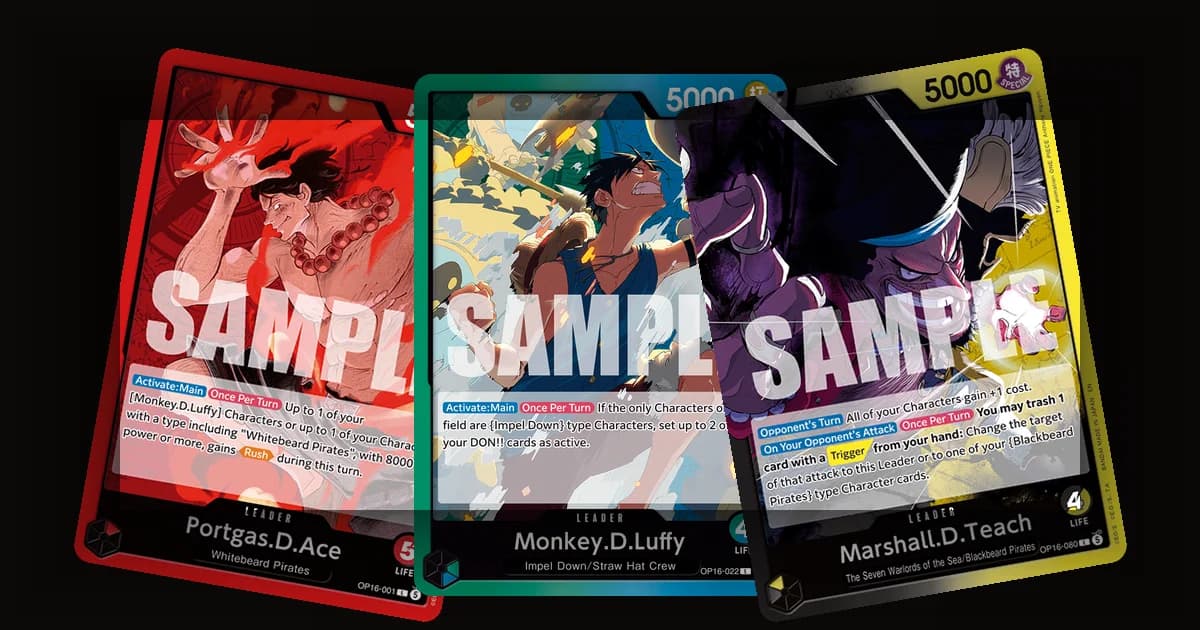
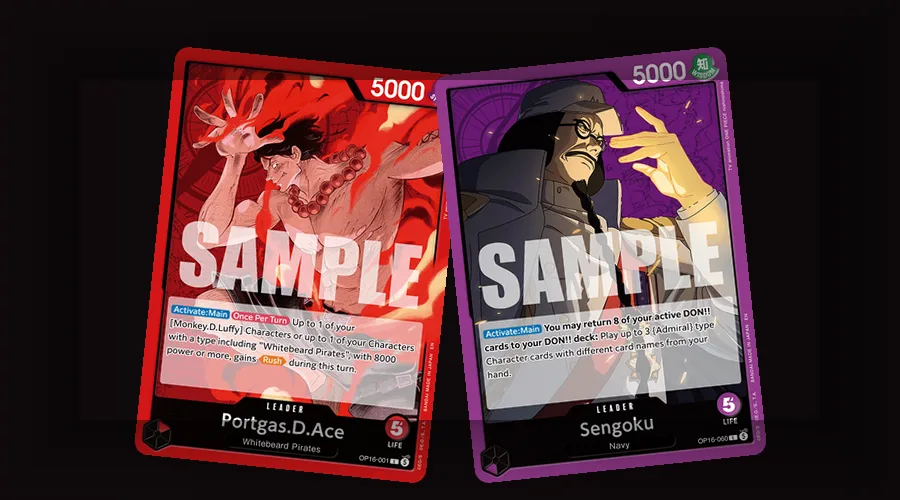 This sample image shows Portgas.D.Ace and Sengoku leader cards, not a sealed-product price comparison.
Which version should an English player buy?
If you play in English events, English is the low-friction choice. The official OP-16 page lists the English release and tournament-legal timing for that region. An event organizer can still set additional language requirements, so confirm the event notice before registering. Do not buy Japanese cards on the assumption that every English event accepts them.
Collectors have a different decision. Japanese printing can be the right choice if the text, print run, or local market is the collection goal. In that case, compare Japanese sellers with Japanese market data. Do not use the English TCGplayer number as a promise of what a Japanese buyer will pay.
For a high-value single, the best choice is usually the version with the lower landed cost and the easier return path. The current snapshot does not make that answer universal. Sakazuki and Kuzan still show a meaningful JP premium after conversion, while Borsalino is closer. A seller's condition, shipping insurance, and payment protection can matter more than a small headline difference.
How to compare a Japanese import fairly
Use this landed-cost check before ordering:
- Convert the Japanese listing using the rate your payment provider will actually charge.
- Add international shipping and insurance.
- Add customs, VAT, or brokerage fees if your country charges them.
- Add marketplace, payment, and currency-conversion fees.
- Compare the result with a domestic English copy in the same condition.
For example, a ¥243,000 Sakazuki quote converts to about $1,567 at the September 16 reference rate before any fee. That is already above the English market snapshots around $1.13k to $1.18k. A ¥258,000 Kuzan quote converts to about $1,664 before fees, compared with English snapshots around $1.11k to $1.17k. The conclusion is not that every Japanese listing is bad. It is that the Japanese copy needs a real discount, not a small headline discount, to beat English after fulfillment.
Check whether a price is a sale, listing, buylist, or market average. The Japanese tracker mixes store data and reports an average, while TCGplayer shows market and listing values that can change when inventory moves. Those measurements answer different questions. Use sale history when available for a purchase decision.
The OP-16 Admiral Manga Rare Guide covers the three chase cards individually. Use it for card identity and rarity context, then return here for the language and landed-cost decision.
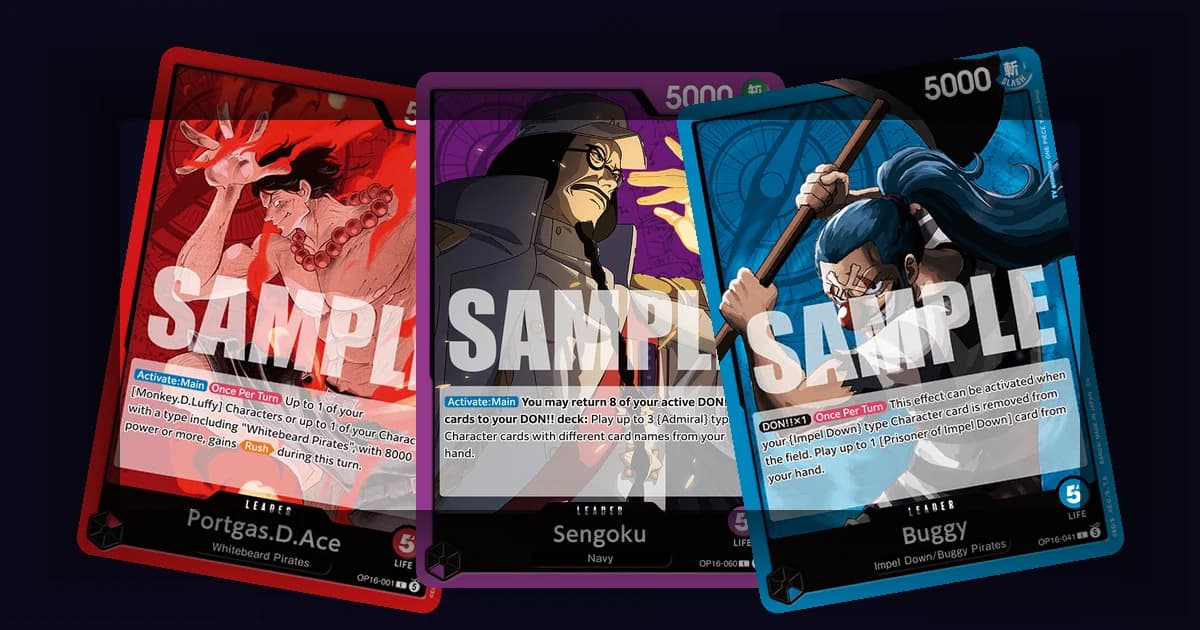
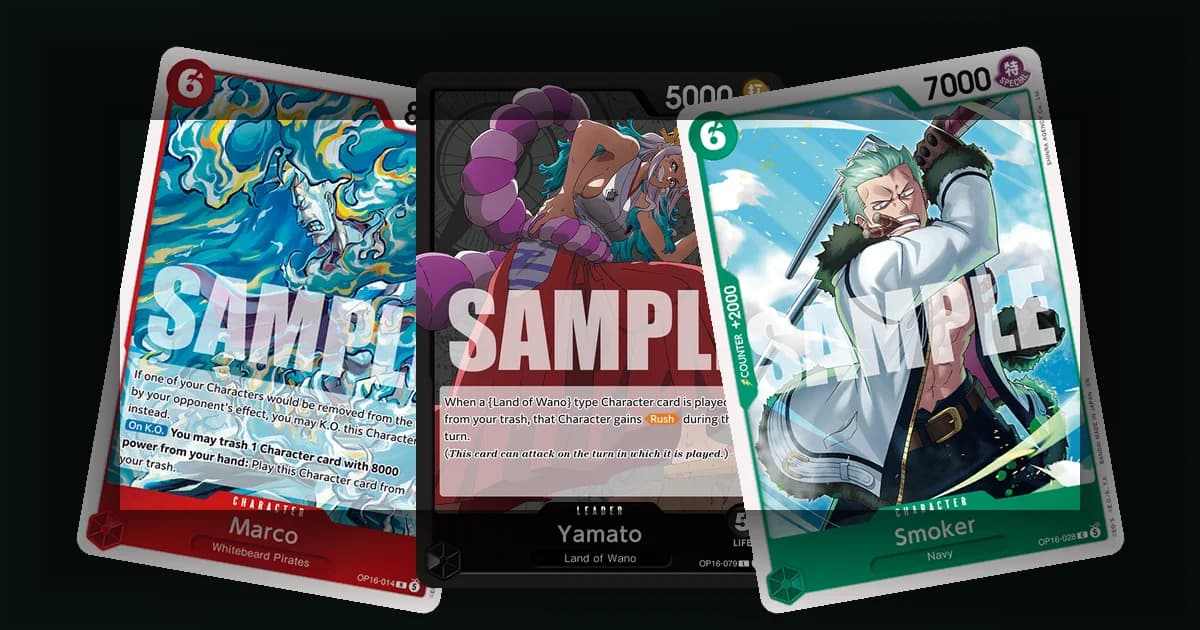
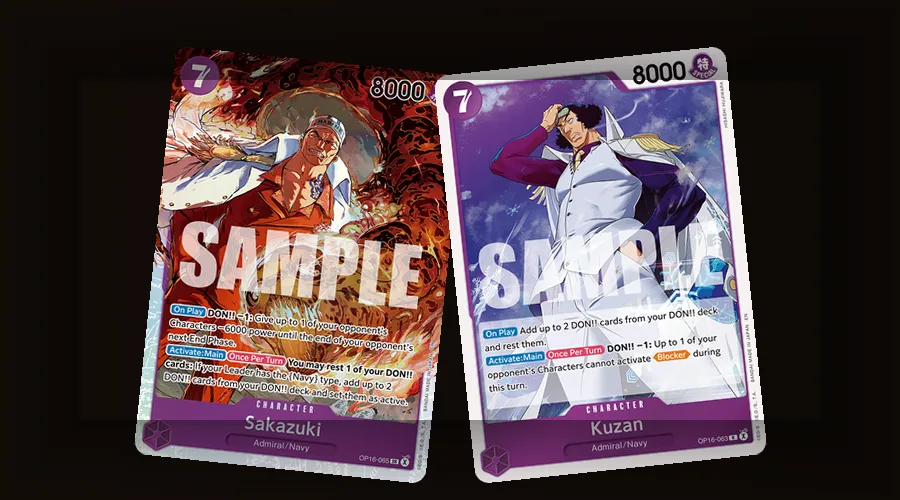 This sample image shows Sakazuki and Kuzan sample cards, the two highest-priced Admiral subjects in the current comparison.
SHOP: Comparing English singles before ordering? Shop TCGplayer →
Key Takeaways
- Japanese OP-16 released May 30, 2026; the official English release was June 12, 2026.
- A September Japanese tracker listed Sakazuki near ¥243,000, Kuzan near ¥258,000, and Borsalino near ¥178,000.
- Recent English marketplace snapshots place the same Manga Rares around $1.1k to $1.2k, depending on card and crawl date.
- The old 2.5x to 3x JP premium is no longer a safe general claim.
- Buy English for English events and simpler fulfillment.
- Import Japanese for the printing, the Japanese market, or a verified lower landed cost after all fees.
- Recheck the market before buying. High-value singles can move materially in a few days.
Frequently Asked Questions
Should I buy Japanese or English OP-16?
Buy English if you play in English events or want local shipping and simpler returns. Buy Japanese if Japanese printing or the Japanese market is the actual goal. The September snapshot does not show a universal JP discount, and importing adds fees that can reverse a small difference.
When did OP-16 release in Japanese and English?
The Japanese set released May 30, 2026, and the official English product page lists June 12, 2026. Japan therefore supplied the first price signal, but launch-week Japanese values are not current. Compare both markets using the same date and the same card variant before buying.
Are Japanese OP-16 cards cheaper than English cards?
Not automatically. The September Japanese tracker listed Sakazuki around ¥243,000 and Kuzan around ¥258,000. English marketplace snapshots were around $1.1k to $1.2k. After converting yen and adding shipping, customs, payment fees, and currency spread, the Japanese copy may cost more.
How much are the OP-16 Admiral Manga Rares now?
The September 15 to 16 Japanese tracker snapshot listed Sakazuki near ¥243,000, Kuzan near ¥258,000, and Borsalino near ¥178,000. English TCGplayer snapshots were roughly $1,127 to $1,178 for Sakazuki, $1,109 to $1,166 for Kuzan, and about $1,043 for Borsalino.
Is importing Japanese OP-16 worth it?
It can be worth it for Japanese artwork, Japanese-market collecting, or a seller whose fully landed quote is lower. It is rarely the simple choice for English tournament play. Check the event's language rule and compare the final payment total, not only the Japanese listing price.
Can Japanese and English OP-16 cards be used together?
Only if the event permits both versions. Tournament organizers set language and card-pool rules, and those rules can vary by region and event level. Ask before registering or submitting a deck. Functional card text does not by itself establish tournament legality for a particular language.
Related Reading
- One Piece TCG OP-16 Guide: Set Review and Leaders (2026): The full OP-16 card pool and leader overview.
- OP-16 Collectors Guide: SEC, Manga Rare, Alt-Art Cards: How the main OP-16 collector rarities differ.
- OP-16 Most Expensive Cards: A broader chase-card ranking with dated market notes.
- OP-16 Is It Worth Buying? Full Verdict and ROI (2026): A set-level purchase decision beyond the language comparison.
References
- Official OP-16 product page: English release date, MSRP, product details, and tournament timing
- Japanese OP-16 market tracker: September 15 set snapshot and current Japanese averages
- Sakazuki Manga Rare on TCGplayer: English market and price history for OP16-065
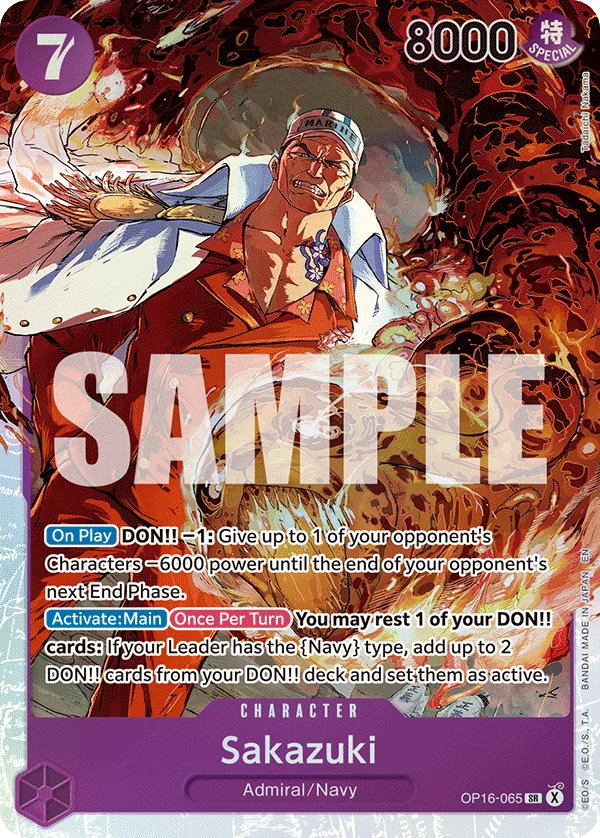 OP16-065OP16-065Shop on TCGplayer
 - Kuzan Manga Rare on TCGplayer: English market snapshot for OP16-063
 OP16-063OP16-063Shop on TCGplayer
 - Borsalino Manga Rare in the TCGplayer search: English market snapshot for OP16-073
 OP16-073OP16-073Shop on TCGplayer
 - USD/JPY historical rate for September 16, 2026: reference rate used for the illustrative conversions
- ONE PIECE tournament rules manual: official event rules to check before mixing language versions
Cards in this article
About the author
Card values and pull rates
Pen name for the Shonen TCG desk's card value, pull rate and collector market coverage.
- Prices read from TCGplayer and Cardmarket listings, dated
- Pull rates tied to a stated sample
- Opinions marked as ours, with the reason
Keep reading
OP-16 Where to Buy: Post-Launch Buying Guide for 2026
Guides · 10 min
One Piece TCG Mulligan Guide: When to Keep or Redraw
Guides · 11 min
One Piece TCG Counter Rules: Counter Step and Values
Guides · 11 min
One Piece TCG DON Cards: 10 Per Deck, Rest or Attach
Guides · 6 min
OP-16 Full Card List & Spoilers: What's in the Set
Guides · 10 min
OP-16 Most Expensive Cards: Best & Top 6 Chase Picks
Guides · 7 min
One Piece TCG Keywords Explained: Rush, Blocker & More
Guides · 9 min
One Piece TCG Card Grading: Is It Worth It in 2026?
Guides · 16 min
Disclaimer
This article is published for informational and entertainment purposes. It does not constitute professional financial, legal, or technical advice. Game performance, online services, patch schedules, and store listings change. Verify critical details (pricing, system requirements, regional availability) with publishers and storefronts before you buy. Affiliate links, where present, help support our editorial work and are labelled in our affiliate disclosure.