

Shonen TCG · Guides
One Piece TCG Card Grading: Is It Worth It in 2026?
TL;DR: One Piece TCG card grading is a fee-and-condition decision, not a fixed price threshold. PSA's current page lists Standard at $59.99 and Value services as unavailable; CGC lists $17 Bulk with a 25-card minimum. Beckett currently pauses Base and Standard submissions while Express remains available through a temporary form. Compare current fees and exact-printing market comps before submitting.
Updated October 2, 2026: Beckett's current availability notice says Base and Standard submissions are temporarily paused, while Express is available through a temporary submission form. The public notice does not provide a stable Express fee or turnaround, so the old BGS Base figures are removed below.
One Piece TCG card grading guide: quick answer
Card grading is the process of submitting your TCG cards to a professional third-party service (PSA, BGS/Beckett, CGC) for authentication and condition assessment. The service encases the card in a sealed plastic slab with an assigned grade (usually on a 1-10 scale) and a label. Graded cards sell at a premium over ungraded (raw) copies because buyers can trust the condition without inspecting in person.
Is it worth it for One Piece TCG? Conditionally. OPTCG launched in 2022, and graded population reports and market premiums vary by printing. High-value chase cards such as the original OP-01 Shanks 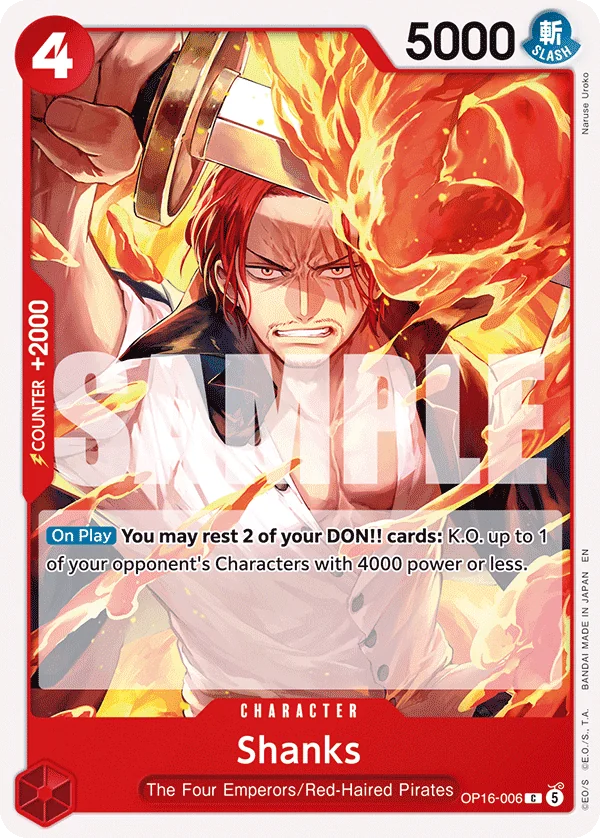 OP16-006OP16-006Shop on TCGplayer Manga Rare and the OP-16 Admiral Manga Rares are easier to justify, while lower-value cards need a careful fee, condition, and resale calculation. Before grading, understand the full rarity ladder so you know exactly what printing you own and which comps apply.
GODEEPER: Curious which One Piece TCG cards carry the highest raw value before you grade them? The expensive cards guide covers current market prices. One Piece TCG Most Expensive Cards 2026
PSA vs CGC vs BGS at a glance
| Service | Cheapest active tier | Turnaround | Best for OPTCG |
|---|---|---|---|
| PSA | $59.99/card (Standard; Value services unavailable) | 90-100 business days | Broad resale market; check declared value limits |
| CGC | $17/card (Bulk, 25-card minimum) | 150 working days | Lower-cost batch submissions and protection |
| BGS | Base and Standard temporarily paused; Express available via temporary form | Check the current submission form | Subgrades and the Black Label chase |
PSA usually has the broadest resale market, but a PSA label does not guarantee a premium on every OPTCG printing. CGC's lower tiers can reduce the per-card fee when you meet its batch minimum, while BGS suits collectors who want centering, corners, edges, and surface scored separately. Collectors announced the Beckett acquisition in 2025, so compare the current services and brand preference rather than relying on an old ownership assumption. For more context, see our PSA vs BGS vs CGC grading comparison.
The Three Main Grading Services
PSA (Professional Sports Authenticator)
The dominant grading service in the trading card market. PSA grades account for the majority of secondary market value when a card is listed as "graded." More buyers trust PSA slabs, which means faster resale and better prices.
Service tiers and turnaround (PSA page checked October 2, 2026):
- Value Bulk and Value: currently unavailable on PSA's service page; no reopening date is listed there
- Standard ($59.99/card): estimated 90-100 business days, max insured value $1,000
- Priority ($79.99/card): estimated 70-80 business days, max insured value $1,500
- Express ($199/card): estimated 20-30 business days, max insured value $2,500
- Super Express ($349/card): estimated 10-15 business days, max insured value $5,000
- Premier ($599/card): estimated 7-10 business days, max insured value $10,000
PSA grade scale: 1 (poor) to 10 (Gem Mint). PSA 9 and PSA 10 often have the strongest resale demand in OPTCG, but lower grades can still matter for specific cards. Compare recent sales instead of assuming a grade creates a premium.
Best for: High-value OPTCG cards where the expected grade premium and broader resale market justify the current fee, declared-value limit, shipping, insurance, and wait.
CGC (Certified Guaranty Company)
CGC entered the TCG grading market as a faster and cheaper alternative to PSA. Their grades are increasingly respected in the anime TCG community, particularly for newer sets.
Service tiers and turnaround (CGC page checked October 2, 2026):
- Bulk ($17/card): about 150 working days
- Economy ($20/card): about 90 working days
- Standard ($55/card): about 10 working days
- Express ($100/card): about 5 working days
- Walk-Through ($300/card): about 2 working days
Turnaround estimates are measured in working days and are not guaranteed. CGC also caps the declared value for its lower tiers, so choose a tier using the exact current card value.
CGC grade scale: Same 1-10 system as PSA. CGC also offers "Pristine" (P10) grading for perfect copies, which PSA does not.
Best for: Cards whose expected premium does not justify PSA's current fee, batch submissions that meet CGC's 25-card Bulk minimum, or collectors who prioritize protection over resale liquidity.
BGS (Beckett Grading Services)
Beckett grades four subcomponents separately (centering, corners, edges, surface) and provides a composite grade. Popular in sports cards, less dominant in anime TCG.
Beckett's current availability notice says Base and Standard submissions are temporarily paused. Express remains available through a temporary submission form, but the public notice does not publish a stable fee or turnaround figure. Do not rely on the old $14.95 Base price or 75-plus-day estimate; check the form immediately before submitting.
Best for: Collectors who want detailed condition reports. Less optimal for OPTCG resale since the buyer pool for BGS graded OPTCG cards is smaller than PSA. For context on which OP-16 cards have the highest collector ceilings, see the OP-16 Admiral Manga Rare guide.
What Makes a Card Grade Well
Understanding grading criteria prevents submission of cards that will come back at PSA 7-8 instead of PSA 10, which is a net loss.
Centering
Centering is one of the first checks to make before submitting. PSA's published PSA 10 guideline is approximately 55/45 on the front and 75/25 on the reverse, and PSA notes that eye appeal can affect borderline calls.
How to check: Hold the card under bright light at eye level. Compare the border widths on both axes and photograph the card if you need to measure it. A visible imbalance can lower the grade, but no simple ratio guarantees a PSA 8 or PSA 10.
Corners and Edges
Corners: Whitening or chipping at the corner tips can lower the grade sharply. Check all four corners under magnification before submitting.
Edges: OPTCG cards have a thin line around the edge of the artwork frame. Any nicks or roughness on the card edges (caused by improper sleeve use or rough pack pulls) will dock the grade.
Surface
Scratches, print lines, fingerprints, and ink specks on the card surface. Surface issues are the second most common PSA 10 rejection cause for OPTCG.
Print lines: Faint parallel lines visible at certain angles, caused by the printing process. These are a manufacturing defect you cannot fix. Cards with visible print lines grade PSA 9 at best.
Holo scratches: For holographic Manga Rare and Alternate Art cards, scratches in the foil can be immediately visible and can push the grade down substantially.
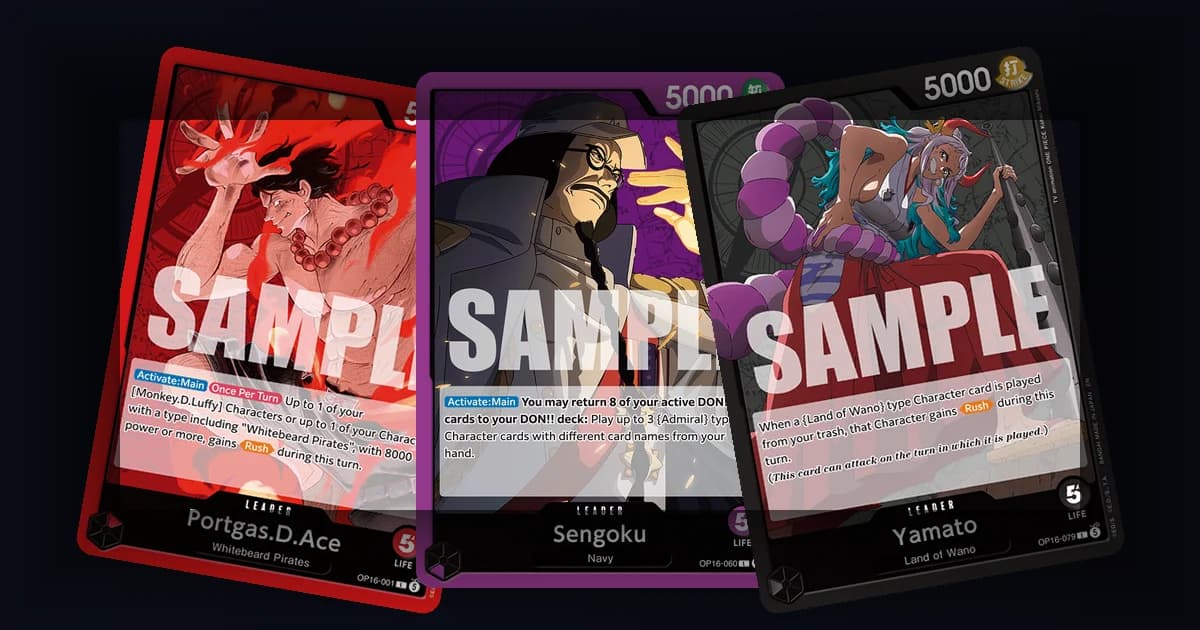
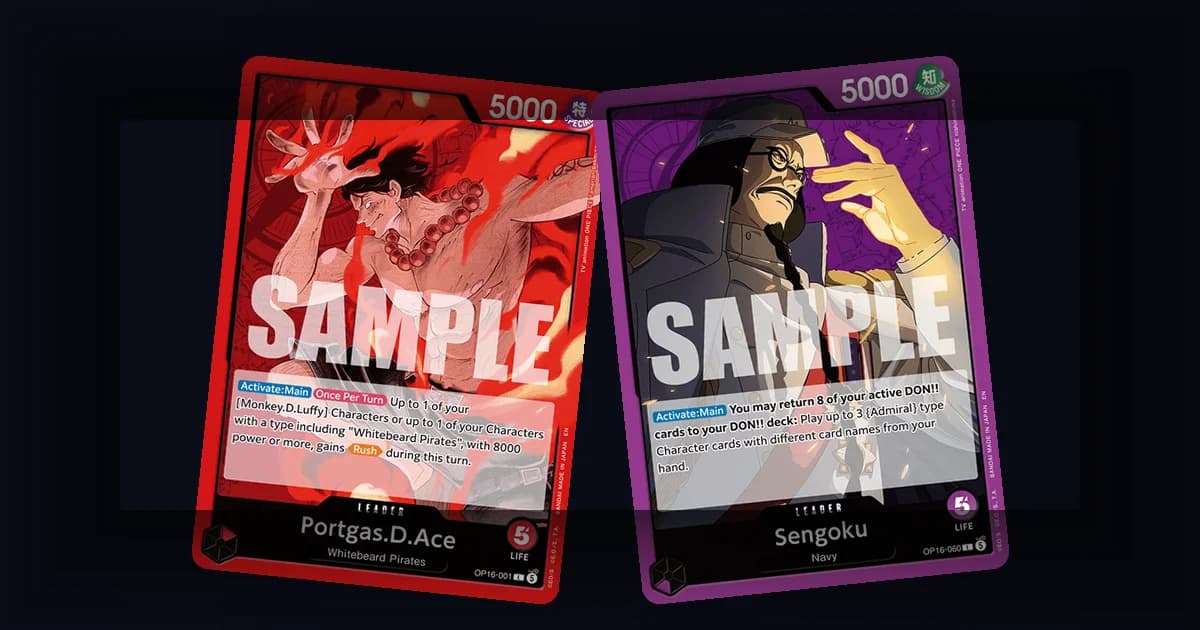
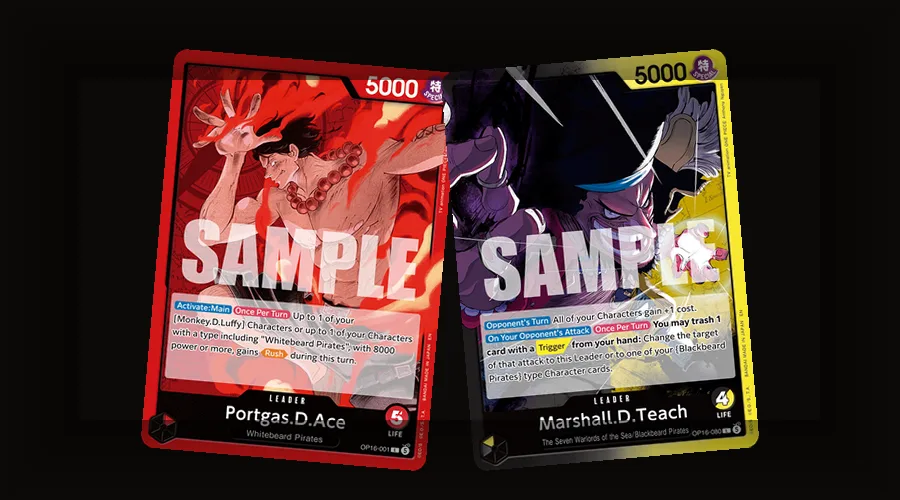 Portgas.D.Ace and Marshall.D.Teach cards from OP-16 shown in a sample image. This guide evaluates condition and current market comps rather than treating the picture as a graded-slab example.
One Piece TCG card grading: Which Cards to Grade
Strong Grade Candidates
OP-01 Shanks Manga Rare (original Romance Dawn printing, raw market around $4,000): The original chase card and the game's first-ever Manga Rare print has a much stronger market than the later Premium Booster reprint. A September 2026 TCGplayer snapshot places the original printing near $4,000, but that is a market reference, not a guaranteed sale. Compare the exact printing, condition, grading fee, and recent PSA 10 comps before submitting.
OP-16 SEC Portgas.D.Ace and Marshall.D.Teach (September snapshot):
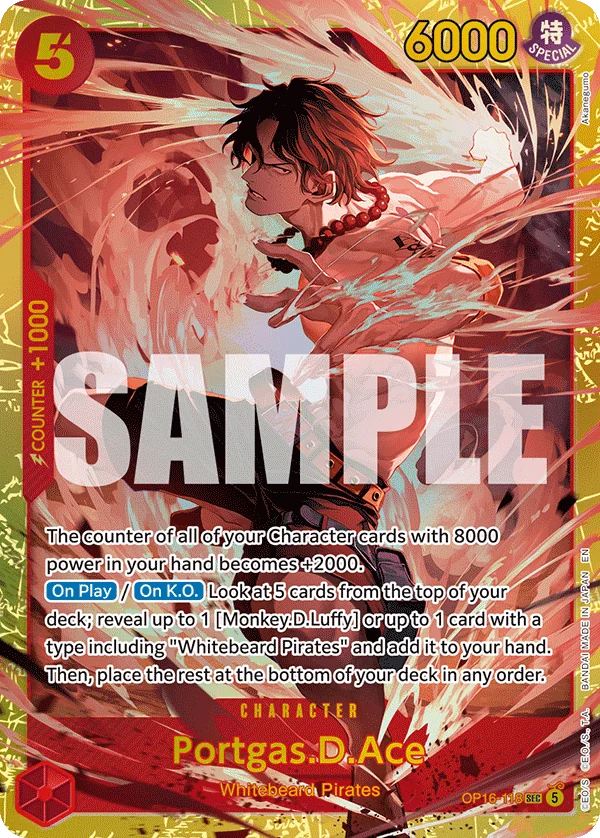 OP16-118OP16-118Shop on TCGplayer Portgas.D.Ace and
 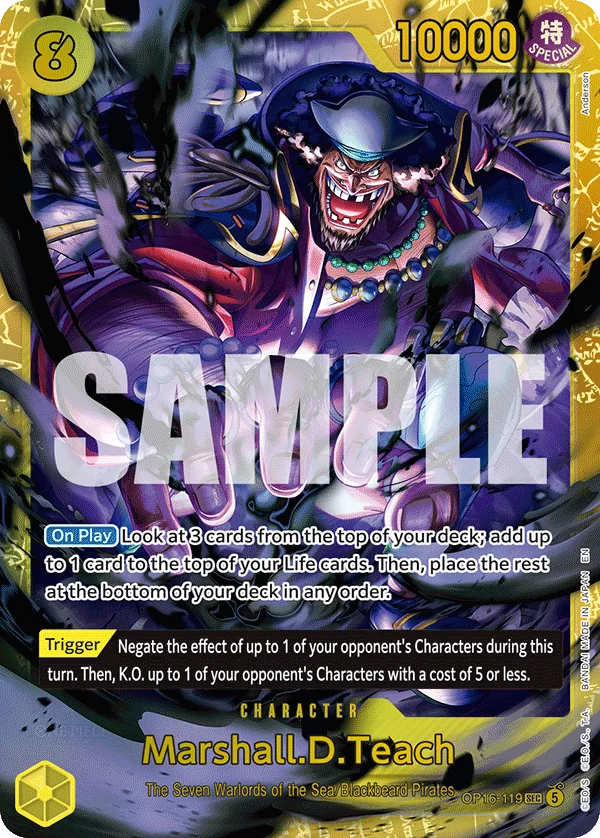 OP16-119OP16-119Shop on TCGplayer Marshall.D.Teach are no longer launch-window grading bets. InkSight's September 10 TCGplayer snapshot lists the Ace base and alternate prints at about $18 and $27, and the Teach base and alternate prints at about $30 and $46. Those market references are far below the Manga Rare tier, so an individual submission needs an unusually strong condition, collection, or expected-grade case to justify the total cost.
Borderline Candidates (Grade Only If Gem Mint)
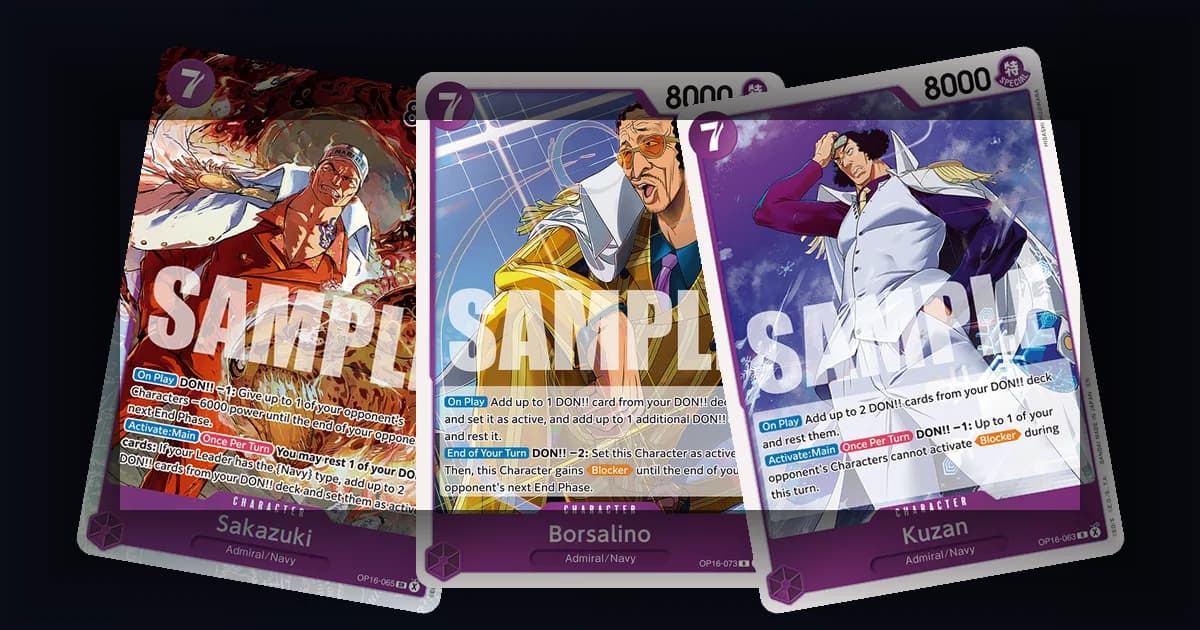
OP-16 Admiral Alternate Art prints (not the Manga Rare): The standard Alternate Art parallels of Sakazuki, Kuzan, and Borsalino are separate, much cheaper prints from the Manga Rare treatments covered below. InkSight's September 10 snapshot places them roughly in the $5-$10 range. Grade them only for a personal collection or if a new comp changes the fee math.
Do Not Grade
- Any card whose expected grade premium does not cover the full cost: Include the grading fee, shipping, insurance, selling fees, and the risk of receiving a lower grade. There is no universal raw-price floor.
- Common and Uncommon cards: No grading service will recover submission costs on standard rarity cards.
- Standard (non-Manga, non-Alternate-Art) prints of chase characters: These typically sell for well under a dollar to a few dollars raw and usually do not justify a grading fee for resale.
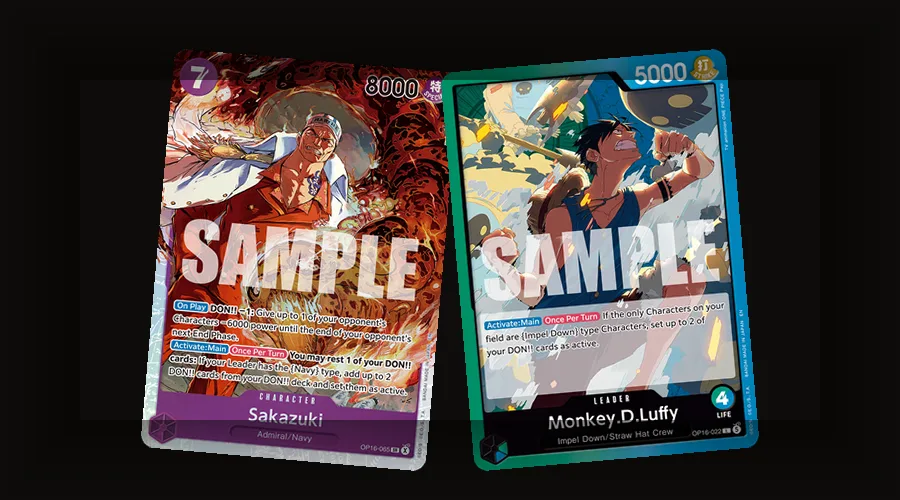 Sakazuki
 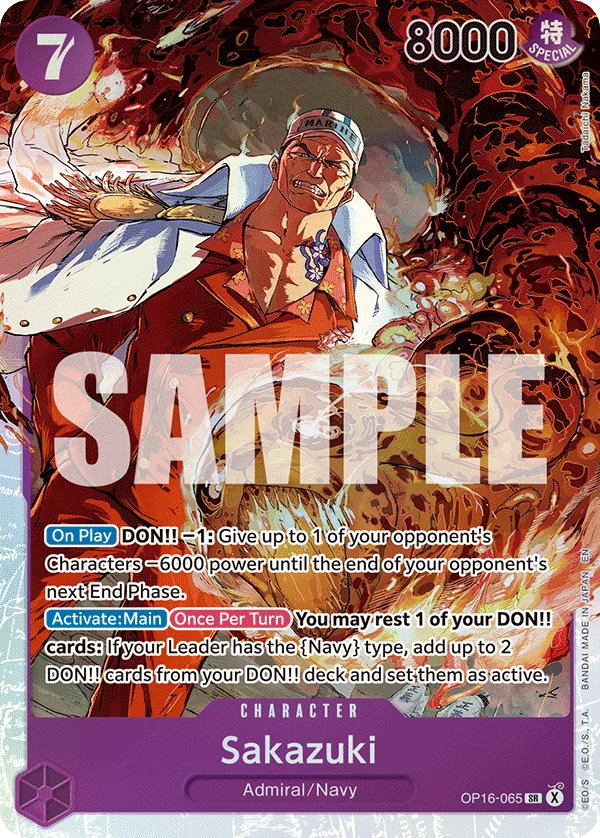 OP16-065OP16-065Shop on TCGplayer (OP16-065) and Monkey.D.Luffy
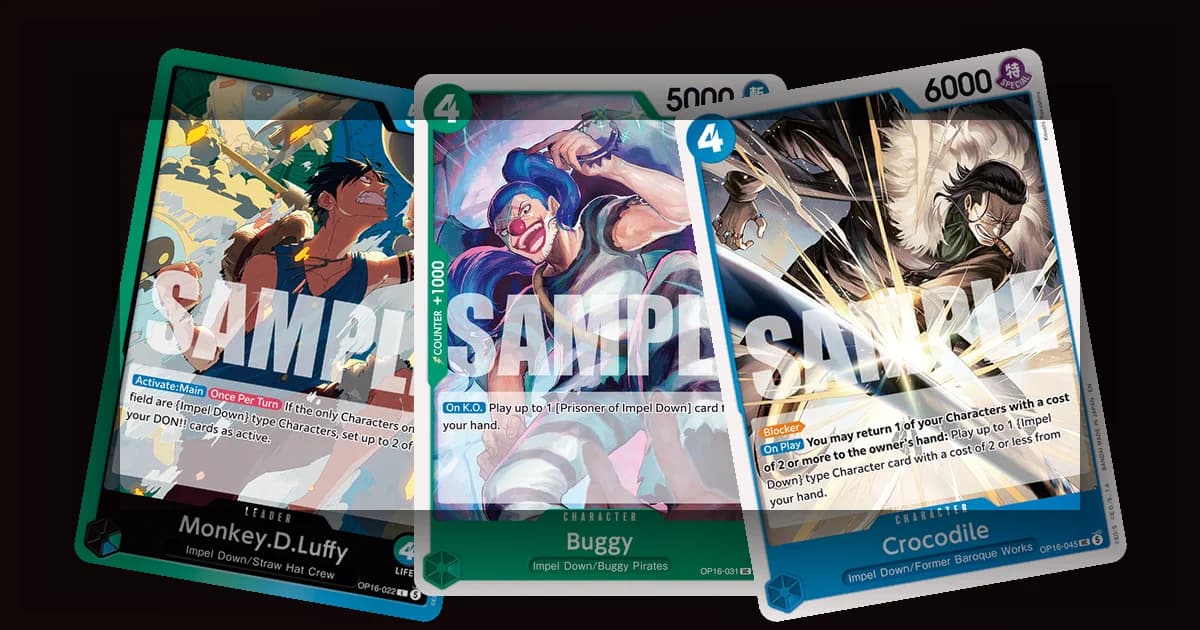
 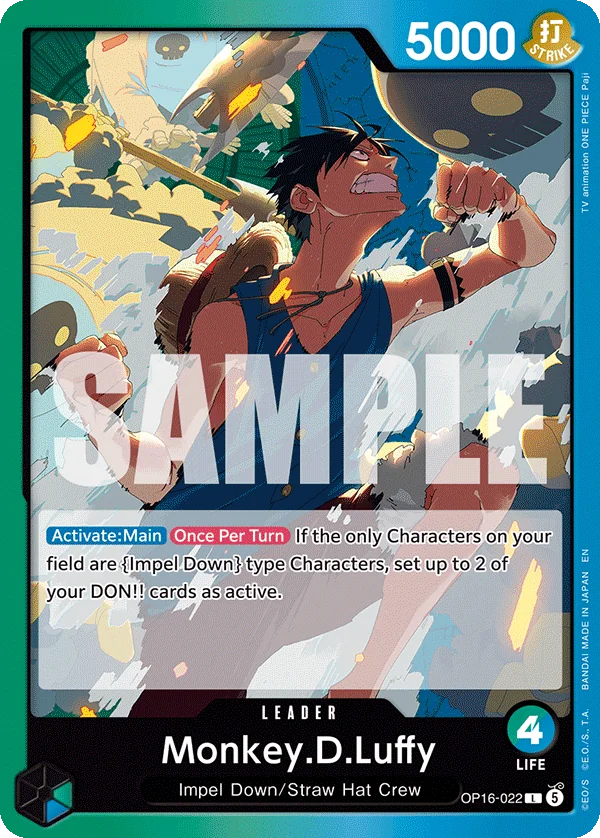 OP16-022OP16-022Shop on TCGplayer (OP16-022) illustrate the difference between a competitive card and a card whose collector demand may support grading.
SHOP: Building your grading submission list? Check current One Piece TCG singles prices on TCGPlayer. Shop TCGplayer →
OP-16 Launch Timing Strategy
Grading at launch week is almost always wrong. Here is why:
Week 1-2: Raw prices can include launch speculation. Submitting during this window means you commit before the market has enough data to show whether the card will hold its price.
Weeks 3-6: Prices stabilize. You can evaluate which cards held value. Pop report (PSA population count) is still low, meaning fewer graded copies competing with yours.
Months 2-3: Pop report grows. Market adjusts to graded supply. This is often the best time to sell PSA 10s from a new set.
Rule of thumb: The weeks 3-6 framework is only a planning guide. OP-16's current snapshots show a wide gap between the three Admiral Manga Rares and the SEC and Alternate Art tiers, but the submission decision still depends on the exact copy and current fees.
Step-by-Step: Submitting Your Cards for Grading
1. Create an account. Sign up at the grading service's website, PSA or CGC.
2. Order submission forms. Generate them through your account dashboard before you package anything.
3. Package your cards. Put each card in a clear penny sleeve, then place it in a semi-rigid holder. PSA's current shipping guide advises against top loaders, hard acrylic cases, and screw-down holders.
4. Fill out the submission form. List each card with its set, year, and a raw value estimate.
5. Ship with tracking and insurance. Send the package to the grading company's facility. Never submit high-value Manga Rares without declared value; a lost shipment without it is unrecoverable.
6. Track your submission. Monitor progress through the online dashboard while it moves through the queue.
7. Receive your grades. Slabs arrive by tracked mail once grading is complete.
Key Takeaways
- PSA usually offers the broadest resale market, but the label does not guarantee a premium; compare recent comps for the exact printing and grade
- Do not use a fixed raw-value threshold. Calculate fee, shipping, insurance, selling costs, and the likely grade premium for the card you actually own
- The original OP-01 Shanks Manga Rare remains a high-value grading candidate, with a September 2026 TCGplayer snapshot around $4,000 raw
- For OP-16: InkSight's September 5 snapshot puts the three Admiral Manga Rares around $1,060-$1,225; SEC and Alternate Art prints are much lower
- Centering and surface condition are the two main reasons OPTCG cards fail to reach PSA 10
- Check centering under bright light before submitting any card
OP-16 Grading Decision Guide (September 2026 Snapshot)
OP-16 EN launched June 12, 2026, so the original 4-6 week launch window has passed. Here is the current grading decision for each OP-16 chase tier, using a dated market snapshot rather than a permanent price rule:
Admiral Manga Rares (Sakazuki, Kuzan, Borsalino): Grade candidates if you own one and the card is clean enough to support a high grade. InkSight's September 5 snapshot lists about $1,224.82 for Sakazuki, $1,161.82 for Kuzan, and $1,059.52 for Borsalino. PSA currently lists Standard at $59.99 and Priority at $79.99, while Value services are unavailable; CGC's lower tiers may suit a batch submission. Recheck the current fee page and comparable sales before mailing a card worth this much.
OP-16 Secret Rares (Portgas.D.Ace, Marshall.D.Teach): Do not grade automatically at current prices. InkSight's September 10 snapshot lists the base and alternate printings between about $18 and $46. That is a dated market reference, not a promise that every copy is worth the same, but it makes the total grading-cost calculation difficult for most submissions.
OP-16 Admiral Alternate Art prints (Sakazuki OP16-065, Kuzan 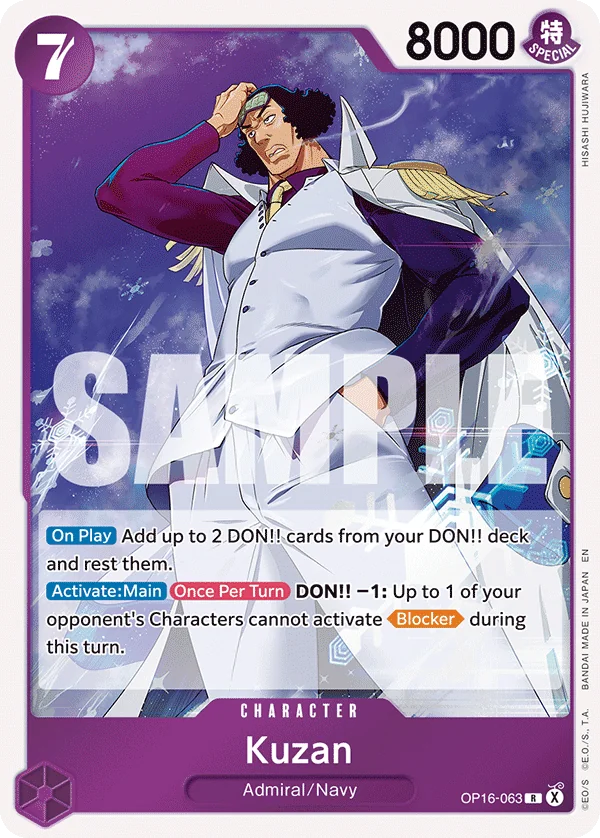 OP16-063OP16-063Shop on TCGplayer OP16-063, Borsalino
 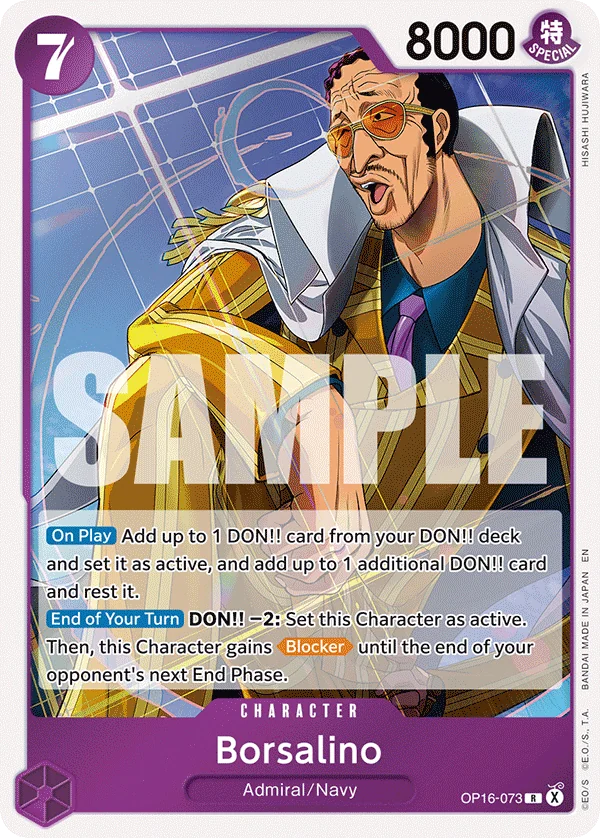 OP16-073OP16-073Shop on TCGplayer OP16-073): Do not grade for resale without a new comp. These card IDs also carry the Manga Rare print discussed above; the separate Alternate Art parallels were roughly $5-$10 in InkSight's September 10 snapshot.
Standard prints, Rares, Uncommons: Do not grade. The cost-to-premium ratio does not work at these raw values on any service.
Condition checks specific to OP-16 cards: Inspect every copy under bright light before submitting. Compare front and reverse centering with PSA's approximately 55/45 front and 75/25 reverse PSA 10 guideline, then check corners, edges, surface, and print lines. A ratio alone does not guarantee a grade.
GODEEPER: Wondering how OP-17 changes the picture for your current collection? The preparation guide covers rotation, budget, and set context. OP-17 Preparation Guide: Set and Rotation Context →
OP-17 and what it means for your OP-16 grading decisions
As of September 16, OP-17 "The World's Strongest Warriors" is already available in English; Bandai's official product page lists August 28, 2026 as the English release date. OP-17 is no longer a future launch variable, so use current market snapshots when deciding whether to grade OP-16 cards.
The good news for Manga Rare holders: Format rotation does not automatically determine collector demand for Manga Rares. The original OP-01 Shanks Manga Rare remains a separate, high-value printing, while OP-16's Admiral Manga Rares are collector cards as well as set chase cards. Their current value still depends on market demand and condition, not on a guarantee that a later set cannot affect prices.
The risk for competitive SRs: If you held OP-16 SR Characters such as Sakazuki, Yamato, or Enel expecting grading gains, competitive demand can change as later sets enter the card pool. Treat SEC cards such as Portgas.D.Ace and Marshall.D.Teach as separate collector decisions, not automatically safer investments.
The PSA 10 window for OP-16: Population reports change as more cards are submitted, so check PSA's live population data instead of relying on a fixed scarcity claim. A low population can support collector interest, but it does not guarantee a premium. Compare current PSA fees, population, and sold comps before grading an OP-16 Manga Rare; do not treat the SEC snapshot as a permanent no-grade rule.
Practical guidance: for Admiral Manga Rares, compare PSA Standard or Priority with CGC's current tiers and include shipping, insurance, and selling fees. OP-17's launch window has passed, so do not plan around a future launch spike. Re-evaluate the SEC cards if their exact printing or market price changes materially.
Related Reading
-
One Piece TCG Beginner Guide 2026: How to Play & Rules: Core rules, DON!! system, and turn structure for players new to One Piece TCG.
-
One Piece TCG OP-16 Guide: Set Review & Leaders (2026): Full OP-16 set overview, all six leaders, and key mechanics.
-
OP-16 Collectors Guide: SEC, Manga Rare, Alt-Art Cards: Deep dive on OP-16's collector-tier cards and what drives their premium.
-
OP-16 Most Expensive Cards Ranked: Top 6 by Price (2026): Current price ranking for OP-16's highest-value chase cards.
-
One Piece TCG Manga Rare Cards Guide: Pull rates, depreciation curves, and collector value for Manga Rares across all sets.
-
OP-16 Best Cards to Pull: Which OP-16 cards carry the highest competitive and collector value at launch.
-
All One Piece TCG Sets OP-01 to OP-16: Full EN set history with release dates for context on print run sizes.
Frequently Asked Questions
Q: Is grading One Piece TCG cards worth it? A: Only when the expected grade premium can cover the current grading fee, shipping, insurance, selling fees, and downside risk. PSA currently lists Standard at $59.99, while CGC lists $17 Bulk with a 25-card minimum. Use the exact printing and recent comps.
Q: Which grading service is best for OPTCG? A: PSA usually has the broadest resale market. CGC's current lower tiers can be cheaper, especially for a 25-card Bulk submission, and BGS provides subgrades. Compare current service fees and sold comps for the exact card instead of assuming one brand always wins.
Q: What is a PSA 10 premium for OPTCG Manga Rares? A: It varies widely by card and printing. The original OP-01 Romance Dawn Shanks Manga Rare is around $4,000 on a September 2026 TCGplayer snapshot, while later reprints are much lower. Check recent raw and PSA 10 comps for the specific printing.
Q: Should I grade my OP-16 cards at launch? A: The launch window has passed. InkSight's September 5 snapshot places the Admiral Manga Rares around $1,060-$1,225, while its September 10 snapshot places the SEC base and alternate prints around $18-$46. Recheck the exact printing, condition, current fee, and expected grade before submitting.
Q: What is the minimum card value worth grading? A: There is no universal minimum. Add the current fee, shipping, insurance, selling fees, and expected grade premium. PSA lists Standard at $59.99; CGC lists $17 Bulk but requires at least 25 cards, so the right threshold depends on the submission.
Q: How do I avoid centering issues? A: Inspect under bright light at eye level before submitting. Compare both axes with PSA's approximately 55/45 front and 75/25 reverse PSA 10 guideline, while remembering that eye appeal also matters. The ratio is a guide, not a guaranteed grade.
Q: What grades actually matter for OPTCG? A: PSA 9 and PSA 10 often have the strongest resale demand, but the premium depends on the card and printing. PSA 8 and below do not automatically create value, so compare recent sales rather than assuming any numeric grade beats a raw copy.
References
- PSA trading card grading services: Current PSA service levels, fees, declared values, and estimated turnaround
- PSA grading standards: PSA's published grade definitions and centering guidance
- PSA shipping guide: Current sleeve, semi-rigid holder, and packaging instructions
- CGC card grading services and fees: Current CGC tiers, batch minimums, fees, and working-day estimates
- Beckett card grading: BGS service-level pricing and subgrade information
- Beckett grading availability notice: current Base, Standard, and Express submission availability
- Collectors announcement on the Beckett acquisition: Ownership context for PSA and Beckett
- InkSight OP-16 set price snapshot: September 10, 2026 TCGplayer market snapshot for OP-16 printings
- InkSight OP-16 50-day market report: September 5, 2026 Manga Rare market snapshot and methodology
- TCGplayer Shanks Manga search: Current raw market references by Shanks printing
- Bandai OP-17 official product page: English release context for the current set window
Was this guide helpful?
Cards in this article
About the author
Card values and pull rates
Pen name for the Shonen TCG desk's card value, pull rate and collector market coverage.
- Prices read from TCGplayer and Cardmarket listings, dated
- Pull rates tied to a stated sample
- Opinions marked as ours, with the reason
Keep reading
OP-16 3 Admirals Guide: Characters, Not Leaders (2026)
Guides · 10 min
OP-16 Green Blue Luffy Deck Guide: Top-Tier Tournament List
Guides · 14 min
OP-16 Most Expensive Cards: Best & Top 6 Chase Picks
Guides · 7 min
OP-16 Black Yellow Teach Decklist: Blackbeard Deck Guide
Guides · 10 min
OP-16 Full Card List & Spoilers: What's in the Set
Guides · 10 min
OP-16 Black Yamato Deck Guide: Mono-Black Wano Recursion
Guides · 13 min
OP-16 Manga Rare Guide: Admiral Prices and Pull Odds
Guides · 13 min
One Piece TCG Counter Rules: Counter Step and Values
Guides · 11 min
Disclaimer
This article is published for informational and entertainment purposes. It does not constitute professional financial, legal, or technical advice. Game performance, online services, patch schedules, and store listings change. Verify critical details (pricing, system requirements, regional availability) with publishers and storefronts before you buy. Affiliate links, where present, help support our editorial work and are labelled in our affiliate disclosure.