Loading…
Loading…
Shonen TCG · Guides
Dragon Ball Fusion World FB10 meta snapshot for 2026, separating July tier labels from Pomona results and later ST01 tournament data before you build.
Reviewing
Dragon Ball Super Card Game Fusion World
Dragon Ball Fusion World FB10 meta should be read as a dated evidence set, not a permanent answer to which Leader is best. The old version treated a four-week community tier table as if it were a global tournament ranking. This update separates editorial labels from standings and keeps FB09, FB10, and FS11 Leader identities distinct.
TL;DR: The sources checked for this audit do not establish an official global FB10 tier list. A July 6 independent deck profile labeled FB10 Vegito Tier A, while a July 8 profile labeled FS11 Son Goku Tier S. In the July 19 Pomona Regional, FS11 Son Goku led Top 32 representation and FB09 Son Gohan: SH won. Use exact event dates and Leader IDs before making a deck choice.
The four-week snapshot was an editorial read of community testing, not a Bandai standings table. It can still be useful for explaining why Vegito, Gohan, and Cell were being discussed, but its tier labels should not be confused with measured win rates or a complete event sample.
The evidence is mixed in a helpful way. An independent July 6 deck profile categorized FB10 Vegito as Tier A Aggro Blue. A separate July 8 profile categorized FS11 Son Goku as Tier S Aggro Yellow. Those labels describe the pages' editorial assessments. They do not prove that either deck won more games across all events.
The July 19 Pomona Regional gives a different kind of evidence. FS11 Son Goku had 9 of 32 Top 32 players, FB09 Son Gohan: SH had 6, and FB10 Vegito had 4. Two FB09 Son Gohan: SH players met in the final, while no FB10 Vegito player reached the Top 8. Representation and conversion do not always point to the same Leader.
Treat the old S, S/A, A, and B labels as a dated conversation starter. They are not an official rules category, and the sources do not publish a shared sample size, matchup matrix, or win-rate calculation behind every placement.
A useful reading framework is:
| Evidence type | What it can tell you | What it cannot prove |
|---|---|---|
| Deck-profile tier label | How one publisher evaluated a list at a stated date | A global win rate or universal ranking |
| Top 32 representation | Which Leaders reached a cut and how often | Which Leader had the best conversion |
| Top 8 and finals | Which Leaders converted in one event | Performance across every region |
| Card text and mechanics | What a deck is built to do | Whether the plan wins more often |
| Community testing notes | Lines players are learning to respect | A measured matchup percentage |
This distinction matters for Vegito. The Leader's text makes its Evolve turn important, but “important to test against” is a safer claim than “best deck in the format.” A current tier page may use a different sample or a different product window. Always read its date and methodology.
The Dragon Ball Fusion World FB10 format and rotation guide has the legality checklist for a deck. Format legality and competitive placement are separate questions.
The July 19 Pomona Regional is the clearest dated counterweight to the old headline. The independent report lists this Top 32:
| Leader | Top 32 | Top 16 | Top 8 |
|---|---|---|---|
| FS11 Son Goku | 9 | 5 | 3 |
| FB09 Son Gohan: SH | 6 | 3 | 3 |
| FB09 Gogeta: BR | 6 | 4 | 1 |
| FB09 Gogeta: GT | 5 | 2 | 1 |
| FB10 Vegito | 4 | 1 | 0 |
| FB09 yellow Gogeta | 1 | 1 | 0 |
| FB10 Son Gohan/Piccolo | 1 | 0 | 0 |
The report names gvbhino's FB09 Son Gohan: SH deck as the winner. It also identifies SD1_Leo in ninth place as the best FB10 Vegito result at that event. That is enough to correct the claim that Vegito topped this specific July regional. It is not enough to declare Vegito weak across the whole season.
The table also shows why product shorthand causes mistakes. Cross Force was the new expansion, yet most Top 8 seats in this event belonged to FS11 or FB09 Leaders. A meta article that only counts FB10 Leaders can hide the decks actually reaching the later rounds.
About the author

Competitive TCG Writer
Competitive One Piece TCG player who topped at regional level. Has strong opinions about leader tier lists and when the meta is being over-hyped.
Keep reading

Dragon Ball Fusion World Vegito Guide: FB10 Snapshot
Guides · 15 min
Dragon Ball Fusion World Best Cards for Beginners 2026
Guides · 12 min

Dragon Ball Fusion World FB11: Brightness of Hope (Oct 2026)
Guides · 8 min

Dragon Ball Fusion World Standard Format Guide 2026
Guides · 16 min

Dragon Ball Fusion World Energy Guide: Master Your Turns
Guides · 15 min
Dragon Ball Fusion World Best Leaders FB10: All 5 Ranked
Guides · 12 min

Dragon Ball Fusion World FB10 Meta Report: 13 Weeks In
Guides · 14 min

Dragon Ball Fusion World FB10 SCR Price Guide 2026
Guides · 9 min
Disclaimer
This article is published for informational and entertainment purposes. It does not constitute professional financial, legal, or technical advice. Game performance, online services, patch schedules, and store listings change. Verify critical details (pricing, system requirements, regional availability) with publishers and storefronts before you buy. Affiliate links, where present, help support our editorial work and are labelled in our affiliate disclosure.
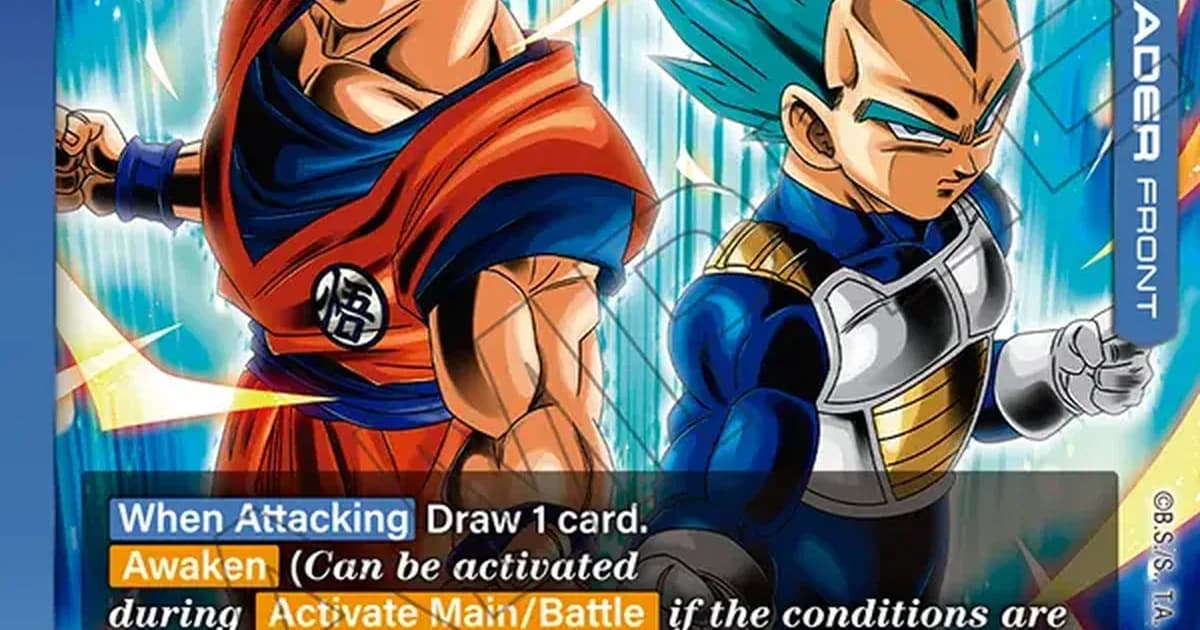
The official FB10 product page highlights FB10-025 Son Goku/Vegeta and its awakened Vegito side. The card can Awaken at 4 Life or less, then rewards an Evolve card by giving the Leader +10,000 power for each card underneath that card during the battle. The official card database supplies the full current text.
That makes the Evolve activation turn the right place to test defensive timing. It does not establish a matchup percentage. A player who spends every defensive resource on early attacks may have fewer answers when the stack matters, but the strength of that line depends on the opposing deck, hand, energy, and event environment.
Use a small test log instead of a universal claim:
This produces information that can support a later matchup update. It is more reliable than repeating that the deck is “unbeatable” or that one counter is “clean.”
The Dragon Ball Fusion World FB10 Cross Force set guide covers the product's card text and the three SCR cards. Keep mechanics coverage there separate from tournament placement claims here.
The article's old shorthand used “Gohan” and “Son Goku” as if each name referred to one deck. The card database contains several versions, and the event window includes multiple products.
Pomona's winner was FB09-049 Son Gohan: SH. The same report separately lists one FB10 Son Gohan/Piccolo player in the Top 32. The winning list also used FB10 support cards, which is normal in a cross-set card pool. The Leader ID is still the correct primary label.
The same care applies to Son Goku. The July 8 profile discussed FS11 SSJ3 Son Goku, while the FB10 product page highlights FB10-001 Son Goku. Those are not interchangeable deck results. A sentence that says “Son Goku was Tier S” without the card number is too imprecise for a meta report.
Cell also needs a product label. FB10-097 Cell is the Cross Force Leader, while SB01 has a different Cell Leader. If a deck list or tier page does not state the card number, verify it against the official database before copying the placement.
The source window changed after July. Story Booster 01 released in English on August 21, 2026, and Bandai lists FB11 Brightness of Hope for October 16. Results from the ST01 era should not be added to a four-week FB10 table as if they were extra samples from the same environment.
The current official pages checked for this update provide product details, card data, rules, and event schedules. They do not provide a single global July tier ranking. Independent sources can still document deck profiles and event standings, but each source should be labeled by type.
For a September tournament, use a fresh result from the same product window as the event. Keep this page for the four-week comparison, and use the Dragon Ball Fusion World FB10 July Meta Report for the separate Pomona retrospective. That separation avoids using one old tier label as current buying advice.
1. Find the publication date. A four-week snapshot and an ST01 result answer different questions.
2. Identify the source type. Mark the page as an official announcement, deck profile, organizer result, or community analysis.
3. Record the Leader card number. Do not merge FB09 Son Gohan: SH with FB10 Son Gohan/Piccolo, or FS11 Son Goku with FB10 Son Goku.
4. Separate labels from standings. A Tier S tag is an opinion unless the source publishes a defined ranking method and sample.
5. Check representation and conversion. Compare Top 32, Top 16, Top 8, and finals when a result page provides them.
6. Keep product windows separate. FB10, ST01, and FB11 are not one undifferentiated result set.
7. Recheck the official rules and event page. A legal deck still needs to follow the current banned and restricted list and any event-specific rule.
8. Date your recommendation. Write the source-check date beside a deck choice so readers know when the claim was valid.
Is Vegito still the best leader in Dragon Ball Fusion World FB10?
The available sources do not establish one best Leader. A July deck profile labeled FB10 Vegito as Tier A, while a separate profile labeled FS11 Son Goku as Tier S. The July 19 Pomona Regional placed four FB10 Vegito players in Top 32 and none in Top 8. Treat Vegito as a serious test, not a proven universal number one.
What changed in the Dragon Ball Fusion World meta from week 1 to week 4?
The useful change was better matchup knowledge, not a verified global tier shift. Players had more time to test the Vegito Evolve turn, Gohan and Cell lines, and the newer Yellow field. The sources checked here do not provide a shared win-rate dataset, so describe these as testing observations rather than measured format-wide results.
What is the best counter to Vegito in Dragon Ball Fusion World?
There is no single counter proven by the sources used here. The official FB10 text explains Vegito's Evolve payoff, so holding interaction for that turn is a reasonable testing hypothesis. A matchup claim needs a dated event sample or recorded games. Do not present Cell, Gohan, or a fast Red start as universally favored without that evidence.
Should I switch Leaders now that the meta has settled?
Do not switch from a deck solely because of an undated tier label. Identify your next event, read its current rules, and compare recent results using the same Leader IDs and sample. This article is a dated FB10 snapshot updated for accuracy. Later ST01 events belong to a newer product window and should be evaluated separately.
How does energy management affect the FB10 format?
Ki and energy decisions matter because several FB10 Leaders use Ki as part of their game plan, but the sources checked do not quantify a skill gap or win-rate effect. Test when to charge, when to spend Ki, and when to keep defensive interaction available. Record the event date and matchup instead of turning practice advice into a tier claim.
Is Son Goku worth playing in Dragon Ball Fusion World FB10?
Yes, it can be a reasonable testing choice, but the label depends on which Son Goku you mean. The official card database lists several Leaders, and the July field included FS11 Son Goku as well as FB10 options. Confirm the card number, product window, and event results before calling one version a beginner pick or a top deck.
When is the next Dragon Ball Fusion World set releasing?
Bandai's official FB11 Brightness of Hope product page lists October 16, 2026 for the English release, with 123 card types and five new Leaders. That date is why September testing should not be mixed with July results. Check the official product page again before the release because Bandai notes that schedules can change.
Related
One Piece TCG Budget Decks: Current Lists Under $100
18 min read
OP-18 Saint Gunko: Purple-Black Leader Text Explained
6 min read
OP18 Franky Leader: Stage Counters and a Free Play Effect
6 min read
Union Arena Re:ZERO and Attack on Titan Vol.2 Tier List
12 min read
Best One Piece TCG Decks Right Now: Current OP-17 Meta
16 min read

