Loading…


Shonen TCG · Guides
FB10 Gohan Deck Guide: Master's Teachings in Cross Force
Reviewing
Dragon Ball Super Card Game Fusion World
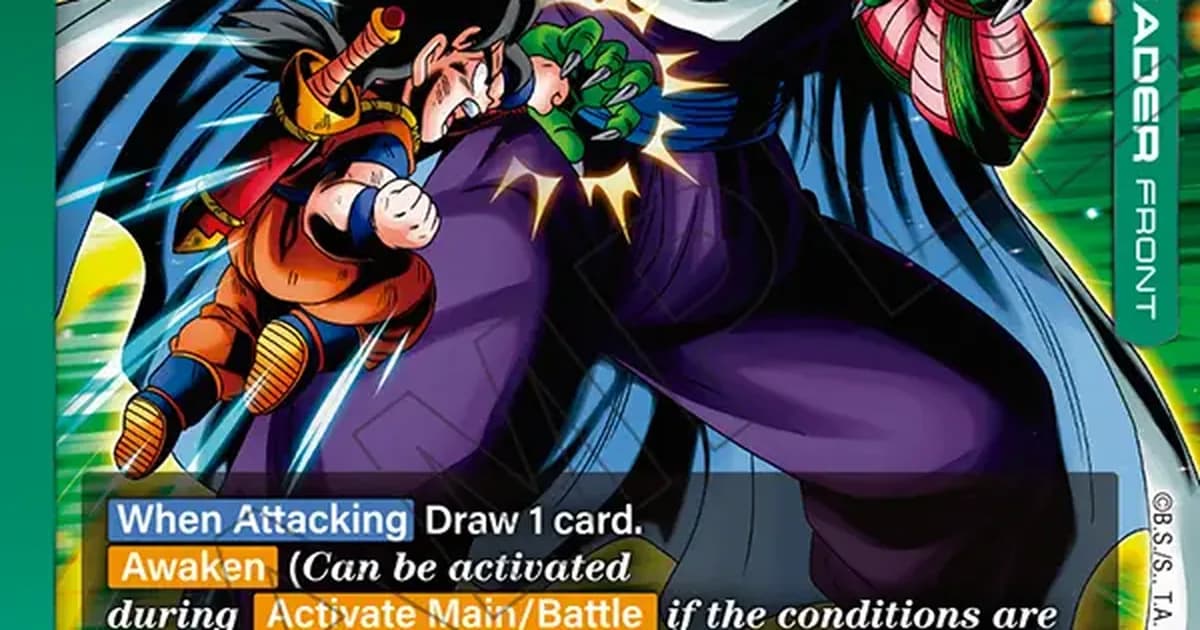
This FB10 Gohan deck guide covers a strategy built on Ki, a per-card energy resource, rather than a single big tempo swing. The core Master's Teachings cards either add to that Ki total or convert it into power, draw, and removal, and that total is what decides when your leader Awakens. Once Gohan flips, the engine can keep generating value through attack triggers and Ki payoffs, including the SCR finisher's life-swing attack.
Correction (2026-07-29): an earlier version of this guide described Gohan's Awaken condition as triggered by sending Piccolo to the Drop Area, unlocking a blanket cost reduction for all green cards. Verified against the official card database, neither of those is accurate. The real leader (FB10-049, Son Gohan: Youth/Piccolo) Awakens when your life drops to 3 or fewer or your total Ki reaches 3 or more, and its Awakened back side only discounts the next Piccolo card played each turn, not green cards broadly.
This FB10 Gohan deck guide covers the real Awakening mechanic, how the Ki resource works across the Master's Teachings package, and a cautious matchup testing plan for the FB10 Cross Force card pool. Cross Force released in English on June 12, 2026. The current official product list also shows Story Booster 01 as released and FB11 as upcoming, so this is an archetype guide rather than a claim that FB10 still defines the entire current format. If you're new to the game entirely, the DBS Fusion World beginner guide covers the base rules before you dive into competitive builds.
TL;DR: Gohan's FB10 leader (FB10-049) Awakens when your life hits 3 or fewer, or your total Ki hits 3 or more, whichever comes first. The core Master's Teachings cards generate or spend Ki, so a good opening can reach the threshold by turn 2 or 3, but the timing is not guaranteed. Once flipped, the back side adds Ki to a Master's Teachings Son Gohan on attack and discounts the next Master's Teachings Piccolo by 1. The SCR (Son Gohan: Childhood, FB10-122) spends 7 Ki on attack to turn a landed hit into extra energy. A July 19 regional report recorded one FB10 Gohan/Piccolo list in the Top 32 at 29th, useful evidence for testing but not a settled tier claim.
FB10 Gohan deck guide: what this deck actually does
Gohan's Awaken condition is dual: your life dropping to 3 or fewer, or your total Ki reaching 3 or more, whichever happens first. In practice, a Master's Teachings Gohan deck often aims for the Ki trigger first, but it cannot assume a fixed turn. The low-cost Gohan package adds Ki to itself or the leader, while later cards spend that resource for pressure, draw, or removal.
That makes this a resource-engine deck more than a pure tempo deck. Phase one is about landing cheap Gohan cards that generate Ki, not about assembling a single combo piece. Phase two, after the flip, is about spending that same Ki pool: the back-side leader adds Ki on attack every turn, individual Gohan cards spend banked Ki for extra power or card draw, and the SCR finisher spends a large chunk of Ki in one shot to convert a landed hit into energy.
That two-phase structure makes Gohan feel different from the FB10 Vegito and Cell examples most players compare it with. Vegito's Evolve is an instant power spike on one key turn. Cell's Android Evolve chain is a multi-turn buildup toward a finisher. Gohan is a running resource total that both sides of the Awaken flip, and most of your cards, interact with directly.
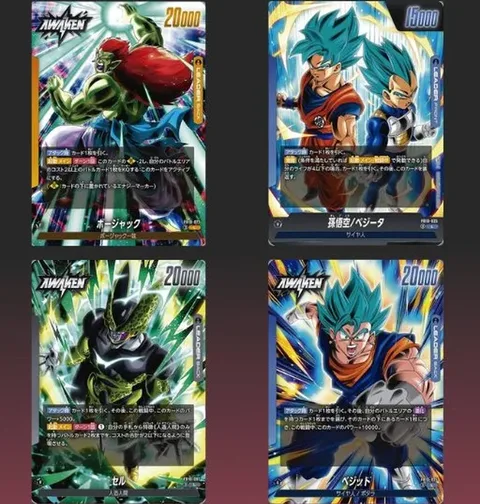 A Cross Force card collage used as a visual reference; the deck analysis below is based on the official card text.
Key Takeaways
- Gohan Awakens when your life drops to 3 or fewer, or your total Ki reaches 3 or more, whichever comes first
- The core Master's Teachings cards add or spend Ki, making the Ki threshold a key deck-building target
- After Awakening, the leader adds Ki on attack and reduces the cost of the next Piccolo (Master's Teachings) card you play by 1, not all green cards
- Son Gohan: Childhood (FB10-122, SCR) spends 7 banked Ki on attack to convert a landed hit into extra energy
- Consistent midrange positioning built around a resource total you control directly, rather than one big swing turn
- Matchup labels below are testing hypotheses, not current tournament win rates
The Awakening condition: life or Ki, whichever comes first
Gohan's leader card, FB10-049 "Son Gohan: Youth/Piccolo," Awakens under either of two conditions: your life total drops to 3 or fewer, or your total Ki reaches 3 or more. Either one flips the card and draws you a card in the process.
Racing to the Ki threshold is almost always the faster and safer route. The Master's Teachings support package is full of cheap Gohan cards that generate Ki the moment they resolve:
Son Gohan: Youth (cost 1): gains 1 Ki on play, and can spend 2 Ki on attack for a temporary power boost.
Son Gohan: Future (FB10-059, cost 2): gains 1 Ki on play and cannot be KO'd until the end of your opponent's next turn. When attacking, it gets +5000 power for the battle if you have a total of 2 or more Ki. It does not spend Ki for that boost.
Son Gohan: Childhood (printed at Common, Uncommon, and Rare, cost 2 to 3): every version gains Ki on play; the Rare printing generates 2 Ki in one hit and the Uncommon can search your Drop for a cost-2 Piccolo once your Ki hits 3.
Play these in roughly any order across your first two or three turns and the Ki total can climb quickly. You do not need one specific engine piece, but the exact Awaken turn still depends on the opening hand, the opponent's interaction, and whether your cards survive long enough to generate Ki. The life-based condition remains a fallback if the opponent applies pressure first.
GODEEPER: How does the Gohan Awakening compare to Vegito's Evolve and Cell's Evolve mechanic? DBS Fusion World FB10 Leaders Guide →
After Awakening: what actually gets cheaper
Once Gohan flips to his Adolescence back side, two things happen every turn you attack: you draw a card, and you can give a Master's Teachings Gohan on your board 1 more Ki. Once per turn you can also reduce the cost of the next Piccolo (Master's Teachings) card you play by 1. That discount is narrow. It applies to Piccolo specifically, not to green cards in general, so don't build the deck around stockpiling expensive green cards to dump on the flip; that plan doesn't match what the card actually does.
The real payoff of Awakening is that your Ki engine keeps running for free. Cards that spend Ki for power boosts or card draw, and the SCR finisher's Ki-spend attack trigger, all get easier to fuel once the back side is adding Ki on attack every turn on top of whatever your battle cards are already generating.
This shapes deckbuilding in an important way: keep playing Ki-generating Gohan cards on curve after the flip instead of switching to a hand of unrelated high-cost threats. Every card that doesn't generate or spend Ki is doing less work than one that does.
 A generic Fusion World visual; the card text and Ki interactions described here come from the official FB10 card list.
Son Gohan: Childhood and the SCR slot
Son Gohan: Childhood is printed at four different rarities in FB10, from Common up to the SCR (FB10-122), one of the set's three SCRs alongside the Vegito and Cell cards.
The SCR version costs 5 (Green, specified GG) with 35000 power. On Play, it and your Leader each gain 1 Ki, and it gets +15000 power for the turn. When Attacking, it can spend 7 Ki: if it deals damage to the opponent that turn, you add 1 of the opponent's life to your own energy in Rest Mode. That's a genuine life swing, but it needs a big banked Ki total to fire, which is exactly what the rest of the Ki-generation package is building toward.
The deck does not need the SCR to function. The lower-rarity Common, Uncommon, and Rare printings of Son Gohan: Childhood all generate or spend Ki in smaller ways and keep the engine intact without needing to hit the 7-Ki threshold. Check Dragon Ball Super Fusion World best cards to pull in FB10 for current SCR pricing if you're deciding whether to chase it.
FB10 Gohan deck guide: the 50-card structure
The competitive Gohan list breaks into three functional packages, built around the Ki total rather than a two-phase hoard-and-dump plan:
Ki-generation package (18 to 22 cards): the low-cost Master's Teachings Gohan cards (Youth, Future, and the Common or Uncommon Childhood printings) that gain Ki on play. These are your opening turns. Run close to a full playset of each variant available to you; the Ki total needs to move every turn.
Ki-spend payoffs (10 to 14 cards): cards whose When Attacking or Activate Main abilities spend banked Ki for power, card draw, or removal, plus the Childhood SCR (or a lower-rarity Childhood printing as a budget substitute) as the biggest single Ki sink. These are what the Ki total is for.
Counter and defensive package (8 to 12 cards): green counter cards that protect your leader while your Ki total is still climbing. Since the Awaken condition includes life 3 or fewer, taking damage isn't purely bad here, but you don't want it happening faster than your Ki total climbs.
Energy plan: Fusion World uses cards from your hand as energy, so this is not a separate four-card energy package. Charge the cards that are least important to the current hand while preserving enough Master's Teachings pieces to keep the Ki engine moving.
Budget adjustments: replace the Childhood SCR with the Rare or Uncommon Childhood printing; both still generate meaningful Ki. The engine is built almost entirely from Common-to-Rare cards, so cutting the SCR loses ceiling, not consistency.
For purchasing the core set, the Dragon Ball Super Fusion World FB10 Cross Force set guide covers where to find packs and current box pricing.
Matchup overview for FB10 format
Vegito Evolve (test the timing): Vegito's Evolve mechanic spikes power on a single key turn. Gohan wants to establish Ki before that turn, but the exact exchange depends on the lists and the draw. Priority: keep landing Ki generators without giving up every defensive option.
Cell Evolve (test the setup race): Cell's Android Evolve chain also asks for a multi-turn setup. Gohan can pressure that setup by developing Ki early, but a matchup result is not established by the current published evidence. Track whether you can keep a board while preserving enough Ki for interaction.
Red and Blue midrange (board-value test): Against midrange decks, compare the value of your Ki payoffs with the opponent's removal and counter package. Do not assume that the engine automatically draws more cards or wins a longer game; test whether your early board survives long enough to matter.
Aggressive leaders (matchup-dependent): Decks that push your life total down fast can trigger the life-based Awaken condition, but they can also end the game before the Ki engine pays off. Mulligan for Ki generators and track your life as a second route to the flip, while saving enough counter power to survive the turn after Awakening.
GODEEPER: Where does Gohan sit in the full FB10 meta tier list compared to every other leader? Dragon Ball Fusion World Meta Tier List June 2026 →
Step-by-Step: Piloting the Gohan Ki Engine
1. Mulligan for Ki generators over payoffs. Prioritize the cheap Master's Teachings cards that gain Ki on play (Youth, Future, or the Common and Uncommon Childhood printings) over higher-cost Ki-spend cards. You need the total moving before you have anything worth spending it on.
2. Land Ki generators every turn through turns 1 to 3. Play any two or three Master's Teachings Gohan cards in roughly any order. The Ki total climbs on its own without needing one specific engine piece.
3. Track your Ki total against the Awaken thresholds. Watch for either your Ki reaching 3 or more or your life dropping to 3 or fewer, whichever happens first. Keep a visible running count so you know exactly which turn you'll flip.
4. Keep playing Ki-generating cards after the flip. The Awakened back side draws a card and adds Ki every turn you attack, and once per turn discounts the next Piccolo (Master's Teachings) card by 1, so don't switch to unrelated high-cost threats once the engine is running.
5. Spend banked Ki through your payoff cards once the engine is running. Use When Attacking and Activate Main abilities for power boosts, card draw, or removal, and fire the Childhood SCR's 7-Ki life-swing attack once you have the banked total to support it.
6. Adjust your plan per matchup. Race the flip against Vegito by prioritizing Ki generators over holding counters in the first two or three turns; against aggro, let a fast life drop toward 3 or fewer serve as a second path to Awaken instead of burning every counter to preserve life.
Tips for playing Gohan in the current meta
Mulligan for Ki generators, not payoffs: in your opening hand, prioritize the cheap Gohan cards that gain Ki on play over the higher-cost Ki-spend cards. You need the total moving before you have anything worth spending it on.
Track your Ki total, not the Drop Area: the Awaken condition checks total Ki (3 or more) or life (3 or fewer) the moment either is true, not on a fixed turn count. Keep a visible running count so you know exactly which turn you'll flip.
Low life isn't only bad here: because life 3 or fewer is a valid Awaken trigger on its own, a rough start against aggro can still end in an early flip. Don't burn every counter card just to preserve life when flipping this turn is close either way.
Against Vegito, test the flip timing: Gohan wants Ki online before Vegito's Evolve setup resolves, but do not trade every defensive card for speed. Use games against the current list to find the turn where preserving a counter is more valuable than one extra Ki.
Play the Dragon Ball Fusion World Evolve mechanic explained guide: understanding Vegito's Evolve turn in detail helps you judge whether you're racing to Awaken first or need to slow down and defend.
Related Reading
- Dragon Ball Fusion World Ki Mechanic Explained 2026: the full rules breakdown of the Ki resource that powers Gohan's entire engine.
- Dragon Ball Fusion World Cell Deck Guide: FB10 Android 2026: Cell's Android Evolve chain, the FB10 leader Gohan's Ki engine tends to race against.
- Dragon Ball Fusion World Vegito Deck: Build Guide 2026: how Vegito's single-turn Evolve spike compares to Gohan's steady Ki buildup.
- Dragon Ball Fusion World FB10 SCR Price Guide 2026: current market pricing for the Son Gohan: Childhood SCR and the other FB10 chase cards.
- Dragon Ball Fusion World FB10 Tier List: 5 Leaders Ranked: where Gohan lands on the post-launch power ranking against every FB10 leader.
Frequently Asked Questions
What is the Gohan deck's core win condition in FB10? Build Ki through cheap Master's Teachings cards, Awaken off that Ki total, then keep spending and regenerating Ki for power boosts, card draw, and eventually the SCR's life-swing attack. Most games are decided by how fast and how consistently your Ki total climbs, not by a single big turn.
How early can Gohan Awaken in a typical game? Turn 2 with an ideal draw of Ki-generating Gohan cards. More typically turn 2 to 4 depending on how many Ki generators land early. Against aggressive leaders, a fast life total drop toward 3 or fewer can also trigger the flip, which is a real backup path, not a failure state.
Is Gohan better than Vegito in the FB10 format? There is not enough current published matchup data here to make a reliable better-than claim. Vegito has a visible Evolve spike, while Gohan has a distributed Ki engine. Choose based on the play pattern you can pilot and test the pairing with current lists instead of treating the matchup as even by default.
Is the Son Gohan Childhood SCR required to be competitive? No. The Ki engine is built entirely from Common-to-Rare rarity cards, including three lower-rarity printings of Son Gohan: Childhood itself. Budget lists without the SCR still function at local and casual competitive level. The SCR adds a bigger single Ki payoff but does not define the strategy.
Where can I find a current 50-card Gohan list? The DragonBall.gg Son Gohan Youth/Piccolo deck page is a community deck reference. For tournament evidence, the July 19 Pomona Regional report is more useful than a generic tier label: it records one FB10 Gohan/Piccolo list in the Top 32 at 29th. Check the official site for current card text and product or event notices.
Can I build Gohan from a starter deck before upgrading? FB10 is a booster product, not a Gohan starter deck. Start from the green cards and any compatible starter collection you already own, then use singles or packs to fill the Master's Teachings shell. The Dragon Ball Fusion World best starter decks 2026 guide covers general upgrade paths, but it does not replace checking the released FB10 card list.
References
- DragonBall.gg Son Gohan Youth/Piccolo deck page: community deck reference for the archetype
- Dragon Ball Super Card Game official FB10 product page: release date, product contents, and current product context
- FB10-049 Son Gohan Youth/Piccolo: official Leader text and Ki Awakening condition
- FB10-122 Son Gohan Childhood: official SCR text and Ki-spend attack effect
- FB10 FAQ: official rules clarifications for Cross Force cards
- 2026 Pomona Regional results and decklists: the reported Top 32 Gohan/Piccolo result
- TCGPlayer Dragon Ball Super Singles: current singles prices for FB10 cards including Son Gohan Childhood SCR
Was this guide helpful?
About the author

TCG Deck Analyst
Former card game tournament organiser turned analyst. Covers One Piece TCG meta, deck efficiency, and card valuation. Builds spreadsheets for decks most people just play.
- Regional TCG tournament organiser
- One Piece TCG meta specialist
- Competitive deck analysis
Keep reading

Dragon Ball Fusion World FB10 July Meta Report 2026
Guides · 12 min

Dragon Ball Fusion World FB10 Format and Rotation Guide
Guides · 14 min

Dragon Ball Fusion World FB10 SCR Price Guide 2026
Guides · 9 min
Dragon Ball Fusion World Story Booster 01: New Leaders
Guides · 6 min

Dragon Ball Fusion World FB10 Meta Report: 13 Weeks In
Guides · 14 min

Dragon Ball Fusion World Most Expensive Cards (2026)
Guides · 13 min

Dragon Ball Fusion World Card Grading: Worth It in 2026?
Guides · 12 min

Dragon Ball Fusion World Standard Format Guide 2026
Guides · 16 min
Disclaimer
This article is published for informational and entertainment purposes. It does not constitute professional financial, legal, or technical advice. Game performance, online services, patch schedules, and store listings change. Verify critical details (pricing, system requirements, regional availability) with publishers and storefronts before you buy. Affiliate links, where present, help support our editorial work and are labelled in our affiliate disclosure.