Loading…
Loading…
Shonen TCG · Guides
Dragon Ball Fusion World FB10 tier list ranks all 5 Cross Force leaders. Vegito and Gohan top the early meta; Cell is solid A-tier. Full breakdown inside.
Reviewing
Dragon Ball Super Card Game Fusion World
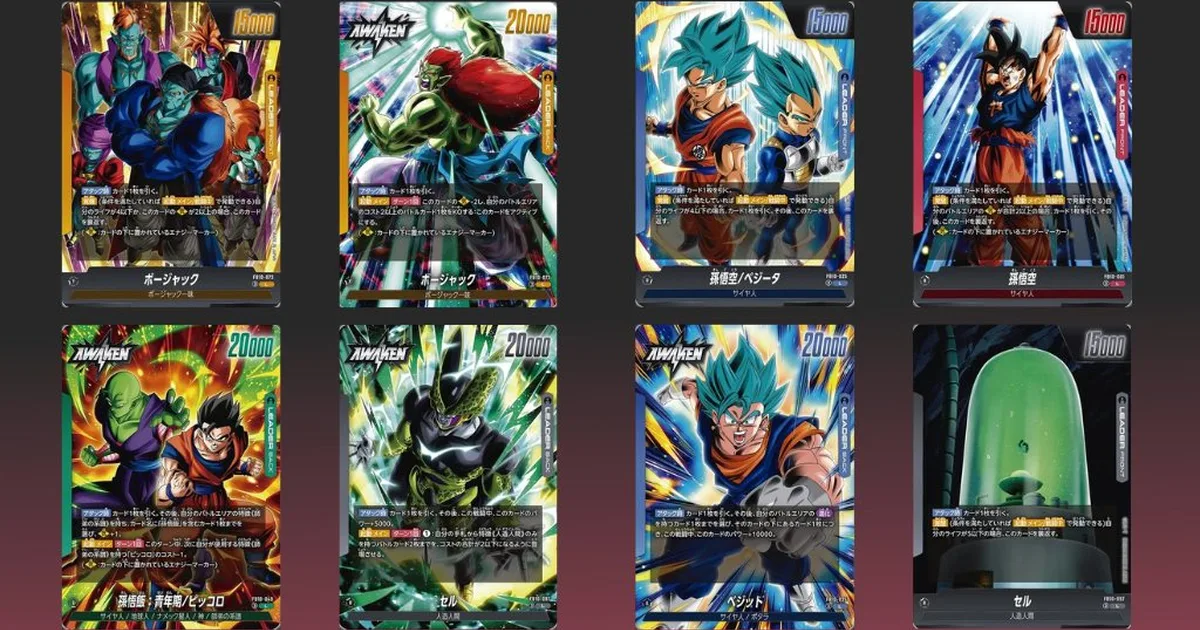
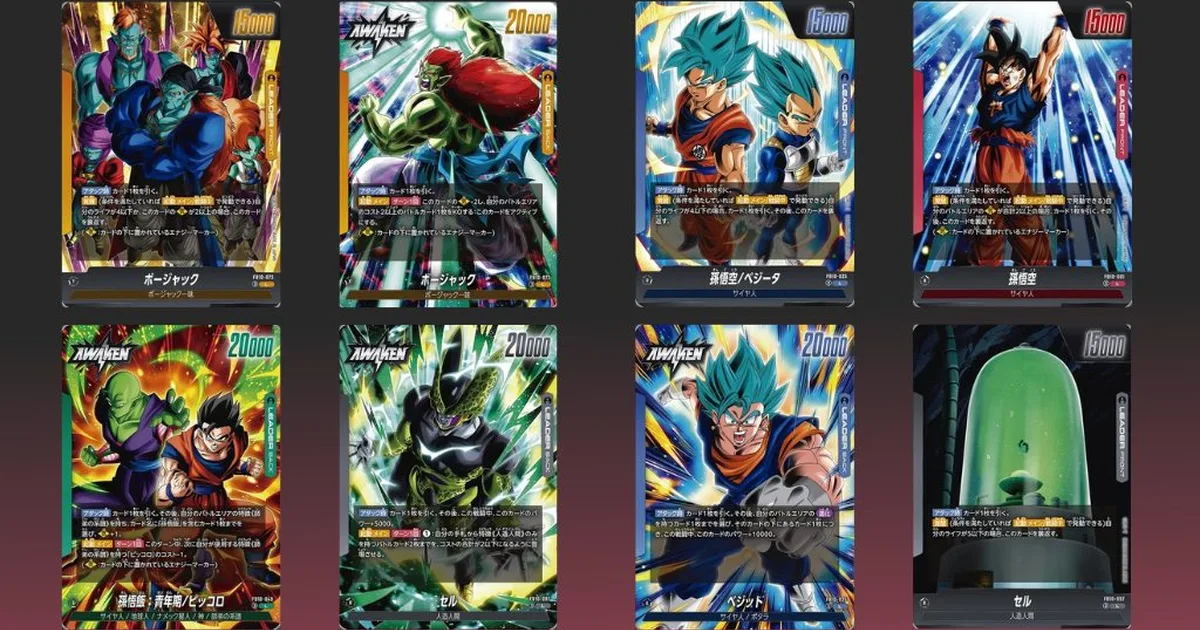
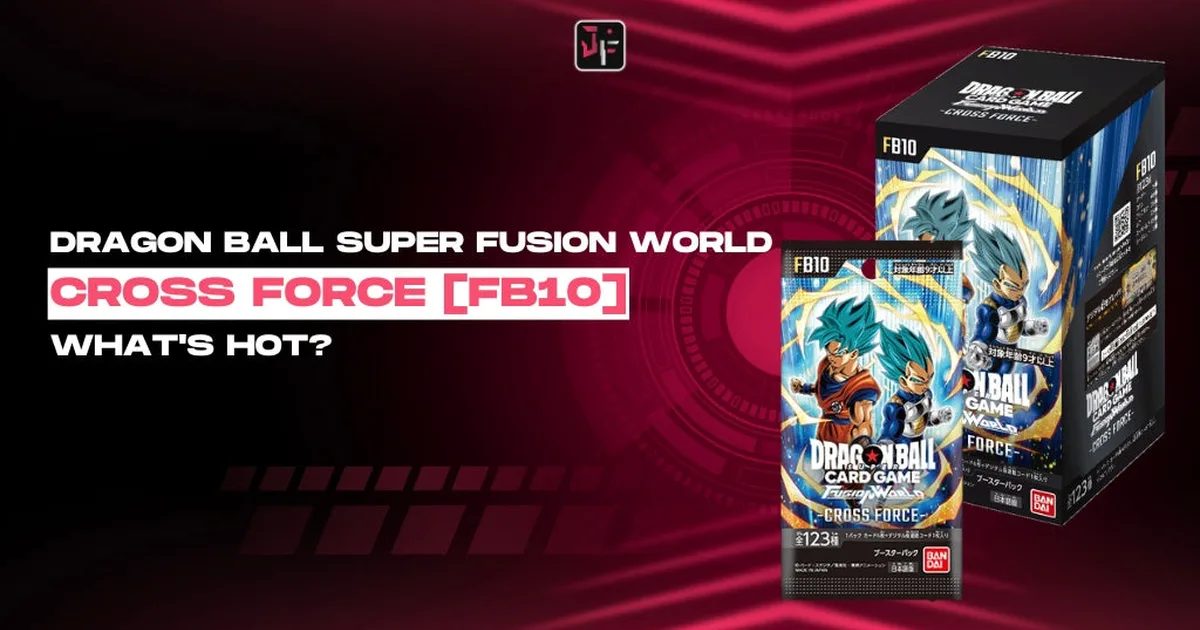
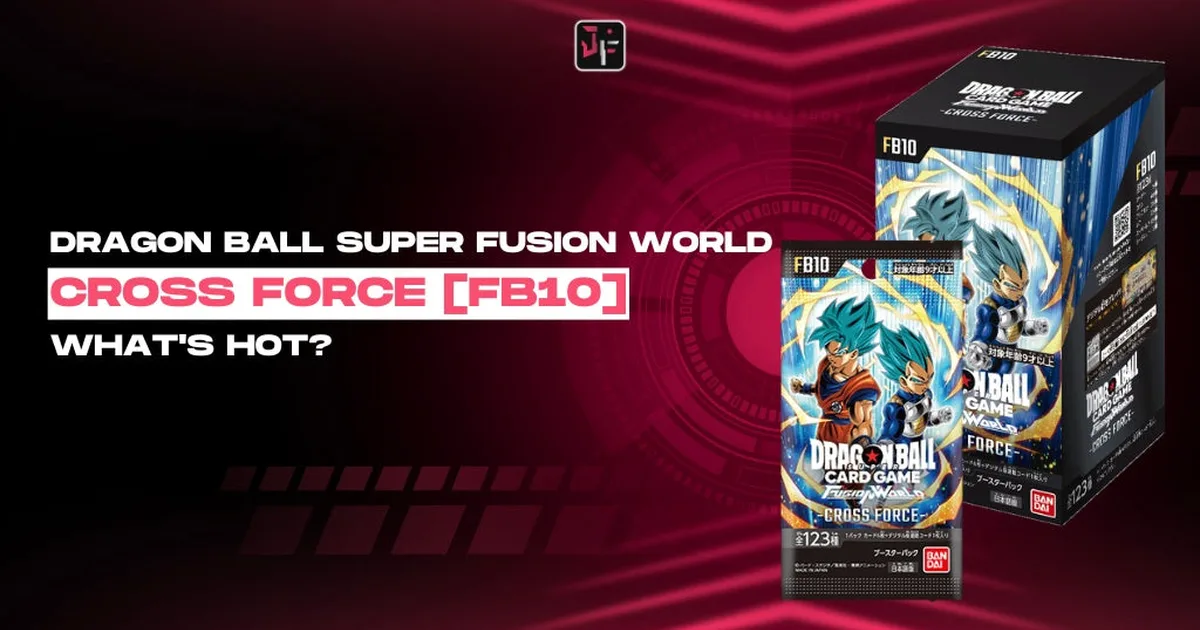
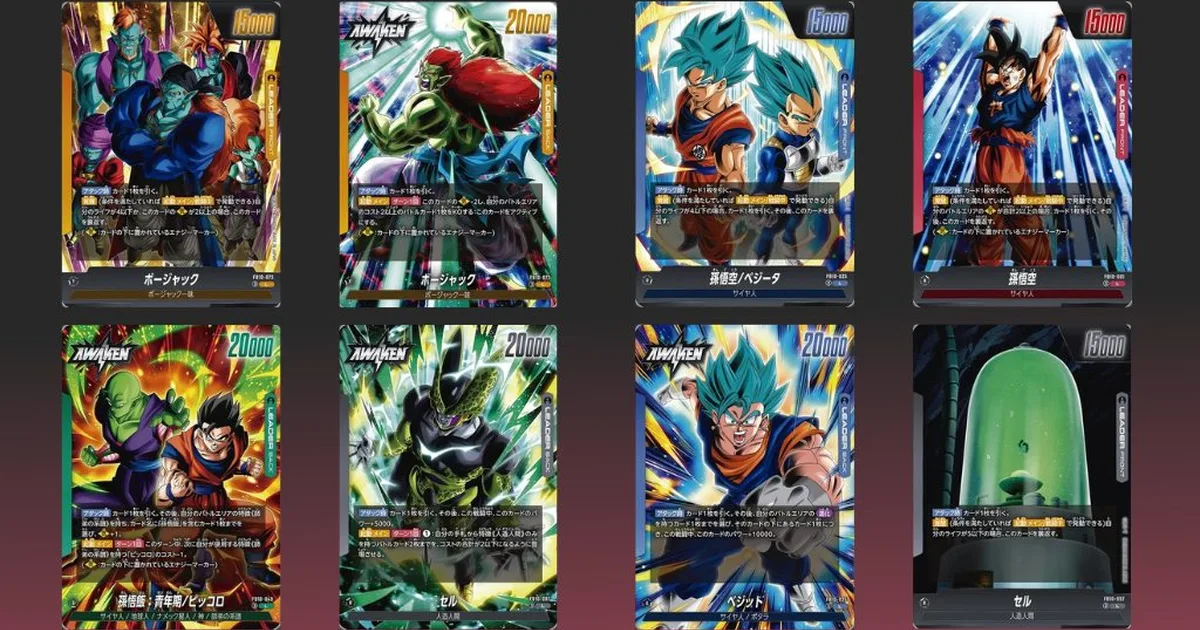
The Dragon Ball Fusion World FB10 tier list picture has started to clarify. Cross Force shipped five leaders across five colors, each with a distinct mechanic, and the early community consensus is settling around two leaders at the top with three sitting below them for different reasons. This breakdown covers where each FB10 leader stands right now, why they're placed there, and what to expect as the meta matures.
One note upfront: FB10 dropped June 12-13, 2026. This tier list originally reflected card analysis and early community reads rather than extensive tournament data. Update (2026-08-13): those early reads have since held up against six-plus weeks of tournament and community-reported results; see the "How to use this tier list" section below for the confirmed follow-up report.
TL;DR: Vegito (Blue, Evolve) and Gohan/Piccolo (Green, Master's Teachings) are the two S-tier leaders in FB10. Cell (Black, Android) is a consistent A-tier. Boujack (Yellow, aggro) and Son Goku Ki (Red) are B-tier for different reasons. Vegito rewards complex multi-action turns; Gohan rewards incremental resource building. Both are worth building around.
S-tier: Vegito (Blue), Gohan/Piccolo (Green) A-tier: Cell (Black) B-tier: Boujack (Yellow), Son Goku Ki (Red)
The gap between S and A isn't enormous, but Vegito and Gohan have mechanical advantages that make them harder to shut down than the rest of the format.
Vegito is the set's signature leader, and the mechanics justify the hype. The FB10 leaders guide has the full profile on each of the five leaders if you want to compare before building. He starts as Son Goku/Vegeta and evolves into Vegito when his Evolve condition is met. Once evolved, his stats jump and he gains the ability to look at the Blue cards stacked under him.
What makes this genuinely powerful: the SR Vegito card reads "choose up to 2 Blue cards under this card with a cost of 4 or less and activate their On Play skills at no skill cost." That means the cards you stacked to Evolve him don't disappear. They're still contributing effects after the evolution. You played those cards, they went under Vegito, and now Vegito is playing them again. That's two actions disguised as one, and the opponent has to hold enough response to answer both.
Blue's card pool in Fusion World generally contains efficient tempo plays and flexible On Play effects. Vegito turns each of those into potential double-activations. The cards that already made Blue strong individually become stronger when they're also fueling Vegito's Evolve replay.
The downside: Vegito's power is ceiling-dependent. You need the right Blue cards in hand and under him at the right time. Loose hands or poor sequencing limit the payoff significantly. He punishes good pilots and rewards bad ones less than Gohan does.
Gohan awakens as Son Gohan: Youth/Piccolo and advances to Son Gohan: Adolescence/Piccolo. The mechanic is a dual advantage system: Gohan cards gain +1 Ki during their attacks, and Piccolo cards cost less to play after the Awaken.
Neither of those effects looks flashy in isolation. Together they generate consistent pressure over multiple turns. The Ki bonus on Gohan attacks means those attacks keep accumulating resources while they're hitting. The Piccolo cost reduction means the support package gets cheaper the longer the game goes. It's a slow compounding advantage that most aggro decks can't race and most control decks can't outvalue.
The dual Awaken condition gives Green an unusual timing option. You can choose when to advance the Gohan leader based on what the board state needs rather than being forced into it. That flexibility matters in a format where the tempo of awakening determines a lot of mid-game outcomes.
Gohan is more forgiving than Vegito. The advantage he generates doesn't require perfect sequencing. You're just attacking with Gohan cards and playing Piccolo cards. The floor is higher even when you draw poorly.
GODEEPER: The full Vegito Evolve deck list, card counts, and turn-by-turn game plan are in the dedicated build guide. Dragon Ball Fusion World Vegito Deck Guide →
About the author

TCG Deck Analyst
Former card game tournament organiser turned analyst. Covers One Piece TCG meta, deck efficiency, and card valuation. Builds spreadsheets for decks most people just play.
Disclaimer
This article is published for informational and entertainment purposes. It does not constitute professional financial, legal, or technical advice. Game performance, online services, patch schedules, and store listings change. Verify critical details (pricing, system requirements, regional availability) with publishers and storefronts before you buy. Affiliate links, where present, help support our editorial work and are labelled in our affiliate disclosure.
Cell's leader ability provides +5,000 power when attacking and reduces the cost of Android cards. That second part is the key. Black in Fusion World already has a solid Android suite, and making those cards cheaper effectively gives Cell free mana ahead of the curve each turn.
The Cell SCR card reinforces this. It Evolves for 3 from a Cell at cost 4 or more, landing at cost 6 with 40,000 power, and carries Double Strike (2 damage instead of 1 on attack) plus Activate Battle, which recurs a Battle card from the Drop into a combo for each card in the Combo Area. That's efficient pressure at that cost, and the Drop recursion means Cell keeps generating value out of cards that would otherwise sit dead in the Drop.
Cell doesn't have the flashiest turns in the format. He doesn't generate multi-action effects like Vegito or build compounding resources like Gohan. What he does is play a clean, consistent game where every Android card costs slightly less than it should and his attacks come with a free power boost. Against strategies that want to control resources, that small discount per card adds up faster than expected.
The competitive case for Cell is that he's lower variance than either S-tier pick. Games with Vegito can fall apart when the Evolve chain doesn't come together. Cell rarely has those collapses. If you want something reliable that punishes opponents who overextend, Cell is the right choice at A-tier.
Boujack's kit is built around two separate effects, not one combined threat. On Play and When Attacking, he lets you play a card with a cost of 2 or less from hand for free, which is the actual source of his aggressive tempo. Separately, a Permanent skill lets him spend 1 Ki to KO his own Battle Card as a replacement effect right when it would otherwise be removed, a defensive save rather than a proactive board-clear. Yellow aggro needs those Ki markers for other plays, so holding one in reserve for the resilience trigger competes with everything else you want to do.
Boujack can absolutely win games and will spike some tournament finishes on the strength of the free-card engine. Yellow has historically been strong in Fusion World, and Boujack brings a new play pattern the format hasn't seen before. The B placement reflects that he's harder to sequence than the top two and that his resource spending doesn't compound the way Gohan's does. He's a skill-testing leader whose ceiling is high but whose floor is volatile. The full Boujack deck guide walks through the offense-versus-defense Ki tension in more depth, including matchup-specific notes.
The Red Goku leader awakens when 2 or more Ki are in the Battle Area and gains +10,000 power on attack while awakened. That's a straightforward Ki payoff condition and a meaningful power bump once active. The problem is that Vegito exists at the same time.
Goku Ki isn't bad. He's direct, he's easy to understand, and +10,000 power on attack is a real game-swinger if the opponent isn't prepared. For new players, he's the best entry point into FB10 because the game plan is clear: accumulate Ki, awaken, attack with big numbers. The deck doesn't punish imperfect play the way Vegito does. To see what the ceiling looks like by comparison, the Vegito deck guide linked above shows how a high-complexity Evolve list is actually built.
At a competitive level, Goku Ki runs into the same issue most "straightforward" leaders face: the experienced opponents know exactly what you're doing and can plan around it. Vegito's multi-action turns are harder to predict. Gohan's advantage builds in ways that are hard to race. Goku Ki's plan is visible from turn 1, which gives the opponent more time to prepare.
That said, the first regional-level results are starting to complicate this read. At Gametrade Distribuzione's Italy Regionals, an FB10-format event tracked by Egman Events, Goku decks placed both first and second, with a Vegito build taking third. One regional isn't a large enough sample to move Goku Ki up a tier by itself, but it's evidence the "easy to play around" read on paper hasn't fully held up against real bracket pressure yet. The full Goku Ki deck guide covers how to actually pilot it, including the Super Genki-Dama Triple Strike line.
GODEEPER: A full breakdown of how Ki works, when to accumulate vs spend, and what Ki leaders actually want from their draws. Dragon Ball Fusion World Ki Mechanic Explained →
FB10 Cross Force disrupted Fusion World more than most sets. Previous sets introduced new leaders within familiar mechanical frameworks. Cross Force introduced two entirely new systems, Evolve and Ki, that require different deck construction logic than what came before.
The FB10 Cross Force full set guide covers the card pool in detail, but the meta impact is worth stating here: Evolve decks and Ki decks don't interact with the board the same way as earlier Fusion World decks. They require different counter strategies. That learning curve is one reason the tier list will shift as more games are played. Players who spent months learning how to beat Red Goku aggro now face a Blue Vegito that plays completely differently.
For returning players from earlier sets, the adjustment period is real. For new players entering at FB10, the format is cleaner. These five leaders are the baseline, and there's no existing meta baggage to sort through.
S-tier is where to start if your goal is winning consistently. Both Vegito and Gohan have strong matchups into most of what the format can throw at them. A-tier Cell is a solid choice if you prefer consistency over ceiling. B-tier leaders are viable picks at local events and can win with good pilot skill, but they'll face tougher matchups in a wide-open field.
Update (2026-08-13): this tier list has been confirmed rather than overturned. The FB10 July meta report, built on six-plus weeks of tournament and community-reported results, backs the same structure: Vegito and Gohan/Piccolo remain the two decks to beat, Cell held A-tier, and Boujack and Son Goku Ki stayed B-tier. The one wrinkle is the Italy regional noted above, where Son Goku decks took first and second (Vegito third), a data point worth watching rather than a tier-moving result on its own. FB11 ("Brightness of Hope") doesn't arrive until October 16, 2026, so this FB10 hierarchy remains the current Standard picture for now.
What is the best leader in Dragon Ball Fusion World FB10? Vegito (FB10-025, Blue) is the community's early top pick. His Evolve mechanic replays On Play skills of Blue cards under him, making each Evolve activation worth significantly more than a standard leader flip. Gohan/Piccolo (FB10-049, Green) is equally strong with a more consistent, compounding game plan.
How many leaders are in FB10? Five: Son Goku (Red, Ki), Vegito (Blue, Evolve), Gohan/Piccolo (Green, Master's Teachings), Boujack (Yellow, aggro), and Cell (Black, Android). Each has an Alt-Art version, and Vegito, Gohan/Piccolo, and Cell also have SCR versions.
Is Cell good in FB10? Yes, Cell is a consistent A-tier leader. Android cost reduction plus +5,000 power on attack adds up each turn. The Cell SCR Evolves into Double Strike and Drop recursion through Activate Battle, which is strong at its cost. Cell is more reliable than explosive.
Is Boujack a good leader? B-tier. His On Play and When Attacking skills give him a free cost-2-or-less card play, and a separate 1-Ki Permanent skill lets him KO his own Battle Card as a defensive save rather than a proactive removal tool. He can spike tournament finishes but is harder to pilot correctly than the S-tier picks.
Should I build Vegito or Gohan first? Vegito if you enjoy complex sequencing and maximizing each turn. Gohan if you prefer a steadier game plan where advantage builds passively. Both are S-tier for different play styles.
Is this tier list for JP or EN? Both. The card content is identical between JP and EN versions. Rankings apply equally to both regions.
When will this tier list update? It already has, informally: the follow-up FB10 July meta report checked these placements against six-plus weeks of tournament and community data and confirmed the same structure. The next real reset is FB11 (Brightness of Hope), releasing October 16, 2026.
Related
Best TCG Dice and Counters 2026: What You Actually Need
12 min read
Union Arena Bleach Ichigo Deck Guide: Purple Build 2026
8 min read
Best Deck Boxes for TCG Storage in 2026: Full Buying Guide
13 min read
Best TCG Playmats 2026: Stitched Edge Buying Guide
10 min read
Best TCG Binders and Portfolios 2026: Side-Load Guide
11 min read