Loading…
Shonen TCG · Guides
Dragon Ball Fusion World Guide 2026: How to Play, FB10
Dragon Ball Fusion World guide for 2026 covers how to play, the energy and combo system, leaders, colors, and the new FB10 Cross Force set for beginners.

Reviewing
Dragon Ball Super Card Game Fusion World
If you want one place to learn the game, this Dragon Ball Fusion World guide covers how to play, the energy and combo systems that make it tick, the Leader colors, and the new FB10 Cross Force set. Dragon Ball Fusion World is Bandai's dedicated Dragon Ball trading card game, where you battle one on one with a Leader-led deck and win by reducing your opponent's Life to zero.
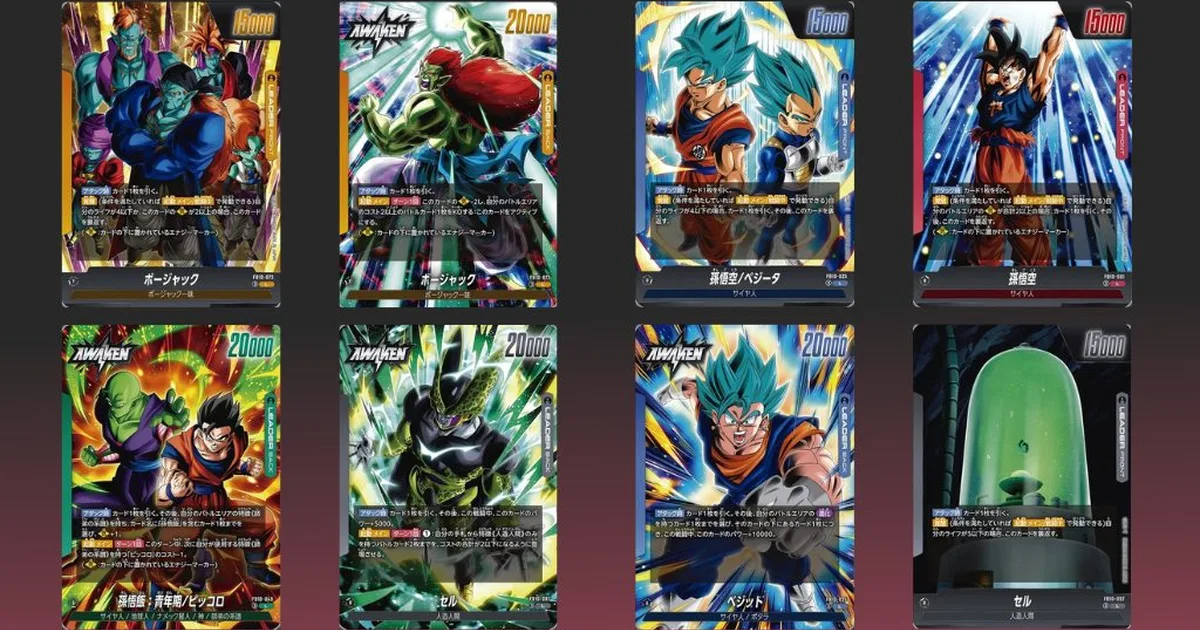
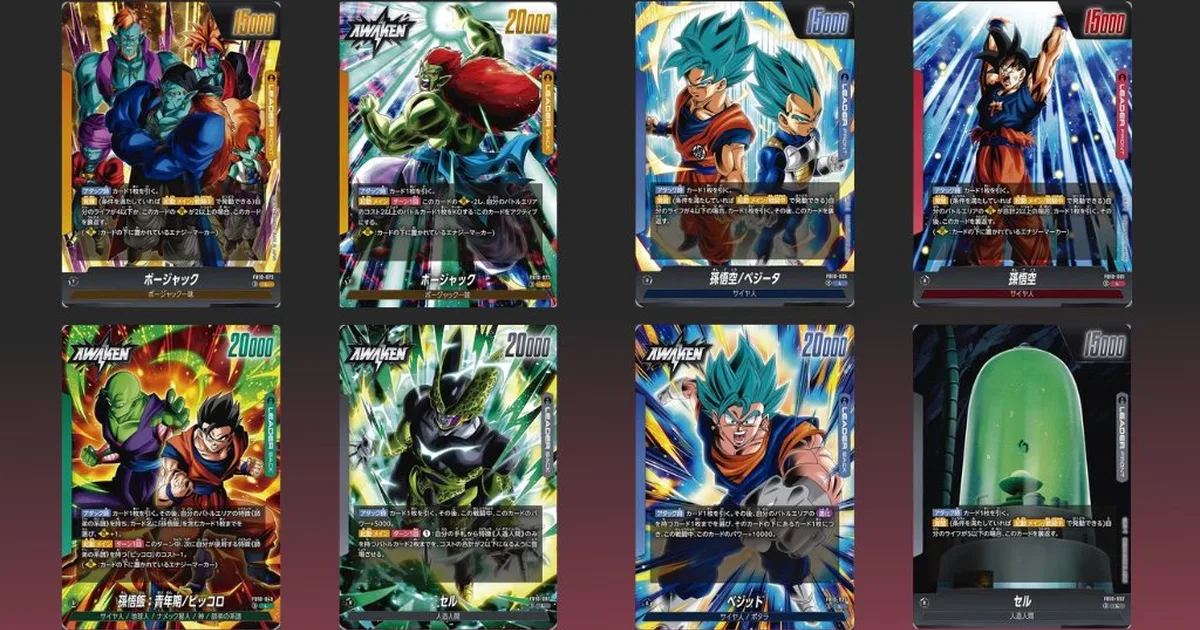
TL;DR: Dragon Ball Fusion World is a fast one-on-one card battler. You charge energy each turn, play Battle and Extra cards, attack with your characters and Leader, and win by dropping the opponent's Life to zero. The signature mechanics are the Combo system (boost power mid-battle from hand) and Leader Awakening (flip to a stronger side at half Life). Colors are red, blue, green, yellow, and black. The current set is FB10 Cross Force (released June 12, 2026 EN, 123 cards, 5 leaders including Vegito, Gohan, and Cell).
Key Takeaways
- You win by reducing the opponent's Leader Life to zero.
- Each turn has three phases: Charge, Main, and Offense.
- Energy is built by placing one card per turn into your Energy area.
- The Combo system lets you boost a battle from your hand; Awakening flips your Leader at half Life.
- Colors are red, blue, green, yellow, and black, each with its own identity.
- The current set is FB10 Cross Force, released June 12, 2026 (EN) / June 13 (JP), and has been live for several weeks now.
- The next set, FB11 Brightness of Hope, is officially confirmed for October 16, 2026, with all five leaders now revealed.
What is Dragon Ball Super Card Game Fusion World? (Overview)
Dragon Ball Super Card Game Fusion World is Bandai's dedicated Dragon Ball TCG, built for fast, aggressive one-on-one games. You bring a deck led by a Leader card, and the entire game is a race to knock out the other Leader. It is the modern flagship Dragon Ball card game and has grown quickly thanks to a low barrier to entry, a digital client, and a steady release schedule.
The appeal is that it captures the feel of a Dragon Ball fight: you charge up energy, swing for big numbers, and pull off comeback moments when your back is against the wall. If you are comparing card games before you commit, our Union Arena vs Dragon Ball comparison digs into how it differs from Union Arena specifically. For a direct comparison with One Piece TCG on cost, complexity, and competitive scene, see the Dragon Ball Fusion World vs One Piece TCG guide.
How to Play Fusion World
The rules are quick to learn, which is a big part of the game's appeal. Here is the full loop.
The goal. Reduce your opponent's Leader Life to zero. Your Leader sits on the field with a stack of Life cards, and damage that reaches the Leader strips Life away.
Setup. Each player puts their Leader into play, draws six cards, and may mulligan once by shuffling those six back and drawing six fresh cards. Then the game begins.
The three phases. Every turn moves through three phases in order:
- Charge Phase. You may place one card from your hand into your Energy area. Any card works, and it immediately counts as one energy. You can skip it, but you cannot place two in a turn, so charging every turn is usually correct.
- Main Phase. You spend energy (by resting it) to play Battle cards and Extra cards, and to activate abilities. This is where you build your board.
- Offense Phase. You attack with your ready characters and your Leader, targeting the opponent's characters or their Leader directly.
Energy. Energy is your resource. Each card in your Energy area provides one energy, and you pay costs by resting energy cards. Because you can feed any card into energy, you are constantly deciding whether a card is more valuable as a play or as fuel, which is the central tension of deck building.
Card types. Decks use two kinds of cards. Battle cards are the characters you send into combat. Extra cards are spells and support effects that swing the board. Your Leader counts as a Battle card too, since it can attack and be attacked.
A worked early turn. On turn one you charge one card into energy, then in the Main Phase you usually play a cheap Battle card and pass, since you only have one energy to spend. On turn two you charge again for two energy, play a slightly bigger character or a one-cost card plus an Extra, and in the Offense Phase you make your first attack, often with your Leader for guaranteed damage. By turn three the real decisions start: with three energy you can develop a threat, attack into the opponent's board, and still hold a card or two in hand for the Combo Area if they swing back. New players spend everything every turn and get punished in combat; the better habit is to leave yourself combo fuel whenever a counterattack is coming.
The Combo System
The combo system is what makes Fusion World combat feel like a real exchange rather than a coin flip. When a battle happens, either player can play Battle cards from their hand into the Combo Area to add that card's Combo Power to their attacker or blocker. So a clash is not just the printed numbers; it is the printed numbers plus whatever each player is willing to commit from hand.
This creates constant bluffing and resource tension. Do you over-commit cards to win this battle, or hold them for later? Cards used in the Combo Area go to the Drop Area afterward, so every combo is a real cost. Learning to read when your opponent is likely to combo, and when they are tapped out, is the single biggest skill jump in the game.
GODEEPER: New to card games entirely and want to see how a leader-and-life system compares elsewhere? Our One Piece beginner guide covers a similar structure. One Piece TCG Beginner Guide →
Leader Awakening
Awakening is Fusion World's comeback mechanic. Once you have lost half of your Life (down to four Life cards), you can flip your Leader card to its Awakened side. The Awakened Leader is a stronger version, usually with higher power and a new or upgraded ability.
The design is clever because it turns taking damage into a resource. A player who is behind on Life is closer to a more powerful Leader, so the game rarely feels decided until it actually is. Good players plan around their Awakening turn, sequencing their attacks and combos so that flipping the Leader swings the game at the exact moment it matters.
Leaders and Deck Building
Every Fusion World deck is built around a single Leader, and that choice shapes everything else. The Leader sets your color, provides an ability, and is your win-or-lose anchor on the board. Around it you build a deck of Battle and Extra cards that support the Leader's plan.
Deck building comes down to a few questions. What is your color and its identity? What is your curve, meaning how your energy costs are spread so you can act on every turn? And how much of your deck is dedicated to Battle cards you can also feed into the Combo Area when you need power in a pinch? Because any card can become energy, consistency matters more than raw power level, especially for newer players.
The four pre-constructed starter decks (Goku, Vegeta, Broly, and Frieza) are the recommended starting point. Each is a ready-to-play Leader deck that teaches one color's style, and they are far cheaper than chasing singles before you know what you like.
- Dragon Ball Fusion World FB10 Leaders: All 5 Explained: deep breakdown of Vegito Evolve, Gohan Ki dual Awaken, and Cell villain Evolve. Pick whichever leader fits your playstyle and build that one first.
- Dragon Ball Fusion World Vegito Deck: Build Guide 2026: how to build the Blue Evolve deck around Vegito, including the carry-forward energy math that makes Evolve chains resource-efficient.
- Dragon Ball Fusion World Evolve Mechanic Explained: step-by-step breakdown of how Evolve works, why it's resource-efficient, and when the vulnerability window matters.
- Dragon Ball Fusion World Best Leaders FB10: All 5 Ranked: all five Cross Force leaders ranked by tier, ease of play, and meta potential, with a beginner recommendation for each.
- FB10 Son Goku Ki Deck Guide: The Beginner-Friendly Build: the simplest deck to pilot in FB10, and the cheapest competitively viable build in the set.
- FB10 Boujack Deck Guide: The Yellow Aggro Ki Build: the week-one hype pick that cooled to B-tier, and why it still wins at locals.
- Dragon Ball Fusion World FB11 Leaders: All 5 Revealed: full confirmed card text for Son Goku, Trunks/Gohan/Trunks Future, Goku Black, Shallot, and Bardock ahead of the October 16 release.
Colors and Archetypes
Fusion World launched with four Leader colors, each tied to a starter and a play identity, with a fifth added later:
- Red (Goku): aggressive, board-focused beatdown that pushes damage fast.
- Blue (Vegeta): control and tempo, with answers and efficient trades.
- Green (Broly): disruption and resource denial, slowing the opponent down.
- Yellow (Frieza): value and removal, grinding advantage over time.
- Black: added in later sets, leaning into its own mix of aggression and disruption.
As with most card games, the strongest decks pair a Leader's color identity with cards that reinforce one clear plan. Do not try to do everything; pick a Leader whose style you enjoy and build toward its strength.
- Dragon Ball Fusion World FB10 Tier List: 5 Leaders Ranked: where each of the five FB10 Cross Force leaders sits in the early post-launch meta, with mechanical reasoning for every tier placement.
FB10 Cross Force Set Guide
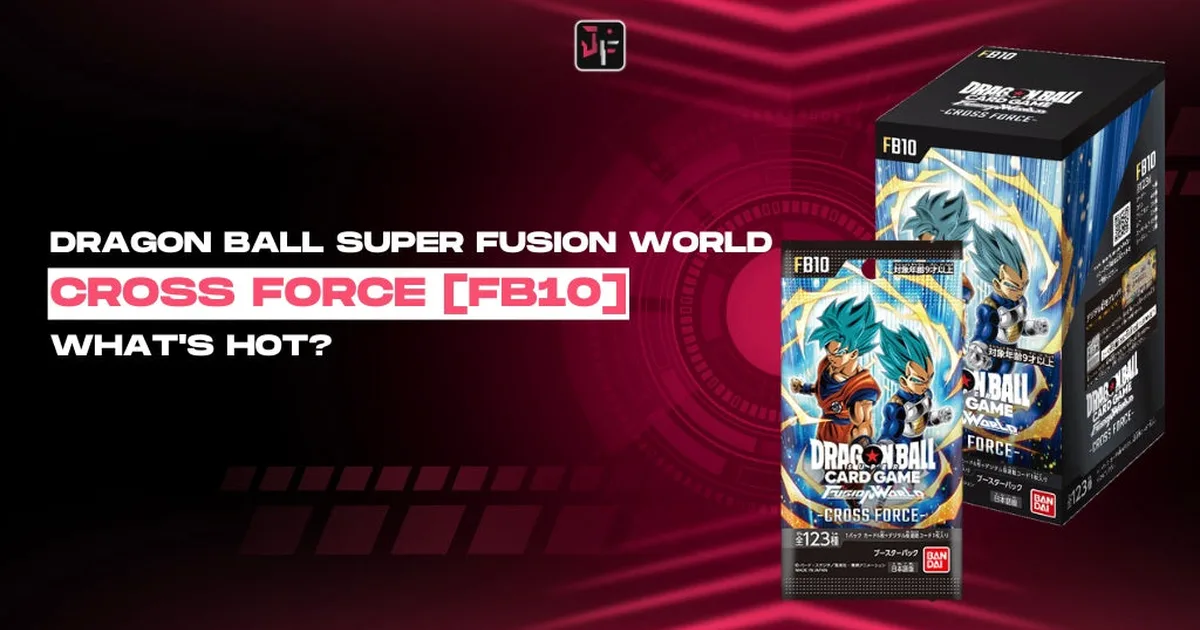
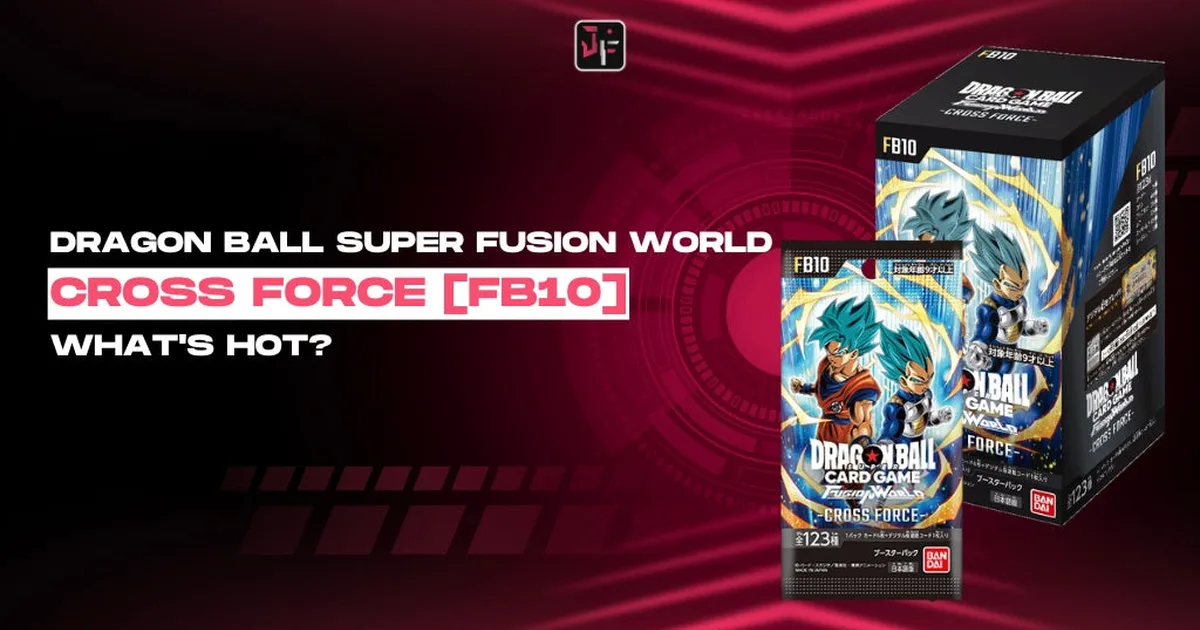
The current set is FB10 Cross Force, released June 12, 2026 in English (June 13 in Japan). It contains 123 cards and follows the standard Fusion World product structure: an English box holds 24 booster packs of 12 cards each plus a digital version serial code for the online client (Japanese packs contain 6 cards each). The set features a Son Goku Leader among its headline cards, alongside Vegito, Gohan, Boujack, and Cell.
As a new-set buyer, the usual advice applies. If you want to play, a box plus a few targeted singles for your chosen Leader is more efficient than chasing chase cards. If you collect, the special-rarity and alternate-art cards are the long-term value. Because card text and prices firm up in the first weeks after release, confirm the latest details against the official list before making big purchases.
It is also worth understanding what a new set does to the wider game. Each Fusion World release adds new Leaders, new Battle and Extra cards, and often new tools for an existing color, which reshapes which decks are strong. A set like Cross Force can lift an underused color into contention or hand the current best deck an even better card, so the meta is never static for long. For a new player, this is good news: there is always a fresh, affordable deck worth learning, and you are never locked out of competing just because you missed an earlier set. The practical move around any launch is to wait a week or two for prices and decklists to settle, then buy into whatever the data shows is both strong and within your budget, rather than gambling on hype in the first few days.
- Dragon Ball Fusion World FB10 Cross Force: Set Guide 2026: complete breakdown of all 123 cards, 5 leaders, 3 SCR pulls, and the Evolve and Ki mechanics in the June 2026 set.
- Dragon Ball Fusion World FB10 Meta Report: 6 Weeks In: where the FB10 settled meta stands at week 6 with Vegito S-tier, Cell rising, and SCR price update.
Best Cards to Pull
Value in a Fusion World set concentrates in a few places: the alternate-art and special-rarity versions of the set's signature Leaders and characters. For FB10 Cross Force, the Goku Leader and the headline reveals are the cards most likely to hold demand, since first-appearance and fan-favorite cards drive the secondary market in every Dragon Ball product. The practical rule is that playable chase cards (ones that are both rare and good in the meta) hold value best, while cards that are only rare tend to settle. Verify current prices on the open market before treating any single as an investment.
- Dragon Ball Fusion World FB10 Best Cards to Pull 2026: Vegito, Son Gohan: Childhood, and Cell SCRs ranked by competitive fit and collector value, with timing advice for the EN launch.
- Dragon Ball Fusion World FB10 SCR Price Guide 2026: verified secondary-market price ranges for all three FB10 SCR leaders.
- Dragon Ball Fusion World FB10 SCR Cards: All 3 Explained: Collector guide to Vegito, Gohan, and Cell SCRs with artwork breakdown, Super Alt-Art differences, and value context.
- Dragon Ball Fusion World Most Expensive Cards (2026): The all-time price ranking across all 10 sets, led by FB09 Dual Evolution's Gogeta chase, not FB10.
Common Beginner Mistakes
A few errors show up in almost every new player's first games, and fixing them is the fastest way to improve.
- Not charging every turn. Skipping your Charge Phase to hold a card slows your energy and falls behind on tempo. Unless you have a specific reason, charge every turn.
- Emptying your hand into the board. If you commit everything in the Main Phase, you have no Combo cards left to win battles, and a single well-timed attack can blow you out. Hold combo fuel when a counter is likely.
- Awakening too early or too late. Awakening at half Life is powerful, but flipping the moment you can is not always right. Plan the turn where the Awakened Leader's stats or ability actually swing a battle, not just the first turn it is legal.
- Ignoring the Leader as an attacker. Your Leader can attack too, and its guaranteed damage adds up fast. Beginners leave it back when it could be chipping Life every turn.
- Buying singles before a starter. The Goku, Vegeta, Broly, and Frieza starter decks teach the game cheaply. Learn with one before spending on chase cards.
Most of these come down to the same lesson: Fusion World rewards patience with your resources. The players who win are not the ones who do the most each turn, they are the ones who keep just enough back to win the fights that matter.
All Dragon Ball Fusion World Guides
This Dragon Ball Fusion World guide is the hub for our coverage. As we publish deeper guides on leaders, colors, the FB10 set, and deck building, they will be linked here so you can move from beginner to competitive in order. Start with these:
- Dragon Ball Fusion World Beginner Guide: a friendly first walkthrough of the game and its products.
- Dragon Ball Fusion World Starter Decks: Which to Buy in 2026: all five starter decks ranked by playstyle and meta relevance, including FS10 Giblet and the fastest path into Cross Force.
- Best Anime TCG to Play in 2026: where Fusion World sits among the major card games.
- Dragon Ball Fusion World Ki Mechanic Explained 2026: how Ki markers accumulate and concentrate, Gohan's dual Awaken condition, and when Ki decks beat Evolve in FB10 matchups.
- Dragon Ball Super Fusion World vs Pokemon TCG 2026: how Fusion World compares to Pokemon on cost, gameplay depth, card pool size, and which to pick as your main game.
- FB10 Gohan Deck Guide: Master's Teachings in Cross Force: Gohan's Awakening via Piccolo Drop, post-Awakening cost reduction strategy, and 50-card list with matchup notes.
- Dragon Ball Fusion World Tier List: June 2026 FB10: Vegito, Gohan, and Cell ranked by meta tier with matchup reasoning two weeks into FB10.
- Dragon Ball Fusion World Cell Deck Guide: FB10 BIO 2026: Cell's Android trait engine, Evolve game plan, cost-1 Cell trick, and matchup spread against Vegito and Gohan.
- Dragon Ball Fusion World FB10 Where to Buy Guide 2026: booster box vs singles breakdown, current price data, JP import options, and which retailers have stock.
- Dragon Ball Fusion World Energy Guide: Master Your Turns: how the energy system works, the charge phase decision, and how to optimize your energy curve every game.
- Dragon Ball Fusion World Best Cards for Beginners 2026: which cards to target first, why starter decks are the right starting point, and what to skip until you know your Leader.
- Dragon Ball Fusion World July Meta: 4-Week Breakdown: how the FB10 counter-meta developed, which leaders gained ground on Vegito, and what to expect going into late July.
- Dragon Ball Fusion World Vegito Guide FB10 Meta 2026: why Vegito is S-tier, how Potara Fusion and Evolve chain together, and the winning lines against Gohan and Cell.
- Dragon Ball Fusion World Standard Format Guide 2026: which sets are legal, deck construction rules, and how the open format shapes what cards are worth investing in.
- Dragon Ball Fusion World FB10 Format and Rotation Guide: which sets are in Standard with FB10, what rotation means for your collection, and how to build for competitive play.
- Dragon Ball Fusion World FB11: What We Know (Oct 2026): Brightness of Hope, the Shallot/Giblet/Shallet leader reveal, 123 cards, and release details for the October 16, 2026 EN release.
- Dragon Ball Fusion World Story Booster 01: New Leaders: the first story-driven Fusion World booster, three new Majin Buu Saga leaders, and full-foil collector treatment for the August 21, 2026 EN release.
- Dragon Ball Fusion World Card Grading Guide 2026: PSA vs CGC cost math for this game specifically, and which chase cards actually clear the grading floor.
Related Reading
- Dragon Ball Fusion World FB10 July Meta Report: how the FB10 format looked heading into August, with per-leader placement notes.
Frequently Asked Questions
How do you win in Dragon Ball Fusion World? You win by reducing your opponent's Leader Life to zero. Each Leader starts with Life cards, and attacks that connect with the Leader remove Life. When the last Life card is gone and the Leader takes another hit, that player loses.
What is the combo system in Fusion World? During battle, you can play Battle cards from your hand into the Combo Area to add their Combo Power to an attacker or blocker. It is the core of combat math: you boost power on the fly to win a clash or survive one. Comboed cards go to the Drop Area after the battle.
What is Leader Awakening? Once you have lost half your Life (down to four Life cards), you can flip your Leader to its Awakened side, which is a stronger version with new abilities. Awakening is a comeback mechanic that rewards trading Life for power at the right moment.
What colors are in Dragon Ball Fusion World? The launch leaders introduced four colors, red (Goku), blue (Vegeta), green (Broly), and yellow (Frieza), with black added in later sets. Each color has its own play identity, and decks are built around a Leader of one color.
What is FB10 Cross Force? FB10 Cross Force is the current Fusion World set, released June 12, 2026 in English (June 13 in Japan). It contains 123 cards, features a Son Goku Leader, and comes in boxes of 24 packs, 12 cards per pack for English (6 per pack in Japanese) plus a digital serial code per pack.
Is Dragon Ball Fusion World good for beginners? Yes. The win condition is simple, games are fast, and four pre-constructed starter decks (Goku, Vegeta, Broly, Frieza) teach the rules with ready-to-play lists. The depth comes from energy management and the combo system, which you learn as you play.
When is the next Dragon Ball Fusion World set after FB10? FB11 Brightness of Hope is confirmed for October 16, 2026, Bandai's official product page and verified account both list the date. The first leader, a Shallot/Giblet/Shallet fusion, is already revealed, with more spoilers expected as launch nears.
References
About the author
KT
Competitive TCG Analyst
Competitive One Piece TCG player and deck builder with 3 years of tournament experience. Covers meta analysis, tier lists, and leader builds.
- 3 years competitive OPTCG tournament experience
- Regional top 8 finisher
- Deck builder and meta analyst
- Covers every set since OP-01
Disclaimer
This article is published for informational and entertainment purposes. It does not constitute professional financial, legal, or technical advice. Game performance, online services, patch schedules, and store listings change. Verify critical details (pricing, system requirements, regional availability) with publishers and storefronts before you buy. Affiliate links, where present, help support our editorial work and are labelled in our affiliate disclosure.