Loading…


Shonen TCG · Guides
Dragon Ball Fusion World Starter Decks: Which to Buy in 2026
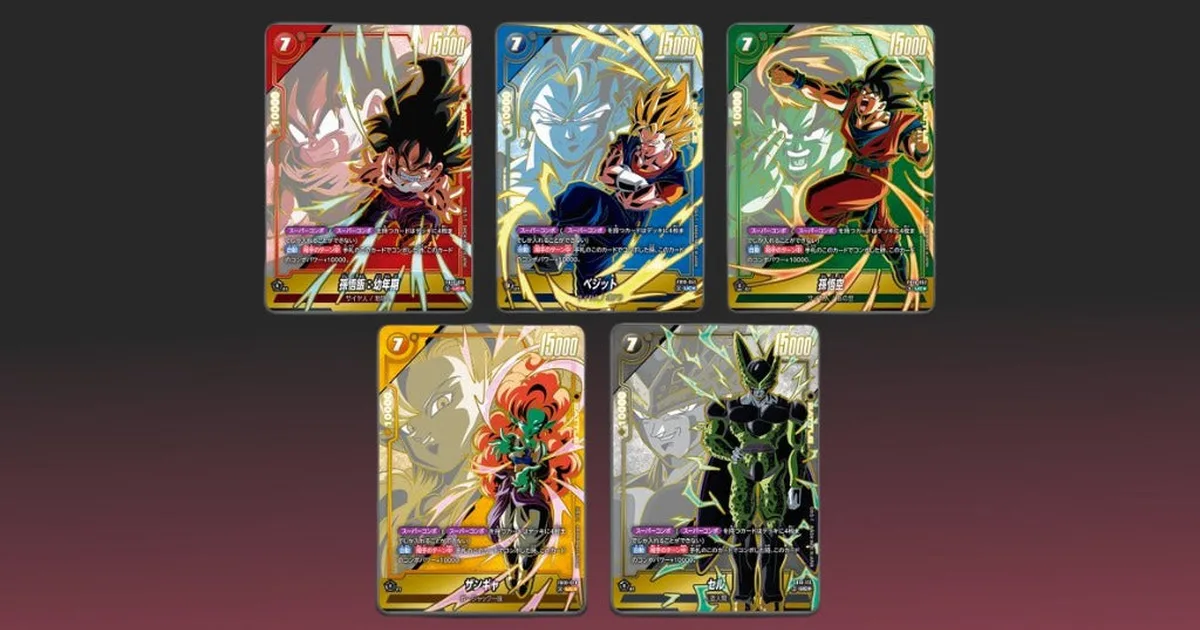
Choosing between Dragon Ball Fusion World starter decks is the first real decision a new player makes, and getting it right saves you money and gets you playing faster. If you've been sitting on the fence about getting into Dragon Ball Super Card Game Fusion World, the starter decks are still the right first move. There are five of them across different price points and playstyles, and picking the wrong one won't ruin you, but picking the right one gets you playing faster and spending less. For a comparison of Dragon Ball Fusion World against the other major TCGs, see the Dragon Ball Fusion World vs One Piece TCG guide or the Dragon Ball Fusion World vs Pokemon TCG breakdown for a direct comparison on cost and gameplay depth.
TL;DR: There are four original Dragon Ball Fusion World starter decks (FS01-FS04) and one premium collab starter (FS10 Giblet). For 2026, FS02 Blue Vegeta is the best entry point if you want to prep for the current Cross Force meta, since Blue is the dominant color with Vegito leading the charge. FS01 Red Goku is the easiest learning deck if you prefer aggro. FS10 is for collectors and Dragon Ball Legends fans. No FB10 Cross Force starter deck was released, so you'll build on top of these originals.
Which Dragon Ball Fusion World starter deck should you buy? (quick answer)
Buy FS02 Blue Vegeta if you want to play in 2026. Blue is the best color right now, and FB10 Cross Force's headline leader, Vegito, is a Blue Evolve deck. Starting with FS02 means you're learning the exact card mechanics you'll use when you upgrade. If you'd rather go face and keep things simple, FS01 Red Goku is more your speed. It's pure aggro, minimal read-the-room decisions.
Skip FS10 Giblet as your first deck unless you're a Dragon Ball Legends fan or primarily a collector. The premium foiling is genuinely nice, but you'll pay more for it, and the collab roster doesn't map as cleanly onto the current competitive meta as the original four do.
The 4 original starter decks: what each teaches you
Fusion World launched with four starter decks, each one color-coded to a different Saiyan saga icon. At around $15-20 each, they're still the most accessible way in. What matters isn't just who's on the box, it's what the deck teaches you about how the game works. Each one drills a different core mechanic hard.
They're 50 cards apiece, built around a leader card with a front and back side. Every game starts with your leader at 1 energy, and you'll flip them partway through as your situation changes. The starters simplify this loop for new players by leaning heavily into one or two mechanics rather than mixing everything at once. That's intentional, and it's why starting here beats buying random boosters.
The Dragon Ball Fusion World complete guide covers the rules in detail if you haven't looked at those yet.
GODEEPER: New to Fusion World rules? Dragon Ball Super Card Game Fusion World Beginner Guide →
 The four original Fusion World starter decks remain the standard entry point, since no dedicated FB10 Cross Force starter was ever released.
Red Goku (FS01): best for aggressive players
Red is the aggro color, and Goku is the face of the franchise for a reason. FS01 leans into Rush-focused gameplay, which means you're putting cards into the battle area fast and attacking early. A lot of new players prefer this because there's less calculation involved. You see an opening, you take it.
What FS01 teaches: board presence, when to commit units to battle, and how to read your opponent's energy for attack windows. These are basic skills that apply to every color, but Red drills them through repetition because you're almost always the one attacking.
The downside is that Red doesn't have the same ceiling in 2026 meta play. FB10 hasn't given Red a breakout leader the way Blue got Vegito. That might change in future sets, but right now, FS01 is a fantastic learning deck that doesn't directly pipeline into a tier-one upgrade path. That's fine for casual play, less ideal if you want to compete at local level soon.
Blue Vegeta (FS02): best for 2026 meta prep
Blue is where you want to be in Cross Force, and FS02 Vegeta is the cleanest on-ramp into it. Blue plays tempo and combo. You're managing your hand size, sequencing your plays, and using counter effects during your opponent's turn. It takes a bit more reading than Red, but the payoff is a style of play that stays competitive.
The connection to FB10 is direct. Vegito, the current meta leader, runs a Blue Evolve strategy. When you've spent time with FS02 understanding how Blue energy works and when to hold counters, upgrading to a Vegito build is a logical next step rather than a complete restart. You're not relearning fundamentals; you're building on them.
FS02 also holds its own at kitchen table games. Vegeta's control elements give you more tools to work with late-game compared to Red's all-in style. If you enjoy making your opponent react to you rather than the other way around, this is the deck.
Green Broly (FS03): best for midrange players
Broly is where the midrange players land. FS03 doesn't go as wide as Red or play as reactive as Blue. It plays threats: big bodies with real power that pressure the opponent to answer or lose. Green's flavor is about sticking units and forcing trades that favor you.
What FS03 teaches is battle math: knowing when your unit wins a trade, when to set up a double-blocker, and how to turn power advantages into wins over multiple turns. These are skills that transfer to every color but are clearest in Green because the deck doesn't have many escape hatches. You win through pressure, not tricks.
For FB10, Green's closest upgrade path goes through the Gohan Ki mechanic. Ki is a new resource introduced in Cross Force, and the FB10 leaders guide explains which Cross Force leaders fit Green and Yellow starters best. Not a perfect overlap, but better than starting completely blind.
 At $15-20 MSRP, the starters are the cheapest entry point to Fusion World before building into a meta deck.
Yellow Frieza (FS04): best for control players
Frieza is for players who enjoy winning on their terms. Yellow's identity is strategic control with revival mechanics. You're letting the opponent overextend, answering their threats with removal and negation, and bringing back key pieces you've lost. The game state is always something you're trying to manage rather than race.
FS04 teaches you patience, card economy, and the value of responding at the right time. If you come from other TCGs and you've played control archetypes before, Yellow will feel natural fast. If this is your first card game, the learning curve is steeper because you need to read the board state without panicking when you're behind on damage.
In terms of 2026 meta relevance, Yellow has pieces worth knowing. Revival effects in particular are a mechanic that shows up in stronger builds across different sets. The starter won't have the power level of a tuned deck, but it'll develop instincts that age well.
GODEEPER: Ready to add FB10 cards to your starter deck? Dragon Ball Fusion World FB10 Cross Force: Set Guide 2026 →
FS10 Giblet: the premium collab starter
FS10 hit shelves on June 13, 2025 as a Dragon Ball Legends collab deck, and it's a different kind of product from the four originals. Every card in the 50-card deck has a silver holographic foil finish, so the table presence is legitimately eye-catching. You also get 4 Super Rare cards instead of the standard 2, and a Bonus Pack that can contain Alt-Art chase cards: Broly: BR AA, Goku Black AA, or Shallet AA.
The deck features Giblet (the mysterious twin of Shallot from Dragon Ball Legends), Goku Black, Broly: BR, and Shallet. If those names hit for you, FS10 makes a lot of sense. If you don't have that Legends connection, you're paying a premium for presentation over the base starters.
Where to get it: GameStop, Game Nerdz, Black Knight Games, and the official Bandai site carry it. Expect to pay more than the $15-20 range of the originals.
As a pure learning tool, FS10 isn't as clean as FS01-FS04. The Legends characters are cool but niche, and the deck's construction prioritizes thematic cohesion over teaching fundamentals. Experienced players who want to expand their collection will appreciate it more than total beginners.
Step-by-Step: How to Pick Your Starter Deck
Work through these questions in order and you'll land on the right starter deck without overthinking it.
1. Set your budget. If you're spending under $20, stick to the four original starters (FS01-FS04). If you're open to paying more for premium silver foiling and Bonus Pack chase cards, FS10 Giblet becomes worth considering.
2. Decide if you're chasing competitive play. If you want to compete at locals or online ranked soon, buy FS02 Blue Vegeta. The Blue fundamentals it teaches carry directly into the Vegito Evolve decks running the Cross Force format, though you'll still need FB10 singles or boosters to finish the build.
3. Match the deck to your playstyle if you're playing casually. Red Goku rewards aggressive rushing, Green Broly rewards midrange pressure and battle math, and Yellow Frieza rewards patient control and revival plays. Pick whichever fits how you like to play, not just your favorite character. You can always buy a second starter later.
4. Check whether you're a Dragon Ball Legends fan. If Giblet, Goku Black, Broly: BR, or Shallet mean something to you, FS10 has value beyond gameplay. If those names don't land, save the money and start with one of the four originals instead.
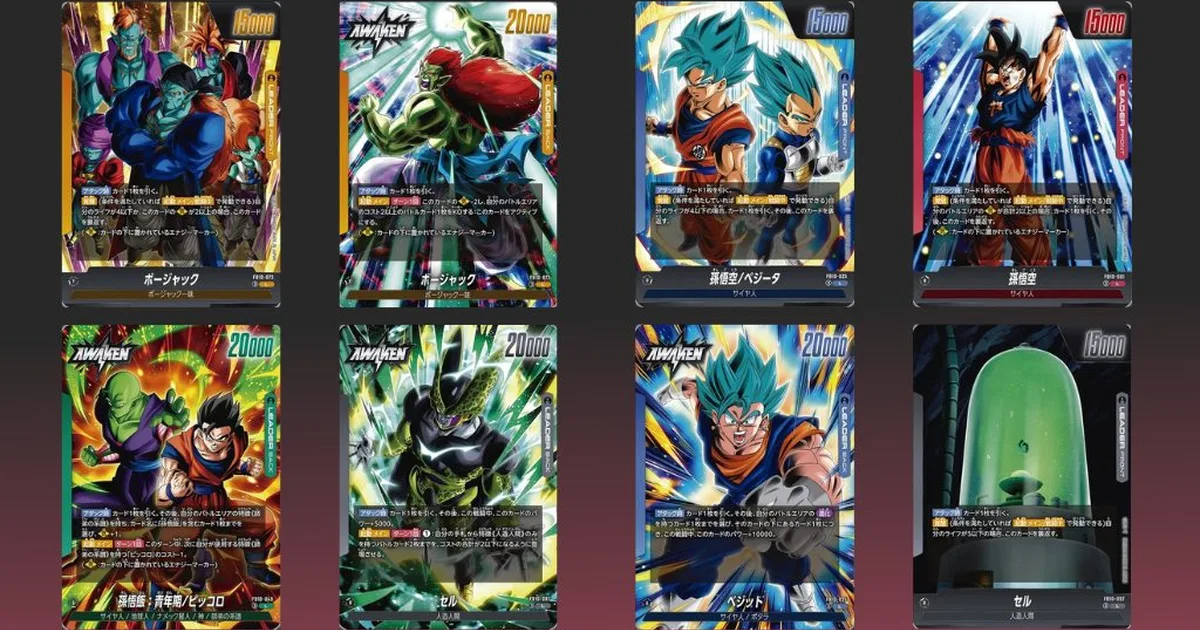
5. Confirm no dedicated FB10 Cross Force starter exists. The four originals and FS10 remain the only official entry points. If a friend tells you there's a "Cross Force starter," they're probably thinking of the theme decks or confusing it with a different product. Once you've picked a deck, buy FB10 booster packs or singles separately to add Vegito, Gohan, Cell, and their supporting cards. The Dragon Ball Fusion World FB10 best cards to pull guide breaks down which packs are worth it.
Tips for getting the most from your starter deck
Play it as-is before modifying anything. This is something a lot of new players skip because they immediately want to swap in rarer cards. The starter is designed as a teaching tool, and replacing cards before you understand why the original ones are there means you'll miss the lessons.
After ten games or so, look at which cards you played every game and which ones sat in your hand. Those hand-sitters are candidates for upgrades. Don't replace them with random cards from packs; look up a basic upgrade list for your color and buy singles.
Learn the energy system above everything else. Energy management is the foundation of Fusion World strategy. Every starter teaches it differently, but the core principle is always the same: spending energy at the wrong time loses games. Watch what your opponent does with their energy as much as you watch your own.
If you're on Blue, practice holding counter cards. A lot of new Blue players play their counters too early because they're nervous about losing them. The power of Blue comes from having options at the right moment, not spending everything immediately.
Finally, check the current meta before you upgrade. The Fusion World tier list at dragonball.gg is updated regularly and shows you where the meta leaders land. It'll tell you whether your color has legs in the current format before you invest in singles.
Key takeaways
The Dragon Ball Fusion World starter decks are a genuine entry point, not a money trap. The originals at $15-20 each are still worth buying in 2026 even after ten sets of content. For the current Cross Force format, FS02 Blue Vegeta is the call. It teaches Blue fundamentals that directly connect to Vegito, and Blue is where the competitive meta is right now.
FS10 Giblet is a collector and Legends fan product first. It's well-made and the silver foil treatment is attractive, but it's not the practical learning tool the four originals are. Save it for your second or third starter, not your first.
No new starter was released for FB10. What you're building on top of is one of these five decks plus Cross Force boosters or singles.
Related Reading
- Dragon Ball Fusion World FB10 tier list: where each FB10 leader lands once you're ready to move past the starter decks.
- Dragon Ball Fusion World best FB10 leaders: a closer look at the leaders your starter deck eventually upgrades toward.
- Dragon Ball Fusion World format guide: how the current Cross Force format is shaped now that FB10 has settled in.
- Dragon Ball Fusion World Ki mechanic explained: the resource system introduced in Cross Force that Green and Yellow starters lead into.
- Dragon Ball Fusion World Energy Guide: Master Your Turns: once you have your starter deck, the energy system is the first advanced concept to understand.
- Dragon Ball Fusion World Best Cards for Beginners 2026: which singles to add to your starter without spending too much.
Frequently asked questions
Q: Which Dragon Ball Fusion World starter deck should I buy?
A: If you want to play the current FB10 meta, start with FS02 Blue Vegeta. It teaches the Blue fundamentals that power the Vegito leader, which is the flagship of Cross Force. If you prefer aggressive play, FS01 Red Goku works as a straightforward learning deck.
Q: Is Dragon Ball Fusion World FS10 Giblet worth buying?
A: FS10 is worth it if you're a Dragon Ball Legends fan or want a premium collector deck. Every card has a silver foil finish and the deck includes 4 SR cards plus a Bonus Pack with Alt-Art chase cards. It's not the cheapest way to start; the original four starters at around $15-20 are better pure learning tools.
Q: Can I build a competitive FB10 deck starting from a starter deck?
A: Yes. The FS02 Blue starter gives you the Blue foundation that upgrades into Vegito Evolve builds from FB10. You'll need to add FB10 boosters and targeted singles to complete the deck, but the starter teaches you the playstyle so you're not learning two things at once.
Q: How many cards are in a Dragon Ball Fusion World starter deck?
A: Standard starter decks (FS01-FS04) contain 50 cards each. FS10 Giblet EX is also 50 cards but features a silver foil treatment and includes a Bonus Pack with potential Alt-Art cards.
Q: Are the original Dragon Ball Fusion World starter decks still good in 2026?
A: Yes. The 4 original starters are still a solid entry point. They teach the core rules, energy system, and combat math. The meta has evolved with each new set, but the starters serve their educational purpose perfectly. You'll want to upgrade with newer cards, but the decks teach the game effectively.
Q: What color should I start with in Dragon Ball Fusion World?
A: Depends on your playstyle. Red (Goku) is for aggressive rushing. Blue (Vegeta) suits tempo and combos, and is the best fit for the FB10 meta. Green (Broly) covers midrange pressure. Yellow (Frieza) plays strategic control and revival. For 2026, Blue aligns best with the current Cross Force meta.
Q: Do Dragon Ball Fusion World starter decks come with the FB10 cards?
A: No. Starter decks (FS01-FS04 and FS10) are standalone pre-constructed decks that don't contain FB10 Cross Force cards. You need to buy FB10 booster packs or singles separately to access the new Vegito, Gohan, and Cell leaders and their supporting cards.
References
- Official Dragon Ball Super Card Game Fusion World starter deck lineup: Bandai's official product page for all starter decks
- FS10 Giblet EX starter deck guide and card list: detailed breakdown of the Dragon Ball Legends collab deck
- TCGPlayer Fusion World starter deck pricing: secondary market pricing for all starters
- Dragon Ball Fusion World tier list and current meta: updated leader rankings and format overview for Cross Force
Was this guide helpful?
About the author

TCG Set Reviewer
Anime TCG collector and set reviewer covering One Piece TCG, Union Arena, Disney Lorcana, and Dragon Ball Fusion World since 2021. Direct, honest, pulls no punches on weak sets.
- One Piece TCG collector since OP-01
- Set review specialist
- Beginner guide contributor
Disclaimer
This article is published for informational and entertainment purposes. It does not constitute professional financial, legal, or technical advice. Game performance, online services, patch schedules, and store listings change. Verify critical details (pricing, system requirements, regional availability) with publishers and storefronts before you buy. Affiliate links, where present, help support our editorial work and are labelled in our affiliate disclosure.