

Shonen TCG · Guides
OP-17 Box Opening Strategy: What to Do Now It Is Out
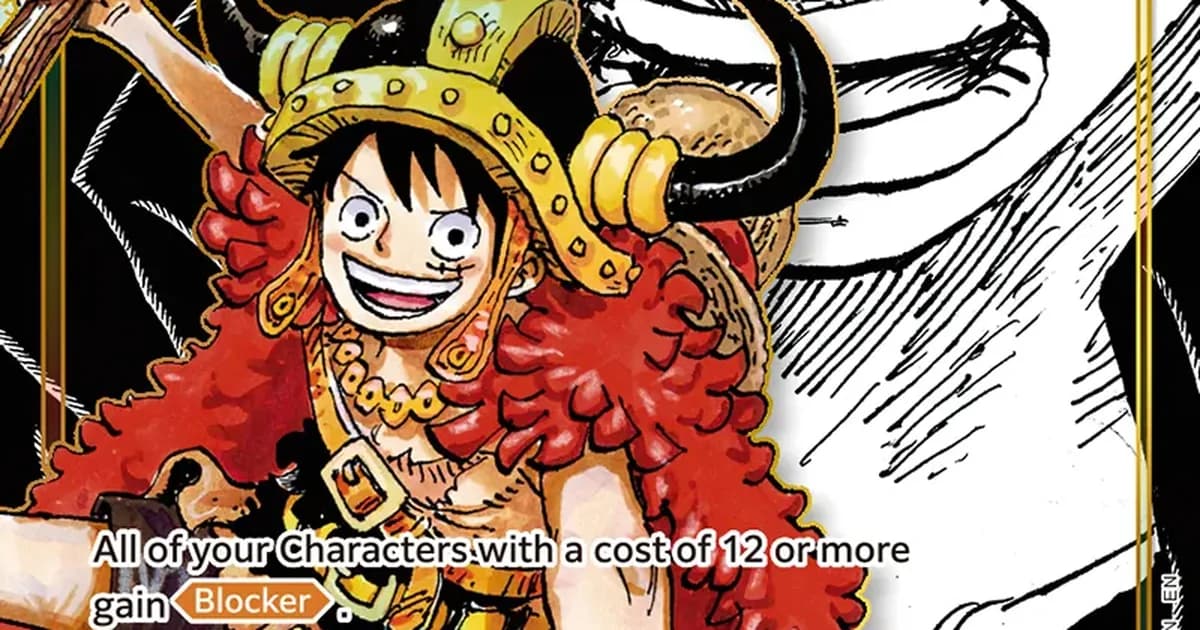
Reviewing
One Piece TCG
OP-17 box opening strategy is no longer a pre-launch hypothetical: Japan released the set August 22, and the EN wide release landed August 28, more than a month ago. What's changed since launch: real secondary-market prices now exist for every premium tier, and they confirm the Super Leader Parallel Luffy, not the Treasure Rare, as the set's real money card. Real box prices also now exist instead of pre-release asking prices. The question isn't whether to pre-order anymore, it is whether opening sealed product still makes sense now that real EN supply, real EN prices, and a clearer picture of where the actual value sits all exist.
TL;DR: Updated September 3, 2026. OP-17 released in Japan August 22 and the EN wide release landed August 28. MSRP is $119.76 per 24-pack display and $479.04 per 4-display case; tracked EN box prices have settled to around $350, down from the $450-480 typical pre-release range. The set's real chase card is the Super Leader Parallel Luffy (OP17-079), trading around $2,104.42 on the secondary market as of September 3, more than the Treasure Rare or any other premium print in the set. No official Bandai pull rate exists for any premium tier.
Updated October 2, 2026: OP-17 is no longer in preorder. Bandai's official product listing gives the English release date as August 28, 2026. The price figures below remain dated post-launch snapshots, and the advice now concerns available sealed stock or singles rather than an open preorder window.
OP-17 box opening strategy: the quick answer
Buy one display if you want the opening experience and don't need a specific card. Buy a case only if you're splitting it with friends or planning to sell sealed product; the dated figures below do not establish positive box EV for OP-17, and the set's value is concentrated on a single ultra-rare insert card rather than spread evenly across its premium tiers. If your goal is a specific competitive piece, skip sealed product entirely and compare the single price now that EN supply is in circulation.
Key Takeaways
- Japan released OP-17 August 22, the US pre-release ran August 21, and the EN wide release followed August 28. Those release dates are historical now, with the EN launch more than a month behind this update.
- MSRP: $4.99 per pack, $119.76 per 24-pack display, $479.04 per 4-display case. Tracked EN box prices have settled to around $350 as of August 31, down from the $450-480 typical pre-release range.
- The set's real money card is the Super Leader Parallel Luffy (OP17-079
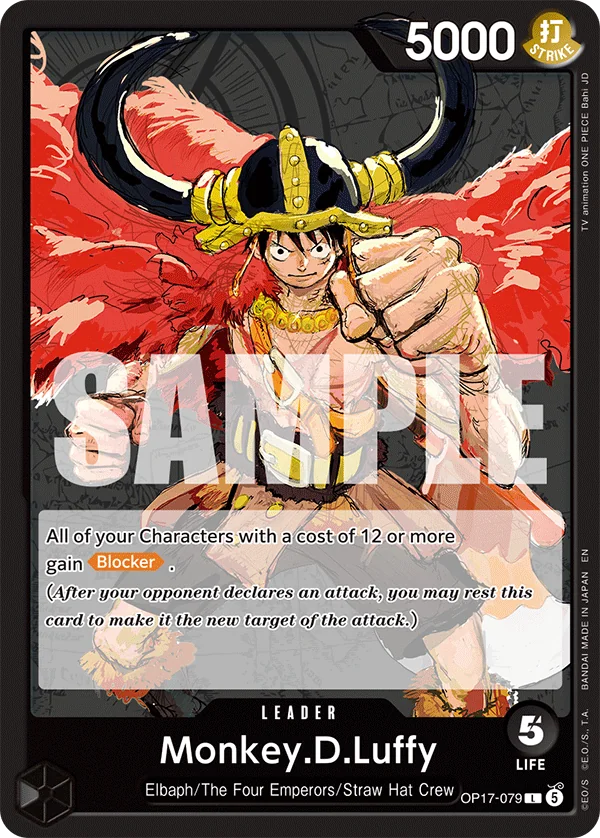 OP17-079OP17-079Shop on TCGplayer), trading around $2,104.42 as of September 3, more than any Treasure Rare, Super Parallel, or Conqueror's Haki Special print.
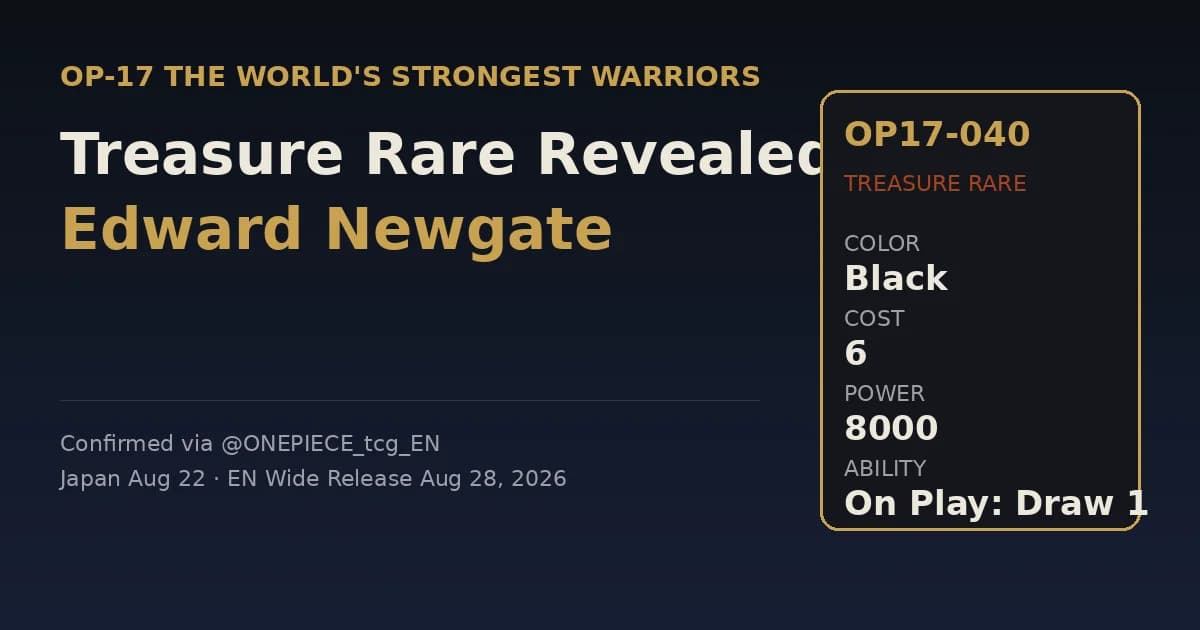
 - The Treasure Rare is confirmed as Edward Newgate
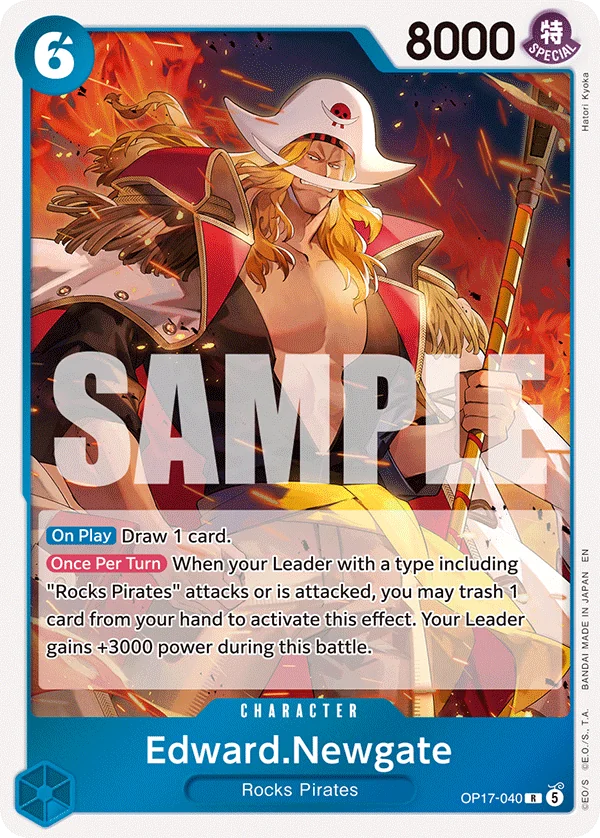 OP17-040OP17-040Shop on TCGplayer, OP17-040, a Blue 6-cost 8000-power character with an On Play draw effect plus a Rocks Pirates leader power-boost ability, but it's trading around $56.95, far below the Super Leader Parallel and even below OP-16's Admiral Manga Rares.
 - No official Bandai pull rate exists for any premium tier.
- MSRP pre-orders are no longer the live question they were before launch; if you missed the window, check current local and online stock directly, since pricing has genuinely settled since release day.
Overview: what this guide covers
This guide assumes you've already read our OP-17 pre-order guide for the full retailer-by-retailer breakdown, that piece still has the most complete list of where to order and what each store charges. What this guide adds is the decision layer sitting on top of that list: now that OP-17 is actually out, how many boxes should you commit to, and in what format, with real post-launch data instead of pre-release estimates. It also folds in the rarity structure covered in the Super Parallel and Manga Rare tiers piece, now confirmed against real secondary-market prices.
This guide has been updated with post-launch observations now that OP-17 boxes are actually in players' hands: dated box prices and secondary-market observations for every premium tier. Where an official number still doesn't exist, mainly Bandai's own pull rates, that's stated plainly rather than guessed at.
Step-by-Step: deciding what to buy now that OP-17 is out
1. Check current local and online stock directly. The pre-order window is over, but that doesn't mean MSRP stock is gone everywhere. Local game stores may restock, and some online retailers may cycle through allocation. Call or check a store's current page rather than assuming last week's "sold out" is still true.
2. Know what you're actually chasing before you buy anything. The set's real money card is the Super Leader Parallel Luffy (OP17-079), not the Treasure Rare this guide originally tracked as the headline chase. If a specific card is your goal, confirm which tier it's actually in before budgeting for boxes.
3. Compare box price to buying the specific card as a single. With real EN prices now available, run the math before opening anything: a single Super Leader Parallel pull is worth something like 6 sealed boxes at current pricing (see the box vs. case math below for the full comparison point). For almost any specific card, buying the single now beats opening product to find it.
4. Decide your format before you check out. Don't add a case to your cart just because it's available. Work through the box-vs-case math below first, then buy.
5. If you're buying secondary, filter for sold comps over asking prices. The August 31 snapshot recorded tracked EN box prices around $350, well below the $450-599 range some listings ran during pre-release. Do not pay pre-release-era prices for post-launch stock without checking sold comps.
GODEEPER: Still deciding how much of your budget goes to OP-17 versus the OP-16 cards you already own? OP-17 OP-16 Format: How the Meta Changes This Fall →
Box vs. case: the quantity math
Start here: do not assume a positive box expected value for OP-17. A single Treasure Rare across the entire print run, plus 11 more cards spread across three additional premium tiers, means the overwhelming majority of boxes opened will not contain any of those twelve cards. That's not pessimism, it is the practical risk of a chase-card rarity structure when the rarest slots are measured in single digits against a print run in the tens of thousands.
With that framing, here's how the math actually breaks down by what you're trying to accomplish:
Casual opener, no specific target. One display ($119.76 MSRP) gives you a full spread across the set's common and mid rarities, plus a real shot at a Super Rare or better. This is the right call for most readers of this guide. You get the launch-week experience without betting real money on hitting a specific card.
Splitting with a group. A case (4 displays, $479.04 MSRP) divided four ways works out to the same per-person cost as buying a display solo, but pools your odds across 96 packs instead of 24. If you have three friends who also want in, this beats everyone buying their own single display. If you don't, don't manufacture the group just to justify a case.
Chasing a specific premium card as a sealed pull. This is the only scenario where buying more product meaningfully changes your odds, and even then the math is rough. Bandai hasn't published an official pull rate for any tier. For comparison, OP-16's three-card Manga Rare tier landed roughly once per two to three cases based on community tracking, so treat any specific-tier estimate for OP-17 as an unconfirmed guess rather than a real number until Bandai or a large enough tracked sample says otherwise. If a specific card is the actual goal, a case gets you closer than a display does, but without a confirmed rate, "closer" is the only honest claim.
Competitive player, no interest in sealed product. Skip boxes entirely. Buy one display if you want to see the new cards in hand, otherwise buy singles now that EN supply has been in circulation since August 28. The pre-order guide linked above already covers why singles-after-launch usually beats cracking packs for anyone chasing 2 or 3 specific pieces.
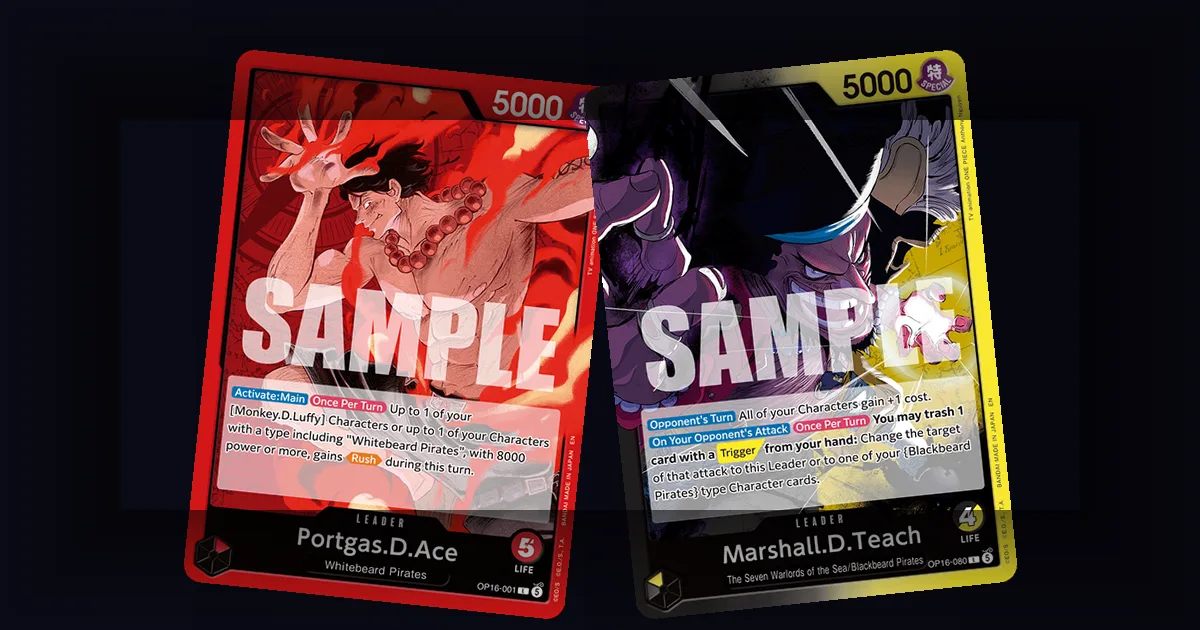 Portgas D. Ace and Marshall D. Teach were OP-16's Secret Rare leaders, the demand benchmark box economics still get measured against heading into OP-17's wider chase-card spread.
Realistic box-opening expectations
Here's what's confirmed about OP-17's rarity structure after real product has been opened, and what still isn't:
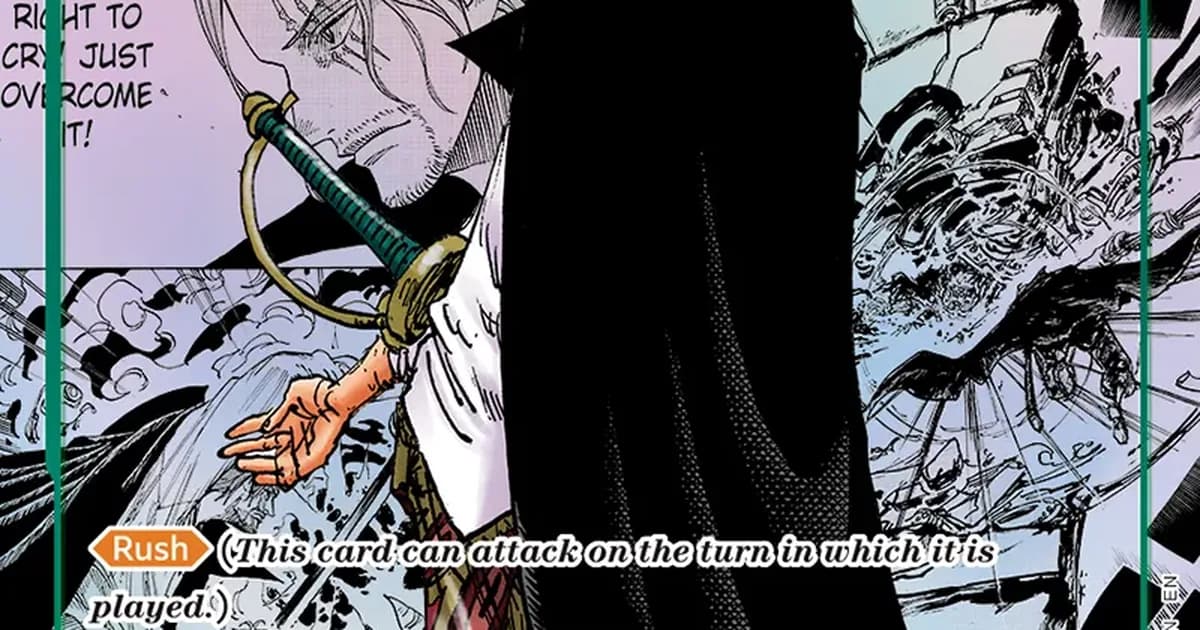
Confirmed: the set carries one Treasure Rare, now identified as Edward Newgate at card number OP17-040, a Blue character with a cost of 6 and 8000 power whose On Play effect draws a card, plus a second effect that boosts a Rocks Pirates-type Leader's power in battle. Alongside it sit the tiers revealed since early August: Super Leader Parallel (one card, Monkey D. Luffy at OP17-079), the manga-art Super Parallel (four cards, Shanks, Newgate, Kaido, and Big Mom), and Conqueror's Haki Special (six characters including Zoro, Garp, and Gol D. Roger). Real secondary-market data now confirms which of these actually matters most: the Super Leader Parallel print of Luffy is the top pull of the entire set, trading around $2,104.42 as of September 3, more than any of the other eleven premium cards including the Treasure Rare. The full breakdown is in OP-17 best cards to pull.
Still not officially confirmed: any Bandai-published pull rate for any tier. Treat any specific ratio you see elsewhere as an unconfirmed community estimate, not a promise, the real rate could land anywhere until Bandai or a large tracked sample settles it. Our OP-17 Treasure Rare reveal covers what is and isn't verified about that specific rarity's mechanics, without inventing numbers Bandai hasn't released.
The honest expectation to set for yourself, now with real data behind it: opening a display or two is worth doing for the experience, the community energy, and a real (if very long, especially for the Super Leader Parallel) shot at something valuable. It is not a plan for guaranteed value, and the base Secret Rares (Loki 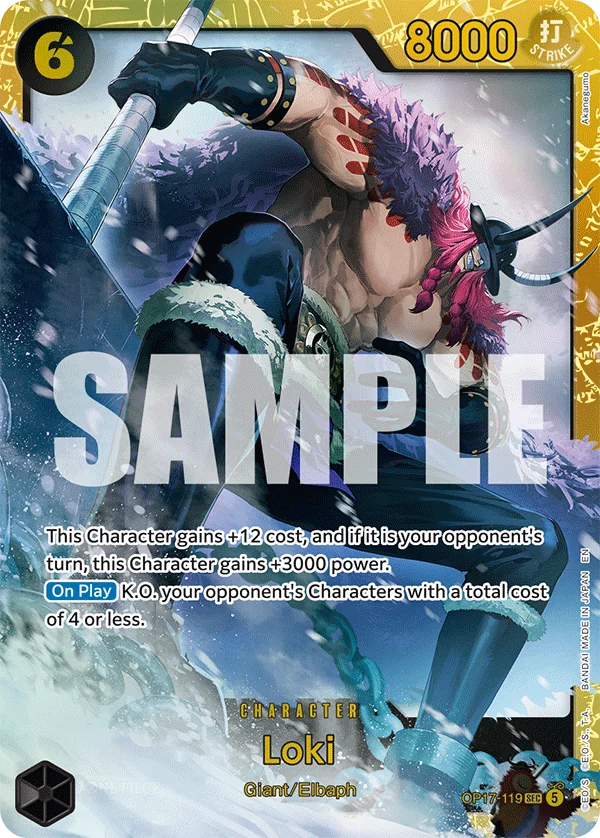 OP17-119OP17-119Shop on TCGplayer at OP17-119, Xebec at OP17-118
 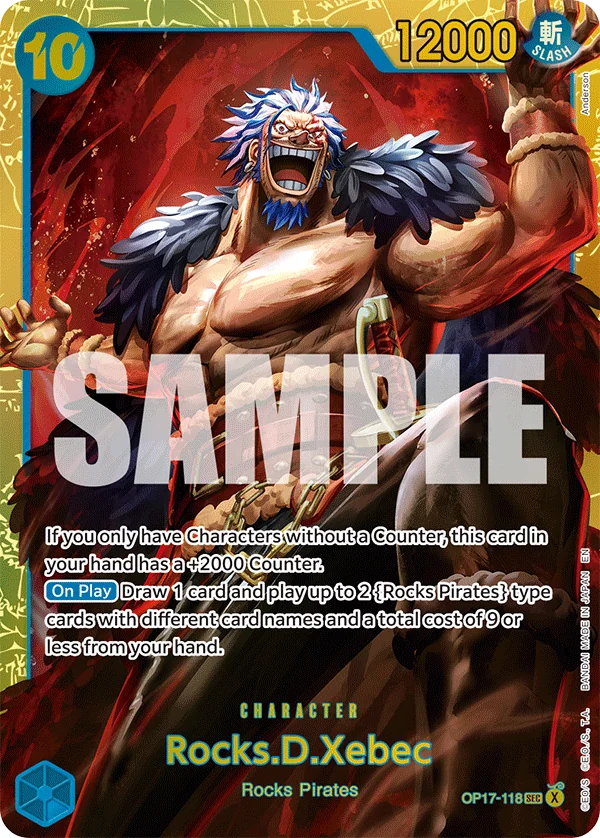 OP17-118OP17-118Shop on TCGplayer in its non-parallel form) trade for real but modest money, $37 to $60 and $24 to $48 respectively as of September 3, which underlines how concentrated this set's real value is on one specific print.
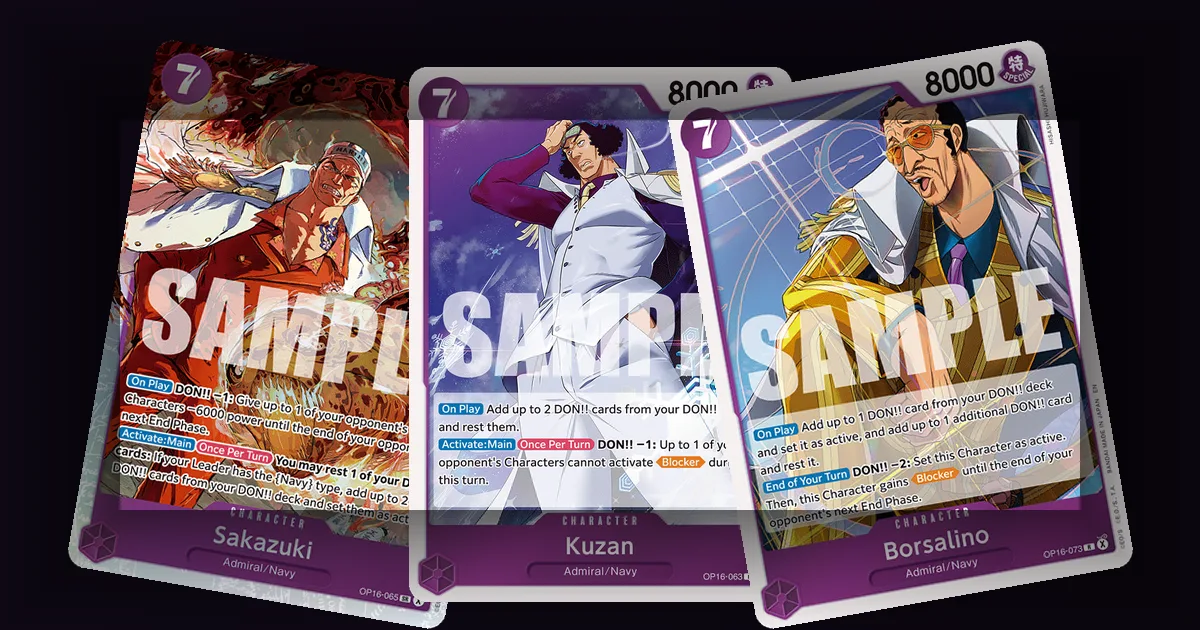 OP-16's three Admiral Manga Rares, Sakazuki
 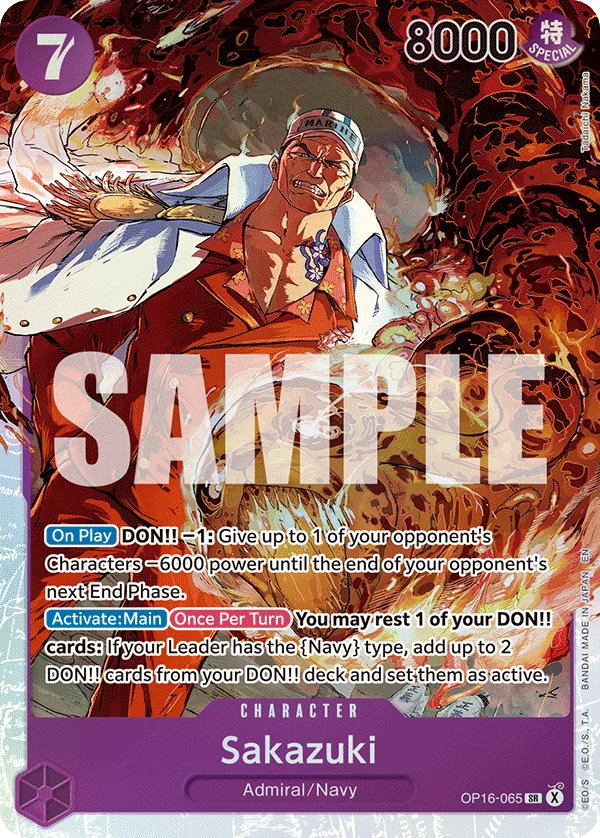 OP16-065OP16-065Shop on TCGplayer, Kuzan
 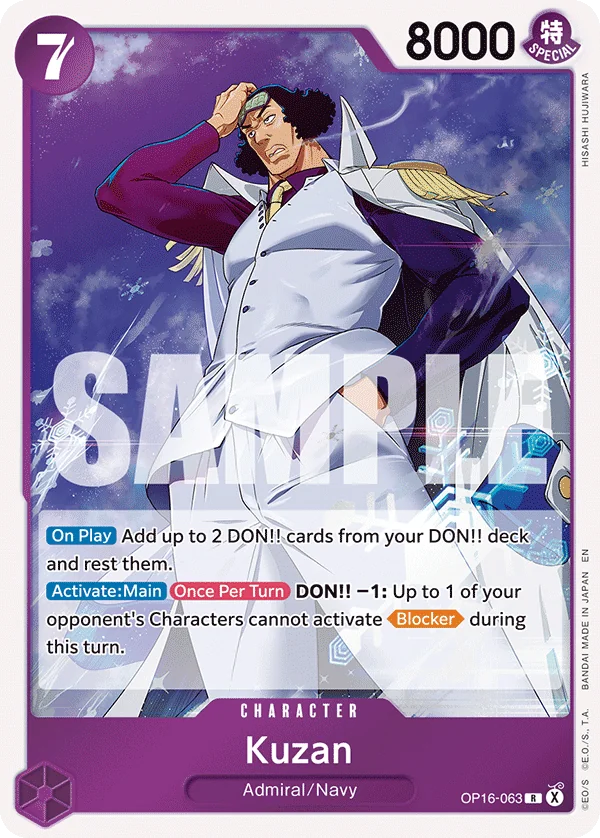 OP16-063OP16-063Shop on TCGplayer, and Borsalino
 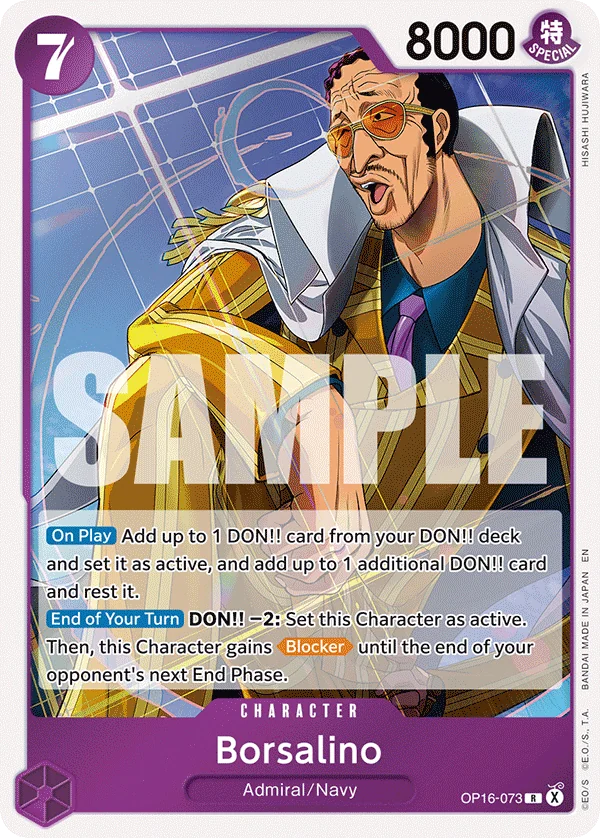 OP16-073OP16-073Shop on TCGplayer, are the closest real comparison point for how a small, multi-card premium tier has historically pulled in this game.
Tips now that EN wide release is here
Watch sold prices, not asking prices. Through the pre-release window, tracked secondary listings ran $349 to $599 against MSRP of $119.76. The August 31 snapshot, three days after EN wide release, recorded around $350, a real drop from the pre-release high end, though still roughly 2.9x MSRP at that time. Check current numbers on the box price tracker rather than treating either historical figure as a live quote by the time you're reading this. If you're buying secondary, filter for sold comps before you filter for lowest listed price.
Know that a historical preorder limit may not be a current store policy. The source material for this guide reported a 4-per-person Premium Bandai limit during the preorder wave. Verify any current seller limit directly rather than treating that old constraint as live inventory data.
Cases don't guarantee a Treasure Rare, or anything else. A case gets you 96 packs instead of 24, which improves your odds on paper, but improved odds on an unpublished baseline still isn't a guarantee. Don't budget a case as though it locks in a chase pull.
If you're comparing sealed stock, local pickup can beat online shipping. A store holding product for in-person pickup sidesteps shipping delays and lets you confirm the current price before paying. It is still worth comparing what local shops actually charge, but treat the linked pre-release comparison as historical context rather than a live quote.
If you missed the EN pre-order window entirely, importing from Japan is worth a look. Japan has had the set on shelves since August 22, and the linked comparison documented JP secondary-market prices below EN's at the time of its snapshot, even after accounting for a proxy service and international shipping. It is not for everyone, since you get Japanese-language cards and wait on shipping, but compare the landed cost with current EN listings before buying.
For the fullest picture of what the release-day snapshot recorded about availability, pricing, and Japan's first week, see OP-17 EN Wide Release Day: What to Know Now.
Common Mistakes
Buying a case to chase one specific card. As covered above, a wider spread of named chase cards across four tiers doesn't proportionally improve your odds at any single one of them. If you want one specific card, buying the single now that real EN supply exists is almost always the cheaper path.
Treating asking prices as the market rate. A $300 box listing that hasn't sold tells you what one seller wants, not what a box is actually worth; the August 31 snapshot recorded tracked EN box prices around $350. Use sold comps as stronger evidence than an asking price before buying sealed product.
Assuming a Treasure Rare pull is the best possible outcome. It isn't. In the September 3 snapshot, the Super Leader Parallel Luffy (OP17-079) was worth roughly 37 times the Treasure Rare. If you're evaluating what you pulled, check which tier it's actually from before assuming the Treasure Rare is the ceiling.
Assuming online stock mirrors local store stock. Online retailers and local game stores get separate distributor allocations. A store selling out online can still have walk-in stock, and vice versa.
Assuming launch-week prices are settled prices. The figures in this guide, including box prices and secondary-market observations, are dated snapshots from the first weeks of real product being opened. Both prices and availability can move as more boxes open on both sides of the Pacific; check current numbers before treating anything here as a live quote.
GODEEPER: Curious what OP-17's launch actually confirmed versus what this site predicted beforehand? OP-17 Final Predictions: Meta Impact and Price Ceiling →
Frequently Asked Questions
Is it too late to get OP-17 at MSRP? As of October 2, 2026, it is a post-release stock question rather than a pre-order deadline. Some local game stores and retailers may still restock near MSRP, while others have sold through their initial allocation. Check current stock and sold prices directly rather than assuming one retailer reflects the whole market.
Should I buy a display or a case of OP-17? A single display makes sense for most players who want the opening experience and some trade fodder. A case only makes sense if you are splitting the cost with 3 other people or planning to resell sealed product, because the dated figures below do not establish positive box EV for OP-17.
How many premium chase cards does OP-17 have? Twelve confirmed cards across four rarity tiers: one Treasure Rare, one Super Leader Parallel, four manga-art Super Parallel cards, and six Conqueror's Haki Special cards. No official pull rate exists for any tier.
What is the OP-17 Treasure Rare, and is it the set's most valuable card? The Treasure Rare is Edward Newgate, card OP17-040, a Blue 6-cost 8000-power character with an On Play draw effect plus a Rocks Pirates leader power-boost ability. It is not the set's most valuable card: as of September 3, it trades around $56.95, far below the Super Leader Parallel Luffy (OP17-079), which trades around $2,104.
How much do OP-17 boxes actually cost right now? MSRP is $119.76 per 24-pack display. The August 31, 2026 snapshot recorded tracked box prices around $350, down from the $450-480 typical pre-release range but still roughly 2.9x MSRP at that time.
Is it worth opening OP-17 boxes for value? No. The dated figures below do not establish positive box EV for OP-17, and its value is concentrated on a single ultra-rare insert card. Open for the experience and the chance at a chase pull. If you need a specific card, compare the current single price before buying sealed product.
Related Reading
- OP-17 World's Strongest Warriors Set Guide for 2026: The full set breakdown, card count, and rarity structure this guide builds on.
- OP-16 Manga Rare: Sakazuki Hits $1,600, 3 Admirals: How OP-16's equivalent top-tier chase cards actually settled after launch hype cooled.
- OP-16 Box Opening Strategy: How Many Boxes to Open: The same quantity math applied to the previous set, useful as a before-and-after comparison.
- OP-17 Blue Leader Revealed: Rocks D. Xebec Confirmed: Background on the sixth and final leader if you're still deciding what to build toward.
References
- BOOSTER PACK -THE WORLD'S STRONGEST WARRIORS- [OP-17] official product page: official release dates and MSRP
- ChannelFireball One Piece TCG pre-order listings: current sealed product pricing and availability
- r/OnePieceTCG community sold-listings post: community-compiled sold price data referenced in this article
- Foilr OP-17 booster box price tracker: live-tracked box price, checked 2026-08-31 at approximately $350
- TCGPlayer One Piece TCG: marketplace pricing reference
Was this guide helpful?
Cards in this article
About the author

TCG News Reporter
Anime TCG journalist covering set releases, Bandai announcements, tournament results, and card market moves. Writes tight, edits tighter.
- Anime TCG news specialist
- Bandai release schedule tracking
- Tournament and market reporting
Keep reading
OP-17 Launch Checklist: 6 Things That Actually Mattered
Guides · 9 min
OP-17 Spoilers Recap: Everything Confirmed, 3 Days Out
Guides · 11 min
OP-17 Final Predictions: Meta Impact and Price Ceiling
Guides · 12 min

OP-17 Pre-Release Price Backlash: What Players Reported
News · 5 min
One Piece TCG Complete Guide 2026: Rules, Colors, Sets
Guides · 16 min
OP-17 Treasure Rare: Edward Newgate Price and Details
News · 11 min
OP-17 Distribution Backlash: What the 16-Case Photo Shows
News · 7 min
OP-17 Super Parallel Cards: New Manga Rare Tier Explained
News · 8 min
Disclaimer
This article is published for informational and entertainment purposes. It does not constitute professional financial, legal, or technical advice. Game performance, online services, patch schedules, and store listings change. Verify critical details (pricing, system requirements, regional availability) with publishers and storefronts before you buy. Affiliate links, where present, help support our editorial work and are labelled in our affiliate disclosure.