Loading…
Loading…
Shonen TCG · Guides
The Dragon Ball Fusion World Evolve mechanic is what turns a Vegito player's board into a chain of transformations in a single turn. Evolve is not a complicated rule, but it has a specific energy logic behind it that most beginner explanations skip entirely. Once you understand the math, the mechanic makes much more sense as a competitive tool.
TL;DR: Evolve lets you place an evolved card on top of a base card on the field, paying only the Evolve cost instead of the card's full energy cost. A 4-cost card reached by Evolving typically costs 2 + 2 energy total, lands one turn sooner than playing it fresh, and often fires a bonus trigger effect on the same turn. The weakness: your base card sits exposed for one full turn before you Evolve it.
You play a base Battle card normally, then the following turn you play an Evolve card on top of it, paying the Evolve cost rather than the full card cost. The two cards form a stack. Only the top card's power and effects are active, but the stack counts as a single card on the field. That's the whole mechanic at its core.
1. Play your base card at its normal energy cost. A 2-cost base card costs 2 energy to field, the same as anything else. Confirm it carries the trait an Evolve card in your hand will later target.
2. Check the base card is still on the field before you Evolve. The Evolve card must target a card with a specific trait, not just any card. If the opponent removed your base card first, you cannot Evolve into thin air.
3. Play the Evolve card on a later turn (or the same turn with enough energy). It targets the base card by trait, usually the character's name or a specific type.
4. Pay the Evolve cost printed on the card, not its full cost. A typical Evolve cost is 1 to 2 energy, which is what makes the mechanic efficient compared to paying the card's full price.
5. Place the Evolve card on top of the base card to complete the stack. Only the evolved card's stats and abilities count from this point. If the evolved card also has an Evolve target, you can chain the process again on a future turn with another Evolve card.
6. Remember the stack moves as one unit if it's destroyed. If the opponent removes the evolved card via an attack or effect, the entire stack leaves the field, so you lose both cards, not just the top one.
GODEEPER: For the full breakdown of every leader in FB10 and which ones use Evolve as their primary strategy. Dragon Ball Fusion World FB10 Leaders: All 5 Explained →
 Evolve places a new card over an existing one, inheriting its active status so the upgraded card attacks immediately.
This is the part most guides skip over, so let me show the actual numbers.
Standard play: You want a 4-cost Battle card on the field. You wait until you have 4 energy, then pay 4 to play it. That card arrives on the turn you hit 4 available energy.
Evolve play: You play a 2-cost base card when you have 2 energy. The next turn, you pay an Evolve cost of 2 to place the 4-cost Evolve card on top of it. Total energy spent: 2 + 2 = 4. Identical total cost.
The difference is timing. In the Evolve line, the evolved form is on the field one turn earlier than in the standard play line. If your base card costs 2 and you play it on turn 2, the evolved form is live on turn 3. In the standard line, that same 4-cost card doesn't arrive until turn 4.
A one-turn speed advantage in Dragon Ball Fusion World is worth a lot. It means applying pressure earlier, forcing your opponent to spend resources reacting instead of building their own position.
On top of the timing advantage, many Evolve cards also have an Evolve trigger effect that fires the turn you Evolve. So on turn 3 in the example above, you are placing a 4-cost card AND getting a bonus action simultaneously. That's where the real efficiency compounds.
When the math breaks even or goes negative:
If the Evolve cost is high (say, 3 energy) and your base card is also expensive (say, 3 energy), you've spent 6 total for a 4-cost card. That's never correct. Evolve is efficient when the base card + Evolve cost is at most equal to the full card cost, and ideally equals it while arriving earlier. Always check the printed Evolve cost before building a chain.
Was this guide helpful?
About the author
Competitive TCG Analyst
Competitive One Piece TCG player and deck builder with 3 years of tournament experience. Covers meta analysis, tier lists, and leader builds.
Disclaimer
This article is published for informational and entertainment purposes. It does not constitute professional financial, legal, or technical advice. Game performance, online services, patch schedules, and store listings change. Verify critical details (pricing, system requirements, regional availability) with publishers and storefronts before you buy. Affiliate links, where present, help support our editorial work and are labelled in our affiliate disclosure.
Every Evolve card has a base set of stats, but many also carry a "When you Evolve this card" bonus that fires exactly once, on the turn you place it. These are the trigger effects, and they're worth looking at separately because they shape how you sequence your turns.
Common trigger effects in Fusion World Evolve decks include drawing a card, removing an opponent's Battle card with a power value below a threshold, or granting the evolved card a power boost until the end of the turn. These aren't always dramatic, but they are free in the sense that you would be paying the Evolve cost anyway.
The practical implication: a well-designed Evolve chain gives you a board threat AND a tempo action on the same turn. Opponents have to respond to the card in play while you've already spent your energy doing something else.
One thing to watch: trigger effects do not fire if you play the Evolve card without actually Evolving (if you somehow play it as a fresh card by another effect). The trigger is specifically tied to the Evolve action. In practice this rarely comes up, but it matters if your opponent questions timing.
Nothing in Dragon Ball Fusion World is without a counter, and Evolve's is clean and exploitable: the base card sits exposed on the field for the entire turn before you Evolve it.
A 2-cost base card is typically a weak Battle card in terms of raw power. It can be attacked and destroyed by most mid-cost cards your opponent fields. If the base card is gone before your Evolve turn, you've lost 2 energy and have nothing to Evolve onto. The investment disappears.
Experienced Evolve players manage this in two ways.
First, they keep combo fuel ready during the base card's exposed turn. A Combo card or a defensive card held in hand can raise the base card's power threshold temporarily when the opponent attacks, potentially saving it. The starter deck guide covers which starter comes with the most combo-fuel support if you're building an Evolve deck from scratch.
Second, when they have enough energy, they play the base card and Evolve in the same turn, collapsing the vulnerability window to zero. Turn 4 with 4 energy: drop the 2-cost base, pay the 2-cost Evolve on the same action sequence. This costs more energy upfront but removes the exposure entirely.
Against Evolve decks, this is your primary counterplay: target the base card the turn it's played. Don't attack the evolved form once it's on the field with full stats. Kill the base card before it becomes the evolved form.
GODEEPER: For a full Vegito deck list that shows exactly how to protect the base card on the Evolve window turn. Dragon Ball Fusion World Vegito Deck: Build Guide 2026 →
 The key advantage: Evolve bypasses summoning restrictions, letting high-cost cards reach play faster.
Fusion World has two major keyword mechanics that look similar from the outside but play very differently: Evolve and Ki.
Evolve transforms cards on the field. You pay a small cost to upgrade a card you've already played, gaining a stronger card with a trigger bonus attached. The result is immediate: the evolved form is active the same turn you Evolve.
Ki accumulates markers on a card over multiple turns. Each turn you meet a condition, you add a Ki marker. Once enough markers are on the card, you unlock a powerful effect or ability. The result is delayed: you're investing over several turns for a payoff later.
In terms of play style, Evolve is more aggressive. It creates board pressure early and rewards fast, sequential turn sequences. Ki is more value-oriented. It rewards patient setups and punishes opponents who don't disrupt the Ki accumulation before the effect fires.
These systems don't mix within a single deck's primary game plan. A Vegito Evolve deck is not also running a Ki-heavy strategy. The timing requirements and resource commitments are too different. Gohan: Childhood, who uses Ki as the primary mechanic, plays a structurally different game than any Evolve leader.
If you're choosing between an Evolve deck and a Ki deck as your first purchase in Fusion World, the honest summary is: Evolve is more intuitive if you like tempo-based card games. Ki is better if you like setup and value engines. The FB10 meta tier list shows where both strategies land in the current Cross Force format.
For a deeper look at how the meta currently values both mechanics, see the Dragon Ball Fusion World complete guide.
Cross Force (FB10) adds two leaders who build their game plan entirely around Evolve.
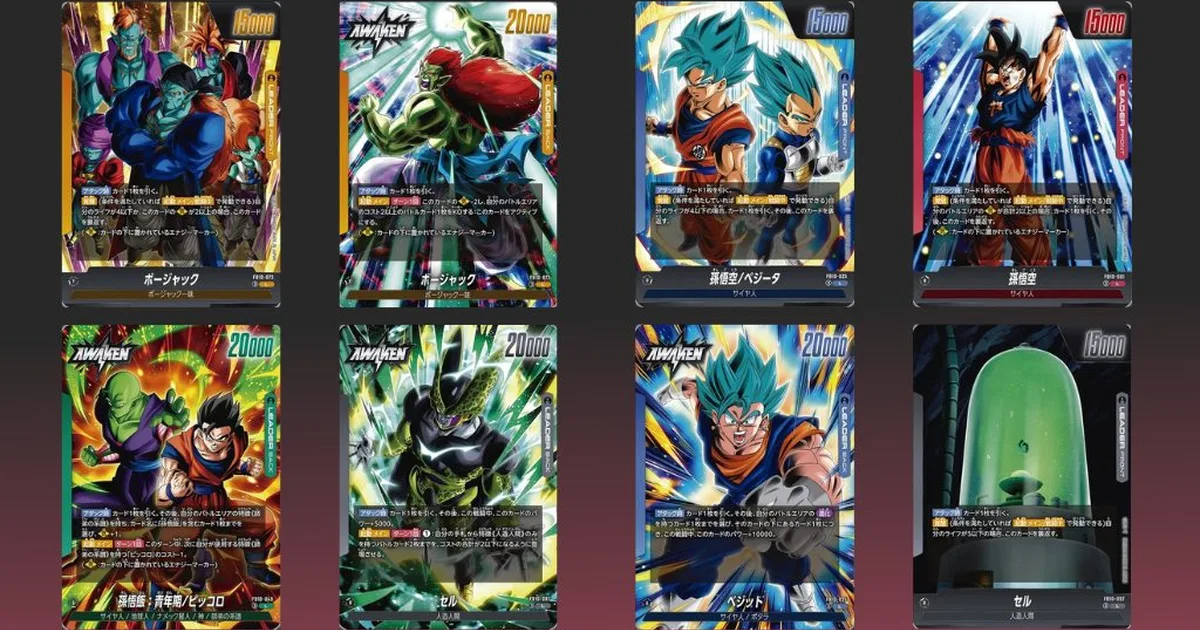
Vegito (Blue) is the flagship Evolve leader of FB10. The Vegito leader ability supports chaining Evolve cards in sequence, building toward the Vegito finisher form on the field. Blue as a color already had Evolve support in earlier sets, and Vegito makes that lineage explicit. Most current competitive Evolve lists are built around the Vegito leader.
Cell is the first villain Evolve leader in Fusion World. Cell's chain starts from Cell Jr. or a weaker Cell form and evolves into the Perfect Cell final form over several steps. This is notable because Evolve had been primarily a hero-side mechanic before FB10. Cell's inclusion signals that the mechanic is being extended across the entire card pool, not just the protagonist roster.
Previous sets had Evolve-capable leaders, so this isn't a mechanic introduced in FB10. What FB10 does is strengthen the Evolve card pool and add Cell as the villain entry point, which increases the mechanic's deck-building flexibility.
For the full breakdown of all FB10 leaders and their mechanics, see the FB10 Cross Force set guide.
These four patterns show up in almost every competitive Evolve game:
1. Match the trait before you commit. The Evolve card targets a specific trait on the base card. Double-check the requirement before playing the base card. Playing a base card that doesn't have the correct trait for your Evolve card is a dead turn.
2. Protect your base card on the exposure turn. Dedicate at least one combo card in hand for the turn your base card sits unprotected. If you have nothing to defend it, consider whether you can Evolve immediately instead of waiting.
3. Evolve at the right moment, not just the first moment. Evolving too early, before your opponent is forced to deal with the threat, can waste the trigger effect. Evolving when your opponent has already spent their removal resources is stronger.
4. Don't over-chain without a payoff. A three-step Evolve chain is only worth it if the final form's stats or ability justify the total energy spent. Sometimes the second Evolve card is strong enough to be the endpoint. Chasing the longest chain for its own sake leaves you exposed at each link.
How does the Evolve mechanic work in Dragon Ball Fusion World? You place a card with the Evolve keyword on top of an existing Battle card that matches the required trait. You pay the Evolve cost instead of the card's full energy cost, which is usually much lower, getting a stronger card to the board faster.
What happens to the card underneath when you Evolve? The base card stays in the stack physically, but for game purposes only the top card counts. Its power, effects, and traits are what matter. The entire stack is removed if your opponent destroys the evolved card.
Is Evolve better than playing a card normally? Evolve gets strong cards to the board one turn earlier than if you waited to pay the full cost, and the trigger effect adds a bonus action on the same turn. The trade-off is that the base card is vulnerable to removal during the turn before you Evolve.
What are Evolve trigger effects? Many Evolve cards have a "When you Evolve this card" bonus that fires once on the turn you Evolve. Common examples include drawing a card, removing an opponent's card, or gaining extra power for that turn.
Which leaders use Evolve in FB10? FB10 Cross Force adds Vegito (Blue) as the flagship Evolve leader and Cell as the first villain Evolve leader in Fusion World. Both build their game plan around chaining Evolve cards.
What is the difference between Evolve and Ki in Fusion World? Evolve transforms cards for immediate board presence, paying a low Evolve cost to layer upgraded forms. Ki accumulates markers on cards over multiple turns to unlock effects later. They are separate systems; a deck typically commits to one as its primary mechanic.
How do you counter Evolve decks in Dragon Ball Fusion World? The simplest counter is removing the base card before the opponent can Evolve it. If you can destroy the base form in the turn it was played, the opponent loses the energy they invested without getting the evolved form.
Related

Best TCG Dice and Counters 2026: What You Actually Need
12 min read

Union Arena Bleach Ichigo Deck Guide: Purple Build 2026
8 min read
Best Deck Boxes for TCG Storage in 2026: Full Buying Guide
13 min read

Best TCG Playmats 2026: Stitched Edge Buying Guide
10 min read

Best TCG Binders and Portfolios 2026: Side-Load Guide
11 min read