Loading…


Shonen TCG · Guides
Dragon Ball Fusion World Vegito Deck: Build Guide 2026

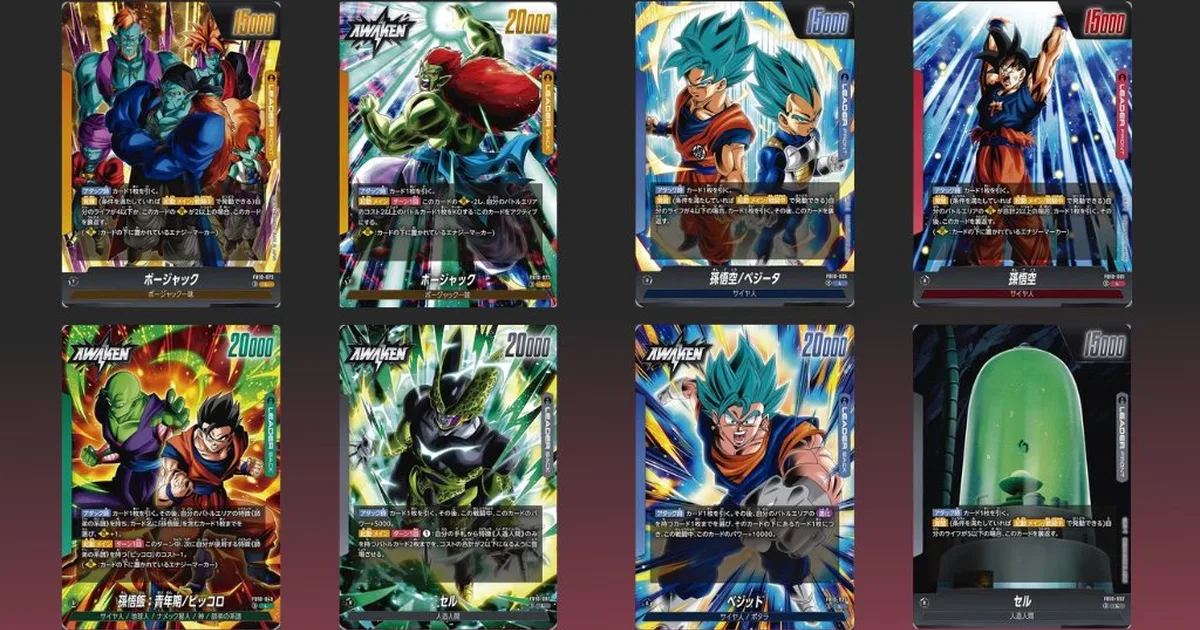
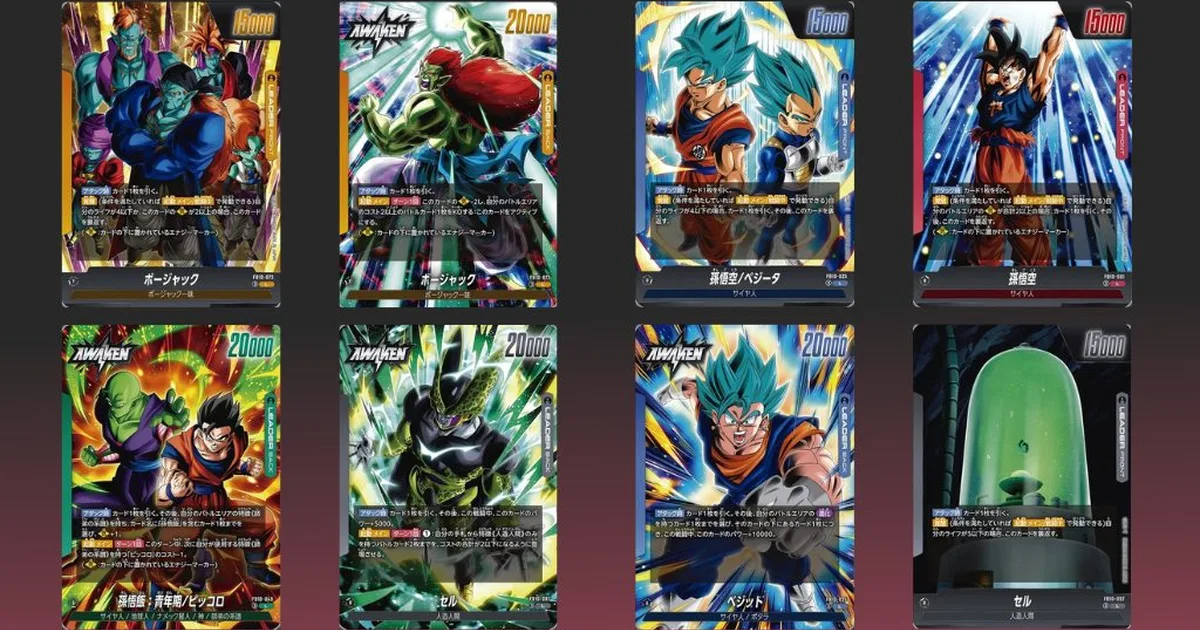
The Dragon Ball Fusion World Vegito deck is the strongest day-1 pick in FB10 Cross Force. Blue Evolve decks showed up immediately once the set released, and the Potara fusion leader fits the archetype perfectly: combine weaker forms into something your opponent cannot handle mid-sequence. This deck is not a one-trick combo, and it is not pure control. It sits in midrange territory, using Blue's efficient answers in the early game and Evolve chains to threaten increasingly hard-to-remove boards in the mid-to-late game. If you're new to Fusion World entirely, the Fusion World beginner guide covers the base rules before diving into an archetype-specific build like this.
TL;DR: Vegito Awakens at 4 Life, which is the standard threshold for nearly every Fusion World leader, not a unique edge. The real payoff is the Awakened ability itself: When Attacking, draw 1 card, then pick 1 Evolved card in your Battle Area and gain 10000 power for the battle for each card stacked underneath it, so the more developed your Evolve chain is when you flip, the bigger the swing. The deck runs on the Evolve mechanic: you play a cheap base card, then Evolve it into a stronger form at a discount, carrying forward the energy already invested. Build with a low early curve, 12-15 Combo cards, 8-10 Extra cards, and enough Evolve pieces to chain from turns 3-5.
Is the Dragon Ball Fusion World Vegito deck competitive? (quick answer)
Yes, and it was competitive on day one. Blue Evolve is a named archetype in Fusion World, and FB10 added dedicated support for it. Vegito Awakens at 4 Life like nearly every other Fusion World leader, so the threshold itself is not the edge. The edge is the Awakened ability: When Attacking, draw 1 card, then pick 1 Evolved card in your Battle Area and gain 10000 power for the battle for each card stacked underneath it, so the more developed that chain is when you flip, the bigger the swing. If your plan is to set up Evolve chains between turns 3 and 5, that's the reason you want the chain developed with real stacked cards before you Awaken, not just surviving to it.
How the Dragon Ball Fusion World Vegito deck wins
Vegito's game plan is a three-phase arc. Early game is setup. Mid game is chain initiation. Late game is converting the chain advantage into a leader Awakening that swings combat math in your favor.
In phase one, you charge energy and play efficient early Blue Battle cards. Blue's color identity in Fusion World is control-tempo: good attack values, solid defensive stats, Extra cards that answer specific threats. In a Vegito deck, you want those early plays to double as Evolve bases. A 2-cost Battle card that evolves into a 4-cost at a 2-energy Evolve cost is doing two jobs: pressuring the opponent in turns 1-2 and setting up the board for the Evolve sequence in turn 3.
Phase two is where the deck differentiates itself. Once your base card is on board, you Evolve it. The new card lands on top of the old one. The energy you spent on the base card is already accounted for. You pay the Evolve cost instead of the full fresh cost, and your opponent now faces a threat that is already partially invested. They have to spend resources to remove it, and if they do not, it evolves again.
Phase three depends on your Life total. Vegito's Awaken trigger fires at 4 Life or fewer, the same threshold most Fusion World leaders use. The ideal line is to time a big Evolve play before you Awaken, since the Awakened ability draws you a card When Attacking, then lets you pick 1 Evolved card in your Battle Area and gain 10000 power for the battle for each card stacked underneath it. Your opponent suddenly has to deal with a leader hitting far harder than its printed stats and a developed board on the same priority window. That is a difficult position for most decks to answer.
GODEEPER: All five FB10 leaders explained, including who pairs well with Blue's control shell. Dragon Ball Fusion World FB10 Leaders: All 5 Explained →
 Vegito's Evolve mechanic places the fused card directly over an existing Character, keeping that Character's active status.
The Evolve mechanic: why it's resource-efficient
This is the angle most deck guides skip, and it is the actual reason Vegito is worth playing. For a complete breakdown of how the Evolve mechanic works across all FB10 leaders, including the energy math for multi-step chains, that guide goes into more depth than this section can.
Suppose a card costs 4 energy to play from hand. Its Evolve form would cost 4 energy on its own. But the Evolve cost is only 2. You already spent 2 energy on the base card in a previous turn. So your total investment across both turns is 4 energy for a board state that would have cost 4 energy to achieve in a single turn if the evolved form existed as a standalone card.
The math advantage comes from distribution across turns. Spending 2 energy in turn 2 and 2 energy in turn 4 is not the same as spending 4 energy in turn 4. You had a body on board during turns 2 and 3 that either applied pressure or forced your opponent to answer it. That body had a real effect on the game, and you paid for the evolved form over time rather than all at once.
The compounding version is the full chain. If a base card evolves into a mid form for 1 energy, which then evolves into the final form for 2 energy more, you have spent 1 + 1 + 2 = 4 energy total across three turns for a form that might have cost 5 or 6 energy to play fresh. Each step along the chain was also a real body that affected the board. That is the Evolve deck's fundamental advantage: staged investment with staged impact.
The downside is genuine. If the opponent removes your base card before you Evolve it, your investment in that card is gone. You do not get a partial refund. This is why timing the Evolve correctly is the primary skill in the deck. You want to initiate the chain on a turn when your base card is likely to survive to the next turn. That usually means waiting until the opponent has spent their Extra cards or until you have a defensive line to protect the base.
How to build a Blue Vegito Dragon Ball Fusion World deck
The 50-card deck (not counting the Vegito leader) breaks into four functional groups: early plays, Evolve pieces, Combo fuel, and Extra cards.
Early plays (12-15 cards): These are your 1-cost and 2-cost Battle cards. They pressure on turns 1-2 and, ideally, serve as Evolve bases later. You want cards that are not embarrassing to play fresh and happen to have Evolve versions. A base card with a useful on-play effect (like charging or drawing) is better than a raw stat card because it generates value before you Evolve it.
Evolve pieces (10-14 cards): This slot holds your mid-form and final-form Evolve cards. The mid-forms typically cost 1-2 energy to Evolve. The final forms, including the Vegito SCR (the premium finisher card in FB10), cost 2-3 energy to Evolve. You want 3-4 copies of any Evolve card you plan to chain with. A 2-of is not reliable enough to build around.
Combo fuel (12-15 cards): Standard Fusion World deck math. Combo cards go to the counter zone to boost your leader or Battle cards in combat. Blue Combo cards often have secondary effects that provide draw or defensive value. At 12 cards, you can reliably access Combo fuel in most combat windows. At 15, you are giving up other slots but guaranteeing it in every hand.
Extra cards (8-10 cards): Blue's answer toolkit. These handle threats that the Evolve chain cannot punch through on its own. 8 is the floor for competitive play. Going above 10 starts crowding out your Evolve pieces.
The curve should peak at 2-4 energy. Vegito does not want expensive standalone threats (5-6 cost) because those compete with the Evolve chain energy you need in the same turns. If you are spending 5 energy on a fresh card in turn 5, you are not Evolving. Pick one path and build toward it.
GODEEPER: Full breakdown of every card category in FB10, including which pulls justify the investment. Dragon Ball Fusion World FB10 Cross Force: Set Guide 2026 →
Seeing the Evolve chain resolve in a real match makes the energy-efficiency argument click faster than any decklist.
Step-by-Step: Playing the Vegito Deck Turn by Turn
1. Charge 1 energy on turn 1 and play a Battle card that can Evolve later. Play a 1-cost Battle card that serves as a future Evolve base, or pass if no 1-cost base card is in hand. The priority is having a base card on board by turn 2.
2. Charge to 2 energy on turn 2 and play a 2-cost base card. Ideally you now have one base card on board threatening the opponent's Life total and setting up the turn 3 Evolve.
3. Make your first real decision on turn 3. With 3 energy available, either Evolve the turn-2 base card for 1-2 energy and play another base card with the remainder, or play a new 3-cost threat fresh if your base card was removed. The Evolve line is usually correct if the opponent hasn't answered your base card yet, since it generates a stronger board state on the same energy budget.
4. Evolve the turn-3 chain or start a parallel chain on turn 4. At 4 energy, you can Evolve one mid-form (2 energy) and still have 2 energy left for a new base or an Extra card answer.
5. Push the chain toward final form from turn 5 onward. Watch your Life total; at 5 Life, one hit puts you into Awaken range, so plan to attack first with Vegito on the turn you flip, triggering the Awakened effect before your opponent gets priority to answer your board.
6. Time your Awaken around a developed Evolve chain, not just the Life threshold. The ideal Awaken turn is one where your Evolved card is already stacked deep, since the Awakened ability draws a card and turns that stack depth directly into power. Since the 4-Life threshold is standard across the game rather than a Vegito-specific buffer, protecting your Evolve chain matters more than banking on the trigger point itself.
 The Potara fusion package pairs with Evolve to generate the energy discount needed for a turn-5 combo closure.
SHOP: Building this Blue Vegito Evolve deck? Check current FB10 singles prices on TCGPlayer. Shop TCGplayer →
Matchups and when Vegito struggles
Blue Vegito is favorable against midrange decks that cannot remove base cards efficiently. They let your Evolve chain develop, and by the time they answer the final form, you have already pressured their Life total. Against opponents who run 8+ Extra cards with cheap removal, the matchup is more contested: they can remove your Evolve base before you chain, and you lose the staged investment.
The hardest matchups are aggressive decks that go wide early. If an opponent develops multiple threats in turns 1-3, your Extra cards are tied up answering their board instead of protecting your Evolve chain. Your chain gets delayed to turn 4-5, and you are already at 3-4 Life before you want to Awaken. Reaching the standard 4-Life Awaken threshold is not a special advantage in this matchup, it just means you flip; without an Evolved card stacked deep enough on board, the Awakened power boost has little to work with, so it is not a free pass.
Red aggro specifically is a rough matchup. Red applies early pressure faster than Blue can set up, and the Evolve chain in the first few turns is interrupted by removal and early swings. The FB10 meta tier list shows current Red standings so you can gauge how often you'll face it at locals. This is a matchup where you side toward more Extra cards and accept that you will Awaken earlier than planned, using the Awakened stats to stabilize rather than close out the game.
Green combo decks are the ambiguous matchup. They develop slowly, which gives you time to Evolve, but their late-game payoffs can be large enough to race through your defense. Track their energy usage carefully; the turns they spend setting up are the turns you should be advancing your chain.
Tips for piloting Vegito
Keep at least one Evolve piece in hand when you play your base card. Committing a base to board without the next piece available is a gamble. If the opponent removes it before your next draw step, the investment is wasted.
The Vegito SCR is a finisher, not an opener. Treat it like a closer in a sports lineup: you put it in when the conditions are right, not on turn 3 just because you drew it.
Count your opponent's Extra cards. Blue mirrors come down to who has more removal left when the Evolve chain peaks. If they have used 4-5 Extra cards in the early game, your chain in turn 4 is facing an opponent who has fewer answers left.
Do not force the Awaken. Taking a hit to drop to 4 Life is not automatically bad, but trading Life points inefficiently to reach Awaken range is a real error. If you are at 5 Life and your board is developed, consider letting the opponent hit you on their turn rather than over-extending to drop yourself to 4.
Internal link discipline matters in deckbuilding too. Check the Dragon Ball Fusion World FB10 best cards to pull guide to know which Evolve pieces are worth the card investment vs which are secondary options.
Key takeaways
The Dragon Ball Fusion World Vegito deck is the Blue Evolve archetype in FB10, built around staged energy investment and an Awakened leader ability that draws a card and turns your Evolve chain's depth directly into extra power, rather than relying on a special Awaken threshold. The core insight, one most guides skip, is that Evolve chains are resource-efficient because you distribute the total cost across turns rather than paying it all at once, and each step along the chain applies real board pressure. Build with a low early curve, protect your Evolve bases, prioritize keeping a chain stacked deep for the Awakened power payoff, and plan your Awaken window rather than letting the opponent decide it for you. FB10 remains the current competitive format for now: Bandai has confirmed the next set, Brightness of Hope (FB11), for October 16, 2026, so this deck still has real runway before the format shifts.
For the full Fusion World context, including how Vegito fits into the broader meta and which other leaders are worth watching, the Dragon Ball Fusion World complete guide 2026 covers the full picture.
Related Reading
- Dragon Ball Fusion World Vegito Guide FB10 Meta 2026: A closer look at where Vegito sits in the current FB10 meta beyond this deck's build framework.
- Dragon Ball Fusion World Energy Guide: Master Your Turns: Energy sequencing fundamentals that apply directly to timing Evolve chains correctly.
- Dragon Ball Fusion World FB10 SCR Price Guide 2026: Current market prices for the Vegito SCR and other FB10 chase cards.
- Dragon Ball Fusion World Best Leaders FB10: All 5 Ranked: How Vegito stacks up against the other four FB10 leaders.
- Dragon Ball Fusion World FB10 Meta Report: 6 Weeks In: Vegito S-tier confirmed at week 6, with Cell rising and SCR price data since launch.
Frequently Asked Questions
Is Vegito a good leader in Dragon Ball Fusion World FB10? Yes. Vegito is one of the strongest day-1 picks in FB10 Cross Force. Blue Evolve is a well-supported archetype, and Vegito's Awakened ability draws a card and adds power scaled to your Evolve stack, which rewards the deck's core plan directly.
What color is the Vegito leader in Fusion World? Vegito is a Blue leader in Dragon Ball Fusion World FB10 Cross Force. Blue historically plays a control-to-tempo role, and FB10 Vegito pushes that toward a midrange-combo identity using the Evolve mechanic.
How does the Evolve mechanic work with Vegito? Evolve lets you place a stronger Battle card on top of an existing one without paying full cost. The energy you already spent on the base card stays on board. You only pay the Evolve cost, which is typically 1-2 energy less than playing the evolved form fresh. This makes Evolve chains resource-efficient compared to playing each form independently.
What is Vegito's Awaken condition in FB10? Vegito Awakens when your Life drops to 4 or fewer, the standard threshold for nearly every Fusion World leader (half of the starting 8 Life), so it is not a special buffer. Once Awakened, his When Attacking ability draws 1 card, then lets you pick 1 Evolved card in your Battle Area and gain 10000 power for the battle for each card stacked underneath it.
How many cards are in a Dragon Ball Fusion World deck? A Dragon Ball Fusion World deck contains 50 cards, not counting the Leader card. The Leader starts on the field and is separate from the 50-card main deck.
Is the Vegito deck good for beginners? It is intermediate. The deck's fundamentals are not difficult, but piloting Evolve chains well requires knowing when to commit your base card and when to hold back. Mis-timing an Evolve costs energy that the opponent can exploit. Players already familiar with Blue's control tools will pick it up faster.
Where can I find current Vegito deck lists? The best source for live tournament deck lists is dragonball.gg/tier-list/, which tracks current standings. The official Fusion World digital client also shows ranked deck builds. Both are updated more frequently than third-party guides.
References
Was this guide helpful?
About the author
KT
Competitive TCG Analyst
Competitive One Piece TCG player and deck builder with 3 years of tournament experience. Covers meta analysis, tier lists, and leader builds.
- 3 years competitive OPTCG tournament experience
- Regional top 8 finisher
- Deck builder and meta analyst
- Covers every set since OP-01


Disclaimer
This article is published for informational and entertainment purposes. It does not constitute professional financial, legal, or technical advice. Game performance, online services, patch schedules, and store listings change. Verify critical details (pricing, system requirements, regional availability) with publishers and storefronts before you buy. Affiliate links, where present, help support our editorial work and are labelled in our affiliate disclosure.