

Shonen TCG · Guides
FB10 Son Goku Ki Deck Guide: The Beginner-Friendly Build
This FB10 Son Goku Ki deck guide covers the leader most people point new Dragon Ball Fusion World players toward first, and for a straightforward reason: he's the easiest deck in the Cross Force set to actually pilot. Below is what the deck does, the Awakening mechanic it's built around, and why one real tournament result now complicates the "just a budget pick" read the format settled into after launch.
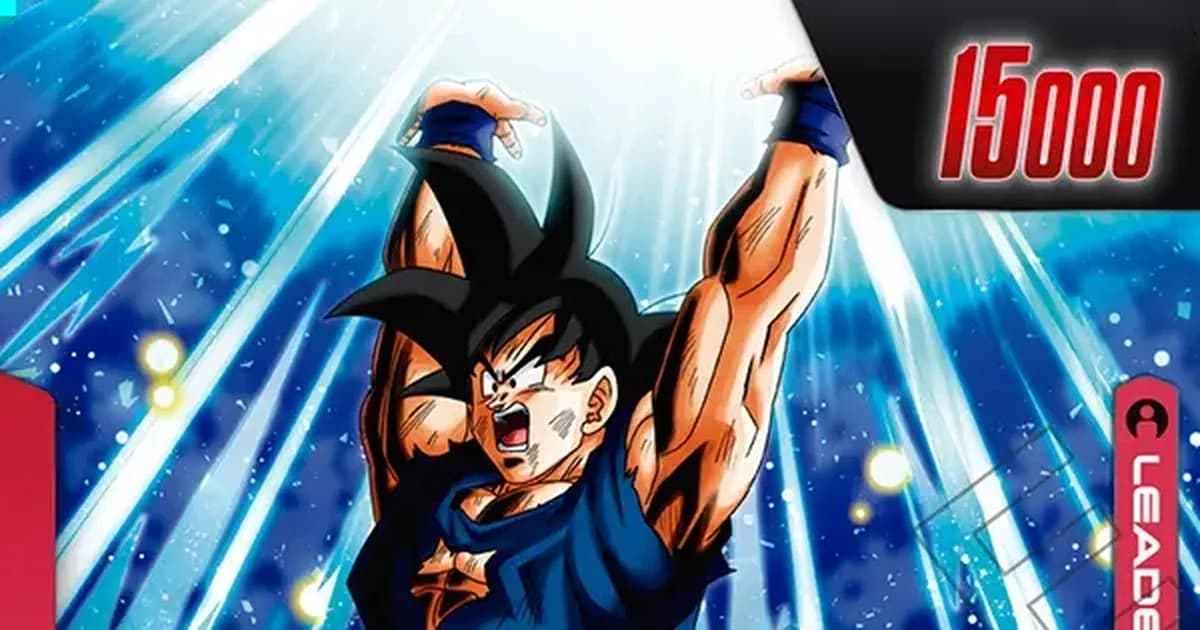
TL;DR: Son Goku (FB10-001, Red) Awakens at 2+ Ki markers for roughly +10,000 power on attack, the most linear game plan in FB10. Community tier lists place him B-tier behind Vegito and Gohan/Piccolo, but Goku decks took 1st and 2nd at an Italy Regional tracked by Egman Events, ahead of a Vegito build in 3rd. The deck's biggest payoff is Super Genki-Dama: banking 7+ Ki for a Triple Strike attack. It's also the cheapest competitive build in the set.
What does the Son Goku Ki deck actually do? (quick answer)
Build Ki markers, Awaken your Leader at 2 or more, then keep attacking with a growing power total. Son Goku (FB10-001, Red) has no multi-step combo to learn and no timing window you can miss. That simplicity makes him the best entry point into FB10 for a new player, and it's also exactly why sharper opponents can see the plan coming and play around it.
Overview: the Ki-and-Awaken game plan
Goku's identity in FB10 is built entirely around one resource: Ki markers accumulating in the Battle Area. Once 2 or more sit there, Goku Awakens. From that point on, his Activate Main skill clears the Battle Area's Ki and stacks it onto himself, worth roughly +10,000 power on the turn it triggers, and he draws a card whenever he attacks. There's no fusion condition to time, no Evolve threshold to track alongside a Life total, just a resource that builds up and then cashes in.
That's the deck's entire appeal and its entire limitation in one sentence. Against an opponent who hasn't played against Goku before, the power swing on Awakening can end a game fast. Against an opponent who has, the plan is readable enough that they can hold back removal or blockers until after you've committed, which is the core reason community tier lists have consistently placed Goku Ki at B-tier behind Vegito (Blue, Evolve) and Gohan/Piccolo (Green, Master's Teachings) since FB10 launched in June.
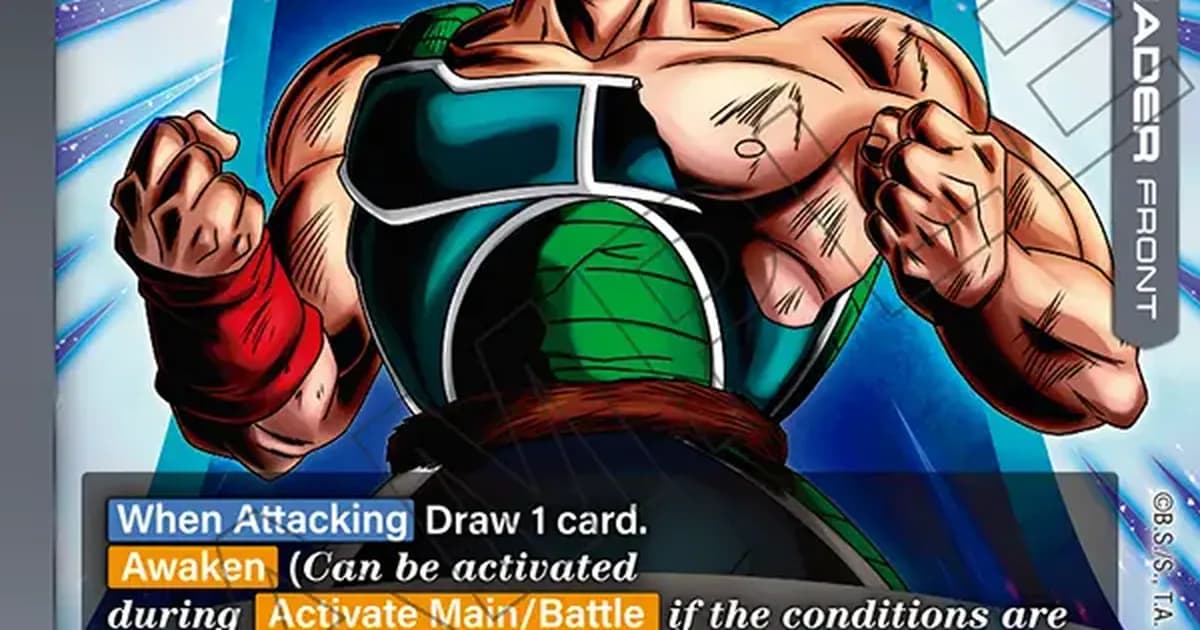
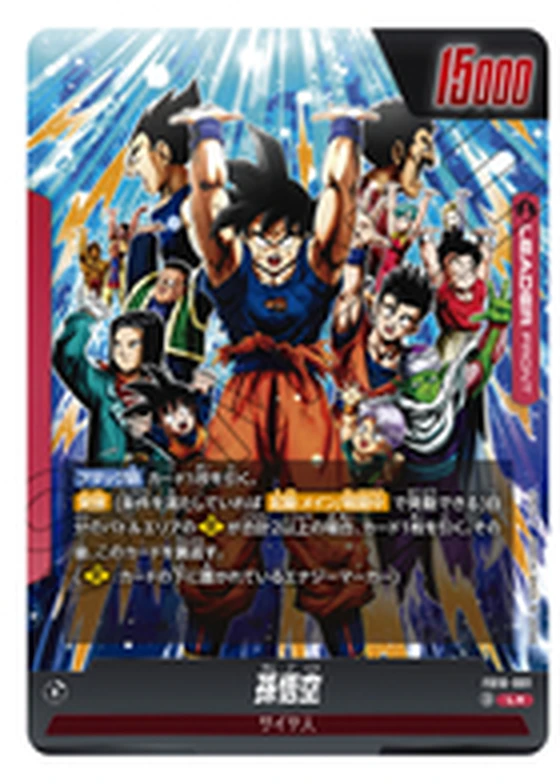 Son Goku's leader card front, the state you're playing from before hitting the 2-Ki Awaken threshold.
The Super Genki-Dama payoff
The deck's single biggest turn runs through an Extra Card built specifically for this leader: Super Genki-Dama. By removing 7 or more Ki markers from under your Son Goku Leader during battle, you can grant him Triple Strike, turning what would be a single point of damage into 3. Hitting that 7-Ki threshold takes real setup, you're not getting there in the first couple of turns, but it's the payoff that separates a Goku deck that's just attacking with a bigger number from one that closes games outright.
Building toward that threshold means playing the early turns patiently. Every attack that doesn't immediately need the power boost is an opportunity to let Ki keep accumulating instead of cashing it in the moment you Awaken. New players tend to trigger the Activate Main clear-and-stack skill the instant it's available; the stronger line is often waiting a turn or two longer to bank more Ki first, especially if you're building toward a Super Genki-Dama swing rather than just riding the initial Awaken bump.
Step-by-Step: Playing the Goku Ki Plan
1. Develop your board through turns 1 and 2 and let Ki accumulate. Don't force Ki plays if a better tempo option exists. The deck can afford to be patient early since its whole plan pays off later.
2. Hit the 2-Ki Awakening threshold around turns 2 to 3. Once Goku Awakens, decide whether to cash in the Activate Main power boost immediately or hold for a bigger Super Genki-Dama turn later.
3. Match your cash-in timing to the matchup. Against an aggressive opponent, cashing in early to stabilize is usually correct. Against a slower deck, banking Ki toward 7 or more is often better.
4. Look for the Super Genki-Dama window from turn 4 onward. Once you've got 7 or more Ki stacked, a Triple Strike turn can end games that would otherwise drag on. Time it against an opponent's open board, not into a wall of blockers.
5. Play around your own predictability all game. Slow-rolling Ki accumulation by even one extra turn, when you can afford to, keeps sharper opponents from setting up a clean answer to your Awaken turn.
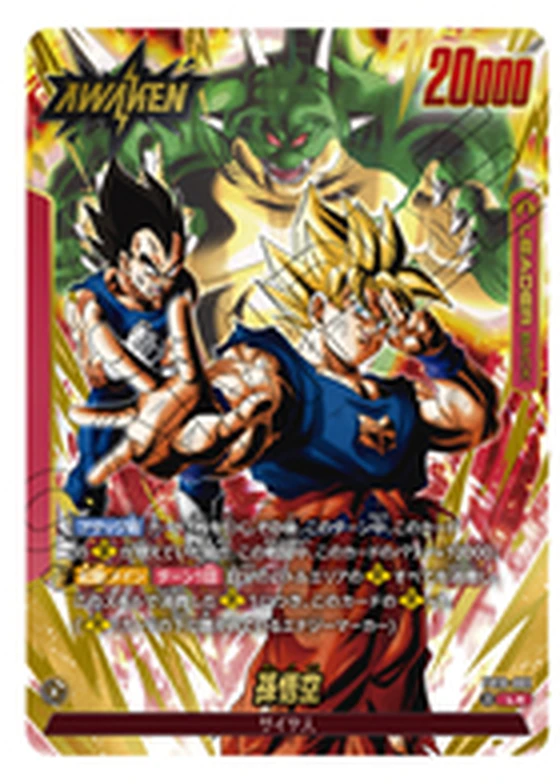 Goku's Awaken side, flipped once 2+ Ki markers sit in the Battle Area, jumping from 15000 to 20000 power.
Tips for playing Son Goku in the current meta
Play around your own predictability. The single biggest leak in a Goku Ki deck's win rate isn't a card choice, it's telegraphing the Awaken turn too early and letting the opponent set up a clean answer. Slow-rolling Ki accumulation by even one extra turn, when you can afford to, buys real value.
Don't skip the Super Genki-Dama line just because it takes patience. It's tempting to just Awaken and swing every turn since that's the deck's simplest mode, but the Triple Strike payoff is what actually closes out games against decks with real defensive tools, not the steady +10,000 power alone.
Budget-wise, this is one of the cheaper competitive builds in FB10. Goku isn't chasing the set's most contested chase singles the way Vegito Evolve builds are, which makes it a genuinely reasonable first deck to build rather than just a "learn on this, then upgrade" placeholder.
Where Goku Ki actually stands right now
Six weeks of post-launch tournament and community data settled FB10 into a clear top two (Vegito, Gohan/Piccolo), an A-tier (Cell), and a B-tier pair (Boujack, Goku Ki) that most coverage, including this site's own tier list, treated as a lower ceiling relative to the top of the format. That read isn't wrong at the aggregate level. But it's worth flagging directly: at an FB10-format Italy Regional tracked by Egman Events, Goku decks placed both first and second, with a Vegito build taking third. One regional result doesn't move a tier list by itself, and it's not proof Goku Ki has quietly become a top-tier deck. It is real evidence the "easy to play around" read on paper hasn't fully held up against actual bracket pressure yet, and it's worth watching as more regional data comes in through the rest of the FB10 season before FB11 ("Brightness of Hope") arrives October 16, 2026.
Key Takeaways
- Son Goku (FB10-001, Red) Awakens at 2+ Ki markers, gaining roughly +10,000 power on the turn he cashes in, and is the simplest leader to pilot in FB10
- The deck's biggest payoff is Super Genki-Dama: remove 7+ Ki from under Goku to grant him Triple Strike (3 damage instead of 1)
- Community tier lists place Goku Ki at B-tier behind Vegito and Gohan/Piccolo, but an Italy Regional saw Goku decks take 1st and 2nd, a real result worth watching
- It's the cheapest competitive-viable build in the set, making it a genuinely reasonable first deck rather than just a training-wheels pick
- The core skill is patience: banking Ki past the minimum Awaken threshold rather than cashing in the instant it's available
Frequently Asked Questions
Is Son Goku a good leader in FB10 Cross Force? He's B-tier on most community tier lists, behind Vegito and Gohan/Piccolo, because his game plan is visible from turn one. That said, at an Italy Regional tracked by Egman Events, Goku decks placed 1st and 2nd, ahead of a Vegito build in 3rd, a real result worth watching even if it's one event.
How does Son Goku's Awakening work in FB10? Goku (FB10-001) Awakens once 2 or more Ki markers are in the Battle Area. After Awakening, his Activate Main skill clears all Ki from the Battle Area onto himself for roughly +10,000 power that turn, plus a draw effect on attack. There's no combo sequencing, just build Ki and swing.
What is Super Genki-Dama in the Goku deck? An Extra Card built around Goku's Ki mechanic. By removing 7 or more Ki markers from under your Son Goku Leader during battle, you can grant your Leader Triple Strike, inflicting 3 damage instead of 1. It's the deck's biggest single-turn payoff.
Is Son Goku a good deck for beginners? Yes, it's the most beginner-friendly leader in FB10. The plan is linear (build Ki, Awaken, attack) and the deck doesn't punish imperfect sequencing the way Vegito's Evolve timing or Cell's Black Android lines do. It's also cheaper to build since it isn't chasing the set's most contested singles.
What beats Son Goku Ki in FB10? Experienced opponents who have seen the deck before can play around the Awakening threshold, holding removal or blockers until after you've committed Ki rather than before. Vegito's flexible multi-action turns and Gohan's incremental resource engine are both harder for Goku to race once the opponent knows what's coming.
Related Reading
- Dragon Ball Fusion World FB10 Leaders Guide: The full profile on all five FB10 leaders side by side.
- Dragon Ball Fusion World FB10 Meta Tier List: Where every leader lands after six weeks of tournament data.
- Dragon Ball Fusion World FB10 Gohan Deck Guide: The Green Master's Teachings deck, FB10's other consistency-focused pick.
- Dragon Ball Fusion World FB10 Cross Force Set Guide: The full set overview if you haven't picked a leader yet.
References
- Egman Events: Dragon Ball Super Fusion World Tournaments: tournament tracker, source for the Italy Regional result cited above
- DRAGON BALL Official Site: FB10 Cross Force: official set announcement and card reveal coverage
Was this guide helpful?
About the author
Beginner guides and anime crossover
Pen name for the Shonen TCG desk's beginner guides, starter decks and anime-to-card-game explainers.
- Rules checked against the official rulebook and card text
- Every claim traced to a cited source
- Opinions marked as ours, with the reason
Keep reading
FB10 Boujack Deck Guide: The Yellow Aggro Ki Build
Guides · 8 min
Dragon Ball Fusion World FB11 Leaders: All 5 Revealed
Guides · 8 min

Dragon Ball Fusion World Card Grading: Worth It in 2026?
Guides · 12 min

Dragon Ball Fusion World Most Expensive Cards (2026)
Guides · 13 min
Dragon Ball Fusion World Story Booster 01: New Leaders
Guides · 6 min

Dragon Ball Fusion World FB10 July Meta Report 2026
Guides · 12 min
FB10 Gohan Deck Guide: Master's Teachings in Cross Force
Guides · 16 min

Dragon Ball Fusion World FB10 Format and Rotation Guide
Guides · 14 min
Disclaimer
This article is published for informational and entertainment purposes. It does not constitute professional financial, legal, or technical advice. Game performance, online services, patch schedules, and store listings change. Verify critical details (pricing, system requirements, regional availability) with publishers and storefronts before you buy. Affiliate links, where present, help support our editorial work and are labelled in our affiliate disclosure.