

Shonen TCG · Guides
FB10 Boujack Deck Guide: The Yellow Aggro Ki Build
This FB10 Boujack deck guide covers a leader with a genuinely unusual arc in Dragon Ball Fusion World's Cross Force format: a week-one favorite that cooled off fast once opponents figured out how to play around it. Here's what the deck actually does, why the hype didn't hold, and where it still wins games today.
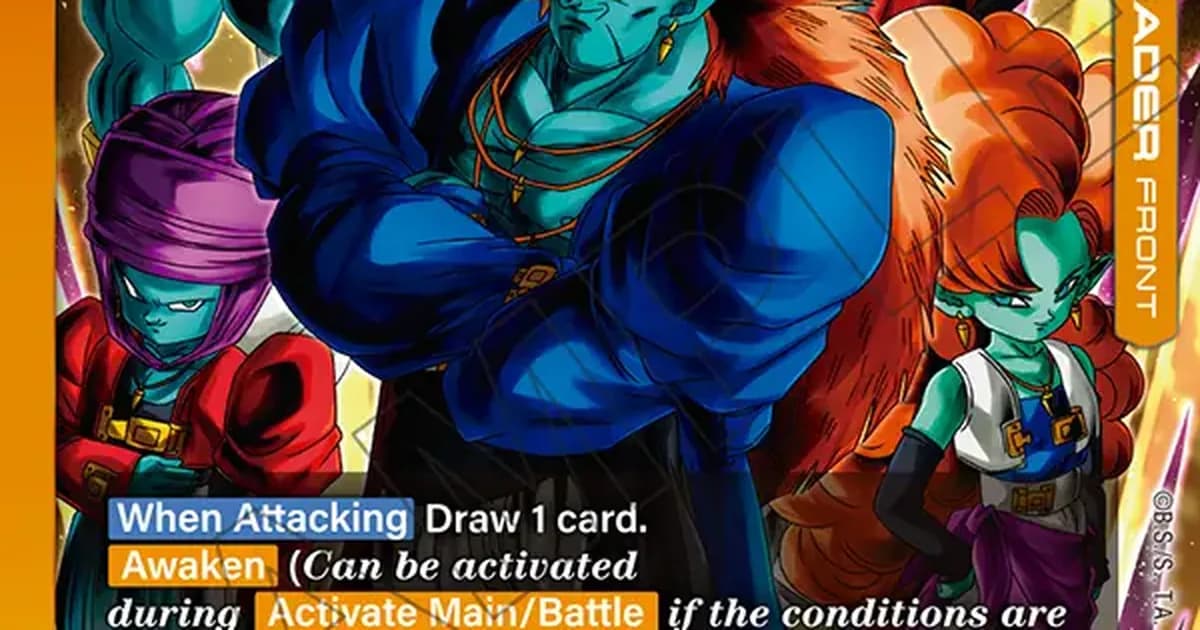
TL;DR: Boujack (FB10-073, Yellow) plays a free cost-2-or-less Battle Card on play or when attacking, and can spend 1 Ki to KO his own card as a defensive trade. He was a week-one darling with an impressive burst ceiling, but six weeks of data settled him at B-tier once Vegito and Gohan pilots learned to read his Ki-spending lines. Still a real threat at locals where opponents haven't seen the deck before.
What does the Boujack deck actually do? (quick answer)
Chain cheap Battle Cards for free every turn using Boujack's On Play and When Attacking skill, and hold Ki in reserve to either fuel a burst turn or bail yourself out of removal. The deck rewards aggressive, low-curve play, but every Ki you spend is a resource decision with real opportunity cost, which is exactly where its ceiling and its floor both come from.
Overview: cheap plays and a defensive trick
Boujack's identity runs through two separate skills that don't combine into one flashy combo, they're just two different tools. On Play and When Attacking, he lets you drop a Battle Card costing 2 or less straight from your hand, no energy spent. That's real, repeatable tempo every single turn, keeping pressure on the board without draining your resources the way most aggressive plays would.
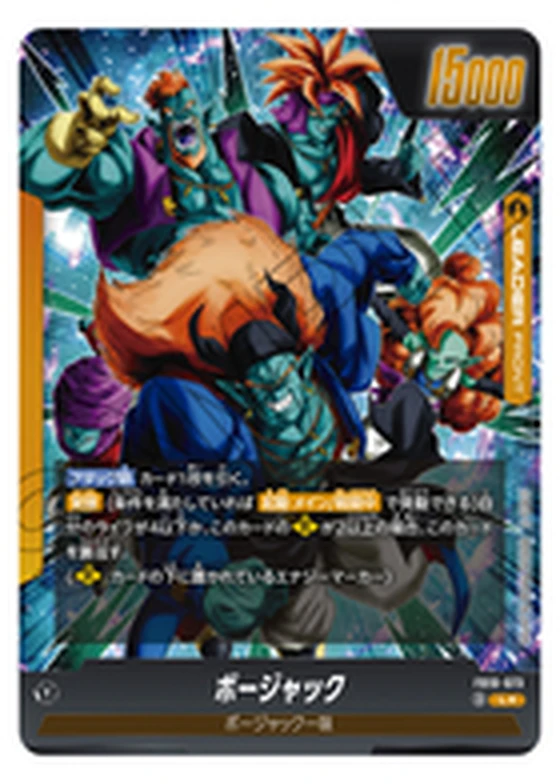 Boujack's leader card front, built around the free cost-2 play engine that keeps pressure on every turn.
The second skill is defensive, not offensive: a Permanent ability that lets you spend 1 of your own Ki during your opponent's turn to KO a Battle Card in your Battle Area yourself, instead of losing it to their removal outright. It's a one-for-one trade that turns what would be a full blowout into an even exchange. The catch is that Ki spent defensively is Ki you can't spend on your own burst turn, and that tension between offense and defense is the actual skill test this leader poses.
Why Boujack cooled off after week one
Early testing painted Boujack as one of FB10's two defining decks alongside Vegito, and for good reason: his burst damage ceiling looked genuinely impressive against opponents seeing the deck cold. Six weeks of real tournament and community data told a different story. The burst requires spending Ki in ways that Vegito and Gohan pilots learned to read and play around, and by week four, Gohan/Piccolo had taken over the format's second-defining-deck slot that early theory crafters had penciled in for Boujack.
That's not the same as saying the deck is bad. It's a real threat in locals and against players who haven't mapped his lines yet, and Yellow has a long history of punishing decks that aren't ready for aggression in Fusion World. What changed is the ceiling: against a field that knows the matchup, Boujack's win rate settles into solid B-tier rather than the S-tier hype week one suggested.
Worth noting for anyone weighing this deck against the format's other Yellow option: Majin Buu: Evil (from the earlier SB01 set) is the Yellow deck that actually held onto A-tier through the same six weeks, precisely because his dismiss-and-pressure plan doesn't lean on the same readable Ki-spending patterns. If you already own SB01 pieces, that's worth comparing against a fresh Boujack build before committing to singles.
Step-by-Step: Piloting the Aggro Ki Plan
1. Chain cheap plays every turn through turns 1 to 3. Use the free cost-2-or-less play on both On Play and When Attacking triggers whenever you can. Don't sit on Ki you don't need yet, this deck wants continuous pressure early.
2. Track your Ki total as the game develops. Every point you're holding is either a future burst turn or a defensive save. There's no universally correct split; it depends on whether you're ahead on board (lean offense) or facing removal-heavy opponents (lean defense).
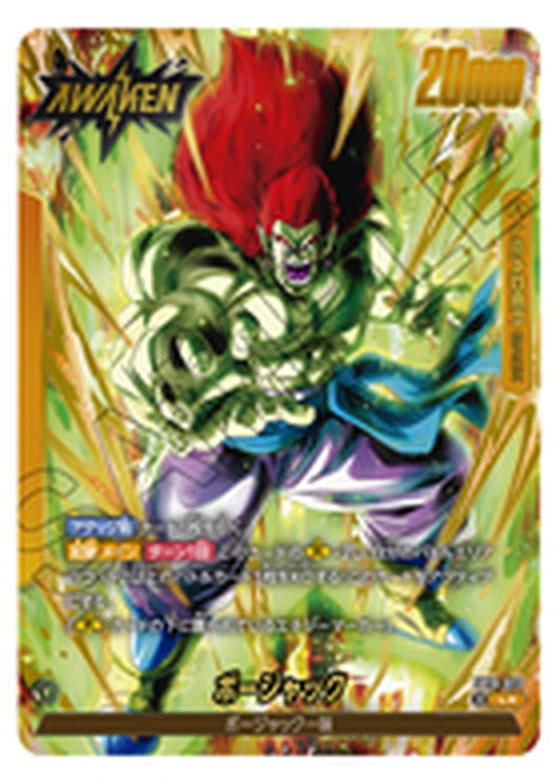 Boujack's Awaken side, the red-haired transformation that unlocks once his condition is met, jumping to 20000 power.
3. Read the matchup before committing to a burst turn. Against Vegito, pressure his Life total before the Evolve engine gets rolling. Against Gohan/Piccolo, expect a grindier game where predictable Ki-heavy turns get punished. Against Cell, race for tempo before his Android cost-reduction engine compounds.
4. Hold at least 1 Ki in reserve against removal-heavy decks. Getting blown out of a key Battle Card because you spent every Ki point on offense is the single most common way this deck loses games it should win.
5. Vary your burst-turn pattern game to game. Experienced Vegito and Gohan pilots have already learned to read Boujack's typical Ki-spending lines, so telegraphing the same sequence every match is exactly what let the format catch up to this deck after week one.
Tips for playing Boujack in the current meta
Don't overcommit into an open board against experienced Vegito or Gohan pilots. They've seen this deck's lines before, and telegraphing a burst turn the same way every game is exactly what let the format catch up to Boujack after week one.
Play the deck where it's actually strong: locals, unfamiliar matchups, and any event where your opponent hasn't specifically prepared for the Ki-spending patterns this leader runs on. The read-and-play-around problem is real at a competitive level, but it isn't universal, plenty of players still haven't seen this specific deck enough times to have a clean answer.
Budget-wise, Boujack sits in a reasonable middle tier, not the cheapest build in FB10 like Son Goku Ki, but not chasing the same contested Blue Evolve singles that make a competitive Vegito deck expensive either.
Matchup notes
Against Vegito, the matchup is genuinely close if you can pressure his Life total before the Evolve engine gets rolling; once he's chaining On Play effects underneath his Evolved cards, Boujack's burst usually can't race the card advantage. Against Gohan/Piccolo, expect a grindier game: his dual Awaken condition means he's rarely far from flipping, and Boujack's Ki-heavy turns give him exactly the kind of predictable pattern his deck is built to punish. Against Cell, the matchup rewards whichever player establishes tempo first; Boujack's early cheap plays can outrace Cell's slower Android cost-reduction engine if you don't give him time to compound.
Key Takeaways
- Boujack (FB10-073, Yellow) plays a free cost-2-or-less Battle Card every turn on play or when attacking, and can spend 1 Ki to KO his own card as a defensive trade
- He was a week-one hype pick that cooled to B-tier once experienced Vegito and Gohan pilots learned to read his Ki-spending lines
- By week four, Gohan/Piccolo had replaced Boujack as FB10's second format-defining deck
- The deck still wins consistently at locals and against opponents unfamiliar with its specific lines
- The core skill test is managing the offense-versus-defense split on Ki spending, not any single combo
Frequently Asked Questions
Is Boujack a good leader in FB10? He's B-tier. Boujack was a week-one favorite with an impressive-looking burst ceiling, but six weeks of tournament and community data show that ceiling requires spending Ki that experienced opponents can read and play around. He's a real threat in locals where meta prep isn't deep, but he isn't carrying anyone to a regional top-8 right now.
How does Boujack's leader ability work? Boujack (FB10-073, Yellow) has two skills. On Play and When Attacking, he lets you play one Battle Card costing 2 or less straight from your hand. Separately, a Permanent skill lets him spend 1 of his own Ki during your opponent's turn to KO a Battle Card in your own Battle Area instead of losing it to their removal, a one-for-one trade rather than a blowout.
Why did Boujack fall from S-tier hype to B-tier? Early testing showed an impressive burst damage ceiling, but that burst relies on spending Ki markers, and experienced Vegito and Gohan pilots learned to read and play around those lines within a few weeks. By week four, Gohan/Piccolo had taken Boujack's spot as the format's clear second-tier defining deck.
What is Boujack's Ki defense trick? During your opponent's turn, if a Battle Card in your Battle Area would be removed, you can spend 1 Ki from your Leader to KO that card yourself instead. It turns what would be a one-sided removal into an even trade, but the Ki you spend there is Ki you can't spend on offense that turn, a real resource tension the deck has to manage.
Is Boujack good for new players? It's playable but not the easiest entry point in FB10. The free cost-2 play engine is straightforward to understand, but sequencing when to spend Ki offensively versus defensively is a real skill the deck tests. Son Goku's Ki deck is the more forgiving beginner pick if you want the simplest possible game plan.
Related Reading
- Dragon Ball Fusion World FB10 Leaders Guide: The full profile on all five FB10 leaders side by side.
- Dragon Ball Fusion World FB10 July Meta Report: The six-week data that tracked Boujack's fall from week-one hype to B-tier.
- FB10 Son Goku Ki Deck Guide: FB10's other B-tier leader, and the more beginner-friendly of the two.
- Dragon Ball Fusion World FB10 Cross Force Set Guide: The full set overview if you haven't picked a leader yet.
References
- DRAGON BALL Official Site: FB10 Cross Force: official set announcement and leader card reveal images
- Egman Events: Dragon Ball Super Fusion World Tournaments: tournament tracker referenced for FB10 meta context
Was this guide helpful?
About the author
Pen name for the Shonen TCG desk's tournament coverage, format analysis and cross-game comparisons.
- Results taken from event pages and standings
- Other games checked against their own official rules
- Opinions marked as ours, with the reason
Keep reading
FB10 Son Goku Ki Deck Guide: The Beginner-Friendly Build
Guides · 9 min
Dragon Ball Fusion World FB11 Leaders: All 5 Revealed
Guides · 8 min

Dragon Ball Fusion World Card Grading: Worth It in 2026?
Guides · 12 min

Dragon Ball Fusion World Most Expensive Cards (2026)
Guides · 13 min
Dragon Ball Fusion World Story Booster 01: New Leaders
Guides · 6 min

Dragon Ball Fusion World FB10 July Meta Report 2026
Guides · 12 min
FB10 Gohan Deck Guide: Master's Teachings in Cross Force
Guides · 16 min

Dragon Ball Fusion World FB10 Format and Rotation Guide
Guides · 14 min
Disclaimer
This article is published for informational and entertainment purposes. It does not constitute professional financial, legal, or technical advice. Game performance, online services, patch schedules, and store listings change. Verify critical details (pricing, system requirements, regional availability) with publishers and storefronts before you buy. Affiliate links, where present, help support our editorial work and are labelled in our affiliate disclosure.