

Shonen TCG · Guides
Union Arena Deck Building Guide: Build a 50-Card Deck
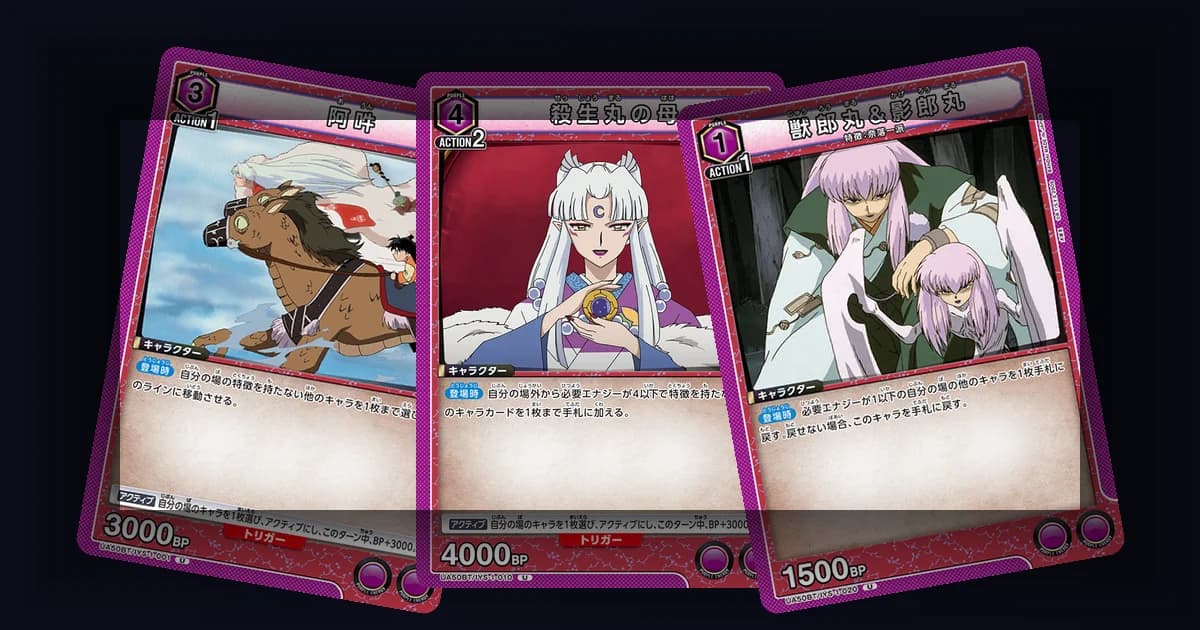
TL;DR: This Union Arena deck building guide shows you how to build: pick a single-IP set, build exactly 50 cards (max 4 per card number) within that source material. Energy is integrated, with no separate resource deck, so every card is a real game piece. Still, you must manage the Energy Line and prepare 3 AP cards separately. Prioritize a smooth curve, a clear win condition, and consistency. Skew Characters for aggro, add Events for control, and start from a starter deck.
Union Arena deck building guide: quick answer
Union Arena is one of the more approachable TCGs to build for, because its structure is clean:
- Pick a single-IP set (Solo Leveling, Bleach, JJK, and others); standard play uses one source material or title
- Build exactly 50 cards from Character, Event, and Field/Site cards
- Max 4 copies of the same card number
- Prepare 3 AP cards separately; they are not part of the 50-card main deck
- Energy is integrated; there is no separate resource deck to build
- Focus on: a smooth curve, one clear win condition, and consistency
GODEEPER: New to Union Arena entirely? Learn the rules and turn structure first. Union Arena TCG Beginner Guide 2026
Step 1: Choose Your IP Set
Union Arena releases as self-contained sets, and standard play uses one source material or title for the main deck. So the first decision is which set to build.
Pick by two factors: the anime you enjoy, because you will play more and learn faster, and the set's core mechanic. Start with the official starter or recommended list for that title, then choose a build whose sequencing you are willing to practice. Newer arrivals like the Chainsaw Man set add fresh options to that list. Your set choice defines your entire card pool, so choose before anything else. See the complete Union Arena EN release schedule for every available IP.
Confirm your event's format: standard play is tied to one source material or title. Only use another construction if the event rules explicitly allow it. Build for the format you will actually play.
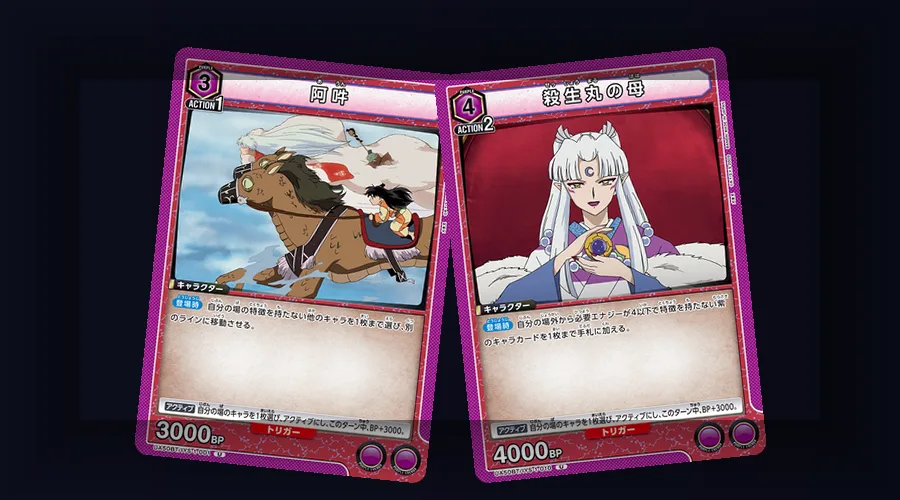 Union Arena decks are built within one source material or title in standard play. Your set choice defines the card pool, so pick the title you want to practice before adding cards.
Step 2: Understand the Energy System
This is where Union Arena differs most from games like One Piece TCG or Magic. Energy is integrated into the card system, not a separate deck of lands or DON!!. You do not build a separate resource base, but cards and the Energy Line still determine how much you can do each turn.
Two consequences for deckbuilding:
- No separate resource deck. You cannot flood or miss a land-style resource deck, but that only removes one kind of variance. You still need cards that generate energy and must manage the Energy Line.
- All 50 cards are real game pieces. Since the main deck is not padded with resource cards, every slot counts. Prioritize a smooth curve and consistency, because each draw needs to support the plan.
The practical upshot: build a deck that can make useful plays across the game and finds its key pieces reliably. Also check the official trigger limits: Special, Color, and Final trigger cards are each capped at four total in a standard deck.
Step 3: Pick Your Card Ratios
A reliable starting frame for a 50-card Union Arena deck:
- Characters (majority): your board, blockers, and attackers, the backbone of the deck
- Events (a focused set): removal, combat tricks, and value effects
- Field/Site cards (a few, if the set supports them): persistent effects that support your strategy
Skew Characters higher for aggressive, board-centric decks; add more Events for control and disruption. These are starting points, tune them by playtesting. The constant is a smooth curve so you can act every turn.
Step 4: Build the Curve
Even without a separate resource deck, curve matters: you still want plays available at each stage of the game.
- Early: cheap Characters to establish a board and not fall behind
- Mid: your workhorse Characters that carry the game
- Late: a thinner top end of high-impact threats and finishers
Avoid stacking expensive cards, a top-heavy deck has weak opening turns. Most decks want the bulk of their cards in the low-to-mid range with a small high end. Aggro curves lower; control curves a bit higher.
Step 5: Define Your Win Condition
Every deck needs a clear answer to how it wins:
- Aggro: pressure the opponent's Life with consistent attacks and go wide or hit hard early
- Mid-range: out-value the opponent with efficient Characters, then close once ahead
- Control: survive with removal and defense, then win late with a strong board or finisher
Your IP set and its mechanics point you toward one of these. Build the rest of the deck to support that single plan rather than hedging, a focused deck beats a muddled one.
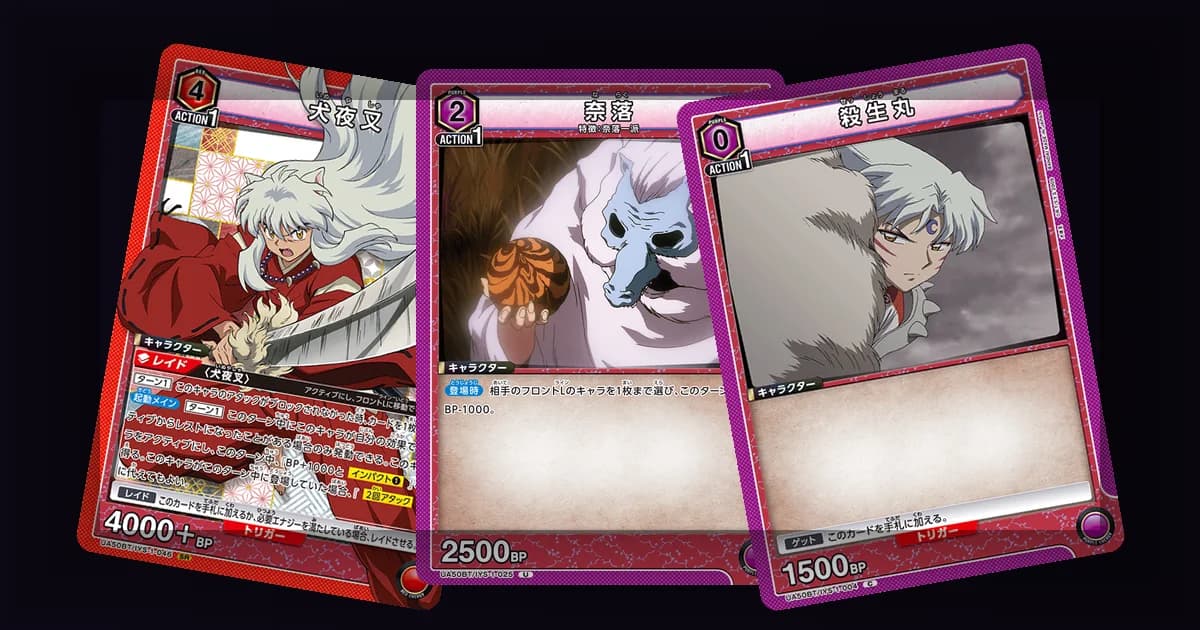
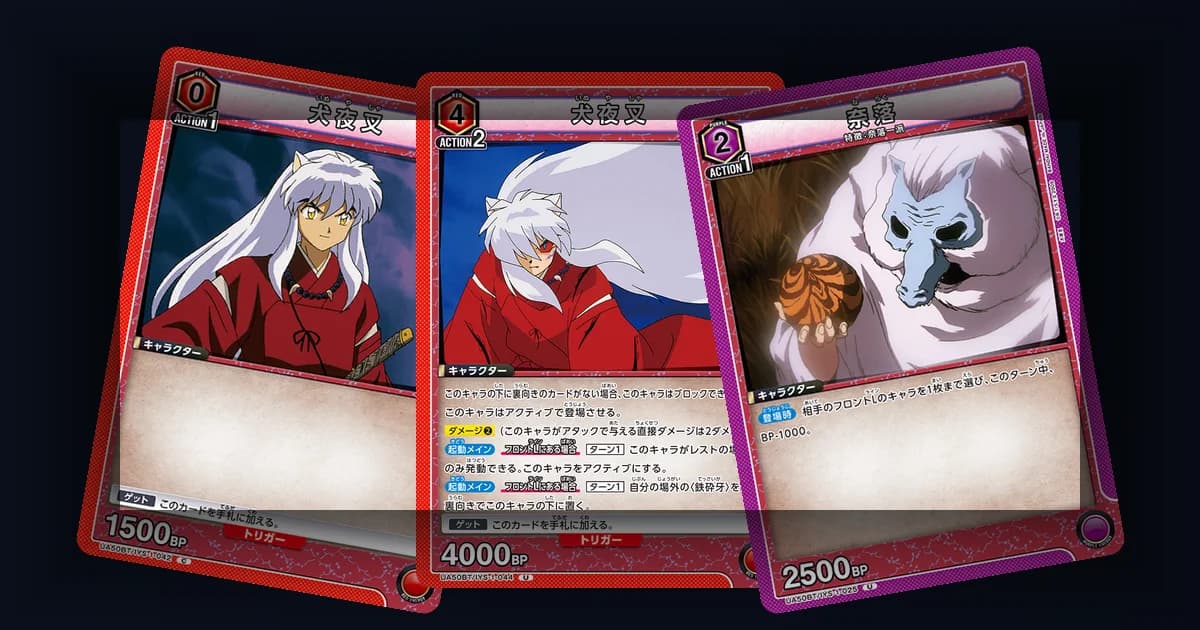
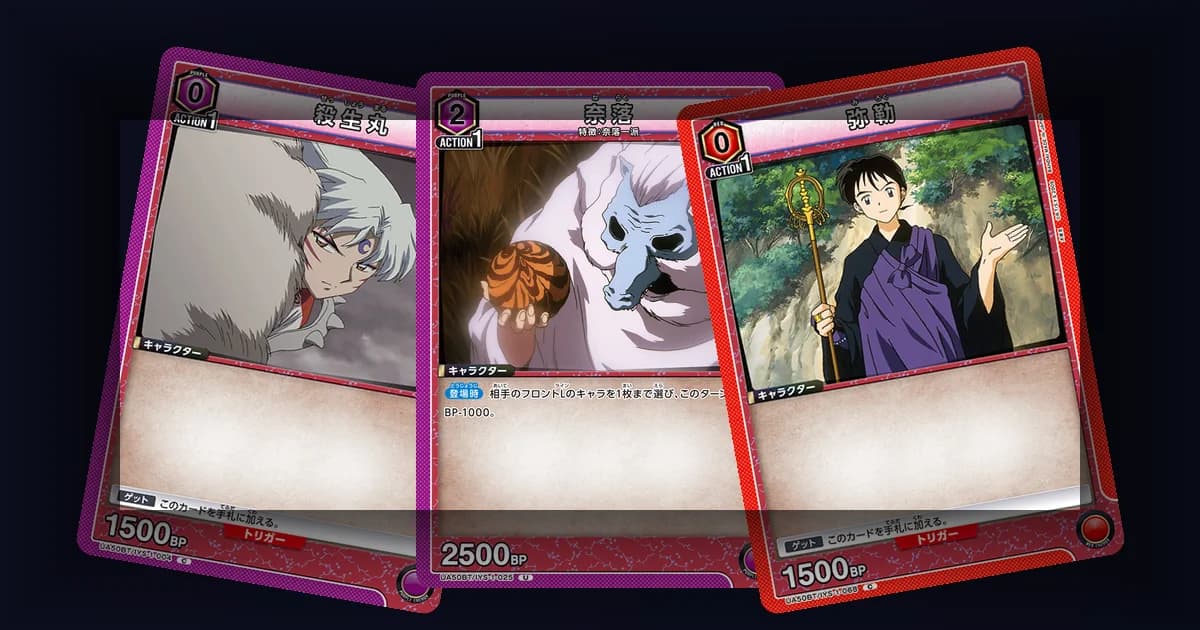
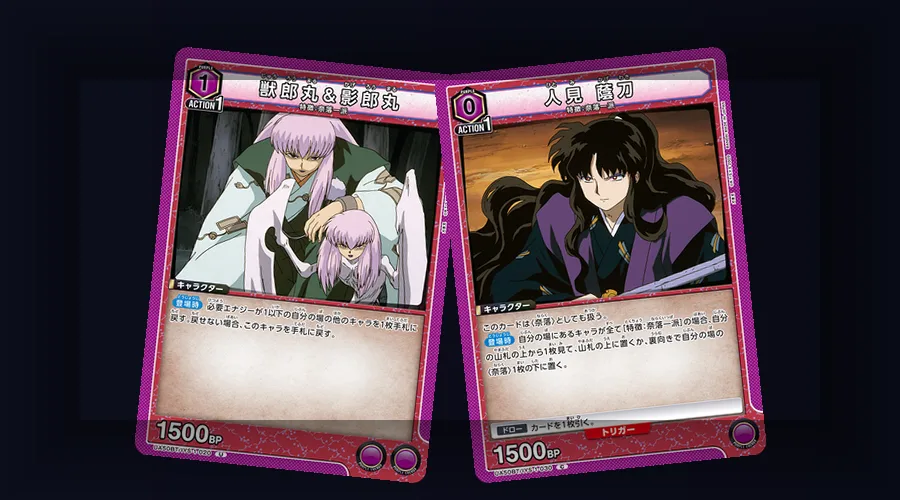 Cards from the same anime set can fill different roles in a focused deck plan; test their costs and effects together before adding more copies.
Step 6: Playtest and Tune
A list on paper is a hypothesis. Playtesting reveals the truth:
- If an early turn is consistently dead, add more cheap Characters.
- If a card never feels good, cut it.
- If you keep losing to a specific strategy, add targeted Events.
- If you mulligan most hands, your curve or ratios are off.
Change one variable at a time so you can tell what helped. Studying the set's strongest cards and a few tournament lists short-cuts this by showing proven ratios you can adapt to your IP. The Union Arena Solo Leveling guide shows a full competitive list and explains why each card earns its slot. For newer releases where tournament data is still thin, the Re:ZERO and Attack on Titan Vol.2 tier refresh shows how to label public list evidence without calling it a win rate.
Common Union Arena Deckbuilding Mistakes
- Too many one-of cards: running singles of many cards wrecks consistency; run 4-of your key pieces.
- Top-heavy curve: too many expensive cards means dead early turns.
- Mixing IPs in a single-IP format: confirm the format; standard play is one IP.
- Copying a list without understanding it: know why each card is included so you can adapt it to your meta.
- Neglecting Events: a deck of only Characters often lacks the interaction to handle the opponent's plan.
Upgrading From a Starter Deck
The smoothest on-ramp to a tuned Union Arena deck is to start from a starter and upgrade one role at a time. For the JJK set specifically, the Union Arena JJK guide walks through how Domain Expansion shapes deckbuilding decisions. Play the starter enough to understand why each card is there and where it feels weak. Then make your first upgrades to consistency, the search and draw effects that help you find your key pieces, because a deck that does its plan reliably beats a flashier but clunkier one. Next, sharpen your win condition by adding the strongest threats your IP set offers. Finally, add tech: the Events and answers that shore up your worst matchups. Upgrading in that order, consistency, then payoff, then tech, means every purchase improves your win rate rather than just changing the deck. It also spreads the cost out, so you are never buying a whole optimized list at once, and you learn what the deck actually needs from real games instead of guessing.
Whichever list you land on, give it a box that actually fits your sleeve count. Our deck box and storage buying guide covers real capacities by brand.
Step-by-Step: Building a Union Arena Deck (Quick Reference)
Six steps, condensed. Follow this sequence and you get a coherent, competitive Union Arena deck without guesswork.
1. Choose your single-IP set. This defines your entire card pool, so decide before anything else, weighing the anime you enjoy against the set's mechanical difficulty.
2. Build exactly 50 cards, max 4 per card number. Prepare 3 AP cards separately; they are not part of the main deck. Energy is integrated into the card system, so there is no separate resource deck to build alongside it.
3. Set your card ratios. Aim for a majority of Characters, a focused set of Events, and a few Field/Site cards if the set supports them, then weight toward Characters for aggro or Events for control.
4. Build a low-to-mid curve with a thin top end. Avoid stacking expensive cards; most decks want the bulk of their cards in the low-to-mid cost range so they can act every turn.
5. Commit to a single clear win condition. Pick aggro, mid-range, or control and build the rest of the 50 cards to support that one plan rather than hedging.
6. Start from a starter deck and upgrade in order: consistency, then win condition, then tech. Playtest after every change, and adjust one variable at a time so you can tell what actually helped.
Key Takeaways
- Build within a single IP set; most formats are single-IP
- Exactly 50 cards, max 4 per card number; prepare 3 AP cards separately; energy is integrated (no separate resource deck)
- Every card is a real game piece, so prioritize curve and consistency
- Skew Characters for aggro, add Events for control; tune by playtesting
- Pick one clear win condition and build to support it
- Start from a starter deck and upgrade one role at a time
GODEEPER: Ready to take your deck to an event? The tournament guide covers format and rules. Union Arena Tournament Guide 2026
Related Reading
- Union Arena Beginner Deck Tier List: Which IP set to build first.
- Union Arena Attack on Titan Vol.2 Armin Deck Guide: Red Vol.2: A concrete 50-card example with Raid sequencing and mulligan priorities.
- Union Arena Card Rarities Explained: Rarity tiers and deck cost.
- Union Arena Beginner Mistakes: Common errors to avoid once your deck is built.
- Union Arena Trigger System Explained: How triggers affect combat math when tuning your curve.
- Union Arena Impact Keyword Explained: The combat keyword that shapes win-condition sequencing.
- Union Arena EN Meta Tier List 2026: Once your deck is built, see which IPs are actually winning events right now.
Frequently Asked Questions
Q: How do you build a Union Arena deck? A: Pick a single-IP set, build exactly 50 cards (max 4 per card number) within it, prepare 3 AP cards separately, and focus on a smooth curve, a clear win condition, and consistency.
Q: How many cards in a deck? A: Exactly 50 in the main deck, up to 4 copies per card number, usually all from one source material or title. Prepare 3 AP cards separately.
Q: How does the energy system affect building? A: There is no separate resource deck, but you still manage the Energy Line and need cards that generate energy. Prioritize curve and consistency.
Q: Good card ratio? A: A majority of Characters, a focused set of Events, and a few Field/Site cards if supported. Skew Characters for aggro, Events for control.
Q: Can you mix IPs? A: Standard play uses one source material or title. Do not mix IPs unless your event rules explicitly allow it.
Q: Best way to learn? A: Start from a starter deck, then upgrade consistency, win condition, and tech in that order. Study set staples and tournament lists.
References
- Union Arena Official Site: deck construction and rules
- Union Arena Beginner Rules: main deck, card-number, and source-material rules
- Union Arena Official Rules: current format and deckbuilding reference
- Union Arena Card List: official card database
- r/unionarena: community deckbuilding discussion
- Limitless TCG: competitive list reference
Was this guide helpful?
About the author
Beginner guides and anime crossover
Pen name for the Shonen TCG desk's beginner guides, starter decks and anime-to-card-game explainers.
- Rules checked against the official rulebook and card text
- Every claim traced to a cited source
- Opinions marked as ours, with the reason
Keep reading
Union Arena How to Play: Win by Taking 7 Life Cards
Guides · 12 min
Union Arena Trigger System Explained: All Trigger Types
Guides · 8 min
Union Arena Raid Mechanic Explained: Rules and Costs
Guides · 8 min

Union Arena Solo Leveling vs JJK: Which Deck to Play
Guides · 8 min
Union Arena Beginner Mistakes: 8 Errors to Stop Making
Guides · 8 min
Union Arena Impact Keyword Explained: Battle Damage Guide
Guides · 10 min
Union Arena Tournament Guide 2026: Rules and Formats
Guides · 12 min
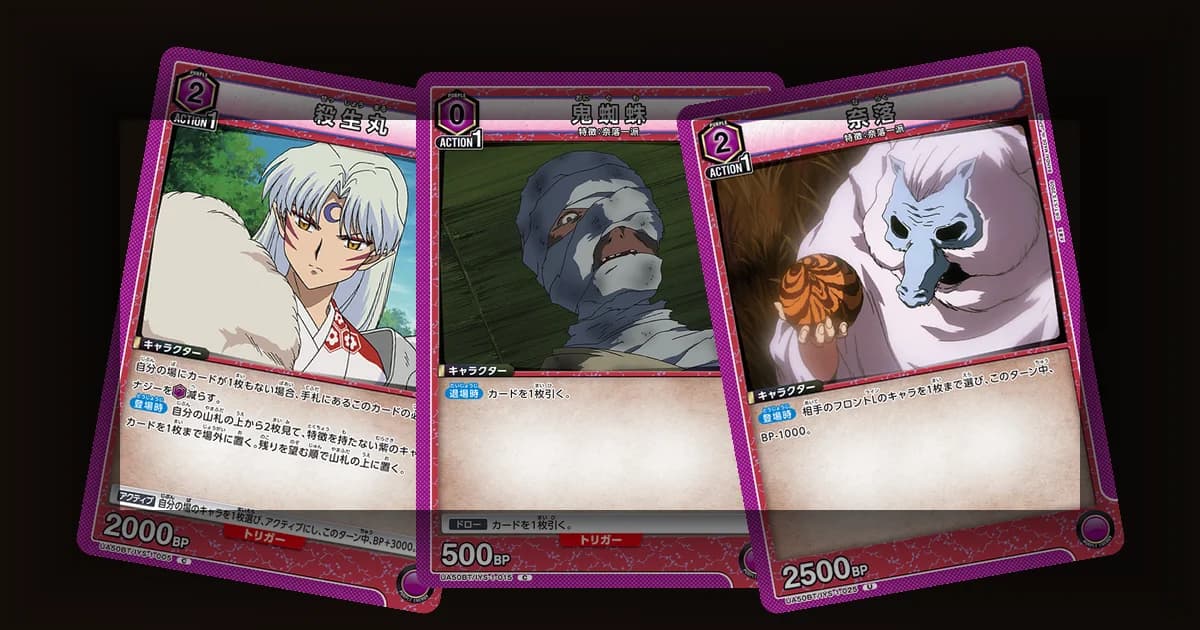
Union Arena Card Rarities Explained: C, U, R, SR, Parallels
Guides · 5 min
Disclaimer
This article is published for informational and entertainment purposes. It does not constitute professional financial, legal, or technical advice. Game performance, online services, patch schedules, and store listings change. Verify critical details (pricing, system requirements, regional availability) with publishers and storefronts before you buy. Affiliate links, where present, help support our editorial work and are labelled in our affiliate disclosure.