Loading…


Shonen TCG · Guides
Union Arena InuYasha Complete Guide: EN Set & Deck Hub 2026
Union Arena InuYasha complete guide: current UE23BT card pool, deck shells, release-event results, and buying notes for September 2026 Standard play.
Reviewing
Union Arena
This Union Arena InuYasha complete guide is now a post-launch hub for the English UE23BT set. Bandai's product page confirms that the booster is available after its August 14, 2026 release, with 80 card types, 12 Action Point card types, 12 cards per pack, and 16 packs per display. The card list and early Standard deck profiles are live, so the useful questions have shifted from launch speculation to card text, current shells, tournament sample size, and buying decisions.
TL;DR: UE23BT is available now at a $4.99 MSRP per pack, with 80 card types plus 12 AP types. Current tracked shells include IYS - Kagura, IYS - Inuyasha, and IYS - Sesshomaru. TCG Contender places those profiles in Tier 2 or Tier 3, but the tournament samples are still thin, so treat the labels as directional rather than settled.
What is Union Arena InuYasha? (quick answer)
Union Arena InuYasha is the English UE23BT booster set for Bandai's multi-IP Union Arena TCG, released on August 14, 2026. The English card numbers use the UE23BT/IYS prefix, while the Japanese product is UA50BT. Union Arena uses a shared rules framework with title-locked deck construction, so each set brings a different anime property into its own legal card pool. If you already play one Union Arena set, the rules carry over, but the title, card pool, and deck options change.
One thing worth flagging up front: an earlier version of this site's InuYasha coverage described a "Jewel Shard counter" mechanic where characters accumulated and spent counters for bonus effects. That framing does not match the live card text. There is no game-wide accumulating counter system. What is real: individual characters have their own abilities, Naraku cards can place faction or Shikon Jewel Shard cards face down beneath a Naraku, and the official set includes a standalone Event named "Shikon Jewel Shard." See the mechanics section below for the current card text.
Confirmed card pool and character lineup
The pre-launch 27-character count is no longer a useful substitute for the live card list. Bandai's official UE23BT product page confirms 80 card types plus 12 Action Point card types, with the base rarity breakdown of 28 Common, 28 Uncommon, 12 Rare, and 12 Super Rare types. The official card list currently shows 117 results because parallel and alt-art entries are included in the display.
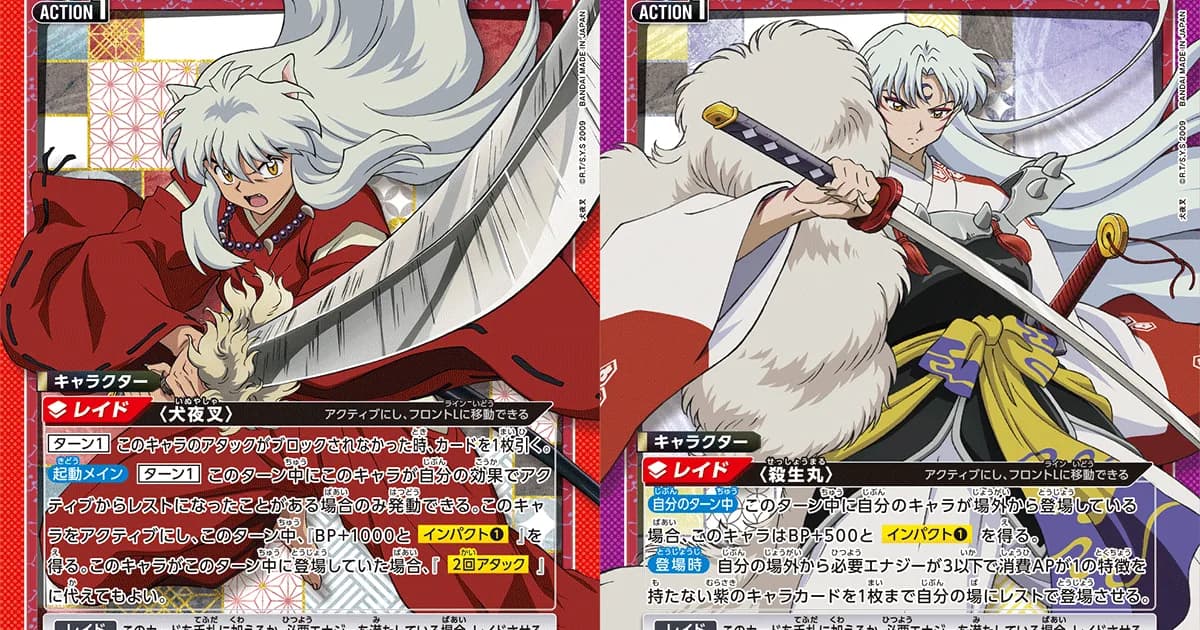
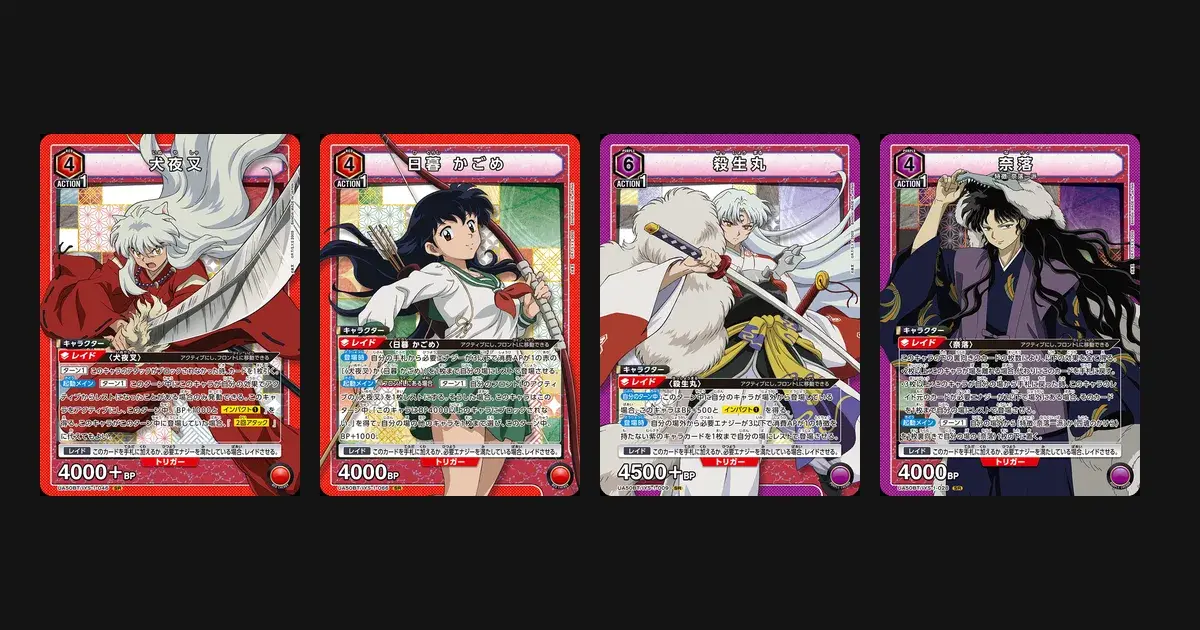
Bandai's featured lineup names Inuyasha, Kagome Higurashi, Shippo, Miroku, Sango, Sesshomaru, Naraku, Kagura, Kanna, Koga, and Kikyo, while the live list also includes support characters, factions, Events, Items, and Locations such as A-Un 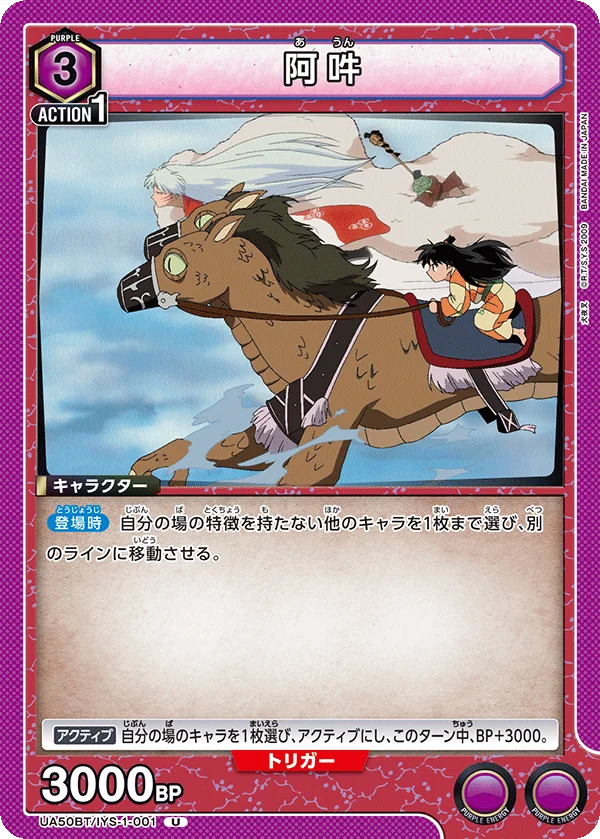 UA50BT-001UA50BT-001Shop on TCGplayer, Rin, Jaken, Shikon Jewel Shard, Tetsusaiga, and Hiraikotsu. Use the official card list for exact names and card numbers rather than relying on a pre-launch roster summary.
The color split still matters for deck building. Red contains the Inuyasha, Kagome, Kikyo, Sango, and Miroku packages, while Purple contains the Sesshomaru, Naraku, Kagura, and Kanna packages. The official product page confirms 12 SR types, and current deck profiles show that players are building around more than the five SR names highlighted in the earlier pre-launch version of this guide.
That two-color split also means the set plays like two separate archetypes sharing one booster. A player who only wants Red doesn't need to track the Purple side's incarnation package at all, and vice versa. Sango and Miroku round out the Red side as supporting pieces around the Inuyasha and Kagome core, while Kanna and Kagura give the Purple side a second layer beyond the Naraku package described in the mechanics section below. Confirm each supporting card's exact text on the official list before assuming it slots into either shell, since a same-color card isn't automatically a fit for every Red or Purple build.
GODEEPER: Want the full character-by-character breakdown before you plan a deck? Union Arena InuYasha Card List: All 27 Confirmed Names →
How the InuYasha mechanics actually work
The English card list is now live, so these mechanics can be checked against Bandai's UE23BT/IYS entries rather than pre-launch scans.
Naraku (UE23BT/IYS-1-028) is a 4-cost, 4000 BP Purple Character. After Raid, it can place a Naraku's Faction or Shikon Jewel Shard card from the sideline face down beneath a Naraku. With two or more cards beneath it, it returns to hand instead of leaving the field normally; with three or more, returning the Raided card can replay its low-cost base card from the sideline set to resting. This is card-specific incarnation text, not a shared counter system.
Sesshomaru (UE23BT/IYS-1-009) is a 6-cost, 4500+ BP Character. If one of your characters was played from the sideline that turn, it gains 500 BP and Impact (1), and its effect can play a Purple character with 3 or less required energy and 1 AP cost from the sideline set to resting. That makes the Sesshomaru raid line a current Purple build-around, although the current profile is still only Tier 3.
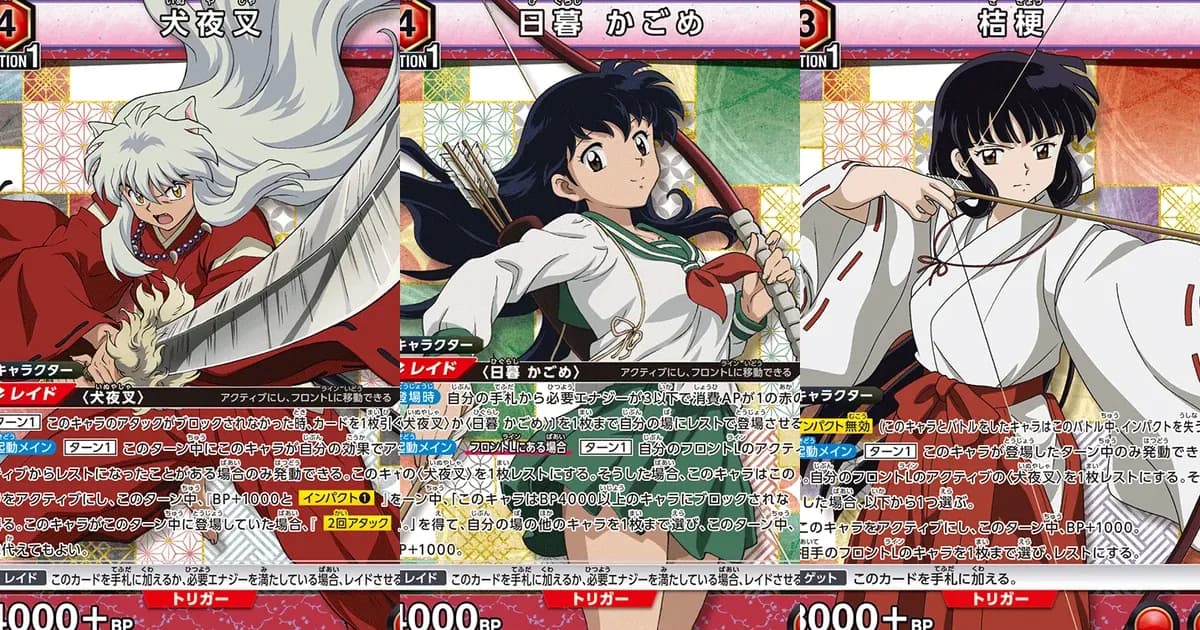
Inuyasha (UE23BT/IYS-1-046) draws a card when its attack is not blocked. Its once-per-turn Activate effect can re-ready it after one of your abilities switched it from active to resting, then gives 1000 BP and Impact (1), or Double Attack if it was played that turn. Kagome (UE23BT/IYS-1-066) can play a low-cost Red Inuyasha or Kagome from hand set to resting, then rest an active front-line Inuyasha to gain an unblockable condition against 4000 BP or higher characters and give another character 1000 BP. Kikyo (UE23BT/IYS-1-049) also uses an active Inuyasha as part of its on-play turn effect, but its choices are to ready Kikyo with a BP boost or rest an opposing front-line character.
Post-launch data now exists, but it is still limited. TCG Contender's current profiles describe IYS - Kagura as a control-midrange deck, IYS - Inuyasha as midrange beatdown, and IYS - Sesshomaru as a slower raid shell. Use the card text for rules certainty and the profiles for provisional competitive context.
How InuYasha compares to recent Union Arena EN releases
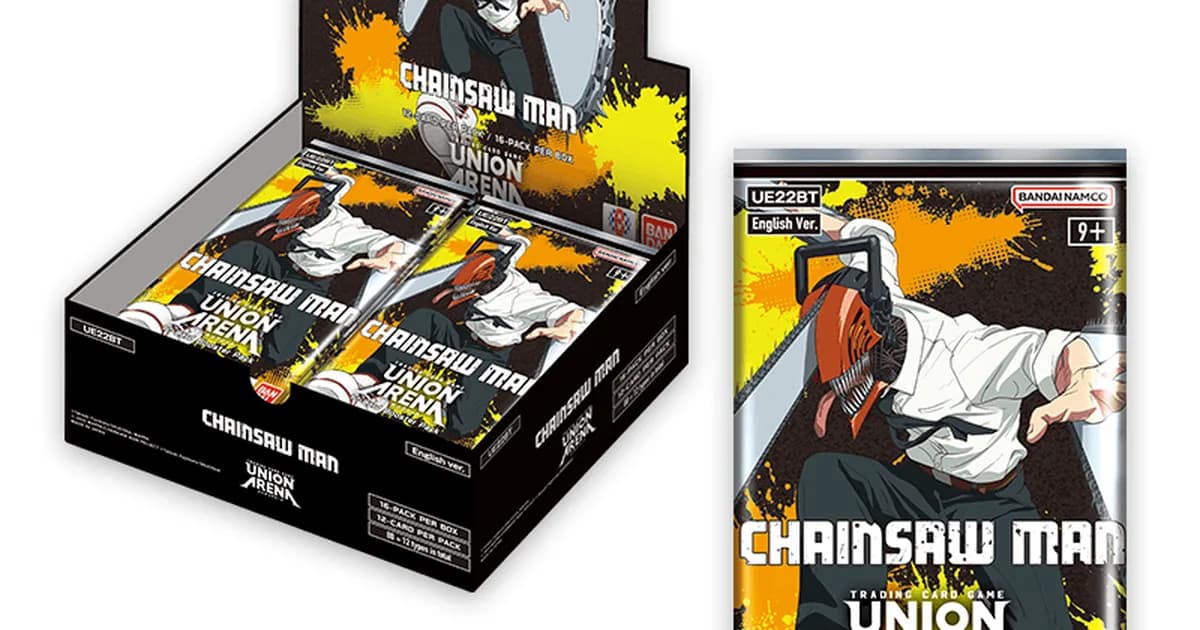
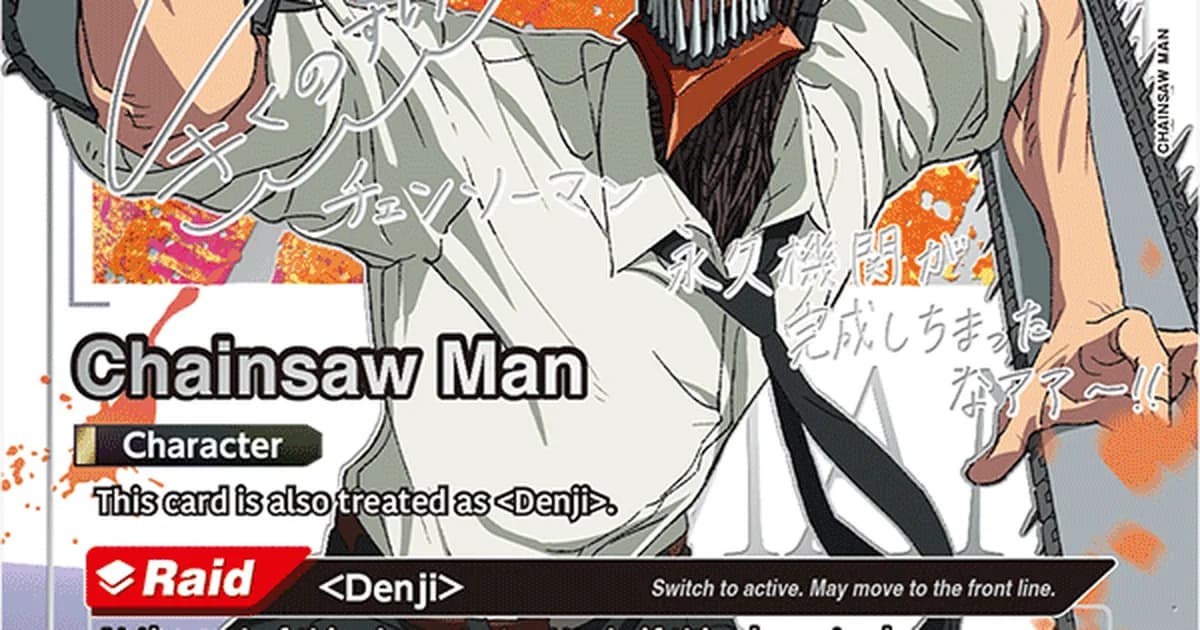
Chainsaw Man is a useful comparison point because it preceded InuYasha on the English release calendar. Its 92-card-type structure, $4.99 MSRP, and 16-pack display configuration provide a reasonable product comparison. UE23BT now has the same base pattern of 80 regular card types plus 12 Action Point types, with Bandai's official page also listing 12 cards per pack.
The structural similarity matters for buying decisions more than deck-building ones. A $4.99 MSRP and 16 packs per display provide a useful sealed-product baseline, but retailer prices and singles listings can move quickly after release. The important current difference is deck structure: the official list now lets players compare Red Inuyasha and Kagome packages with Purple Sesshomaru, Kagura, Kanna, and Naraku packages instead of relying on pre-launch theory.
One thing that carries over directly is the need to separate card-text analysis from tournament evidence. InuYasha now has early local and online results, but the samples remain smaller than established Union Arena titles. The Chainsaw Man launch guide remains useful historical context, while the current deck profiles below should take priority for UE23BT decisions.
Release timeline and where the set stands now
English release: UE23BT released on August 14, 2026 at a $4.99 MSRP per pack. Bandai lists 12 cards per pack, 16 packs per display, 80 base card types, and 12 AP card types on the official product page.
Release Event: the official Five Pack Battle release period ran from August 14 through August 20, 2026. That event is over, but it established the first sealed-play window for the English set. The release guide is now historical launch context rather than a future schedule.
Card list: Bandai's English card list is live and currently displays 117 results for INUYASHA [UE23BT], including parallel and alt-art entries. Use those entries to check exact card numbers, text, rarity, and card type before building a list.
Current play and buying: singles and sealed product are now post-launch purchases. Check current TCGplayer listings for product choices rather than an old buying guide's price examples. The launch day coverage is also historical, so current deck profiles and event results should take priority.
Current deck shells and deck guides
Kagome Higurashi is a Red support and resource piece. The current official card list confirms that her 066 card can play a low-cost Red Inuyasha or Kagome from hand and can convert an active Inuyasha into an unblockable attack line. Her deck guide covers the package in more detail.
Sesshomaru anchors a Purple raid shell built around sideline development and playing characters from the sideline. TCG Contender currently labels the profile Tier 3, with a thin sample and a slower build-up. The Sesshomaru deck guide covers the standalone build, while the Sesshomaru and Kagome guide covers pairing the two colors.
Kagura and Naraku form the current control-midrange shell. TCG Contender labels IYS - Kagura Tier 2 and highlights Kagura, Kanna, and Naraku as the resource and disruption core. The Naraku deck guide remains useful for the incarnation package, but use the current profile for live tier context.
Inuyasha anchors a Red midrange beatdown plan built around unblocked attacks, card draw, and switching back to active for bigger turns. TCG Contender currently labels IYS - Inuyasha Tier 3 and lists tournament entries through September 9. "Counter Rush" is a site working label, not a Bandai-confirmed archetype name. The Red deck guide covers the package and sequencing.
For cross-title context, the Evangelion matchup prep piece is a historical launch-week comparison. Check current Standard results before treating any matchup prediction as settled.
GODEEPER: Want the current evidence separated from pre-launch theory? Union Arena InuYasha EN Tier List: What We Actually Know →
What the current card list confirms
The pre-launch unknowns are now resolved. Bandai's official UE23BT product page lists 80 base card types plus 12 Action Point card types, with 28 Common, 28 Uncommon, 12 Rare, and 12 Super Rare types. The official English card list currently returns 117 entries because it includes parallel and alternate-art listings. Treat 80 plus 12 as the set's type count and 117 as the displayed result count, not as 117 base cards.
Card text for the English pool is live. The official list confirms the Red and Purple packages, the featured roster, and the card-specific effects discussed in the mechanics section above. Naraku's Shikon Jewel Shard text is part of one card's effect, not a set-wide counter system.
Competitive data is more limited than the card data. TCG Contender currently labels IYS - Kagura Tier 2, while its IYS - Inuyasha and IYS - Sesshomaru profiles are Tier 3. Those profiles include recent tournament entries but also warn that the sample is limited, so use the labels as a current signal rather than a settled ranking for the whole format.
The set is available now, so buying decisions can use real English listings rather than launch projections. Sealed inventory and singles prices can still move during the first weeks after release, especially for parallel and alternate-art versions.
Buying strategy: singles, sealed, and timing
The singles vs sealed breakdown runs the actual math on whether to crack packs or buy targeted singles now that the English set is available. Use singles when you need specific deck pieces, and use sealed when opening packs or playing a limited event is part of the goal. Compare current listings because early prices remain volatile.
For a broader buy-in strategy that isn't just about the InuYasha set specifically, the English release guide covers booster box vs. singles decisions and which cards look worth targeting first based on confirmed card text. Both approaches assume you're buying for a set you plan to actually build decks with, not flipping sealed product for a quick markup, which is a separate and riskier strategy this guide doesn't cover.
SHOP: Building an InuYasha collection? Check current Union Arena singles and sealed pricing on TCGPlayer. Shop TCGplayer →
Key Takeaways
- Union Arena InuYasha (UE23BT) released August 14, 2026 at $4.99 per pack, with 16 packs per display
- The official product page lists 80 base card types plus 12 Action Point types; the English card list displays 117 entries because of parallel and alternate-art listings
- The current shell signals are Kagura control-midrange, Inuyasha Red midrange, and Sesshomaru Purple raid, with limited tournament samples
- No accumulating "Jewel Shard counter" mechanic exists. Shikon Jewel Shard appears as part of Naraku's individual card effect
- The August 14 to 20 release event has ended, so current deck evaluation should use post-launch profiles and event records
- Sealed and singles are both available, but early market prices can still change
Frequently Asked Questions
When does Union Arena InuYasha release in English? The English set UE23BT released on August 14, 2026. The official product page lists $4.99 per pack, 12 cards per pack, and 16 packs per display.
How many characters are confirmed in Union Arena InuYasha? The official set configuration is 80 base card types plus 12 Action Point card types. The English card list shows 117 results because parallel and alternate-art entries are included. That result count is not the number of base cards or characters.
Is there a tier list for Union Arena InuYasha yet? There is early post-launch data, but it is still a small sample. TCG Contender currently labels IYS - Kagura Tier 2 and IYS - Inuyasha and IYS - Sesshomaru Tier 3. Treat those as current profile signals, not a definitive format-wide ranking.
Should I import Union Arena InuYasha from Japan or wait for English? English product is already available. Import the Japanese version only if you specifically want Japanese cards or access to that release, rather than because the English set is unavailable.
What are the best Union Arena InuYasha decks so far? The current profiles point to Kagura control-midrange, Inuyasha Red midrange beatdown, and Sesshomaru Purple raid. Kagome, Naraku, and Kikyo remain important support pieces, but the available tournament sample is too small to call one shell definitively best.
Where can I buy Union Arena InuYasha singles vs sealed? Both sealed product and singles are available through Union Arena retailers and marketplaces. Check current listings before buying, especially for parallel and alternate-art cards whose prices can move during the early post-launch period.
Related Reading
- Union Arena TCG Beginner Guide 2026: rules and fundamentals if InuYasha is your first Union Arena set.
- Union Arena Card Rarities Explained: how the game's rarity tiers work, useful before evaluating any "chase card" claims.
- All Union Arena Sets EN Release Schedule: where InuYasha fits in the broader release calendar.
- Union Arena Deck Building Guide: general deck construction fundamentals that apply across every Union Arena set, including InuYasha.
- Union Arena Keywords Glossary: Trigger, Raid, Impact, and other terms used throughout the deck guides above.
References
- Official UE23BT product page: release date, MSRP, pack configuration, card-type totals, and rarity breakdown
- Official UE23BT English card list: current card entries and parallel listings
- Official UE23BT release event: August 14 to 20, 2026 Five Pack Battle schedule
- TCG Contender IYS - Inuyasha profile: current deck profile, tier signal, and tournament history
- TCG Contender IYS - Kagura profile: current control-midrange profile and tier signal
- TCG Contender IYS - Sesshomaru profile: current Purple profile and tier signal
- TCGPlayer UE23BT InuYasha listings: live sealed and singles marketplace reference
Cards in this article
About the author
RN
Beginner Guides & Crossover Writer
Anime fan turned TCG content creator. Bridges the gap between anime fandom and card game strategy. Covers beginner guides, anime-to-TCG crossover content, and Union Arena.
- TCG content creator since 2022
- Specializes in onboarding new players
- Covers Union Arena multi-IP content
- Bridge between anime fandom and TCG community
Keep reading
Union Arena Card Grading Guide: Is It Worth It in 2026?
Guides · 11 min
Union Arena Worth Collecting in 2026? A Real Price Check
Guides · 11 min
Union Arena Current Meta: Which Deck Is Strongest Right Now
Guides · 12 min
Union Arena InuYasha Launch Day: What's Live August 14
Guides · 9 min
Union Arena Keywords Glossary: Every Term Explained
Guides · 10 min
Union Arena Chainsaw Man Best Cards to Pull (2026)
Guides · 9 min
Union Arena InuYasha Card List: All 29 Confirmed Names
Guides · 9 min
Union Arena Chainsaw Man EN Release: July 31 Specs
Guides · 8 min
Disclaimer
This article is published for informational and entertainment purposes. It does not constitute professional financial, legal, or technical advice. Game performance, online services, patch schedules, and store listings change. Verify critical details (pricing, system requirements, regional availability) with publishers and storefronts before you buy. Affiliate links, where present, help support our editorial work and are labelled in our affiliate disclosure.