

Shonen TCG · Guides
Union Arena How to Play: Setup, a Full Turn and How to Win
Two lines on the table, seven face-down Life cards, and damage that goes to the sideline instead of your hand.
Our callYou win when your opponent's Life area is empty after the trigger check. Damage doesn't refill your hand the way it does in One Piece; Life cards go to the sideline.
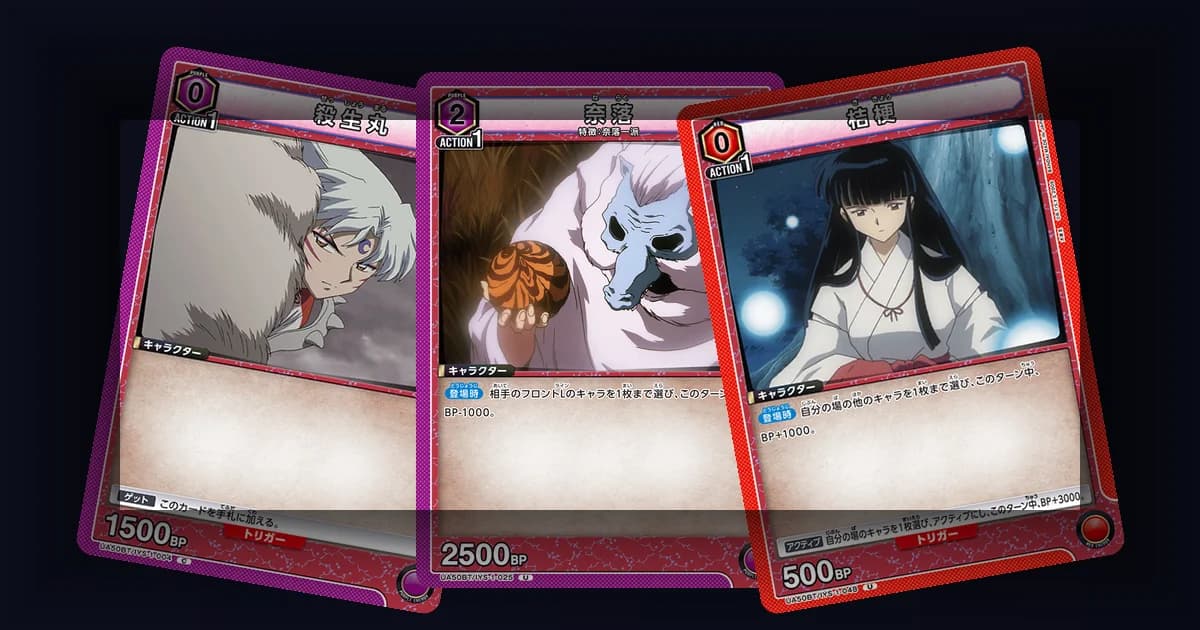
TL;DR: Union Arena how to play, in short: win when your opponent's Life area is empty, or when their deck is empty and they can't draw in their Start Phase. The engine is simple: play Character or Site cards to your energy line by meeting their required energy and AP cost, use that line's continuous generation to deploy Characters to the front line, then attack to deal damage to Life. Up to 4 cards fit in each line. Raid lets you stack a stronger form onto a Character, and Life cards can hold triggers that fight back. Deckbuilding also requires 3 Action Point cards alongside your 50-card main deck.
Updated October 8, 2026: Checked the energy rules against the Official Rule Manual: cards on the energy line generate energy whether active or rested, and only that generation counts toward Required Energy.
Note: Union Arena's energy for deploying Characters comes from generation on cards in your energy line, not a separate resource deck you draw from during the game. Those cards generate energy continuously, active or rested; you do not rest them to produce it. You still prepare a distinct set of 3 AP cards alongside the main deck.
Union Arena how to play: quick answer
Union Arena's whole loop is three steps you repeat every turn:
- Play Character or Site cards to your energy line by meeting their required energy and paying their AP cost. Cards there generate energy continuously, active or rested.
- Meet the required energy and pay AP to place Characters on your front line.
- Attack with front-line Characters to take your opponent's Life cards.
Empty all 7 cards out of your opponent's Life area and you win. You also win if their deck is empty when they need to draw in their Start Phase. That is the entire game in one sentence; everything else is detail that sharpens those three steps.
GODEEPER: Want the bigger-picture starting point and which IP to buy first? The beginner guide covers it. Union Arena TCG Beginner Guide 2026
That's Bandai's official rule tutorial, posted in March 2024. The written rules below follow the current U.S. rule manual and FAQ.
The Goal: 7 Life Cards
Each player begins with 7 cards face down in their Life area, taken from the top of their own deck. These are your life total. An unblocked attack deals 1 damage (2 if the attacker has damage 2), and for each point the attacking player picks one of your Life cards. You turn it face up, check it for a trigger, and then it goes to your sideline. If you have no Life left once the trigger check is done, you lose. The second path is deck-out: if your opponent has no cards in their deck and can't draw during their Start Phase, they lose, even with Life cards left.
If you come from One Piece, this is the big difference: Life cards don't go to your hand, so damage never refills it. What keeps games tense is the triggers. A Draw trigger gets you a card back, and a Final trigger can keep you in the game at zero.
AP and the Energy Line
AP (Action Points) are separate cards used to pay a card's AP cost. You can play Character or Site cards onto your energy line after meeting the required energy and paying that cost. Cards on the energy line generate energy in their printed colors; only energy-line generation counts toward Required Energy.
- You can have up to four cards on your energy line.
- The required energy must be met by matching color generation. Union Arena does not make you choose one universal deck color, but all cards in the deck must share the same source material code.
- Energy generation is continuous, so using it to play a card does not consume the generation printed on your energy-line cards.
- Building your energy line early is how you ramp toward stronger Characters.
The practical takeaway: your first turns are often about establishing the energy line so that later turns can deploy bigger front-line threats. Skipping energy development stalls your whole game, while an overloaded line can limit future movement and plays.
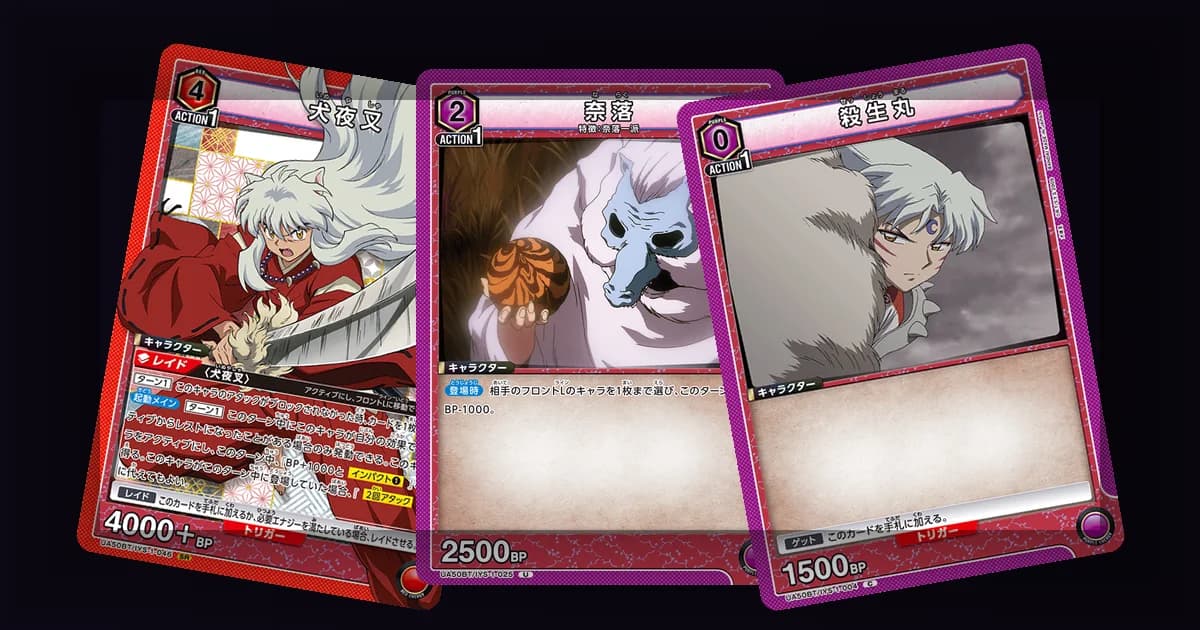
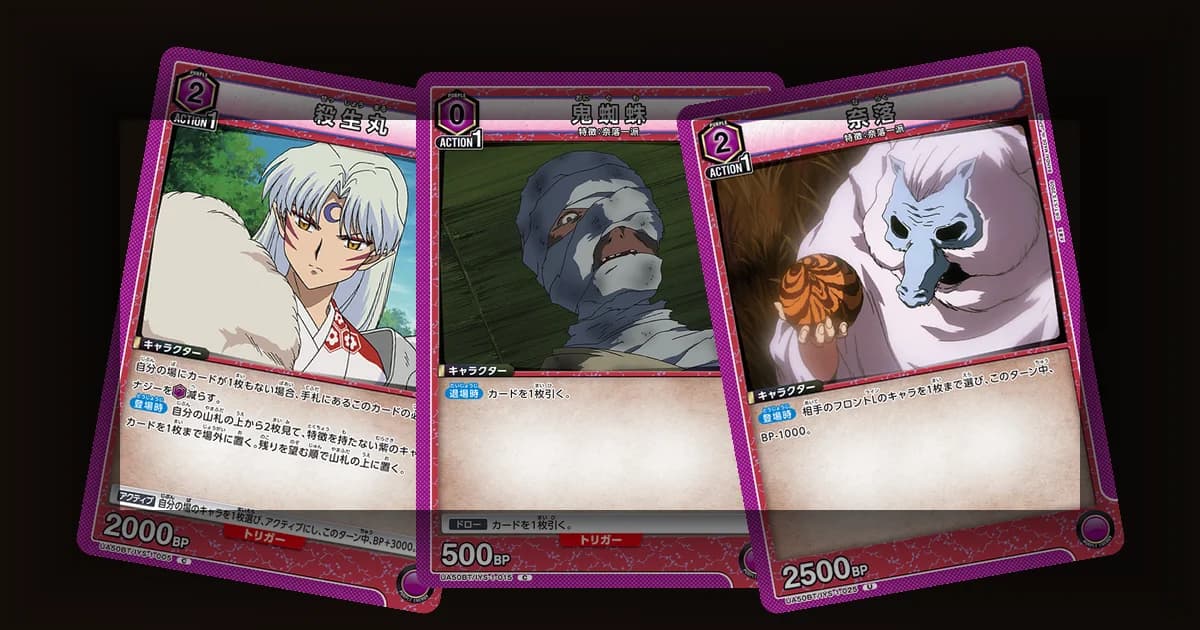
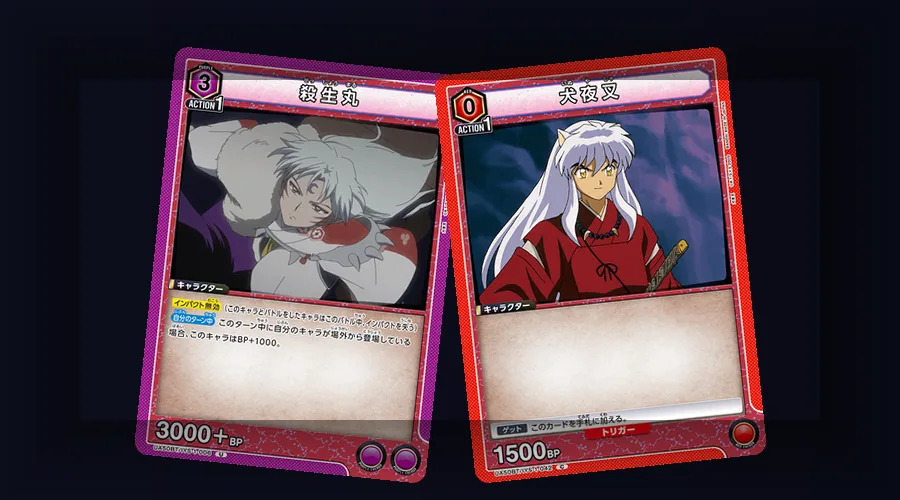 Image: Bandai, official UNION ARENA card list. Two InuYasha Characters of the kind that go on either line.
The Front Line and Combat
The front line is where the game is won. You meet a Character's required energy and pay its AP cost to place it here, and front-line Characters can attack and block.
- Up to four Characters can occupy your front line.
- Characters have BP (Battle Points), their power in combat. Compare the BP after card effects resolve to determine a clash.
- When you attack, the defender can block with a front-line Character or let it through. An unblocked attack deals damage to their Life.
Combat is a constant negotiation: do you attack into their blockers to clear the board, or swing past them to take Life? A character with high BP pressures both, forcing chip damage or favorable trades.
GODEEPER: Ready to turn these rules into a real 50-card list? The deck-building guide covers ratios and curve. Union Arena Deck Building Guide
Raid: Stacking a Stronger Form
Raid is Union Arena's signature mechanic and the one new players ask about most. A Raid Character is played on top of an existing Character, representing a transformation or power spike (think a base form leveling into a stronger version).
To Raid, you declare it, place the Raid card on the specified Character, and pay its AP and energy cost. The character continues fighting as the upgraded version, often with much higher BP and a new ability. Raid decks plan their whole curve around hitting the transformation on time, which is why understanding it early matters.
Triggers: Your Life Cards Fight Back
When you take damage, each Life card picked is turned face up and checked for a trigger icon, then placed in your sideline. The trigger types are:
- Get , the card's specific printed effect (often adding it to hand)
- Draw , draw extra cards
- Special , a card-specific powerful effect
- Color , gives an effect tied to your deck's color
- Final , the one that can save you: Bandai's FAQ says you only lose at zero Life after every trigger in that check, Final included, has resolved
- Active , the effect printed on the card, often switching a character to active or granting a BP boost
Special, Color, and Final are limited triggers: a deck can run at most 4 cards of each, 12 total. Get, Draw, and Active are not limited.
Triggers are why being ahead on Life is not a guaranteed win. A defender losing Life cards can hit a trigger that draws into an answer or swings tempo. Good players track roughly how many triggers a deck runs and play around the likely ones.
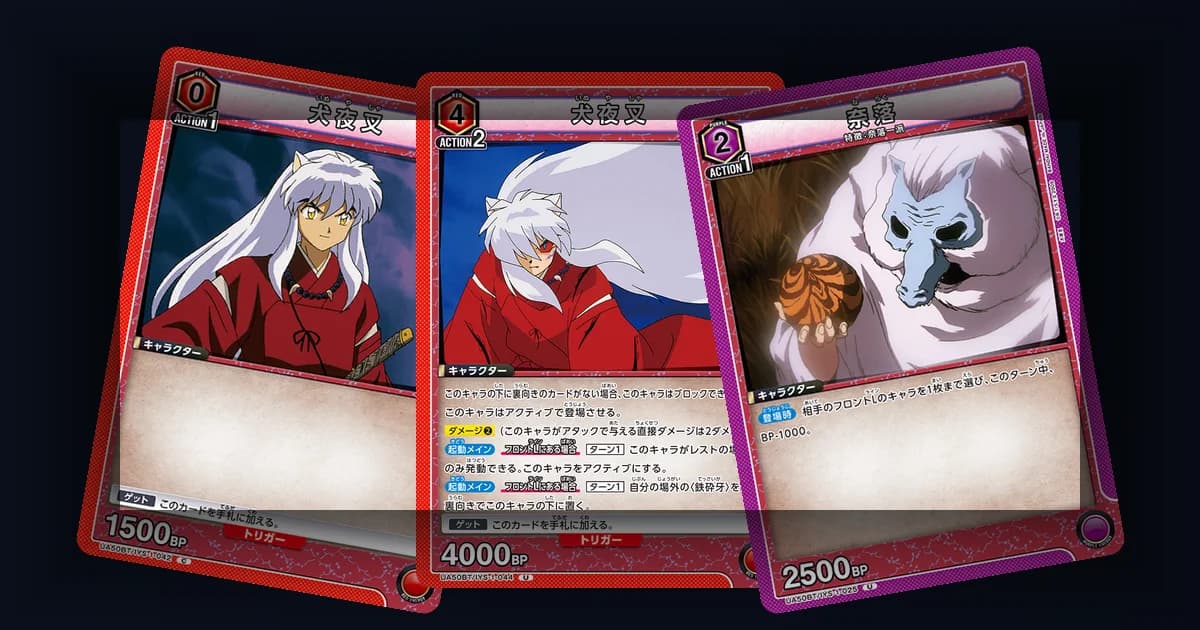
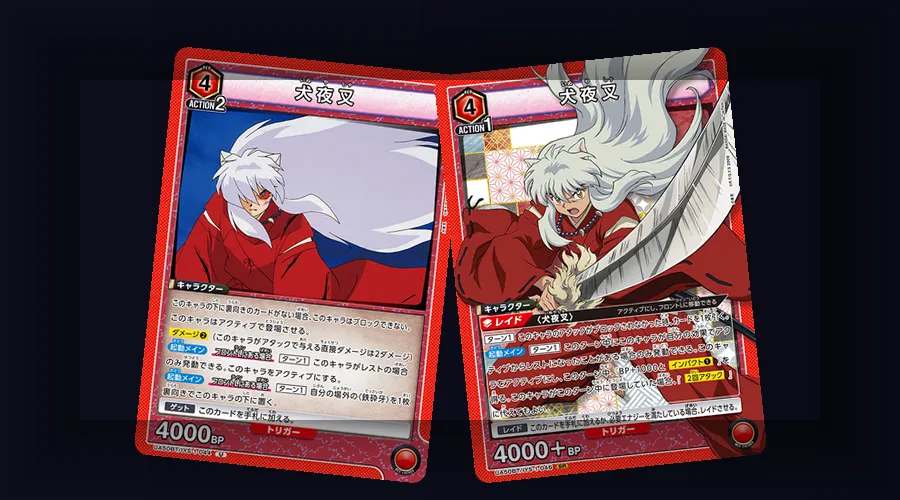 Image: Bandai, official UNION ARENA card list. A base Character beside its Raid form, the stacking mechanic covered above.
Step-by-Step: A Sample Union Arena Turn
Putting the rules together, here's what a typical mid-game turn looks like.
1. Start your turn and ready your rested cards. Everything you rested last turn, energy line and front line alike, switches back to active before you do anything else.
2. Play a Character or Site to your energy line. First satisfy its required energy, then pay its AP cost. Cards on that line provide continuous generation whether active or rested, so this is how you build toward bigger plays without spending the generated energy itself.
3. Use generated energy to meet the requirement and pay AP to deploy a Character to your front line, or Raid an existing one into a stronger form. Raid stacks a transformed version onto a character already in play instead of adding a new body.
4. Attack with your front-line Characters. The opponent blocks what they can with their own front-line Characters; whatever gets through deals damage to their Life area.
5. Your opponent checks each Life card you hit for a trigger, then you end your turn and pass. Get, Draw, Special, Color, Final, or Active can all fire off a Life card, so let them resolve before passing.
Repeat that loop, ramp energy, deploy or Raid, attack, and the player who pressures Life most efficiently while respecting triggers comes out ahead. Remember both win conditions apply throughout: an empty Life area after the trigger check ends the game, and so does an opponent with no card to draw in their Start Phase.
Union Arena how to play: common beginner questions
- Do I build a separate energy deck? No. Energy comes from generation on cards you play to the energy line, not from a resource deck that you draw during the game. You build one 50-card main deck, take its top 7 cards as Life, and prepare 3 AP cards separately.
- Can I mix anime IPs? Not when the cards have different three-letter source material codes. Cards with the same code can use different colors, but a normal deck cannot combine unrelated series codes. Always check the event's format for additional restrictions.
- Is going first better? Neither seat is automatically better for every deck. The turn order changes what each player can do early, so learn the opening sequence from both sides and test your deck in both seats.
- What is the InuYasha set? InuYasha is already part of the English Union Arena product line. The official product page identifies the booster as UE23BT with an August 14, 2026 release date, so check the current product and event pages for regional availability.
Reading the Board State
Strong Union Arena play is mostly about reading two zones at once. Glance at your opponent's front line: how many active characters can block, and what are their BP values? That tells you which attacks will get through and which will trade. Then check their energy line: how much energy and AP they can generate next turn signals whether a big play or a Raid is coming. Finally, weigh both Life totals against the likely triggers each deck runs. A player at 2 Life with a trigger-dense deck is far more dangerous than the raw number suggests. Make a habit of scanning front line, energy line, and Life before every attack, and your decisions sharpen immediately, because you are playing the whole board rather than one card at a time.
Key Takeaways
- Win when your opponent's 7-card Life area is empty, or when they can't draw in their Start Phase
- AP cards pay the cost to play cards; matching energy generation fulfills required energy
- Up to 4 cards each on the energy line and the front line
- BP decides combat; unblocked attacks deal damage, and Life cards go to the sideline, not your hand
- Raid stacks a stronger form onto a Character for AP and energy
- Life cards can carry triggers, so the losing player can fight back
GODEEPER: Curious which IP set is easiest to start with? The tier list ranks the EN starters. Union Arena Beginner Deck Tier List
Frequently Asked Questions
Q: How do you win? A: A player wins when the opponent has no cards left in their Life area once the trigger check is over. A normal unblocked attack deals 1 damage, so one Life card is checked for a trigger and then goes to the sideline. There is also a deck-out win: if the opponent has no cards to draw during the Start Phase, that player loses.
Q: How does AP and energy work? A: AP and energy are separate resources. To play a card, first meet its required energy with generation from your energy line, then pay its AP cost by resting AP cards. Cards on the energy line generate energy whether they are active or rested, so playing a card does not consume that generation.
Q: What is the front line? A: Your front line holds up to four Character cards, which are the attackers and blockers. Cards can also move between the front and energy lines during the Movement Phase when a rule allows it. The front line creates pressure, while the energy line supplies the generation needed for future costs.
Q: What is Raid? A: Raid plays a specified stronger Character on top of an existing Character instead of adding a separate body. You still check the Raid card's required energy and pay its AP cost. The resulting stack uses the new card's text and BP, so the mechanic turns an established board piece into a larger threat.
Q: What are triggers? A: Triggers are effects printed on Life cards. When an attack damages you, each Life card picked is turned face up; resolve its trigger if it has one and you want to, then the card goes to your sideline. Get, Draw, Special, Color, Final, and Active are the named trigger types, giving the defending player a chance to recover.
Q: How many cards in a deck? A: The main deck has exactly 50 Character, Site, and Event cards. Those cards must share the same three-letter source material code, and the top 7 become Life cards at setup. You also prepare 3 Action Point cards separately, so the AP cards are not counted in the 50-card main deck.
Our take
Learn the two lines and the trigger check before anything else. The lines decide what you can play; the trigger check decides how close a game really is. Limited triggers are where new players get surprised. In an r/Union_Arena_TCG thread from October, one player summed up online play against tuned decks as opponents having "at least 2 specials in hand to kill my big guys and the rest of the specials in life." A deck can run up to 12 limited triggers, so count them in your opponent's list before you swing into their last few Life cards.
Related Reading
- Union Arena Raid Mechanic Explained: A deeper look at transforming Characters mid-game.
- Union Arena Trigger System Explained: Every Life card trigger type and how to play around them.
- Union Arena Beginner Mistakes: 8 Errors to Stop Making: Common early misplays once you know the rules.
- Union Arena Card Rarities Explained: Reading rarity and deck cost.
- Union Arena Tournament Guide 2026: Format and competitive prep.
References
- Union Arena Official Rules: AP, energy, front line, Raid, and triggers
- Union Arena Official Rule Manual: deck construction, setup, field limits, damage and victory conditions
- Union Arena Official Rules FAQ: AP, energy generation, movement, and trigger rulings
- Union Arena Official Site: product and format information
- Union Arena Card List: card text and trigger icons
- Union Arena InuYasha Product Page: current product and release information
Was this guide helpful?
About the author
Beginner guides and anime crossover
Pen name for the Shonen TCG desk's beginner guides, starter decks and anime-to-card-game explainers.
- Rules checked against the official rulebook and card text
- Every claim traced to a cited source
- Opinions marked as ours, with the reason
Keep reading
Union Arena Deck Building Guide: Build a 50-Card Deck
Guides · 8 min
Union Arena Trigger System Explained: All Trigger Types
Guides · 8 min
Union Arena Raid Mechanic: How Raid Works, Cost and Steps
Guides · 9 min
Solo Leveling vs JJK: Which Union Arena Deck to Play
Guides · 8 min

Union Arena Beginner Mistakes: 8 Errors to Stop Making
Guides · 7 min
Union Arena Impact Keyword: How It Works and How to Stop It
Guides · 6 min
Union Arena Tournament Guide 2026: Rules and Formats
Guides · 12 min
Union Arena Card Rarities Explained: C, U, R, SR, Parallels
Guides · 5 min
Disclaimer
This article is published for informational and entertainment purposes. It does not constitute professional financial, legal, or technical advice. Game performance, online services, patch schedules, and store listings change. Verify critical details (pricing, system requirements, regional availability) with publishers and storefronts before you buy. Affiliate links, where present, help support our editorial work and are labelled in our affiliate disclosure.