

Shonen TCG · Guides
Union Arena Trigger System Explained: All Trigger Types
Every life card you lose gets flipped, and most of them do something. Here's what each trigger does, word for word, and how a regional-winning deck spreads them.
Our callTriggers are the defender's free effects. Learn the seven standard texts, respect the four-copy cap on Special, Color and Final, and count your opponent's capped triggers before you go for the last point.
The Union Arena trigger system in one line: every life card you lose gets turned face up, and if it has a trigger you may use it for free. There are seven trigger types, each with one standard text, and three of them (Special, Color and Final) are capped at four cards per deck. Know the seven texts and you can read any opponent's life area as a risk.
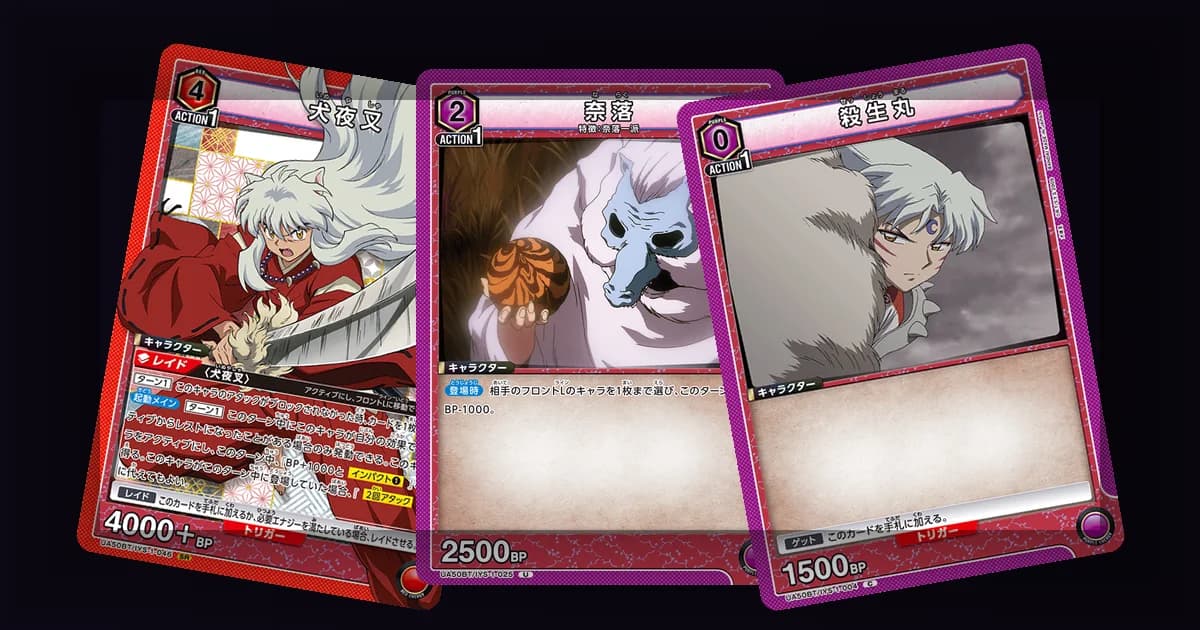
How we checked this: we read the trigger sections of Bandai's Official Rule Manual and Tournament Rules Manual, checked each trigger's wording on official English card list entries from five colors, and counted the triggers in the list that won Core TCG's regional with a script.
Updated October 16, 2026: We replaced the generic descriptions with the exact standard text of every trigger, fixed Color (the effect is set by the card's color, not by the card), and added the trigger count of a real regional-winning deck.
How a Union Arena trigger fires
The rule manual's sequence, step by step:
- Damage. An attack that isn't blocked deals 1 damage, or 2 with Damage 2.
- The attacker picks. "The player dealing damage selects one card in the damaged player's life area for each point of damage dealt."
- Flip and decide. Turn each card face up. If it has a trigger, you may activate it. It's optional.
- Sideline. The card goes to your sideline after the trigger resolves, and cards without triggers go there too, unless the trigger moved it somewhere else.
- Several cards. With more than one trigger, you choose the order, and each one is activated, resolved and sidelined before the next.
- Game check. Only after every trigger is done: if the defender has no life left, the attacker wins.
You start with seven life cards taken from the top of your deck, so your triggers are whatever your deck is made of. It also means the player who has lost more life has flipped more triggers.
Every trigger type, word for word
Within a type, the wording was identical on every card we checked. These are the texts on Bandai's English card list:
| Trigger | What it says | Capped at four? |
|---|---|---|
| Get | Add this card to your hand. | No |
| Draw | Draw a card. | No |
| Active | Choose one character on your field and switch it to active. It gains 3000 BP until the end of the turn. | No |
| Raid | Add this card to your hand, or if you have the required energy, perform Raid with it. | No |
| Special | Choose one character on your opponent's front line and sideline it. | Yes |
| Color | Set by the card's color (below) | Yes |
| Final | If you have 0 life, place the top card of your deck into your life area. | Yes |
Get and Raid are the two that change where the card goes: Get puts the flipped card in your hand, and Raid can put it straight onto your field on top of a character with the same name. The Raid guide covers that part.
Special is the strongest of the standard texts: it sidelines any front-line character, with no BP limit. Boogie Woogie carries it in the Jujutsu Kaisen deck below.
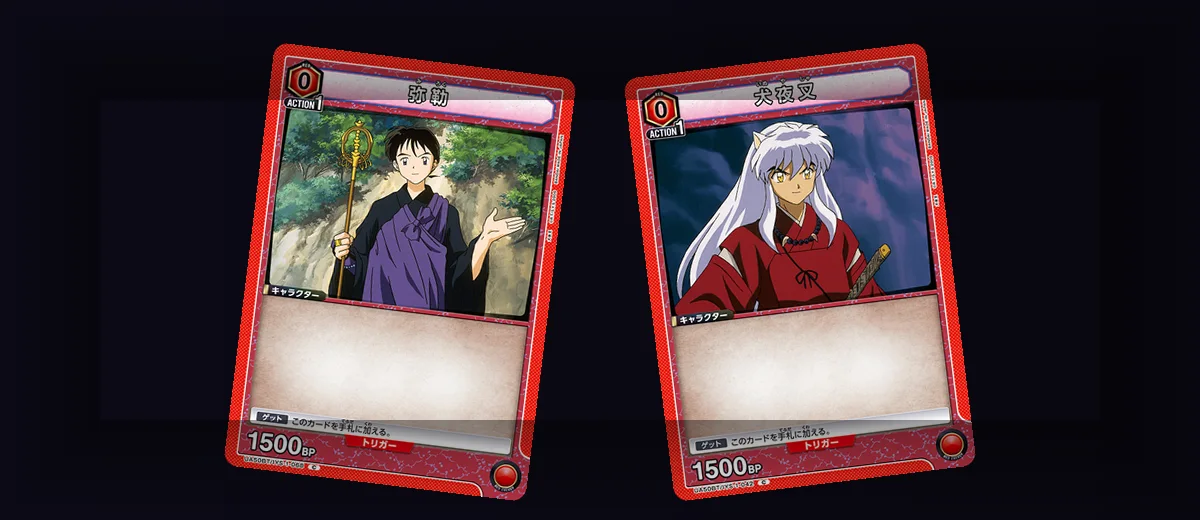 Image: Bandai, UNION ARENA official card list
Final only works on the hit that empties your life area. It puts one card back, and since the loss check waits until every trigger has resolved, your opponent needs another point of damage to finish.
Color triggers by color
Color is the trigger people get wrong, because the effect isn't printed per card. It depends on the color:
| Color | Color trigger text |
|---|---|
| Red | Choose one character with 2500 or less BP on your opponent's front line and sideline it. |
| Blue | Choose one character with 3500 or less BP on your opponent's front line and return it to their hand. |
| Yellow | Choose one character on your opponent's front line and switch it to resting. It will remain set to resting the next time it would be switched to active. |
| Purple | Play one purple character card with 2 or less required energy and 1 AP cost from your sideline set to active onto your front line. |
| Green | Play one green character card with 2 or less required energy and 1 AP cost from your hand set to active onto your field. |
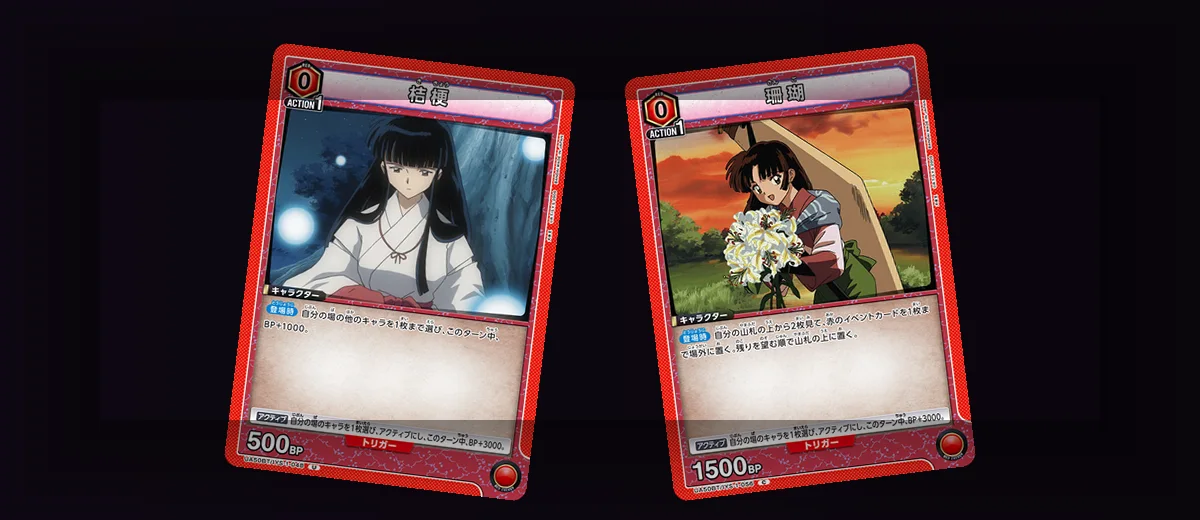 Image: Bandai, UNION ARENA official card list
Joseph Writer Anderson ranked them and put Yellow on top, calling it "so strong you could even say it's broken compared to the other Color Triggers." Green came last for a practical reason: "you tend to not have any targets for this particular color trigger when it activates," because Green decks lean on big characters.
The four-copy cap
The Tournament Rules Manual is short on it: "Cards with the Special, Color, and Final triggers are limited to no more than 4 cards in a deck for each trigger type." It counts cards, not card names. Two different Special cards share the same four slots, so a deck can't hold more than twelve capped triggers in total.
What a winning deck's triggers look like
Here's the Purple Jujutsu Kaisen list that won Core TCG's regional, dated July 31, 2026, sorted by trigger:
| Trigger | Cards in the list | Copies | At least one in your seven life cards |
|---|---|---|---|
| Draw | Utahime Iori, Goodwill Event, Kasumi Miwa | 11 | 84.6% |
| Get | Aoi Todo (079), Kokichi Muta (JJK-3-029) | 8 | 73.0% |
| Active | Aoi Todo (JJK-2-010), Yoshinobu Gakuganji | 8 | 73.0% |
| Raid | Aoi Todo (081), Ultimate Mechamaru, Mode: Absolute | 8 | 73.0% |
| Special | Boogie Woogie | 4 | 46.4% |
| Color | Aoi Todo (080), Kokichi Muta (JJK-3-030) | 4 | 46.4% |
| Final | Domain Expansion | 4 | 46.4% |
| None | Ultimate Mechamaru (074) | 3 |
Two things stand out. Only three of the 50 cards have no trigger, and the list runs exactly four of each capped type. There's an 87.4% chance that at least one of its seven life cards is a Special, Color or Final. If you're attacking into this deck, assume you'll hit one.
Bandai's own rules tutorial shows a trigger check on the table if you'd rather see it played out:
Playing around triggers
- Count the capped ones. Each Special, Color or Final your opponent has already flipped or played is one fewer left in their life area and deck. Late in the game that number tells you how risky the next swing is.
- The last point is the dangerous one. A Final trigger fires on any hit that leaves the defender at 0 life, including a Damage 2 hit that takes their last two cards at once; Bandai's FAQ confirms it still activates. If both of those cards are Final, only the first one resolves. Plan for one more point of damage than they have life.
- Respect Special with your best character. Special sidelines anything on the front line, so the swing that flips it can lose you your biggest body on the way.
- Yellow and Blue punish small boards. Against those colors, a front line of cheap characters is exactly what their Color trigger hits.
Our take
The Union Arena trigger system isn't luck you ignore; it's a second hand your opponent hasn't drawn yet. Run your four of each capped type unless a card is genuinely bad, and when you attack, think about what a flip does to you, not just what the hit does to them.
Frequently Asked Questions
How do triggers work? The player dealing damage picks a life card per point of damage. Each is flipped, you may use its trigger, and it then goes to your sideline unless the trigger moved it.
What are the trigger types? Get, Draw, Active, Raid, Special, Color and Final, plus no trigger. Special, Color and Final are capped at four cards each.
What does a Color trigger do? It depends on the card's color: Red and Blue remove small characters, Yellow rests one, Purple and Green play a small character for free.
What is a Final trigger? If you have 0 life, it puts the top card of your deck into your life area.
Can you build around triggers? You build with them. Core TCG's winning list has a trigger on 47 of 50 cards and maxes all three capped types.
Do you have to use a trigger? No, it's optional. The card goes to the sideline either way.
Related Reading
- Union Arena Purple Todo Deck Guide: the winning list used above.
- Union Arena Impact Keyword Explained: Impact and Damage, the keywords that decide how many life cards get flipped.
- Union Arena Beginner Mistakes: 8 Errors to Stop Making: common rules slips.
- Union Arena Keywords Glossary: every keyword in one place.
Was this guide helpful?
About the author
Beginner guides and anime crossover
Pen name for the Shonen TCG desk's beginner guides, starter decks and anime-to-card-game explainers.
- Rules checked against the official rulebook and card text
- Every claim traced to a cited source
- Opinions marked as ours, with the reason
Keep reading
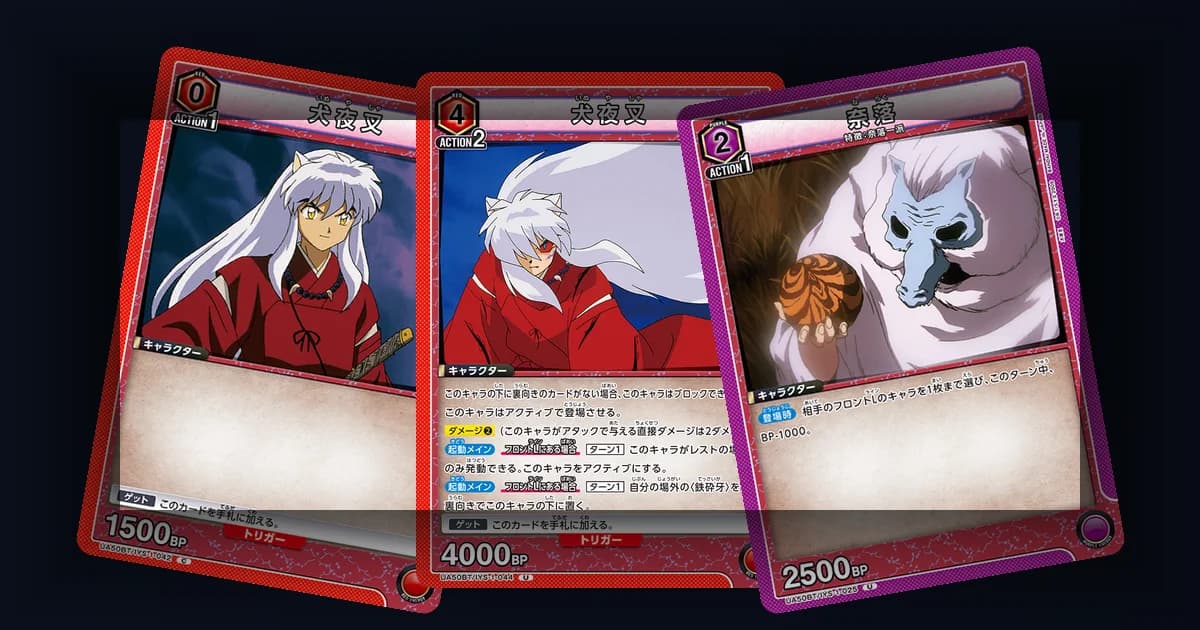
Union Arena Raid Mechanic: How Raid Works, Cost and Steps
Guides · 9 min
Union Arena How to Play: Setup, a Full Turn and How to Win
Guides · 12 min
Union Arena Deck Building Guide: Build a 50-Card Deck
Guides · 8 min
Solo Leveling vs JJK: Which Union Arena Deck to Play
Guides · 8 min
Union Arena Beginner Mistakes: 8 Errors to Stop Making
Guides · 7 min
Union Arena Impact Keyword: How It Works and How to Stop It
Guides · 6 min
Union Arena Tournament Guide 2026: Rules and Formats
Guides · 12 min
Union Arena Card Rarities Explained: C, U, R, SR, Parallels
Guides · 5 min
Disclaimer
This article is published for informational and entertainment purposes. It does not constitute professional financial, legal, or technical advice. Game performance, online services, patch schedules, and store listings change. Verify critical details (pricing, system requirements, regional availability) with publishers and storefronts before you buy. Affiliate links, where present, help support our editorial work and are labelled in our affiliate disclosure.