Loading…


Shonen TCG · Guides
One Piece TCG Yellow Deck Guide: Trigger Power 2026
Reviewing
One Piece TCG
One Piece TCG Yellow deck builds run on a logic no other color shares. You start a game wanting to be attacked. You stack your Life pile with cards that fire when revealed. You skip blockers on purpose. Yellow rewards players who treat damage as a resource instead of a threat, and it's genuinely one of the stranger mental shifts in the game.
TL;DR: One Piece TCG Yellow deck identity: Yellow is the Trigger and Life manipulation color. Its cards have the strongest Trigger effects in the game, which activate when the opponent attacks you and reveals a new Life card. Yellow works best as a splash color in dual-color builds. Black/Yellow Blackbeard and Purple/Yellow Rosinante are currently the strongest Yellow-adjacent performers by broad consensus, with Blue/Yellow Nami (OP11-041) standing as the most accessible competitive option in 2026. Pure Yellow builds exist but are less consistent. The skill expression is knowing exactly when to hold Life cards and when to let Triggers fire.
What is the Yellow color identity in One Piece TCG?
Yellow's design asks one question: what happens when you take damage? In most card games, damage is bad and you minimize it. Yellow decks flip that. When your opponent attacks and reduces your Life total, you take the top card of your deck and add it to your Life pile. If that card has a Trigger, you fire it immediately. A well-built Yellow deck fires a Trigger nearly every time the opponent swings, which means they're building your engine for you.
Yellow players actually want to start with 5 Life, the maximum. They run fewer blockers than any other color. They let the opponent attack because each attack is a potential Trigger activation. The color punishes reckless aggression better than any other archetype, which makes it both satisfying to pilot and frustrating to play against.
Key takeaways
- Yellow's Trigger effects are the strongest in the game, covering draw, removal, Don!! generation, and Life addition
- The color is most powerful in dual-color builds; Black/Yellow Blackbeard and Purple/Yellow Rosinante are the current top Yellow-adjacent performers, with Blue/Yellow Nami the most accessible alternative
- Yellow decks skip blockers intentionally, relying on Trigger chains as the primary defensive tool
- Starting with 5 Life is correct in Yellow builds because more Life means more Trigger opportunities
- OP-16 added modest Yellow support; the color's core engine still comes from OP-09 and OP-11
Yellow's trigger mechanic explained
Triggers are printed in the lower-left corner of eligible cards, marked with the Trigger icon. The timing: your opponent declares an attack against your leader. You resolve the attack. If the damage would reduce your Life total, you take the top card of your deck and place it face-up into your Life pile. If that card has a Trigger icon, you may activate its effect immediately.
Yellow has four Trigger types, and none of them are trivial:
Draw Triggers let you pull 1-2 cards the moment the opponent attacks. Card advantage on your opponent's turn, not yours. That's unusual.
Removal Triggers K.O. or bounce one of the opponent's Characters. They attack thinking they're advancing their board, then watch a Character disappear as a consequence of the swing.
Don!! Triggers add Don!! cards to your field outside your draw phase. That's extra resources to work with immediately, on a turn you didn't expect to have them.
Life Triggers add more cards to your Life pile, which both extends the game and creates more future Trigger opportunities in the same motion.
Here's the deckbuilding tension: you've got no control over WHEN Triggers fire since the opponent controls when they attack, but you have full control over HOW MANY fire per attack. A deck with 18 Trigger cards fires more often than one with 8. Yellow players track Trigger density carefully and cut non-Trigger cards only when a card's effect clearly justifies lowering that ratio.
Step-by-Step: How a Yellow Trigger Resolves
1. The opponent declares and resolves their attack. Your leader, or a blocking Character, takes the hit, and if the damage would reduce your Life total, the Trigger sequence begins.
2. Take the top card of your deck into your Life pile. This happens face-up, so both players see immediately what card it is.
3. Check the card for a Trigger icon. If it carries one, you may activate its effect right then, before anything else happens. If it doesn't, the card simply joins your Life pile as normal.
4. Resolve the Trigger effect. Depending on the card, this might mean drawing 1-2 cards, K.O.'ing or bouncing an opposing Character, adding Don!! to your field, or adding another card to your Life pile, which can chain into a second Trigger check.
5. Reassess the board before your next decision. With the Trigger resolved, plan your next play around what just changed, since a removal or draw Trigger can flip the board state in the same turn it fires.
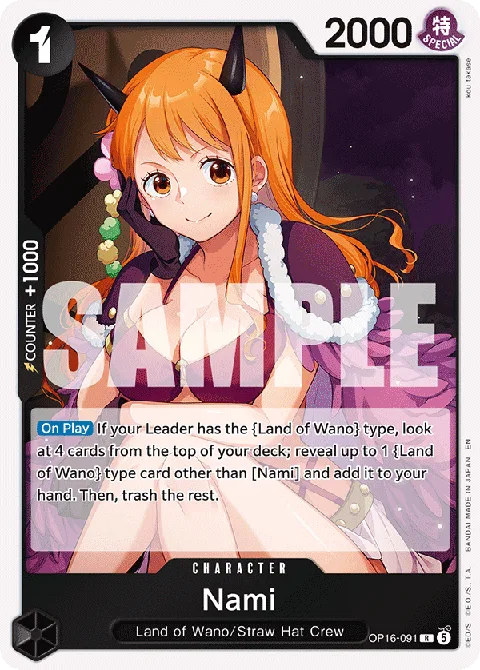 Nami
Nami 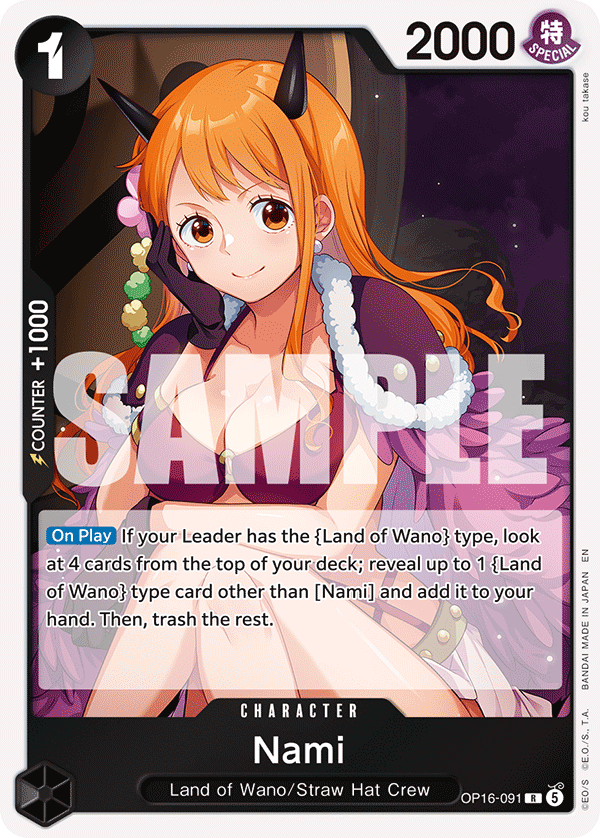 OP16-091OP16-091Shop on TCGplayer (OP16-091) from OP-16 exemplifies how Yellow's trigger package gets value from cross-set cards, providing hand filtering effects that keep the draw engine condition met each turn.
GODEEPER: Black/Yellow Blackbeard and Purple/Yellow Rosinante are the current top Yellow-adjacent performers, but Blue/Yellow Nami remains the most accessible competitive pick. For the full Nami breakdown with card-by-card analysis and sideboard options, read the complete One Piece TCG Nami Deck Guide →
Yellow leaders and who plays Yellow
Yellow has fewer leaders than Red or Blue, and that's by design. The color's strength is as a splash, not a standalone identity. By broad tournament consensus, two OP-16 dual-color builds currently sit above the rest of the Yellow-adjacent field:
Marshall.D. Teach (Blackbeard), Black/Yellow, is the current top Yellow-adjacent performer and one of the most-played leaders in the format overall. His defensive, board-control shell pairs Yellow Triggers with Black's Life-reveal information advantage, making your board harder to attack into while Black handles removal. If tournament results are your priority, this is the strongest Yellow package on the table right now.
Donquixote Rosinante 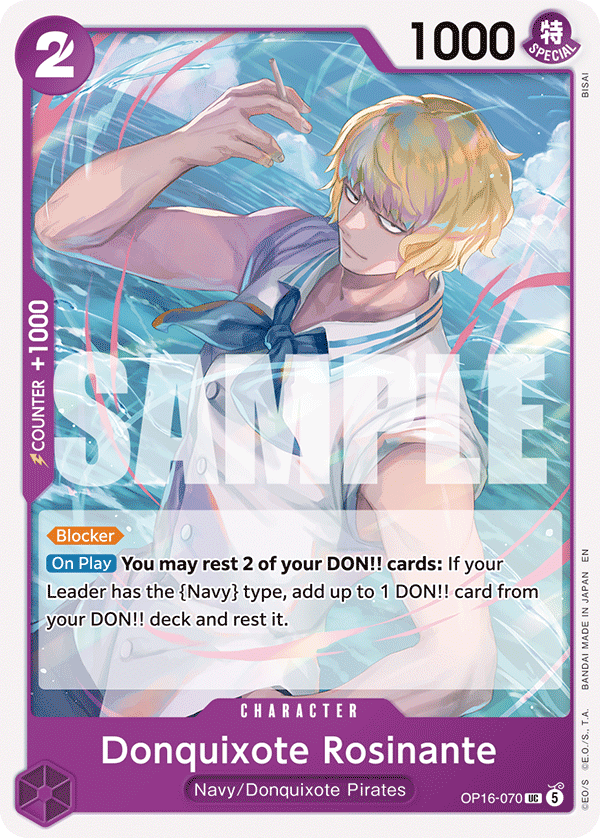 OP16-070OP16-070Shop on TCGplayer, Purple/Yellow, returned to relevance with OP-16's new Marine package. He runs a sticky board that's difficult to remove and leans on Purple's ramp tools alongside Yellow's Trigger defense, making him a leading pick for players who want a longer, grindier game plan than Blackbeard's.
Nami (OP11-041) is Blue/Yellow and remains the most accessible entry point into competitive Yellow. Her ability adds Yellow Trigger cards from your hand directly to the top of your Life pile, so you control which Triggers fire next rather than hoping the deck's natural order delivers them. She pairs with Zeus's Thunder effects from the Blue side, running a dual engine where Blue provides tempo and Yellow provides reactive pressure. If Blackbeard and Rosinante feel like a steeper climb, Nami is the more forgiving on-ramp into Yellow.
Charlotte Linlin (Big Mom) also has an older Yellow leader print built around Life manipulation, adding to her own Life total with Trigger support built into her kit. She's slower and more defensive than the other options here, relying on stacking Life rather than dual-color tempo. OP-17 gave her a brand-new mono-Yellow print instead: the OP-17 Big Mom deck guide covers her new When Attacking hand-disruption ability, a different kit from this earlier Life-total leader entirely.
Players coming from other colors should know: Yellow's leaders demand a different way of thinking about your own health total. The One Piece TCG Blue deck guide covers how the Blue side of Nami's game plan works alongside Yellow's Trigger engine.
SHOP: Building a Yellow One Piece deck? Compare current One Piece Card Game singles for the Leader and Trigger package. Shop TCGplayer →
Building with Yellow: what actually goes in the deck
Yellow needs specific card type ratios to function. This isn't a color where you can swap in your favorite Characters and call it a day.
You want 12-18 Trigger Characters. These don't all need to be powerful in the traditional sense. A 3-cost Character with a draw Trigger is valuable because it fires when revealed, not because it has high Power. The Life pile is where these cards do their job, not the board.
Life manipulation Events add cards to your Life pile mid-game. They let you reset your Life count during a match, generating additional Trigger opportunities and extending the game when you'd otherwise be at risk.
Don!! accelerators fill in the gaps between Trigger activations. Yellow's Triggers provide some Don!!, but a consistent Don!! package means you can actually play your hand on turns where no Triggers fire.
Late-game threats close games. Without them, Yellow can accumulate enormous card advantage and still lose to an opponent who rebuilds and attacks through your remaining Life. High-Power Characters with Rush or Banish effects convert Life advantage into actual board damage.
Blockers don't go in Yellow decks. Each blocker is a non-Trigger card sitting in your Life pile doing nothing when it's revealed. Yellow's trade-off for having no blockers is the Trigger removal and tempo effects that fire on the opponent's turn instead. That trade-off is the foundation of Yellow deckbuilding, and it takes some games to genuinely internalize.
GODEEPER: Purple punishes Life stacking in specific ways that are worth knowing before your first tournament. See the full matchup breakdown in the One Piece TCG Purple Color Guide →
Yellow vs other colors: when to choose Yellow
Yellow's matchup spread comes down to structural reasons, not just card quality.
Against Red, early aggro attacks actually help Yellow because they fire Triggers before Yellow has set up. Yellow wins the mid-game if it generates enough draw Triggers to out-resource Red's hand. The One Piece TCG Red color guide has full detail on Red's aggro patterns.
Against Green, Yellow needs to manage Life carefully. Green's Rested Don!! effects give it early tempo and it can accelerate into large plays that skip past Yellow's Trigger window entirely. Green also has counter effects that interrupt Yellow's sequencing. Check the One Piece TCG Green color guide for Green's speed mechanics.
Against Black, Yellow has to sequence Life additions carefully. Black removal can destroy Yellow's Trigger Characters before they contribute, and Black players know to target the Characters Yellow needs most. The One Piece TCG Black color guide covers Black's K.O. package.
Yellow is the right call if you like reactive play styles where your defense generates resources, your local meta skews aggressive, you're willing to invest time learning Trigger sequencing, or you specifically want to play Nami.
Skip Yellow if you want a consistent game plan from turn 1, your meta is heavy Black removal, or you prefer proactive board-development play. Yellow's power is real, but it's not the color for players who want to set the pace from the start.
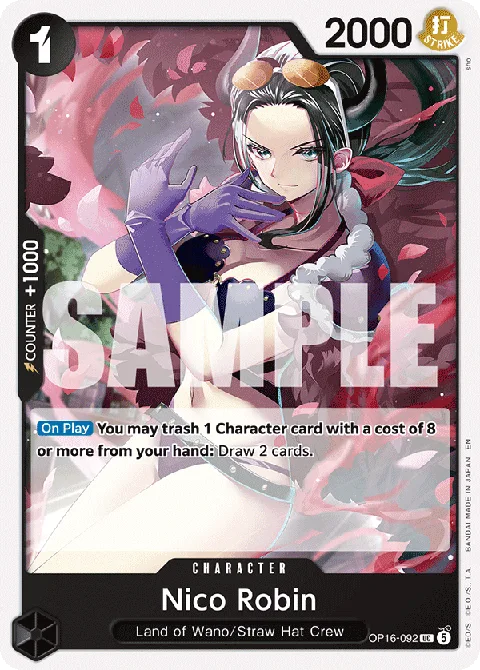 Nico Robin
 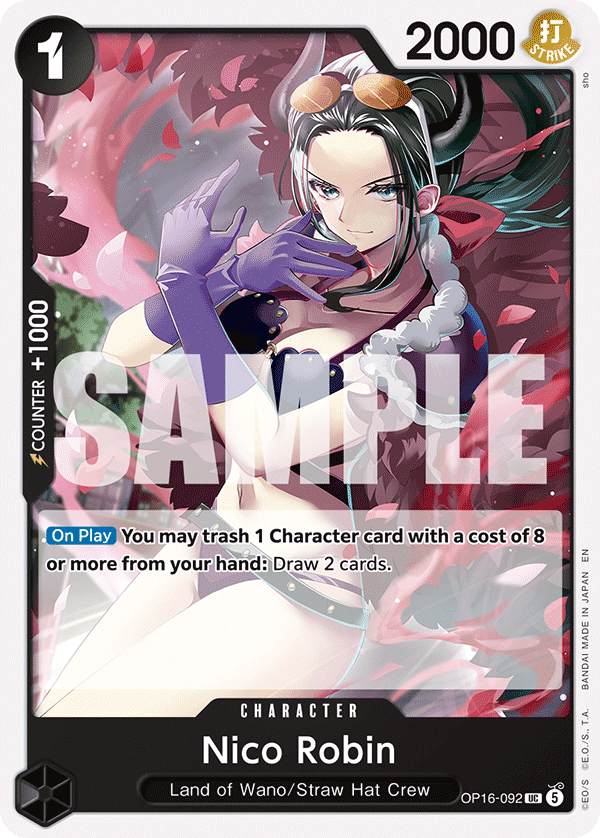 OP16-092OP16-092Shop on TCGplayer (OP16-092) brings Blue/Yellow cross-set flexibility to the Yellow pool, providing on-play effects that support both the Trigger density requirement and the Straw Hat character package.
Yellow in the OP-16 format
OP-16 leans heavily on Black and Purple, and the set's clearest Yellow-adjacent headliner is Marshall.D. Teach (Blackbeard), a genuine two-color Black/Yellow leader that's currently one of the strongest decks in the format. Akainu is the set's other week-1 headliner, and the new mechanics center on Marines and Cipher Pol. Yellow doesn't get a pure mono-Yellow breakout card in OP-16, but between Blackbeard and Rosinante's return, the color got real headline presence this set.
OP-16 also adds several characters with Yellow affiliation under the Marine and Cipher Pol factions, giving Blue/Yellow Nami players more to work with. Some OP-16 event cards also carry Yellow Triggers that slot into Nami's Life pile strategy.
Yellow's core engine is stable across sets because it's built on Trigger density rather than chasing new power cards. A Nami deck built around the OP-09 and OP-11 core cards is still competitive in OP-16 format. Yellow players pick up OP-16 pieces selectively. They don't need to rebuild. Yellow also shows up as a splash color in Black/Yellow Yamato, where the Black Yellow Yamato deck guide covers how a Yellow package layers onto Yamato's Black recursion engine, distinct from Blackbeard's dedicated Black/Yellow Blackbeard deck guide.
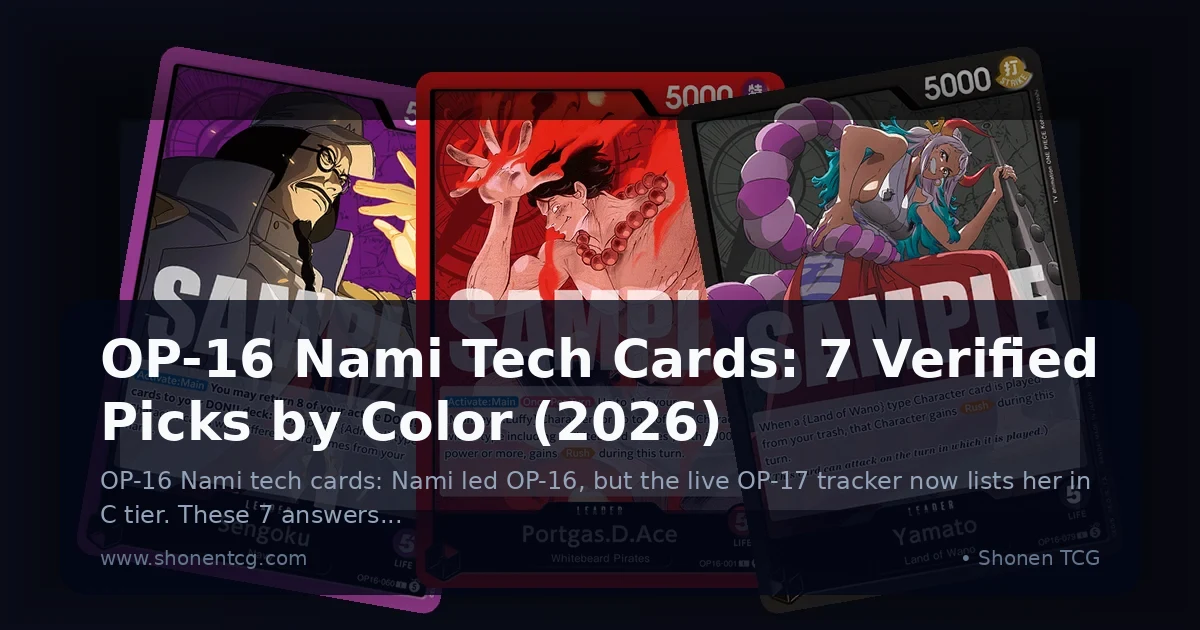
For players trying to counter Nami specifically, the OP-16 Nami tech cards guide breaks down the specific Yellow, Black, and Purple cards showing up in top tables.
Related reading
- OP-16 Rosinante Deck Guide: Full build and matchup breakdown for Purple/Yellow Rosinante, one of the format's current top Yellow-adjacent decks.
- OP-16 Meta Report July 2026: Current tier standings across the whole OP-16 format, including where each Yellow-adjacent leader ranks.
- OP-16 All 6 Leaders Explained: Colors and identities of every OP-16 leader, useful context for how Yellow's splash packages fit in.
- One Piece TCG OP-16 Complete Guide: Full set overview covering leaders, chase cards, and the complete OP-16 competitive landscape.
- One Piece TCG Beginner Guide 2026: How to Play & Rules: Core rules, DON!! system, and turn structure for players new to One Piece TCG.
Frequently asked questions
What does Yellow do in One Piece TCG? Yellow is the Trigger and Life manipulation color. It has the most powerful Trigger effects among all six colors, which activate when the opponent attacks you and reveals a Life card with a Trigger. Yellow also runs cards that add to your Life total, making Life management a central skill. The color rewards patience and punishes aggressive players who attack recklessly.
What is the best Yellow leader in One Piece TCG in 2026? Black/Yellow Blackbeard and Purple/Yellow Rosinante are the current top Yellow-adjacent performers by broad tournament consensus. Blue/Yellow Nami (OP11-041) is the most accessible strong option, generating additional Yellow Triggers and using Zeus's Thunder effects. Pure Yellow leaders like Charlotte Linlin exist but see far less competitive play.
How do Triggers work in One Piece TCG? When your opponent attacks you and reduces your Life total, you take the top card of your deck and add it to your Life pile. If that new card has a Trigger icon, you may immediately activate its effect. Yellow Triggers include drawing cards, removing opponent's Characters, adding Don!! to your field, and adding extra Life cards. The timing is controlled by your opponent, but your deck construction determines how many Triggers fire.
Why do Yellow decks avoid running blockers? Yellow decks deliberately skip blockers because the Trigger defense system replaces blocking. Every blocker you play is a card that is NOT a Trigger source. Yellow would rather take the attack, add a card to Life, and chain a Trigger effect than pay the Don!! cost to activate a blocker. The exception is in situations where blocking buys enough time for your Trigger engine to pay off.
Is Yellow good for beginners in One Piece TCG? Yellow has a steeper learning curve than Red or Black. Knowing when to hold Life cards versus when to "pop" them for Trigger chains requires match-by-match calculation. The Blue/Yellow Nami deck in particular demands strong deck knowledge. If you want a simpler entry point, Red aggro or Black removal are more forgiving. But if you enjoy reactive, punish-based play, Yellow rewards the investment.
Does Yellow have strong cards in OP-16? OP-16 leans heavily toward Black and Purple, so Yellow's new additions are modest. Several Marines and Cipher Pol characters carry the Yellow tag in OP-16. Nami builds mostly draw from their OP-09 and OP-11 core. Yellow gets stronger additions in some OP-16 event cards, but players building Yellow for the first time do not need OP-16 as their entry point.
What is the Yellow engine in One Piece TCG? The Yellow engine refers to stacking your deck with high-Trigger-density cards so that nearly every Life reveal fires an effect. A well-built Yellow engine might contain 12-18 Trigger cards, meaning opponents face Trigger effects most of the time they attack. Managing the ratio of Triggers to core game pieces is the main deckbuilding challenge in Yellow.
References
Was this guide helpful?
Cards in this article
About the author
KT
Competitive TCG Analyst
Competitive One Piece TCG player and deck builder with 3 years of tournament experience. Covers meta analysis, tier lists, and leader builds.
- 3 years competitive OPTCG tournament experience
- Regional top 8 finisher
- Deck builder and meta analyst
- Covers every set since OP-01

Disclaimer
This article is published for informational and entertainment purposes. It does not constitute professional financial, legal, or technical advice. Game performance, online services, patch schedules, and store listings change. Verify critical details (pricing, system requirements, regional availability) with publishers and storefronts before you buy. Affiliate links, where present, help support our editorial work and are labelled in our affiliate disclosure.