Loading…
Loading…
Shonen TCG · General
Reviewing
Union Arena
The Union Arena InuYasha best cards are already documented from the JP release that dropped in May 2026.
Union Arena InuYasha does not release in English until August 14, 2026. The Japanese version has been out since May. I have been tracking JP prices for the past several weeks, and the data paints a clear picture of which cards to prioritize before EN release prices finalize.
The collector appeal for InuYasha is genuinely different from any other Union Arena set. Solo Leveling attracts new anime fans. Bleach attracts Shonen fans broadly. InuYasha is pulling in people in their late 20s and 30s who watched the original run and have not thought about the series in ten years. That nostalgia translates to stronger collector floor values than a purely metrics-based analysis would predict.
Here is what is worth pulling, what is worth buying as singles, and whether the box math makes sense for the EN release.
TL;DR: InuYasha EN releases August 14, 2026. Chase card: Full Demon InuYasha Special Rare ($40-60 JP, expect similar EN). Best competitive buy: Kagome (Rare, $6-10). Box EV is neutral-to-slightly-negative at street prices; neutral-to-slightly-positive at MSRP. Pre-order starter deck at $17 for guaranteed 4x Miroku.
Date note: August 14, 2026 EN release date is sourced from community reports and the Union Arena official JP site announcement. The official EN Union Arena site was unreachable for final verification. Confirm at the Bandai EN product page before pre-ordering.
The competitive builds run Kagome as the 4-of draw engine and Full Demon InuYasha or Sesshomaru as finishers. The collector chase is Full Demon InuYasha Special Rare. The budget path to a competitive deck is buying Kagome and Miroku as singles and adding Full Demon InuYasha as funds allow.
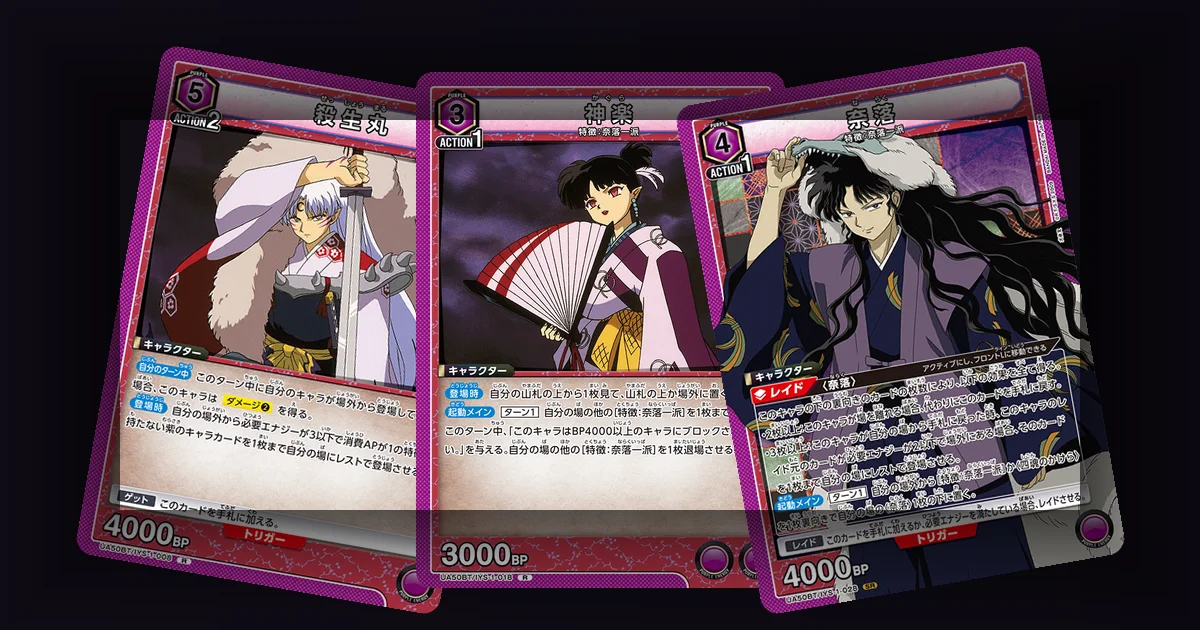
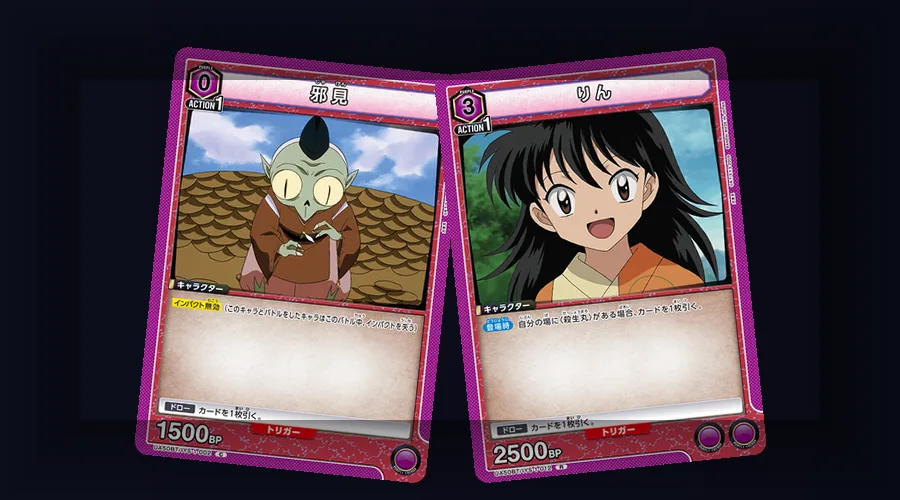 The InuYasha set's Special Rares are the top collector pulls at launch.
Was this guide helpful?
About the author

TCG Deck Analyst
Former card game tournament organiser turned analyst. Covers One Piece TCG meta, deck efficiency, and card valuation. Builds spreadsheets for decks most people just play.
Disclaimer
This article is published for informational and entertainment purposes. It does not constitute professional financial, legal, or technical advice. Game performance, online services, patch schedules, and store listings change. Verify critical details (pricing, system requirements, regional availability) with publishers and storefronts before you buy. Affiliate links, where present, help support our editorial work and are labelled in our affiliate disclosure.
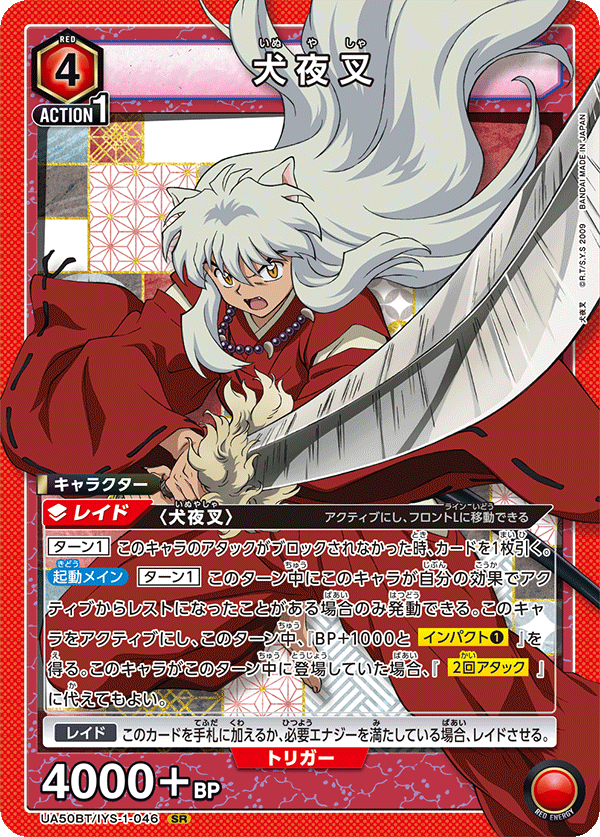 UA50BT-046UA50BT-046Shop on TCGplayer The best card in the set and the box's most valuable single pull. At maximum Jewel Shard counters (4), Full Demon InuYasha hits 9000+ power with an attack-twice conditional that closes games in 2-3 turns from any board state.
Competitive: Yes. The Counter Rush archetype runs 2 copies. Reaching maximum counters requires Kagome and Miroku support, but when the combo resolves, Full Demon is a game-ender.
Collector: Extremely strong. InuYasha's demon form is one of the series' most iconic visuals. The Special Rare artwork depicts the full transformation with screened energy effects. Nostalgia-driven collector demand keeps the floor elevated even if competitive demand declines.
Buy at: Any price below $50 EN is reasonable for both competitive and collector purposes. Above $55, buy only if you need it for competitive play or love the card specifically.
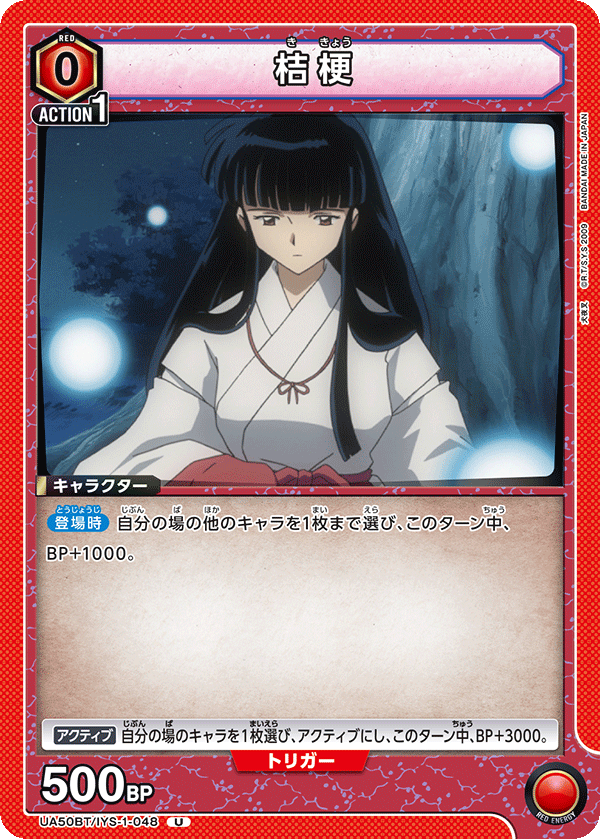 UA50BT-048UA50BT-048Shop on TCGplayer InuYasha's original love interest, the priestess Kikyo, is the second-highest value Special Rare. Her Purification mechanic operates on opponent characters (spending her own counters to debuff opposing power) rather than benefiting your own characters.
Competitive: Yes. Kikyo enables a defensive variant of the InuYasha archetype. Two copies is standard in Sesshomaru Control builds.
Collector: Strong. Kikyo has a deeply dedicated fanbase from the original series, and her Special Rare artwork shows her in the iconic purple and white priestess outfit. Her collector floor is unusually strong for a card that is not the set's marquee character.
Buy at: Below $30 EN is good value for the competitive + collector combination. Above $35 EN, she becomes a purer collector purchase.
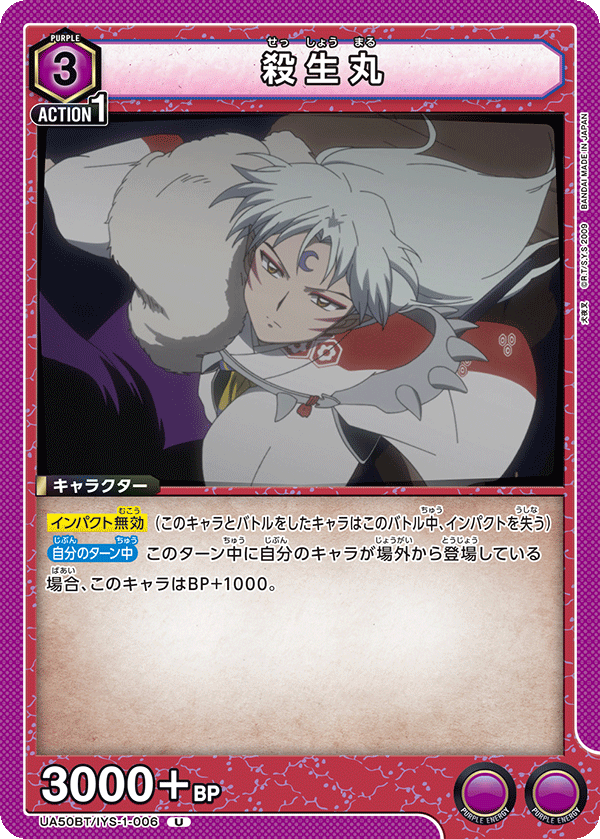 UA50BT-006UA50BT-006Shop on TCGplayer InuYasha's brother and fan-favorite rival character. Sesshomaru as a TCG piece has a specific advantage: he ignores Jewel Shard counter requirements entirely. His power is a flat 7000, independent of the counter system.
Competitive: Moderate. Sesshomaru Control runs 2 copies as the non-counter win condition. His consistent power level is valuable against opponents who target your counter-accumulation pieces.
Collector: Strong. Sesshomaru consistently polls as one of the most popular characters in all Shonen anime, not just InuYasha. His collector ceiling is higher than purely competitive demand.
Buy at: Below $25 EN is solid. Above $30, prioritize based on which deck you are building.
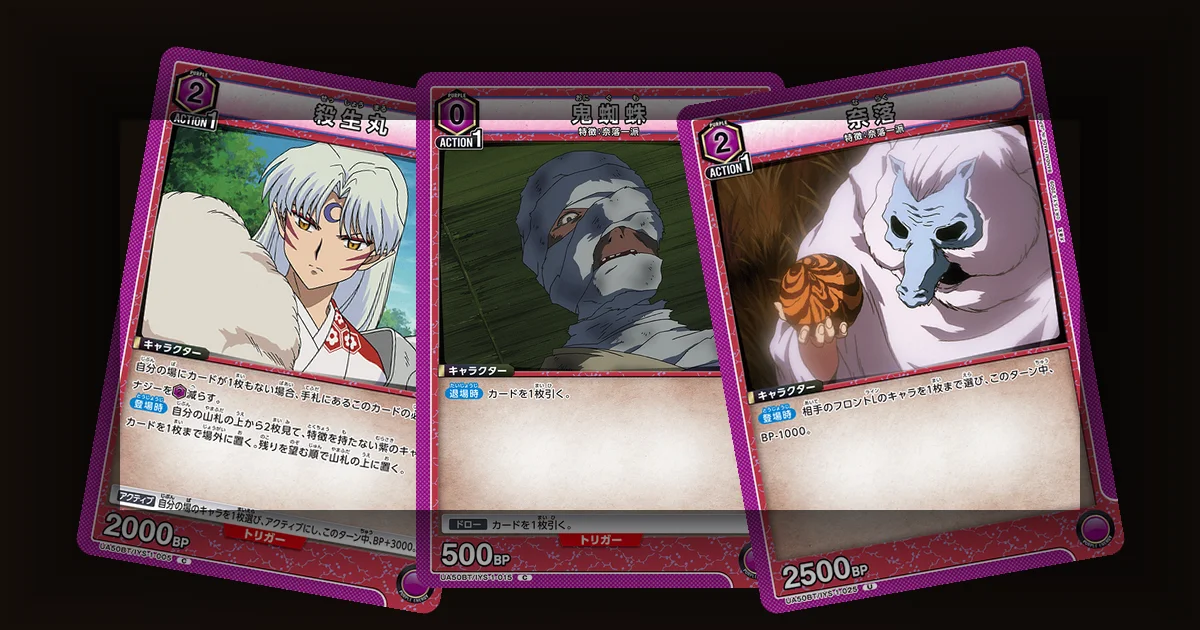
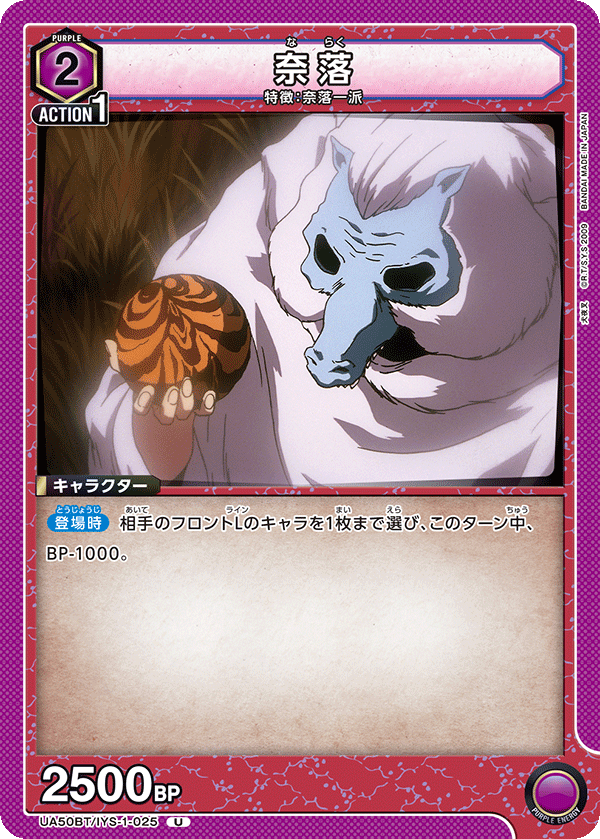 UA50BT-025UA50BT-025Shop on TCGplayer The set's main villain and the 4th Special Rare by value. Naraku's ability negates all Jewel Shard counter effects on the field for one turn. In InuYasha mirrors, this is devastating; against other archetypes, it is situational.
Competitive: Niche. Naraku is a meta-call card: excellent in InuYasha-heavy metas, marginal in others. Most competitive InuYasha builds run 1 copy as a flex finisher.
Collector: Moderate. Naraku has collector interest from being the primary antagonist. Less dedicated fanbase than Sesshomaru or Kikyo.
Buy at: Below $18 EN for meta-call use. Only buy higher if you are a Naraku fan specifically.
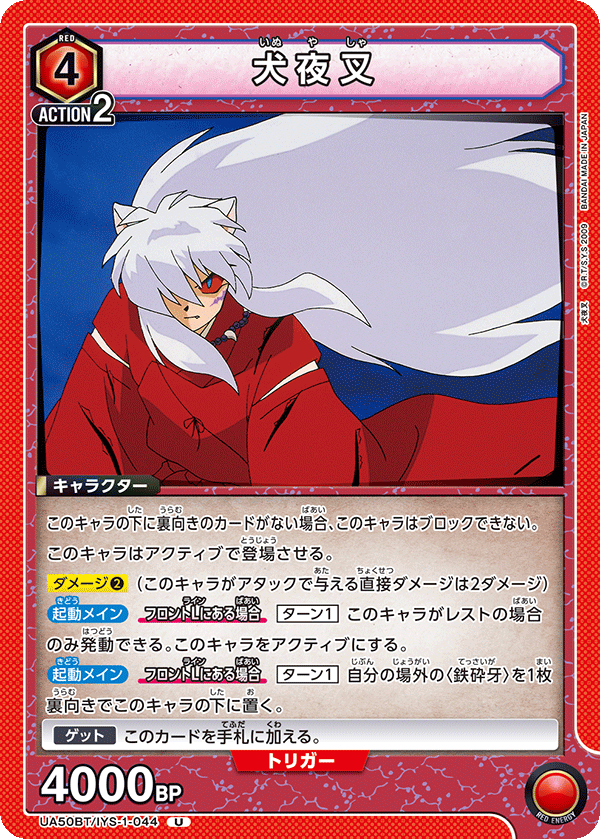 UA50BT-044UA50BT-044Shop on TCGplayer A powered-up version of base InuYasha (different from Full Demon). Acts as a stepping stone in the transformation sequence when Full Demon is not yet accessible. Competitively useful as a turn 5-6 alternative.
Competitive: Moderate. Some builds run 2 copies to create redundancy in the transformation chain.
Collector: Lower than the other InuYasha-face versions because Full Demon and base InuYasha already serve different collection roles. This one occupies an in-between position.
Buy at: Below $15 EN if you need a second transformation option in your build.
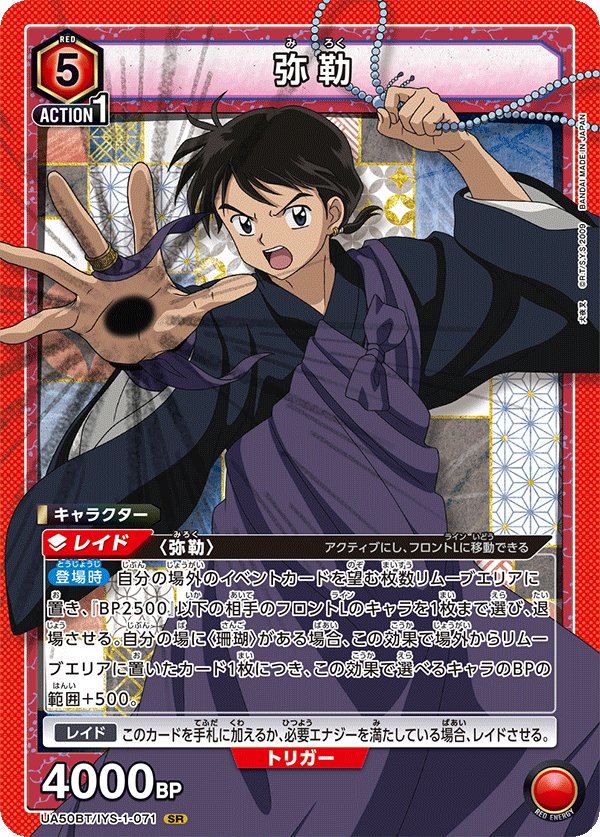 UA50BT-071UA50BT-071Shop on TCGplayer The highest-print-rate Special Rare in the set (appears most frequently when a Special Rare is pulled). Miroku standard is in the starter deck; this is the premium foil version.
Competitive: The SP version is identical in function to the standard Miroku. Run the standard version from the starter deck; this SP offers no gameplay advantage.
Collector: Mild. Miroku fans will want this, but it is not a top collector priority.
Buy at: Below $12 EN if you want the foil version for display. Do not prioritize over competitive singles.
GODEEPER: For the full InuYasha set preview including mechanic details and competitive archetypes, see the complete pre-release coverage. Union Arena InuYasha: Everything We Know →
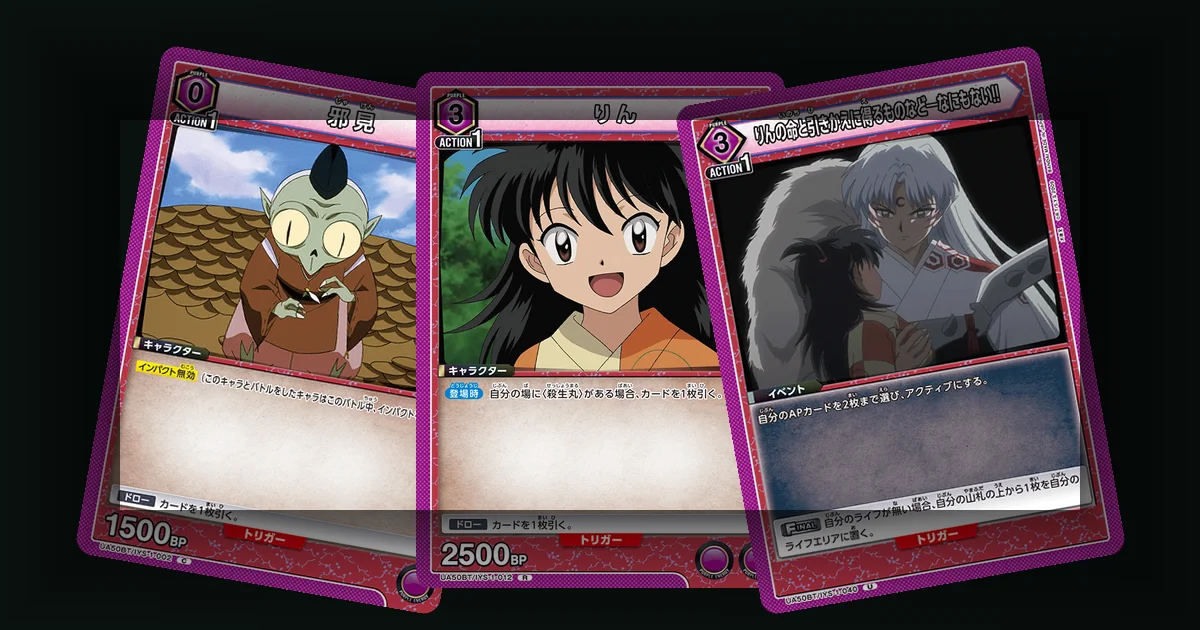
Kagome Higurashi (Rare, $6-10 JP): Run 4 copies in any InuYasha competitive build. She is the draw engine and Purification activation piece. Without Kagome, the counter system cannot cycle through Purification fast enough to maintain hand size. The most important card in the set by competitive function.
Miroku (Uncommon, $3-5 JP, also in starter deck): The counter accelerator. Puts 1 Jewel Shard counter on all your characters when he enters. Four copies standard. Buy the starter deck and get 4 copies for $17; no need to purchase singles if you are buying the starter.
Shadow Soldier Igris equivalent / Sango (Uncommon, $2-4 JP): Sango as the blocker piece. 3-cost, blocker ability, Hiraikotsu counter effect. Run 3-4 copies. Inexpensive and widely available.
System Alert equivalent / Shikon Jewel Shard event (Common, $0.50-$1 JP): The primary interaction event for counter manipulation. Likely run at 4 copies. Inexpensive to acquire.
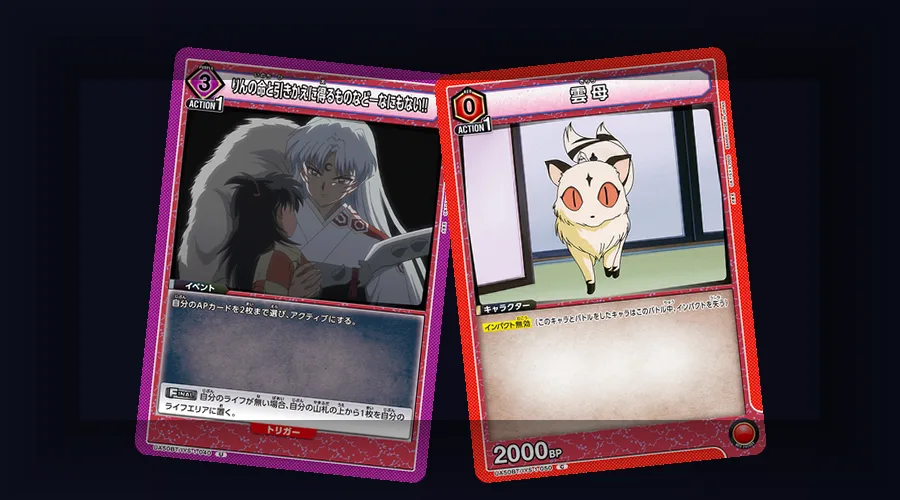 Lower-rarity competitive cards offer the best value per dollar for deckbuilders.
Box structure: roughly 16-20 packs depending on the set, 8 cards per pack Special Rare guarantee: 1 per box Street price EN (estimated): $75-80 Expected pulled value calculation:
Average Special Rare value (across all 6): Full Demon $50 + Kikyo $28 + Sesshomaru $25 + Naraku $18 + Inuyasha Awakened $15 + Miroku SP $12 = average $24.67 per Special Rare
Remaining 23 packs of Rares, Uncommons, Commons: expected $20-30 in aggregate value
Total expected value: $45-55 per box at EN release prices Box cost at MSRP ($75-80): -$25 to -$30 expected loss
Box EV is negative for hunting specific cards. This is standard for anime TCGs. The math improves if you open Full Demon InuYasha; it gets worse if you open Miroku SP.
Buy singles for competitive pieces. Kagome at $8 x4 = $32. Miroku from starter deck (included). Sango at $3 x4 = $12. Full Demon InuYasha at $50 x2 = $100. Total competitive core: ~$144. One box expected return: $45-55 in pulled value. Singles win the math decisively.
SHOP: Deciding what to chase from InuYasha? Check current Union Arena prices on TCGPlayer. Shop TCGplayer →
Starter deck ($17 MSRP): Pre-order without hesitation. Contains 4x Miroku, 3x base InuYasha, Sango, and other competition pieces. At $17, this is the single best value purchase in the set.
Booster box at MSRP ($75-80): Pre-order 1 box if you are a collector who wants the opening experience or if you plan to play InuYasha seriously and want card volume. The expected single Special Rare from one box could be Full Demon InuYasha at $50+, making the box break-even or slightly profitable if that happens.
Booster box at street price ($85-95): Skip. Negative EV widens at above-MSRP prices.
Singles after EN release: The best strategy for competitive builders. Prices will spike on day 1 of EN release, drop slightly in week 2-3, and stabilize around week 4. If you are patient, week 3-4 after EN release is the best single-purchase window.
Union Arena vs Dragon Ball Super Card Game Compared: Union Arena vs Dragon Ball Super Card Game.
Union Arena InuYasha: Everything We Know: Full mechanic preview and competitive breakdown
Union Arena InuYasha Deck Building Guide: How to build each InuYasha IP deck with card ratios for EN 2026.
All Union Arena Sets: EN Release Schedule: Where InuYasha fits in the broader UA timeline
Union Arena Solo Leveling Guide: The current competitive standard before InuYasha launches
Union Arena Bleach Guide: Another EN standard contender for comparison
Union Arena TCG Beginner Guide: Rules and first-game setup if InuYasha is your entry point
Union Arena InuYasha English Release: What to Buy in 2026: box vs singles strategy, retailer list, and timeline for the August 14 EN launch.
Union Arena InuYasha EN Singles vs Sealed: Full Math: EV math showing exactly how much you save buying specific SR singles versus opening boxes to find them.
Union Arena InuYasha Collector Guide: SR Rarity and Value: pull rates, voice-actor signed card values, and collector strategy for EN launch boxes.
When will EN InuYasha prices stabilize after launch? Typically 3-4 weeks after EN release. Week 1 prices are launch-window inflated; week 2-3 prices drop as initial box opens flood the market; week 4 price reflects sustained competitive and collector demand.
Will Full Demon InuYasha's price hold after the competitive meta settles? The competitive demand component will fluctuate with meta changes. The collector floor (InuYasha fan base, iconic card artwork) will keep the price above $25-30 long-term even if competitive demand decreases. Kikyo and Sesshomaru hold similar collector floors.
Are InuYasha cards compatible with other Union Arena IPs? Not in standard constructed format. Union Arena requires single-IP decks in official play. InuYasha cards can only be combined with other InuYasha cards.
Does the InuYasha starter deck include Kagome? Based on Japanese starter deck contents, Kagome appears at 2 copies. Run 4 for competitive play; purchase 2 additional Kagome singles at $7-10 each.
Is Full Demon InuYasha mandatory for competitive play? No. Sesshomaru Control builds do not run Full Demon InuYasha and still perform competitively in early JP data. Full Demon is the most powerful finisher in the set but Counter Rush builds are viable at 1 copy of Full Demon or zero.
Related
Dragon Ball Fusion World Vegito Guide FB10 Meta 2026
13 min read
OP-16 One Month Meta Report: Complete 5-Week Breakdown
9 min read
Dragon Ball Fusion World July Meta: 4-Week Breakdown
8 min read
OP-16 Nami Counter Guide: All 6 Matchups Explained
9 min read
Disney Lorcana Attack of the Vine Best Cards to Pull
13 min read