

Shonen TCG · Guides
OP-16 One Month Meta Report: Complete 5-Week Breakdown
OP-16 one month meta report: a dated five-week retrospective on the launch meta, plus the current post-release OP-17 standings. Updated Sep 2026.
This OP-16 one month meta report is a dated retrospective on the first five weeks after "The Time of Battle" launched in English on June 12, 2026. It was originally written before OP-17. This October 5 update keeps the historical month-one narrative, labels old tracker values by date and methodology, and adds a separate post-release OP-17 snapshot instead of treating July data as current.
TL;DR: The original five-week report put Blue/Green Luffy, Purple Enel, and Black/Yellow Teach in its top group. The dated July 7 OnePiece.gg OP-16 table reports Ranked Sim figures of 72% for Luffy, 69.6% for Enel, and 66% for Purple/Yellow Rosinante, with Teach at 67.1% in Tier 2 and Nami at 64.7% in Tier 2. Those are historical ranked-sim snapshots, not current tournament win rates. The October 5 OPMetagame snapshot instead leads with Green Mihawk at 303 decklists and 65.0%.
Updated October 5, 2026: The OP-17 comparison is now labeled with the October 5 tracker snapshot: Green Mihawk 318 decklists, Blue Rocks 178, Purple Kaido 101, and Black Luffy 97. These are decklist counts, not universal win rates.
OP-16 one month meta report: quick answer
At the historical cutoff, the original report described 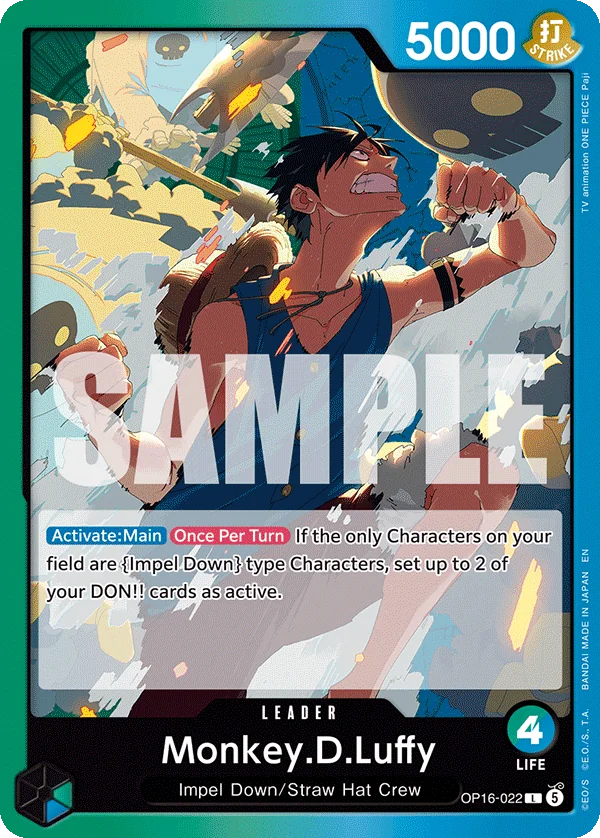 OP16-022OP16-022Shop on TCGplayer Blue/Green Luffy as the breakout performer and placed Enel and
 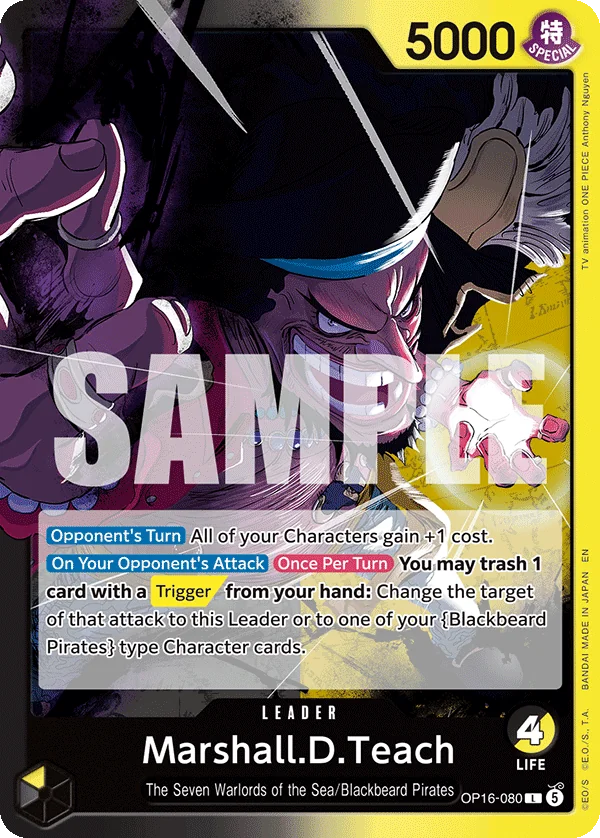 OP16-080OP16-080Shop on TCGplayer Blackbeard in the leading group. For a dated, citable number, the July 7 OnePiece.gg page labels its figures "Decklist Winrate (Ranked Sim)" and puts Enel at 69.6%, Luffy at 72%, and Purple/Yellow Rosinante at 66% in Tier 1. It puts Black/Yellow Teach at 67.1% and Blue/Yellow Nami (OP11-041) at 64.7% in Tier 2.
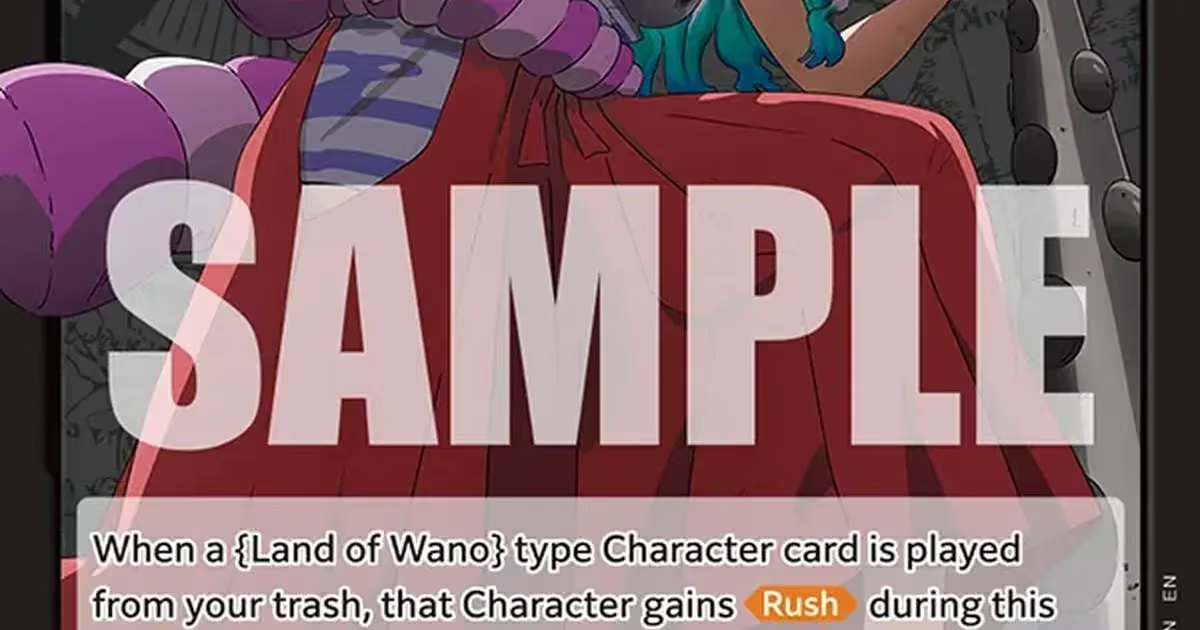
 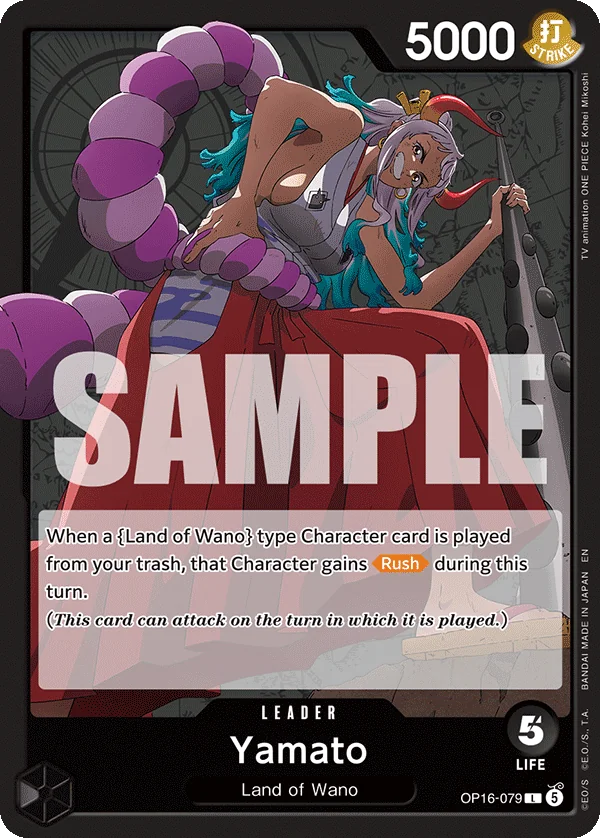 OP16-079OP16-079Shop on TCGplayer Yamato and
 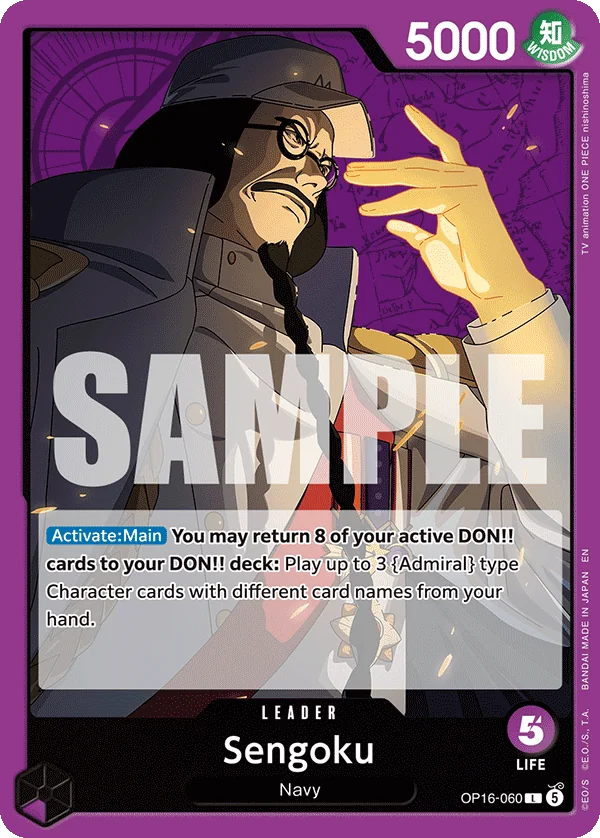 OP16-060OP16-060Shop on TCGplayer Sengoku are also listed in that Tier 2 group, while
 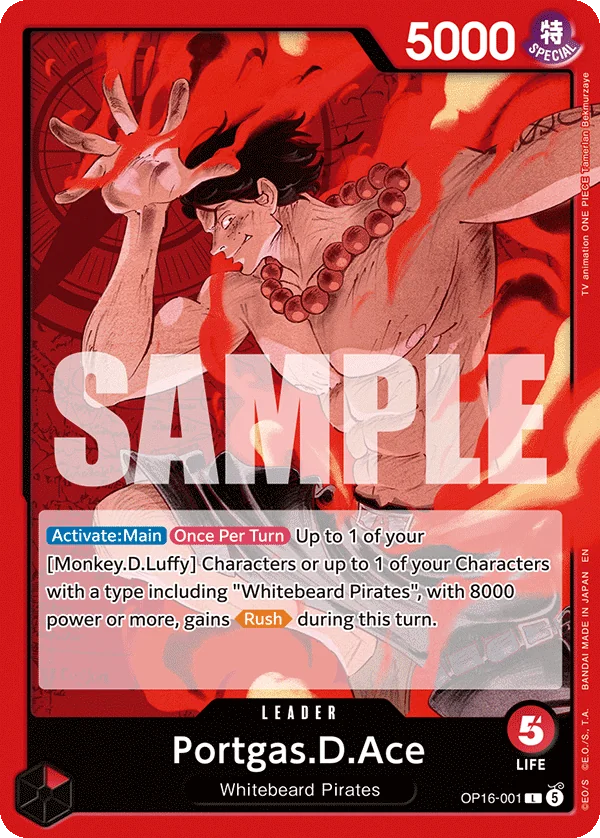 OP16-001OP16-001Shop on TCGplayer OP-16 Red Ace appears in Tier 3.
 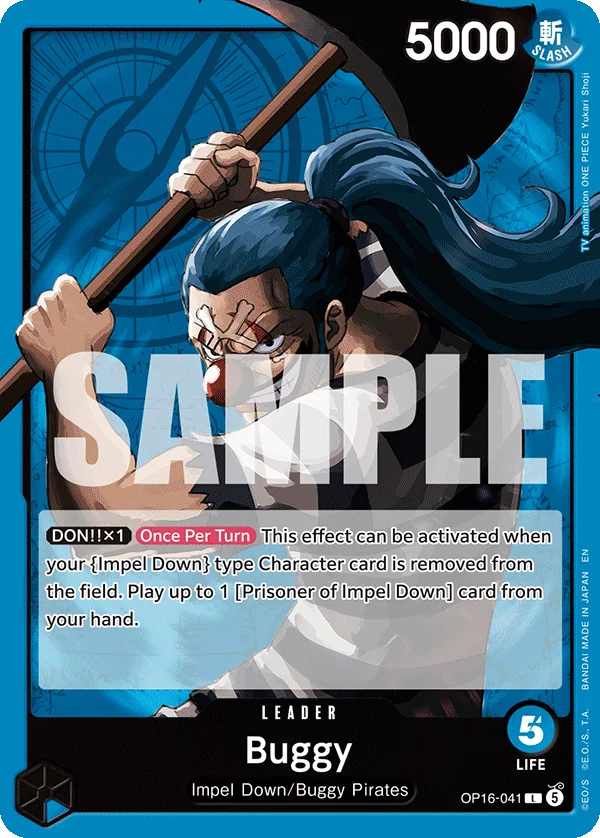 OP16-041OP16-041Shop on TCGplayer Buggy remains a niche historical pick. None of these July numbers should be read as a September OP-17 ranking.
OP-16 one month meta report: month-one snapshot
This section is a historical five-week report, not the current ladder. The closest dated source attached to the original update is the July 7 OnePiece.gg OP-16 table. It explicitly reports Ranked Sim results rather than a universal tournament win rate:
Tier 1 in the July 7 snapshot: Purple Enel at 69.6%, Blue/Green Luffy at 72%, and Purple/Yellow Rosinante at 66%, each across 50+ ranked games.
Tier 2 in the July 7 snapshot: Black/Yellow Teach at 67.1% across 70+ games, Blue/Yellow Nami at 64.7% across 50+ games, Red/Blue Lucy at 65.1% across 60+ games, and Red/Blue Ace at 60% across 90+ games. Green Mihawk, Black Yamato, and Purple Sengoku were also listed in Tier 2 without a comparable figure in the page text.
Tier 3 in the July 7 snapshot: OP-16 Red Ace and Blue/Purple Luffy. Buggy is retained in this article as a niche historical discussion point, not as a current competitive placement.
October 5 OP-17 context: the OPMetagame snapshot used for this update lists Green Mihawk at 318 decklists and 65.0%, Blue Rocks at 178, Purple Kaido at 101, and Black Luffy at 97. Those counts are a new sample rather than a continuation of the month-one table. Lower-volume figures from the earlier September sample are not carried forward as October counts.
One additional correction matters: the Nami discussed here is OP11-041 from OP-11. The old OP16-091 shortcode did not identify that Leader and has been removed.
GODEEPER: For a deep breakdown of how to build and pilot the current Nami list in the OP-16 format, see OP-16 Nami Matchup Guide and Counter Strategies.
Leaders Who Improved Through the Month
Blue/Green Luffy (OP16-022) is the clearest historical story in the report. The two-pool plan asked pilots to sequence attacks and resource commitments carefully, so early impressions did not necessarily predict later results. The lesson is about learning a complex Leader, not proof that a month-one rating remains current.
Purple/Yellow Rosinante is the most useful dated comparison point. The July 7 OnePiece.gg snapshot placed the archetype in Tier 1 at 66% across 50+ Ranked Sim games. That number documents a historical OP-16 sample; it is not an OP-17 tournament placement.
For a closer look at how to build Rosinante, the OP-16 Purple/Yellow Rosinante deck guide covers the full list and sideboard theory.
Sengoku Purple ramp (OP16-060) is an interesting case. The original report treated its sequencing and board development as skill tests, but the October 5 OP-17 tracker shows only three Purple Sengoku decklists. That sample is too small for a current win-rate claim, so the historical pilot-skill discussion should not be presented as live evidence.
Enel (Purple) was one of the historical OP-16 risers. The dated July 7 table gives Purple Enel a 69.6% Ranked Sim figure in Tier 1, alongside Luffy and Rosinante. Keep that figure tied to the source date and method, especially now that the live format is OP-17.
Blackbeard (Black/Yellow, OP16-080) was another historical high-skill archetype. The July 7 snapshot put Black/Yellow Teach in Tier 2 at 67.1% across 70+ Ranked Sim games. The October 5 OP-17 tracker lists Black Blackbeard in A tier with eight decklists, so the current sample is too small to support a broad claim about its present ceiling.
For the full Blackbeard list and pilot notes, see the OP-16 Blackbeard deck guide.
SHOP: Updating an OP-16 deck after the month-one results? Compare current OP-16 singles for the shell you want to test. Shop TCGplayer →
Leaders Who Fell Through the Month
Ace Red aggro (OP16-001) had the sharpest historical decline in the original report. That is a dated OP-16 observation, not a permanent label: the October 5 OP-17 tracker lists Red Ace with 69 decklists in A tier.
The aggressive Red archetype is not inherently unplayable. Use the current event's format and deck data rather than carrying the old five-week label into OP-17.
Nami (OP-11) is another historical comparison point. The July 7 OnePiece.gg table lists Blue/Yellow Nami at 64.7% in Tier 2 across 50+ Ranked Sim games. The old statement that her rate was never independently confirmed should be replaced by this dated source, while current OP-17 placement must be checked separately.
GODEEPER: If you are comparing current OP-16 leaders after the OP-17 release, the OP-16 all 6 leaders explained guide has a quick comparison of each Leader's historical ceiling and build cost.
Key Lessons from Month 1
Pilot skill compounds faster than format knowledge. The historical lesson from Luffy's two-pool mechanic is that early impressions can lag behind player understanding. That lesson is useful for testing, but it is not a substitute for a current result table.
Nami's month-one dip was answer-driven in the original analysis. The dated snapshot shows her in Tier 2, but the cause is an interpretation of that historical matchup environment, not a current OP-17 fact.
Yamato (OP16-079) was a lower-volume historical pick. The October 5 tracker shows 22 Black Yamato decklists in B tier, so the safe current claim is playable but low sample, not guaranteed stable results.
Buggy Blue swarm was treated as a niche pick in this retrospective. No current OP-17 claim is attached to it here.
What Changed After OP-17
OP-17 is no longer an upcoming set. Japan released it on August 22, the English pre-release window began on August 21, and the English wide release was August 28. The October 5 OPMetagame snapshot lists Green Mihawk at 318 decklists and 65.0%, Blue Rocks at 178, Purple Kaido at 101, and Black Luffy at 97. Treat these as a dated tracker sample, separate from the July OP-16 table.
The practical lesson is simple: do not merge the July OP-16 Ranked Sim table with the October 5 OP-17 decklist table. They measure different windows and use different labels. For current standings, use the OP-17 meta tier list and the source's update timestamp; for the original release timeline, see the OP-17 release date guide for World's Strongest Warriors.
Related Reading
-
One Piece TCG OP-16 Guide: Set Review & Leaders (2026): Full OP-16 set overview, all six leaders, and key mechanics.
-
OP-16 Price Guide: What Every Card Is Worth (2026): Dated OP-16 market snapshots, not a current investment recommendation.
-
OP-16 Luffy Deck Guide: The Blue/Green Luffy list and the historical two-pool strategy.
-
OP-16 Yamato Deck Guide: The Black recursion game plan and its current OP-17 context.
-
OP-16 Sengoku Deck Guide: Purple ramp pilot notes with low-volume current context.
-
OP-17 Spoilers: All Confirmed Cards and Leaders 2026: The completed OP-17 card and Leader archive.
-
OP-17 Leaders Preview: All 6 Confirmed, Xebec Is Blue: The confirmed OP-17 lineup and release history.
-
OP-16 Nami Tech Cards: 7 Verified Picks by Color (2026): Card-by-card OP-16 answers to Nami's historical draw engine.
Frequently Asked Questions
What is the best deck in OP-16 one month after launch? This is a dated question. The July 7 OnePiece.gg OP-16 snapshot lists Blue/Green Luffy at 72% in Tier 1, with Purple Enel at 69.6% and Purple/Yellow Rosinante at 66%, all labeled Ranked Sim figures. The October 5 OP-17 tracker is separate and lists Green Mihawk first by volume.
Is Nami still top tier in the OP-16 format? The dated July 7 OP-16 table places Blue/Yellow Nami in Tier 2 at 64.7% across 50+ Ranked Sim games. That is not a current OP-17 placement.
Did Ace fall off one month into OP-16? The original report described a slower OP-16 month-one trajectory, but the October 5 OP-17 tracker lists Red Ace with 69 decklists in A tier. The historical decline should not be presented as a permanent current ranking.
How is Blackbeard performing one month into OP-16? The July 7 OP-16 table places Black/Yellow Teach in Tier 2 at 67.1% across 70+ Ranked Sim games. The October 5 OP-17 tracker lists Black Blackbeard in A tier with eight decklists, a small current sample.
What should I buy after OP-17's release? Do not use this dated OP-16 report as a buying signal. Compare live prices, current decklists, and the event's legality rules. A tier placement or Ranked Sim figure is not a guarantee of future card value.
Is Yamato good in OP-16? The original report treated Black Yamato as a lower-volume but playable OP-16 recursion deck. The October 5 OP-17 tracker lists Black Yamato with 22 decklists in B tier, so use that current low-sample snapshot rather than the old Tier 2 wording.
What is the Purple/Yellow Rosinante archetype? Rosinante is a cross-set Purple/Yellow archetype. The dated July 7 OP-16 snapshot places it in Tier 1 at 66% across 50+ Ranked Sim games. That is historical OP-16 evidence, not a current OP-17 placement.
References
- Limitless TCG One Piece Tournament Data -- tournament and deck data used for historical comparison.
- OnePiece.gg OP-16 meta snapshot -- July 7 dated Ranked Sim snapshot with the OP-16 Tier 1 and Tier 2 figures quoted above.
- OPMetagame OP-17 Tier List -- October 5, 2026 tracker snapshot used for the dated OP-17 sample.
- Bandai OP-16 official product page -- official release and set context.
- Bandai OP-17 official product page -- official release schedule and set context.
- r/OnePieceTCG community meta discussion -- supplemental community context, not a primary ranking source.
Cards in this article
About the author
Matchups and tier lists
Pen name for the Shonen TCG desk's competitive guides, matchup breakdowns and tier list commentary.
- Lists averaged from public tournament results, sample size stated
- Card text quoted from Bandai's official card list
- Opinions marked as ours, with the reason
Keep reading
OP-16 Nami Tech Cards: 7 Verified Picks by Color (2026)
Guides · 16 min
OP-17 Leaders Preview: All 6 Confirmed, Xebec Is Blue
News · 6 min
One Piece TCG Yellow Deck Guide: Trigger Power 2026
Guides · 9 min
One Piece TCG Black Deck Guide: Removal and Trash Mastery
Guides · 11 min
One Piece TCG Purple Deck Guide: DON Ramp and Control
Guides · 12 min
One Piece TCG Blue Deck Guide: Tempo and Draw 2026
Guides · 9 min

OP-17 Preparation Guide: What Actually Mattered at Launch
Guides · 12 min
One Piece TCG Green Deck Guide: Rest and Tempo Denial 2026
Guides · 17 min
Disclaimer
This article is published for informational and entertainment purposes. It does not constitute professional financial, legal, or technical advice. Game performance, online services, patch schedules, and store listings change. Verify critical details (pricing, system requirements, regional availability) with publishers and storefronts before you buy. Affiliate links, where present, help support our editorial work and are labelled in our affiliate disclosure.