

Shonen TCG · Guides
Attack of the Vine Amber Steel Upgrade: Full Guide
The Attack of the Vine Amber Steel upgrade question is simpler than most players expect. Steelsong entered Set 13 as the top Infinity Constructed deck at 19% meta share, and the core engine that got it there didn't need replacing. It needed patching.
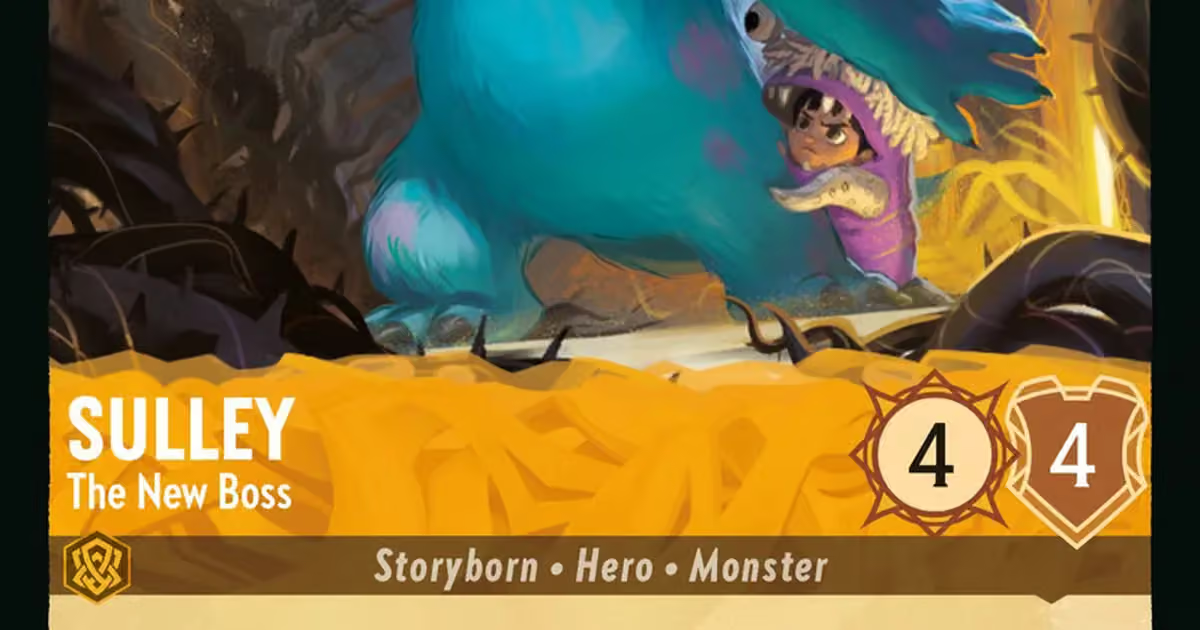
TL;DR: Steelsong needs 5-8 new Set 13 singles, mostly Amber additions that patch the curve. Steel changes very little. The core engine survives intact. New players can build a functional version for less than a full Wilds Unknown list, and the deck is already winning locals with Set 13 upgrades.
How does Attack of the Vine change Steelsong? (quick answer)
Attack of the Vine adds new Amber singers that fix the one gap the Wilds Unknown list never fully solved: the 3-cost questing slot. Steel receives modest additions that work better as flex options than core swaps. The engine (Amber singers quest, Steel characters protect them, Songs drive tempo and hand size) doesn't change. You're patching the curve, not rebuilding the deck.
Key Takeaways
- Steelsong held 19% of Infinity Constructed meta share entering Set 13, the highest of any archetype
- Attack of the Vine (Set 13, July 24, 2026) adds Amber singers that close the 3-cost curve gap
- Steel additions in Set 13 work better as 1-2 flex slots than as core replacements
- You need 5-8 new singles maximum; the rest of your Wilds Unknown list carries over
- Budget builds are viable: the Wilds Unknown core doesn't need to be replaced, only extended
- First-week local results show Steelsong still placing well with Set 13 upgrades
- The flex slot count should increase to 2-3 cards as meta counter-tech emerges in weeks 2-3
 Ariel - Singing Mermaid is one of the key characters in this Lorcana format.
What Steelsong looked like entering Set 13
Before opening a single Attack of the Vine pack, it helps to know what you're starting from. The Wilds Unknown version of Steelsong ran a specific structure: roughly 14 Songs spread across the curve, Amber questing characters in the 2-4 cost range, and Steel's large Ward-protected characters anchoring the board from turn 4 onward.
The Songs served two purposes. Removal Songs cleared opponent threats without costing ink when sung by an exerted character. Draw Songs, most importantly A Whole New World, kept the hand refueled through the midgame. That's why the archetype held its position across multiple set transitions: the Songs package doesn't lose power when new cards arrive, it just gains better characters to sing them.
The weak spot in the Wilds Unknown list was the 3-cost Amber singer slot. The options available were functional but not dominant. When opponents ran low-cost aggro to pressure before Steel came online, the 3-cost slot was where Steelsong felt the stress most. Set 13 addresses that directly.
GODEEPER: The full breakdown of how Steelsong works from scratch, including Shift chains and the Songs count rationale. Disney Lorcana Amber Steel Steelsong: Deck and Matchups →
New Amber additions for Set 13 Steelsong
Amber's design identity in Attack of the Vine leans hard into the Pixar side of the Disney catalog. The new characters are singers first, which fits perfectly with what Steelsong already wants. A character that quests and can exert to sing a 4-cost Song does double work without requiring any structural change to the deck.
The additions you're evaluating for the core fall into two categories.
The 3-cost slot fix. Attack of the Vine brings at least two new Amber characters in the 3-cost range with questing ability and enough willpower to survive a single-target removal Song from a typical opponent. These are the cards you're most likely adding to the core rather than the flex slots. One or two copies depending on how aggressive your local meta is.
The singer-synergy additions. Several Set 13 Amber cards trigger effects when they're exerted to sing rather than when they attack or quest. These reinforce the Songs engine without changing how many Songs you're running. They cost 4 or 5, so they arrive at the same point your Steel characters are coming online. Both halves of the board develop together rather than one waiting on the other.
You don't need all of them. Two or three Amber additions is the range where the curve improvement shows up consistently without diluting the proven Wilds Unknown pieces that already work.
For a fuller picture of which Set 13 Amber cards rate highest across all archetypes, see the Disney Lorcana Attack of the Vine best cards to pull guide for pull value and playability ratings.
 Mickey Mouse - Inspirational Warrior brings unique abilities to the Lorcana card pool.
How much Steel actually changes (minimal)
Steel's Set 13 additions are modest. The new Steel characters skew toward the 5-6 cost range where Steelsong already has strong options from Wilds Unknown. You're not replacing established Ward-protected characters with new ones. The new cards give you alternative angles, not direct upgrades.
Two Set 13 Steel cards are worth testing as flex slots. One provides a secondary protection effect that stacks with existing Ward characters. The other enters earlier in the curve but trades durability for lower cost. Neither one's likely to crack the core of a tuned list.
If you're prioritizing purchases, buy the Amber additions first. Steel can wait until week 2 or 3 when you can see what the meta counter-tech looks like and whether the flex slot needs a Steel answer at all.
The full upgrade path: what to cut and what to add
This is a 5-8 card swap, not a rebuild. Here's how to think about it systematically.
What stays (the protected core):
- A Whole New World copies: zero cuts here regardless of price or meta pressure
- Your full removal Songs package: this is why the deck is 19% meta share
- Established Steel characters with Ward at 4-5 cost: still the best protection available
- Any Shift chain pieces at 5-7 cost: Shift efficiency is format-stable
What to cut (2-4 cards):
- The weakest Amber character at 3-cost that currently occupies 2 copies: replace with the stronger Set 13 equivalent
- 1-2 Steel characters in the 6+ cost range that consistently felt one turn too slow against fast matchups: move them to the sideboard or cut entirely
- Any Songs you ran at 3-4 copies when 2-3 were sufficient: Songs count matters but over-packing them at any single cost point reduces flexibility
What to add (5-8 cards):
- 2-3 Amber 3-cost singers from Set 13 that improve the curve
- 1-2 Amber singer-synergy cards at 4-5 cost
- 2-3 flex slots (see next section)
The remaining 52 or so cards from your existing list carry over. That's the advantage of playing an archetype whose engine doesn't get rotated out from under it.
GODEEPER: See which Set 13 cards are winning early and how the full Attack of the Vine meta is shaking out after four days. Disney Lorcana Attack of the Vine Week 1 Meta Report →
Flex slots and meta adaptation
Steelsong's resilience across set transitions comes partly from its core, but also from how it manages the 2-3 flex slots at the edge of the 60-card list. Those slots are the deck's immune response: they change week to week based on what opponents are running against you.
Entering Set 13, the main lines of counter-tech you'll see are:
Rush aggro. Players who watched Steelsong dominate Wilds Unknown are building fast decks to pressure before Steel comes online. Your flex answer here is additional cheap Amber characters that can quest on turn 2 and trade up in value against aggro threats.
Bounce effects. If the Set 13 meta settles into a bouncing pattern where returning your characters resets Singer advantage, the flex slot should include a character or Song that recovers hand size quickly after a bounce. A Whole New World already helps, but a supplementary draw piece in the flex section maintains tempo.
Direct Ward bypass. Some Set 13 builds will run effects that ignore Ward entirely. The flex response depends on the specific effect, but generally a second line of protection through stat boosts or lore acceleration to race rather than protect works better than trying to out-armor specific bypass tech.
Don't lock in flex slots on launch week and leave them there. The week-1 list and the week-4 list should look different. Keep those 2-3 spots fluid and adjust as you see what opponents are actually bringing.
Step-by-Step: upgrading your Steelsong list for Set 13
1. Audit your current Wilds Unknown list for the weak slots. Look specifically at the 3-cost Amber questing slot, any Steel character at 6+ cost that consistently arrived a turn too slow, and Songs you're running at 3-4 copies where 2-3 would do. These are the spots Set 13 is meant to fix, not the whole 60 cards.
2. Buy the Set 13 Amber additions first. Pick up 2-3 of the new 3-cost Amber singers and 1-2 singer-synergy cards at 4-5 cost. These are freshly released and not yet spiked in price, and they close the curve gap the Wilds Unknown list never fully solved.
3. Cut 2-4 cards to make room. Drop the weakest 3-cost Amber character copies, 1-2 of the slowest 6+ cost Steel characters, and any over-packed Songs count. Never cut A Whole New World, your removal Songs package, or an established Shift chain piece regardless of price.
4. Test the Set 13 Steel options as flex slots, not core swaps. The new Steel cards skew toward the 5-6 cost range Steelsong already covers well, so treat them as alternate angles for 1-2 flex spots rather than direct replacements for proven Ward-protected characters.
5. Fill your remaining 2-3 flex slots based on local counter-tech. Answer rush aggro with cheap Amber questers, answer bounce-heavy metas with a supplementary draw piece, and answer Ward-bypass tech with stat boosts or lore acceleration instead of trying to out-armor it directly.
6. Re-check the flex slots weekly. Don't lock the list in on launch week. Track what opponents are actually bringing to locals and swap the flex spots accordingly as the Set 13 meta settles over the following weeks.
Budget build option for new players
New players asking whether to start with Steelsong post-Set 13 get a better answer than they did mid-Wilds Unknown. The Wilds Unknown core is now spread across two set releases in availability, which tends to stabilize singles prices as more product enters the market.
Start with A Whole New World, at minimum 2 copies. It's the card the deck is built around and the one you'll never cut regardless of budget pressure. Check inkdecks.com for current pricing before buying; it fluctuates based on tournament demand.
After that, buy the Set 13 3-cost Amber additions. They're freshly released and not yet spiked in price. Fill in the Wilds Unknown 2-cost Amber characters as budget allows. The 2-cost slot has functional options at lower price points that still enable turn-2 questing.
Steel comes last. Run 6 or 7 Steel characters instead of a full count at first. The Set 13 Steel additions don't require serious investment and the expensive Wilds Unknown Steel characters can be acquired over 2-3 weeks rather than all at once.
A list built this way plays well at locals and casual Infinity. You'll lose a few percentage points against optimized tournament builds because you're short on copy counts for the strongest individual cards. For someone learning the archetype, those percentage points matter less than getting reps with Songs sequencing and Singer management. That's what actually wins games with this deck.
For a broader look at how all six ink colors changed in Set 13, the Disney Lorcana Attack of the Vine ink changes guide breaks down which colors gained most and how the format identity shifted.
Frequently Asked Questions
How many Attack of the Vine cards does Steelsong need? Most competitive builds add between 5 and 8 new Set 13 singles. The Amber ink additions slot into the curve naturally, while the Steel side changes very little. You don't need to rebuild from scratch: the core 52 or so cards from your Wilds Unknown list remain untouched and continue doing their job.
Does Steelsong still win after Attack of the Vine? Yes. First-week local results show Steelsong continuing to place well with Set 13 upgrades. The archetype held 19% of the Infinity Constructed meta entering Set 13 and the engine that earned that share, Amber singers questing behind Steel protection, didn't rotate out or get countered into irrelevance by Set 13's release.
What ink color does Attack of the Vine help more: Amber or Steel? Amber gains meaningfully more than Steel from Set 13. The new Pixar singer additions fill specific curve gaps that Amber has carried since early Infinity. Steel's upgrades are mostly flavor; you're mainly adding 1 or 2 flex-slot options rather than overhauling any portion of the Steel core.
Is Amber Steel worth building for new players after Set 13? Yes, with the budget path. You can build a functional version by picking up 5 to 8 Set 13 singles and borrowing or buying the Wilds Unknown core on a budget. The full powered list costs more because A Whole New World remains the deck's highest-priced single, but the archetype's resilience across set transitions makes it a safer investment than most alternatives.
What should I cut from the Wilds Unknown Steelsong list for Set 13? Target the 2 to 3 slots that performed weakest against the current field: over-costed Steel characters that rarely resolved before the game ended, and any redundant copy counts on support Songs that your curve already handles. Don't cut A Whole New World or any core Shift chain piece regardless of cost.
How do I handle the counter-tech targeting Steelsong? Run 2 to 3 flex slots and use them to answer what the local meta is running against you. The flex package rotates based on the week's matchup spread rather than being fixed at 60 cards. Track what opponents are using to punish Steelsong specifically, then adjust before the next event.
Related Reading
- Disney Lorcana Attack of the Vine Best Decks Guide: Full ranking of which archetypes benefit most from Set 13 and the emerging top-tier builds.
- Disney Lorcana Attack of the Vine Deck Building Guide: Ink pairings, card ratios, and upgrade paths for building your first Set 13 deck.
- Lorcana Attack of the Vine: Temporary Shift and Hunny Guide: All three new Set 13 mechanics explained, with deckbuilding implications.
- Disney Lorcana Complete Guide 2026: The full Lorcana primer covering ink colors, deck building basics, formats, and how Attack of the Vine fits into the broader game.
References
Was this guide helpful?
About the author
Pen name for the Shonen TCG desk's tournament coverage, format analysis and cross-game comparisons.
- Results taken from event pages and standings
- Other games checked against their own official rules
- Opinions marked as ours, with the reason
Keep reading
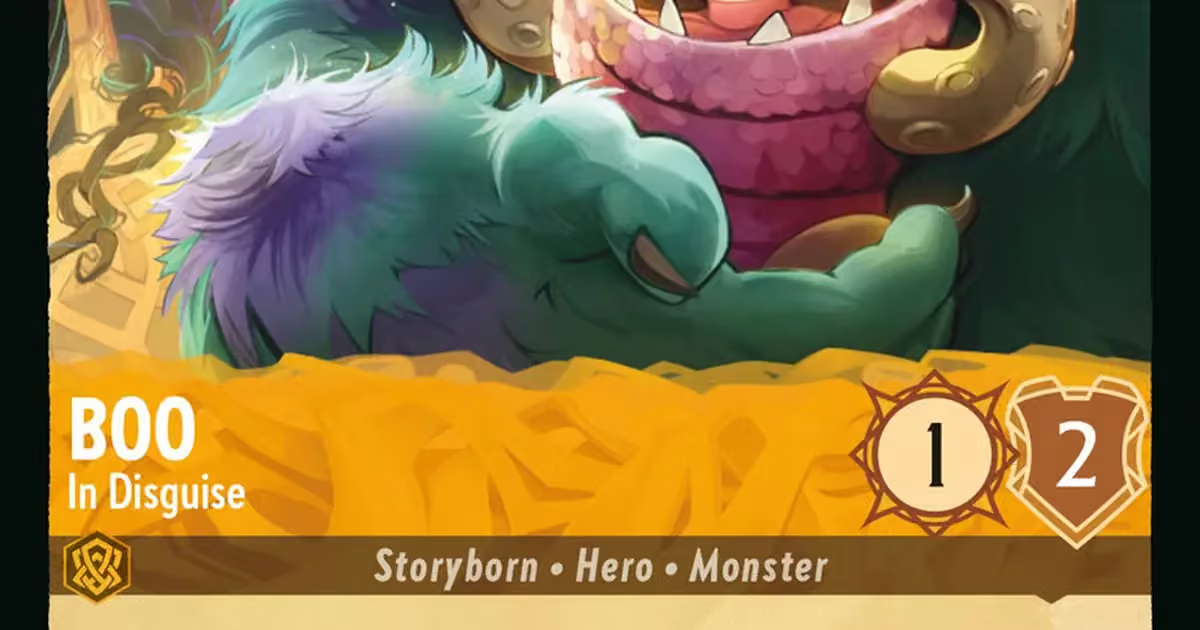
Attack of the Vine Monsters Inc Characters Card Guide
Guides · 13 min
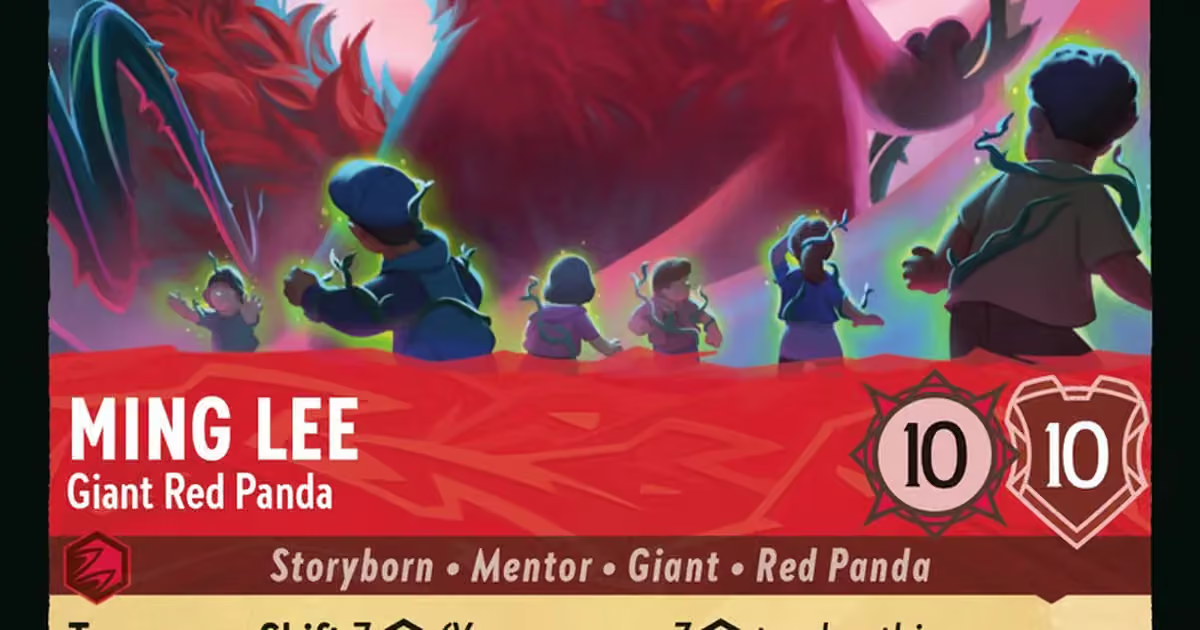
Attack of the Vine Ruby Steel Upgrade: Full 2026 Guide
Guides · 10 min
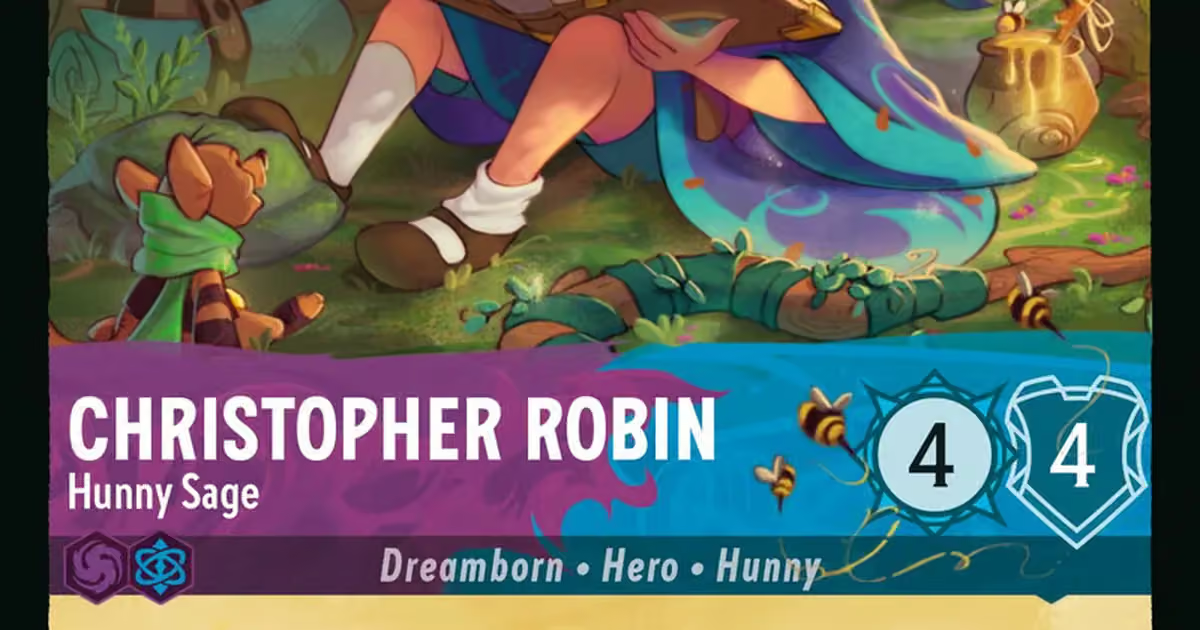
Attack of the Vine Amethyst Hunny Full Deck Guide 2026
Guides · 11 min
Attack of the Vine Amethyst Ruby Upgrade Full Guide
Guides · 11 min
Attack of the Vine Lore Rush Guide: Win Fast in Set 13
Guides · 9 min
Attack of the Vine Turning Red Ruby Full Deck Guide
Guides · 11 min
Attack of the Vine Up Sapphire Guide: Carl and Dug
Guides · 10 min

Disney Lorcana Emerald Aggro Upgrade Attack of the Vine
Guides · 11 min
Disclaimer
This article is published for informational and entertainment purposes. It does not constitute professional financial, legal, or technical advice. Game performance, online services, patch schedules, and store listings change. Verify critical details (pricing, system requirements, regional availability) with publishers and storefronts before you buy. Affiliate links, where present, help support our editorial work and are labelled in our affiliate disclosure.