

Shonen TCG · Guides
Attack of the Vine Lore Rush Guide: Win Fast in Set 13
This Attack of the Vine Lore rush guide covers how to race to 20 Lore before your opponent can set up a real answer. Disney Lorcana ends the moment a player hits 20 Lore, and rush decks are built around one idea: get there first. Set 13's Amber/Emerald tools make that race faster than it's been in recent sets, especially with Monsters Inc joining Emerald's pool.
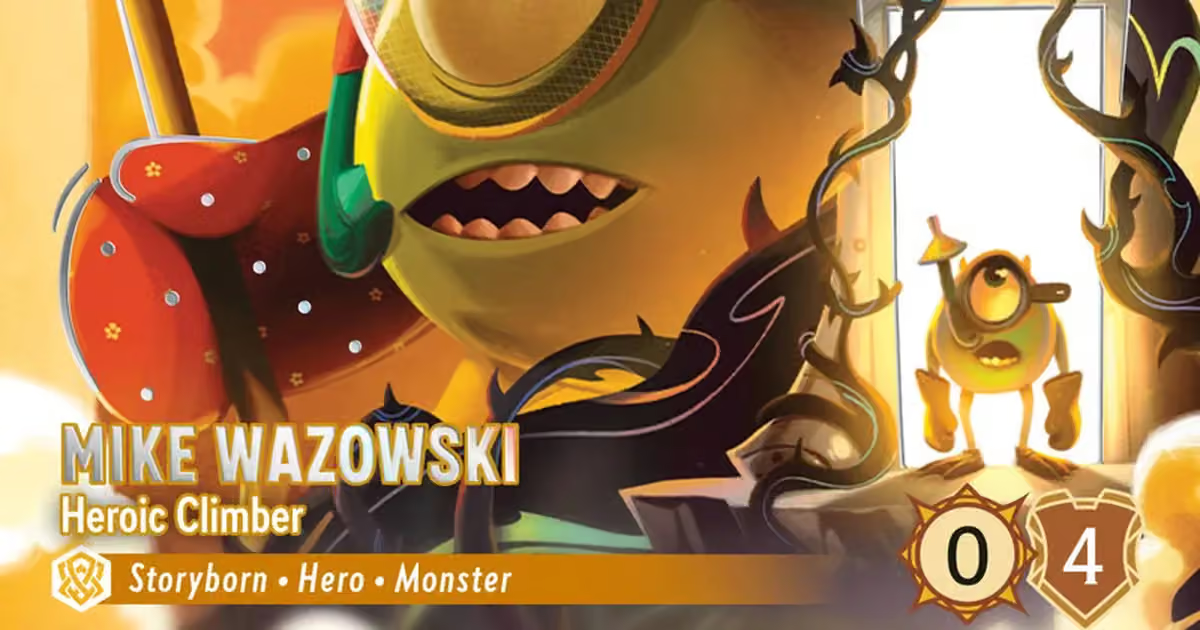
TL;DR: Amber/Emerald Lore rush is the fastest path to 20 Lore in Set 13. Stock 16-20 cheap questers, use Emerald disruption to delay opposing answers, and aim to close games between turns 8-11. Monsters Inc additions (Mike Wazowski, Sulley, Boo) strengthen the mid-curve in Emerald. You don't need expensive Legendaries to make this work.
Attack of the Vine Lore rush guide: the short answer
Load your deck with 1-3 cost characters that quest for 2 Lore each, back them up with Emerald disruption to slow opposing responses, and start questing on turn one. The goal is to accumulate Lore faster than your opponent can remove your board. Set 13 adds Monsters Inc characters that fill the exact cost slots where the strategy previously ran thin.
Key Takeaways
- Amber gives you the cheapest questers in the format, many questing for 2 Lore at cost 1 or 2
- Emerald disruption (return-to-hand effects, can't-quest abilities) buys you one to two extra turns of questing
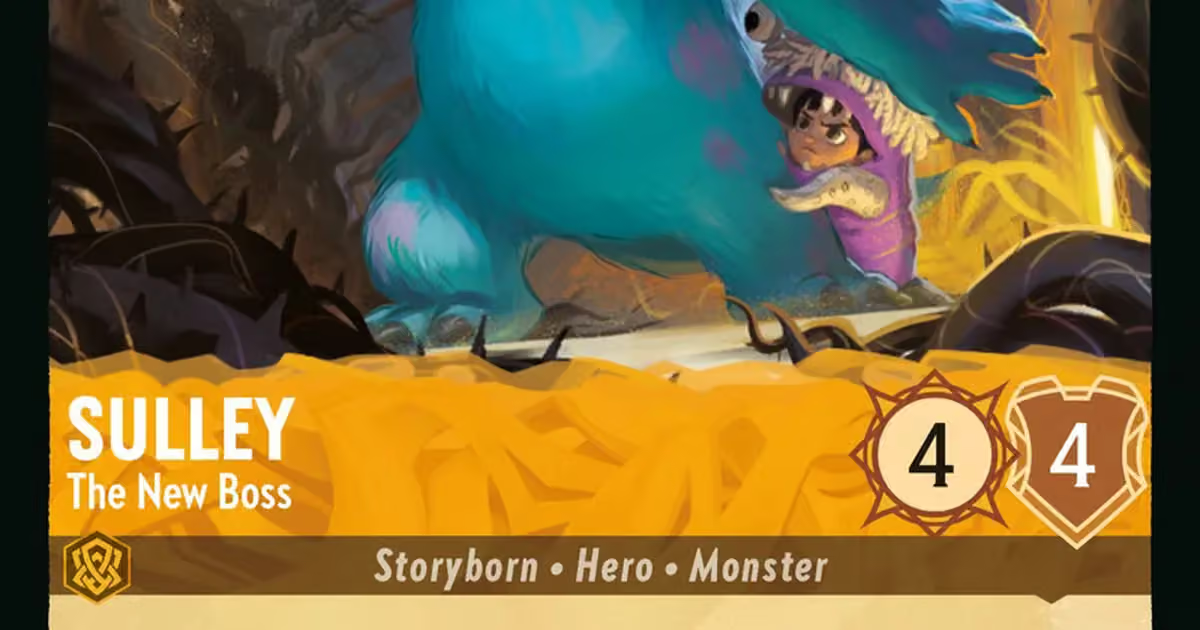
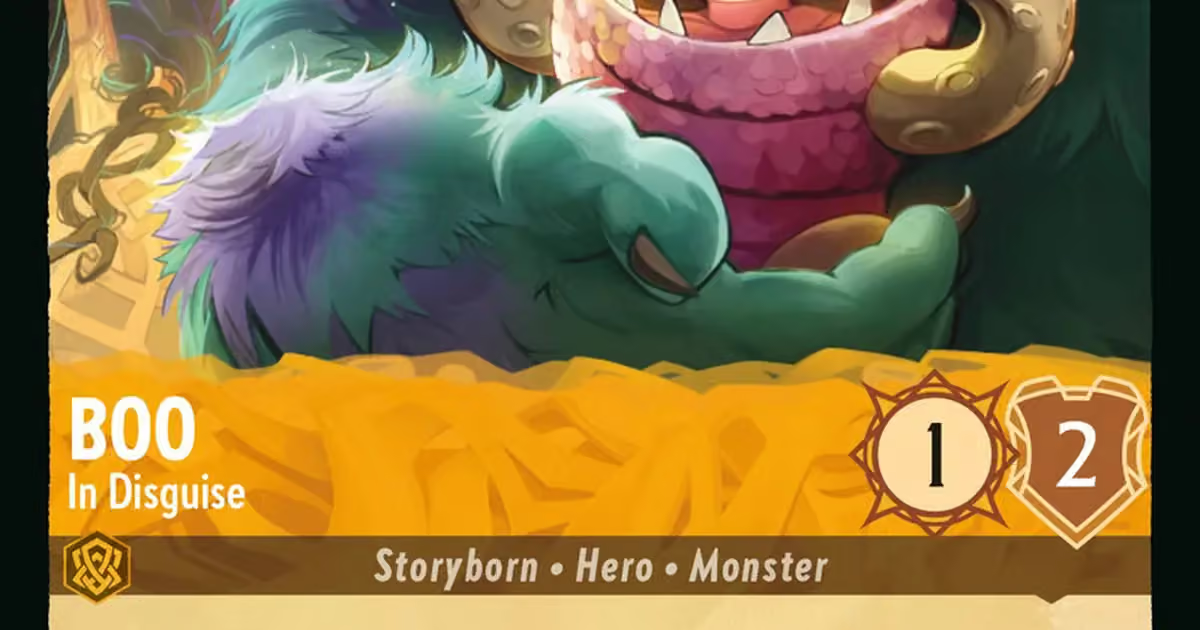
- Mike Wazowski, Sulley, and Boo from Monsters Inc enter Emerald in Set 13, deepening the 2-3 cost character pool
- Lore rush doesn't require a Legendary finisher to win; most games end at turn 8-11 through pure questing volume
- Protect your cheapest questers first: losing a 1-cost character hurts less than losing a 3-cost one
- The matchup you fear most is Amethyst/Ruby Bounce, which can reverse your board faster than you can re-establish
 Ariel - Singing Mermaid is one of the key characters in this Lorcana format.
Why Lore Rush Works in Set 13
Set 13 is a good environment for aggressive questing, for a few reasons. Core format (Sets 9-13) cuts the card pool in a way that limits the nastiest older bounce and control tools from Infinity. Your opponents are also testing new cards, so they're running rougher lists in the first few weeks after launch than they will be by week four.
Attack of the Vine brings three Pixar IPs into the pool: Monsters Inc, Up, and Turning Red. They didn't all land in the same inks, and for Amber/Emerald rush, only one of them matters. Monsters Inc went to Emerald. Up is Sapphire and Turning Red is Ruby. If you're running Amber/Emerald, you're here for the Scare Floor.
The Monsters Inc additions appear to deliver on-quest or triggered effects rather than passive stat blocks. That's what Emerald actually wants: characters that do something beyond just trading. A Mike Wazowski with an on-quest trigger and a Sulley who pushes through a challenge are both upgrades at the same cost range, not sidegrades.
There's a timing advantage too. Bounce is your worst matchup, and Amethyst bounce pilots are still experimenting with their Set 13 builds right now. Weeks one and two after a set release are when Bounce underperforms relative to its actual strength, because its players are still finding the right ratios. Rush decks get to punish that window.
GODEEPER: For a full overview of which ink colors gained the most from Set 13 and how the broader meta is shaping up at launch, see the Disney Lorcana Attack of the Vine Best Decks Guide →
Best Characters to Quest in Attack of the Vine
Character selection is the whole game in Lore rush. Every slot that doesn't quest efficiently is a lost Lore turn.
At cost 1, you want Amber characters questing for 2 Lore. These exist in the pool from earlier Core sets. They'll die to almost any challenge, which is fine. Their job is to quest twice before they're removed. If they get challenged before questing, you've forced your opponent to spend ink and a turn on a 1-cost character. That's also a win.
At cost 2, a Lore rating of 2 is acceptable and 3 is elite. Any 2-cost character questing for 1 Lore is a cut, unless it does something that directly advances your plan: draw, protect another quester, or delay an opposing response.
The 3-cost Emerald slot is where Set 13 improves the deck most. Mike Wazowski and Sulley fill roles here based on prerelease reporting. If their printed text confirms on-quest triggers or challenge disruption, they replace older 3-cost Emerald characters that only traded. Boo looks more support-oriented and stays a flex slot until week-one tournament results settle her role. Don't go deep on Boo copies at launch.
At cost 4 and above, limit yourself to 4-6 slots total. Too many 4-cost cards stalls you on turns 3-4, exactly when you should be at 6-8 Lore. Anything at cost 4 needs to quest for 3+ Lore or provide immediate disruption. A single 5-cost Legendary as a closer is fine. It's not required.
 Rapunzel - Sunshine brings unique abilities to the Lorcana card pool.
Building Your Lore Rush Deck
A competitive 60-card Lore rush list follows a specific structure. Drift from these ratios and you end up with a midrange deck that's worse at being midrange than decks actually built for that.
Characters should take up 38-40 slots: 20-22 copies across 4-5 distinct 1-2 cost Amber questers, 10-12 copies of 3-4 cost Emerald disruption characters, and 4-6 finisher slots if you want a closer (cap at one copy of any Legendary). Action cards run 10-12 slots, split between 6-8 Emerald disruption actions (return-to-hand, can't-quest) and 4 draw or search effects. Items fill the remaining 8-10 slots: cheap pieces that protect characters or generate passive Lore.
Check your ink curve before you finalize. The median cost across all 60 cards should sit at 2.0 or lower. Above 2.5 and the deck stalls on turns 3-4 rather than building the Lore lead it needs.
The most common mistake is stacking 4-5 cost threats because they look powerful on paper. A 5-cost character questing for 4 Lore doesn't enter play until turn 7. If you're aiming to close by turn 9, that card spent two turns in your hand doing nothing.
Sample 60-Card List
This is a template built around confirmed Set 13 card availability. Card names at cost 1-2 from earlier Core sets remain competitive in Set 13. Specific Set 13 additions fill the 3-cost Emerald slots.
Amber (30 cards):
- 4x 1-cost quester A (2 Lore each)
- 4x 1-cost quester B (2 Lore each)
- 4x 2-cost quester C (2 Lore each)
- 4x 2-cost quester D (3 Lore each, if available)
- 4x 3-cost Amber character with Singer or protection ability
- 4x action cards (draw or lore gain)
- 4x low-cost items (Lore or protection)
- 2x 4-cost Legendary finisher (optional)
Emerald (30 cards):
- 4x Mike Wazowski (Set 13, 2-3 cost Emerald, on-quest or disruption effect)
- 4x Sulley (Set 13, 3 cost Emerald, challenge disruption)
- 2x Boo (Set 13, flex slot, pending week-one data)
- 4x 3-cost Emerald disruption character (older Core set fill-in if Boo underperforms)
- 4x Emerald action cards (return-to-hand or can't-quest)
- 4x Emerald action cards (second disruption type)
- 4x items supporting board presence or Lore generation
- 4x draw effects
This list prioritizes questing volume over card advantage. You should be questing with at least two characters per turn from turns 2-4 onward.
GODEEPER: The full upgrade path for Amber/Emerald including specific card cuts, budget options, and where to buy singles before prices settle is in the Emerald Aggro upgrade guide for Attack of the Vine →
Step-by-Step: playing a Lore rush turn by turn
1. Open turn one with a 1-cost Amber quester. Get it into play and questing immediately for its 2 Lore. Don't hold it back waiting for a bigger turn; its job is to start the clock right away.
2. Add a 2-cost quester on turn two. Two characters questing by turn two puts real pressure on, ideally landing 4+ Lore across the first two turns before the opponent has any board presence to answer with.
3. Play your disruption piece on turn three before you quest, not after. Bouncing the opponent's best character on your own turn forces them to replay it on theirs, costing them ink and a full turn of board presence. Bounce after questing and that timing value is wasted.
4. Quest with your smallest character first every turn from turn four onward. If the opponent wants to challenge, give them the least valuable target and challenge back only when you win the trade cleanly. Keep one character unquested when you can afford to; it can contest an opposing piece and that's often worth more than the last point of Lore.
5. Punish desperation at 12+ Lore. Once you're past 12, opponents get anxious and start spending multiple removal effects on a single character. Let them do that to the quester you're willing to lose and close the game with the ones you kept in reserve.
Questing exposes characters to challenges. You can't avoid them, but you can make them costly.
Quest with your smallest character first each turn. If your opponent wants to challenge, give them the least valuable target. Challenge back with larger characters only when you'll win the trade cleanly or when the character is getting removed anyway.
Keep one character off the quest when you can. Un-quested characters can contest opposing pieces. At 16-18 Lore, that's often more valuable than the extra Lore from questing with your last character.
Play Emerald disruption before you quest, not after. Bouncing your opponent's best character on your turn forces them to replay it on theirs: they lose ink, lose a turn of board presence, and you get a free questing window. If you bounce after questing, the timing is wasted.
Don't stack your whole board on the same turn against Steel or control decks with known wipe effects. Spread out. Quest with two characters and keep one back. Rush decks lose to mass removal because rebuilding in a late game is expensive.
At 12 Lore, opposing players get anxious. They need to remove multiple questers to have a shot and that desperation leads to bad sequencing. Let them spend two removals on one character and get punished by the one you kept in reserve.
Matchups
vs. Amethyst/Ruby Bounce
This is your hardest matchup. Bounce punishes overcommitment exactly the way rush decks overcommit, so you'll feel this one in your gut. Expect your best questers to get returned at least once per game. The answer is to stay low on curve: keep 1-2 cost characters in hand specifically for redeploys after a bounce. The Bounce player spends ink to reset you, but only gains tempo if you can't immediately re-quest. Get to 14-16 Lore before they stabilize and the game is yours because you need fewer turns to close than they need to mount a comeback.
vs. Amber/Steel Steelsong
Roughly even. Steelsong is slower than you in the first four turns, which is the window you need. Their Steel protection becomes a real problem around turns 5-7 once they've established a protected board. Don't let the game get there. At 12+ Lore by turn 6, you're likely to close before the defensive suite fully activates. Use Emerald disruption on their Singer characters specifically: removing the Lore engine hurts more than removing a protected defender.
vs. Ruby/Sapphire Items
Favorable. Items decks spend their first three turns setting up engine pieces rather than threatening your board. That's three free questing turns. By the time their item synergies come online, you should be at 10-14 Lore. They can't remove cheap Amber characters fast enough. Don't waste Emerald disruption on their characters here since the win condition is the item board, not specific characters. Just quest.
vs. Monsters Inc mirror or Emerald aggro
Pure race. Whoever gets to 10 Lore first is favored and the player who spends early actions on disruption usually loses. Save Emerald bounce for turns 4-6, not turns 1-3. The first two or three turns are pure questing, no exceptions.
Frequently Asked Questions
What ink combination is best for Lore rushing in Set 13? Amber and Emerald is the strongest pairing. Amber contributes cheap characters that quest for high Lore values immediately. Emerald provides disruption to delay opposing answers. The pairing already held 15% meta share entering Set 13 and benefits more from the Monsters Inc additions than any other competing strategy.
How many low-cost characters should I run in a Lore rush deck? Target 20-22 characters in the 1-3 cost range across your 60-card list. You need bodies that can quest on turns 1-3 without setup. Characters questing for 2 or more Lore at cost 2 form the core of any competitive rush build. Below that threshold, the deck stalls on ink efficiency.
Is Lore rush viable in Infinity format as well as Core? Both formats support rush, but Core is better for it. Core (Sets 9-13) cuts access to the older bounce tools and control packages that punish aggro hardest. Infinity has those cards, so aggressive boards get slowed down more consistently. If you're playing Infinity, adjust by running a few more disruption pieces.
How do I handle a bounce deck when playing Lore rush? Keep at least two 1-2 cost questers in hand at all times specifically for re-deployment after a bounce. Quest with your cheapest character first each turn to limit the value of any single bounce. Characters with Rush or resist-style abilities are especially useful because they deny clean tempo swings from the opponent's disruption package.
Should I run more than one ink color for a Set 13 rush deck? Yes, always two inks. Single-ink rush decks don't have the disruption or draw to handle varied opponents. Amber/Emerald works because the roles don't overlap: Amber quests, Emerald disrupts. Collapsing that into one ink means you're doing both jobs worse.
What is the ideal curve for a Lore rush deck in Set 13? Quest on turn one with a 1-cost character, add a 2-cost quester on turn two, and play a disruption piece on turn three. By turn four you want 6-8 Lore with at least two characters on board. From turn five onward, you're looking for an uninterrupted two-quest sequence each turn that closes the game between turns 8 and 11.
Can a budget player build a competitive Lore rush deck for Set 13? Yes. The Amber/Emerald core runs almost entirely on commons and uncommons priced under two dollars each. The Monsters Inc additions from Set 13 are not chase Legendaries. Budget players can assemble a competitive 60-card list for around 40-50 dollars in targeted singles, particularly if you wait until week three after launch when prices stabilize from opening volume.
Related Reading
- Disney Lorcana Attack of the Vine Week 1 Meta Report: First-weekend results and which decks are winning early in the Set 13 format.
- Lorcana Attack of the Vine: Temporary Shift and Hunny Guide: All three new Set 13 mechanics explained, with deckbuilding implications.
- Disney Lorcana Complete Guide 2026: How the game works, ink color overviews, format rules, and the best entry points for new players picking up Lorcana for the first time.
- Disney Lorcana Amethyst Ruby Upgrade Guide Attack of the Vine: For players who want to understand the bounce archetype that is Lore rush's hardest matchup, this covers how Amethyst/Ruby lists are changing in Set 13.
- Disney Lorcana Ruby Steel Upgrade Guide Attack of the Vine: Ruby/Steel decks offer a midrange alternative that can outrace control while surviving aggro pressure, a useful comparison when deciding which archetype fits your play style.
References
- Disney Lorcana Official Card Gallery Set 13: Full official card list for Attack of the Vine including confirmed abilities, ink placements, and rarity breakdowns.
- Lorcana prerelease community reports and card previews: Community-sourced prerelease data from the July 17, 2026 events, including early card performance notes for Monsters Inc characters in Emerald.
Was this guide helpful?
About the author
Reviews and guides
Pen name for the Shonen TCG desk's set reviews, deck builds and beginner guides across One Piece TCG, Union Arena, Disney Lorcana and Dragon Ball Fusion World.
- Prices read from TCGplayer and Cardmarket listings, dated
- Pull rates tied to a stated sample
- Opinions marked as ours, with the reason
Keep reading
Attack of the Vine Amethyst Ruby Upgrade Full Guide
Guides · 11 min
Attack of the Vine Ruby Steel Upgrade: Full 2026 Guide
Guides · 10 min
Attack of the Vine Amber Steel Upgrade: Full Guide
Guides · 10 min
Attack of the Vine Monsters Inc Characters Card Guide
Guides · 13 min
Attack of the Vine Amethyst Hunny Full Deck Guide 2026
Guides · 11 min
Attack of the Vine Turning Red Ruby Full Deck Guide
Guides · 11 min
Attack of the Vine Up Sapphire Guide: Carl and Dug
Guides · 10 min

Disney Lorcana Emerald Aggro Upgrade Attack of the Vine
Guides · 11 min
Disclaimer
This article is published for informational and entertainment purposes. It does not constitute professional financial, legal, or technical advice. Game performance, online services, patch schedules, and store listings change. Verify critical details (pricing, system requirements, regional availability) with publishers and storefronts before you buy. Affiliate links, where present, help support our editorial work and are labelled in our affiliate disclosure.