

Shonen TCG · Guides
Disney Lorcana Budget Decks 2026: Play Core for Under $50

Reviewing
Disney Lorcana
Disney Lorcana budget decks do not need collector-rarity upgrades to be playable. The examples in this guide were planned around sub-$50 builds when Wilds Unknown was the current set, but those figures are not live October 2 prices. Buy singles and skip collector traps, then recheck the legal pool and current listings before treating a budget target as realistic.
Correction (2026-07-29): an earlier version of this guide cited specific Core meta-share percentages for Amethyst/Sapphire Evasive, Amber/Amethyst Evasive, and Amber/Emerald Aggro from before Set 13 (Attack of the Vine) released July 24, 2026. Core's top archetypes have shifted since then, and Core's legal set range is now Sets 9-13, not Sets 9-12. The budget principles and specific card picks below are still sound; the meta-share numbers have been removed rather than replaced with unverified new figures.
Disney Lorcana budget decks are my starting point for new players and anyone coming back for the Wilds Unknown season.
TL;DR: This guide's Amber/Emerald Aggro example used a $35-45 estimate, and its Ruby/Steel Items example used $40-55. Both avoid Enchanted and Iconic rarity entirely. Core's legal set range is Sets 9-13 after Set 13's July 24, 2026 release. The official 2-Player Starter Set (released May 8, 2026) MSRP is $29.99; buy singles for the specific rares you need and skip booster pack gambling.
Updated October 2, 2026: Ravensburger's official Hyperia City page lists prerelease on October 16 and everywhere release on October 23, 2026. Hyperia City is not part of Core Constructed on this October 2 snapshot, so the Sets 9-13 baseline below remains the pre-Hyperia pool. Dollar figures in this guide are dated planning estimates, not live quotes.
Disney Lorcana Budget Decks: What You Can Actually Build (Quick Answer)
This guide presents two Core Constructed budget examples for Sets 9-13, with Attack of the Vine legal as of July 24, 2026: Amber/Emerald Aggro and Ruby/Steel Items. The earlier estimates were around $35-45 and $40-55, respectively, while the Infinity example was around $50-60. Those figures are planning snapshots, not a current ranking or price guarantee. Neither Core example requires an Enchanted or Iconic card.
The key insight: Lorcana's most expensive cards are expensive because of rarity, not because they win more games. Merida, Formidable Archer, the Legendary chase card from Wilds Unknown, sells for far more than Merida, Gifted Archer, a cheap Rare from the same set, and a budget Amber/Emerald or Ruby/Steel list doesn't need either one to function. That's the whole budget game in one example.
Why Lorcana Budget Decks Work in Core Format
Core Constructed has a hidden advantage for budget players: rotation. Because only the four most recent sets are legal, the power ceiling is lower than Infinity. Many of the broken all-format staples from sets 1-8 aren't legal in Core, which means a well-built budget deck competes on more even footing.
Wilds Unknown (Set 12, released May 15, 2026) brought the first Pixar crossover into Lorcana. The set added strong commons and uncommons in Amber and Emerald, which directly benefits aggro and tempo strategies. These are exactly the low-rarity cards that make budget builds viable.
The Core Constructed meta has shifted since Set 13 released: the old top archetypes (Amethyst/Sapphire Evasive, Amber/Amethyst Evasive) are no longer confirmed leaders, and current top decks lean Amber-paired. What hasn't changed is the underlying budget logic: the premium-rarity Evasive archetypes still cost the most, with Merida, Formidable Archer (Legendary) and other key rares pushing those builds past $150, while Amber/Emerald Aggro stays cheap because its core runs on commons and uncommons. That's the deck we want for budget purposes.
For a broader look at what Wilds Unknown adds to the card pool, the Disney Lorcana Complete Guide 2026 covers the full format context.
GODEEPER: Full Wilds Unknown set overview including which products to buy. Disney Lorcana Wilds Unknown Set Guide →
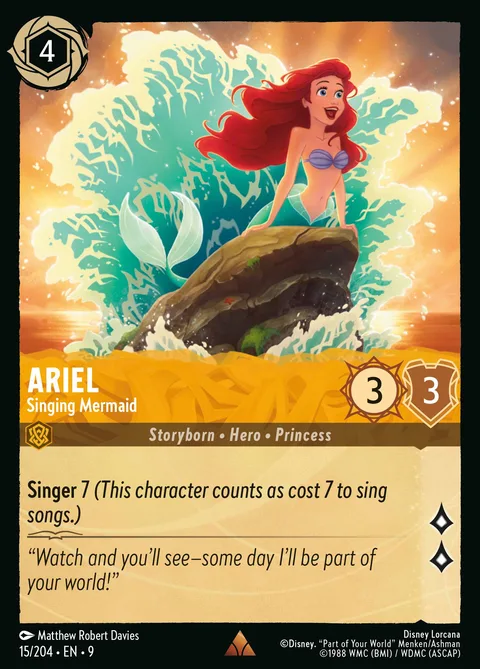 Ariel - Singing Mermaid is one of the key characters in this Lorcana format.
Budget Deck #1: Amber/Emerald Aggro (Core budget example)
Amber/Emerald Aggro is the most budget-friendly Core example in this guide. Flood the board with cheap 1-3 cost Amber characters in the first three turns, quest for Lore hard, and use Emerald bounce and shift tricks to protect your board when your opponent tries to answer you.
The Amber core runs almost entirely on commons and uncommons. Woody, Waiting for a Friend is an early game staple that fits the 4-of plan. He costs 1 and carries a plain 2 Strength/2 Willpower body, making him a clean turn-one play with no downside. Alan-a-Dale, Loyal Bard fills the 2-cost slot with 3 Strength/2 Willpower and a Singer 4 ability, giving you early board presence that can also double as a Song enabler later in the game. Check current listings for the exact low-rarity prices before buying.
You don't need the Enchanted art versions of any of these. Standard versions of the key Amber characters are the budget targets, while collector variants can change the total dramatically. A playset of the key rares should be priced from current listings rather than the old snapshot used for this guide.
Emerald brings the tempo tools that keep this deck resilient. Bounce effects return opponent characters to hand, which sets them back several ink and lets your questing characters survive another turn. Low-cost shift options let you evolve characters already on the board instead of playing new ones from hand, which protects your board investment from Banish effects. Price the Emerald rares against the current listings, and skip premium variants unless collecting is part of your goal.
Estimated cost in the earlier snapshot:
- Commons and uncommons (roughly 35-40 cards): dated planning estimate only
- Key rares (8-10 cards, 4-of each): dated planning estimate only
- Total: the earlier $35-45 range, not an October 2 quote
An earlier draft reported a 4-2 local result after Wilds Unknown released, but that anecdote is not independently verifiable from a public event report. Treat it as a player story, not proof of a current tournament record or meta share.
Budget Deck #2: Ruby/Steel Items (Core budget example)
Ruby/Steel Items runs a different game plan. Ruby burn deals direct damage to characters, Steel item cards generate passive effects that compound over a longer game, and Songs feed both sides of the engine.
What makes this deck affordable is rarity distribution. The item engine runs almost entirely on commons and uncommons. Steel item cards from Wilds Unknown (Set 12) added new tools to this archetype, and most of them aren't rare. Compare the rare pieces with current listings instead of relying on the old price range in this article.
Ruby burn lets you remove threats without needing expensive high-power characters of your own. Fill your creature slots with efficient commons. The Songs that feed your Ruby effects are mostly common or uncommon too, which is why the overall price stays low.
Estimated cost in the earlier snapshot:
- Items and songs (common/uncommon base): dated planning estimate only
- Ruby burn package: dated planning estimate only
- Key rares (5-8 cards): dated planning estimate only
- Total: the earlier $40-55 range, not an October 2 quote
The ceiling on this deck is lower than Amber/Emerald Aggro, but so is the floor. If you want to interact with your opponent's board rather than race past it, Ruby/Steel is the better fit even when the singles total differs from the old estimate.
The Disney Lorcana Amber/Amethyst Evasive Deck Guide shows what the mid-range step up looks like once you've outgrown budget builds.
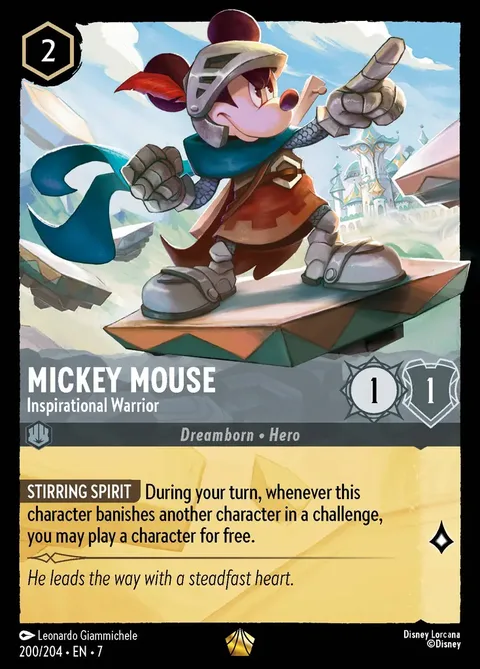 Mickey Mouse - Inspirational Warrior brings unique abilities to the Lorcana card pool.
Step-by-Step: Building from a Starter Deck
The 2-Player Starter Set (released May 8, 2026) has an official $29.99 MSRP and contains two ready-to-play 60-card decks (Amber-Emerald and Amethyst-Ruby). It is a functional starting point for learning the game and comparing card roles, but it is not a guarantee of regional-level results.
1. Buy the starter at the official $29.99 MSRP when available. The 2-Player Starter Set (released May 8, 2026) gives you two ready-to-play 60-card decks (Amber-Emerald and Amethyst-Ruby) and a sample of how the current card pool plays. Don't crack boosters yet.
2. Pick your deck. After a few games, decide between Amber/Emerald Aggro and Ruby/Steel Items based on which playstyle clicked. Aggro players who want to race will prefer Amber/Emerald. Players who want to build an engine and interact with the board will prefer Ruby/Steel.
3. Build a singles list. Go to inkdecks.com, find the current community list for your archetype filtered to Core Constructed, and export it. Compare against what you already own from the starter. What's left is your buy list.
4. Buy singles, not packs. Take your list to TCGPlayer and sort by "Best Price." Price the common and uncommon portion as one order, then add key rares one at a time, starting with the highest-impact cards. A booster pack gives random cards, while a specific single guarantees exactly what you need. Compare the current pack and single listings before you buy.
5. Test before spending more. Play the deck at a local Friday Night Lorcana event. See where you're losing. The right upgrade becomes obvious after 10-15 games, and it's almost never a $40 Enchanted card.
The Disney Lorcana Starter Decks 2026 guide has a full breakdown of what each starter contains and which one fits your play style.
Cards to Skip (Enchanted and Iconic Traps)
Buying Enchanted and Iconic rarity cards is the budget mistake I see most often from new players. Both rarities work the same way: alternate art foil versions of existing cards. The card text is identical. The stats are identical. The abilities are identical. The only difference is the art style, which uses an art nouveau aesthetic that looks great in a binder. Competitive players almost never run Enchanted cards in tournament lists because the gameplay benefit is zero.
Wilds Unknown's own Legendary cards make this concrete, even though this particular set doesn't print any Enchanted or Iconic cards at all. Merida, Formidable Archer is the set's Legendary chase pull, and she costs meaningfully more than Merida, Gifted Archer, a Rare from the same set that fills a similar early-aggression role. If you're building a competitive Core Constructed budget deck, buy the Rare.
Buzz Lightyear, Jungle Ranger works the same way. He's Wilds Unknown's other Legendary, prized for character recognition and pull-rate scarcity, not a budget-relevant edge over cheaper Emerald commons and uncommons.
Skip these:
- Any Enchanted card over $20 (buy the standard version)
- Any Iconic card (same rule)
- Foil versions of any rare (no gameplay benefit, 3-5x price premium)
- Alternate art versions from premium bundles
One exception: if a standard rare has jumped in price because it's genuinely good in the meta, that's a different situation. A playable non-Enchanted rare can be worth buying when it is central to the list. A collector version of a card that does not see play is not a budget upgrade.
The Disney Lorcana Best Cards to Pull from Wilds Unknown guide breaks down which Wilds Unknown cards are worth pulling for competitive play versus collection value.
Where to Buy Lorcana Singles Cheap
TCGPlayer is the primary marketplace for Lorcana singles in the US. The "Best Price" sort finds the cheapest individual listing. Factor in shipping if you're buying from multiple sellers (some have free shipping thresholds around $5-10). For a full deck purchase, consolidating into 1-2 orders usually brings shipping costs to zero or near zero.
inkdecks.com is the best free resource for current Lorcana decklists. It aggregates community and tournament lists, lets you filter by format (Core vs Infinity), and links directly to card prices. Build your list here before buying.
Local game stores are worth checking for commons and uncommons specifically. Many stores sell bulk commons at $0.10-0.25 each, which is cheaper than TCGPlayer once you factor in shipping. For rares and above, online is usually better unless your LGS runs frequent singles sales.
Facebook Marketplace and local Discord servers for Lorcana can yield deals, especially if players from the Infinity crowd are rotating out of cards that are no longer competitive in Core. Someone who played Amethyst/Sapphire in Infinity and is moving on might sell a near-complete Ruby/Steel lot for 60 cents on the dollar.
SHOP: Building a budget Lorcana list? Compare current Disney Lorcana singles before spending on premium variants. Shop TCGplayer →
Budget Upgrade Path: From a first list to competitive play
After a few weeks on your budget list, upgrades get easier to evaluate. Spend where win rate impact is highest per dollar spent.
First upgrade: Fill in any 4-of playsets you're currently running as 2-3 ofs. Consistency beats novelty every time. If you're running 3 copies of your best rare, buy a fourth before adding anything new.
Second upgrade: Buy the single highest-impact rare in your archetype that you do not own yet. For Amber/Emerald Aggro, it is usually one of the specific rares that optimized lists run. Buy that card before touching anything else.
Later upgrades: Add tech choices for your local meta. Pay attention to what decks you're playing against and find the 2-4 cards that answer those threats specifically.
What to skip: a large jump in spend that only adds Enchanted and Iconic rarity upgrades without changing the deck's text or strategy. Your budget version of Amber/Emerald will lose to better-piloted versions of itself before it loses to more expensive decks. Decisions and play patterns matter more than premium variants.
If you're deciding whether to invest in Core or Infinity cards as you upgrade, the format comparison matters a lot for where to spend your money.
GODEEPER: Comparing Core vs Infinity formats before you invest. Disney Lorcana Core vs Infinity Format Guide →
Key Takeaways
- Amber/Emerald Aggro is the first budget example in this Core Constructed guide, built almost entirely on commons and uncommons unlike premium-rarity Evasive lists
- Ruby/Steel Items is a solid second example for players who prefer a controlling game plan
- Enchanted and Iconic rarity cards are collector variants with identical gameplay text at 5-10x the price of standard versions
- Buy singles, not packs. Packs give random cards, while singles let you target the exact cards you need
- Start with the 2-Player Starter Set (released May 8, 2026) at its official $29.99 MSRP when available, then build a singles list from inkdecks.com and buy only what you're missing
- The biggest upgrade to any budget deck is consistency: finish your 4-of playsets before adding new cards
- Wilds Unknown (Set 12) added strong commons and uncommons in Amber and Emerald that directly benefit budget builds
Related Reading
- Disney Lorcana How to Play: Beginner Guide: Rules overview, turn structure, and first-game walkthrough for new players.
- Disney Lorcana How to Get Cards Cheap: Singles vs Packs: the math on why singles beat packs for building specific decks, with timing advice for buying.
- Disney Lorcana Songs Guide: How to Play Song Cards 2026: Songs are the most powerful free-plays in budget builds; understand them before finalizing your list.
Frequently Asked Questions
What is the cheapest competitive Disney Lorcana deck? Amber/Emerald Aggro is the cheapest example presented in this guide. It avoids Enchanted and Iconic rarity cards, relying on efficient common and uncommon cards with a small rare package. Price that package from current listings before buying.
Do Enchanted cards play differently from regular versions? No. Enchanted rarity is a collector variant, not a functional upgrade. The card text, stats, and abilities are identical to the standard version. For competitive play, always buy non-Enchanted versions of expensive cards.
Can I use Disney Lorcana starter decks for competitive play? Starters are a good base. The 2-Player Starter Set (released May 8, 2026) has an official $29.99 MSRP and supplies two ready-to-play 60-card decks (Amber-Emerald and Amethyst-Ruby). You'll want to upgrade with the specific singles your chosen list needs before heading to a Core Constructed event.
What is Core Constructed in Disney Lorcana? Core Constructed's legal set range has moved since this guide was first written. As of late July 2026, Core is Sets 9-13, following Set 13's July 24, 2026 release and Sets 5-8 rotating out July 17. Check the current rotation guide before building, since it updates each rotation. Infinity uses all sets ever printed.
How much does a full competitive Lorcana deck cost? The old draft used $35-55 for budget examples and $80-120 for a mid-range example. Those are dated planning ranges, not October 2 market quotes. A premium-rarity build can cost more. Start with a list you can price from current singles, then upgrade the single most impactful rare first.
Is it better to buy packs or singles for Lorcana? Singles, almost always when you need specific cards. A booster gives random cards, while buying the four specific rares you need guarantees the playset. Compare current listings before deciding whether a pack is worthwhile.
References
- inkdecks.com: Disney Lorcana community decklists (Core filter)
- Disney Lorcana Official Site: formats and rules
- Disney Lorcana Hyperia City product page: official prerelease and everywhere release dates
- Disney Lorcana December 2025 product announcement: official 2-Player Starter Set MSRP, release date and contents
- TCGPlayer: Disney Lorcana singles pricing
Was this guide helpful?
About the author

TCG Reviews & Guides Editor
TCG reviews and guides editor specialising in set reviews, deck builds, and beginner content across One Piece TCG, Union Arena, Disney Lorcana, and Dragon Ball Fusion World. Known for step-by-step guides that actually work at the local game store level.
- One Piece TCG set reviews OP-01 to OP-16
- Union Arena EN coverage
- Beginner and competitive guide writing
- Set value and collector analysis
Keep reading

Disney Lorcana Hyperia City: Set 14 Release Date, Cards
News · 9 min

Disney Lorcana vs Magic vs One Piece TCG: Which to Play
Guides · 8 min

Disney Lorcana Songs Guide: How to Play Song Cards 2026
Guides · 9 min
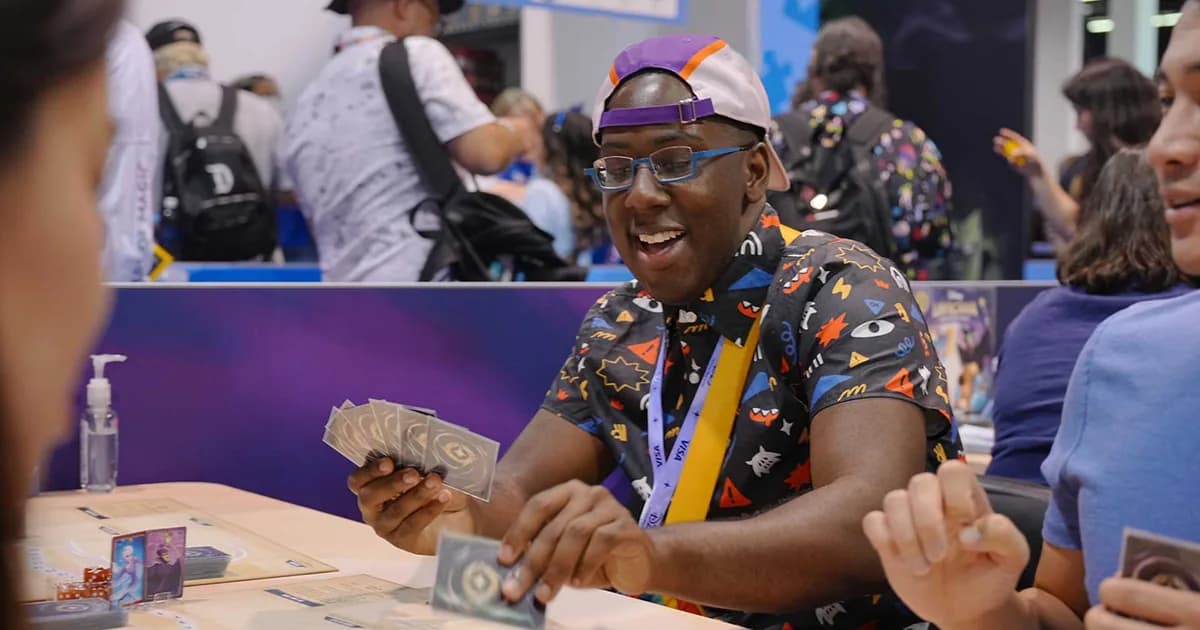
Disney Lorcana D23 2026: Exclusive Promos and CCQ Guide
News · 7 min

Disney Lorcana Starter Decks 2026: Best Picks to Begin
Guides · 9 min

Disney Lorcana How to Get Cards Cheap: Singles vs Packs
Guides · 9 min

Disney Lorcana Wilds Unknown Sealed Deck Guide 2026
Guides · 9 min
Lorcana Emerald Sapphire control deck guide: Core 2026
Guides · 15 min
Disclaimer
This article is published for informational and entertainment purposes. It does not constitute professional financial, legal, or technical advice. Game performance, online services, patch schedules, and store listings change. Verify critical details (pricing, system requirements, regional availability) with publishers and storefronts before you buy. Affiliate links, where present, help support our editorial work and are labelled in our affiliate disclosure.