Loading…


Shonen TCG · Guides
Disney Lorcana Amethyst Sapphire Deck Guide: Core 2026
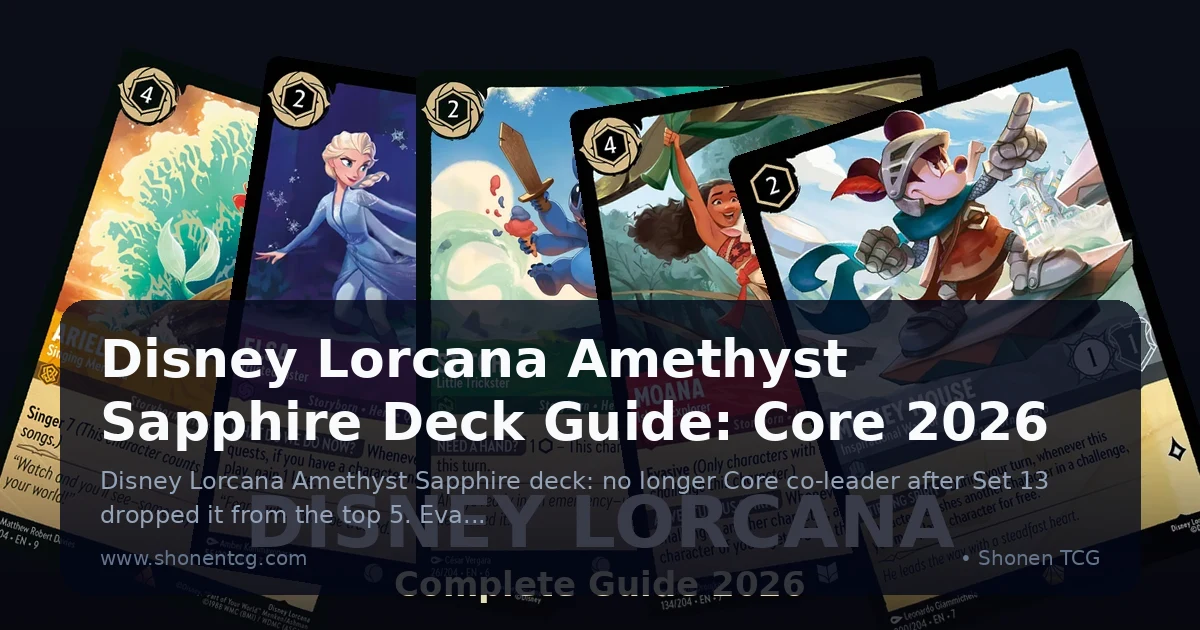
Reviewing
Disney Lorcana
Disney Lorcana Amethyst Sapphire deck built a board of Evasive characters that most Core Constructed opponents couldn't remove through normal combat, and for weeks it shared the top of the format with Amber Emerald Aggro. If you're facing this deck at locals, it's still a real, functional archetype worth understanding even though it's no longer the format's leading pick.
Correction (2026-08-31): an earlier version of this guide described Amethyst Sapphire Evasive as tied for Core's top deck at 19% meta share. That was accurate before Set 13 (Attack of the Vine) released July 24, 2026. Per the most recent confirmed data (inkdecks.com, 750+ logged decks, 2026-08-07), the current Core top tier is entirely Amber-paired: Amber/Emerald Elinor and Amber/Amethyst Midrange co-lead at 15% and 14%, followed by Amber/Ruby Boost (12%), Amber/Steel Steelsong (10%), and Amber/Emerald Songs (9%). Amethyst Sapphire Evasive is no longer tracked among the format's top-5 leaders. The deck and its game plan below are unchanged, only its current competitive standing has shifted.
The core idea is straightforward: put Evasive characters into play and quest with them safely, because most decks can't interact with Evasive in combat. Amethyst handles the Evasive pieces and the bounce-and-draw package that keeps the board fresh. Sapphire brings item synergies that extend the value of what's already on the board. Understanding the Disney Lorcana ink colors helps clarify why Amethyst and Sapphire combine so naturally here.
TL;DR: Amethyst Sapphire Evasive builds a board of Evasive questers that most opponents can't remove through normal combat. Amethyst provides Evasive characters, draw, and bounce; Sapphire adds item synergies that compound value over turns. It held 19% Core meta share tied for the top spot before Set 13 released July 24, 2026, but per 2026-08-07 data (inkdecks.com) it has dropped out of the confirmed top-5, now led by Amber/Emerald Elinor and Amber/Amethyst Midrange (15%/14%). Costs around $380-$420 for a full build. Best matchup: control and midrange. Hardest: aggro that races lore before your board is established.
Disney Lorcana Amethyst Sapphire deck: quick answer
The deck wins by establishing Evasive characters and questing with them every turn without interruption. Opponents who can't challenge Evasive characters must find Songs, damage effects, or bounce spells to interact, and most Core decks don't run enough of those to keep up. You're typically questing for 3-6 lore per turn from a safe board while the opponent looks for answers.
Amethyst contributes the Evasive characters and the interaction spells. Bounce effects return opponent threats to hand, which is how you handle large non-Evasive characters that pose a lethal challenge. Draw spells keep your hand full through the turns you spend deploying questers.
Sapphire contributes items and additional card selection. Items are permanents that stay in play generating value without occupying a character slot. In a deck that wants to fill the board with Evasive characters, items provide passive benefits without competing for deployment turns.
Key takeaways
- Evasive characters can only be challenged by other Evasive characters, making them safe questers against most Core decks
- Amethyst provides Evasive characters, bounce effects, and draw spells
- Sapphire items generate value without competing with character deployment turns
- Held 19% Core Constructed meta share tied with Amber Emerald Aggro before Set 13 released July 24, 2026; per 2026-08-07 data (inkdecks.com, 750+ decks) it has dropped out of the confirmed top-5, now led by Amber/Emerald Elinor (15%), Amber/Amethyst Midrange (14%), Amber/Ruby Boost (12%), Amber/Steel Steelsong (10%), and Amber/Emerald Songs (9%)
- Full competitive build ran approximately $380-$420 while a top-5 Core archetype; check current TCGPlayer prices before buying
- Aggro is the hardest matchup; control and midrange are favorable
- The Pawpsicle item sub-archetype pushes item density higher for players who prefer a more passive value strategy
How the Evasive keyword works
Evasive prevents a character from being challenged unless the challenging character also has Evasive. That sounds simple, but the implications are significant.
In a typical Lorcana turn, an opponent can challenge your questing characters to remove them before they continue accumulating lore. Evasive removes that option for most decks. Your Evasive character quests, the opponent's turn starts, they have no legal Evasive challenger, so your character sits there questing again next turn.
The practical effect is that each Evasive quester represents multiple lore gains as long as it stays in play. A character questing for 2 lore per turn contributes 6-10 lore over 3-5 turns before opponents find an answer. That pace is difficult to race.
Evasive is not unstoppable. Songs and card effects that deal damage hit Evasive characters regardless of the keyword. Bounce effects return them to hand. Heavy damage Songs can remove Evasive questers; the meta presence of those Songs is why the deck includes bounce and repositioning tools, not because Evasive itself is fragile.
GODEEPER: How does Amethyst Sapphire compare to the other top Evasive option? Disney Lorcana Amber Amethyst Evasive Guide →
Amethyst's role: Evasive characters, bounce, draw
Amethyst is the active half of the deck. It provides the characters that actually win the game and the spells that manage the board while doing so.
Evasive characters from Amethyst's card pool form the questing engine. The key ones have Evasive plus some secondary ability: extra lore gain on quest, card draw on play, or a body large enough to survive damage Songs. Wilds Unknown (Set 12) added Evasive Amethyst options that pushed this archetype from fringe to dominant.
Bounce effects return opponent characters to their hand. This is how the deck handles large threats that would otherwise snowball. A bounce spell on an opponent's strongest character costs them an ink investment and sets their board back a full turn. In Core's card pool, Amethyst has bounce available at multiple ink costs, giving you flexible interaction at different points in the game.
Draw spells refill your hand after spending ink on early questers and bounce. The deck relies on playing multiple Evasive characters across turns, so running out of cards mid-game is an easy way to lose. Amethyst's draw package keeps options available through turn 6-8 when the game typically resolves.
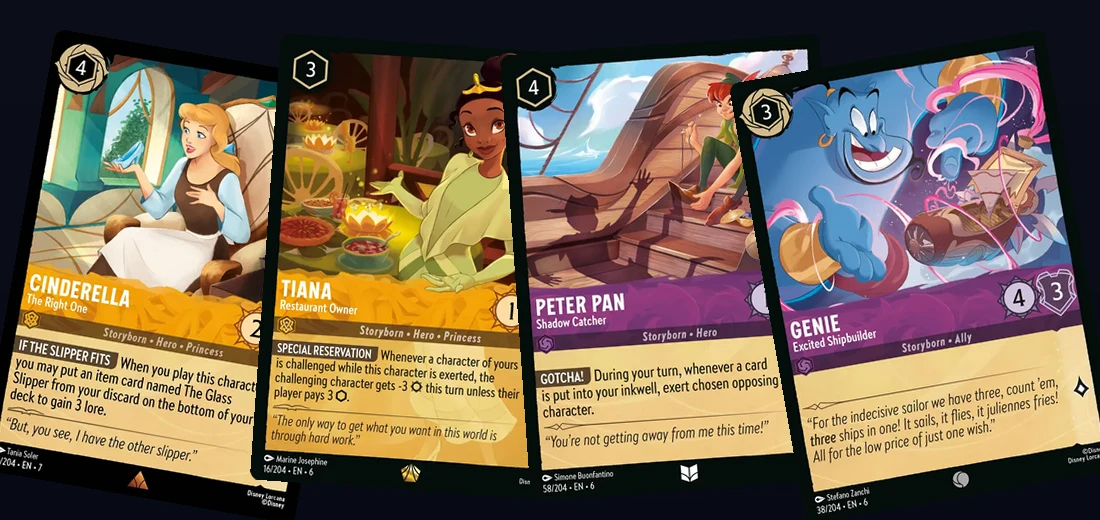 Evasive characters queue for lore while sitting safe from most opponent challenges. Multiple questers compounding per turn creates lore pressure that non-interactive decks struggle to race.
Sapphire's role: items and card selection
Sapphire is the passive half that makes the deck consistent and hard to outlast.
Items are the defining feature of Sapphire's contribution. Items enter play and provide ongoing bonuses without using character deployment turns. A typical Sapphire item might give your characters +1 lore on quest, draw you a card when a condition is met, or add damage prevention. Because Evasive characters are already safe from challenge, items that protect or buff them create compounding advantages.
The Pawpsicle sub-archetype pushes item density even higher, running more Sapphire items and leaning further into the passive value generation model. That variant trades some Evasive character density for more consistent item draws.
Card selection from Sapphire lets you filter through the deck to find what the current game state demands. Early turns you want Evasive questers; mid-game you want bounce or draw to maintain board; late game you want whatever puts you from 15 to 20 lore fastest. Sapphire's selection tools let you find the right piece at the right time rather than drawing a hand of mismatched resources.
Step-by-Step: playing Amethyst Sapphire Evasive to 20 lore
Most games end at lore 20, reached when Evasive questers accumulate over 4-8 turns. The typical path:
1. Ink aggressively through turns 1-3. Deploy your first Evasive quester as early as your hand allows and start questing it immediately. Use bounce on any opponent threat that could disrupt your early game before it gets the chance to challenge or stabilize.
2. Add a second and third Evasive quester on turns 4-6. Items start generating value alongside them. Each questing turn now generates 4-6 lore; after three turns at that pace you're sitting at 12-18 lore.
3. Close to 20 lore on turns 7-8. Use bounce effects to handle the last characters the opponent deploys in desperation rather than letting them stabilize the board.
4. Compress the timeline against aggressive decks. If the opponent is racing, aim to establish at least one Evasive quester by turn 2-3 instead of waiting for the ideal curve, or you'll lose the lore race before your board comes online.
5. Track the opponent's answer suite as you extend. If they haven't shown a damage Song or a bounce effect by the time you have two Evasive questers in play, keep deploying; if they have, hold one bounce spell of your own in reserve to protect your best quester the turn it matters.
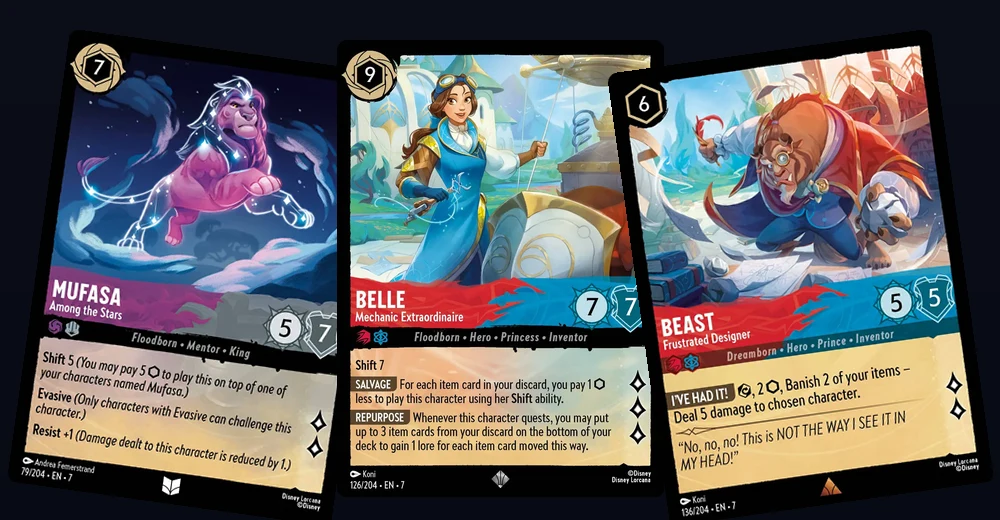 Sapphire items stack passive bonuses alongside questing Evasive characters. The combination of protected questers and compounding items creates a value engine most Core opponents can't dismantle in time.
Matchup overview
Aggro (unfavorable): The hardest matchup. Aggro ignores Evasive entirely by questing its own characters faster than you can. If the opponent reaches 18 lore on turn 5 while you've deployed two Evasive questers for 6 lore, Evasive didn't help you. Mulligan for early Evasive questers and ink every turn without missing; this matchup is decided in turns 1-4.
Midrange (favorable): Midrange wants to establish large characters and quest. Your bounce effects reset their board repeatedly, costing them far more than the bounce costs you. Your Evasive questers accumulate lore while midrange characters spend turns being bounced. Card advantage from Amethyst's draw package keeps you ahead through the attrition phase.
Control (favorable to even): Control decks try to answer everything you play. Evasive characters are harder to answer than normal characters, which forces control to spend premium interaction on your questers. If the control deck runs enough damage Songs, the matchup becomes even. If it doesn't, your lore lead becomes insurmountable.
Other Evasive decks (even to close): Mirror matches and other Evasive builds like Amber Amethyst Evasive come down to who establishes Evasive questers first and who draws better bounce. The Sapphire item package gives Amethyst Sapphire a slight advantage in the mid-to-late game by generating passive bonuses that the opponent isn't matching.
GODEEPER: See the full current Core meta breakdown alongside every archetype's meta share. Disney Lorcana Attack of the Vine Best Decks Guide →
Build notes and cost
The full competitive Amethyst Sapphire Evasive list ran approximately $380-$420 while the deck was a top-5 Core archetype. The cost came from high-rarity Evasive characters in Sets 9-12 and key Sapphire items that are Core-legal but expensive; check current TCGPlayer listings, since prices can soften once a deck drops out of the format's leading tier.
Budget paths:
- Start with the Wilds Unknown starter decks that include Amethyst or Sapphire cards, then upgrade using Core-legal singles
- Check the Disney Lorcana Starter Decks Guide for which starter gives you the best foundation
- The Pawpsicle variant tends to be cheaper because items are generally lower rarity than rare Evasive characters
- Check current TCGPlayer listings to compare Core Amethyst Sapphire builds by total cost
SHOP: Building this Amethyst Sapphire Evasive list? Check current Disney Lorcana singles prices before committing to the full $380-420 build. Shop TCGplayer →
Related Reading
- Disney Lorcana Amber Emerald Aggro Deck Guide: the deck Amethyst Sapphire was tied with before Set 13's release shifted the top of Core.
- Disney Lorcana Emerald Sapphire Control Deck Guide: the other major Core archetype using Sapphire's item package.
- Disney Lorcana How to Get Cards Cheap: budget-buying strategies for building toward this deck's $380-$420 price tag.
- Disney Lorcana Core vs Infinity Format Guide: which sets are legal in Core and why it matters for building.
- Disney Lorcana How to Play Beginner Guide: full rules for new players before building your first competitive deck.
Frequently Asked Questions
Q: What is the Amethyst Sapphire deck in Disney Lorcana? A: It combines Amethyst's Evasive characters and bounce/draw spells with Sapphire's items, winning by questing Evasive characters safely to reach 20 lore. It was tied for Core's top deck before Set 13 released July 24, 2026. As of the 2026-08-07 inkdecks.com data it sits outside the confirmed top-5, now led by Amber/Emerald Elinor and Amber/Amethyst Midrange, though it's still a functional archetype.
Q: What is Evasive? A: A keyword preventing a character from being challenged unless the challenger also has Evasive. Most decks lack Evasive challengers, so Evasive questers accumulate lore safely each turn.
Q: How much does the deck cost? A: It ran around $380-$420 for a full competitive build while a top-5 Core archetype. Budget versions exist; check current TCGPlayer listings, since prices move with demand.
Q: Why Sapphire and not another ink color? A: Sapphire items generate ongoing value without using character slots, which is what Amethyst's Evasive strategy needs. Other inks either duplicate what Amethyst already does or add complexity without enough payoff in Core's card pool.
Q: What's the hardest matchup? A: Fast aggro that races lore without engaging your Evasive characters. The deck is well-suited to most other matchup types.
Q: Where do I find the current deck list? A: Check a Lorcana deck-tracking site for logged Core Amethyst Sapphire Evasive lists and sort by recent tournament placement. Verify any specific list against the current Core Constructed legal set list (Sets 9-13) before building.
References
- inkDecks.com Core Amethyst Sapphire Evasive: thousands of tournament lists, meta share, matchup data
- inkDecks.com Lorcana Core Meta Report June 2026: full Core format overview and tier list
- lorcana.gg Tier List June 2026: Infinity and Core rankings
- Wilds Unknown Official Page: official set information
- TCGPlayer Disney Lorcana: current singles pricing
Was this guide helpful?
About the author

TCG Reviews & Guides Editor
TCG reviews and guides editor specialising in set reviews, deck builds, and beginner content across One Piece TCG, Union Arena, Disney Lorcana, and Dragon Ball Fusion World. Known for step-by-step guides that actually work at the local game store level.
- One Piece TCG set reviews OP-01 to OP-16
- Union Arena EN coverage
- Beginner and competitive guide writing
- Set value and collector analysis
Disclaimer
This article is published for informational and entertainment purposes. It does not constitute professional financial, legal, or technical advice. Game performance, online services, patch schedules, and store listings change. Verify critical details (pricing, system requirements, regional availability) with publishers and storefronts before you buy. Affiliate links, where present, help support our editorial work and are labelled in our affiliate disclosure.