Loading…
Loading…
Shonen TCG · Guides
Reviewing
Disney Lorcana
Disney Lorcana Amber Steel Steelsong currently leads Inkdecks' Set 13 Infinity snapshot at 50% of the three archetypes shown in its September 16, 2026 table. That is a small current sample, not a claim that half of every Infinity event is this deck. Inkdecks' current Core table lists Steelsong at 6% share, 48% win rate, and Tier 3. New to the format structure? The Disney Lorcana Core vs Infinity Format Guide explains which sets are legal in each format before you build.
The deck's name tells you what it does: Steel ink characters plus a Songs package supported by Amber characters. Song counts vary by list. Inkdecks' current two-list Infinity analysis marks Let the Storm Rage On and Strength of a Raging Fire as common cards in both lists, while other flex choices change with the format and the pilot.
TL;DR: Disney Lorcana Amber Steel Steelsong uses Songs, Shift chains, and Amber plus Steel characters to build board tempo. The current Set 13 Infinity snapshot puts it at 50% of three listed archetypes, while the current Core snapshot puts it at 6% share, 48% win rate, and Tier 3. Let the Storm Rage On and Strength of a Raging Fire are common current Song options; A Whole New World is an Infinity-only optional reset, not a Core staple.
The deck wins by doing three things simultaneously: controlling the board with removal Songs, drawing enough cards to stay ahead, and deploying Shift characters that opponents can't easily remove. When all three are running, opponents face a field of protected characters questing each turn while they run out of answers.
Steel provides the characters. Their high willpower and Ward keyword mean they survive challenges and Songs that wipe smaller characters. Amber provides the Shift curves that let you get those big Steel bodies into play before the normal ink cost would allow it.
The Songs are what ties it together. You play them by exerting characters rather than spending ink, which means a Steel character sitting in play is also a free Song every turn.
In Disney Lorcana, Songs are played by exerting a character instead of paying the Song's ink cost directly. If you have a 5-cost character in play, you can sing any Song with an ink cost of 5 or less for free by exerting that character.
Amber Steel Steelsong exploits this rule by turning its larger characters into both questing threats and Song enablers. Do not treat the older 14-Song count as a fixed current requirement. The current two-list Infinity analysis highlights a smaller shared Song core, with flex cards changing by list:
Board control Songs pressure opposing characters before they can challenge or quest. Let the Storm Rage On deals 2 damage to a chosen character and draws a card, while Strength of a Raging Fire deals damage equal to the number of characters you have in play. Neither effect is an automatic banish, so choose targets and board development with the actual damage thresholds in mind.
Hand-reset Songs refresh your hand after spending multiple cards. A Whole New World is the Infinity-only option here: a symmetric discard-and-draw-7 effect, not a one-sided draw. Because the current common-card analysis does not make it a universal staple, include it only when the extra reload is worth giving the opponent a fresh hand.
GODEEPER: Want to see how this deck fits into the broader Set 13 meta picture? Disney Lorcana Attack of the Vine Best Decks Meta 2026 →
Was this guide helpful?
About the author

TCG Reviews & Guides Editor
TCG reviews and guides editor specialising in set reviews, deck builds, and beginner content across One Piece TCG, Union Arena, Disney Lorcana, and Dragon Ball Fusion World. Known for step-by-step guides that actually work at the local game store level.
Disclaimer
This article is published for informational and entertainment purposes. It does not constitute professional financial, legal, or technical advice. Game performance, online services, patch schedules, and store listings change. Verify critical details (pricing, system requirements, regional availability) with publishers and storefronts before you buy. Affiliate links, where present, help support our editorial work and are labelled in our affiliate disclosure.
Shift is a keyword that lets you play a character onto an existing character with the same name at a reduced ink cost. In practice, you play a cheap version of a character first, then Shift a more expensive version of that character on top of it later, paying only the Shift cost instead of the full ink cost.
In Amber Steel Steelsong, Shift does two things at once. It gets a powerful, high-willpower Steel character into play turns earlier than opponents expect (a character that normally costs 7 ink might only cost 4 or 5 if you already have a cheaper copy on the board). And the Shifted character can immediately quest, challenge, or sing Songs. One Shift play turns into both a board threat and a free Song in the same sequence.
The practical effect is that a Steel character that costs 5-7 ink to Shift in on turn 3-4 is then immediately worth a free Song exert. You've paid maybe 4 ink for a board piece and gotten a free removal Song in the same turn.
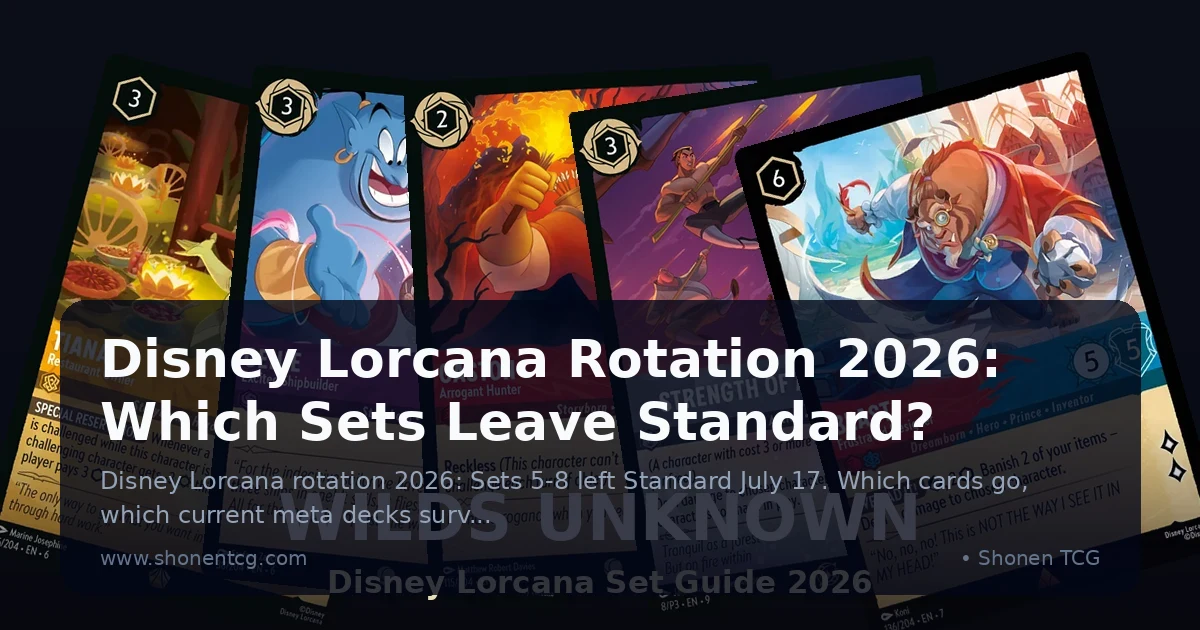
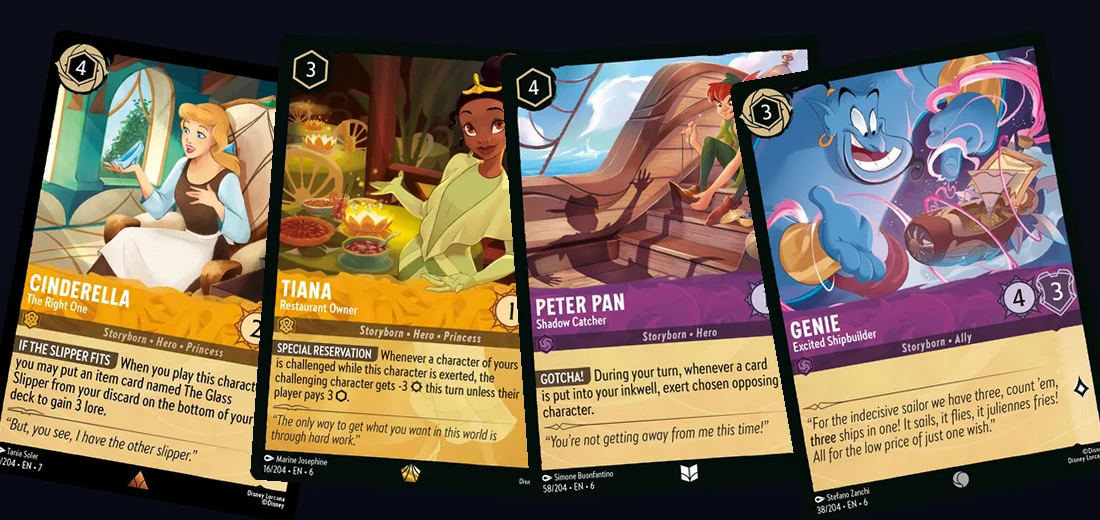 A promotional Disney Lorcana character collage featuring Cinderella, Tiana, Peter Pan, and Genie; it is illustrative rather than a literal Shift chain or decklist.
Let the Storm Rage On and Strength of a Raging Fire are two current Steel Song options tracked in both lists in Inkdecks' current Infinity analysis. Let the Storm Rage On deals 2 damage and draws a card; Strength of a Raging Fire deals damage equal to the number of characters you have in play. A character with the required cost can sing either Song for free, so the goal is to develop enough board to make those effects matter while preserving ink for characters and other actions.
This asymmetry is what makes the deck feel unfair to play against. You're playing your curve (using ink to deploy characters and quest) while the opponent deals with character removal happening at no ink cost. Over 3-4 turns this generates a massive board-state advantage: your board grows while theirs gets reset.
These Songs are tempo tools, not guaranteed answers to every large character. An opponent who plays a damaged character may lose it before it can quest or challenge, but the damage thresholds depend on your board and on the target's willpower.
The official card gallery gives A Whole New World this text: "Each player discards their hand and draws 7 cards." It is a symmetric reset, not a pure draw engine, and the card is currently legal in Infinity only. The current two-list Inkdecks analysis does not show it among the common cards, so this is a metagame-dependent option rather than the definition of every Amber Steel list.
If your Infinity list includes it, singing A Whole New World via an exerted character resets your hand to 7 at no ink cost, but only when your existing hand is small enough that discarding it costs you little. Sung with 4-5 cards in hand, you net 2-3 cards; sung with 0-1 cards, you net the full 7. After resetting, your next turn has full options again, but your opponent has the same seven-card refill.
The limitation is timing on both sides. A Whole New World is worst when your hand is already strong (you're discarding real value to reset) and worst against an opponent who's also low on resources (you're refilling their hand for free). It's best when you're nearly empty and your board state is strong enough to punish whatever your opponent draws into. Good Steelsong play means tracking both hands, not just your own, before committing to this Song.
1. Establish your Shift curve first. Play a cheap early character, then Shift a higher-cost Steel character onto it as soon as you can afford the Shift cost. Getting a high-willpower Steel body into play by turn 3 or 4 is the foundation everything else in the deck depends on.
2. Start singing off your first exerted character. Once a qualifying character is in play, sing Songs by exerting it instead of paying ink. Use Let the Storm Rage On for damage plus a card, or Strength of a Raging Fire when your board makes its damage scale well; do not treat either one as an automatic answer to every target.
3. Track both hands before playing A Whole New World. In Infinity, do not sing it until your own hand is small and your board is strong enough to use the reset better than your opponent. It is not legal in Core, and playing it too early in Infinity discards real value from your hand.
4. Prioritize deploying characters over racing against aggro. If the opponent is closing on 15+ lore before your Songs engine is online, deploy characters ahead of inking for expensive plays; you need Steel bodies in play to unlock the free-Song math this deck relies on.
5. Close with Shift-protected questers. Once board control is established, quest with characters that are difficult to challenge, and use the current Song package on damaged targets that threaten to stabilize.
Aggro (pressure point): Fast lore-rushing decks can force you to sing before your board is developed. Prioritize deploying characters over inking for expensive plays when you lack board presence, and use damage Songs on targets that block your route to 20 lore.
Midrange (depends on the list): Songs and Shift reward you for sequencing board development with interaction, but do not assume every build has the same removal or reload package. Compare the current list's Song count and target range before calling the matchup favorable.
Control (sequencing test): Control matchups come down to who turns cards into lasting lore first. Watch for bounce effects targeting Shifted characters, which can undo both the top card and the base underneath. The Lorcana Amethyst Ruby deck guide explains that type of pressure.
Evasive decks (race): Evasive characters can avoid challenges from non-Evasive characters, so damage Songs and quest timing matter more than a simple challenge plan. The race to 20 lore usually decides whether your board development was fast enough.
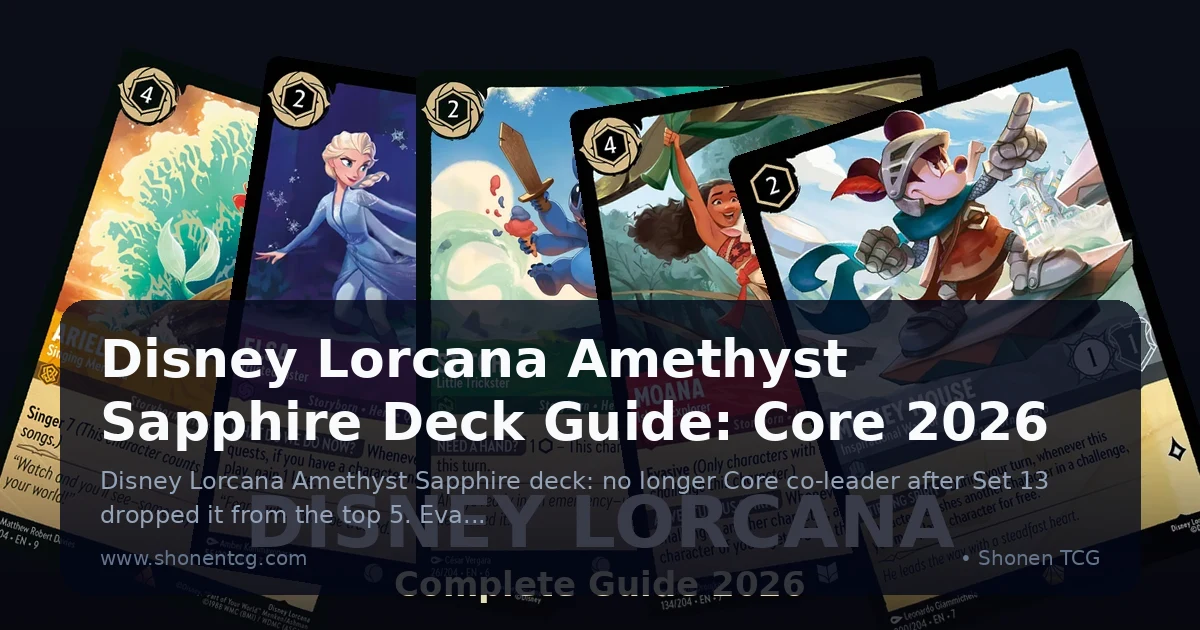
GODEEPER: Playing Evasive decks that this meta targets? Disney Lorcana Amethyst Sapphire Deck Guide →
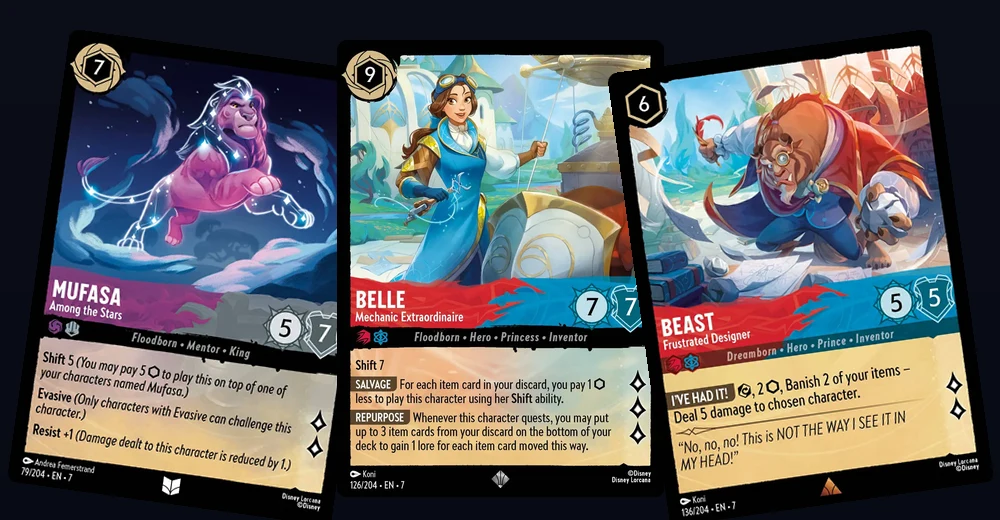 A promotional collage of Mufasa, Belle, and Beast cards; it is not a literal in-game board state or removal sequence.
Inkdecks' September 16, 2026 snapshot prices a premium Infinity Steelsong list at about $203, but individual lists and prices move. A Whole New World is Infinity-only and is not required for every current list. Budget options include:
Running fewer expensive characters and flex cards while keeping the current Song core. If your Infinity list includes A Whole New World, cutting copies lowers the ceiling and cost, but Core players need a different legal reload plan. Let the Storm Rage On and Strength of a Raging Fire are separate card choices, so compare their current prices rather than assuming every Song has the same budget impact.
For players starting out with Disney Lorcana, the Disney Lorcana Starter Decks Guide covers which preconstructed products give you the best foundation before investing in a full competitive build.
Check inkdecks.com for community-submitted budget Infinity Steelsong lists filtered by price. Community lists often find cheaper substitutes for the highest-cost singles.
SHOP: Building this Amber Steel Steelsong list? Check current Disney Lorcana singles prices before you commit to the full build. Shop TCGplayer →
Q: What is the Disney Lorcana Amber Steel Steelsong deck? A: A Songs-heavy midrange deck using Amber and Steel characters, Shift, and Songs that can be sung by exerting characters. Current lists vary, but Inkdecks' current two-list analysis includes Let the Storm Rage On and Strength of a Raging Fire in both lists.
Q: Why is it called Steelsong? A: The community name highlights that the deck pairs Steel characters with a heavy Songs package. The Songs are sung by exerting Steel characters, making the steel characters do double duty as both board threats and Song enablers.
Q: What does A Whole New World do? A: Each player discards their hand and draws 7 cards. It is symmetric, legal in Infinity only, and not a universal current staple, so include it only when the reset fits your list and format.
Q: Is this deck good for beginners? A: Not the easiest starting point. Songs timing, Shift decisions, and hand management all require understanding mid-game sequencing. Amber Emerald Aggro is more straightforward if you're new to Lorcana. Once you know the basics, Steelsong is a rewarding deck to learn.
Q: How much does Steelsong cost to build? A: It varies by list and market. Inkdecks' September 16, 2026 snapshot lists a premium Infinity Steelsong build at about $203. Budget lists cutting expensive characters and flex cards can cost less, so check current price-filtered lists before buying.
Q: What's the win rate in Infinity? A: The September 16, 2026 Inkdecks report shows Steelsong at 50% of the three archetypes in its Set 13 Infinity table, but it does not display a win-rate figure for that small snapshot. Do not read 50% as an overall event win rate. The separate Core report lists Steelsong at 6% share and 48% win rate.
Related
Union Arena Fullmetal Alchemist Deck Guide: Blue 2026
8 min read
Union Arena Attack on Titan Vol.2: New Yellow Color
8 min read
OP-17 Mihawk Deck Guide: Green Dracule Mihawk 2026
13 min read
Dragon Ball Fusion World FB11 Leaders: All 5 Revealed
8 min read
OP-17 Mihawk Matchup Guide: All 6 Leaders Explained
14 min read