Loading…
Loading…
Shonen TCG · Guides
Reviewing
Disney Lorcana
Disney Lorcana Songs guide: this breakdown covers everything you need to know about Song cards, the free-singing mechanic, the strategic trade-offs, and the strongest Songs worth including in your 2026 decks. Songs are one of the five card types in Lorcana alongside Characters, Actions, Items, and Locations. They work differently from anything else in the game, and understanding them is the difference between playing them as expensive Actions and playing them as free tempo swings.
TL;DR: Song cards can be played by paying their ink cost OR by exerting a character whose cost meets the Song's singing cost, letting you use the effect for free. Singing exerts the character, so it can't quest or challenge that turn and becomes vulnerable. The best Songs in 2026 generate card advantage, bounce characters, or deal damage at costs that would be underpriced even if you were paying full ink.
A Song card in Disney Lorcana has two ways to be played. You can pay its printed ink cost from your inkwell like any other card, or you can exert a character you control whose cost is equal to or higher than the Song's singing cost. That second method is free: you spend zero ink and get the effect. The singing cost is written on the card itself, in the line that reads "A character with cost N or more can exert to sing this song for free." That is the mechanic in one sentence.
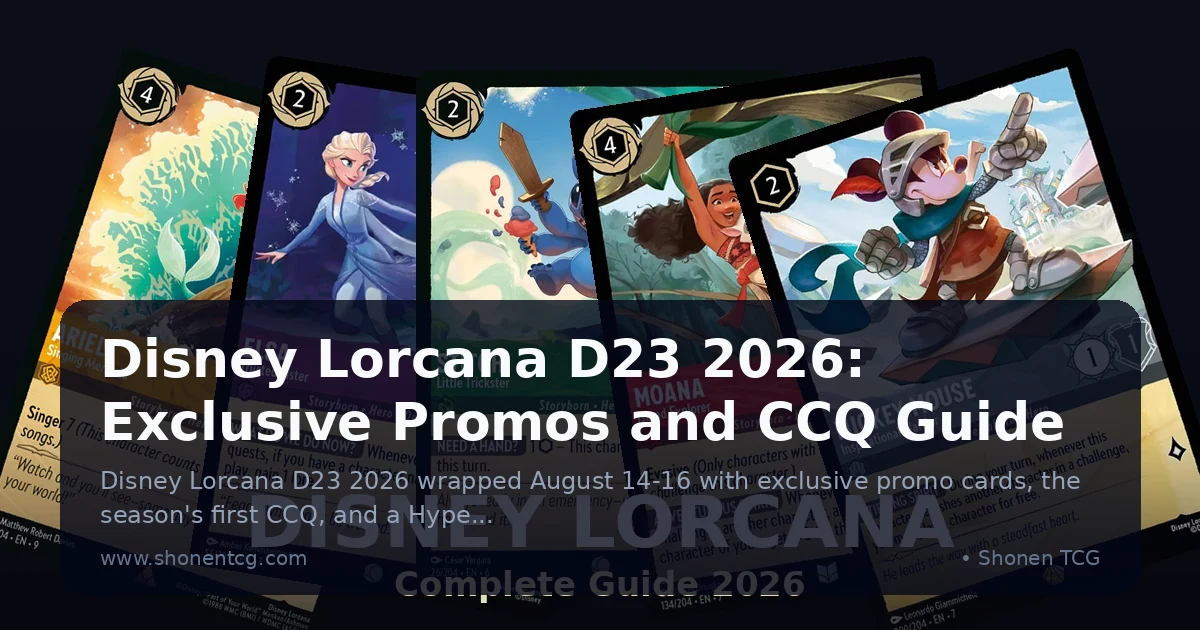
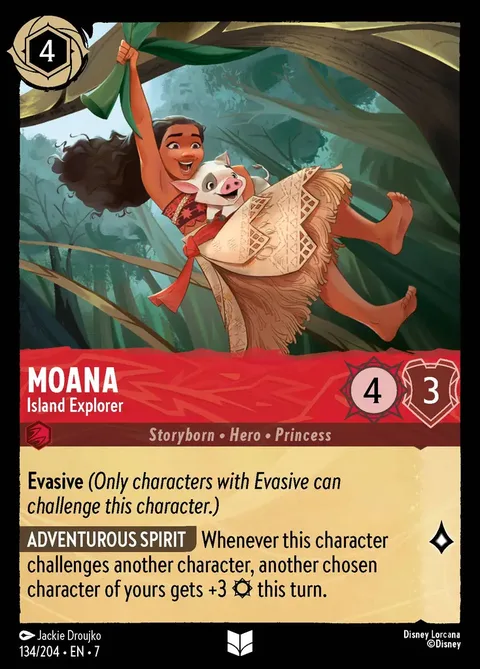 Moana - Island Explorer is one of the key characters in this Lorcana format.
Song cards sit in their own category in Lorcana, separate from Action cards even though both resolve and go to the discard pile. The visual tell is the musical note icon at the top left of the card frame. Functionally, Songs behave like Actions with an extra layer: a free-casting mode that rewards building around characters with high base costs.
Every Song card has standard text plus one special line near the bottom of the effect box: "A character with cost N or more can exert to sing this song for free." The number N is the singing cost, and it varies by card. A low-cost Song like "Part of Your World" has a singing cost of 3, meaning almost any mid-range character in your deck can sing it. A high-ceiling Song might require a 6-cost or 7-cost character to activate for free, which limits which decks can run it effectively.
The reason Songs exist as a distinct type rather than just Actions with a secondary ability is thematic, but the mechanical consequence is real. Some card effects, character abilities, and deck effects specifically reference Songs by type. A character that says "whenever a Song is played" cares only about that card type, not Actions in general. That synergy layer is part of what makes Songs matter in competitive Lorcana.
If you're still getting comfortable with the card types and how a turn flows in Lorcana, review the beginner rules guide before you worry about Song timing.
Singing a Song takes three things: a Song card in hand, a character in play that has been there since the previous turn, and that character's printed ink cost meeting the Song's singing cost.
1. Declare the Song and the singer. State that you're singing the Song and point to the character doing the singing.
2. Confirm the character's printed cost meets the singing cost. Check the number in the ink circle at the top left of the character card against the Song's singing cost. Only the printed cost counts here. Cost reductions from effects during play do not matter. If your opponent played something to make a 5-cost character cheaper this turn, the character's printed cost is still 5.
3. Exert the character. Turn it sideways to mark it exerted.
4. Reveal and resolve the Song. It does not cost any ink.
5. Discard the Song. Place it in your discard pile once it resolves.
One thing trips new players up: you cannot sing a Song with a character on its first turn in play unless that character has Rush. Freshly played characters carry the "wet ink" restriction in Lorcana. They cannot exert for any reason, including singing, until they have been in play through at least one of your Ready steps. Rush removes this restriction, but Rush on Song-relevant characters is rare by design.
The other edge case worth knowing: you can exert multiple different characters to sing multiple Songs in the same turn, as long as each character meets the singing cost of its Song. A 5-cost character can sing a cost-3 Song, a 4-cost character can sing a different cost-4 Song, and you can do both in the same turn. They cannot, however, share one character: a single character can only exert once.
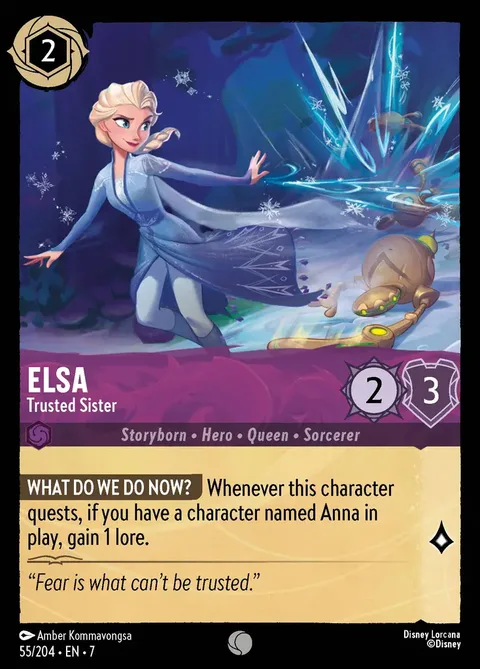 Elsa - Trusted Sister brings unique abilities to the Lorcana card pool.
Was this guide helpful?
About the author

TCG Reviews & Guides Editor
TCG reviews and guides editor specialising in set reviews, deck builds, and beginner content across One Piece TCG, Union Arena, Disney Lorcana, and Dragon Ball Fusion World. Known for step-by-step guides that actually work at the local game store level.
Disclaimer
This article is published for informational and entertainment purposes. It does not constitute professional financial, legal, or technical advice. Game performance, online services, patch schedules, and store listings change. Verify critical details (pricing, system requirements, regional availability) with publishers and storefronts before you buy. Affiliate links, where present, help support our editorial work and are labelled in our affiliate disclosure.
Singing feels free, but it costs something real: the character's action for the turn.
An exerted character cannot quest, cannot challenge, and cannot sing again. If your board consists of two characters and you sing with one of them, you are questing with one character at most. You are also leaving both characters exerted and available to be challenged if your opponent has something to attack.
In practice, this means singing is most valuable when:
The situations where singing hurts you:
This trade-off is what separates players who treat Songs as free Actions from players who understand that the exert cost is real. It is cheaper in ink, not cheaper in board presence.
GODEEPER: Thinking about which ink color combinations set up the best singing platforms? The Disney Lorcana Ink Colors Explained guide → breaks down how each color's character curve affects what Songs you can viably run.
The strongest Songs in the current format share a trait: their effects are worth more than their singing cost would suggest they should be.
Part of Your World is the clearest example. With a singing cost of 3 and an ink cost of 5, you can sing it with nearly any mid-curve character and get a card advantage effect that looks at the top of your deck plus retrieves a card from your discard pile. Drawing and recycling resources for free is a high-efficiency play, and the card has shown up in competitive lists since the early sets.
Be Our Guest lets you play a card from your hand for free, effectively giving you a second play that turn. The ceiling on this is high because it scales with what you have in hand. If you are sitting on an expensive character or a high-value Item and you can sing Be Our Guest with a mid-cost character, you effectively gained several ink worth of value that turn.
Let It Go deals direct damage to a character and can be particularly effective against low-willpower questers. Its singing cost fits comfortably in Amethyst decks built around Elsa as the singing platform, and the damage pairs well with challenge sequences to finish off characters your opponent considered safe.
Grab Your Sword and A Whole New World have each shown up in different format contexts as ways to clear the board or draw deep into your deck. Both have singing costs that require meaningful characters to activate, which limits them to decks intentionally built around high-cost character bases.
For a full breakdown of what to pull from the most recent set, see the Wilds Unknown set guide for which Songs from that expansion made the cut in competitive play.
Songs reward two things in deck construction: a curve that produces characters above the Songs' singing costs, and effects that chain well with what Songs tend to do.
The first point is the more important one. A deck with a high concentration of 1- and 2-cost characters will struggle to sing most Songs for free. Building a Song-focused deck usually means committing to a mid-range character curve, with enough 3-, 4-, and 5-cost characters to act as consistent singing platforms even as your more expensive cards get answered by the opponent.
The second point is about synergy. Some characters in Lorcana trigger when a Song is played, not just when you quest or challenge. A character that reads "whenever you play a Song, gain 1 lore" creates direct value from the act of singing. Decks that run four Songs and four of that character are building a closed loop: the characters enable the Songs for free, and the Songs reward you for having the characters. This engine pattern has driven several competitive builds across multiple sets.
Songs are also worth thinking about in the context of your inkwell. Most Songs are inkable, meaning the gold border is around the ink cost and you can place them in your inkwell if the effect isn't what you need right now. That flexibility matters in games where you need to hit 3 or 4 ink early and your hand is full of Songs you can't sing yet. If you're building a budget list and looking for versatile cards, the Disney Lorcana Budget Deck Guide 2026 discusses how to build around Songs without overspending on the rarest effects.
When mixing two ink colors, Songs are usually tied to one color. Amber, Amethyst, and Emerald tend to have the most Songs across the card pool. Pairing an Amethyst Song package with a second color that provides aggressive characters creates a deck that can sing for value while the rest of the board applies pressure.
Check the singing cost before committing to a character. New players sometimes try to sing with a character that looks big enough, only to realize their character costs one less than the singing threshold. Print cost on the character card, not what you paid to play it.
Prioritize singing over questing when you're already winning the board. If your opponent has no good challenges, singing a card-draw Song costs you lore that turn but extends your hand, which often wins the longer game. Once you pull ahead in lore, slow down, refill your hand with Songs, and use that advantage to stabilize.
Use high-cost characters as singing platforms when they can't safely quest. A 6-cost character on a board full of your opponent's big threats is at risk questing anyway. Sing something valuable with her instead of leaving her exerted from a quest attempt that gains you 2 lore before she gets removed.
Never sing with your only character if you're behind. Falling behind on lore and having zero non-exerted characters is a losing board state. If you need to sing, make sure something on your board either quests first or remains ready to block challenges.
Track which Songs your opponent might be holding. In a competitive game, if your opponent has three inkable Songs they've been sitting on, they might be building toward a multi-Song turn that chains effects. Try not to overextend into a board state where a single turn of free Song plays wipes your advantage.
For more structured deck ideas that use Songs as core pieces, the Disney Lorcana Starter Decks 2026 guide shows which prebuilt lists already have Song synergies built in, so you can test the mechanic before constructing from scratch.
What is a Song card in Disney Lorcana? A Song card is one of the five card types in Lorcana, identified by the musical note icon in the top-left corner. You can play it by paying its ink cost normally, or by exerting a character whose cost meets or exceeds the Song's singing cost, which lets you play it for free.
Can a character sing a Song on the same turn it was played? No. A character needs to have dried, meaning it must have been in play from a previous turn. Freshly played characters have the wet ink restriction and cannot exert to sing, quest, or challenge until your next turn, unless they have Rush.
Does singing exert the character permanently? No. The character is exerted for the current turn only. It readies again at the start of your next turn during the Ready step, just like a character that quested or challenged. The difference is that an exerted character can be challenged by your opponent before it readies.
What is the singing cost on a Song card? The singing cost is the minimum character cost required to sing the Song for free. It is printed in the text box as "A character with cost N or more can exert to sing this song for free." A Song with singing cost 3 needs a character that costs 3 or more ink to sing it.
Can you sing a Song and still count it toward your inkwell? No. Once you sing a Song, it resolves and goes to your discard pile. You can only ink a card by placing it face down into your inkwell during your Ink phase, which removes it from your hand permanently. You make that choice before deciding to sing; you cannot do both with the same copy.
Is Part of Your World one of the best Songs in Lorcana? Yes. Part of Your World lets you look at the top cards of your deck and return a card from your discard pile to your hand, making it an efficient card advantage tool. It has appeared in high-placing decks across multiple formats because drawing and retrieving resources is never a bad effect.
Do Songs have inkwell symbols? Most Songs are inkable, meaning they show the gold circle border around their ink cost and can be placed in your inkwell as a resource if you don't need the effect. A small number of Songs are non-inkable. Check the individual card's border to confirm before deciding whether to ink or sing.
Related
Union Arena Fullmetal Alchemist Deck Guide: Blue 2026
8 min read

Union Arena Attack on Titan Vol.2: New Yellow Color
8 min read
OP-17 Mihawk Deck Guide: Green Dracule Mihawk 2026
13 min read
Dragon Ball Fusion World FB11 Leaders: All 5 Revealed
8 min read
OP-17 Mihawk Matchup Guide: All 6 Leaders Explained
14 min read