Loading…
Loading…
Shonen TCG · Guides
Reviewing
Disney Lorcana
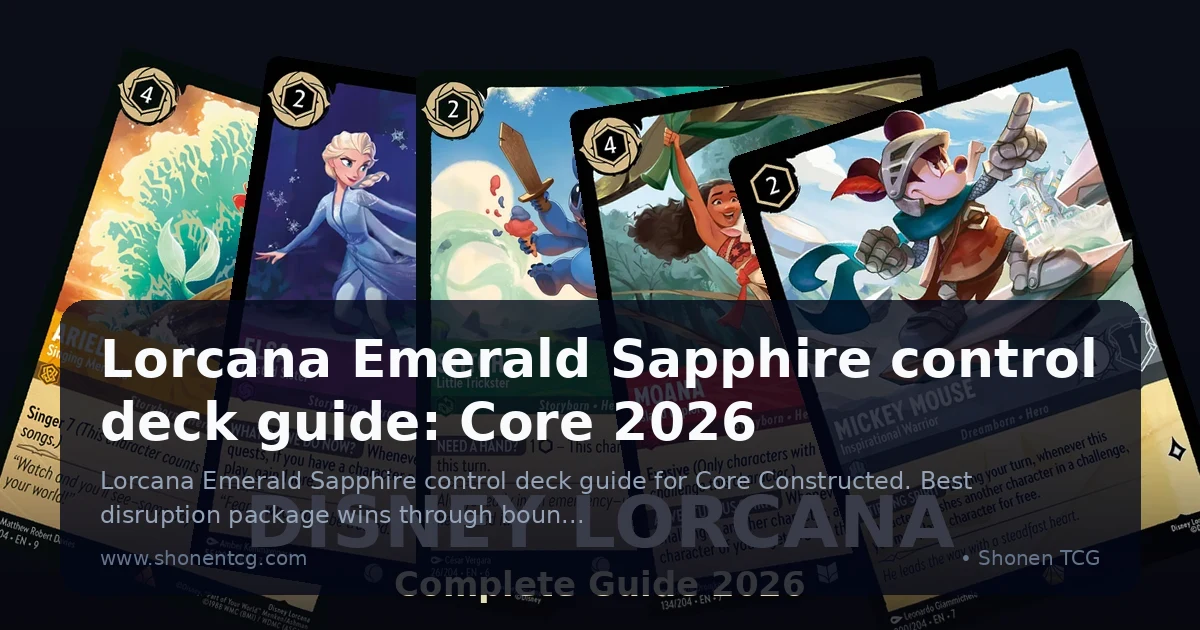
This Lorcana Emerald Sapphire control deck guide covers why the format's most reactive archetype is also one of its most rewarding. Emerald Sapphire carries one of the strongest disruption packages in the Wilds Unknown-era field (14% Core meta share as of that format; see the correction note below for the current Set 13 picture). It doesn't race Amethyst Sapphire Evasive to 20 lore. It dismantles the board and wins on value instead.
TL;DR: Correction (2026-07-29): the meta share figures in this guide (Emerald Sapphire Control at 14%, Amethyst Sapphire Evasive at 18%, Amber Emerald Aggro at 16%, Amber Amethyst at 15%) are from the Wilds Unknown format, before Set 13 (Attack of the Vine) rotated Core Constructed on July 24, 2026. The archetype and matchup logic below still hold; the exact percentages don't reflect the current field. Emerald Sapphire Control counters Evasive decks through bounce effects that bypass Evasive's challenge protection. Emerald handles disruption; Sapphire replenishes hand advantage. Recommended for experienced TCG players comfortable managing two-resource control gameplay.
Emerald Sapphire Control sacrifices early lore to deny the opponent a functional board. Emerald bounce and removal pieces reset the opponent's tempo. Sapphire draw effects keep your hand ahead of theirs. Once the board is clear enough, protected characters quest to 20 lore while the disruption package holds threats off.
The win condition isn't speed. It's card quality differential: by the time both decks have used most of their resources, the Sapphire draw engine means you have better options in hand than they do.
Emerald's defining role in Lorcana has always been disruption. Bounce effects return opponent characters to hand rather than banishing them outright. The distinction matters because it adds a cost: the opponent spent ink to play that character, and now they spend ink again. In a format built around characters generating lore each turn, forcing a replay creates a real tempo gap.
Bounce also directly answers Evasive characters, which otherwise cannot be targeted by most challenge-based removal. Against Amethyst Sapphire Evasive, the Core format's leading deck at 18% share, this property makes Emerald bounce effects some of the most efficient answers in the format. The Evasive player relies on their characters questing safely turn over turn. Returning them to hand interrupts that sequence and costs the opponent ink they often can't fully replace in the same turn.
Emerald also contributes targeted removal for characters that need to be banished outright rather than returned. The combination gives the deck flexibility across matchup types: bounce for value-oriented boards, hard removal for aggressive threats where returning a character just lets them replay it immediately.
GODEEPER: Understanding how Evasive characters work changes how you sequence Emerald bounce effects. Lorcana Amethyst Ruby Bounce Deck Guide 2026 →
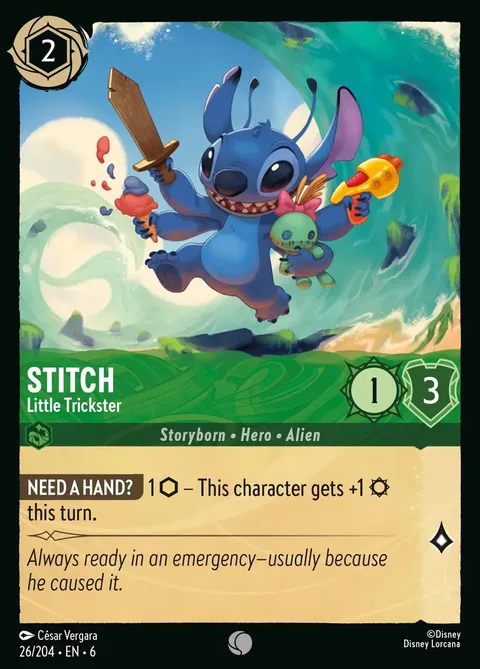 Stitch - Little Trickster is one of the key characters in this Lorcana format.
Sapphire ink contributes the draw effects, utility spells, and ramp pieces that keep Emerald Sapphire's hand ahead. This is where the deck's staying power comes from.
Control decks lose when they run out of answers. Each removal or bounce play costs a card. Without replenishment, the opponent eventually plays through the disruption. Sapphire draw effects solve this directly: you spend a card to answer a threat, draw one or two replacements, and enter the next turn with the same (or better) hand quality.
Sapphire also provides the ramp infrastructure that lets the deck operate a turn ahead of its raw ink curve. In Lorcana, being a turn ahead on available ink translates directly to playing your disruption pieces one turn earlier, which changes the math on what the opponent can establish before answers arrive.
The pairing isn't accidental. Emerald has the answers. Sapphire has the volume to keep finding them. Neither ink would sustain a full control game plan alone.
Emerald Sapphire's path to 20 lore is longer than most archetypes. That's a feature, not a flaw, but it requires understanding when to stop disrupting and start questing.
The deck wins in three stages. Early turns are defensive: answer the opponent's first threats, prevent board floods, and avoid falling behind on lore so badly that recovery becomes impossible. The deck is designed to give up a few lore in this phase. Expecting to match aggro tempo early leads to spending disruption pieces poorly.
Mid-game is where Sapphire draw effects become critical. The goal is ending most turns with three or more cards in hand while keeping the opponent's board thin. This hand advantage is the deck's actual resource lead. It doesn't show on the lore tracker, but it compounds: the player with more options consistently makes better decisions.
Late game, the deck needs one or two characters to quest with reasonable protection. At this point, the opponent has burned resources trying to establish a board that keeps getting answered, and your hand still has pieces to cover threats. Protected characters questing from 10 to 20 lore close games faster than aggro players expect, because the opponent is often low on ink by the time they need to answer.
One concrete skill marker: knowing which characters to let quest versus which ones to challenge and remove. Misjudging this costs multiple turns and often decides the game at higher levels.
For a broader look at how this archetype compares to the other Core decks right now, the Lorcana Wilds Unknown Set Championship meta breakdown covers all four top archetypes with metashare data.
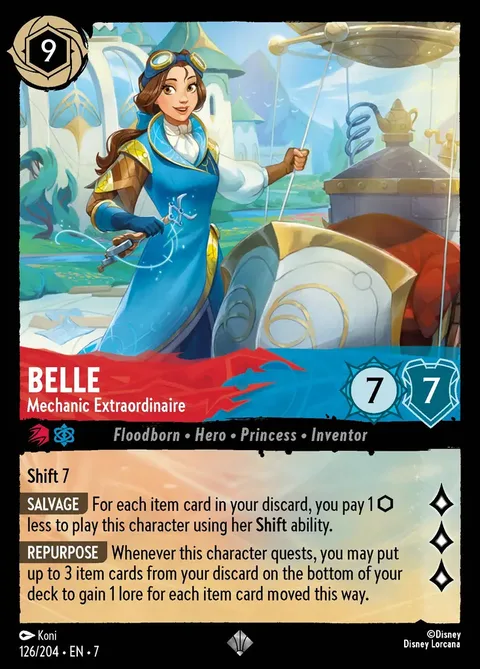 Belle - Mechanic Extraordinaire brings unique abilities to the Lorcana card pool.
Was this guide helpful?
About the author

TCG Reviews & Guides Editor
TCG reviews and guides editor specialising in set reviews, deck builds, and beginner content across One Piece TCG, Union Arena, Disney Lorcana, and Dragon Ball Fusion World. Known for step-by-step guides that actually work at the local game store level.
Disclaimer
This article is published for informational and entertainment purposes. It does not constitute professional financial, legal, or technical advice. Game performance, online services, patch schedules, and store listings change. Verify critical details (pricing, system requirements, regional availability) with publishers and storefronts before you buy. Affiliate links, where present, help support our editorial work and are labelled in our affiliate disclosure.
1. Play defensively in the early turns. Answer the opponent's first threats, prevent board floods, and accept giving up some lore. The deck is designed to concede early lore rather than match aggro tempo, so don't spend disruption pieces trying to keep pace on the lore tracker.
2. Build hand advantage through the mid-game. Use Sapphire draw effects to end most turns with three or more cards in hand while keeping the opponent's board thin. This hand lead is the deck's real resource advantage, even though it doesn't show up as lore.
3. Sequence your Emerald disruption for maximum tempo. Against board-heavy opponents, let them commit two or three characters before bouncing sequentially across consecutive turns rather than answering each threat as it lands; against fast aggro, use efficient low-cost answers immediately to break their tempo before they flood the board.
4. Judge each threat: let it quest or remove it. Misjudging which characters to leave alone versus which to challenge and remove costs multiple turns and often decides the game. Characters that only add marginal lore are usually not worth spending a removal piece on.
5. Close with protected questers once the board is clear. Move one or two characters into a questing role with reasonable protection and push from 10 to 20 lore. By this point the opponent has typically burned resources trying to reestablish a board that kept getting answered, and your hand still has pieces in reserve.
This is the matchup that justifies playing Emerald Sapphire Control. Amethyst Sapphire Evasive holds 18% meta share and sits at the top of Core Constructed. Evasive characters can't be targeted by most challenge-based removal, which makes most decks deal with them awkwardly.
Emerald bounce effects ignore this protection entirely. Returning an Evasive character to hand costs the opponent the ink they spent to play it, strips the Evasive body from the board, and often sets them back a full turn on their lore generation plan.
The strategic goal in this matchup is patience. Let them develop a board, because that gives your bounce pieces more targets. Answering each character as it appears is inefficient early. Waiting for them to commit two or three characters, then bouncing sequentially on consecutive turns, creates a much larger tempo gap. Sapphire draw effects keep your hand stocked to sustain the pressure.
Where this matchup goes wrong: falling too far behind on lore in the first four turns makes it hard to recover even after stabilizing the board. The Evasive deck generates lore fast when left alone. Some lore concession is expected; 8 to 10 behind by turn five is manageable. More than that and the clock is too short for the value plan to pay off.
GODEEPER: Want the current picture instead of the Wilds Unknown baseline? See how Core archetypes shifted in the first week after Set 13. Disney Lorcana Attack of the Vine Week 1 Meta Report →
Amber Emerald Aggro at 16% meta share is the worst matchup for this deck. The aggro build races lore before control pieces come online, and Emerald Sapphire's disruption is most effective once a board exists and the opponent has invested ink in it.
The problem in the early turns: Amber Emerald aggressive characters cost less ink than most Emerald bounce effects. They can flood the board before you have enough available ink to answer multiple threats in a single turn. When they sequence well, the lore gap reaches a point where questing to 20 becomes faster than bouncing your way to a stable board.
The only consistent path to winning this matchup is denying their early turns. Efficient two-cost answers on their first characters break their tempo sequence. Letting them establish three or more characters on the board before you start answering is usually a loss.
Most competitive players accept this as a structural unfavorable and make their decisions knowing it. At a tournament with heavy Amber Emerald representation in the field, that changes the deck selection calculus.
Amber Amethyst at 15% meta share splits on draw more than any other matchup. The deck mixes Amber aggression with Amethyst's card draw and Evasive threats. Against Emerald Sapphire, it's a race between their Evasive characters building lore and your bounce effects maintaining tempo.
When Amber Amethyst draws their Evasive characters early and Amber questers support them, the matchup feels like the Evasive matchup but faster. When their draw is slower or Amber-heavy, the matchup plays more like a midrange fight where card advantage wins.
The neutral read is accurate at the population level. Over a large sample, neither deck has a consistent edge. Individual games feel decisive because of the wide variance in how either deck can open.
The deck is not a beginner's on-ramp. It has a higher skill ceiling than any of the Core aggro builds and requires specific knowledge to sequence removal correctly. Experienced TCG players who enjoy reactive game states and board reading will find it one of the most engaging options in the Core format.
If you're new to Lorcana, the Disney Lorcana complete guide has a fundamentals section covering turn sequencing and ink management that applies directly here. Understanding those mechanics at a baseline level before picking up a control shell will shorten the learning curve significantly.
Players coming from control archetypes in other TCGs will find the translation reasonably natural. The resource system works differently, but the core competency (identifying the right moment to answer versus the right moment to develop) transfers directly.
Emerald Sapphire Control is mid-range in cost compared to the other Core meta decks. It doesn't depend on a single expensive legendary finisher the way some aggro and Evasive builds do. The value comes from the consistency of the disruption package, which distributes across multiple cards rather than concentrating in one.
The practical budget consideration is the Sapphire draw package. Some of the most efficient Sapphire card advantage pieces have seen price movement tied to their cross-archetype demand. These are the hardest pieces to proxy toward and the most important for the deck's core loop.
Building toward the core Emerald disruption pieces first and running cheaper Sapphire draw substitutes while collecting the premium versions is a workable path. The deck functions at a lower efficiency with the budget package, but the game plan remains intact.
The Disney Lorcana Wilds Unknown Best Decks meta guide compares the cost profiles of all Core top-four builds if you're deciding between archetypes before committing.
Is Emerald Sapphire Control worth playing in Core Constructed? Correction (2026-07-29): the 14% figure below is from the Wilds Unknown format, before Set 13 (Attack of the Vine) rotated Core Constructed on July 24, 2026; current post-rotation meta share for this archetype hasn't been separately reported yet. The disruption-based game plan (bounce, removal, card draw) still holds, and it rewards preparation over pure card power, punishing opponents who rely on board flooding.
What does Emerald ink do in Lorcana? Emerald specializes in bounce effects that return opponent characters to hand, plus targeted removal. In the Control build, Emerald pieces handle tempo disruption: slowing the opponent's lore push while your value engine catches up.
What does Sapphire ink add to the control shell? Sapphire contributes card draw, ramp, and utility effects. It keeps your hand stocked while Emerald spends resources on disruption. Most of the deck's card advantage comes from Sapphire, and that sustained card quality is what lets Control close games in the late stages.
How does Emerald Sapphire beat Evasive decks? Bounce effects from Emerald ink return Evasive characters to hand, stripping their board presence. Evasive characters avoid challenge-based removal, but bounce ignores that protection entirely. This is why Emerald Sapphire has a favorable matchup profile against Amethyst Sapphire Evasive, which led the Core format in the Wilds Unknown era and remains one of the format's strongest archetypes post-Set 13.
What is the hardest matchup for Emerald Sapphire Control? Amber Emerald Aggro is the most difficult matchup. The aggro deck races lore before the control pieces come online, and Emerald Sapphire's disruption is more effective once a board exists to disrupt. Draws where the aggro player sequences well leave very little room to stabilize.
How much does Emerald Sapphire Control cost to build? Emerald Sapphire Control is mid-range in cost compared to the other Core meta decks. It doesn't require chase-tier legendary cards, but several Sapphire draw pieces and Emerald removal spells carry price tags. Building from a starter and upgrading the engine incrementally is a practical path in.
Can a beginner play Emerald Sapphire Control? Not ideally. Control rewards players who can read board states, sequence removal efficiently, and identify when to disrupt versus when to quest. Newer players will find more forgiving on-ramps in Amber Emerald Aggro or one of the Evasive builds before transitioning to Control.
Related
Union Arena Re:ZERO Emilia Deck Guide: Purple Build 2026
13 min read

Union Arena Attack on Titan Vol.2 Buying Guide: What to Buy
14 min read
Sabo deck guide: OP17 Red/Black Elbaph Build Plan 2026
12 min read
Union Arena Re:ZERO Buying Guide: Box, Deck, or Singles
17 min read
Union Arena Attack on Titan Armin Deck Guide: Red Vol.2
21 min read