

Shonen TCG · Guides
Disney Lorcana Emerald Aggro Upgrade Attack of the Vine
Your Emerald Aggro upgrade Attack of the Vine is a targeted slot swap, not a full rebuild, even though July 17 brought a Core Constructed rotation alongside the Attack of the Vine prerelease. The Amber/Emerald shell sits at 15% Core meta share as of the Aug 7 tournament snapshot, and its aggro engine is built mostly on Sets 9-12, the block that stayed legal after Sets 5-8 rotated out of Core. Real Set 13 additions land on both sides of the deck: Monsters Inc joins the Amber half (not Emerald, despite an earlier version of this guide's speculation), while Up characters and two standalone cards join the Emerald half.

TL;DR: Amber/Emerald Aggro stays competitive in Set 13 with targeted upgrades, not a rebuild, because its core engine runs on Sets 9-12, which stayed Core-legal when Sets 5-8 rotated out on July 17. Monsters Inc (Mike Wazowski, Sulley, Boo) prints in Amber and upgrades that half of the deck; Up (Carl Fredricksen, Ellie Fredricksen, Russell) plus Tod - Clever Fox and Put That Thing Back are the real Emerald additions. Budget players can upgrade 6-8 slots; premium players can push 10-12, plus any Sets 5-8 pieces the current list still runs. Wait until Week 3 to buy singles for the best prices.
Emerald Aggro upgrade Attack of the Vine: what's the path? (quick answer)
The upgrade path for Emerald Aggro in Attack of the Vine is slot-by-slot, not ground-up. Your Sets 9-12 core stays legal and remains the backbone; Core Constructed also rotated on July 17, so any lingering Sets 5-8 pieces in your list need a replacement regardless of how good the Set 13 additions are. See the Disney Lorcana rotation 2026 guide for the full list of what leaves Core. The changes target four areas: rotation-forced replacements, the Amber-side Monsters Inc upgrades, the Emerald-side Up and tempo pieces, and the finisher slot if you haven't committed to one yet.
Set 13 covers roles the archetype has always wanted more of on both sides of the ink split: cheap Amber bodies that apply lore pressure or refill your hand, and Emerald pieces that draw cards, bounce a blocker, or add lore off playing a location. How many slots you change depends on your budget, how many Sets 5-8 cards your current list still runs, and whether you're building for Week 1 events or longer-term play.
Key Takeaways
- Amber/Emerald Aggro sits at 15% Core meta share as of the Aug 7 tournament data (750+ logged decks), a co-leading archetype with Amber/Amethyst Midrange; its Sets 9-12 core survived the July 17 rotation intact
- Core Constructed rotation took effect July 17, 2026, the same day as the Attack of the Vine prerelease: Sets 5-8 left, narrowing Core to Sets 9-13
- Monsters Inc (Mike Wazowski, Sulley, Boo) prints in Amber, not Emerald -- these are real upgrades for the deck's Amber half
- The real Emerald additions are Up characters (Carl Fredricksen, Ellie Fredricksen, Russell) plus Tod - Clever Fox and the bounce Song Put That Thing Back
- Up's cards lean toward location synergy rather than pure Aggro; Tod and Put That Thing Back are the cleaner Aggro-shell fits
- Budget upgrade path targets 6-8 slots, premium path runs 10-12, plus whatever Sets 5-8 cards rotation forced out
- Wait until Week 3 to buy singles: historical price drops of 20-35% vs. launch
 Stitch - Little Trickster is one of the key characters in this Lorcana format.
The existing Amber/Emerald Aggro shell (Sets 9-12, post-rotation)
Before listing what changes, it helps to be specific about what you're keeping, and about what July 17's Core Constructed rotation took away regardless of Set 13.
The Amber core contributes early-quest characters that generate lore in the first two or three turns. These don't fight for board space; they quest and pass. This shell is built mostly from Sets 9-12, so it survives rotation without a rebuild. Set 13 adds real depth here too: Mike Wazowski - Well-Rounded Entertainer (1-cost Common) and Sulley - The New Boss (5-cost Super Rare) are both Amber, and they're covered in the Amber-side section below.
The Emerald core does three things: it provides cost disruption and card selection that keeps your hand full, it adds bodies that quest without dying immediately to a single character challenge, and it holds a Legendary or Super Rare threat for games that go to turns 12 and beyond. Like the Amber side, the Emerald engine leans on Sets 9-12. If your current list still runs any Sets 5-8 pieces, those need a replacement now that Sets 5-8 rotated out of Core Constructed on July 17, independent of whether a Set 13 card outperforms them.
The win condition hasn't changed. Get to 20 lore before the opponent stabilizes their board. That means questing as early as turn one or two with Amber characters, disrupting the opponent's responses with Emerald, and closing with a Legendary or Super Rare threat if the game goes past turn 10.
GODEEPER: The full card list, ink ratio, and matchup breakdown for the current Core build are covered in detail. Disney Lorcana Amber Emerald Aggro Deck Guide 2026 →
What Set 13 actually adds to Emerald (it isn't Monsters Inc)
An earlier version of this guide placed Mike Wazowski, Sulley, and Boo in Emerald ink. That was wrong -- confirmed against the official Set 13 database, all three print in Amber (with additional Ruby and Sapphire versions), and they're covered as Amber-side upgrades in the next section. Emerald's real Set 13 additions come from a different franchise entirely: Up.
Carl Fredricksen - Loving Husband (AOV-074, 1-cost Uncommon) reads: "TAKE MY HAND: When you play this character, you pay 2 {i} less for the next character named Ellie Fredricksen you play this turn." Ellie Fredricksen - Loving Wife (AOV-075, 2-cost Common) reads: "ADVENTUROUS HEART: Whenever you play a location, gain 1 lore." Played together they discount into a location-lore combo, but that combo needs locations in your list to matter, which most Aggro builds don't run.
Russell - Junior Wilderness Explorer (AOV-082, 2-cost Common) moves himself and another character to a location for free on quest. Russell - Senior Wilderness Explorer (AOV-079, 5-cost Super Rare, Shift 3) buffs characters at locations and gains lore off big questers. Both are genuinely good cards, but like Carl and Ellie, their payoff is tied to running locations. Treat the Up package as an optional sub-theme, not an automatic upgrade for a pure Aggro list.
The two Set 13 Emerald cards that fit a straightforward Aggro shell without any location investment are Tod - Clever Fox (AOV-081, 3-cost Uncommon): "PROBLEM SOLVING: When you play this character, draw 2 cards, then choose and discard a card," and Put That Thing Back (AOV-103, 4-cost Uncommon Song, singable free off a 4-cost-or-more exerted character): "Return chosen character or item to their player's hand." Tod smooths your draws without slowing the plan down; Put That Thing Back is a tempo swing that buys a turn against a board stall, which matters more for an Aggro deck than a location payoff does.
 Robin Hood - Eye for Detail brings unique abilities to the Lorcana card pool.
What Set 13 adds to Amber: the real Monsters Inc upgrade
The Monsters Inc cards this deck actually wants are on the Amber side. Mike Wazowski - Well-Rounded Entertainer (AOV-021, 1-cost Common, 2 Strength / 1 Willpower / 1 Lore) plays into a 1-cost slot with "MAKE 'EM LAUGH: When you play this character, you may pay 2 {i} to give chosen character +1 {l} this turn," a small but real lore boost on a body that also trades in combat.
Sulley - The New Boss (AOV-024, 5-cost Super Rare, 4/4/1) carries Bodyguard plus "REHIRE: When you play this character, you may return a character card from your discard to your hand," making him a defensive finisher that protects your cheaper questers and refills your hand at the same time. He's a strong fit for the deck's top-end slot, alongside or instead of whatever Legendary you're currently running.
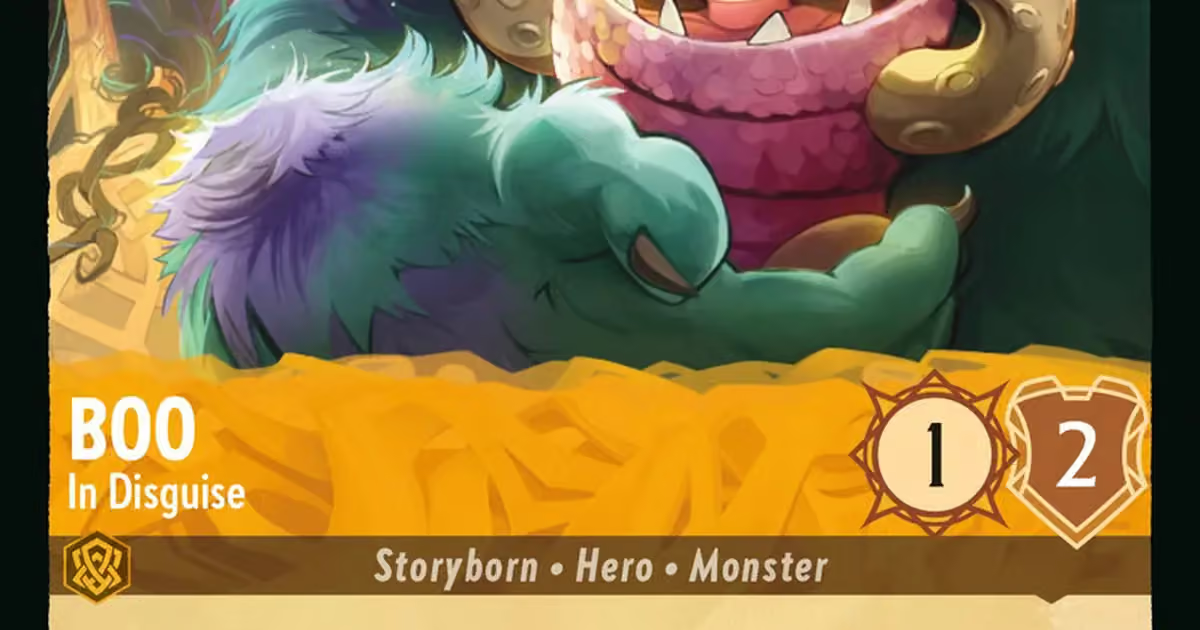
Boo - In Disguise (AOV-019, 2-cost Uncommon, 1/2/2) is a conditional include: she can't be challenged while an exerted Sulley is in play, so she's worth running specifically alongside the Amber Sulley print, not as a standalone piece.
For the full detail on all Monsters Inc printings across all three inks, including the ones this deck doesn't use, see the character guide linked in Related Reading below.
Which slots to cut from your current list
Cuts fall into three categories: cards that rotated out of Core Constructed on July 17 regardless of Set 13, characters that are outperformed by the Set 13 additions, and tech cards that addressed problems Set 13's new tools solve more cleanly.
Rotation cuts (mandatory, not optional): any Sets 5-8 card still in your list has been Core-illegal since July 17, independent of anything covered below. Check your decklist against the rotation guide linked above if you're unsure which slots are affected.
Likely cuts in the 1-cost Amber slot: Mike Wazowski - Well-Rounded Entertainer replaces any 1-drop that doesn't also carry a small effect. The aggro shell wants every slot to either quest well or do something extra. Characters that only trade are weaker than characters that trade and do something else.
Action card slots: if you've been running a card-draw action for consistency, Tod - Clever Fox does that job on a body instead, freeing the action slot for a tempo play like Put That Thing Back.
The finisher slot: if you've been playing a single Legendary threat as a theoretical closer but it hasn't been performing, Sulley - The New Boss is a strong direct replacement, or a second copy alongside it. Closing games at 20 lore is a speed race. If your current finisher costs too much to realistically play before the game ends, cut it.
What you don't cut: Amber's quest package, your counter suite, your draw support. The shell is what makes this deck work. The Set 13 cards enhance it; they don't redefine it.
GODEEPER: The full Set 13 meta picture and which decks gained the most from Attack of the Vine are broken down here. Disney Lorcana Attack of the Vine Best Decks and Meta Tier List →
Step-by-Step: upgrading your Amber Emerald Aggro list for Set 13
1. Cut any remaining Sets 5-8 cards first. These have been Core-illegal since the July 17 rotation regardless of Set 13, so replace them before evaluating any new card on its own merits. Check your decklist against the rotation guide if you're unsure which slots are affected.
2. Add Mike Wazowski - Well-Rounded Entertainer to your 1-cost Amber slot. He replaces any 1-drop that only trades in combat without doing anything extra; his small lore boost is worth the swap in a shell where every early slot matters.
3. Swap a card-draw action for Tod - Clever Fox. Tod does the same consistency job on a body instead of a dead action, which frees the action slot for a tempo play like Put That Thing Back.
4. Settle your finisher slot with Sulley - The New Boss. If your current Legendary closer hasn't been performing or costs too much to realistically land before the game ends, Sulley's Bodyguard plus discard recursion is a direct, cheaper-to-cast upgrade.
5. Leave the Up sub-theme out unless you're also running locations. Carl Fredricksen, Ellie Fredricksen, and Russell only pay off with a location package this shell doesn't run; treat them as optional rather than automatic includes.
6. Time your purchases by rarity. Buy commons and uncommons (Mike Wazowski, Tod) immediately since their prices drop fast either way. Wait until Week 3 for Sulley and any other rare or above, when prices typically fall 20-35% from launch, unless early tournament results show it's worth paying the premium now.
Budget vs. premium upgrade paths
Not every player wants to acquire every Set 13 card on launch day. Here's how to think about it in two tiers.
Budget path (6-8 slot changes, targeting common and uncommon Set 13 cards):
Start with Mike Wazowski - Well-Rounded Entertainer (Common) and Tod - Clever Fox (Uncommon) -- both cheap to acquire and both slot in without changing your sequencing. Skip Sulley and the Up sub-theme until you've confirmed how much of the finisher slot you want to commit to. Run the rest of your existing shell and test at local events before committing to more singles. If your current list still has Sets 5-8 pieces, replace those first since they've been Core-illegal since July 17 regardless of budget.
Expected investment for a budget upgrade: moderate. Uncommon and common singles from a new set rarely hold value past the first two weeks.
Premium path (10-12 slot changes, including the Sulley - The New Boss Super Rare slot):
Sulley - The New Boss is a Super Rare, so it will cost more at launch than at Week 3. Premium players willing to absorb that cost get the deck in its full-upgrade state for Week 1 events. The tradeoff is overpaying on a card that may fall significantly once the market digests opening volume.
Neither path requires chasing Secret Rare or Enchanted versions. The upgrade is about board efficiency, not collectible rarity.
Week 1 vs. Week 3 buying strategy
This applies to every new set, and Attack of the Vine is no exception.
Week 1 prices: Launch hype, prerelease excitement, and streamer influence push singles up. Sulley - The New Boss and any "meta-defining" rare from early coverage get priced at maximum speculation value.
Week 3 prices: Opening volume from booster boxes catches up with demand. Common and uncommon singles drop fast, often within the first week. Rare singles see a 20-35% reduction from peak by Week 3, based on the pattern seen in Sets 11 and 12. Super Rares take longer because they're lower-print but also see a correction once high-volume openers flood the market.
The exception to the "wait" strategy is if tournament results show a specific card winning major events. Tournament demand can sustain or even increase prices temporarily. Watch the first weekend of local and regional results before making large purchases.
For budget players: buy commons and uncommons immediately since their prices fall fast and the savings aren't worth the wait. For rares and above: wait until Week 3 unless tournament results force your hand.
Frequently Asked Questions
Do I need to rebuild my Amber/Emerald Aggro deck from scratch for Set 13?
No. The core engine runs mostly on Sets 9-12, which stayed Core-legal after the July 17 rotation. That date also removed Sets 5-8 from Core Constructed, so older pieces in your list need swapping either way. Set 13 adds real upgrades on top of that: Monsters Inc for the Amber side, Up and two standalone cards for the Emerald side. Expect to swap 6-10 cards total depending on your budget.
Are Monsters Inc characters in Emerald ink for Attack of the Vine?
No. Mike Wazowski, Sulley, and Boo print in Amber, plus Ruby and Sapphire versions -- confirmed against the official Set 13 card database, correcting an earlier version of this guide. The franchise that actually lands in Emerald this set is Up.
Is Amber still the right partner ink for Emerald Aggro in Set 13?
Yes, more directly than before. The Amber-side Monsters Inc cards are real upgrades for this exact deck's Amber half, not a separate package. No Set 13 placement creates a stronger aggro pairing than Amber/Emerald.
When is the best time to buy Set 13 singles for this deck?
Week 3 after launch is the historical sweet spot for rares and above. Prerelease hype inflates prices in Week 1. By Week 3, opening volume has pushed singles down 20-35% from launch prices. Buy commons and uncommons early since their price drops happen fast.
Is Amber/Emerald Aggro a competitive deck entering Set 13?
Yes. It sits at 15% Core meta share as of the Aug 7 tournament data (750+ logged decks), a co-leading archetype alongside Amber/Amethyst Midrange. Its Sets 9-12 core survived the July 17 Core Constructed rotation intact, unlike rivals still leaning on Sets 5-8.
What is the win condition of Amber/Emerald Aggro in Lorcana?
The deck races to 20 lore before the opponent stabilizes. Cheap characters quest and generate lore in turns one through three, Emerald disruption delays key opponent responses, and a Legendary or Super Rare threat closes games that stretch past turn ten. Speed is the entire game plan.
Should I prioritize Mike Wazowski or Sulley for the upgrade?
Both, but in different slots. Mike Wazowski - Well-Rounded Entertainer is a cheap 1-drop upgrade with a small lore boost, worth adding immediately. Sulley - The New Boss is a 5-cost Super Rare finisher with Bodyguard, worth prioritizing once you've settled on your top-end slot.
Related Reading
- Disney Lorcana Attack of the Vine Best Cards to Pull: Which Set 13 chase cards and value targets are worth acquiring at launch versus waiting on.
- Disney Lorcana Attack of the Vine Meta Impact on Wilds Unknown Format: How Set 13 shifts the format landscape beyond the Core Constructed environment.
- Disney Lorcana Complete Guide 2026: Ink colors, format overview, and how Core Constructed is organized for new and returning players.
- Disney Lorcana Attack of the Vine Best Decks and Meta Tier List (see the GODEEPER callout above): Full tier list of Set 13 launch week decks with matchup notes and positioning.
- Attack of the Vine Monsters Inc Characters Card Guide: Every Monsters Inc printing across all three inks, and why the franchise's chase card is a Super Rare, not an Enchanted.
- Attack of the Vine Lore Rush Guide: Fast 20-Lore Strategy: How to build an aggressive Lore-rushing deck with Set 13 cards.
References
- Official Disney Lorcana Set 13 card gallery: disneylorcana.com
- Disney Lorcana Set 13 card database (Limitless TCG, live post-launch): lorcana.limitless.gg
- Core format meta share tracking: lorcast.com
- Disney Lorcana subreddit: reddit.com/r/DisneyLorcana
Was this guide helpful?
About the author
Pen name for the Shonen TCG desk's tournament coverage, format analysis and cross-game comparisons.
- Results taken from event pages and standings
- Other games checked against their own official rules
- Opinions marked as ours, with the reason
Keep reading
Attack of the Vine Up Sapphire Guide: Carl and Dug
Guides · 10 min
Attack of the Vine Print Run: How Many Packs to Open
Guides · 9 min

Disney Lorcana Iconic Rarity: Set 13 Collector Guide
Guides · 5 min
Lorcana Attack of the Vine Deck Building Guide 2026
Guides · 8 min
Attack of the Vine Turning Red Ruby Full Deck Guide
Guides · 11 min

Disney Lorcana Attack of the Vine Ink Colors Guide
Guides · 8 min
Attack of the Vine Amethyst Hunny Full Deck Guide 2026
Guides · 11 min
Attack of the Vine Monsters Inc Characters Card Guide
Guides · 13 min
Disclaimer
This article is published for informational and entertainment purposes. It does not constitute professional financial, legal, or technical advice. Game performance, online services, patch schedules, and store listings change. Verify critical details (pricing, system requirements, regional availability) with publishers and storefronts before you buy. Affiliate links, where present, help support our editorial work and are labelled in our affiliate disclosure.