Loading…


Shonen TCG · Guides
Union Arena InuYasha Red Deck Guide: Inuyasha Tap Synergy
Reviewing
Union Arena
This Union Arena InuYasha Red deck guide covers a genuine mechanical loop built into the title character's own card: rest Inuyasha, then reactivate him for a bigger, better attack. What follows is what the four confirmed Red Super Rares actually say on the card, not a fan-made archetype name.
TL;DR: Inuyasha, Kagome Higurashi, Kikyo, and Miroku are the four confirmed Red Character SRs in UA50BT/UE23BT. Inuyasha draws a card on an unblocked attack and can switch from resting back to active for a bigger swing; Kikyo and Kagome both key off resting an active Inuyasha to unlock their own effects. There's no official "Counter Rush" archetype name. Early tournament data exists, but the sample is too small for a reliable win-rate or official tier claim.
What color is the Union Arena InuYasha deck? (quick answer)
Red. The four headline Character SRs confirmed on Union Arena's official card list, Inuyasha (UA50BT/IYS-1-046), Kagome Higurashi (066), Kikyo (049), and Miroku (071), are all Red. That makes Red the deck to build if you're chasing the title character's own kit, separate from Sesshomaru and Naraku, who are Purple.
What the current results do and do not show
The post-release picture is no longer "no tournament data." TCG Contender's current IYS - Inuyasha profile labels the deck Tier 3 and lists a limited ten-entry sample, including a third-place finish in a 10-player local event on September 8, 2026, plus Top 8, Top 16, and Top 32 finishes. Bandai's official top-placing archive remains the right place to check Championship results, but these early third-party listings do not justify a firm win-rate or official tier claim.
Inuyasha's real ability, card text quoted
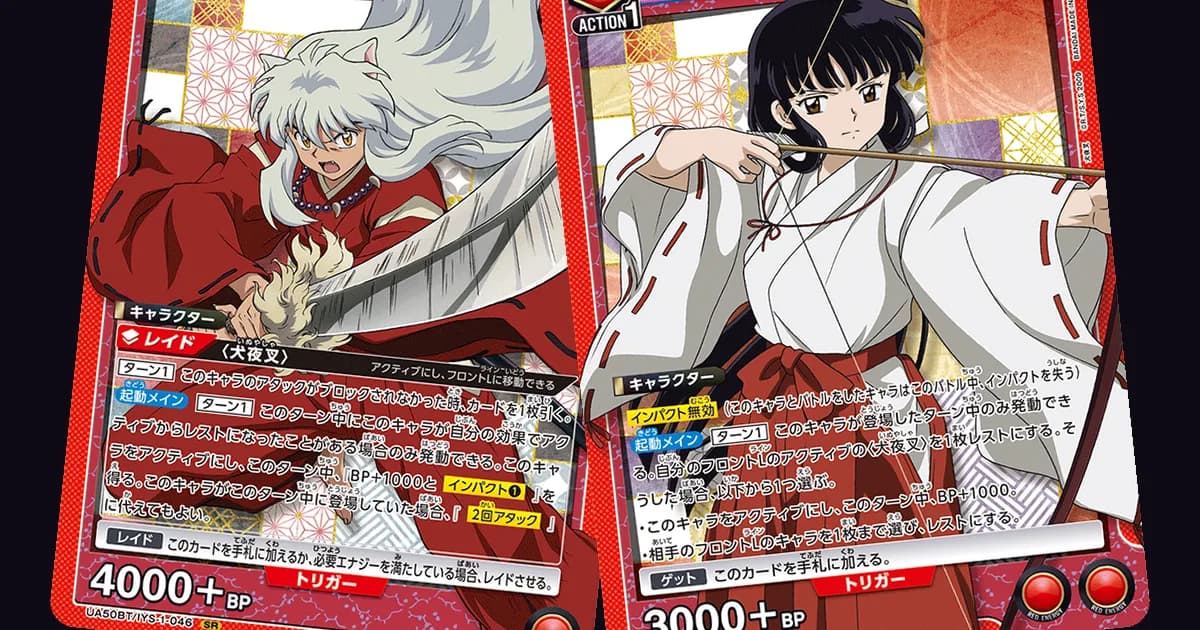
Inuyasha (UA50BT/IYS-1-046, SR) costs 4 Red energy and 1 AP for 4000+ BP. 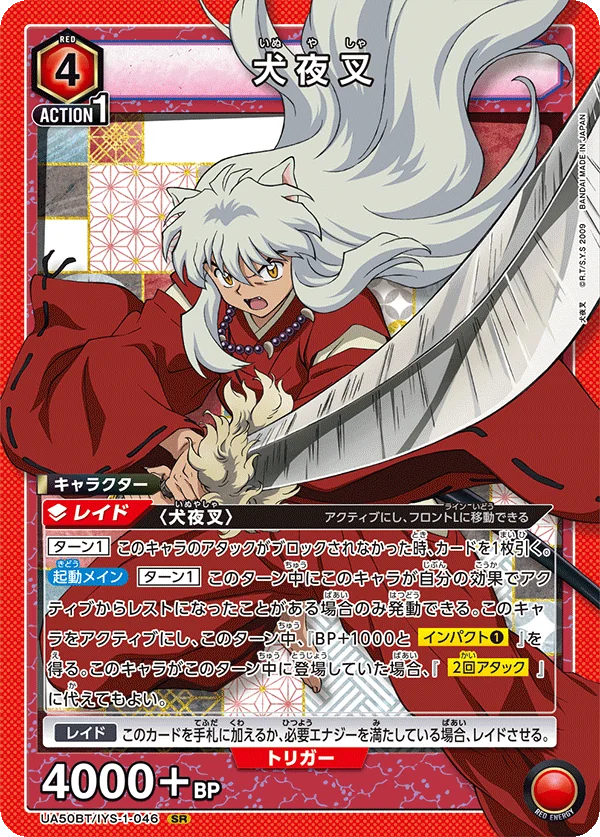 UA50BT-046UA50BT-046Shop on TCGplayer His printed effect: [Raid] switches him to active and lets him move to the front line. Once per turn, when he attacks and isn't blocked, you draw a card. His Activate: Main ability only works on a turn he was switched from active to resting by one of your own abilities, at which point you can switch him back to active for 1000 BP and Impact (1), or Double Attack instead if he was played that same turn.
That last clause is the whole deck in one sentence: Inuyasha needs something else to rest him first before his best mode turns on. He doesn't do it himself.
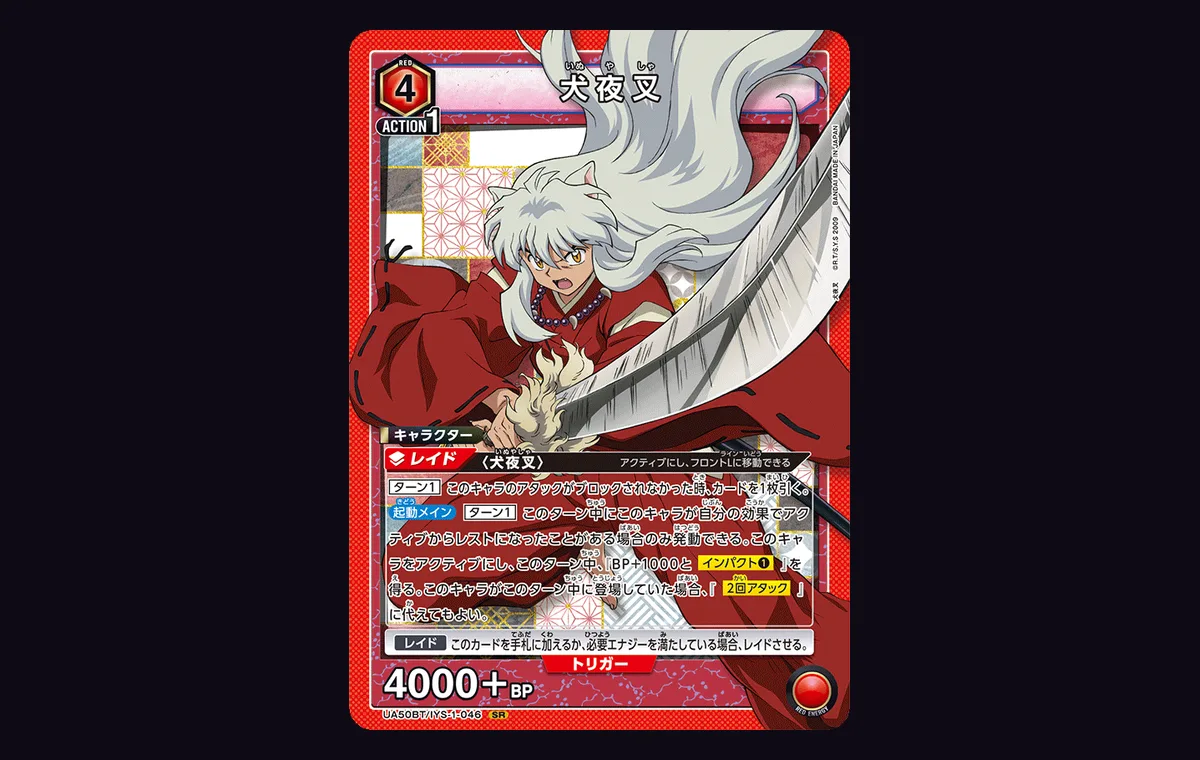 Inuyasha's printed card text: the Activate: Main ability only works on a turn he was rested by one of your own effects.
The rest-and-reactivate loop: Kikyo and Kagome
Kikyo (UA50BT/IYS-1-049, SR, 3 Red energy, 1 AP, 3000+ BP) 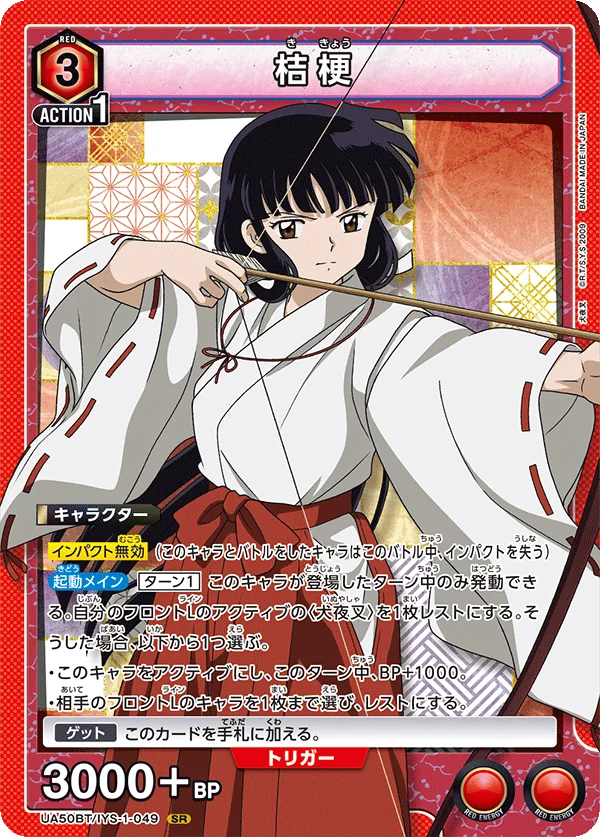 UA50BT-049UA50BT-049Shop on TCGplayer is a [Nullify Impact] character whose Activate: Main ability only fires on the turn she was played. It rests one active Inuyasha on your front line, and if you do, you choose between switching Kikyo to active for 1000 BP, or resting an opposing front-line character outright. Her trigger effect is [Get], adding her straight to your hand when flipped from Life.
Kagome Higurashi 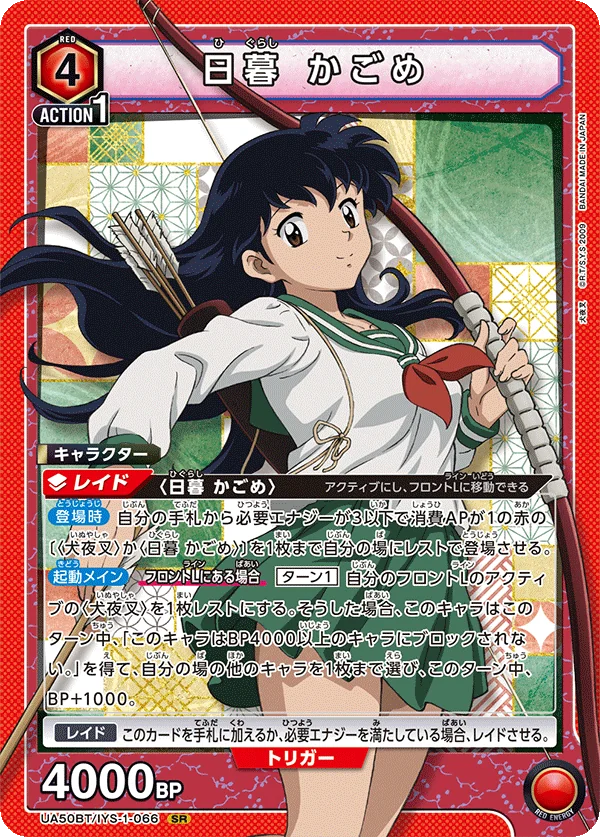 UA50BT-066UA50BT-066Shop on TCGplayer (UA50BT/IYS-1-066, SR, 4 Red energy, 1 AP, 4000 BP) does two things. Her When Played effect plays a cheap Red Inuyasha- or Kagome-family card (3 energy or less, 1 AP) from hand to the field resting, which is the deck's actual cost discount. Once she's on the front line, her Activate: Main ability, once per turn, rests an active Inuyasha; if you do, she becomes unblockable by anything 4000 BP or higher for the turn, and a second character of your choice gains 1000 BP.
Read those two abilities back to back and the loop is obvious: Kikyo and Kagome both want to rest an active Inuyasha to unlock their own payoff, and Inuyasha wants to be rested by something so his Activate: Main ability comes online. Sequencing who rests him and when is the actual skill test in this deck, not a counter you're spending.
GODEEPER: New to the game entirely? The core rules cover AP, energy, and the Front Line/Energy Line split this deck relies on. Union Arena How to Play: Rules & Turn Flow Explained →
Miroku's removal piece
Miroku 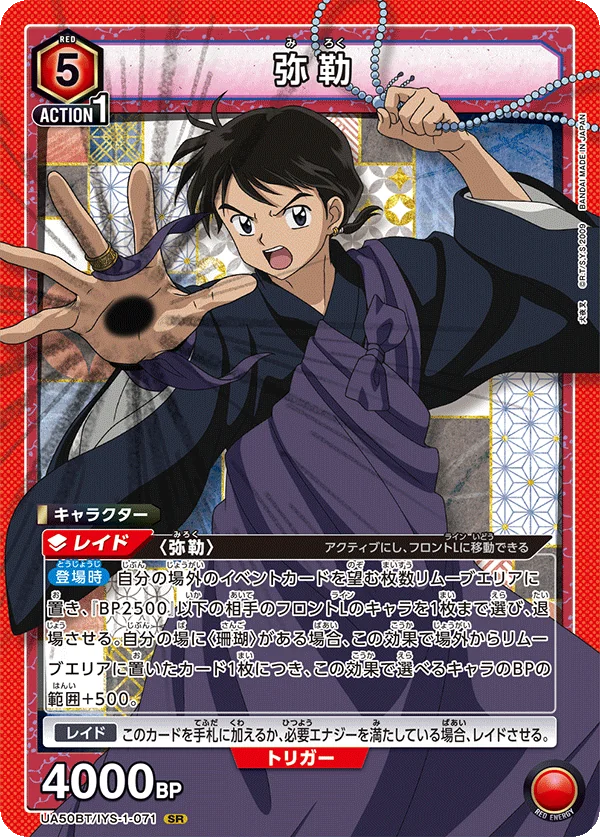 UA50BT-071UA50BT-071Shop on TCGplayer (UA50BT/IYS-1-071, SR, 5 Red energy, 1 AP, 4000 BP) plays a different role: interaction. His When Played effect lets you place any number of Event cards from your sideline into the removal area, then sideline up to one opposing character with 2500 BP or less. If Sango
 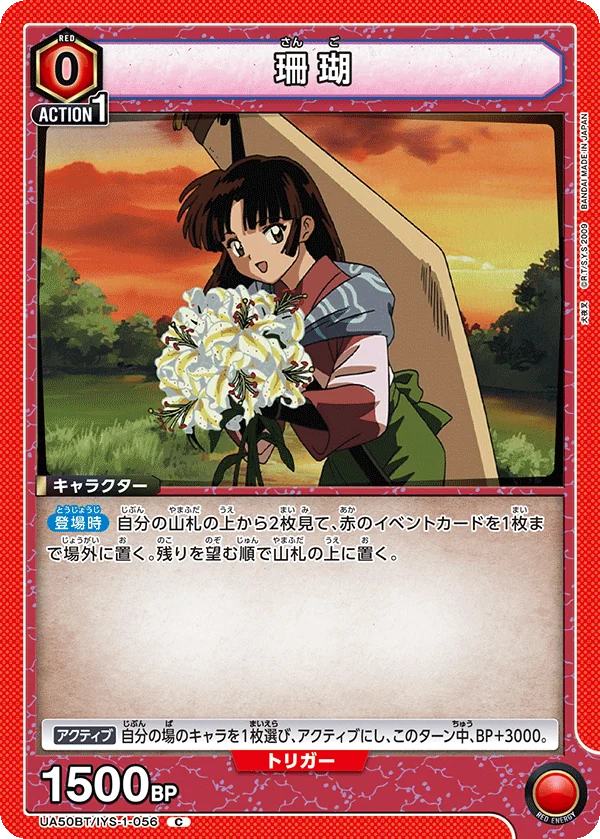 UA50BT-056UA50BT-056Shop on TCGplayer is also on your field, each card placed into removal area this way adds 500 to that BP threshold, so a fuller sideline of spent Events with Sango present can pick off meaningfully bigger targets. Sango herself (UA50BT/IYS-1-056, C, 1 Red energy, 1 AP, 1500 BP) is a cheap early play with a When Played dig for a Red Event card and a separate trigger effect that switches a field character to active and gives it 3000 BP for the turn.
Miroku is your answer to a small blocker or an annoying early character your opponent won't attack into. He costs the most energy of the four SRs, so he tends to come down after your board is already established.
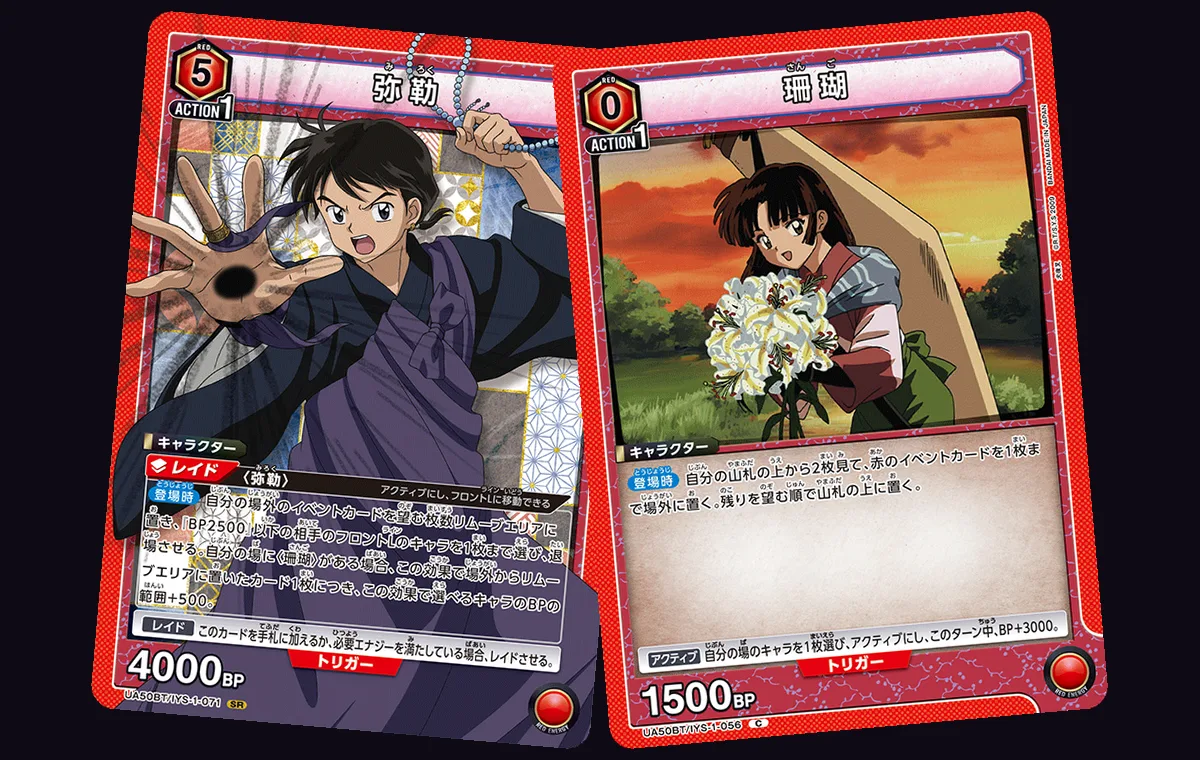 Miroku's removal effect scales with Sango on the field: each Event card placed into removal area adds 500 to the BP threshold he can sideline.
SHOP: Building the Red InuYasha rush deck? Compare current InuYasha listings for Inuyasha, Kagome, Kikyo, and Miroku. Shop TCGplayer →
Step-by-Step: A Sample Turn Sequence
Reading the four SRs together, here's what a clean sequence looks like, built directly from their printed text rather than a hypothetical.
1. Check whether Inuyasha is active or resting before you plan the turn. If he's resting from a prior attack, note that Kikyo and Kagome's abilities both need an active Inuyasha to rest, so this specific turn can't unlock his reactivation yet, wait for him to untap first.
2. Attack with Inuyasha first while he's active. If unblocked, his own ability draws a card. He ends the attack resting, which is exactly the state his Activate: Main ability wants, but that ability only unlocks when he's rested by one of your OWN abilities, not by attacking, so attacking alone doesn't turn it on.
3. Play Kikyo or Kagome on a turn Inuyasha is active, before he attacks, if you want the reactivation loop instead. Kikyo's Activate: Main ability rests him and lets you choose between switching herself to active for 1000 BP or tapping down an opposing blocker. Kagome's front-line ability rests him too, making herself unblockable by 4000+ BP characters and pumping a second character 1000 BP, at the cost of Inuyasha resting before he attacks that turn.
4. Activate Inuyasha's own reactivation ability once he's been rested by an ability, not combat. Switch him back to active for a 5000 BP (1000 BP bonus) attacker with Impact (1), or a Double Attack version if he was just played.
Result: sequencing Kikyo or Kagome's ability to rest Inuyasha, then activating his own reactivation ability, stacks his upgraded attack on top of whatever Kikyo or Kagome's own effect did that turn. That's the real payoff this deck is built to set up, two ability activations working together rather than one card doing everything.
Building around the loop
A workable Red InuYasha shell leans on:
- Inuyasha as the payoff piece: draws cards on unblocked attacks, hits harder once rested and reactivated.
- Kagome as the enabler: discounts your curve early and is the character most likely to be resting Inuyasha on a given turn.
- Kikyo as a flexible answer: either pushes your own tempo or taps down an opposing blocker, and refunds herself to hand off a Life flip.
- Miroku (plus Sango, if you're running her) as the removal package for anything small that's stalling your attacks.
Run copies of the cheap Red commons and uncommons in the set to fill your curve below these four SRs; the official card list confirms 28 Common and 28 Uncommon slots exist in Red plus Purple combined, but this guide only asserts specific text for the cards quoted above. Verify any other specific card's ability directly on Union Arena's official card list before building around it.
GODEEPER: Want the collector side, autograph SRs, pull rates, and where to buy? The buying guide breaks down JP import vs waiting for the EN release. Union Arena InuYasha Buying Guide →
Key Takeaways
- Inuyasha, Kagome, Kikyo, and Miroku are all confirmed Red Character SRs, verified directly against Union Arena's official card list
- Inuyasha draws a card on an unblocked attack and needs to be rested by another effect before his own reactivation ability turns on
- Kikyo and Kagome both key off resting an active Inuyasha, which is the deck's real engine, not a generic counter mechanic
- Miroku (with Sango) is the removal piece for small blockers
- No official archetype name exists. Early third-party results are available, but they are not enough to establish a reliable win rate or official tier
Related Reading
- Union Arena InuYasha Kagome Deck: Support Guide: A deeper look at Kagome's specific role and when to prioritize her.
- Union Arena InuYasha Sesshomaru and Kagome Guide: How the Red and Purple InuYasha decks compare.
- Union Arena Deck Building Guide: Deck construction rules and curve theory that apply to any Union Arena IP.
- Union Arena InuYasha English Release: What to Buy: The broader EN launch picture beyond just this deck.
- Union Arena Raid Mechanic Explained: How the [Raid] ability every InuYasha SR shares actually works.
Frequently Asked Questions
What color is the Inuyasha deck in Union Arena? Red. Inuyasha (UA50BT/IYS-1-046), Kagome Higurashi (066), Kikyo (049), and Miroku (071) are all confirmed Red Character cards per the official card list.
Is there an official "Counter Rush" archetype name for this deck? No official Bandai archetype name exists. The deck plays aggressively because of what the card text does, not a published label.
How does Inuyasha's rest-and-reactivate engine work? He needs another effect to rest him first, then his Activate: Main ability switches him back to active for 1000 BP and Impact (1), or Double Attack if played that turn.
What does Kagome Higurashi do? She discounts your curve on play and, from the front line, rests an active Inuyasha to become unblockable by high-BP characters while pumping a second character.
Does the Union Arena InuYasha starter deck exist? No starter or trial deck is listed on the current official product page. UA50BT and UE23BT are booster products, and the English UE23BT release date was August 14, 2026.
Is there tournament data yet for this deck? Yes, but only a limited early sample. TCG Contender currently lists ten entries for IYS - Inuyasha, including a third-place finish in a 10-player local event on September 8, 2026. Treat that as third-party evidence, not a definitive win rate or official Championship tier.
References
- Union Arena official card list: source for all card text quoted in this guide
- Union Arena InuYasha booster pack product page: official set details
- Union Arena top-placing decks: current Championship results, checked for InuYasha placements
- TCG Contender IYS - Inuyasha profile: current third-party deck tier and tournament sample
Was this guide helpful?
Cards in this article
About the author
KT
Competitive TCG Analyst
Competitive One Piece TCG player and deck builder with 3 years of tournament experience. Covers meta analysis, tier lists, and leader builds.
- 3 years competitive OPTCG tournament experience
- Regional top 8 finisher
- Deck builder and meta analyst
- Covers every set since OP-01
Keep reading
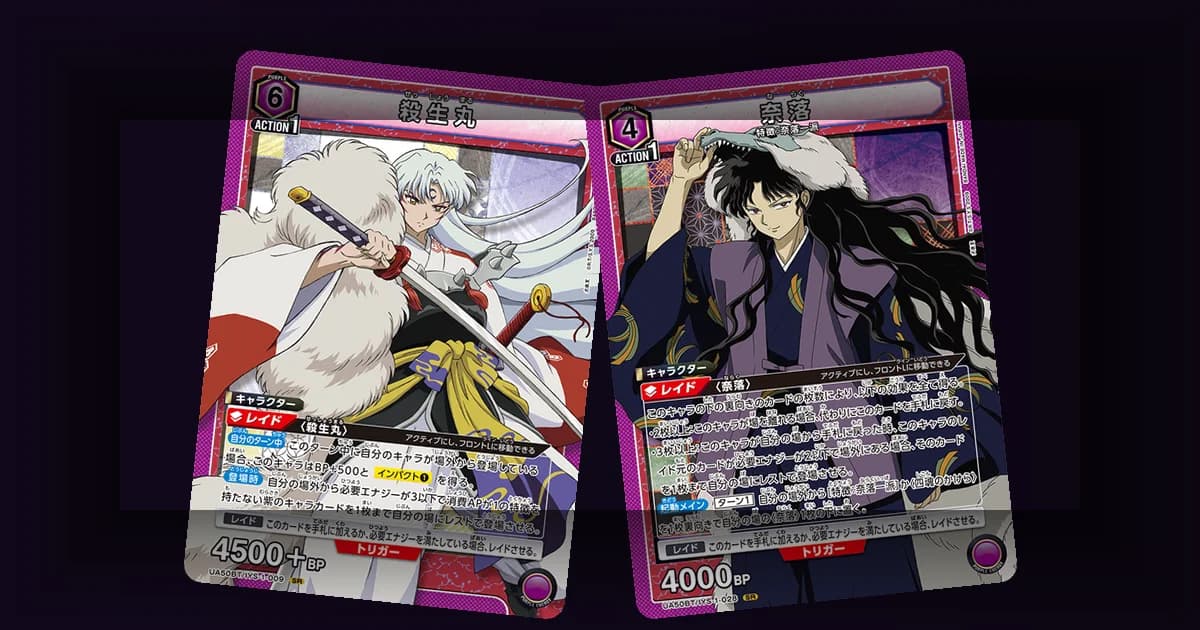
Union Arena InuYasha Sesshomaru Deck Guide: Purple Build
Guides · 10 min
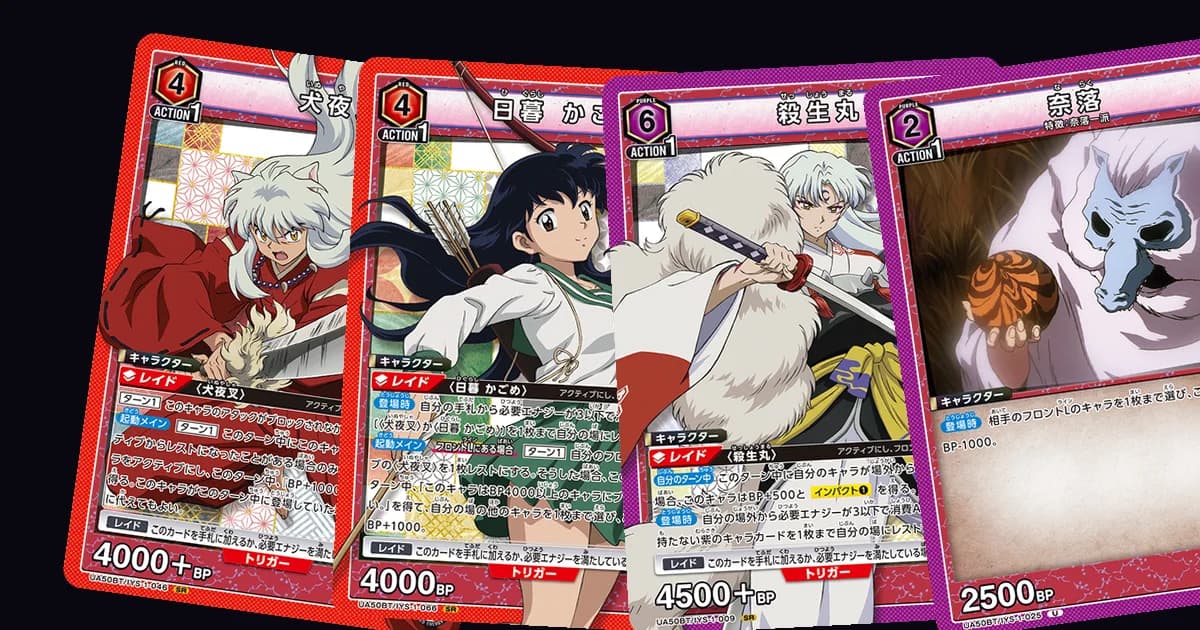
Union Arena InuYasha EN Tier List: September 2026 Evidence
Guides · 11 min
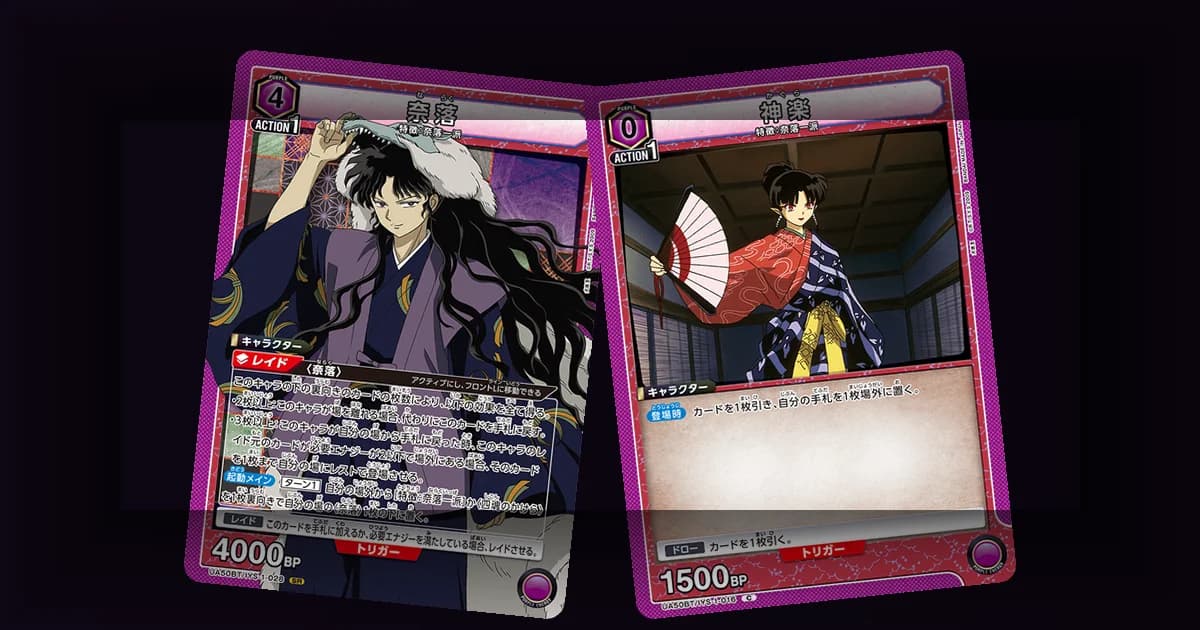
Union Arena InuYasha Naraku Deck: Resilience Guide 2026
Guides · 9 min
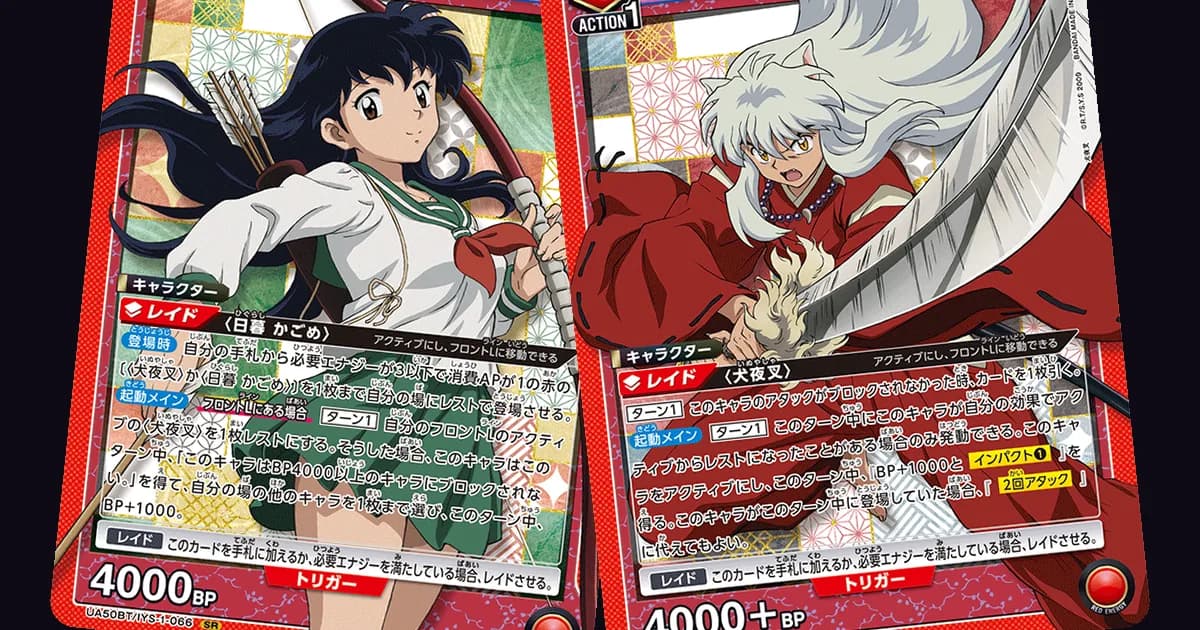
Union Arena Kagome Higurashi: Card Text and Deck Role
Guides · 8 min
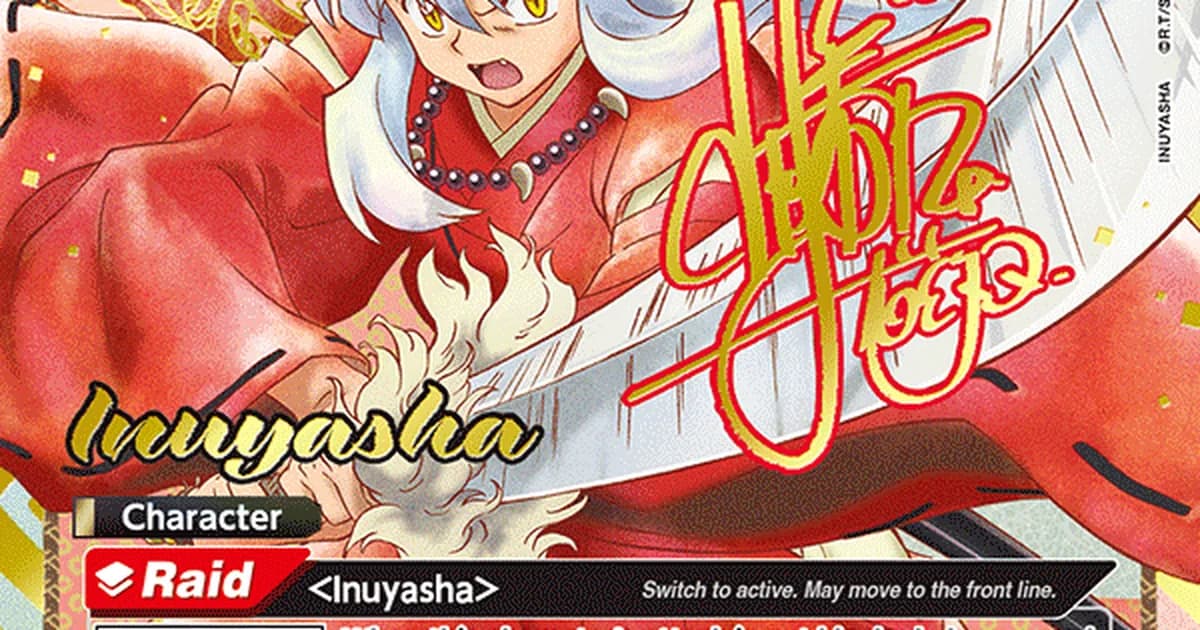
Union Arena InuYasha EN Singles vs Sealed: Full Math
Guides · 7 min
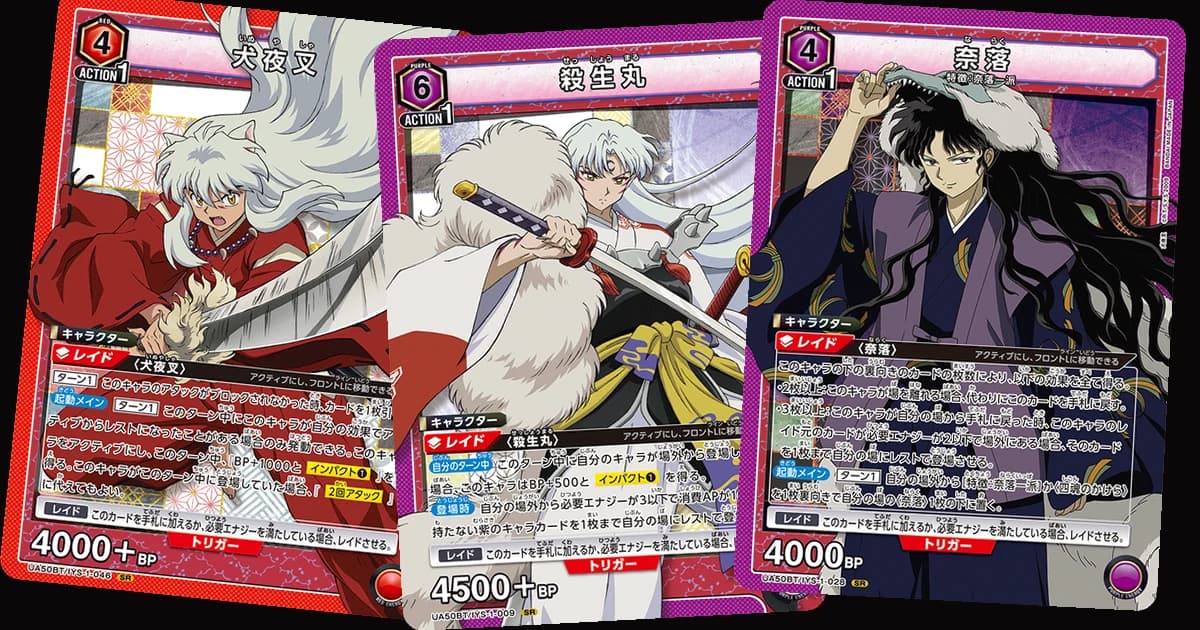
Union Arena InuYasha vs Yellow Evangelion Matchup Prep
Guides · 10 min
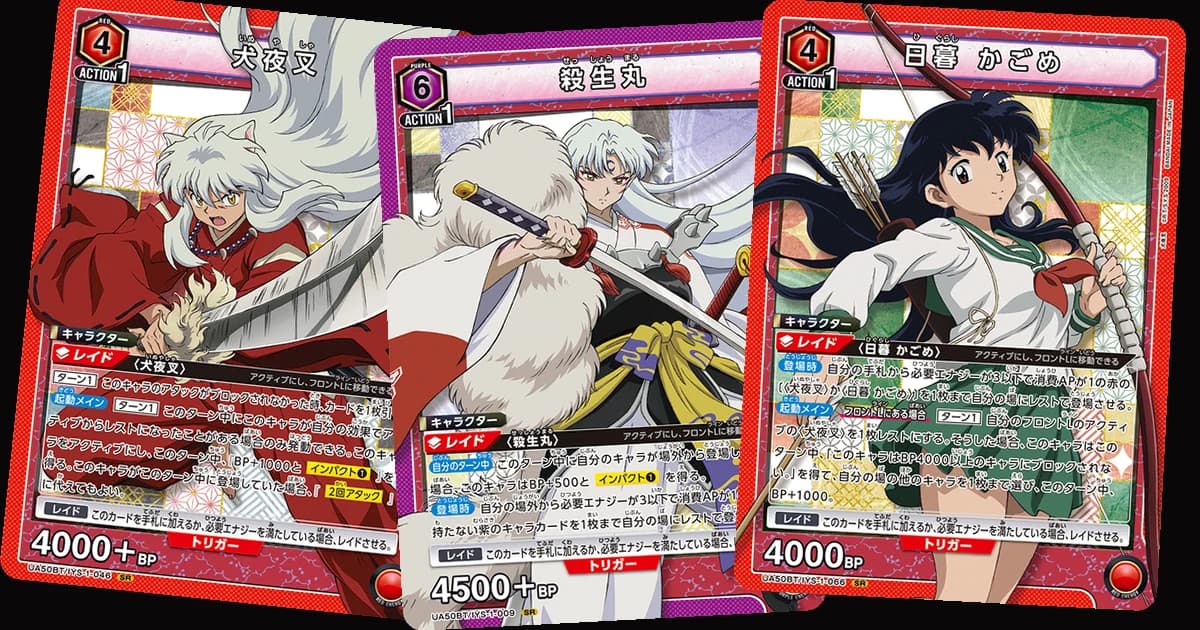
Union Arena InuYasha EN Launch: What to Buy After Release
Guides · 8 min
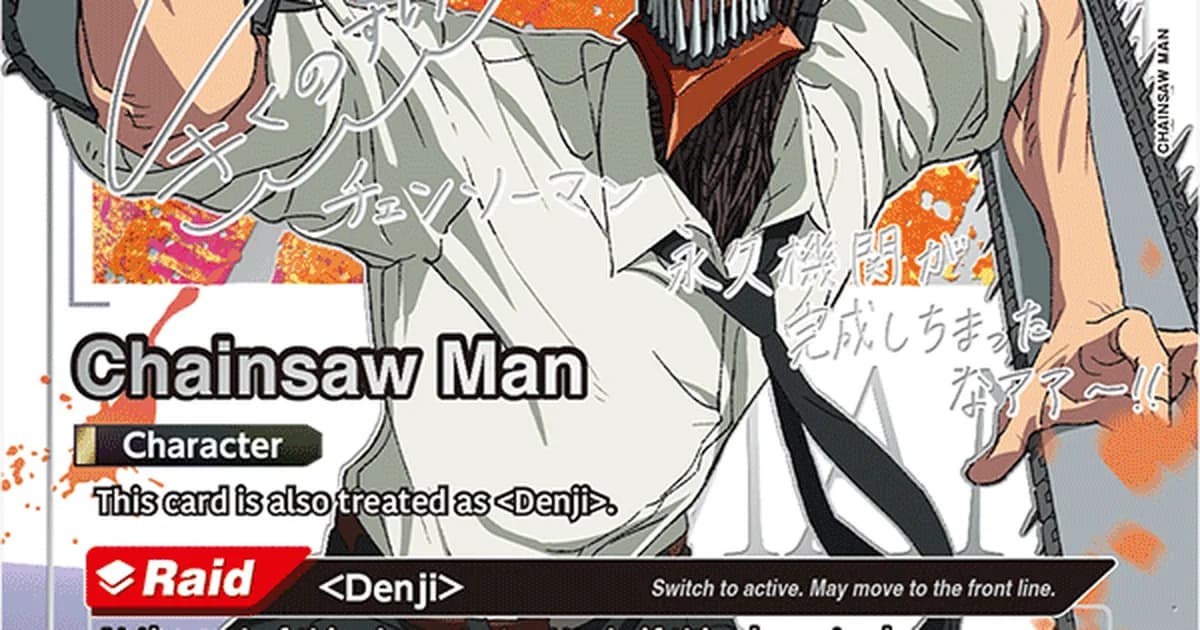
Union Arena Chainsaw Man EN Release: July 31 Specs
Guides · 8 min
Disclaimer
This article is published for informational and entertainment purposes. It does not constitute professional financial, legal, or technical advice. Game performance, online services, patch schedules, and store listings change. Verify critical details (pricing, system requirements, regional availability) with publishers and storefronts before you buy. Affiliate links, where present, help support our editorial work and are labelled in our affiliate disclosure.