Loading…
Loading…
Shonen TCG · Guides
Union Arena InuYasha EN launch update: corrected product facts, buying priorities after release, and the current gap in official tournament data.
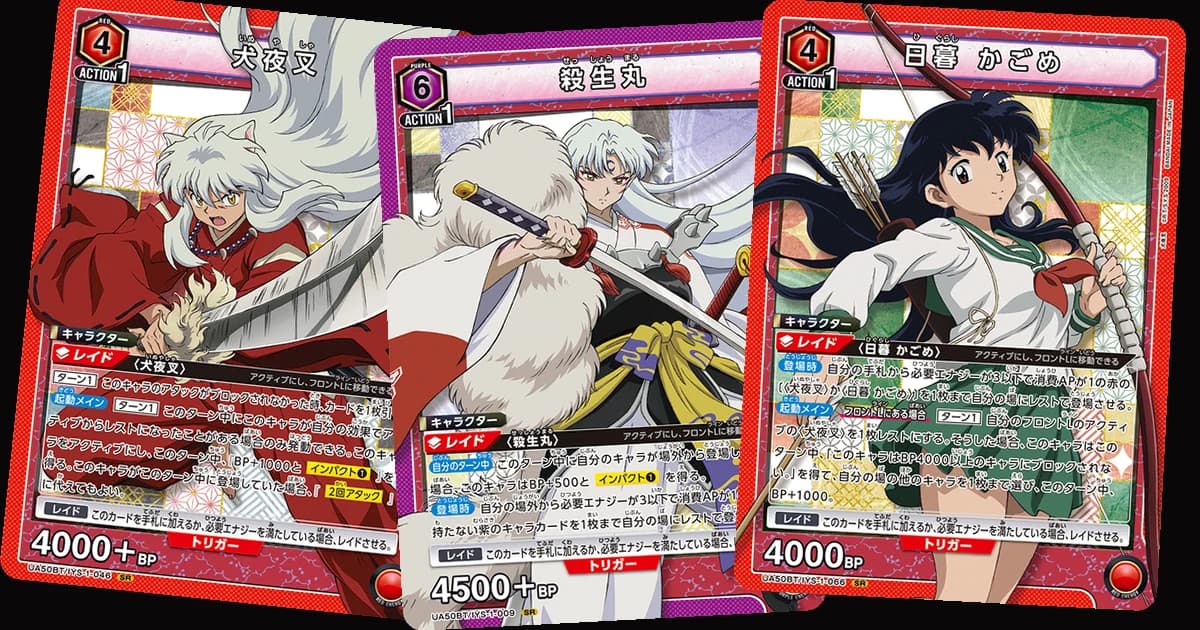
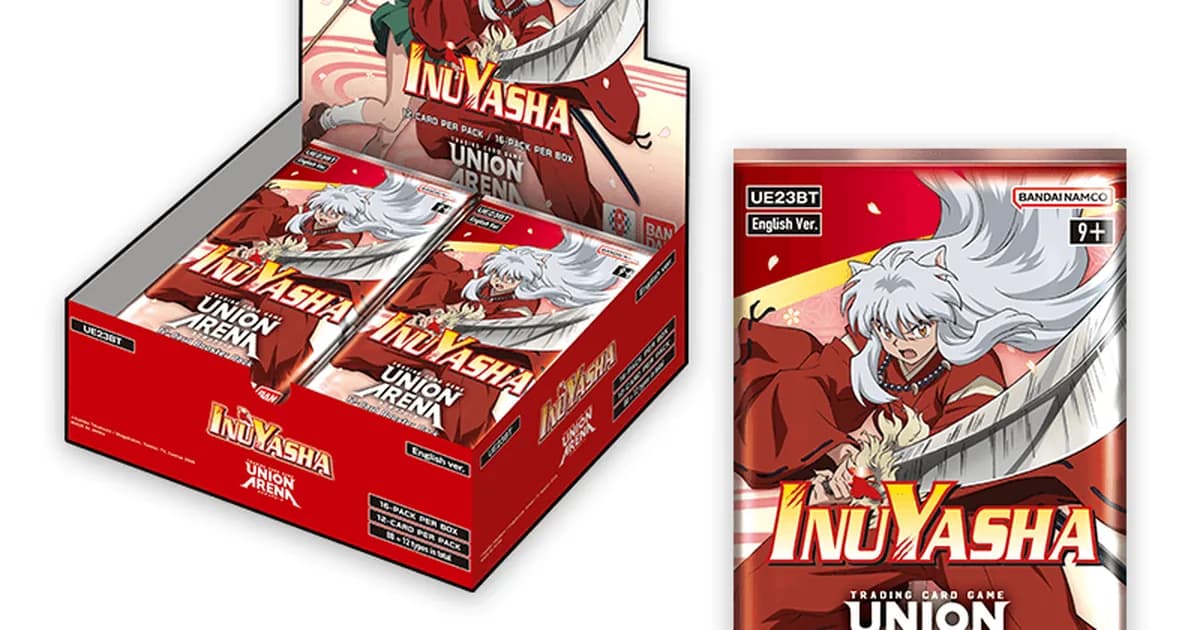
Union Arena InuYasha EN launch is now a post-release buying question. Bandai's official UE23BT product page confirms the August 14, 2026 English release, $4.99 pack MSRP, 12 cards per pack, and 16 packs per display. The launch event ended August 20, and the current official top-placing page still does not show an InuYasha regional entry, so buying advice should separate product facts from early meta expectations.
TL;DR: UE23BT is already released. The official product page lists $4.99 per pack, 12 cards per pack, 16 packs per display, 80 card types, and 12 Action Point card types. A display is 192 cards at the listed pack configuration, before duplicates. Buy sealed for the opening and collection experience; buy singles for a specific deck, and treat Red InuYasha's A+ community placement as an early signal rather than an official result.
If you are buying after release, start by choosing your goal. One display gives you a broad sealed sample of UE23BT, but duplicates mean it is not a guaranteed deck. Singles are the more controlled route once you know which cards your list needs. For competitive testing, check Bandai's official card list first and compare the current local and online supply before paying a premium.
Bandai's official UE23BT product page is the authority for the release facts:
| Product fact | Official information |
|---|---|
| English set | INUYASHA [UE23BT] |
| Release date | August 14, 2026 |
| Pack MSRP | $4.99 |
| Cards per pack | 12 |
| Packs per display | 16 |
| Card types | 80 plus 12 Action Point types |
| Release event | August 14 through August 20, 2026 |
The 16-pack configuration works out to 192 cards per display before duplicates. The $79.84 figure sometimes used for a display is arithmetic based on 16 packs at the listed $4.99 MSRP, not a separate display MSRP stated on the product page. Use that distinction when comparing a sealed listing with the official reference price.
The page also says that alt-art cards are included, a limited Action Point card with a serial number is included, and each box includes one of eight box-topper designs. Those features make sealed product relevant to collectors, but they do not make a display an efficient way to assemble a competitive playset.
The old launch copy described packs as containing eight cards and treated the set as an upcoming release. Both points are now obsolete. The English product is available in the current market, and the official specification is 12 cards per pack.
About the author
TCG Collector & Value Analyst
TCG collector and value analyst covering anime card games since 2021. Specializes in pull rates, card values, and market trends across One Piece TCG and Union Arena.
Keep reading
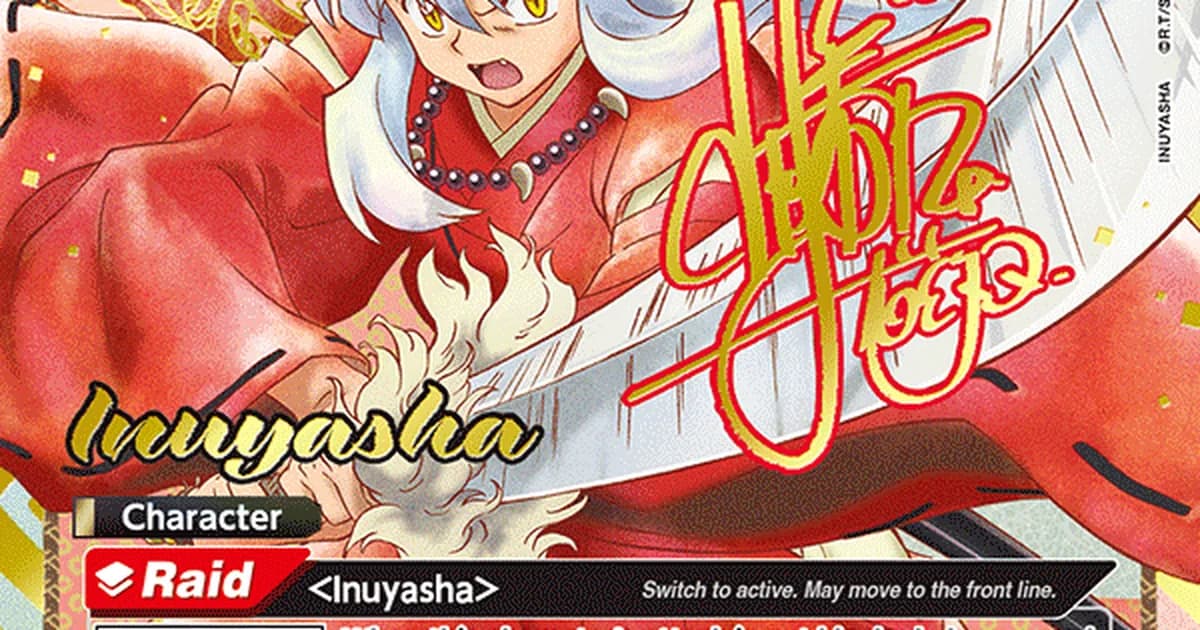
Union Arena InuYasha EN Singles vs Sealed: Full Math
Guides · 7 min
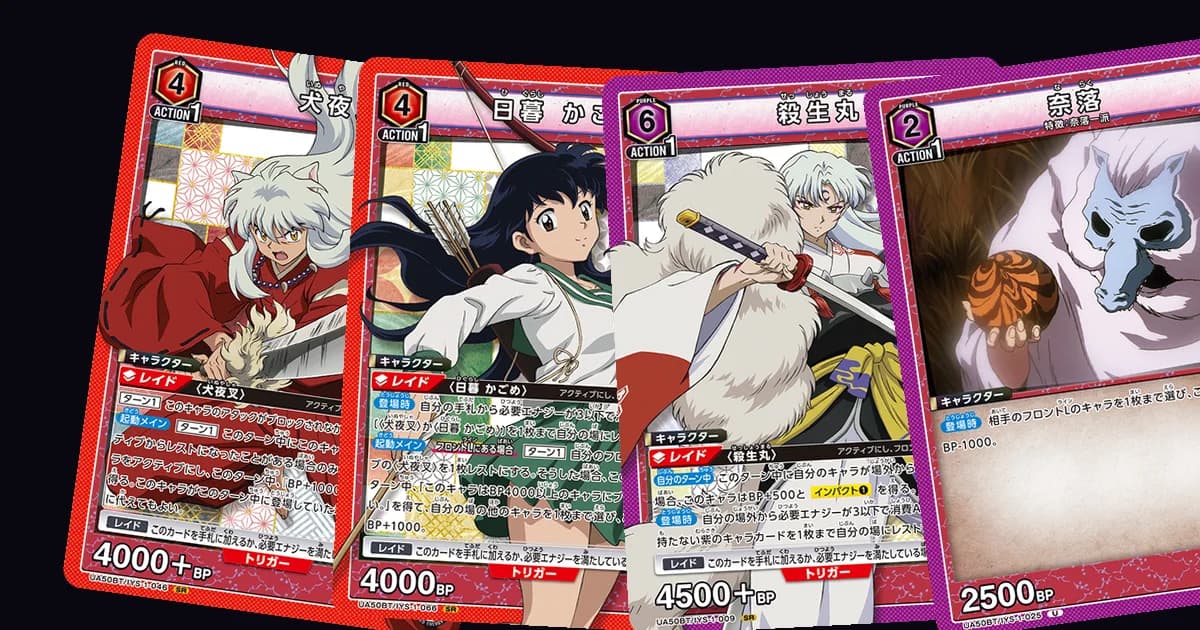
Union Arena InuYasha EN Tier List: September 2026 Evidence
Guides · 11 min
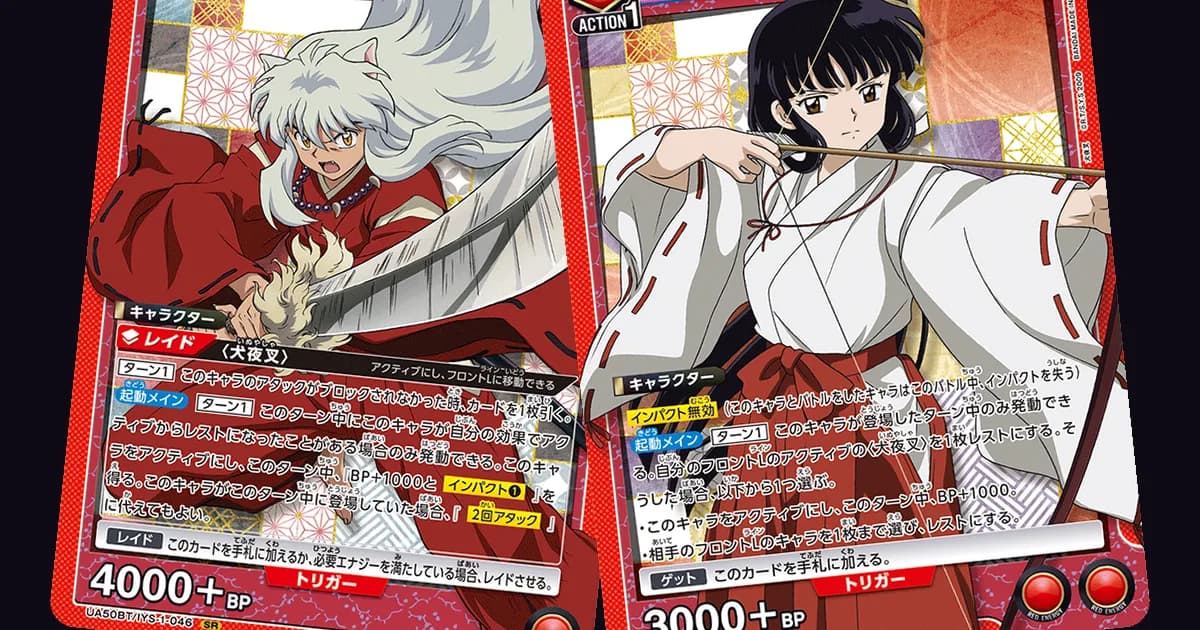
Union Arena InuYasha Red Deck Guide: Inuyasha Tap Synergy
Guides · 10 min
Union Arena InuYasha Sesshomaru Deck Guide: Purple Build
Guides · 10 min
Union Arena InuYasha Naraku Deck: Resilience Guide 2026
Guides · 9 min
Union Arena Kagome Higurashi: Card Text and Deck Role
Guides · 8 min

Union Arena 100 Girlfriends EN: Launch Guide July 2026
Guides · 12 min
Union Arena InuYasha English Release: What to Buy in 2026
Guides · 12 min
Disclaimer
This article is published for informational and entertainment purposes. It does not constitute professional financial, legal, or technical advice. Game performance, online services, patch schedules, and store listings change. Verify critical details (pricing, system requirements, regional availability) with publishers and storefronts before you buy. Affiliate links, where present, help support our editorial work and are labelled in our affiliate disclosure.
The official UE23BT card list currently returns the English set's card pool. Use it to verify the exact name, color, card type, and printed text before buying singles. This is especially important when a Japanese list, an English translation, and a community deck label use slightly different naming.
For competitive context, Bandai's Top-Placing Decks page currently lists titles such as Solo Leveling, Sakamoto Days, Evangelion, Jujutsu Kaisen, Kenshin, Bleach, Kagurabachi, and Tokyo Ghoul. InuYasha is not shown in the current Championship title filter or visible top-placing entries checked for this update. That does not prove nobody has won a local event with the set; it means the official Championship archive does not yet provide a regional placement to use as a meta result.
The community picture is further along. Joseph Writer Anderson's September 14 English tier list places Red InuYasha in A+. That is useful evidence that the shell is being considered competitively relevant, but it is still a community assessment. It is not a Bandai win rate, a guaranteed matchup spread, or proof that every InuYasha build belongs in A+.
Keep the deck labels separate. Red InuYasha is one community label. Other InuYasha builds and color combinations should be checked against the official card list and the exact deck list being discussed. Do not transfer Red InuYasha's placement to every Sesshomaru, Naraku, or support-heavy build without a source.
Choose the purchase path that matches your goal.
One display for learning and collecting. A single display gives a new player 16 sealed packs and the chance to see the set's character and card pool firsthand. It does not guarantee a complete list, a specific Action Point card, a full set of box toppers, or the exact cards needed for a competitive shell. Treat it as an opening experience and a way to find cards to trade.
Singles for a known deck. If you already have a tested list, singles are more predictable than opening displays. Verify every card in the official card list, then compare live seller listings, shipping, condition, and language before buying. Avoid using a pre-release price forecast as a substitute for the current market.
Sealed product for collecting. The serial Action Point detail, alt-art cards, and box-topper designs create a legitimate collector lane. Check that a listing identifies UE23BT, not the Japanese UA50BT product, and confirm whether the seller is offering a sealed display, loose packs, or individual cards.
A local event for learning the game. The official InuYasha Release Event used Five Pack Battle Rules and ended August 20. It is no longer a current purchase route, but a local Union Arena store tournament can still be a better way to learn than buying a large amount of sealed product before you know your preferred play pattern.
The Union Arena deck-building guide covers the energy, AP, title-code, and deck-construction fundamentals that matter before you order singles. For the sealed-versus-singles decision, the InuYasha singles vs sealed guide is the better set-specific comparison.
Use the community placement as a starting filter, not as a purchase order. The current InuYasha tier list can show which shells are being discussed, but it cannot tell you whether a particular local store has the cards or whether a deck fits your experience.
Next, open the official card list and write down the exact cards your chosen list requires. Separate cards that are essential four-ofs from flexible support. Then compare the cost of those singles with the amount of sealed product you would need to open to see the same cards. If the list depends on a small number of high-rarity cards, singles usually give you better control.
Finally, test before committing to a second display or a full playset. A community A+ label means the shell is worth testing. It does not mean the list is easy to pilot, that its cards are cheap, or that it has an official regional record. Results, availability, and prices will change as more English events are posted.
Pre-release advice about waiting for singles to settle should not be treated as a current price forecast. The set has released, the release event has ended, and current listings are the only responsible basis for a purchase decision. If you are collecting, sealed product may still be the point. If you are playing, compare a real deck list and live singles instead.
The same applies to card text. Do not rely on an old article's description of Naraku, Inuyasha, Kagome, Sesshomaru, or any other card when the official card list is available. Read the printed English text, check the exact card number, and verify that the listing matches UE23BT before paying.
When did the English set release?
Bandai lists August 14, 2026 for UE23BT, with a $4.99 MSRP per pack and 12 cards per pack. The product page lists 16 packs per display. The official release event ran August 14 through August 20, so both the retail launch date and sealed event window are historical now.
How many cards are in a display?
The official configuration is 12 cards per pack and 16 packs per display, or 192 cards before duplicates. The product page lists 80 card types plus 12 Action Point card types. Alt-art cards, box toppers, and random contents mean a display is not a guaranteed complete set.
Is there an InuYasha starter deck?
The official UE23BT page checked here lists the booster product and does not list a dedicated InuYasha starter deck. New players should plan around sealed packs, local play, borrowed cards, or singles rather than assuming a ready-to-play InuYasha starter is available.
Should I buy sealed product or singles?
Buy sealed if you value opening packs, collecting, trading, or learning the set through a local group. Buy singles if you already know your deck list and want predictable access to specific cards. Compare live prices, shipping, and condition because the market can move after release.
What is the current meta status?
Joseph Writer Anderson's September 14 community tier list places Red InuYasha in A+. Bandai's current Top-Placing Decks page does not show an InuYasha regional entry. That combination supports testing, but it is not an official win rate or guarantee that every InuYasha build performs equally.
When was the release event?
Bandai listed the English release event for August 14 through August 20, 2026, using Five Pack Battle Rules at participating stores. Players applied through BANDAI TCG+. The event is ended, so check current local Union Arena listings for regular tournaments instead.
Where should I verify card text?
Use Bandai's official UE23BT card list for names, colors, card types, card numbers, and printed effects. Community lists and Japanese translations can help with discovery, but they should not replace the official English text when you are buying expensive singles.
Related
One Piece TCG Budget Decks: Current Lists Under $100
18 min read
OP-18 Saint Gunko: Purple-Black Leader Text Explained
6 min read
Lorcana Great Hunny Rescue: Contents and Release Date
6 min read
OP18 Franky Leader: Stage Counters and a Free Play Effect
6 min read
Best One Piece TCG Decks Right Now: Current OP-17 Meta
16 min read

