

Shonen TCG · Guides
Union Arena InuYasha EN Tier List: September 2026 Evidence
Union Arena InuYasha EN tier list evidence: official Red and Purple shells, one small Rare Battle result, and the limits of the current data.
An honest Union Arena InuYasha EN tier list needs results, not guesses. I checked Bandai's current English product, card, recommended-deck, and top-placing pages on September 16, 2026, then cross-checked the latest local event I could verify. The result is a useful card read, but not a defensible Red-versus-Purple ranking yet.
TL;DR: UE23BT released on August 14, 2026. Bandai's recommended-deck page shows Red and Purple InuYasha shells, while its current top-placing archive shows no InuYasha entry. A September 10 Rare Battle did have six players and a 3-0 winner, but it recorded no decklist or match details. That is a starting data point, not an S-tier result.
Union Arena InuYasha EN tier list: what the evidence supports (quick answer)
There is no evidence-based ranking to publish yet. The official top-placing archive does not currently show an InuYasha result, and the one recent local result I could verify was a six-player Rare Battle without a recorded decklist. Bandai's Red and Purple recommendations are useful deckbuilding references, but they are not competitive placements.
The distinction matters because a tier list needs more than a list of appealing effects. It needs a sample of completed events, identifiable lists, and enough rounds to compare a shell with the rest of the format. The September 10 event at Andyseous Odyssey Colosseum in Dallas, listed by UA Homies, had six players and three rounds. TLT|JEGOS finished first at 3-0, but the event page reports no identified decks or match records. We can record the finish; we cannot responsibly attach it to Red, Purple, or a specific card package.
Here is the current evidence in one view:
| Source | What it supports | What it does not prove |
|---|---|---|
| Bandai recommended decks by title | Red and Purple InuYasha starting shells | A tier, win rate, or matchup spread |
| Bandai top-placing archive | No InuYasha entry is currently shown | That no local player has tested the set |
| UA Homies, September 10 | Six players, three rounds, UE23BT Rare Battle, 3-0 winner | Which color or list won |
That leaves a clear editorial line. This page maps the confirmed product and the most important card patterns, while the tier label stays open until event data is detailed enough to support one.
What is confirmed about the UE23BT release
The official UE23BT product page lists the English InuYasha booster's release date as August 14, 2026, with a $4.99 MSRP. Each pack contains 12 cards, each display contains 16 packs, and each case contains 16 displays. Bandai lists 80 card types plus 12 AP types, with the base breakdown shown as 28 Commons, 28 Uncommons, 12 Rares, and 12 Super Rares. The product page also notes alt-art versions, voice-cast autograph cards, serial-numbered AP cards, and eight box-topper designs.
The official English card-list search currently displays 117 results for the product. That number should not be read as 117 base card types: the product page's 80 card types plus 12 AP types and the card-list result count reflect different ways of displaying variants and product entries. For deck construction, the official product total is the useful baseline. For collecting, the live card-list page is the better place to check the current variants.
Union Arena's standard construction rules still matter for the test plan. A deck contains 50 cards, can include up to four copies of a card number, and uses one IP. That means the interesting Red and Purple question is not whether both colors can appear in an InuYasha deck. It is whether the card pool gives a mixed list enough consistency to justify the energy curve and the support requirements of each route.
The most complete roster is in the site's Union Arena InuYasha confirmed card list, but that page should be read alongside the live English card list for printing and variant checks.
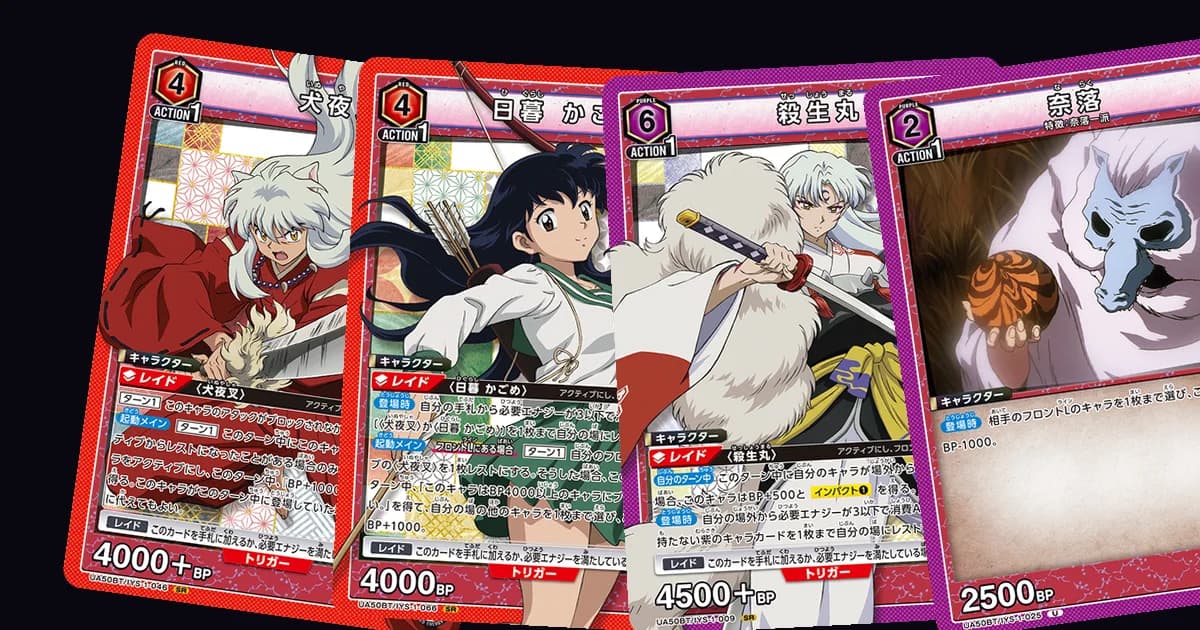
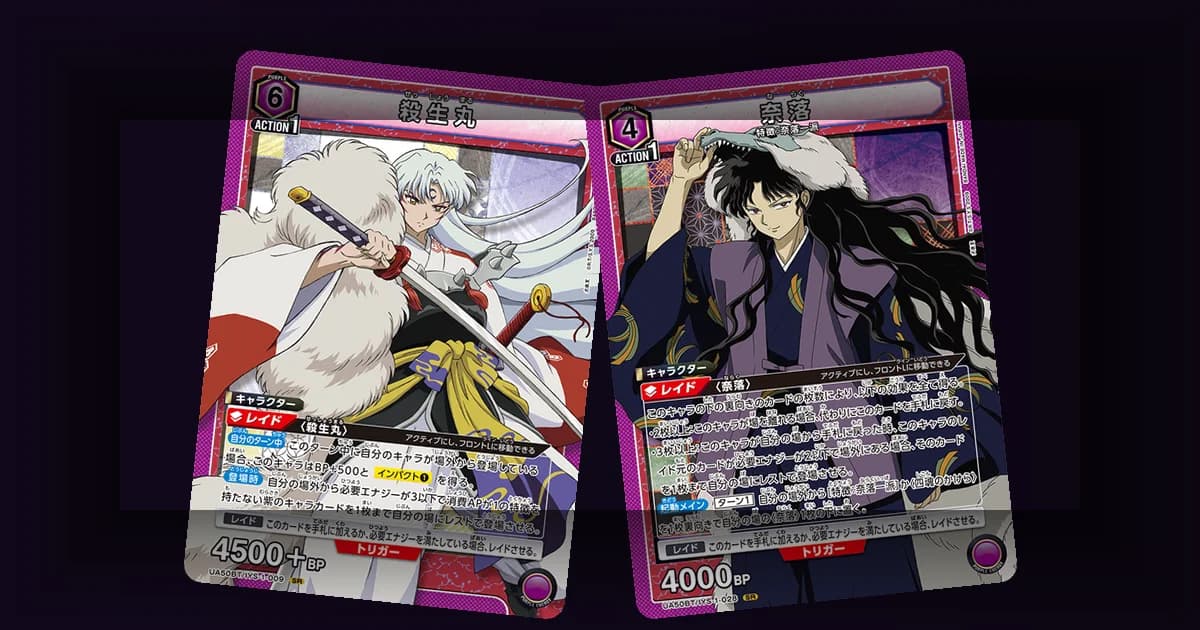
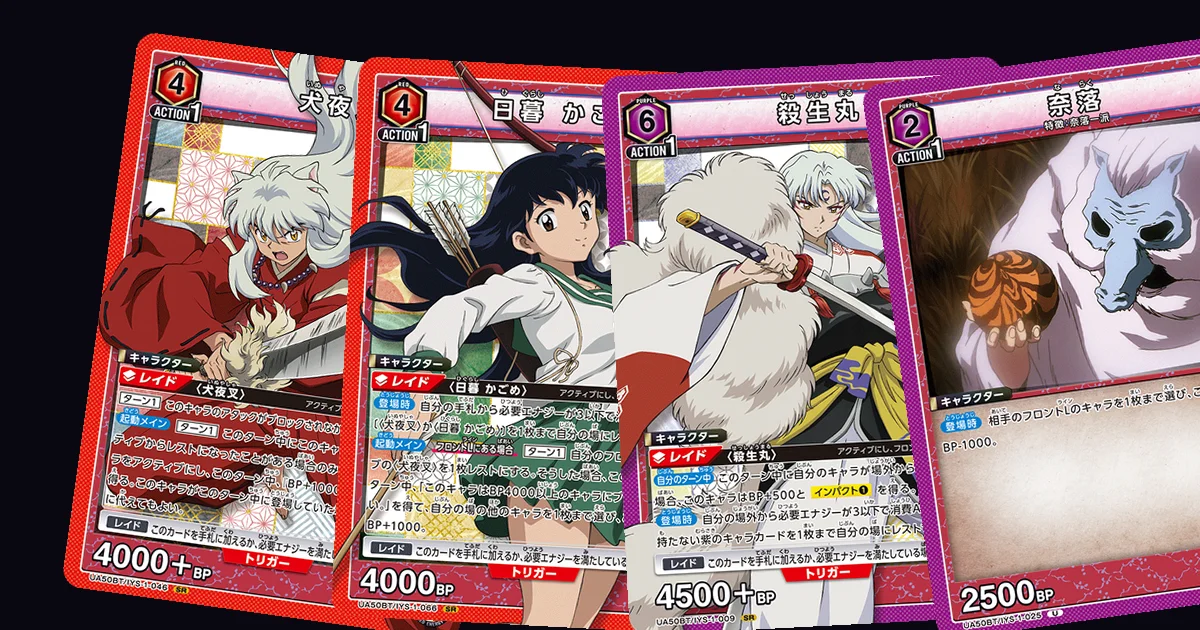 The hero image is a Japanese UA50BT sample-card collage of the four named characters. It illustrates the card subjects, not English printings or tournament performance.
GODEEPER: Need the full roster before testing a list? Union Arena InuYasha Card List: All 27 Confirmed Names →
Union Arena InuYasha EN tier list: the Red route
The Red route has the clearest pressure pattern in the confirmed cards. Inuyasha rewards an unblocked attack with a draw, while Kagome can put a small Red Inuyasha or Kagome character from hand onto the field and turn a resting Inuyasha into an attack-opening effect. That looks like a tempo shell to test, not evidence that Red belongs in a top tier.
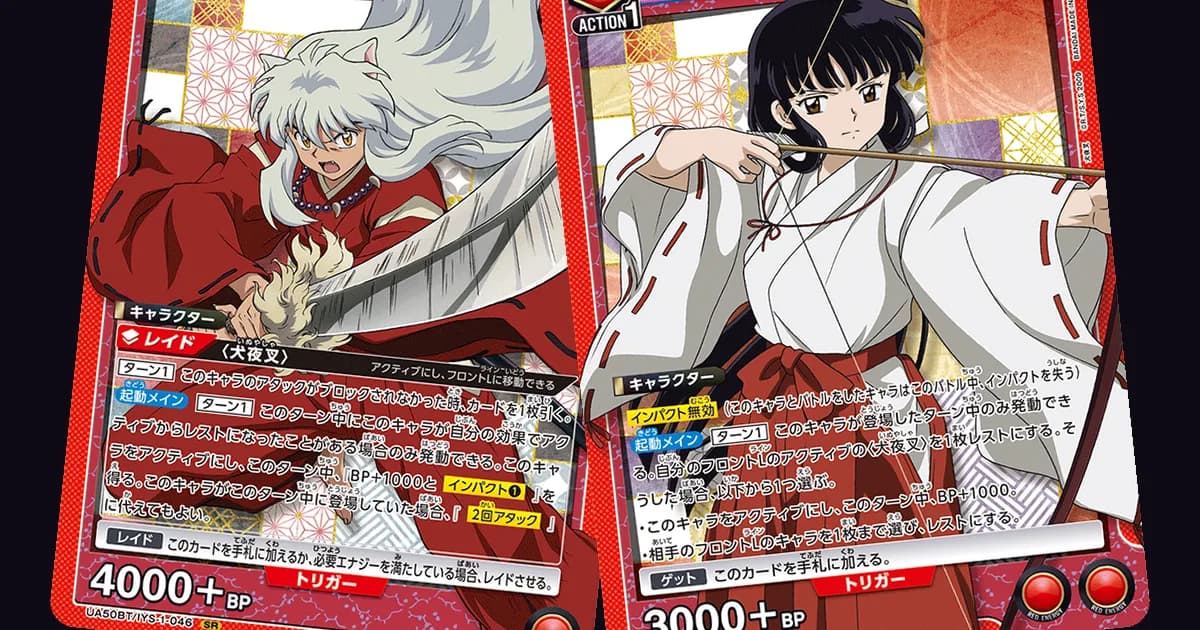
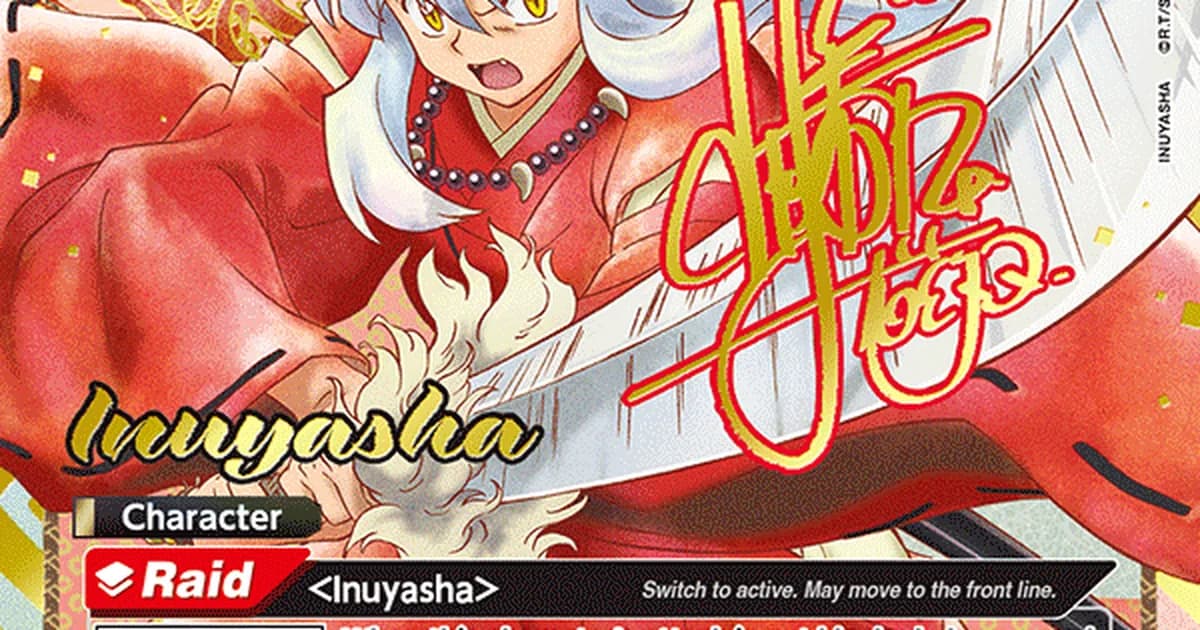
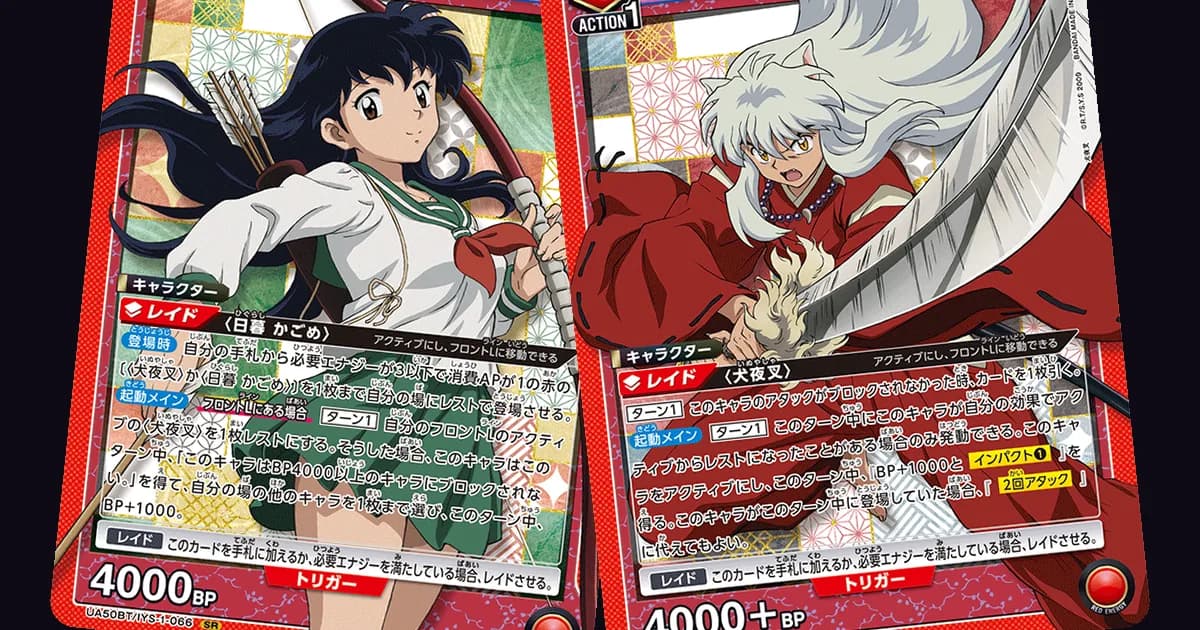
Inuyasha, UE23BT/IYS-1-046, costs 4 Red energy and has 4000-plus BP with Raid. Its attack trigger draws one card when the attack is not blocked. Its activated effect has a specific setup requirement: after one of your effects switches it from Active to Rested, it can switch back and gain a temporary power and Impact boost, or gain Double Attack when the card was played that turn. The card therefore asks you to plan the order of your effects. It is not simply a free extra attack every turn.
Kagome Higurashi, UE23BT/IYS-1-066, costs 4 Red energy and has 4000 BP. On play, she can play a Red Inuyasha or Kagome card costing up to 3 energy and up to 1 AP from your hand in the Rested position. From the Front Line, her once-per-turn effect rests an Active Inuyasha, then makes Kagome unblockable by characters with 4000 or more BP and gives another character +1000 BP for the turn. That sequence supplies both board development and a way to make the attack step awkward for the opponent.
The attractive part of the route is the way its effects point in the same direction: establish a character, convert Inuyasha's state into pressure, and draw when the opponent declines to block. The missing part is consistency data. We do not yet know how often the list finds its required characters, how it handles early removal, or whether a mixed-color build gives up too much energy stability.
SHOP: Testing an InuYasha Red or Purple shell? Compare current InuYasha listings before buying a full playset. Shop TCGplayer →
Union Arena InuYasha EN tier list: the Purple route
Purple is a slower hypothesis built around the sideline and Naraku's resilience. Sesshomaru pays six energy for a large body and a payoff tied to sideline play, while Naraku rewards you for placing matching trait cards face down beneath him. The text suggests a board-value plan, but no verified tournament sample tells us whether that plan survives the current field.
Sesshomaru, UE23BT/IYS-1-009, costs 6 Purple energy and has 4500-plus BP. If a character was played from your sideline during the turn, his effect gives him +500 BP and Impact 1 for that turn. His play effect can also bring a Purple character costing up to 3 energy and up to 1 AP from the sideline in the Rested position. That makes the sideline a deliberate part of the deck's curve rather than a place to leave discarded cards.
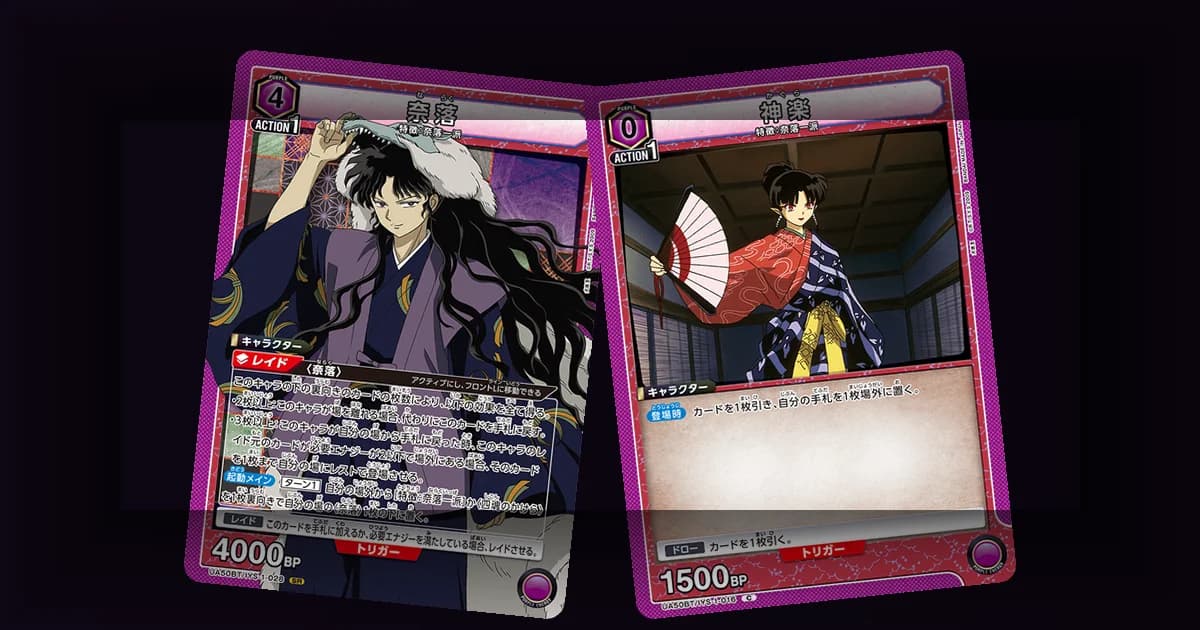
Naraku, UE23BT/IYS-1-028, costs 4 Purple energy and has 4000 BP. His activated effect places a Naraku's Faction or Shikon Jewel Shards 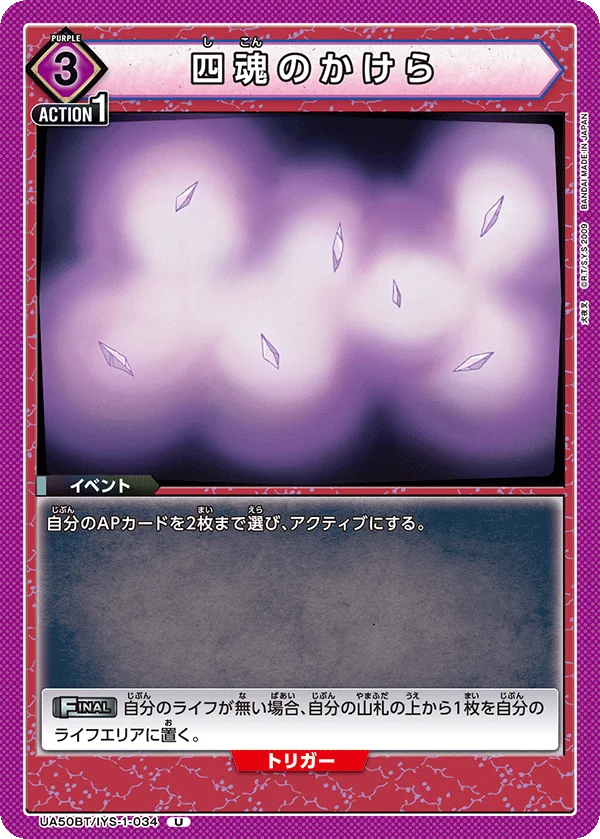 UA50BT-034UA50BT-034Shop on TCGplayer card from the sideline face down beneath him. At two or more cards beneath him, he can return to hand instead of leaving the field when that replacement condition applies. At three or more, his Raid-related effect can put a Base card from the sideline onto the field. The payoff is real, but it requires the list to supply the right traits and protect its setup long enough to matter.
This is why “Shikon Jewel Shards mechanic” is too broad a description. The official Naraku card uses Shikon Jewel Shards as a trait check for one part of its own engine. It does not establish a shared resource system for the whole set. Purple may become the better grind route, or it may be too slow. The cards alone cannot answer that.
GODEEPER: Want to test the energy curve and sideline requirements correctly? Union Arena Deck Building Guide →
How to read the first InuYasha results
The next useful update should report lists and rounds, not just a winner's name. For each event, record the color or colors, leader and key characters, number of players, number of rounds, final record, and whether decklists are public. A six-player local result can show that the set is being played and can reveal a promising list, but it cannot establish a format-wide tier by itself.
The same standard applies to the official archive. When an InuYasha entry appears there, check the event size and the full list before turning the placement into a tier claim. A single top finish may reflect a small field, a strong pilot, a favorable matchup path, or a list that other players cannot reproduce. Several events with identifiable Red and Purple builds would let us compare opening-hand reliability, removal recovery, pressure against large blockers, and the cost of building Naraku's stack.
For now, the safest test plan is to keep the two routes separate for the first few sessions. Start with the official Red and Purple recommendations, log which effects are live on curve, and note where a hand or sideline gets stranded. Then test a mixed list only after you know which color supplies the consistency pieces. That produces useful local evidence without pretending it is a tier list.
Key Takeaways
- No evidence-based InuYasha tier ranking is available in the sources checked on September 16, 2026.
- Bandai's title deck page currently provides Red and Purple recommended shells, not competitive placements.
- The September 10 UA Homies Rare Battle had six players and a 3-0 winner, but no recorded decklist or match data.
- UE23BT released on August 14, 2026, at a listed $4.99 per pack, with 80 card types plus 12 AP types.
- Red testing should focus on Inuyasha's unblocked-attack draw and Kagome's state-changing setup.
- Purple testing should focus on sideline access, Sesshomaru's payoff, and Naraku's face-down stack.
Frequently Asked Questions
Is there a real InuYasha tier list yet?
Not one supported by enough data. Bandai's current top-placing archive has no InuYasha entry, and the latest local result I could verify had six players but no decklist. That is a real event to record, not enough evidence to rank Red or Purple against established Union Arena decks.
When did InuYasha release in English?
The UE23BT English booster released on August 14, 2026. Bandai lists 12 cards per $4.99 pack, 16 packs per display, and 16 displays per case. The product page lists 80 card types plus 12 AP types, along with alternate and special versions.
What colors does the set currently recommend?
Bandai's recommended-deck page shows Red and Purple InuYasha shells. That is a useful starting point for testing, but the page does not provide win rates or tournament tiers. Treat the colors as official deckbuilding routes until event lists show which one, if either, performs better.
What does the Red Inuyasha card actually do?
Inuyasha costs 4 Red energy, has 4000-plus BP and Raid, and draws a card when an attack is not blocked. An own-card effect can also set up a temporary power and Impact boost or Double Attack under specific conditions. The card rewards careful timing, not automatic extra attacks every turn.
What does Naraku's Purple engine need?
Naraku needs matching cards from the sideline to place face down beneath him. Two cards support a return-to-hand replacement effect, while three cards unlock a further Base-card play when he is Raided. Sesshomaru also rewards sideline play, so the route must balance setup pieces with enough normal field presence.
Related Reading
- Union Arena InuYasha EN Buying Guide: Product details and purchase considerations for the English release.
- Union Arena InuYasha Sesshomaru and Kagome Guide: Focused card analysis for two headline characters.
- All Union Arena Sets: Complete EN Release Schedule: The wider English release calendar around UE23BT.
- Union Arena Card Rarities Explained: How the C, U, R, SR, and AP labels fit into collecting.
References
- Bandai official InuYasha UE23BT product page: release date, MSRP, pack configuration, and product rarity totals
- Bandai official English InuYasha card list: live card-list results and product variants
- Bandai recommended decks by title: official Red and Purple InuYasha starting shells
- Bandai official top-placing decks archive: current recorded competitive placements
- UA Homies September 10 InuYasha Rare Battle: six-player local result, standings, and available event metadata
- Bandai official Union Arena rule manual: deck construction and game rules
- Official Inuyasha card page, UE23BT/IYS-1-046: Inuyasha text and stats
- Official Kagome Higurashi card page, UE23BT/IYS-1-066: Kagome text and stats
- Official Sesshomaru card page, UE23BT/IYS-1-009: Sesshomaru text and stats
- Official Naraku card page, UE23BT/IYS-1-028: Naraku text and stats
Cards in this article
About the author
Deck guides and meta
Pen name for the Shonen TCG desk's One Piece TCG deck guides, tier lists and meta reports.
- Lists averaged from public tournament results, sample size stated
- Card text quoted from Bandai's official card list
- Opinions marked as ours, with the reason
Keep reading
Union Arena InuYasha Red Deck Guide: Inuyasha Tap Synergy
Guides · 6 min
Union Arena InuYasha Sesshomaru Deck Guide: Purple Build
Guides · 8 min
Union Arena InuYasha EN Singles vs Sealed: Full Math
Guides · 7 min
Union Arena InuYasha Naraku Deck: Resilience Guide 2026
Guides · 9 min
Union Arena Kagome Higurashi: Card Text and Deck Role
Guides · 8 min
Union Arena InuYasha EN Launch: What to Buy After Release
Guides · 8 min
Union Arena InuYasha vs Yellow Evangelion Matchup Prep
Guides · 10 min
Union Arena Chainsaw Man EN Release: July 31 Specs
Guides · 8 min
Disclaimer
This article is published for informational and entertainment purposes. It does not constitute professional financial, legal, or technical advice. Game performance, online services, patch schedules, and store listings change. Verify critical details (pricing, system requirements, regional availability) with publishers and storefronts before you buy. Affiliate links, where present, help support our editorial work and are labelled in our affiliate disclosure.