

Shonen TCG · Guides
One Piece TCG Green Deck Guide: Rest and Tempo Denial 2026
Reviewing
One Piece TCG
One Piece TCG Green deck guide: Green wins time by taking actions away from the opponent. Rest effects can remove a blocker from combat, strand a DON!! card, or force the opponent to wait before using a key Character again. In the OP-17 snapshot checked on September 18, 2026, Green Dracule Mihawk was the clearest Green result in that dated sample, while the older Green/Blue Monkey.D.Luffy OP16-022 shell sat in a smaller sample. This guide separates exact card text from that pre-ban meta snapshot.
TL;DR: Green's signature plan is temporary denial through resting. Green Dracule Mihawk was the strongest Green entry in the dated OP-17 tracker snapshot, while Blue/Green Luffy asks you to manage an Impel Down condition and Blue support. OP14-020 is legal through October 11, 2026, and banned effective October 12. Build around a clear Leader plan, count blockers and Counters before adding rest Events, and remember that a rested card usually returns active next turn. Updated September 30, 2026: Bandai's September 24 notice makes OP14-020 Dracule Mihawk a Banned Card effective October 12, 2026. Read the One Piece TCG banlist and effective dates before treating this dated Green comparison as a current Standard recommendation.
One Piece TCG Green deck guide: quick answer
Green is the tempo-denial color. Resting an opposing Character turns it sideways, so it normally cannot attack or block for the rest of that turn. Resting an opponent's DON!! card also reduces the resources available for that turn. Unlike a K.O. or a bounce effect, the card stays on the field. The opponent gets it back when the card becomes active again, so Green has to create another awkward decision on the following turn.
The best Green list is not simply the one with the most rest text. The Leader decides what the deck is trying to do. Green Mihawk rewards a large-Character plan and converts a self-rest into active DON!! under a condition. Green/Blue Luffy uses a narrower Impel Down field condition and can combine Green's denial with Blue's bounce and replay tools. Those are different decks even though both use Green cards.
Key Takeaways
- Green usually denies a turn by resting an opposing Character or DON!! rather than removing it.
- Green Dracule Mihawk OP14-020 led the September 2026 OP-17 tracker snapshot, but that ranking is a third-party sample and the Leader is banned effective October 12, not a post-ban Standard recommendation.
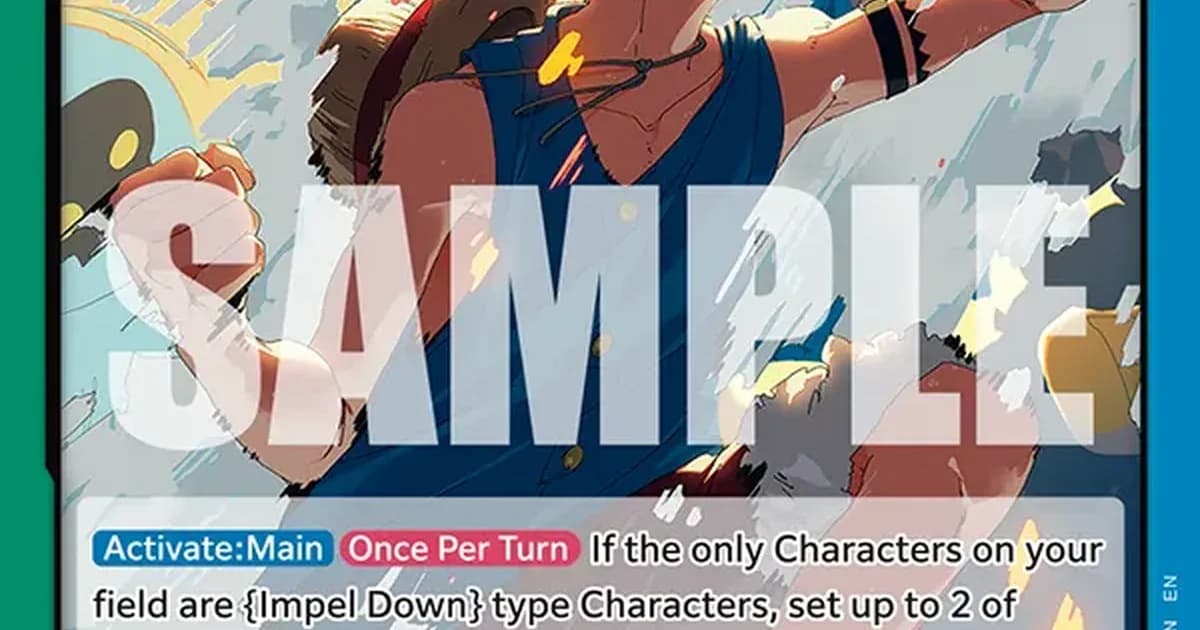
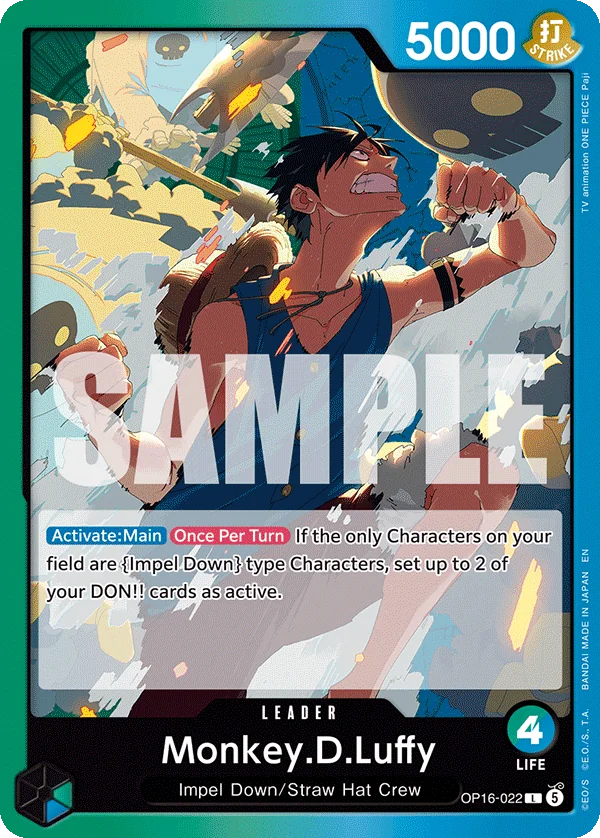 OP16-022OP16-022Shop on TCGplayer Monkey.D.Luffy is a Green/Blue Leader whose once-per-turn effect sets up to two of its own DON!! active only when the field contains only Impel Down Characters.
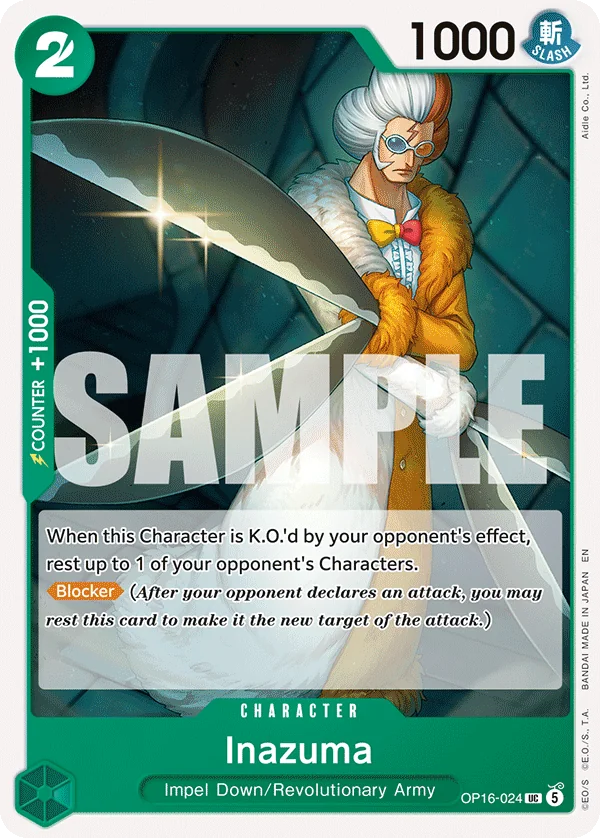 OP16-024OP16-024Shop on TCGplayer Inazuma is a real OP-16 Green example: when the opponent K.O.'s it with an effect, it can rest one opposing Character, and it also has Blocker.
- Blue support is not automatically Green support.
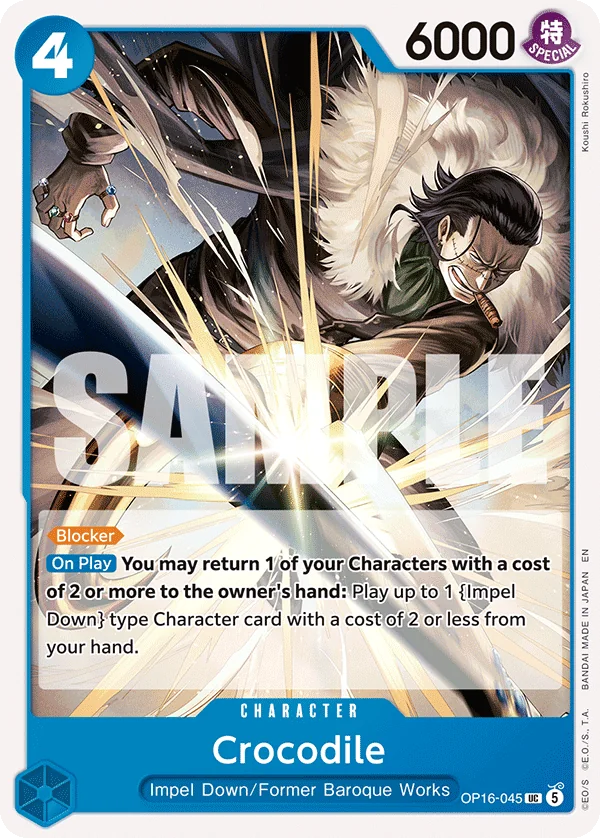 OP16-045OP16-045Shop on TCGplayer Crocodile is Blue and returns one of your own 2-cost-or-more Characters to hand to play a small Impel Down Character from hand.
 - Green can struggle against wide aggressive boards because a single rested target does not remove the other fresh attackers.
- Check the event format before registering an older Leader. ST02-001 Eustass "Captain" Kid is marked not legal in Standard by the current card database.
Green's color identity in One Piece TCG
Every One Piece color asks a different question. Red asks how quickly it can attack. Blue asks which card can be returned or replayed. Black asks how to reduce costs and remove a Character. Yellow uses Life and Trigger effects. Purple turns DON!! acceleration into a game plan. Green asks which opposing card must be unable to act right now.
That last question makes timing more important than raw card count. Resting a blocker before an attack can open a life swing. Resting a Character before it attacks can buy a full turn. Resting DON!! before the opponent's Main Phase can stop a play, but only if the opponent actually needs those DON!! to pay for it.
Rest is not removal. The target remains available for an effect that can use a rested card, and it normally becomes active in the controller's next turn. Green therefore wants repeated, well-timed denial. One rest effect buys a window. Several turns of denial can turn that window into a lead.
This is also why Green is different from Blue. Blue bounce can force an opponent to replay a Character and can return your own Character for another On Play effect. Green leaves the card in place and attacks the opponent's timing. A Blue/Green deck can use both plans, but do not describe a bounce effect as Green rest text when evaluating a card.
GODEEPER: The One Piece TCG OP-16 Complete Guide gives the wider set and color context before you choose a Green Leader.
One Piece TCG Green deck guide: choose the Leader
Green Dracule Mihawk OP14-020
The dated OP-17 tracker snapshot places Green Dracule Mihawk in S tier, with a large public sample. That is useful evidence that the Leader had a competitive plan before the announced ban, not proof that every Mihawk list was automatically strong.
OP14-020 is a 5-Life, 5000-power Green Leader. Its printed text gives it +1000 power when the opponent's Leader has the Slash attribute. Its once-per-turn Activate: Main effect lets you rest one of your own cards; if you have a Character with a cost of 5 or more, you can set up to three of your DON!! cards active, then you cannot play Character cards for the rest of that turn.
That text points Mihawk toward a different Green plan than a pure tap-down deck. You want a meaningful large Character in play, enough DON!! to exploit the restand, and a Main Phase sequence that does not need another Character after the effect resolves. The self-rest is a cost and a timing signal, not an opposing-board removal effect.
Green/Blue Monkey.D.Luffy OP16-022
OP16-022OP16-022Shop on TCGplayer is a 4-Life, 5000-power Green/Blue Leader with Impel Down and Straw Hat Crew traits. Its once-per-turn Activate: Main effect checks your field: if the only Characters there are Impel Down Characters, it can set up to two of your DON!! cards active.
The condition is narrower than the old article suggested. The Leader does not draw from both Character pools, and the effect does not allow a Straw Hat Character to remain beside an Impel Down Character while still satisfying the check. Blue cards can still add bounce, Blocker, or replay value, but the deck has to respect the Impel Down-only condition when it wants the Leader effect.
The same OP-17 tracker snapshot lists Green/Blue Luffy as a lower-volume B-tier entry. Treat that as a current sample signal, not a ban on the deck. It remains a reasonable choice when you prefer an Impel Down engine and Blue's ability to recycle your own Characters.
Historical Green reference: Eustass "Captain" Kid ST02-001
ST02-001 is a useful historical Green Leader because its once-per-turn effect can rest three of its own DON!! cards and trash one card from hand to set the Leader active. The current card database marks it not legal in Standard, however. Use it for Extra or historical discussion only unless the event rules say otherwise.
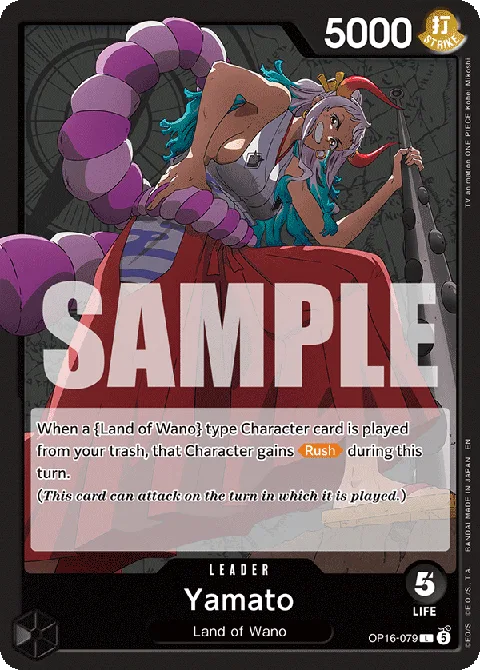 Real OP-16 sample image: Yamato OP16-079. This is a Black Leader asset used as a representative card image, not a Green card list.
Green cards and the rest-versus-value decision
Rest Characters with a purpose
Start by identifying the turn in which a rested Character changes combat math. A rested 5000-power blocker before your attack can be worth more than a larger Character that leaves the opponent's board untouched. A rest effect used after the opponent already attacked may still matter for the next action, but it cannot undo the attack that already happened.
OP16-024OP16-024Shop on TCGplayer Inazuma illustrates the value of a delayed rest. It is a 2-cost Green Character with Blocker, and when an opponent's effect K.O.'s it, its ability can rest up to one opposing Character. That makes it a defensive body with a built-in tempo consequence, not a generic Event that should be spent on every target.
Rest DON!! only when it changes the turn
Resting DON!! is strongest when it removes a real option. Early in a turn, one rested DON!! may stop a key play. Late in a turn, it may do nothing if the opponent has already paid for the cards they wanted. Count the opponent's active DON!!, the cost of the card you expect, and whether they have an alternative line before choosing a DON!! target.
Separate Blue support from Green rest
OP16-045OP16-045Shop on TCGplayer Crocodile is a 4-cost Blue Blocker, not a Green rest card. Its On Play effect can return one of your own Characters with cost 2 or more to hand, then play an Impel Down Character costing 2 or less from hand. In a Blue/Green Luffy shell, that can replay a useful On Play Character and make room for a better line. It does not rest an opposing card, so count it as Blue value and replay support.
The real local inline-1 image is similarly not a Green example: Kouzuki Oden OP16-083 is a Black 5-cost Character with Blocker, and its On Play effect can discard an 8-cost-or-more Character from hand to draw two cards. It is kept only as a truthful representative image for the article, not as a Green recommendation.
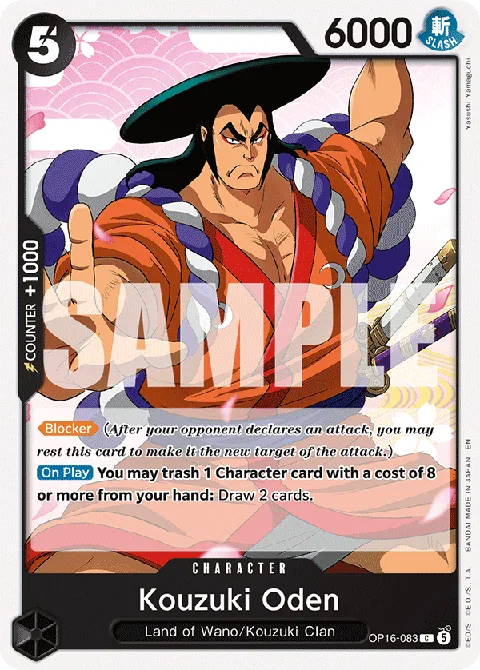 Real OP-16 sample image: Black Kouzuki Oden OP16-083. The card is shown for transparency and is not part of the Green core-card recommendations.
Count support, not just rest text
Before adding a rest Event, check four things:
- Does the deck have enough Characters to contest the board while it spends cards on denial?
- Can the effect hit the type of card the opposing deck actually uses?
- Does the card give a Counter value or another reason to keep it when there is no good target?
- Does the Leader need active DON!!, a large Character, or a specific trait before the rest effect matters?
Green is strongest when every denial card is useful in at least two game states. A card that only rests a small Character is much worse when the opponent has moved to large Leaders and resilient board development.
Step-by-Step: pilot a Green deck
1. Read the Leader condition before the opening hand. Mihawk wants a large Character and a Main Phase sequence that can stop after its Leader effect. Luffy wants an Impel Down-only field when its effect resolves. These conditions change which hands are keepable.
2. Map the opponent's next meaningful action. Ask whether the opponent needs a blocker, an attacker, an active DON!! payment, or a specific Character effect. Do not spend a rest effect just because a target exists.
3. Decide between Character and DON!!. Rest a Character when it changes combat or stops an important attack. Rest DON!! when it prevents a play the opponent cannot replace with a cheaper line.
4. Preserve a second denial window. If the opponent will regain the card next turn, do not empty every rest effect at once unless the attack is decisive. Green wins by making the next turn awkward too.
5. Sequence attacks after the rest. Rest the blocker before committing the attack that benefits from its absence. If you are playing Mihawk, resolve the Leader effect only after checking whether you still need to play a Character.
6. Recount active DON!! before passing. Your own DON!! count tells you what the opponent can answer next turn. Their active count tells you whether a rested DON!! card actually reduced their options.
Building a Green deck for 2026
Start with the Leader, not with a color pile. A Green Mihawk list needs a credible set of 5-cost-or-more Characters and enough defensive cards to survive while it develops. A Green/Blue Luffy list needs an Impel Down core, Blue replay tools, and a plan for maintaining the Leader's field condition.
Use these questions while building a 50-card list:
- How many early Characters can contest the board or provide a useful Counter?
- How many cards create a real rest window, and what are their legal targets?
- Does the list have enough Blockers or Counter power to survive when one rest effect is not enough?
- Are you adding Blue cards because they advance Luffy's Impel Down plan, or only because they are individually powerful?
- If you choose Mihawk, what happens after the Leader effect prevents additional Character plays for the turn?
Keep the legal construction baseline visible: the deck has 50 cards, the Leader is separate, and a card number normally cannot appear more than four times. Format legality is a separate check. The current database marks ST02-001 not legal in Standard, while OP14-020 is legal only through October 11, 2026 before Bandai's announced ban and OP16-022 remains a separate option. Confirm the event's current Block and restriction rules before using an older card.
For a first draft, prioritize a stable Character curve, a healthy Counter count, and only enough rest effects to find them consistently. A 50-card list that draws a playable Character and a useful defensive card is more reliable than a list filled with narrow rest effects that have no target in the current matchup.
Green matchup plans
Against a small value board
Save the first rest effect for the Character that either generates value or blocks the attack that matters. Green does not need to rest every card. Denying one engine Character while developing your own board often produces more value than spreading small effects across harmless targets.
Against a wide aggressive board
One rest effect is not removal. If the opponent has several fresh attackers, rest alone does not solve the race. Keep Blockers and Counter cards, protect Life when necessary, and use denial to remove the attack that would create the largest swing. A Green deck that spends every card tapping one target can fall behind the rest of the board.
Against bounce and control
Expect the opponent to use your need for a board as a weakness. Do not commit every Character to a line that loses to one bounce effect, and do not assume a rested card is safe. With Green/Blue Luffy, sequence replay effects so that returning your own Character creates a real On Play benefit rather than simply resetting your board.
Against large-Character plans
Mihawk's large-Character condition can be powerful, but it also tells the opponent what you need. Develop enough pressure that they cannot ignore your board, then use rest effects to make the high-cost turn awkward. Track whether their answer is a removal effect, a blocker, or a Leader attack and save the relevant defense.
Green play tips
Rest before the important action. A rested blocker after it already blocked did not save your attack. A rested attacker after it already swung did not undo the damage. Use the effect before the action it is meant to deny.
Do not confuse rest with removal. The opponent will get the card back active unless another effect or rule changes that timing. Plan the follow-up turn before declaring the first rest.
Use DON!! denial with a cost in mind. Resting one DON!! against a player who has seven active DON!! may be cosmetic. The same effect against a player holding exactly enough to play a key card can be the best line in the turn.
Check the Leader condition after every replay. Blue bounce can be strong in a Luffy deck, but a non-Impel Down Character left on your field can turn off the once-per-turn Leader effect.
Respect Mihawk's no-more-Characters clause. If you need to play a Character after restanding DON!!, play it first or choose a different sequence. Treat the effect as a full-turn plan rather than a free resource refresh.
For the broader beginner context, the One Piece TCG beginner guide 2026 covers DON!!, Characters, Leaders, and combat before you tune a Green list.
Related Reading
- One Piece TCG Blue Yellow Color Guide - compare Blue's bounce and Yellow's Life tools with Green's temporary denial.
- One Piece TCG Red Deck Guide 2026 - the aggressive pressure Green must answer.
- One Piece TCG Purple Deck Guide 2026 - a different resource and control plan.
- One Piece TCG Deck Building Guide - the 50-card construction process before choosing a Leader.
- One Piece TCG Standard Format Guide 2026 - current legality and Block rules to check before an event.
Frequently Asked Questions
What does Green do in One Piece TCG? Green is built around temporary denial. Resting a Character normally stops it from attacking or blocking for that turn, while resting DON!! reduces the opponent's available payment. Green has to repeat that pressure because the cards usually remain in play.
Who is the best Green Leader in 2026? In the September 2026 OP-17 snapshot checked for this update, Green Dracule Mihawk was the highest-ranked Green entry. The source is a third-party tracker, and Bandai's October 12 ban means this is a dated pre-ban sample rather than an official ranking or current Standard recommendation.
What does OP16-022 Monkey.D.Luffy do? It is a Green/Blue 4-Life Leader. Once per turn, if the only Characters on your field are Impel Down Characters, it can set up to two of your DON!! cards active. The condition does not allow a mixed field of Impel Down and non-Impel Down Characters.
What does resting mean in One Piece TCG? Resting turns the card sideways. A rested Character normally cannot attack or block, and a rested DON!! card cannot pay for a cost. It is not the same as K.O. or returning a card to hand.
How is Green different from Blue? Blue's defining interaction is often bounce, which returns a Character to a hand. Green's defining interaction is rest, which leaves the card in play but denies its action for a turn. A dual-color deck can use both, but the effects should not be conflated.
Is Eustass "Captain" Kid ST02-001 legal in Standard? The card database checked for this update marks ST02-001 as not legal in Standard and legal in Extra. Use the event's current legality document rather than assuming an older starter Leader is still available.
Can Green beat aggro? Yes, but not by resting one card and ignoring the rest of the board. Keep Blockers and Counter power, choose the attack that must be denied, and preserve enough resources to handle the fresh Characters that aggro can play after a rest effect resolves.
References
- One Piece Card Game official site for official rules, products, and tournament resources.
- One Piece Card Game comprehensive rules for active and rested cards, DON!! use, and combat timing.
- OP-17 One Piece TCG tier list for the dated September 2026 Green Mihawk and Green/Blue Luffy snapshot.
- Monkey.D.Luffy OP16-022 card page for the Leader's exact effect, color, life, and traits.
- Dracule Mihawk OP14-020 card page for the Green Leader's exact effect and current format labels.
- Inazuma OP16-024 card page for the Green Character's Blocker and K.O. trigger text.
- Crocodile OP16-045 card page for the Blue Impel Down replay effect.
- Eustass "Captain" Kid ST02-001 card page for the historical Leader text and Standard legality label.
Last checked: September 18, 2026. Tournament results, tier labels, card legality, and deck lists can change after a new set, ban notice, or event update.
Was this guide helpful?
Cards in this article
About the author

Competitive TCG Writer
Competitive One Piece TCG player who topped at regional level. Has strong opinions about leader tier lists and when the meta is being over-hyped.
- Regional One Piece TCG top-8 finisher
- Competitive meta analyst
- Matchup and deck-building specialist
Keep reading
One Piece TCG Purple Deck Guide: DON Ramp and Control
Guides · 12 min
One Piece TCG Red Deck Guide: Full Aggro Strategy 2026
Guides · 14 min
One Piece TCG Black Deck Guide: Removal and Trash Mastery
Guides · 9 min
OP-17 Leaders Preview: All 6 Confirmed, Xebec Is Blue
News · 6 min
One Piece TCG Blue Yellow Guide: Pairing and Nami Strategy
Guides · 14 min
OP-16 Nami Tech Cards: 7 Verified Picks by Color (2026)
Guides · 16 min
One Piece TCG OP-16 meta report: July 2026 snapshot
Guides · 9 min
OP-16 One Month Meta Report: Complete 5-Week Breakdown
Guides · 10 min
Disclaimer
This article is published for informational and entertainment purposes. It does not constitute professional financial, legal, or technical advice. Game performance, online services, patch schedules, and store listings change. Verify critical details (pricing, system requirements, regional availability) with publishers and storefronts before you buy. Affiliate links, where present, help support our editorial work and are labelled in our affiliate disclosure.