

Shonen TCG · Guides
OP-16 Meta Tier List Week 1: Early EN Results (2026)
OP-16 meta tier list week 1, rebuilt from the first recorded EN OP16 events on June 20-21, 2026, with an evidence cutoff and no fabricated win rates.
TL;DR: This OP-16 meta tier list is a historical Week 1 snapshot built from the first recorded EN OP16 tournament pages checked for this update. Green/Blue Luffy, Black/Yellow Blackbeard, and Blue Buggy showed the clearest early placement evidence. The sample is small, includes older leaders, and does not support fabricated win rates.
Update (2026-09-16): The original pre-launch projection has been replaced with a results-based retrospective. The article now separates the six official OP16 leaders from older leaders that also appeared in the OP16-format events.
OP-16 meta tier list? (quick answer)
The early results point to Green/Blue Luffy and Black/Yellow Blackbeard as the best-supported OP16 leaders in the first recorded EN events. Blue Buggy also reached a top-four finish. This is a historical placement snapshot, not a complete tier list or a current ranking.
Scope and evidence
This article answers a narrow historical question: what did the first recorded EN OP16 results show about the six leaders from the set?
The cutoff is the two early Limitless pages cited below:
- Regional Peoria, June 20, 2026: 1,117 players.
- Treasure Cup Peoria, June 21, 2026: 510 players.
That is not a complete seven-day sample, and it is not a current ranking. It is the earliest large-event snapshot used here. I use the placement records exactly as published, with no invented win rates or extrapolated matchup percentages.
The official OP16 product and card list identify six leaders:
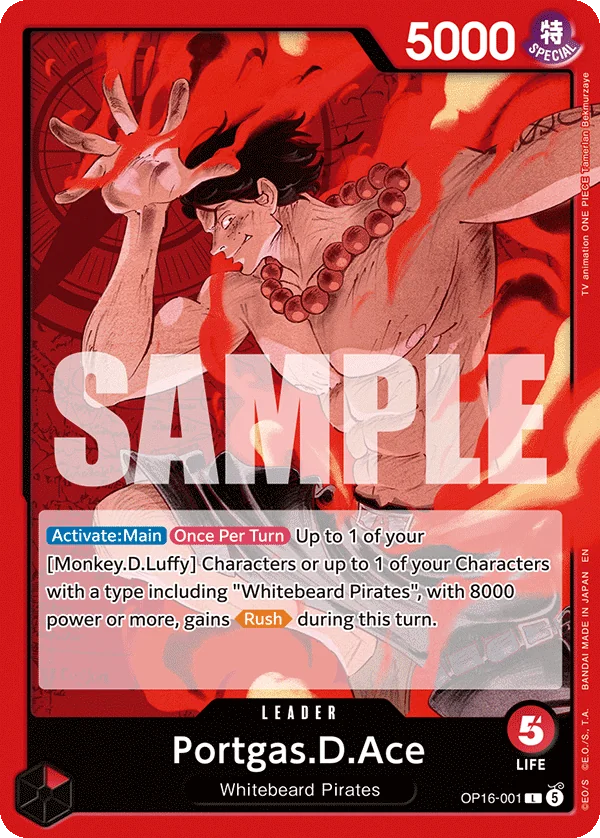 OP16-001OP16-001Shop on TCGplayer Portgas.D.Ace, Red, Whitebeard Pirates
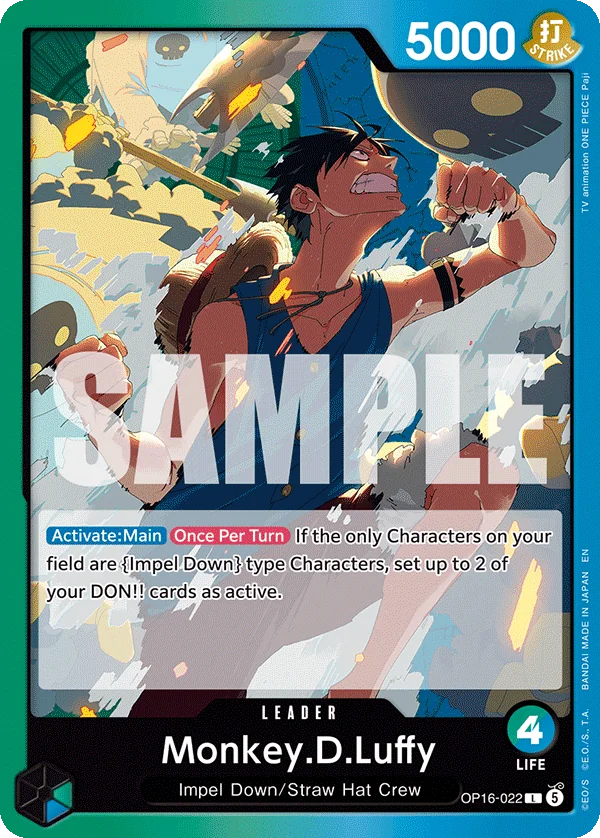 OP16-022OP16-022Shop on TCGplayer Monkey.D.Luffy, Green/Blue, Impel Down and Straw Hat Crew
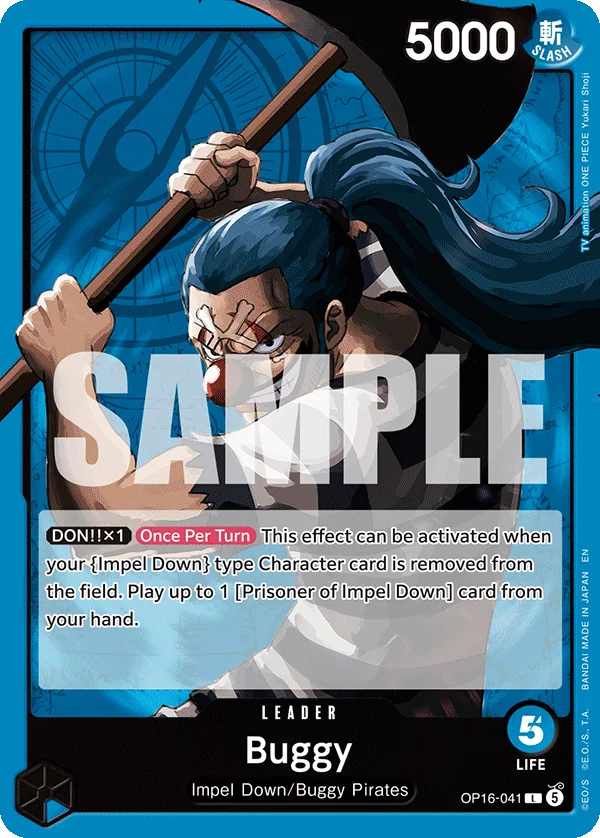 OP16-041OP16-041Shop on TCGplayer Buggy, Blue, Impel Down and Buggy Pirates
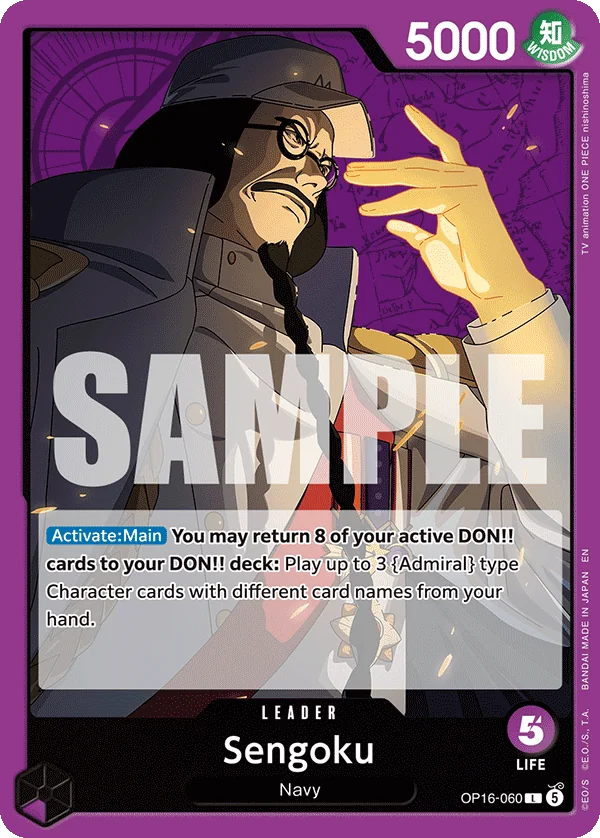 OP16-060OP16-060Shop on TCGplayer Sengoku, Purple, Navy
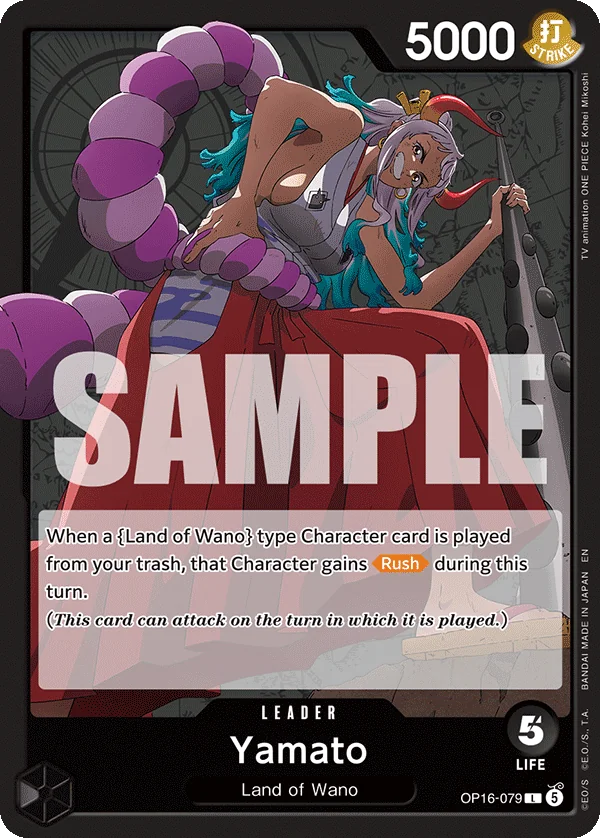 OP16-079OP16-079Shop on TCGplayer Yamato, Black, Land of Wano
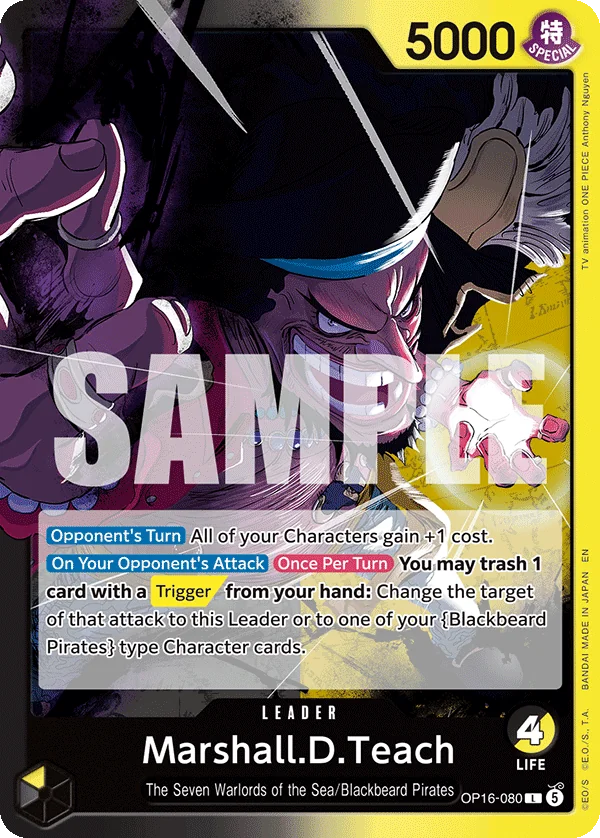 OP16-080OP16-080Shop on TCGplayer Marshall.D.Teach, Black/Yellow, The Seven Warlords of the Sea and Blackbeard Pirates
How this OP-16 meta tier list is scored
The labels below are editorial shorthand for the amount of early placement evidence, not official tiers:
- Tier 1 early evidence: multiple top-16 placements across the two cited events.
- Watchlist: at least one meaningful result, but too little data for a stronger label.
- Unproven: no top-16 result in these two pages. That does not mean the leader is weak; it means this sample cannot support a claim.
This distinction matters because OP16-format results include older leaders. Regional Peoria was won by Red/Blue Lucy, followed by four Blue/Yellow Nami entries before the first OP16 leader, Green/Blue Luffy, at 5th. Treasure Cup Peoria was won by Blue/Yellow Nami, with Black/Yellow Blackbeard at 2nd and Blue Buggy at 4th. The format label does not turn every deck into an OP16 leader deck.
Tier 1 early evidence: Luffy and Blackbeard
Green/Blue Luffy
OP16-022OP16-022Shop on TCGplayer Luffy had the clearest repeat result among the six OP16 leaders in this small sample:
- 5th at Regional Peoria on June 20
- 6th and 15th at Treasure Cup Peoria on June 21
The list entries show the leader paired with the OP16 Impel Down package, including Prisoner of Impel Down Characters. That gives the result a coherent set identity, but the placements still do not prove a format-wide win rate. See the OP-16 Luffy deck guide for the card-by-card plan.
Black/Yellow Blackbeard
OP16-080OP16-080Shop on TCGplayer Blackbeard produced the deepest group of early placements:
- 7th, 8th, and 13th at Regional Peoria
- 2nd, 7th, and 11th at Treasure Cup Peoria
That is stronger early evidence than the pre-launch projection could provide. It still should not be rewritten as “the best deck” because these pages do not provide a complete metagame win-rate denominator. The OP-16 Blackbeard deck guide covers the shell and its risk points.
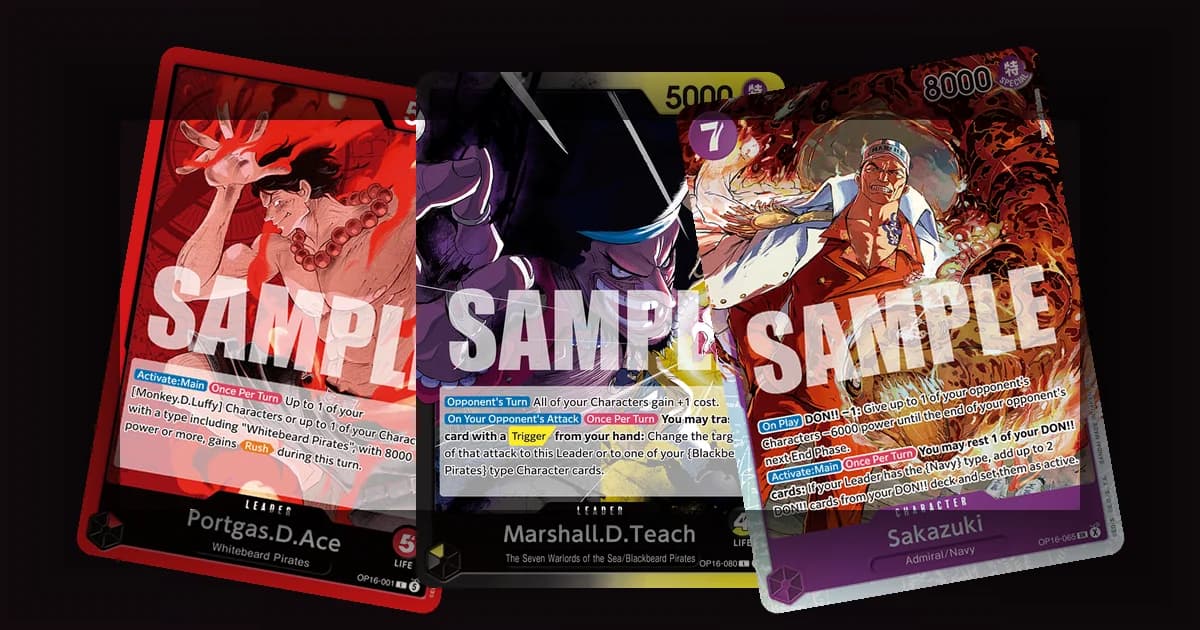
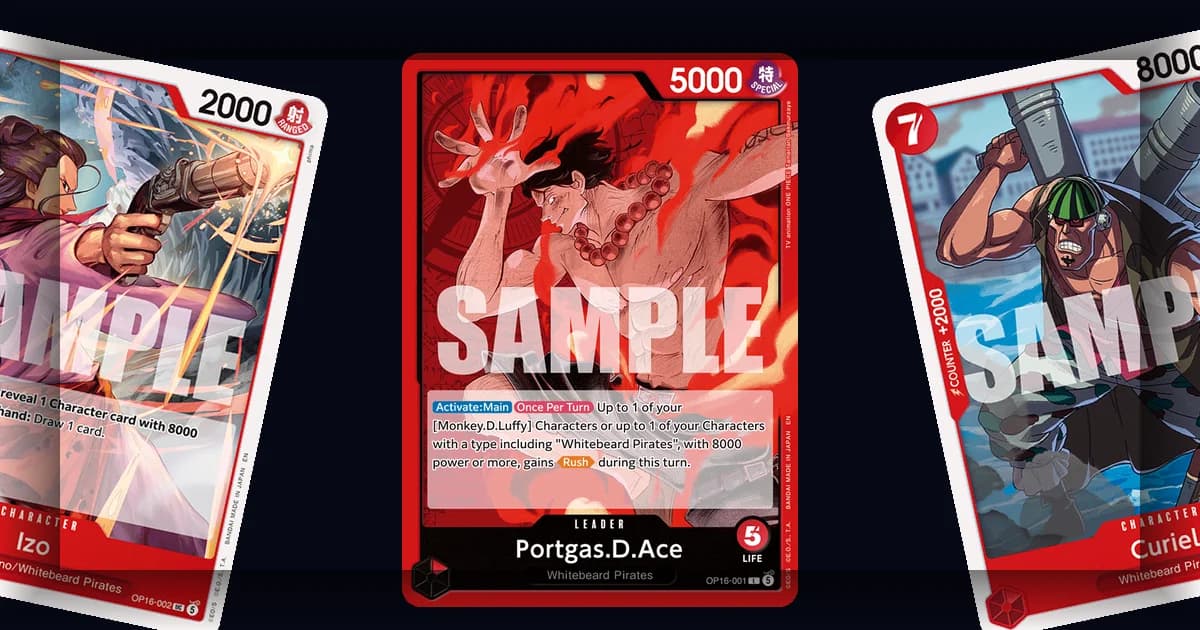
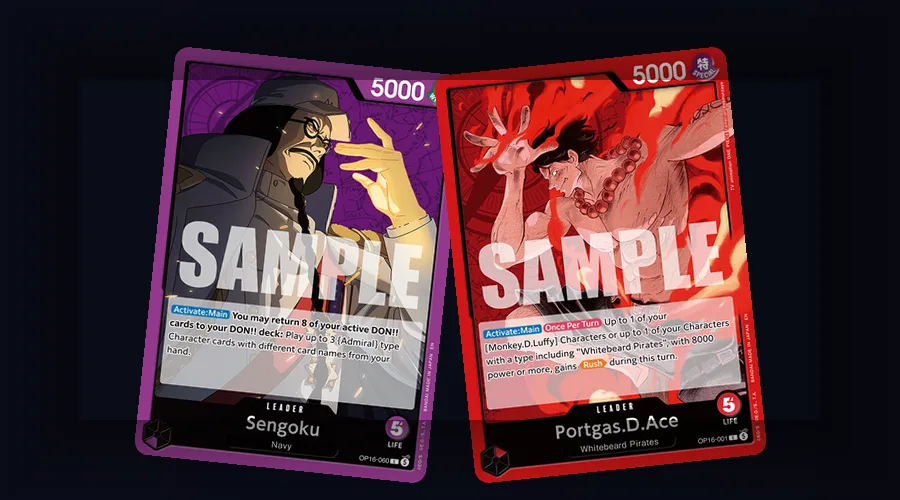 Real OP-16 sample Leader cards for Sengoku and Portgas.D.Ace. The sample watermark is part of the source asset; this image is illustrative, not tournament evidence.
Watchlist: Buggy, Ace, Yamato, and Sengoku
Blue Buggy
OP16-041OP16-041Shop on TCGplayer Buggy reached 4th at the June 21 Treasure Cup. The published list uses a broad Impel Down package with low-cost Characters and Prisoner of Impel Down Events. One top-four finish is a meaningful signal, but it is not enough to place Buggy above leaders with several results. Use the OP-16 Buggy deck guide if you want the most direct version of that plan.
Red Ace
OP16-001OP16-001Shop on TCGplayer Ace finished 19th at Regional Peoria. That is a real posted result and better evidence than a pre-launch guess, but it is outside the event's top 16 and does not establish a tier placement. The early sample gives Ace a watchlist label, not a verdict. For the dated Treasure Cup shell, see the OP-16 Ace Deck Tech Week 1.
Black Yamato
OP16-079OP16-079Shop on TCGplayer Yamato finished 34th at Regional Peoria. No top-16 result appears for Yamato on either cited page. This is not evidence that the leader is unplayable; it only means the two-event sample did not produce a strong placement.
Purple Sengoku
OP16-060OP16-060Shop on TCGplayer Sengoku does not appear in the top 16 of either cited event. The leader's official ramp mechanic can still be tested in local play and later events, but a mechanic description cannot substitute for tournament evidence.
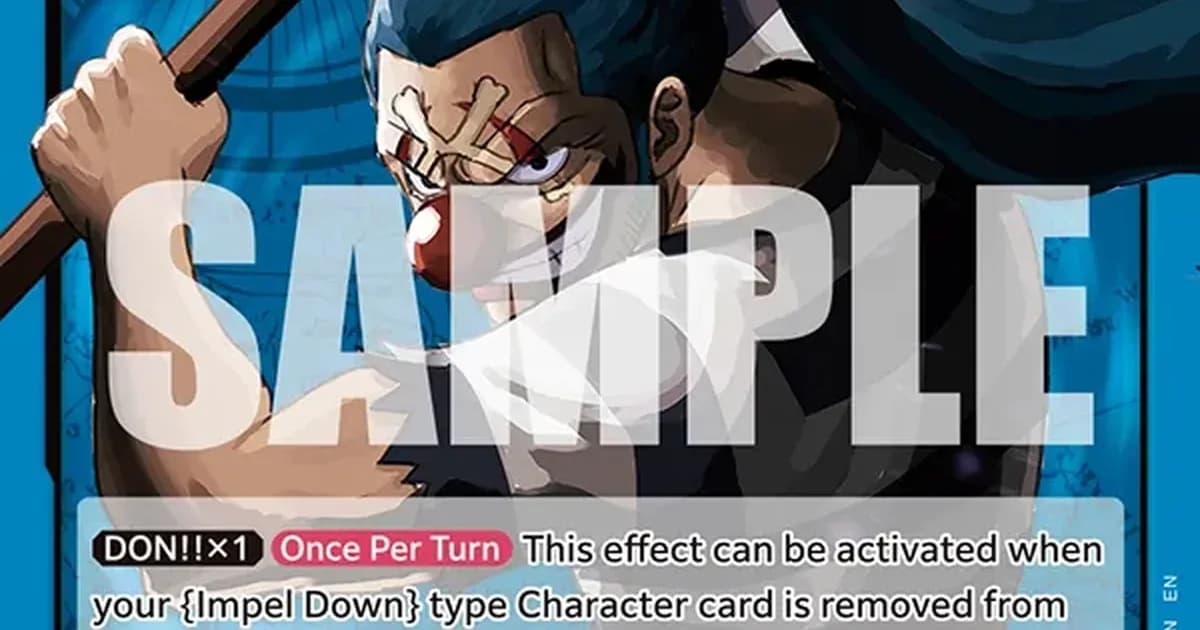
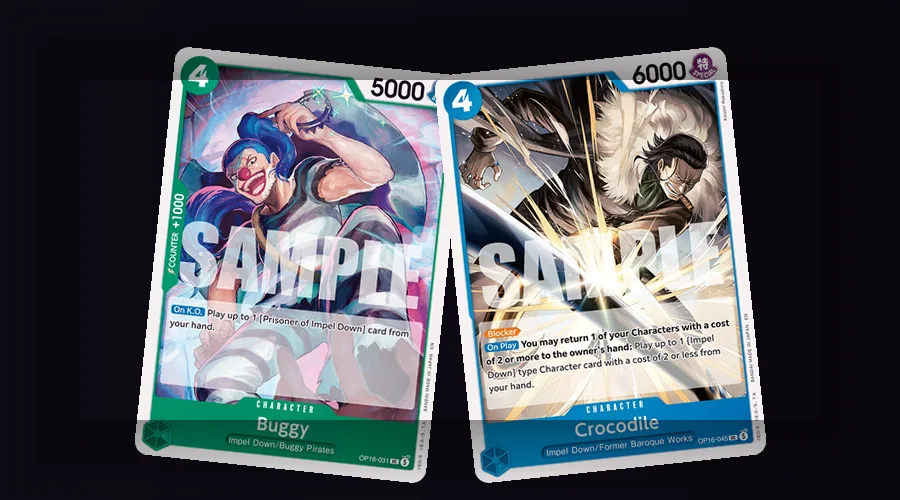 Real OP-16 sample Character cards showing Buggy and Crocodile. They illustrate the Impel Down card pool and are not a price, rarity, or performance claim.
What the two early tournaments actually showed
| Event | Winner | Highest OP16 leader | Other notable OP16 placements |
|---|---|---|---|
| Regional Peoria, June 20, 1,117 players | Red/Blue Lucy | Green/Blue Luffy, 5th | Purple Enel 6th; Black/Yellow Blackbeard 7th, 8th, and 13th; Red Ace 19th; Black Yamato 34th |
| Treasure Cup Peoria, June 21, 510 players | Blue/Yellow Nami | Black/Yellow Blackbeard, 2nd | Blue Buggy 4th; Green/Blue Luffy 6th and 15th; Black/Yellow Blackbeard 7th and 11th; Purple Enel 8th, 12th, and 13th |
The results make two points easy to miss:
- The strongest early OP16 leader signal came from Luffy and Blackbeard, not from a pre-launch ranking based on card text.
- The broader format was already shaped by Nami, Lucy, Enel, and Rosinante. Calling a six-leader table the whole metagame would misrepresent the events.
Practical lessons for deck builders
Use the early results as a starting point rather than a finished tier list:
- Test Luffy first if you want repeatable early evidence. It placed in both events and gives you a clear OP16 Impel Down shell to tune.
- Test Blackbeard if you want the deepest early result set. It reached the top 16 repeatedly, but its presence in the results does not prove every build is equally strong.
- Keep Buggy on the shortlist. A 4th-place Treasure Cup finish is enough to justify testing, not enough to call the deck dominant.
- Treat Ace, Yamato, and Sengoku as open questions. Their results in this narrow sample are too thin to support a hard tier claim.
- Do not copy old budget numbers from the original article. Card prices move, and the cited event pages contain marketplace snapshots that are not a stable build-cost estimate.
For a broader set overview, see One Piece TCG OP-16 Guide: Set Review & Leaders. For individual card context, see OP-16 Best Cards to Pull.
What this article does not claim
This retrospective does not claim:
- a global OP16 win rate
- a matchup chart
- a universal best leader
- a current September 2026 ranking
- a stable deck price
- that a single event proves dominance
For later OP16 events, use the live Limitless OP16 deck database and check the event date. The OP-16 Meta Report July 2026 is a separate, later snapshot and should not be merged with this Week 1 evidence.
Key takeaways
- This is a historical early-results snapshot, not a current tier list.
- Luffy and Blackbeard have the strongest repeat placement evidence in the two cited events.
- Buggy has a strong single-event signal from a 4th-place Treasure Cup finish.
- Ace, Yamato, and Sengoku remain under-tested by this narrow sample.
- Nami, Lucy, Enel, and Rosinante show why OP16-format results are broader than the six new leaders.
- Tournament placements are evidence; they are not the same as win-rate data.
Frequently Asked Questions
Q: What does Week 1 mean here? A: It means an early post-launch snapshot. The cited Limitless pages are Regional Peoria on June 20 and Treasure Cup Peoria on June 21, so this is not a complete seven-day sample.
Q: Which OP16 leader performed best? A: Luffy and Blackbeard have the best repeat placement evidence in these two events. The sample is too small for a global ranking.
Q: Are the win rates real? A: No win-rate percentages are used. The article reports published placements only.
Q: Which leader should a beginner try? A: Buggy or Luffy are reasonable starting points for a direct Impel Down plan. That is an editorial learning recommendation, not a measured power ranking.
Q: Is this the current OP16 meta? A: No. It is a dated Week 1 retrospective. Check later dated events in the live Limitless database.
Q: Why are Nami and Lucy in an OP16 article? A: Limitless uses OP16 as the format label, and the cited events also include older leaders. Their finishes are context for the environment, not part of the six OP16 leaders.
Related Reading
- OP-16 All 6 Leaders Explained: official leader identities, colors, and card text.
- OP-16 Ace Deck Guide: a focused look at the Red leader that finished 19th in the cited Regional.
- OP-16 Sengoku Deck Guide: a focused look at the leader without a top-16 result in this narrow sample.
- OP-16 Yamato Deck Guide: a focused look at the Black leader that finished 34th in the cited Regional.
- OP-16 vs OP-15 Power Level: broader set context, separate from this Week 1 snapshot.
References
- One Piece Card Game OP-16 official product page: official set overview and leader identities.
- One Piece Card Game official OP16 card list: official card numbers, types, colors, and traits.
- Limitless Regional Peoria, IL, June 20, 2026: 1,117-player OP16 event results.
- Limitless Treasure Cup Peoria, IL, June 21, 2026: 510-player OP16 event results and decklists.
- Limitless OP16 deck database: later format results and deck distribution.
Cards in this article
About the author
Deck guides and meta
Pen name for the Shonen TCG desk's One Piece TCG deck guides, tier lists and meta reports.
- Lists averaged from public tournament results, sample size stated
- Card text quoted from Bandai's official card list
- Opinions marked as ours, with the reason
Keep reading
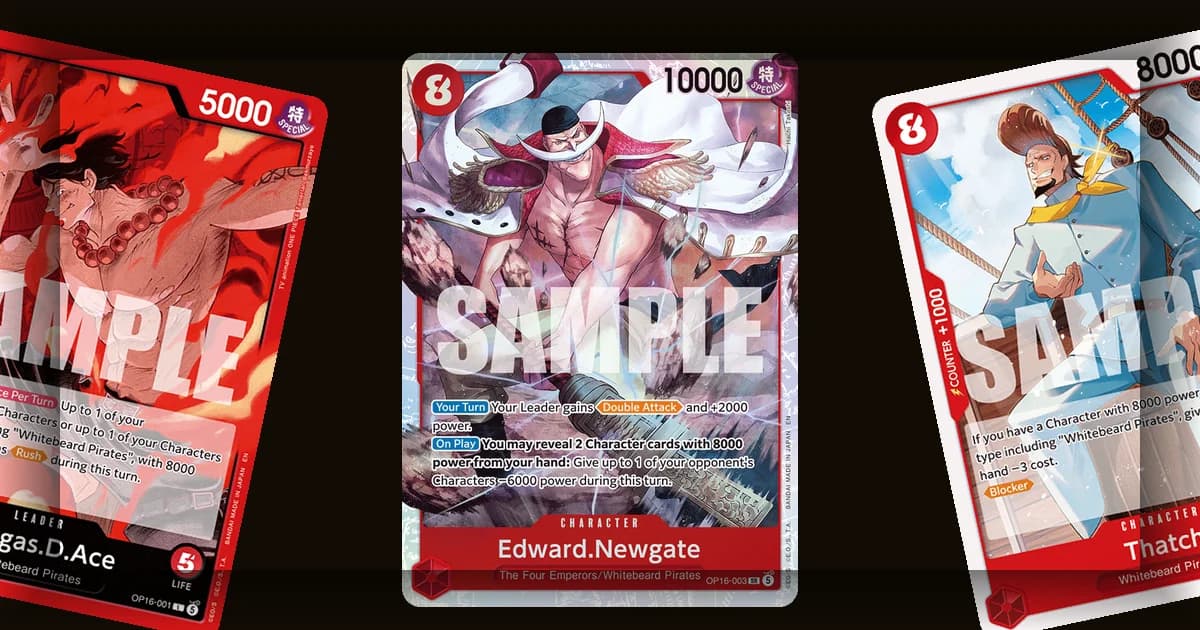
One Piece TCG Most Expensive Cards 2026: Value Guide
Guides · 9 min
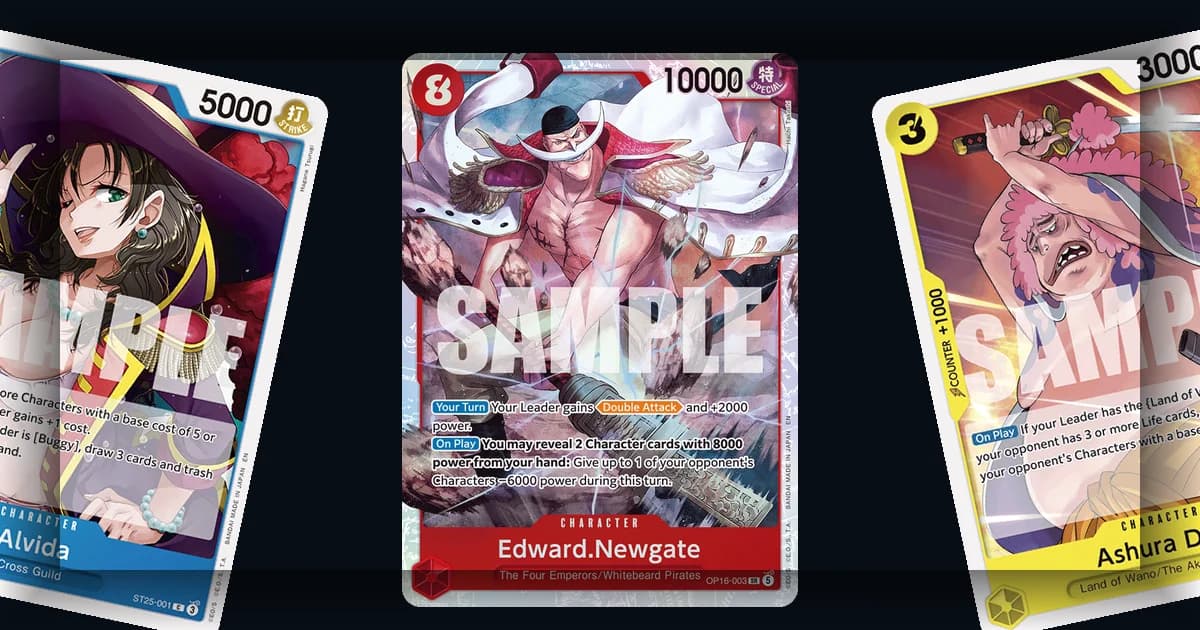
Best One Piece TCG Decks for Beginners: 5 Picks (2026)
Guides · 14 min
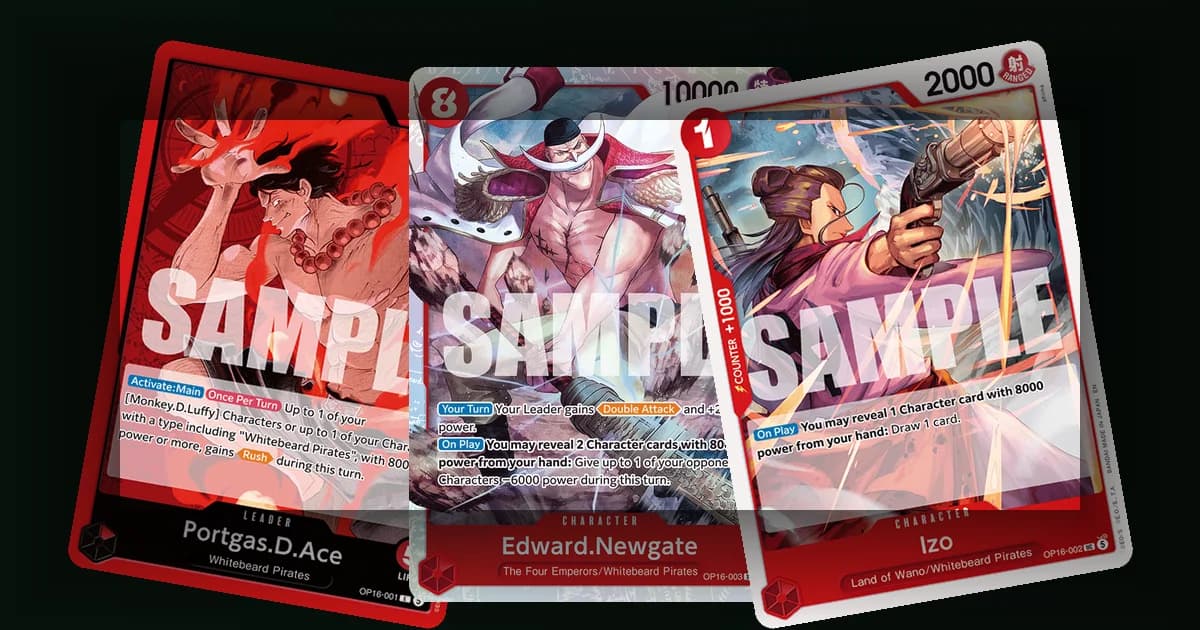
OP-16 is it worth buying? Box, singles, or sealed?
Guides · 9 min
OP-16 Chase Cards: Best to Pull & Value Guide (2026)
Guides · 12 min
One Piece TCG Tournament Guide: How to Compete (2026)
Guides · 11 min
One Piece TCG Manga Rare Cards: Guide & Values (2026)
Guides · 12 min

All One Piece TCG Sets OP-01 to OP-17: Complete List (2026)
Guides · 13 min
OP-16 Akainu deck guide: Sakazuki in Sengoku Navy 2026
Guides · 10 min
Disclaimer
This article is published for informational and entertainment purposes. It does not constitute professional financial, legal, or technical advice. Game performance, online services, patch schedules, and store listings change. Verify critical details (pricing, system requirements, regional availability) with publishers and storefronts before you buy. Affiliate links, where present, help support our editorial work and are labelled in our affiliate disclosure.